
Select Language:
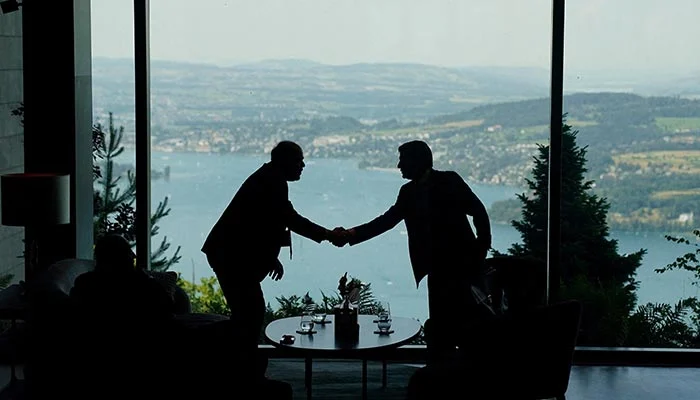
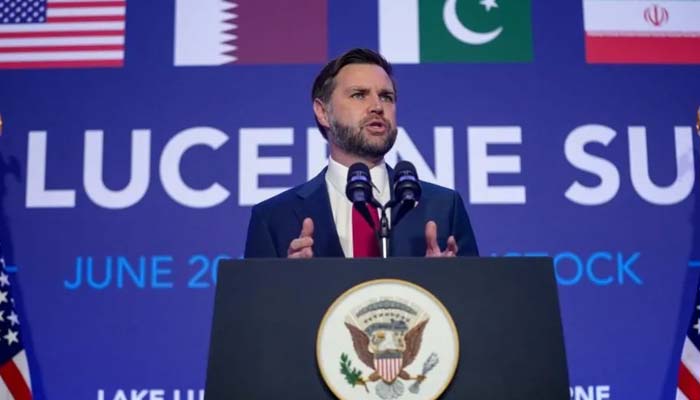
US Vice President JD Vance delivered opening remarks at the Lake Lucerne Summit on June 21, 2026 — Reuters
– Delegates’ visits have laid the groundwork for upcoming negotiations, according to sources.
– Diplomatic efforts regarding Lebanon are ongoing and increasingly intensive.
– Iran is also focusing on the release of its frozen assets as a priority.
—
JD Vance, the Vice President of the United States, expressed optimism about the progress of indirect talks with Iran taking place in Qatar concerning the Strait of Hormuz. He emphasized that Washington does not plan to escalate military involvement unless absolutely necessary. The discussions are centered around a 14-point interim agreement signed last month, aimed at suspending the conflict triggered by US-Israeli strikes on Iran earlier this year and reopening the strait. The agreement also establishes a 60-day window to negotiate a permanent peace settlement.
Despite these diplomatic efforts, both the US and Iran have publicly disagreed on the interpretation of the interim deal, resulting in reciprocal military strikes and a lack of clear progress on complex issues such as Iran’s nuclear program. Vance indicated that while he cannot promise that the US won’t resort to full military action before the upcoming deadline, President Donald Trump has instructed officials to pursue a diplomatic deal.
“When it comes to military action, I can’t guarantee anything because it ultimately depends on Iran’s actions,” Vance explained during a visit to Virginia Beach. “The President won’t send our troops back into combat unless there’s a clear and justified reason.”
In Qatar, technical discussions are primarily focused on commercial shipping through the strait, with future talks expected to address Iran’s nuclear capabilities. Vance noted, “It’s still early, but the talks are progressing well.”
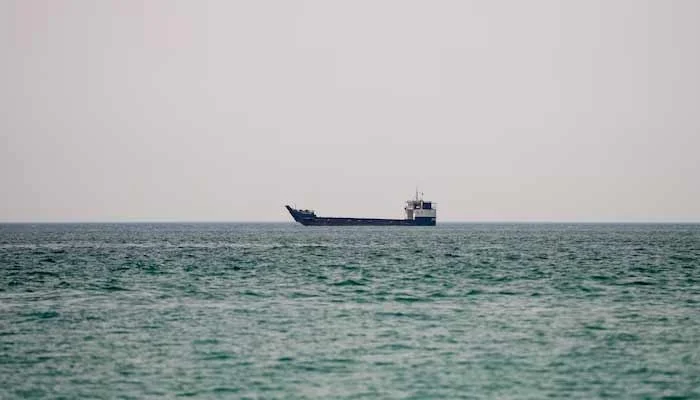
Iran aims to achieve international recognition of its control over the strategic waterway and the authority to impose fees on ships passing through the Gulf—possibly through force if necessary, according to two senior Iranian officials. Traffic has partially resumed in the strait, which previously handled about 20% of global oil and liquefied natural gas shipments before the conflict erupted.
Former President Trump, who prioritizes halting Iran’s nuclear development, stated on Wednesday that “Iran’s denuclearization is progressing smoothly,” though he offered few specifics. When asked if the US might re-engage in full-scale war with Iran, Trump responded, “They’ve come a long way. We hit them hard last week, and I believe they’re doing fine now.”
—
The indirect negotiations, mediated by Qatar and Pakistan, started on Tuesday night and continued into Wednesday, according to an Iranian official. The sessions involve top negotiators and technical experts, with meetings also occurring between US officials—including Jared Kushner, Trump’s son-in-law, and envoy Steve Witkoff—and Qatar’s leadership. Kushner and Witkoff discussed US-Iran negotiations and developments in Lebanon, where fighting has recently intensified between Israel and Iran-backed Hezbollah.
Iran’s deputy foreign minister, Kazem Gharibabadi, led a delegation that included representatives from Iran’s foreign ministry, central bank, and agriculture ministry, engaging with Qatar’s Prime Minister. The main issues on the table are Iran’s control over the Strait of Hormuz and the release of approximately $6 billion in frozen Iranian assets.
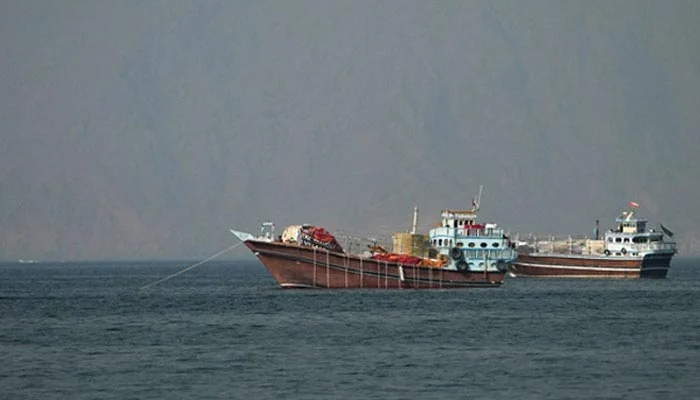
The US is primarily focused on ensuring unimpeded shipping through the strait, with one Iranian vessel reportedly running aground in the shallow waters outside Iranian-controlled routes. Oil market analysts describe Hormuz’s reopening as inconsistent and unpredictable.
The conflict has prompted Iranian attacks on Gulf states hosting US military bases, resulting in thousands of casualties, mainly in Iran and Lebanon, and driving up energy prices. Trump faces domestic pressure to mitigate economic damage from the war ahead of the November midterm elections, amid criticism that the interim deal fails to meet US strategic goals.
Oil prices declined further on Wednesday, with US West Texas Intermediate crude oil dropping below $69 per barrel, reaching its lowest point since February 27—the day before the conflict started.
The US-Iran interim agreement also calls for an end to hostilities in Lebanon. The US supports separate negotiations between Israel and Lebanon, which have yielded a framework security agreement rejected by Hezbollah that some analysts believe could entrench Israel’s military presence in southern Lebanon.
 ChatGPT
 Perplexity
 Gemini AI
 Grok AI