Tag: diplomacy

  • Trump Suspends Iran Strikes, Starts New Talks Today

    Trump Suspends Iran Strikes, Starts New Talks Today

    US President Donald Trump announced that talks with Iran will start on Monday after he decided to postpone any new “disastrous” strikes against the Islamic republic in favor of pursuing a diplomatic solution.

    “Obviously, they don’t want to be attacked. They saw the buildup and understood the looming threat,” Trump told journalists Sunday from aboard Air Force One.

    “Our current approach is to engage in negotiations. The discussions kick off tomorrow afternoon,” he added, though he didn’t specify where the talks would take place or who would be involved.

    On Saturday, Trump backed away from threats of a massive military strike against Iran, which he claimed would be the largest since World War II, stating that “a deal’s perimeter” was established.

    He explained on Sunday that Iran, along with U.S. allies Saudi Arabia, the UAE, and Qatar, had asked for a delay on the strikes.

    “When our allies requested to hold off, I had to consider it. Their requests suggest a potential deal,” Trump said.

    He added that there were agreements on the Strait of Hormuz and possibly on Iran’s nuclear program, which could lead to its denuclearization.

    Reiterating that the scale of the planned attack would have been “the biggest since WWII,” Trump noted it would have taken years to recover if possible at all, emphasizing the destruction it would cause.

    Saudi Crown Prince Mohammed bin Salman also urged against launching the strikes, warning of unforeseen consequences.

    “Could flooding and chaos spill into their country? Many bad outcomes could arise,” Trump warned.

    The conflict started on February 28 when the U.S. and Israel launched surprise strikes against Iran, but intermittent diplomacy has resulted in periods of reduced tensions. A previous ceasefire agreement involving the reopening of the Strait of Hormuz—an essential route for global energy supplies—collapsed, and Iran has since reinforced its control over the waterway amid escalating attacks from both sides in recent weeks.

    Iran’s Foreign Minister Abbas Araqchi has held phone conversations with Saudi Arabia’s Prince Faisal bin Farhan and Pakistan’s army chief, Asim Munir, to discuss diplomatic strategies, according to Iranian state media.

    Earlier, Iranian media reported that negotiations with Oman over the Strait of Hormuz were nearing completion, citing Araqchi.

    The Iranian Foreign Ministry stated that talks are centered on establishing a new route through the strait, clarifying that this does not affect whether the strait remains open or closed. Last month, Iran rejected an Omani proposal—supported by Gulf states—that involved collecting voluntary fees for using the strait.

    Israel’s Energy Minister Eli Cohen, who also serves on Prime Minister Benjamin Netanyahu’s security cabinet, confirmed close security and intelligence collaboration with the U.S. on regional developments. However, he emphasized that regardless of agreements or external commitments, Israel remains prepared to act against Iran if it attempts to restart its nuclear program or expand its missile industries.

    Trump and Netanyahu met earlier this week in Washington, during which they discussed various options—diplomacy, economic measures, and military action—to prevent Iran’s nuclear ambitions, which Tehran denies pursuing.

  • Trump: US and Israel to Delay Iran Strike

    Trump: US and Israel to Delay Iran Strike

    President Donald Trump stated Saturday that the U.S. and Israel agreed to delay any new military actions against Iran, contingent upon swiftly reaching a resolution. Concerns had been rising that conflict might escalate again after Trump threatened to strike Iran “very hard,” with reports indicating plans for renewed heavy attacks targeting energy infrastructure and other key sites.

    CBS News reported that the U.S. and Israel were planning joint strikes, possibly over the weekend, with targets including oil refineries and power plants. Trump announced on Truth Social that the U.S. is prepared for military action against Iran, emphasizing levels of force not seen since World War II. However, he added that he would hold off for now, citing requests from Iran and other Middle Eastern nations to avoid escalation.

    He said, “Based on this request, I have agreed to hold off on attacking, for the future benefit of the entire world, and to give Iran a chance to reach a quick deal.” The conditions for the deal include the immediate and complete opening of the Strait of Hormuz and an end to Iran’s nuclear proliferation. Trump stated that Israel is standing with him in this commitment and called on everyone to make it happen.

    The conflict, which began on February 28 after the U.S. and Israel launched strikes on Iran, has persisted for over five months with no clear resolution. Recently, there has been a resurgence of tit-for-tat attacks. Saudi Crown Prince Mohammed bin Salman reportedly called Trump to express concerns about the planned strike, urging de-escalation and restraint, according to unnamed U.S. officials cited by Axios. The White House has not yet responded to this report.

  • Netanyahu and Trump Hold First White House Meeting Amid Iran Conflict

    Netanyahu and Trump Hold First White House Meeting Amid Iran Conflict

    Prime Minister Benjamin Netanyahu made his first face-to-face visit to the White House since the Iran conflict erupted, engaging in discussions with President Donald Trump. The United States military confirmed they had intercepted several missiles fired by Tehran. The private meeting, described as “positive and productive” by the White House, lasted approximately an hour and a half. It aimed to mend public differences regarding the war and reinforce their alliance.

    Following the meeting, Netanyahu expressed in a video message that it was “one of the best conversations I’ve ever had with the president of the United States” and emphasized their mutual goal: preventing Iran from acquiring nuclear weapons. The Iran conflict, which started in late February with joint US-Israeli strikes, has recently paused, with Washington indicating a preference to see diplomatic negotiations proceed.

    Yemen’s Iran-supported Houthi rebels claimed responsibility for ballistic missile attacks against a Saudi oil tanker, NCC Ghazal, in the Red Sea, accusing it of violating a blockade they imposed on the kingdom’s ports. Saudi Arabia has not yet responded publicly but reported intercepting drones targeting eastern oil facilities, blaming Iran-backed militias in Iraq.

    The U.S. Central Command announced that Iran’s Islamic Revolutionary Guard Corps launched multiple ballistic missiles from Iran aimed at U.S. forces in the Middle East, all of which were successfully intercepted. Tensions had been simmering, with nightly U.S. strikes on Iran and missile and drone attacks from Tehran on U.S. allies around the Gulf, though both the U.S. and Iran had temporarily held fire over the weekend.

    Israel has not participated in the recent hostilities between the U.S. and Iran, which escalated earlier this month after a ceasefire broke down. This was the eighth meeting between Netanyahu and Trump since early 2025, taking place ahead of crucial elections in both Israel and the United States—national elections for Netanyahu and midterms for Trump.

    Netanyahu attended a private memorial dinner in Washington honoring the late Senator Lindsey Graham and also participated in a memorial service for the late Israeli ally. Relations between Trump and Netanyahu were strained during last month’s negotiations over Iran’s ceasefire, with Trump criticizing Netanyahu harshly. Trump later referred to Netanyahu as a “very difficult guy” in an interview. Netanyahu minimized these disagreements, calling them “tactical differences” and reaffirming their shared objectives in the conflict.

    On the agenda for Tuesday’s discussions were the implementation of a US-backed framework agreement signed by Israel and Lebanon last month, though ground-level application remains challenging. They also planned to address the ongoing crisis in Gaza, where reconstruction efforts have stalled, and the humanitarian situation remains bleak. Israel continues its frequent targeting of militants in Gaza, nearly three years after the outbreak of hostilities with Hamas.

    Israeli UN ambassador Danny Danon highlighted the timing of Netanyahu’s visit, stressing the ongoing threats from Iran, which continues to support terrorism and block the Strait of Hormuz. International relations expert Yonatan Freeman explained that the main goal was to demonstrate that the U.S. and Israel remain aligned, countering any notions of a falling-out or major disagreements between the allies.

  • Ukraine’s FM Assures Iran Kyiv Aims to Avoid Escalation

    Ukraine’s FM Assures Iran Kyiv Aims to Avoid Escalation

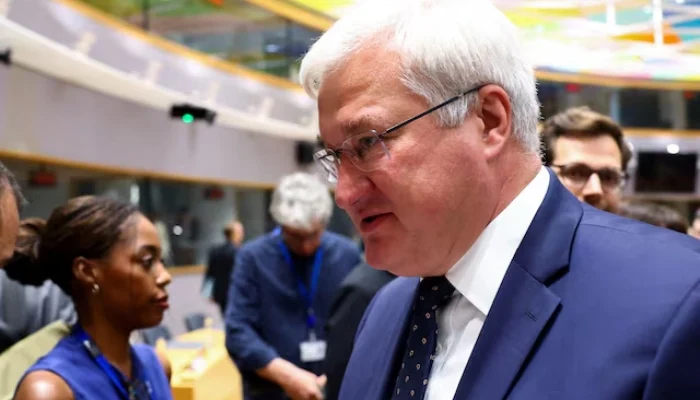
    Ukraine’s Foreign Minister Andrii Sybiha participated in a European Union Foreign Ministers’ meeting in Brussels on July 13, 2026. — Reuters

    – Araghchi states Ukraine assured that the Caspian Sea attack was unintentional.
    – He mentions Ukraine told Iran it aimed to prevent escalation.
    – Calls for compensation for damages caused by the attack.

    KYIV: Ukraine and Iran’s foreign ministers had a phone conversation on Tuesday, Kyiv reported, expressing a desire to prevent any ‘escalation’ following Ukraine’s strike on an Iranian vessel in the Caspian Sea.

    Sybiha, via his X account, shared that he had an open and honest discussion with Iranian Foreign Minister Abbas Araghchi.

    “Diplomacy involves direct dialogue, even when it’s tough. I emphasized that our primary goal is to avoid unnecessary escalation,” Sybiha stated.

    President Volodymyr Zelensky announced on Saturday that Ukraine had launched long-range strikes against vessels transporting military cargo in the Caspian Sea, involving Iran.

    Sybiha reassured Araghchi that Ukraine’s military actions are solely aimed at defending against Russian aggression and were never meant to target civilians or vessels.

    Regarding Iran’s report about the death of one of its citizens and the vessel involved, Sybiha pointed out that Russia is “the fundamental cause of all incidents,” bearing full responsibility for provocations and casualties.

    He stressed the importance of avoiding any steps that could escalate tensions and urged Iran to cease supporting Russia’s war effort in Ukraine.

    Araghchi, in his own X post, confirmed that Sybiha had assured him the attack was “unintentional” and that Ukraine seeks no escalation.

    He reiterated that “Iran does not desire escalation either but maintains that any attack on its citizens or interests is unacceptable and calls for compensation for the damages.”

    The Ukrainian Foreign Ministry’s spokesperson, Georgiy Tykhy, confirmed this was the first official communication between Sybiha, who has been serving since September 2024, and Araghchi.

    Relations between Kyiv and Tehran are tense. Iran, a key ally of Russia in the Middle East, notably supplied Shahed drone technology to Moscow at the beginning of Russia’s full-scale invasion of Ukraine in 2022.

    Kyiv, for its part, claims it has supported efforts to counter Iranian drones used during retaliatory strikes after Israel and the U.S. targeted Iran in late February.

  • Trump’s Frustration with Netanyahu Over Iran Sparks Tensions at Leaders’ Meeting

    Trump’s Frustration with Netanyahu Over Iran Sparks Tensions at Leaders’ Meeting

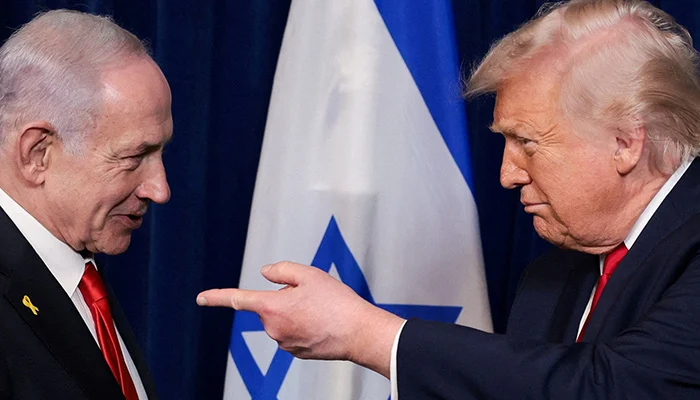
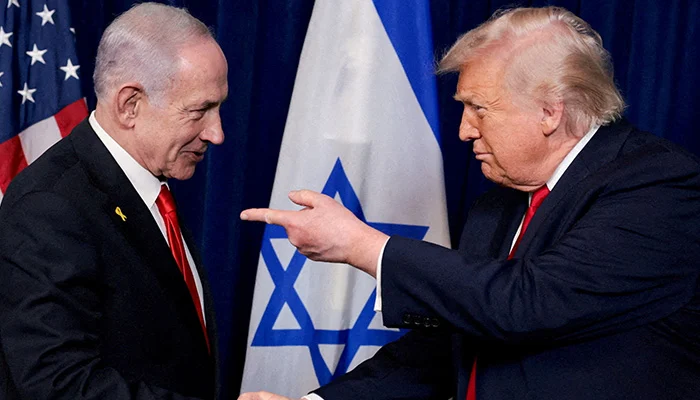
    During a press conference at Trump’s Mar-a-Lago club in Palm Beach, Florida, on December 29, 2025, US President Donald Trump pointed at Israeli Prime Minister Benjamin Netanyahu, signaling a tense moment between the two leaders.

    – Trump and Netanyahu’s meeting comes amid ongoing tensions concerning Iran’s strategies.
    – Netanyahu is actively seeking Trump’s support as Israel prepares for upcoming elections.
    – Trump is under scrutiny over calls for increased US involvement in the Iran conflict.

    Prior to their scheduled White House meeting on Tuesday, Trump expressed frustration with Netanyahu, indicating displeasure over leaked details of the Israeli leader’s talking points on Iran. When asked about reports that Netanyahu planned to discuss Iran’s underground facility near one of its nuclear sites—known as Pickaxe Mountain—Trump dismissed the importance, suggesting Netanyahu only brought it up to keep him engaged. He stated, “I don’t need Bibi to tell me that. Bibi’s telling me that because he wants me to stay involved,” and questioned why Netanyahu would publicly announce such information instead of sharing it privately during their meeting.

    The New York Post reported that Netanyahu was prepared to provide intelligence indicating Iran is expanding its nuclear infrastructure at Pickaxe Mountain while falsely claiming to pursue peace. Netanyahu’s office has yet to respond to comments about Trump’s remarks.

    Photographs shared by Netanyahu’s office showed the two leaders smiling broadly during their meet in the Oval Office, joined by Vice President JD Vance, Secretary of State Marco Rubio, and Defense Secretary Pete Hegseth. Trump had first briefed with Ukrainian President Volodymyr Zelenskyy in private before joining Netanyahu. Both meetings were described as “positive and productive,” with relations between the U.S. and Ukraine warming as Kyiv has made advances against Russian forces. Netanyahu faces increased frustration from the White House over the stalled progress in broader efforts to resolve Iran’s nuclear ambitions and is also under pressure from Trump supporters skeptical of deeper American involvement in the Middle East.

    The Israeli and Ukrainian leaders attended a memorial service in Washington honoring Senator Lindsey Graham, a staunch supporter of both Israel and Ukraine. Meanwhile, the conflicts in Ukraine and the Middle East are at pivotal stages. Trump announced a pause in US airstrikes, hoping to give diplomacy more room, while Zelenskyy emphasized the importance of advancing peace talks to end Russia’s invasion of Ukraine.

    Netanyahu’s relationship with Trump has been inconsistent, at times needing to be restrained from provocative military actions against Hezbollah in Lebanon. Netanyahu is reportedly seeking Trump’s endorsement for his reelection bid on October 27, aiming to bolster his standing at home, where polls remain unfavorable. Their upcoming discussion is expected to cover the Abraham Accords—agreements brokered during Trump’s administration to normalize relations between Israel and the UAE, Bahrain, Morocco, and Sudan. Trump has also expressed interest in including Saudi Arabia in these accords and recent efforts to negotiate a nuclear deal with Riyadh, which has so far rejected joining without a pathway to Palestinian statehood.

    Relations have improved between Trump and Zelenskyy since early tensions, especially as Kyiv has achieved some success in its fight against Russia, including targeted attacks on Moscow’s oil infrastructure. Zelenskyy post-meeting emphasized the need to intensify diplomatic efforts to end Russia’s invasion. They also discussed cooperation on missile defense and drone production, with Zelenskyy mentioning talks about licensing production of interceptors for Patriot systems and joint drone initiatives. Following their discussions, Zelenskyy was scheduled to meet with US senators at the Capitol.

  • Iran and US Pause Hostilities for Second Day Running

    Iran and US Pause Hostilities for Second Day Running

    Iran has announced it will cease its attacks as long as the United States does the same, a senior Iranian official told Reuters on Sunday. This comes amid the U.S. halting its bombing operations after President Donald Trump’s advisors informed him they were running low on targets and expressed concerns about depleting the military’s arsenal.

    Following thirteen consecutive nights of escalating U.S. airstrikes against Iran, the Pentagon suspended the campaign late Friday, with no U.S. attacks reported on Saturday or Sunday. Iran, which had responded to each night’s U.S. strikes with its own retaliations against neighboring countries hosting U.S. bases, has also paused fire for the last two days.

    The anonymous Iranian official stated to Reuters that Tehran’s stance remains “attack for attack”: if American strikes cease, Iran will also halt its operations. This message has reportedly been conveyed to U.S. authorities.

    U.S. UN ambassador Mike Waltz expressed on “Fox News Sunday” that President Trump paused the attacks to provide space for diplomacy, although he didn’t specify further details. Recently, U.S. military leaders have indicated that the strikes aimed at deterring threats to shipping in the Strait of Hormuz— a vital waterway for global oil transit— have largely exhausted their predefined target set.

    Resuming large-scale hostilities is still on the table, but Chairman of the Joint Chiefs of Staff General Dan Caine has privately advised Trump that such a move could be risky, especially considering the potential depletion of munitions, including missile interceptors used in Middle Eastern air defenses.

    Caine’s office and U.S. Central Command declined to comment, with military officials traditionally avoiding public discussion of private advice given to the president. On NBC’s “Meet the Press,” Waltz remarked that the U.S. military “has everything it needs,” but also noted that Defense Secretary Pete Hegseth inherited a depleted stockpile when taking over under the Trump administration.

    The senior Iranian source, speaking on condition of anonymity, told Reuters they are skeptical that Trump’s decision to pause the strikes signals a genuine shift in U.S. negotiation tactics. “There’s more skepticism than optimism about the halt in attacks. The general view is that the pause is tactical, not genuine. Iran has experienced enough U.S. deception to doubt that this will last,” they said.

    Over the past two weeks, the U.S. has conducted nightly strikes in retaliation for Iranian attacks on shipping in the Strait of Hormuz. Iran has responded by targeting water desalination plants in nearby Gulf Arab states. Iran insists it aims to control the strait, a crucial route through which about 20% of the world’s oil has historically flowed, prior to the current conflict.

    The renewed U.S. military strikes have significantly undermined last month’s temporary agreement aimed at ending the conflict. President Trump’s decision to pause the strikes reportedly followed a meeting where military and political advisors, including Vice President JD Vance, expressed reservations. Reports indicate Admiral Brad Cooper, the commander of U.S. forces in the Middle East, advised halting the campaign, citing limited effectiveness.

    Meanwhile, residents in Iran remain anxious. Nader, a 49-year-old business owner in Tehran, expressed doubt that the pause will last, stating, “Everyone is stuck in limbo. Trump is playing games with Iran. He’s neither ending the war nor striking decisively. It’s exhausting.”

  • Six Candidates Vie for UN Leadership in Televised Debate

    Six Candidates Vie for UN Leadership in Televised Debate

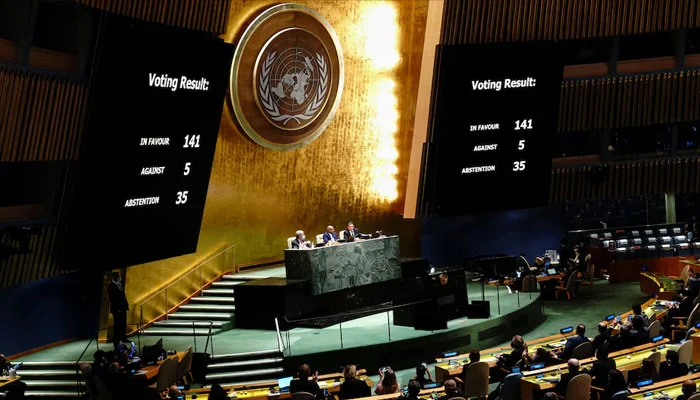
    Six contenders for United Nations secretary-general will engage in a debate Thursday within the symbolic General Assembly Hall, just a week before the official selection process kicks off—an event vital to an institution currently facing serious challenges.

    The race remains unpredictable, with no clear front-runner and minimal excitement, as candidates will undergo 90 minutes of questioning from diplomats, UN staff, and civil society representatives. The event begins at 5:00 p.m. local time and will be streamed by Bloomberg.

    Candidates include Michelle Bachelet from Chile, Maria Fernanda Espinosa of Ecuador, Rafael Grossi from Argentina, Rebeca Grynspan of Costa Rica, Carolyn Rodrigues-Birkett representing Guyana, and Macky Sall from Senegal—all vying to replace the outgoing Secretary-General Antonio Guterres.

    Annalena Baerbock, President of the General Assembly, emphasized the significance of the town hall, noting it’s a rare chance to explore candidates’ ideas, priorities, and leadership visions. She highlighted that amid a fractured world, the UN requires an exceptional leader capable of modernizing the organization and upholding the core principles of the UN Charter—its three pillars of peace and security, human rights, and development.

    The UN faces a deep-rooted financial and confidence crisis, with the Trump administration criticising it for mismanagement and inefficacy. The United States insists that the organization refocus on its primary goals of peace and security, while other nations stress the importance of its broader roles, including human rights and development.

    Compared to the more dynamic 2016 campaign, this year’s race appears subdued, with fewer candidates and less intrigue. Richard Gowan, an analyst with the International Crisis Group, told AFP that the process is notably cautious, with candidates deliberately treading carefully to avoid offending the veto powers, especially the U.S.

    Prior to the debate, each candidate has been questioned for three hours by representatives of all 193 UN member states. The candidates largely agree on the need for ongoing reforms to improve efficiency and advocate for increased engagement by the Secretary-General in global peace efforts.

    On July 30, the Security Council’s 15 members will conduct their first private, anonymous vote to indicate preferences. This initial “straw poll” will be followed by additional votes until one candidate secures at least nine votes without a veto from any of the five permanent members. The chosen candidate’s name will then be forwarded to the General Assembly for formal appointment, with the new Secretary-General scheduled to assume office on January 1, 2027.

    Diplomats remain cautious about predicting the outcome, noting several capitals have yet to make their choices. While Rafael Grossi is often seen as a leading contender, others such as Grynspan and Rodrigues-Birkett also have significant support. A surprise candidate could still emerge, as many names circulate within UN corridors and media outlets. Notably, rumors suggest FIFA President Gianni Infantino might be a candidate, especially considering Trump’s reportedly expressed interest in him leading the UN, according to the New York Post.

    Traditionally, the UN seeks a Secretary-General from a specific geographic region on a rotational basis; currently, Latin America claims this opportunity. Additionally, there is a growing call among member states for the organization to elect a woman to the top position for the first time.

  • Yemen’s Houthis impose naval blockade on Saudi, threatening global oil supply

    Yemen’s Houthis impose naval blockade on Saudi, threatening global oil supply

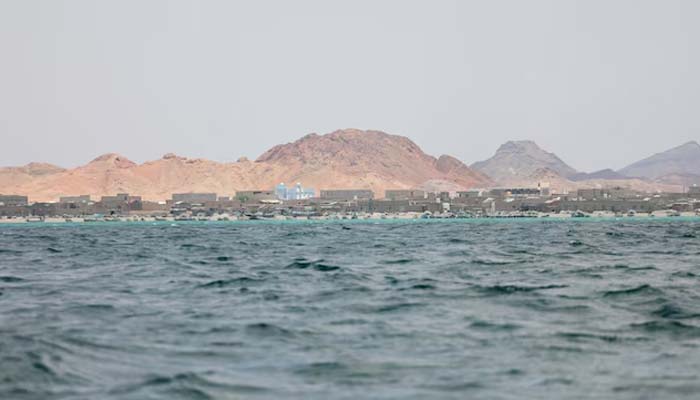
    A picture shows a small village along the coast at Bab el-Mandeb, Yemen, taken on April 2, 2026. — Reuters

    – Yemen’s Houthis announce a “maritime embargo” on Saudi Arabia.
    – This action broadens the threat to global energy sources beyond the Gulf region.
    – Diplomatic efforts to ease tensions have recently shown signs of progress.

    Yemen’s Iran-aligned Houthis declared on Monday that they are establishing a naval blockade against Saudi Arabia, marking a new phase in the ongoing struggle that adds a new front to the U.S. confrontation with Iran and endangers worldwide energy trade and supply beyond the Gulf.

    Iran had encouraged the Houthis to block the Bab el-Mandeb Strait linking to the Red Sea if U.S. attempts to target Iranian military infrastructure persisted.

    The Saudi government has yet to respond publicly.

    If the Bab el-Mandeb Strait were fully closed, global oil supply could decrease by about 7%, since most of Saudi Arabia’s oil exports would be unable to leave through that route. This potential disruption would compound the large cutbacks already happening in global oil shipments, which have fallen by approximately 10% due to ongoing conflicts in the region.

    Diplomatic efforts are underway to restore a ceasefire. The Houthis’ announcement follows recent indications from Iran and the U.S. that talks are resuming to de-escalate the cycle of attacks that has nearly shattered a fragile interim agreement inked last month.

    A senior Iranian official told Reuters on Monday that Tehran has received a proposal for a 10-day ceasefire from mediators, aiming to preserve the interim deal and eventually reach a comprehensive peace to the conflict that began on February 28 with U.S.-Israeli strikes targeting Iran.

    Oil prices temporarily surged above $90 per barrel earlier Monday due to renewed shipping disruptions through the Strait of Hormuz. However, prices later retreated after Iran’s Foreign Ministry stated that mediators recently presented proposals to Tehran, indicating diplomatic channels remain active.

    Neither the Foreign Ministry nor the official provided further details on the potential ceasefire talks.

    Meanwhile, two Pakistani government sources said Iran’s Interior Minister Eskandar Momeni, making his second visit to Islamabad in less than a week, urged Pakistan to resume its diplomatic mediation role between Iran and the U.S.

    This diplomatic activity follows Iran’s Revolutionary Guards claiming responsibility for strikes on U.S. military assets across the region after another night of U.S. airstrikes on Iranian targets.

  • Iran vows to honor ceasefire amid Trump’s truce end

    Iran vows to honor ceasefire amid Trump’s truce end

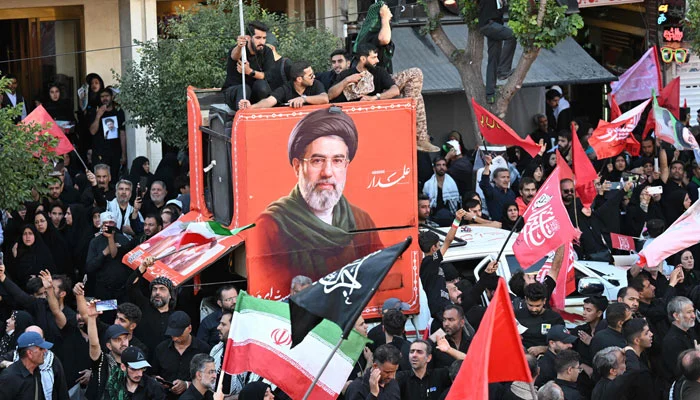
    Crowds gather along a street around a portrait of Iran’s Supreme Leader Mojtaba Khamenei at the Shrine of Imam Reza, Iran’s most sacred site, in Mashhad on July 9, 2026. — AFP

    – Iran maintains it must control the Strait of Hormuz.
    – Araghchi will travel to Oman for talks, according to state media.
    – Prime Minister Shehbaz Sharik urges Iran to protect the fragile peace they’ve fought to establish.

    Iran asserts it has fulfilled its promise regarding a ceasefire with the United States, despite President Donald Trump claiming the truce has ended, though he also indicated he’s open to further negotiations with Iran. These statements mark a significant decline in relations amidst recent skirmishes that threaten the fragile agreement aimed at solidifying the months-long ceasefire into lasting peace, avoiding a return to full-scale regional conflict.

    On Saturday, Trump intensified the rhetoric, posting on Truth Social that if Iran attempts or manages to assassinate him, he would “completely decimate” Iran. This followed his earlier indication that he was open to further talks, even as he declared the ceasefire was over, just weeks after Washington and Tehran signed an agreement promoting peace.

    While direct negotiations between Iran and the U.S. have not resumed since last month, reports indicate a mediator from Qatar was in Tehran following exchanges of missile fire. Trump tweeted, “The Islamic Republic of Iran has asked us to continue ‘talks’. We’ve agreed, but the U.S. has made it clear that the ceasefire is over.” Earlier at a NATO summit, Trump also declared the ceasefire’s end, dismissing Tehran’s diplomacy as “a waste of time.”

    Iran’s Foreign Minister Abbas Araghchi responded Saturday, asserting that Iran has “kept its word so far,” accusing the U.S. Treasury Secretary of violating the memorandum of understanding. This agreement stipulated Iran would maintain its current nuclear program status, and the U.S. would refrain from imposing new sanctions or deploying additional forces, pending a final deal. Araghchi emphasized that “mutual compliance” is essential, pointing out violations by the U.S.

    Although both nations held one direct round of talks in Switzerland and engaged in indirect negotiations in Qatar, no diplomatic progress has been evident recently.

    The tense rhetoric coincides with reports that Washington has given Iran an ultimatum: cease attacks on commercial ships in the Strait of Hormuz and recognize the waterway’s open status by Saturday. The Strait, a vital shipping corridor for global oil supplies, remains a flashpoint with Iran, which effectively closed it in response to U.S.-Israeli strikes earlier this year. Iran insists it must control Hormuz—covering Iranian and Omani waters—and has proposed charging fees for ships passing through.

    Recent U.S. strikes in the region followed attacks on ships and prompted Iranian reprisals against American bases in the Gulf. Additionally, the U.S. Treasury revoked a temporary waiver allowing Iran to produce and sell crude oil, canceling a license effective through August 21.

    Iranian officials, including Araghchi, are headed to Oman for discussions on the Strait. Qatar continues to advocate diplomacy, with reports noting a Qatari delegation in Tehran trying to reinforce Qatar’s role as a mediator after condemning Iran’s recent attacks on a Qatari LNG tanker. Iran denies involvement.

    Prime Minister Shehbaz Sharif, involved in mediating the crisis, spoke with Qatar’s emir and Iran’s President Pezeshkian to urge protecting the peace. Meanwhile, Iran’s chief negotiator, Mohammad Bagher Ghalibaf, issued a defiant statement, emphasizing that Iran will never surrender in this confrontation and affirming the country’s readiness to defend itself.

  • India Secures Agreement for Peaceful Australian Uranium Supply

    India Secures Agreement for Peaceful Australian Uranium Supply

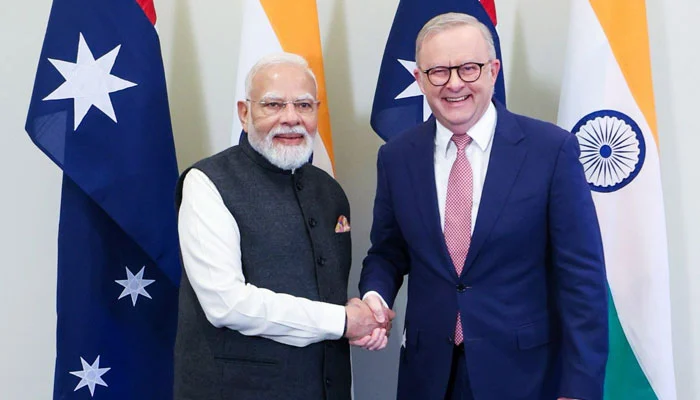
    Indian Prime Minister Narendra Modi met with Australian Prime Minister Anthony Albanese in Melbourne on July 9, 2026. — X/ @narendramodi

    – Exports will be regulated under safeguards set by the IAEA.
    – Both countries will collaborate to establish a temporary space tracking station.
    – Albanese commended Modi’s leadership for strengthening international relations.

    Modi announced during his visit to Australia that he secured a uranium supply deal, which is vital for advancing India’s nuclear energy goals. With an ever-growing demand for electricity, Modi plans to significantly expand nuclear power in the near future.

    Although Australia holds approximately 28% of the world’s uranium reserves, regulatory and political challenges have previously limited exports to India. “Today, we finalized an important nuclear agreement,” Modi stated after discussions with Albanese. “This paves the way for Australian uranium to support India and boosts our clean energy initiatives.”

    According to a joint statement, this agreement allows for long-term uranium exports strictly for peaceful purposes, with adherence to IAEA safeguards. Albanese emphasized, “This arrangement helps Australia increase its non-fossil fuel energy capacity.”

    A nuclear cooperation treaty signed in 2015 laid the groundwork for uranium exports between the two nations. Recently, their relationship has grown closer, partly driven by a shared interest in countering China’s military ambitions and expanding trade outside of China.

    The leaders also agreed to enhance defense cooperation and strengthen supply chains for critical minerals. Additionally, they plan to build a temporary space tracking facility on Australia’s Cocos Keeling Islands, which will support Indian space launches, according to the joint statement.

    Prime Minister Albanese appeared cheerful during a selfie moment with Modi earlier in the day. He has jokingly called Modi “The Boss,” suggesting he can draw larger crowds than U.S. rock star Bruce Springsteen.

    Albanese praised Modi’s role in boosting the partnership between the two countries, saying, “Your leadership and personal involvement have been central to these developments.”

    India’s diaspora in Australia has surged sharply, making it the largest overseas community in the country. Last year’s statistics confirmed that Indian-born residents now outnumber those from Britain—a significant demographic shift.

    Modi is expected to receive a warm welcome at an upcoming community rally in Melbourne, with organizers anticipating over 20,000 attendees. However, his visit is also likely to provoke opposition protests, including concerns over perceived radical Hindu nationalism at home. Australia’s Alliance Against Islamophobia plans to protest outside the rally, highlighting issues faced by minority groups in India.

    Anti-immigration demonstrators have also assembled beforehand, carrying signs like “Put Australians First.” After Australia, Modi is scheduled to travel to New Zealand.

  • Trump on Meloni: ” She’s genuinely a kind person”

    Trump on Meloni: ” She’s genuinely a kind person”

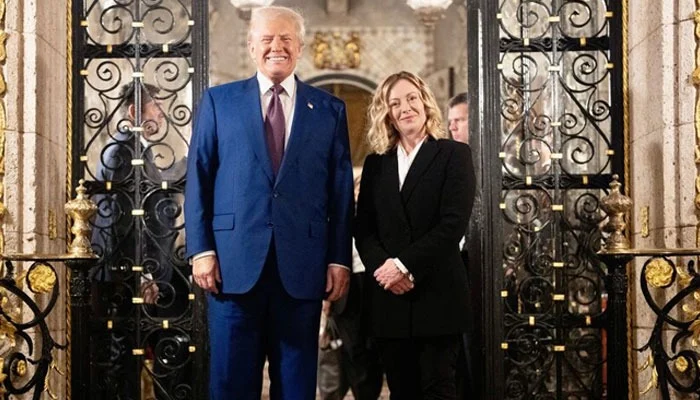
    US President-elect Donald Trump met with Italian Prime Minister Giorgia Meloni at Mar-a-Lago in Palm Beach, Florida, on January 4, 2025. — Reuters

    ANKARA: Donald Trump appeared to put an end to the diplomatic spat with Italy’s Prime Minister Giorgia Meloni as he arrived in Ankara for an important NATO summit.

    The disagreement started late last month after Trump claimed in an interview with an Italian TV channel that Meloni had “begged” him for a photo together at the G7 summit, and he only agreed because he “felt sorry for her.” Meloni swiftly denied the allegation, calling it “fabricated,” which led Trump to double down, sparking a personal feud with one of Europe’s leading right-wing leaders.

    This conflict escalated into an unprofessional back-and-forth that continued until Sunday, when Trump posted an altered image on his Truth Social platform. The picture showed Meloni looking at him with admiration, accompanied by the caption, “Restraining Order Needed.”

    By Tuesday, Trump seemed to adopt a more friendly approach. “I think she’s a nice person, actually,” he stated during a joint press conference with Turkish President Recep Tayyip Erdoğan.

    “Our relationship was strained, folks. It got a little worse because she refused to help us… She declined to get involved with the Strait of Hormuz,” he said, expressing disappointment over Europe’s hesitation to support US and Israeli efforts in the Iran conflict.

    “I like her. I think she’s a good person, but she made a mistake… she just wasn’t there for us, and I wasn’t happy about that,” Trump added.

    Leading up to the Ankara meeting, Trump has heavily criticized European NATO members, with allies trying to highlight increased defense spending to win his favor.

  • Netanyahu urges US to halt F-35 sale to Turkey

    Netanyahu urges US to halt F-35 sale to Turkey

    Israeli Prime Minister Benjamin Netanyahu on Monday urged the U.S. to refrain from selling its F-35 fighter jets or their components to Turkey, warning it could disrupt regional power dynamics.

    Later in the day, President Donald Trump was scheduled to visit Ankara for a NATO summit. Turkey might see this visit as an opportunity to push for the acquisition of dozens of jet engines and possibly re-enter the F-35 program.

    However, Netanyahu warned that providing Turkey with advanced military technology like the F-35s would be a mistake, especially considering Turkish President Recep Tayyip Erdogan’s openly hostile stance, which Netanyahu claims includes calls for Israel’s destruction.

    “I don’t think they should be given F-35s or the engines for their fighter jets because that would upset the balance of power in the Middle East,” Netanyahu told Fox News on “Fox & Friends.”

    Last month, Trump assured Erdogan that he would do everything possible to make Turkey “very happy” regarding their interest in obtaining F110 jet engines and rejoining the F-35 program.

    Experts believe Turkey aims to develop its own fifth-generation fighter, the KAAN, utilizing these engines, seeking to join a small group of nations—like the U.S., China, and Russia—that produce advanced combat aircraft.

    Turkey’s purchase of a Russian S-400 missile system in 2017 led to strong displeasure from Washington, which expelled Turkey from the F-35 program in 2019.

    Despite recent tensions, Netanyahu affirmed that his relationship with Trump remains strong. “We are the best of allies,” he said. “My relationship with the president is fine.”

  • Vance: U.S. Won’t Seek War with Iran Unless Necessary

    Vance: U.S. Won’t Seek War with Iran Unless Necessary

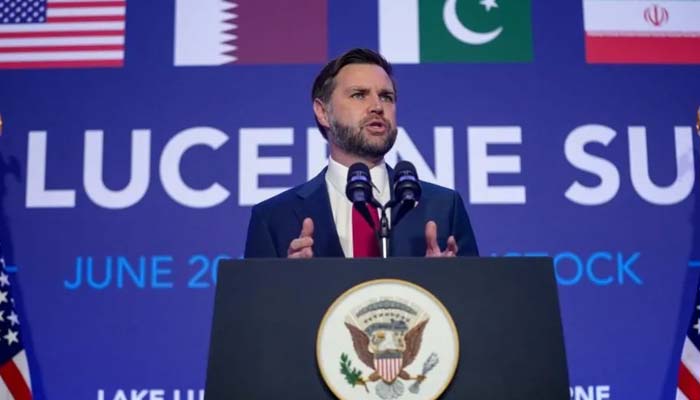
    US Vice President JD Vance delivered opening remarks at the Lake Lucerne Summit on June 21, 2026 — Reuters

    – Delegates’ visits have laid the groundwork for upcoming negotiations, according to sources.
    – Diplomatic efforts regarding Lebanon are ongoing and increasingly intensive.
    – Iran is also focusing on the release of its frozen assets as a priority.

    JD Vance, the Vice President of the United States, expressed optimism about the progress of indirect talks with Iran taking place in Qatar concerning the Strait of Hormuz. He emphasized that Washington does not plan to escalate military involvement unless absolutely necessary. The discussions are centered around a 14-point interim agreement signed last month, aimed at suspending the conflict triggered by US-Israeli strikes on Iran earlier this year and reopening the strait. The agreement also establishes a 60-day window to negotiate a permanent peace settlement.

    Despite these diplomatic efforts, both the US and Iran have publicly disagreed on the interpretation of the interim deal, resulting in reciprocal military strikes and a lack of clear progress on complex issues such as Iran’s nuclear program. Vance indicated that while he cannot promise that the US won’t resort to full military action before the upcoming deadline, President Donald Trump has instructed officials to pursue a diplomatic deal.

    “When it comes to military action, I can’t guarantee anything because it ultimately depends on Iran’s actions,” Vance explained during a visit to Virginia Beach. “The President won’t send our troops back into combat unless there’s a clear and justified reason.”

    In Qatar, technical discussions are primarily focused on commercial shipping through the strait, with future talks expected to address Iran’s nuclear capabilities. Vance noted, “It’s still early, but the talks are progressing well.”

    Iran aims to achieve international recognition of its control over the strategic waterway and the authority to impose fees on ships passing through the Gulf—possibly through force if necessary, according to two senior Iranian officials. Traffic has partially resumed in the strait, which previously handled about 20% of global oil and liquefied natural gas shipments before the conflict erupted.

    Former President Trump, who prioritizes halting Iran’s nuclear development, stated on Wednesday that “Iran’s denuclearization is progressing smoothly,” though he offered few specifics. When asked if the US might re-engage in full-scale war with Iran, Trump responded, “They’ve come a long way. We hit them hard last week, and I believe they’re doing fine now.”

    The indirect negotiations, mediated by Qatar and Pakistan, started on Tuesday night and continued into Wednesday, according to an Iranian official. The sessions involve top negotiators and technical experts, with meetings also occurring between US officials—including Jared Kushner, Trump’s son-in-law, and envoy Steve Witkoff—and Qatar’s leadership. Kushner and Witkoff discussed US-Iran negotiations and developments in Lebanon, where fighting has recently intensified between Israel and Iran-backed Hezbollah.

    Iran’s deputy foreign minister, Kazem Gharibabadi, led a delegation that included representatives from Iran’s foreign ministry, central bank, and agriculture ministry, engaging with Qatar’s Prime Minister. The main issues on the table are Iran’s control over the Strait of Hormuz and the release of approximately $6 billion in frozen Iranian assets.

    The US is primarily focused on ensuring unimpeded shipping through the strait, with one Iranian vessel reportedly running aground in the shallow waters outside Iranian-controlled routes. Oil market analysts describe Hormuz’s reopening as inconsistent and unpredictable.

    The conflict has prompted Iranian attacks on Gulf states hosting US military bases, resulting in thousands of casualties, mainly in Iran and Lebanon, and driving up energy prices. Trump faces domestic pressure to mitigate economic damage from the war ahead of the November midterm elections, amid criticism that the interim deal fails to meet US strategic goals.

    Oil prices declined further on Wednesday, with US West Texas Intermediate crude oil dropping below $69 per barrel, reaching its lowest point since February 27—the day before the conflict started.

    The US-Iran interim agreement also calls for an end to hostilities in Lebanon. The US supports separate negotiations between Israel and Lebanon, which have yielded a framework security agreement rejected by Hezbollah that some analysts believe could entrench Israel’s military presence in southern Lebanon.

  • Iran refuses US envoy talks, lowering peace hopes

    Iran refuses US envoy talks, lowering peace hopes

    Iran announced on Tuesday that it will not meet with top U.S. officials who traveled to the region amid escalating hostilities, casting doubt on the likelihood of a sustained peace process between the two nations. Iranian representatives also emphasized that both sides need to resolve the terms of the ceasefire signed two weeks earlier before addressing more complex issues, such as potential restrictions on Iran’s nuclear activities.

    These updates suggest substantial gaps remain between Iran and the U.S. on key elements of their initial agreement, which aimed for Iran to ease its control over the Strait of Hormuz in exchange for financial incentives. This framework also set a 60-day window for negotiations to establish a permanent peace accord.

    U.S. President Donald Trump’s son-in-law, Jared Kushner, along with special envoy Steve Witkoff, arrived in Doha for what the White House described as high-level talks. However, both Iran and Qatar clarified that they would be mediating meetings rather than engaging directly with the Americans. Qatar’s Foreign Minister Sheikh Mohammed bin Abdulrahman al-Thani was among those who met with Kushner and Witkoff.

    Iranian Foreign Ministry spokesperson Esmaeil Baghaei stated, “No meetings at any level with the American side are scheduled for the upcoming days.” Meanwhile, Qatar’s foreign ministry indicated that lower-level technical discussions between the countries were set to begin.

    In the meantime, U.S. officials are reportedly considering military options to break the deadlock. The Wall Street Journal cited sources familiar with discussions indicating that President Trump has weighed the possibility of resuming full-scale strikes, though he has currently opted to extend diplomatic efforts. Trump has publicly warned Iran of impending attacks but is currently allowing more time for negotiations.

    Shipping traffic through the Strait of Hormuz has partially resumed, transporting about 20% of the world’s oil and natural gas before the conflict erupted in late February. Iran claims sovereignty over the strait and plans to manage traffic with Oman, a U.S. ally on the opposite side of the waterway, and intends to impose tolls starting in mid-August when the current 60-day period expires. Iran’s top negotiator, Mohammed Baqer Qalibaf, asserted on state TV, “The sovereignty of the Strait of Hormuz belongs to Iran and Oman, and traffic is subject to arrangements determined by Iran.”

    U.S. Vice President JD Vance responded, stating that Iran would not be allowed to collect tolls from ships passing through the strait, emphasizing that “this is not going to end with Iran collecting tolls.” Vance added that oil flows through the strait have returned to pre-war levels, and in some days, even exceeded them, although he did not provide specific figures.

    Despite market relief, with oil prices declining since the weekend when the U.S. launched strikes against Iranian military facilities and Iran responded with attacks on U.S. military sites in Kuwait and Bahrain, economic vulnerabilities remain. The UN trade and development agency warned that food and fuel prices may stay elevated, threatening fragile economies. The ongoing conflict has driven up global inflation and created political pressure on Trump ahead of the midterm elections in November, which will determine control of Congress. Trump and Treasury Secretary Scott Bessent have urged gas retailers to lower prices.

    An interim agreement between the U.S. and Iran also includes provisions to end hostilities between Israel and Hezbollah, a militant group backed by Iran in Lebanon. However, Lebanon’s influential parliament speaker Nabih Berri, an ally of Hezbollah, expressed skepticism about a separate U.S.-brokered deal between Lebanon and Israel to cease military hostilities. Experts warn that such arrangements risk entrenching a stalemate, especially if Israel’s withdrawal from southern Lebanon remains linked to Hezbollah’s disarmament.

  • Iran and US Reach Deal to Pause Attacks and Resume Negotiations

    Iran and US Reach Deal to Pause Attacks and Resume Negotiations

    Iran and the U.S. have agreed to cease hostilities in the Persian Gulf and restart discussions concerning their conflict over the Strait of Hormuz, according to a U.S. official on Sunday. This development offers hope of preserving a temporary peace agreement amid recent exchanges of strikes that have heightened tensions.

    “Technical negotiations are expected to continue on all aspects of the Memorandum of Understanding (MOU). Both parties will temporarily stand down, allowing vessels to move freely,” the official stated. The MOU, signed on June 17, outlines the reopening of the Strait of Hormuz for maritime traffic.

    Axios, reporting first on the ceasefire, cited a senior U.S. official indicating that discussions will reconvene Tuesday in Qatar. This diplomatic effort follows days of tit-for-tat military actions triggered after Iran attacked a cargo vessel in the Strait of Hormuz last week, with both nations accusing each other of violating the ceasefire agreement brokered in June.

    Earlier on Sunday, Iran launched missile and drone strikes against U.S. military targets in Kuwait and Bahrain, shortly after President Donald Trump warned that Iran risks its existence if it refuses to honor commitments to cease hostilities.

    Concurrently, Israel reported striking Iranian-backed Hezbollah positions in southern Lebanon again, destroying underground facilities used by the group. This strike followed a recent ceasefire agreement with Lebanon. Iran has emphasized that the conflict in Lebanon must end if the broader peace efforts are to succeed.

    The U.S. military also conducted strikes on Iran following an attack on a commercial tanker in the Strait, a critical global energy shipping route that Iran has largely hindered during the ongoing conflict.

    Trump, expressing increasing frustration, warned on social media that if Iran refuses to abide by the peace process, the U.S. might be compelled to “militarily complete the job” they initially began, declaring, “The Islamic Republic of Iran will no longer exist!”

    The initial 14-point peace plan was designed to stop the violence instigated by the U.S. and Israel, which started on February 28, involve reopening the Strait of Hormuz, and facilitate negotiations on Iran’s nuclear program.

    Despite a recent round of mediated talks led by U.S. Vice President JD Vance and Iranian parliamentary speaker Mohammad Baqer Qalibaf in Switzerland, fighting has continued and even intensified after the U.S. waived some sanctions on Iran.

    Shortly after Trump’s warning, Kuwait reported its air defenses intercepting missile and drone attacks, and Bahrain issued alerts of siren sounds in response to what was described as an Iranian attack, damaging a residential building with no reported casualties. Bahrain has urged the UN Security Council to hold an urgent session to address Iran’s actions.

    Kuwait also intercepted two ballistic missiles, with no casualties or damage reported. Meanwhile, Qatar announced that one of its citizens died from shrapnel injuries resulting from a vessel incident linked to military operations, with another person injured during the same event, details of which remain unclear.

  • US Seeks Iran Deal, But Not at Any Cost

    US Seeks Iran Deal, But Not at Any Cost

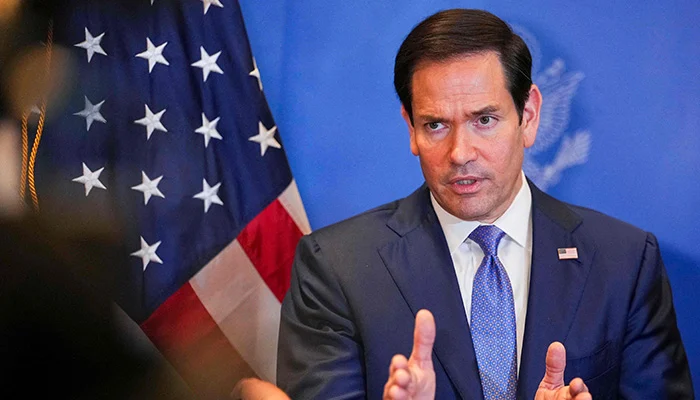
    U.S. Secretary of State Marco Rubio spoke with reporters before leaving Bahrain International Airport after visiting the Middle East to discuss the interim deal between the U.S. and Iran with Arab Gulf allies in Manama on June 25, 2026. — AFP

    – The United States opposes any future fees on the Strait of Hormuz.
    – Washington aims for an agreement that does not jeopardize regional stability.
    – Technical discussions between Iran and the U.S. are set to resume in the coming days.

    Top U.S. diplomat Marco Rubio emphasized Thursday that any deal with Iran wouldn’t come at any cost and reassured Gulf allies that their security wouldn’t be compromised. Rubio visited Bahrain as part of a regional tour, speaking to Gulf partners severely impacted by Iran during ongoing Middle East conflict—a campaign launched on February 28 involving significant U.S.-Israeli strikes against Iran.

    The U.S. and Iran have preliminarily agreed to begin negotiations addressing complex issues such as Iran’s nuclear program, sanctions relief, and energy transport through the Strait of Hormuz. Rubio stated at a Gulf Cooperation Council meeting in Bahrain, “While we want a deal, we don’t want a deal at any price. We need to ensure that no part of this agreement threatens the security, stability, or prosperity of our Gulf partners.”

    Rubio also reassured the Gulf nations that the Strait of Hormuz, vital for their oil and natural gas exports for decades, will remain free of tolls. Iran previously blockaded Hormuz as retaliation during the war, which caused a global economic shock. Iran has indicated plans to introduce maritime service fees and warned that unauthorized crossings will be dealt with harshly. The U.S. and allies have rejected such tolls outright, with Rubio reaffirming that Hormuz must be recognized as an international waterway, a principle essential to global order.

    Oman’s top diplomat, Badr Albusaidi, confirmed that plans for Hormuz do not include transit fees, despite Iran and Oman mentioning discussions of possible charges for services in the strait. Oman recently released a map of a temporary shipping route that runs close to its coast, coordinated with the International Maritime Organization. Iran, through its Revolutionary Guards, later criticized the new route without specifically mentioning Oman.

    An agreement signed last week by Iran and the U.S. allows commercial ships to transit the strait free of charge for 60 days, but future arrangements remain unclear.

    Iran, feeling emboldened since the conflict intensified, refuses to relinquish control over Hormuz and has called its initial deal with Washington a “declaration of America’s defeat.” President Donald Trump met with NATO Secretary General Mark Rutte at the White House on Wednesday, touting the negotiations as successful. Meanwhile, Trump requested nearly $88 billion in emergency funding to cover war expenses, just after Congress urged him to end the conflict unless explicitly authorized for further military action.

    Iran criticized NATO’s support for the U.S., with Foreign Minister spokesperson Esmaeil Baqaei accusing the transatlantic alliance of participating in an “illegal war.” Technical talks between the U.S. and Iran are expected to resume soon after a first round held in Switzerland. Additionally, separate reconciliation discussions between Gulf countries and Iran are anticipated to be held in Saudi Arabia, though no specific date has been provided.