Category: News

All latest happning

  • Iran Calls for Control over Hormuz Inbound and Outbound Traffic

    Iran Calls for Control over Hormuz Inbound and Outbound Traffic

    People gather on a beach as a vessel navigates through the Strait of Hormuz, near Bandar Abbas, Iran, on May 31, 2026. — Reuters

    – Tehran is unlikely to shift its stance on the Hormuz dispute, according to a source.
    – Iranian President emphasizes that Tehran does not aim for a broader conflict.
    – The Strait of Hormuz remains a primary point of contention between the U.S. and Iran.

    Iran is seeking to oversee inbound maritime traffic through the Strait of Hormuz and monitor outbound shipments, with plans to intervene if necessary. These discussions involve Oman, aiming to reopen the strategic waterway. A senior Iranian official told Reuters that the current proposal involves Iran managing inbound ships, while outbound vessels would travel through a route between Iran and Oman, with exit clearances granted by Oman after notifying Iran.

    Tehran appears steadfast in its position, the source added. In late July, Iranian Deputy Foreign Minister Kazem Gharibabadi rejected Omani suggestions for an equal division of transit rights, asserting that such proposals fail to address Iran’s security concerns until regional stability is achieved.

    Control over the Strait of Hormuz, a narrow waterway bridging the Gulf and the Indian Ocean, is crucial since it handles about a fifth of global oil shipments and other vital goods. The dispute over maritime jurisdiction has been a significant obstacle in resolving the ongoing US-Israel efforts to pressure Iran, with the strait largely blockade since the conflict intensified in late February.

    The status of negotiations between the U.S. and Iran remains uncertain. An attack on a vessel near the Strait of Hormuz and rising oil prices have cast doubt on prospects for a quick resolution. Oil prices climbed nearly 3% after a significant decline the previous day, as market participants reassessed diplomatic hopes. A cargo ship was struck by an unknown projectile near Oman’s coast, reported the UK Maritime Trade Organization.

    While President Donald Trump claimed that talks with Tehran were ongoing and described it as Iran’s “last chance” to reach an agreement, Iranian officials denied any negotiations were happening. Trump’s recent decision to cancel planned military strikes on Iran, which he suggested were ‘massive attacks,’ reflects a pattern of threatening military action and then stepping back to pursue diplomatic efforts.

    Iranian President Masoud Pezeshkian stated that Iran has no desire to escalate the conflict, emphasizing, “We defend our borders, but we are not seeking to expand the war.” Meanwhile, Iran has suspended most traffic through Hormuz, while the U.S. maintains sanctions and a maritime blockade.

    Sources indicated that the vessel hit near Hormuz was a dry bulk cargo ship. Its crew abandoned the vessel, and one crew member remains missing.

    Since the launch of “Operation Epic Fury” over five months ago, the U.S. has repeatedly threatened military action, only to later cite negotiations as the reason to scale back. Iran, on the other hand, has refused to engage in negotiations following the breakdown of a proposed agreement in early July, which was initially signed to de-escalate tensions.

    The core dispute over the Strait of Hormuz persists. While Washington insists the June memorandum mandated Iran reopen the waterway, Tehran maintains that the agreement explicitly preserves its authority over shipping traffic in the region.

  • Webb Telescope Unveils Evidence of Ancient Catastrophe on Neptune’s Moons

    Webb Telescope Unveils Evidence of Ancient Catastrophe on Neptune’s Moons

    Recent observations of Neptune’s moons and rings are revealing evidence of a past catastrophe billions of years ago, involving a Pluto-sized object that caused a cosmic chaos. NASA’s James Webb Space Telescope analyzed three of Neptune’s small inner moons—Proteus, Larissa, and Galatea—and its dusty inner rings, discovering clay minerals typically found deep inside distant solar system objects. These magnesium-rich minerals are also present on the dwarf planet Ceres, orbiting the asteroid belt between Mars and Jupiter, and have been identified in some meteorites.

    “These minerals form only after long-term contact between liquid water and rock,” explained Ryleigh Davis, a planetary scientist and lead author of the study published in Science Advances. Since Neptune’s small moons are too cold and tiny to have created such minerals in place, they must have originated elsewhere—probably from the interior of a much larger, ancient planet. The presence of this material suggests a catastrophic event that destroyed early worlds, exposing their core material, which later coalesced into the current moons and rings.

    The study points to Triton, Neptune’s biggest moon, as the likely culprit. Once residing farther out in the Kuiper Belt, Triton was captured by Neptune’s gravity within the first billion years after the solar system formed, around 4.5 billion years ago. During this chaotic period, Neptune’s gravitational influence stirred up its original moons, leading to collisions that resulted in debris, which eventually reformed into Neptune’s current inner moons and rings.

    Unlike the regular, circularly orbiting large moons of Jupiter, Saturn, and Uranus—formed in a more orderly fashion—Neptune’s satellite system is dominated by a captured object, Triton, which accounts for over 99% of the system’s mass. Triton orbits Neptune in the opposite direction of the planet’s spin, a trait characteristic of captured objects rather than moons formed alongside their planets.

    Neptune has 16 known moons, including Nereid, which has one of the most elliptical orbits in the solar system. Nereid is believed to be the only survivor among Neptune’s original moons, having somehow escaped Triton’s destructive influence. Triton itself resembles Pluto in composition, with surfaces covered in nitrogen, methane, and carbon dioxide ices, and possessing a thin nitrogen atmosphere.

    The findings also consider an alternative theory—that another large Kuiper Belt object may have drifted too close to Neptune and was torn apart by its gravity—but the evidence strongly favors Triton’s capture as the primary event. This saga reminds us of the violent past of our solar system, illustrating how a single cosmic incident can radically alter the architecture of a planetary system.

  • Bangladesh seeks India’s position on Hasina’s upcoming New Delhi speech

    Bangladesh seeks India’s position on Hasina’s upcoming New Delhi speech

    Bangladesh has requested India clarify its position on former Prime Minister Sheikh Hasina’s upcoming virtual speech from New Delhi. Dhaka warns that permitting a fugitive’s political activities on Indian soil could complicate efforts to enhance bilateral relations.

    This marks Bangladesh’s first official reaction to Hasina’s announced appearance at an August 5 event organized by the Foreign Correspondents’ Club of South Asia in New Delhi, commemorating the second anniversary of a student-led uprising that ousted her government.

    The situation arises as Dhaka continues to push for Hasina’s extradition, given that she has been residing in India since fleeing Bangladesh in August 2024. Despite facing several legal cases, Hasina told Reuters she intends to return to Bangladesh in December.

    “India needs to be clear about its stance,” said Shama Obaid Islam, Bangladesh’s State Minister for Foreign Affairs. “We are engaging with India with a positive outlook and hope that this progress remains unaffected.”

    The Foreign Correspondents’ Club of South Asia confirmed that Hasina, 78, will deliver her address via video link, alongside her son, Sajeeb Wazed Joy, and other speakers. The club has yet to comment on Bangladesh’s concerns.

    Islam emphasized that Bangladesh has repeatedly expressed its concerns to India regarding the political statements made by Hasina and other Awami League leaders from Indian territory.

    “We do not want India-Bangladesh relations to be jeopardized by statements from individuals accused of fleeing justice,” she said, noting that India has previously indicated it does not expect fugitives to partake in political activities from within its borders.

    Although she clarified that the event was not organized by the Indian government, Islam said Dhaka would use diplomatic channels if necessary to address the issue.

    No immediate response has been received from India’s foreign ministry.

    Relations between the two countries have been tense since Hasina was removed from office. However, recent signals show both sides are interested in rebuilding ties through increased engagement and cooperation, especially since Tarique Rahman’s government took power following elections in February.

    Hasina has been in India since her government’s overthrow amidst weeks of violent protests. Bangladesh has since sought her extradition, and in 2025 she was sentenced to death for crimes against humanity related to the deadly crackdown in 2024, which the UN estimates resulted in up to 1,400 deaths. Hasina has dismissed the ruling as legally invalid.

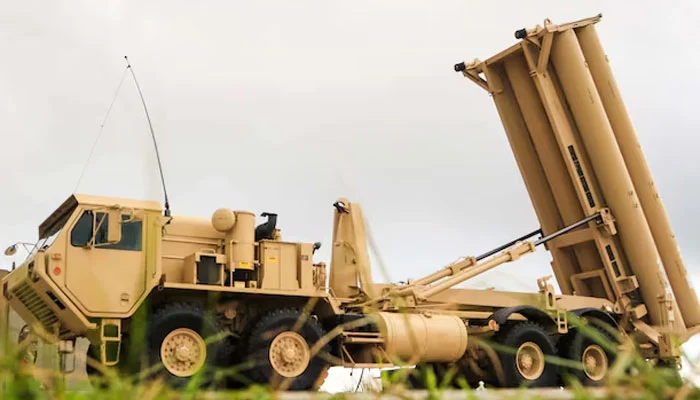
  • US Agrees Deal to Expand Patriot and THAAD Missile Parts Manufacturing

    US Agrees Deal to Expand Patriot and THAAD Missile Parts Manufacturing

    The United States has entered into a deal exceeding $3 billion with Lockheed Martin and Northrop Grumman to increase the manufacturing of Patriot and THAAD missile interceptors, due to strained stockpiles from conflicts in Iran and Ukraine. This announcement, made by the Pentagon and Northrop on Monday, follows a recent contract signed with Lockheed valued at up to $58.6 billion to produce Patriot interceptor missiles.

    The U.S. has been providing extensive arms supplies to allies while also deploying munitions in Iran, raising concerns about the sufficiency of air defense systems and precision-guided weapons inventories. According to the Pentagon, this framework agreement aims to triple Patriot missile production and quadruple THAAD system outputs.

    A recent estimate by the Center for Strategic and International Studies, a think tank based in Washington, indicates that the U.S. military currently has fewer than 1,000 Patriot interceptors and under 250 THAAD interceptors, both of which are critical air defense systems heavily utilized in the Middle East.

    Pentagon officials have been urging contractors to accelerate production, with earlier agreements this year aimed at increasing missile output. Ukraine, for its part, has faced significant shortages of Patriot systems, which remain its only missile defense capable of intercepting ballistic threats.

    The Pentagon also announced that the new deal will establish a secondary source for PAC-3 solid rocket motors and increase the production of ignition safety devices. Additionally, the U.S. has a similar agreement with Raytheon’s parent company, RTX, to escalate Tomahawk missile production from about 60 per year to a target of 1,000 annually.

  • Analysts Predict Further PBOC Easing in Second Half

    Analysts Predict Further PBOC Easing in Second Half

    The central bank is anticipated to intensify its counter-cyclical monetary policy adjustments in the latter half of the year, utilizing a variety of policy instruments flexibly, analysts indicated after reviewing its latest strategic plan.

    During a work session on August 1, the institution outlined its priorities for the second half of 2026, pinpointing eight key focus areas. These include maintaining a moderately accommodative monetary stance, enhancing the quality and efficiency of financial services for the real economy, accelerating development in financial markets, carefully addressing risks in crucial sectors, and steadily promoting financial reforms and openness.

    There is now more room for monetary easing, noted a leading economist at a major bank. The meeting suggests the central bank intends to respond swiftly to economic changes by employing a comprehensive suite of policy tools, such as lowering reserve requirements and interest rates. It will also leverage structural monetary policies to create a dual approach that combines broad-based and targeted measures.

    Another expert from a prominent financial organization expects the central bank to utilize tools such as reverse repurchase agreements, medium-term lending facilities, and government bond transactions to ensure abundant liquidity throughout the second half. These structural policies are likely to support innovation, boost domestic demand, and aid small and micro enterprises.

    A chief macroeconomic analyst emphasized that credit growth is expected to slow yet improve in quality during this period. The priority will be optimizing structural monetary tools and coordinating with fiscal and industrial policies to promote technology financing and inclusive lending for smaller businesses.

    It is also suggested that focus should shift from simply tracking the pace of loan growth to analyzing the composition of credit, which provides a clearer picture of monetary policy stance.

    In recent months, the central bank has begun using overnight reverse repurchase agreements more frequently as part of efforts to stabilize short-term money market rates. It also pledged to continue refining its monetary policy framework, signaling ongoing improvements such as adjustments to interest rate policies.

    These measures aim to reduce volatility in short-term rates among banking institutions, fostering a transition toward a more market-based monetary policy approach. At the same time, they aim to maintain ample liquidity and manage market expectations effectively.

  • ByteDance and Alibaba Combine AI Office Tools to Boost Commercial AI

    ByteDance and Alibaba Combine AI Office Tools to Boost Commercial AI

    Chinese internet giants ByteDance and Alibaba are actively working to integrate their AI-powered workplace solutions as they aim to speed up the commercialization process of artificial intelligence applications.

    ByteDance announced on July 30 that the teams behind its Feishu platform and AI assistant Doubao will combine to create a new Doubao product team led by Zhao Qi, who is the current director of Doubao. Following this restructuring, Xie Xin, the head of Feishu, will report directly to Zhao.

    Similarly, Alibaba consolidated three of its enterprise agent products—QoderWork, Wukong, and MuleRun—into a new offering named QwenWork on July 27. The company plans to build QwenWork based on QoderWork while incorporating features from Wukong and MuleRun, resulting in a more robust AI solution designed to boost enterprise productivity.

    Industry analysts emphasize that the main goal behind these integrations is to commercialize enterprise AI tools. Major tech companies are developing general-purpose AI models that are tailored for office environments. By combining these models with their respective workplace platforms, they hope to capture larger segments of the enterprise market. This approach aims to convert consumer adoption into paid mobile office solutions on a broader scale, explained industry analyst Zhang Shule.

    The go-to-market teams for Feishu, which handle marketing, sales, and customer support, will also merge with ByteDance’s Volcano Engine team. Volcano Engine manages cloud computing and enterprise technology services. Together, they will create a new business-focused unit responsible for overseeing marketing, sales, and customer support for ByteDance’s cloud offerings, including Model-as-a-Service and Software-as-a-Service solutions. Tan Dai, head of Volcano Engine, will lead this new organization, with sales director Lin Chan and marketing strategist Shi Zhijun reporting to him.

    An insider from Feishu indicated that, post-merger, Volcano Engine will manage the MaaS (Model-as-a-Service) operations, while Feishu will leverage Doubao to provide productivity tools at the product level. This organizational realignment aims to eliminate overlapping efforts and better utilize resources. It also allows Feishu to move beyond the traditional limits of office software and develop AI-driven productivity tools in partnership with Doubao, the source added.

    Meanwhile, Alibaba’s QwenWork has already begun small-scale testing and released a desktop client. The company plans to introduce a web version and an integrated version within DingTalk, Alibaba’s workplace collaboration platform based in Hangzhou.

    Experts believe that competition among AI office agents will increasingly depend on their ability to produce practical solutions for real business needs—focusing mainly on task accuracy and reliability. Chen Chen, a senior analyst at a Chinese market research firm, noted that advancing enterprise capabilities—such as team collaboration, hierarchical permission management, knowledge retention, security, and compliance—will be vital. As AI office tools continue evolving, foundational elements like general AI models, standard protocols, and policy frameworks are expected to mature further. Companies will likely intensify their exploration of AI use cases within work environments, moving toward deeper integration with collaborative ecosystems.

    Furthermore, improvements in policy standards and national protocols for agent interconnection are anticipated to open new procurement channels for businesses. This could gradually create pathways for consumer adoption, potentially taking shape next year.

  • Iran Denies Ongoing Talks with US After Trump Cancels Attacks

    Iran Denies Ongoing Talks with US After Trump Cancels Attacks

    People walk past a billboard featuring Iran’s late Supreme Leader Ayatollah Ali Khamenei on a street in Tehran, August 3, 2026. — Reuters

    – Trump claims negotiations with Iran are set to begin Monday.
    – Iran’s foreign ministry denies any such talks are scheduled.
    – Oil prices drop after Trump decides against military action.

    Iran announced Monday that there are no ongoing negotiations with the U.S. and no meetings planned, contradicting President Donald Trump’s statements earlier that day about talks scheduled for that afternoon, which he cited as reason to cancel proposed attacks.

    Over the past five months, Trump has repeatedly announced plans for large-scale strikes on Iran only to back away at the last minute.

    “I’d prefer a deal, honestly. I’m not interested in killing people,” Trump said aboard Air Force One on Sunday.

    He added, “What we’re doing now is talking with them, in the form of negotiations. It starts tomorrow afternoon,” without specifying where or with whom the talks would take place.

    Iran’s Foreign Ministry spokesperson Esmaeil Baghaei dismissed the claims, stating that no negotiations are in progress and no meetings are scheduled. Iran is not planning to host foreign delegations or send representatives abroad in the near future.

    Baghaei further explained that all Iranian negotiators are currently inside the country, except Foreign Minister Abbas Araghchi, who is on a religious pilgrimage in Iraq. The only active discussions are with Oman regarding the management of the Strait of Hormuz.

    A senior Iranian source also told Reuters that no negotiations are planned and that Araghchi will be unavailable until at least the end of the week.

    ### Repeating Pattern

    Monday’s events fit a trend observed over the last five months, since Trump launched “Operation Epic Fury” alongside Israel. On several occasions, Trump has threatened military strikes but then cited diplomatic efforts as reasons for retreating.

    Publicly, Iran has rejected negotiations with Washington since a June memorandum aimed at de-escalation collapsed in early July.

    Trump has yet to achieve his initial objectives, which include dismantling Iran’s nuclear program, limiting its ability to target regional neighbors, and creating conditions for Iranian regime change.

    US escalations have been met with Iran’s increased military responses targeting US forces in the Middle East, along with threats against Washington’s regional allies and shipping lanes. Each time, Trump has retracted his threats.

    The dispute over control of the Strait of Hormuz remains a main point of contention. Washington insists the June agreement requires Iran to open the vital waterway, while Tehran argues the text maintains its authority over shipping traffic.

    This would grant Iran greater influence over the strait than before the conflict, posing a setback to Trump’s goals.

    So far, the U.S. has been unable to force Iran to relinquish control, which has led to higher global oil prices and increased gasoline costs in the U.S.

    Oil prices fell Monday after Trump’s latest decision to halt military action, with Brent crude futures dropping more than 4% to approximately $84 a barrel.

    In the latest incident reported in the Strait of Hormuz, UK Maritime Trade Operations (UKMTO) said overnight that the captain of a vessel reported an explosion near the ship. No injuries were reported.

  • Court Clears Ex-India Wrestling Chief of Harassment Charges

    Court Clears Ex-India Wrestling Chief of Harassment Charges

    Brij Bhushan Sharan Singh, head of the Wrestling Federation of India and a sitting member of Prime Minister Narendra Modi’s BJP, arrived at a political rally in Colonelgunj, Uttar Pradesh, on June 11, 2023. Supporters greeted him by showering flower petals. Vinesh Phogat announced plans to appeal the court’s decision in a higher court, stating her intention to continue the fight. An aide close to Singh mentioned that the court identified contradictions in the major issues presented.

    A New Delhi court cleared Singh of charges related to sexual harassment and stalking, which had been brought by several athletes who had previously won medals. Singh, 69, a former politician affiliated with the BJP, faced accusations from some women wrestlers claiming groping and demands for sexual favors—a charge he denied. The case sparked weeks of protests led by prominent wrestlers, including World Championship winner Vinesh Phogat and Olympic bronze medalist Sakshi Malik, demanding Singh’s removal from his federation role.

    Singh’s lawyer, Rajiv Mohan, confirmed that his client was “honorably acquitted” after the court found discrepancies and contradictions in witness testimonies and evidence. Following the verdict, Singh’s supporters celebrated, setting off firecrackers and tossing flowers while chanting slogans. Singh expressed relief, stating, “I had said that I would hang myself if I was found guilty. Today, I am walking free after being honored with acquittal.”

    Despite the court’s decision, Phogat declared that they would file an appeal in a higher court and continue their efforts against Singh. She highlighted the courage it took for athletes to protest and file complaints against a powerful leader within the ruling party. Earlier in 2023, Delhi police had formally charged Singh with sexual harassment and stalking after persistent pressure from protesting athletes, whose demonstrations gained widespread public attention. Many prominent wrestlers camped out at protest sites in Delhi, accusing authorities of neglecting their complaints. As wrestling remains immensely popular in northern India, images of Phogat and other athletes being detained during the protests circulated widely on social media platforms.

  • DeepSeek’s AI Model Offers Cheapest Rates Among Top Competitors, Study Finds

    DeepSeek’s AI Model Offers Cheapest Rates Among Top Competitors, Study Finds

    DeepSeek’s flagship AI model has emerged as the most cost-effective option in global benchmark testing among well-known models, costing more than 100 times less to operate than Anthropic’s Claude Fable 5, according to a research firm.

    DeepSeek, which is reportedly gearing up for a possible IPO, officially launched its V4-Flash model on Friday, aiming to regain momentum by delivering ultra-low-cost AI solutions. The startup’s previous model, R1, gained worldwide attention in early 2025, causing a selloff in global tech stocks and prompting concerns over the high costs US companies were incurring on AI development.

    The V4-Flash model charges approximately $0.14 per million input tokens and $0.28 per million output tokens, as per Artificial Analysis. A token is a unit used to quantify AI data usage. The research firm estimates that the average cost per test for V4-Flash is around 3 cents, versus 86 cents for Moonshot AI’s Kimi K3, $1.86 for OpenAI’s GPT-5.6, and $3.15 for Claude Fable 5.

    This comparison offers a more practical understanding of value than just price alone, as it considers the amount of data a model processes and generates to complete tasks. A model may appear inexpensive initially but could end up costing more if it requires many more steps to produce an answer.

    Once leading in Chinese AI news, DeepSeek quickly faced competition from domestic rivals including startups Moonshot, MiniMax, Z.AI, and tech giants like ByteDance and Alibaba— all competing for global dominance, especially targeting businesses seeking scalable, affordable AI deployment.

    Artificial Analysis rated V4-Flash at 50 out of 100 on its Intelligence Index, which evaluates performance across nine benchmarks including coding, reasoning, and workplace tasks. This score matches Google’s Gemini 3.6 Flash and is just a point behind Meta’s Muse Spark 1.1 and Z.AI’s GLM-5.2 (also known as Zhipu). Notably, Moonshot’s Kimi K3 scored 57, while Anthropic’s Claude Opus 5, Fable 5, and OpenAI’s GPT-5.6 scored significantly higher.

    DeepSeek is also developing an advanced version called V4-Pro, although no release date has been announced for that model.

    In a separate development on Monday, Alibaba introduced its most powerful AI model to date, the Qwen3.8-Max, which is comparable in size to a recent offering from domestic competitor Moonshot AI, launched last month.

  • India’s ‘Cockroach’ Youth Shift: Why they Opposed Modi

    India’s ‘Cockroach’ Youth Shift: Why they Opposed Modi

    Thousands of protesters cheered as Education Minister Dharmendra Pradhan resigned in New Delhi on July 25, 2026. — Reuters

    SITAMARHI: Ashok Kumar knows Narendra Modi transformed his life for the better.

    He recalls as a child watching his farming parents struggle financially—and how life changed after Modi took office in 2014. His government expanded benefits like affordable cooking gas and direct farm subsidies, sparking hope for a brighter future for Ashok and his younger brother Abhishek. Their parents rewarded Modi with votes in three elections.

    But last week, 25-year-old Ashok found himself protesting alongside others at Jantar Mantar, a historic observatory that serves as Delhi’s main gathering site. The protests were led by the Cockroach Janta Party, a satirical movement that has become a voice for India’s disillusioned youth.

    The protests erupted after the government canceled the results of a national medical exam for around 2 million students, including Abhishek, after test questions were leaked.

    In India, standardized tests serve as a pathway into the middle class. The country limits access to thousands of public sector jobs—including diplomats, administrators, clerks, and forest rangers—through tough exams that students spend years and small fortunes preparing for.

    Success is statistically more difficult than gaining admission to Harvard, but the rewards include lifelong job security, pensions, and housing benefits unavailable in the private sector. Corporate job growth has slowed from 11% annually before 2020 to about 3%, according to Marcellus Investment Managers.

    Since 2014, at least two dozen exams have had results invalidated due to leaks, according to a Reuters review of public records and media reports. Yet this recent incident triggered one of India’s largest protests in decades.

    Tens of thousands took to the streets in Delhi and other cities to express outrage over the repeated failures of an exam system that acts as a barrier to upward mobility—often called the “iron rice bowl” in Asia, symbolizing job security.

    Four years ago, Ashok moved from his home state of Bihar—India’s poorest per capita—to Delhi. He earned a master’s degree and enrolled in a test-prep school, trying repeatedly but failing to crack the highly competitive civil service exams. His younger brother Abhishek later joined him to prepare for a similar medical school test.

    Many young people, frustrated by unfulfilled promises, have joined demonstrations, highlighting issues often overshadowed by India’s impressive economic growth. Complaints include widening income inequality, rising youth unemployment, and declining free speech rights, according to Reuters interviews with dozens during the six days of protests. Youth unemployment for those under 30 is three times higher than the overall rate.

    Protesters held up posters mocking Modi and his ministers using strong language, challenging the image of the indomitable leader who has defeated India’s once-powerful Congress party and intimidated the free press, critics say.

    Modi’s office declined to comment. The government claims that claims of an unemployment crisis are exaggerated and that India’s economic fundamentals remain solid.

    ### The People’s Party

    The Cockroach Janta Party (or “People’s Party”) was named after a remark made by India’s chief justice earlier this year, referring to unemployed youth.

    He later clarified that his comments were misunderstood.

    On July 20, over 50,000 people tried to march on Parliament. Police responded with force, injuring 118 officers, but the demonstrators garnered sympathy online. The crowd of diverse age groups and social backgrounds grew, with Bollywood celebrities expressing support on social media.

    Ashok shows a bruise from a police baton he received during a protest. “People normally divide themselves by religion, caste, or language,” he said. “But this was the first time they united over education.”

    Delhi Police did not respond to questions about their handling of the protests.

    By week’s end, the government bowed to the pressure, and Education Minister Dharmendra Pradhan resigned—one of the few times Prime Minister Modi has conceded to public demands.

    In response, the government announced stricter laws against exam leaks with harsher penalties, and Modi addressed India’s youth via video, promising to review the examination system. They also pledged compensation for families of students who committed suicide after exam leaks and promised to drop prosecutions of protesters.

    Pradhan declined to comment.

    ### Living on rice and buffalo milk

    India’s rapid economic growth took off in the 1990s after ending decades of protectionism and opening up to global markets.

    Today, the country hosts leading firms that provide back-office services for Wall Street and Silicon Valley. It has been among the world’s fastest-growing large economies, with around half a billion people now considered middle class.

    But in Bihar, Ashok and Abhishek’s home state, poverty remains rampant. Reuters journalists visited their family home—set in a remote part of Bihar—where a buffalo tethered in a dung-filled yard provides milk, which their mother sells to supplement their father’s income from rice farming.

    The recent invalidation of the medical entrance exam crushed Abhishek’s hopes. He tried three times and failed.

    “I thought becoming a doctor would help me buy my mother jewelry and a TV,” Abhishek said. Now, he’s worried about even asking for money to replace his worn flip-flops.

    “How much can I study?” he asked. “I can’t prepare this much again.”

    Ashok had decided early on to pursue a government job, one of the few opportunities for ambitious Biharis eager to escape farm life.

    He attended exam-prep schools while living at home, studying by lantern when the electricity was out. “I thought hard work alone would be enough,” he remembered.

    But a series of cheating scandals, especially in Bihar, disillusioned him. In 2015, headlines worldwide showed relatives and friends of exam candidates climbing buildings to sneak answers through windows.

    “Cheats Climb High,” one American news site headlined.

    As recently as 2024, hundreds protested online over alleged leaks of a civil service exam. The Bihar government, which is led by Modi’s party, claimed results were only slightly irregular and certified the results.

    Ashok still fell short, missing the cutoff by just ten points. Having prepared for more competitive exams, he felt bitter about his near-miss.

    Over the past four years, he’s taken seven exams but failed each time, spending over $10,000—mostly saved from his father’s hard work.

    Back in his cramped Delhi apartment, peeling walls are decorated with posters, including one quoting Hindu monk Swami Vivekananda: “Arise, awake, and stop not until your goal is achieved,” though Ashok admits the sentiment feels distant.

    “The public exam system has pretty much collapsed,” he said simply.

    ### For the future of the children

    Divya Unny is one of India’s “winners.”

    She grew up during India’s economic liberalization and worked for a popular fashion magazine before moving into filmmaking and directing. Her feminist short films have gained millions of views on YouTube.

    But in July, she joined thousands of disillusioned protesters at Jantar Mantar. Chanting “Inquilab Zindabad”—meaning “Long Live the Revolution”—and with Michael Jackson’s “They Don’t Care About Us” blasting from loudspeakers, she expressed her frustrations.

    Based in Mumbai, Unny criticized the film industry’s focus on Hindu-nationalist themes and said wages haven’t kept pace with inflation.

    Her reasons for protesting weren’t just personal. She had built a bond with Simran Singh, the 21-year-old daughter of her housekeeper, Mamta. After Simran’s medical exam results were invalidated, she was deeply upset.

    Unny, accompanied by her husband, traveled a 17-hour train ride with her to join the demonstration, wearing her late mother’s sari and a flower in her hair.

    “We just wanted to support the future of this country’s children,” she explained.

    Mamta, her housekeeper, came to Mumbai from Bihar seeking a better life for herself and Simran. She worked long hours but also spent over $3,000 on coaching for her daughter. Simran dedicated herself entirely to her studies, isolating from friends to prepare.

    After the exam cancellation, Mamta said, Simran expected to score enough to enter medical school. But media reports of irregularities haunted her, and she shut herself away for days, refusing to eat.

    Later, the government announced the results void due to leaks and promised an investigation. The July retest saw her score drop below her expectations, leading her to abandon her dream of medicine altogether.

    “Now she’s 21,” Mamta sighed. “By next year she’ll be 22, and we’ll keep doing this forever. When will she get to just live her life?”

  • Myanmar’s Aung San Suu Kyi Meets Red Cross Official, Govt Confirms

    Myanmar’s Aung San Suu Kyi Meets Red Cross Official, Govt Confirms

    Myanmar’s former leader Aung San Suu Kyi, who has been detained since 2021, recently met with a representative from the International Committee of the Red Cross. The country’s government spokesperson confirmed the meeting took place on Monday in Naypyidaw. Suu Kyi, a Nobel Peace Prize laureate, has been serving a 27-year prison sentence following conviction on multiple charges, which her supporters argue are politically motivated. Her son has publicly expressed limited knowledge regarding her current health and living conditions.

    The meeting occurred amid ongoing international concern for her well-being. Photos released by the government show Suu Kyi dressed in traditional Burmese attire, meeting with Arnaud de Baecque of the ICRC in a modest, wood-paneled room with minimal furnishings. Another image depicts her celebrating her birthday, with a cake inscribed with her name and the date June 29, 2026, hinting at the rare inside look into her residence. However, these images’ exact location and date could not be independently verified, and no prior online postings of them exist.

    Following a military-led election in April, which resulted in the continuation of Myanmar’s military control and the presidency of Min Aung Hlaing, Suu Kyi was moved to house arrest. Her sentence was reduced by a sixth as part of an amnesty that also released her political ally, ex-president Win Myint. Despite this, access to her remains limited. The regional ASEAN group and other international bodies continue to seek meetings with her, but the military government has been reluctant to grant such requests.

    Last December, Myanmar’s ruling junta claimed Suu Kyi was in good health. Her son has voiced concern over his limited updates and fears she could pass away without him knowing, due to the lack of communication over the years.

  • Trump Suspends Iran Strikes, Starts New Talks Today

    Trump Suspends Iran Strikes, Starts New Talks Today

    US President Donald Trump announced that talks with Iran will start on Monday after he decided to postpone any new “disastrous” strikes against the Islamic republic in favor of pursuing a diplomatic solution.

    “Obviously, they don’t want to be attacked. They saw the buildup and understood the looming threat,” Trump told journalists Sunday from aboard Air Force One.

    “Our current approach is to engage in negotiations. The discussions kick off tomorrow afternoon,” he added, though he didn’t specify where the talks would take place or who would be involved.

    On Saturday, Trump backed away from threats of a massive military strike against Iran, which he claimed would be the largest since World War II, stating that “a deal’s perimeter” was established.

    He explained on Sunday that Iran, along with U.S. allies Saudi Arabia, the UAE, and Qatar, had asked for a delay on the strikes.

    “When our allies requested to hold off, I had to consider it. Their requests suggest a potential deal,” Trump said.

    He added that there were agreements on the Strait of Hormuz and possibly on Iran’s nuclear program, which could lead to its denuclearization.

    Reiterating that the scale of the planned attack would have been “the biggest since WWII,” Trump noted it would have taken years to recover if possible at all, emphasizing the destruction it would cause.

    Saudi Crown Prince Mohammed bin Salman also urged against launching the strikes, warning of unforeseen consequences.

    “Could flooding and chaos spill into their country? Many bad outcomes could arise,” Trump warned.

    The conflict started on February 28 when the U.S. and Israel launched surprise strikes against Iran, but intermittent diplomacy has resulted in periods of reduced tensions. A previous ceasefire agreement involving the reopening of the Strait of Hormuz—an essential route for global energy supplies—collapsed, and Iran has since reinforced its control over the waterway amid escalating attacks from both sides in recent weeks.

    Iran’s Foreign Minister Abbas Araqchi has held phone conversations with Saudi Arabia’s Prince Faisal bin Farhan and Pakistan’s army chief, Asim Munir, to discuss diplomatic strategies, according to Iranian state media.

    Earlier, Iranian media reported that negotiations with Oman over the Strait of Hormuz were nearing completion, citing Araqchi.

    The Iranian Foreign Ministry stated that talks are centered on establishing a new route through the strait, clarifying that this does not affect whether the strait remains open or closed. Last month, Iran rejected an Omani proposal—supported by Gulf states—that involved collecting voluntary fees for using the strait.

    Israel’s Energy Minister Eli Cohen, who also serves on Prime Minister Benjamin Netanyahu’s security cabinet, confirmed close security and intelligence collaboration with the U.S. on regional developments. However, he emphasized that regardless of agreements or external commitments, Israel remains prepared to act against Iran if it attempts to restart its nuclear program or expand its missile industries.

    Trump and Netanyahu met earlier this week in Washington, during which they discussed various options—diplomacy, economic measures, and military action—to prevent Iran’s nuclear ambitions, which Tehran denies pursuing.

  • Trump’s Fluctuating Stance on Iran: His Own Words

    Trump’s Fluctuating Stance on Iran: His Own Words

    Donald Trump has issued some of the most aggressive public threats regarding military action in recent U.S. history, though he has also retracted many of those statements. The 80-year-old Republican’s tone on Iran has changed multiple times since the conflict there began on February 28, often shifting sharply and quickly.

    He has claimed victory repeatedly, asserting that Iran’s military strength was completely defeated, only to later amend the timeline or threaten Tehran with additional strikes. On June 17, Trump praised Iran’s new leaders as “very smart” and “less radicalized” than those who had been killed in U.S. and Israeli attacks. By July 8, however, his tone grew harsher. “I don’t want to deal with them anymore; they’re scum,” he stated.

    Here are some notable examples of Trump’s threats toward Iran and how he later softened his stance:

    March 21:
    “Iran must fully open, without threats, the Strait of Hormuz within 48 hours. If not, the U.S. will target and destroy their power plants, starting with the largest!”
    This warning, broadcast on his Truth Social platform, was alarming because attacking civilian infrastructure like power plants is widely regarded as a war crime.

    March 23:
    Two days later, Trump extended the deadline by five days, citing “productive conversations” with Iran. He then postponed further destruction of energy facilities for ten days, moving the deadline to April 6, to allow ongoing diplomatic negotiations.

    April 5:
    Approaching the end of the extension, Trump posted a profanity-laden message on Easter Sunday, threatening Iran by saying, “Open the damn Strait, or you’ll be living in Hell,” concluding with “Praise be to Allah.”

    April 7:
    Trump declared, “An entire civilization will die tonight,” which many interpreted as a threat to obliterate Iran and its roughly 90 million people. Later that day, he announced a temporary suspension of attacks: “I agree to hold off bombing Iran for two weeks” after discussions with Pakistani leaders.

    June 11:
    Trump warned on social media: “The U.S. will hit Iran very hard tonight,” and mentioned plans to seize Kharg Island along with other oil infrastructure. However, five hours later, he canceled the strikes, attributing the decision to progress with negotiations aimed at ending the hostilities.

    An interim agreement was signed in June, but within a month, tensions rose again—Iran targeted U.S. facilities across the Middle East, and U.S. forces responded by attacking Iranian coastal defenses, along with bridges and infrastructure.

    July 31:
    “Iran will face severe measures soon; at some point, they’ll realize they can’t endure it anymore,” Trump told his cabinet.

    August 1:
    Trump claimed Iran and regional neighbors requested the U.S. to hold off on attacking, stating “a deal has been agreed upon,” though Iranian state media strongly denied making such a request.

  • Tragedy in Spain: 72+ Dead in Ceuta Migrant Surge

    Tragedy in Spain: 72+ Dead in Ceuta Migrant Surge

    During last week’s surge of migrants into Spain’s Ceuta enclave, at least 72 individuals lost their lives, according to local officials. This follows recent reports of about 60,000 people rushing into the territory, predominantly by swimming around the border from Morocco. Many have since returned to Morocco following the large crossing event.

    Miguel Angel Perez Triano, the government delegate for Ceuta, confirmed the death toll had risen to 72, up from the previous count of 67. Spanish authorities responded by deploying police and military patrols in Ceuta, restoring order after the mass crossing. Most migrants, who crossed the small border barrier, left voluntarily within two days, leaving only scattered groups wandering the area.

    The unprecedented influx has triggered an international crisis, with European partners criticizing Spain’s immigration policies. Outside a housing complex near Ceuta’s port, Spanish soldiers detained nine exhausted migrants sitting on the pavement, guarded by armed personnel and an armored vehicle, an AFP reporter observed.

    Rescue boats from a relief unit patrolled the waters surrounding the border, which now features a reinforced 500-meter floating barrier designed to bolster security. Additionally, Civil Guard agents escorted migrants onto buses to be taken back to the Moroccan border post.

    The border remained largely calm, with cleanup crews collecting debris left behind during the crossing. Spain has accused criminal gangs of spreading false rumors that a recent Spanish Supreme Court decision would facilitate easier migration. Some analysts speculate Morocco may have allowed the crossings to exert diplomatic pressure on Spain, especially as Madrid has recently improved relations with its rival Algeria.

    In 2021, roughly 10,000 migrants seized the opportunity when Morocco eased border restrictions, using it as leverage in negotiations with Spain. Moroccan officials have yet to comment publicly on the recent crisis, but some migrants reported hearing that the border was open—a rumor quickly amplified via social media.

    The European Union announced plans for a video conference on Tuesday, following a joint letter from 22 member states calling for urgent, coordinated measures to prevent further uncontrolled crossings. On Saturday, Italy suspended its participation in the Schengen agreement with Spain for a month, halting visa-free travel across their borders.

    Spanish Prime Minister Pedro Sánchez condemned the reaction of some EU countries, labeling it “selfish” and calling for a unified response to manage the crisis effectively.

  • South Korea Hits Record Temperature of 42.5°C

    South Korea Hits Record Temperature of 42.5°C

    South Korea recorded its highest temperature ever recorded in over a hundred years on Sunday, prompting authorities to advise residents to cease all outdoor activities immediately in affected regions. The city of Yangsan in the southeast hit 42.5°C at 1:26 p.m. local time (4:26 a.m. GMT), according to the Korea Meteorological Administration. Yangsan has been at the center of the ongoing heatwave, experiencing temperatures above 40°C for the fifth straight day. Other cities like Daegu and Busan are also experiencing high temperatures in the upper 30s.

    Many residents sought shelter inside air-conditioned malls or cafes to escape the intense heat, an AFP correspondent observed. Ju Dong-yeol, 27, sought refuge from the heat at a Starbucks in Seoul with his parents and commented, “It’s too hot to be outside doing anything.” He added, “I can’t think of anything else to do but stay in air-conditioned places like home, shopping malls, and cafes.”

    More than 20 locations in South Korea were under emergency heatwave alerts on Sunday—a new category introduced this year to better address rising temperatures. An emergency alert is issued when a forecast predicts perceived temperatures of 38°C or actual temperatures of 39°C for the day. The weather agency strongly urged people to stop all outdoor activities immediately, emphasizing that indoor spaces without air conditioning pose serious risks. They advised moving to a cool place, such as a designated cooling center or shaded area, and staying hydrated while resting.

    Data from the Korea Meteorological Administration reveal that the average number of heatwave days each year in the country has more than doubled over the past five decades, rising from eight days in the 1970s to 19 days recently. A heatwave day is defined as any day with a maximum temperature of at least 33°C.

    In sports, South Korea’s professional baseball league had to cancel a game in Changwon after temperatures reached 39.5°C, marking the second consecutive game canceled there. The Korea Baseball Organization stated the decision prioritized the safety and health of spectators and players as a severe heat warning remained in effect.

    Scientists warn that the frequency and severity of extreme weather events like heatwaves are escalating due to human-driven climate change. The return of El Niño this year, a natural climate pattern that warms the surface of the Pacific Ocean, has contributed to this trend by generally occurring every two to seven years.

    Europe also endured a summer of extraordinary heat, with prolonged heatwaves pushing temperatures above 40°C in parts of southern Europe. Authorities issued health warnings, combated wildfires, and urged the public to avoid outdoor activities during the hottest parts of the day. The current season’s heatwave initially swept through western Europe, then moved across central areas and reached Italy over the weekend, with the Italian government announcing that nearly all major cities would be under the highest heat alert starting Monday.

  • Trump: US and Israel to Delay Iran Strike

    Trump: US and Israel to Delay Iran Strike

    President Donald Trump stated Saturday that the U.S. and Israel agreed to delay any new military actions against Iran, contingent upon swiftly reaching a resolution. Concerns had been rising that conflict might escalate again after Trump threatened to strike Iran “very hard,” with reports indicating plans for renewed heavy attacks targeting energy infrastructure and other key sites.

    CBS News reported that the U.S. and Israel were planning joint strikes, possibly over the weekend, with targets including oil refineries and power plants. Trump announced on Truth Social that the U.S. is prepared for military action against Iran, emphasizing levels of force not seen since World War II. However, he added that he would hold off for now, citing requests from Iran and other Middle Eastern nations to avoid escalation.

    He said, “Based on this request, I have agreed to hold off on attacking, for the future benefit of the entire world, and to give Iran a chance to reach a quick deal.” The conditions for the deal include the immediate and complete opening of the Strait of Hormuz and an end to Iran’s nuclear proliferation. Trump stated that Israel is standing with him in this commitment and called on everyone to make it happen.

    The conflict, which began on February 28 after the U.S. and Israel launched strikes on Iran, has persisted for over five months with no clear resolution. Recently, there has been a resurgence of tit-for-tat attacks. Saudi Crown Prince Mohammed bin Salman reportedly called Trump to express concerns about the planned strike, urging de-escalation and restraint, according to unnamed U.S. officials cited by Axios. The White House has not yet responded to this report.

  • Woman’s bomb injures 21, kills 3 outside Moscow restaurant

    Woman’s bomb injures 21, kills 3 outside Moscow restaurant

    A homemade bomb carried by a woman resulted in three deaths and injured at least 21 others in an explosion near a high-end restaurant in downtown Moscow on Saturday evening, authorities reported.

    The blast happened shortly before 8 p.m. local time near an Italian eatery situated in one of Moscow’s seven Stalin-era skyscrapers at Kudrinkskaya Square.

    Russia’s Anti-Terrorism Committee stated that an unidentified woman attempted to enter the restaurant but was stopped by a security guard, according to the state news agency RIA.

    They reported that the woman, the security guard, and a customer at the Balzi Rossi Italian restaurant were killed in the explosion that ensued.

    Victims sustained wounds of various severities, authorities said.

    The scene, which was cordoned off to the public, showed heavily armed law enforcement personnel according to footage released by Russia’s state news agency, RIA.

    Officials have not disclosed the identities of those killed or injured, nor have they identified suspects or motives.

    Four years into a full-scale conflict with Ukraine, Russia’s FSB security agency announced earlier this year that security measures for senior military officials would be heightened following a series of assassinations and attempted killings attributed to Kyiv.

    The daily newspaper Kommersant cited its sources suggesting that the bomb was intended to target and harm patrons enjoying the restaurant’s outdoor summer terrace.

    It was also suggested that the device was triggered remotely by someone else, and that the woman believed to have been carrying it may not have known it was explosive.

    The restaurant’s website indicated it was closed Saturday for a private event.