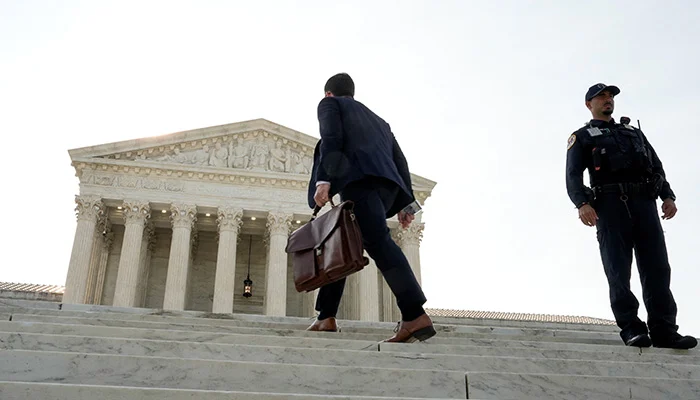
The Supreme Court of the United States concluded its nine-month term with three significant rulings. Firstly, the court upheld state bans on transgender students participating in female sports teams. Secondly, it rejected President Donald Trump’s attempt to end birthright citizenship, delivering a setback to his immigration policies. Lastly, the court struck down certain campaign finance restrictions, expanding allowable campaign spending.
On Tuesday, the court issued a decisive 6-3 ruling blocking Trump’s executive order aimed at altering the interpretation of the 14th Amendment, which grants citizenship to anyone born on U.S. soil. The majority opinion, authored by Chief Justice John Roberts, stated that the executive order violated constitutional guarantees by misinterpreting the constitutional term “subject to the jurisdiction thereof,” which historically confers automatic citizenship upon anyone born in the U.S., with specific narrow exceptions.
In the realm of transgender rights, the court reversed lower court decisions supporting challenges to state laws in West Virginia and Idaho that restrict transgender girls from participating in female sports based on biological sex. They unanimously ruled that these laws do not violate Title IX or the Equal Protection Clause. Justice Brett Kavanaugh emphasized that states can define eligibility for women’s sports based on biological sex without needing a complete overhaul of existing sports policies.
Regarding campaign finance, the Supreme Court favored Republican challengers, including Vice President JD Vance, by striking down federal limits on coordinated spending by political parties and candidates. The 6-3 decision concluded that such spending caps infringe upon First Amendment rights, allowing greater financial influence by political groups leading into the upcoming midterm elections.
Throughout its term, the high court made numerous impactful decisions—from ruling against expansive tariffs and affirming presidential authority to firing Federal Trade Commission members, to narrowing protections under the Voting Rights Act, to allowing the rescinding of humanitarian immigration protections for certain foreign nationals. The court also made notable rulings expanding gun rights, including striking down restrictions on handgun possession in public spaces.