
Select Language:
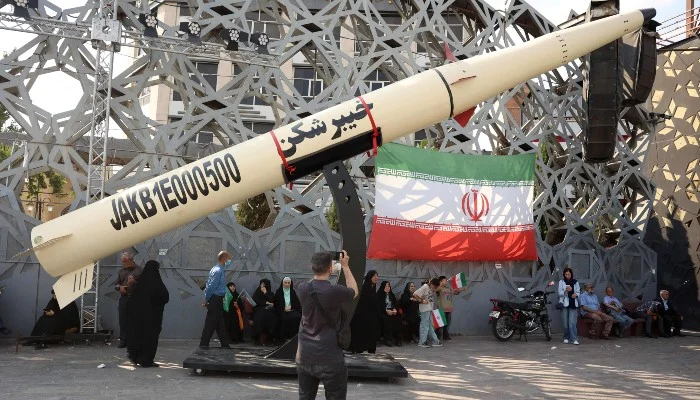
Iranians gather next to a symbol of a Kheibar missile during a rally in Tehran on June 4, 2026. — AFP
– Iran’s Revolutionary Guards claim they targeted U.S. military bases.
– The U.S. military previously conducted strikes against Iranian sites.
– This escalation endangers a delicate ceasefire and long-term peace efforts.
Iran’s Revolutionary Guards announced they launched attacks against a U.S. base in Jordan and 21 additional targets across the Gulf on Wednesday. This was in response to U.S. strikes around the Strait of Hormuz, according to Iranian media reports.
These clashes represent one of the largest exchanges of hostilities since the ceasefire was established in April.
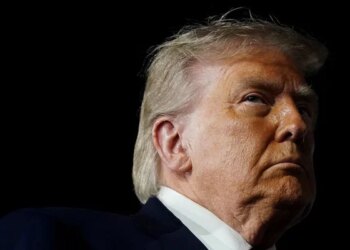
The Iranian attacks, which included locations in Kuwait and Bahrain, followed a U.S. military statement on X (formerly Twitter), revealing targeted strikes on Iranian air defense systems, ground control stations, and surveillance radar sites near the Strait. U.S. President Donald Trump described the strikes as a strong and powerful response to the downing of a U.S. Apache helicopter on Tuesday.
“We need a very robust and forceful response, and that’s what this is,” Trump told ABC News on Tuesday.
The increase in hostilities casts doubt on prospects for a peace agreement to end the conflict that began with U.S.-Israeli strikes against Iran on February 28. Iran responded by firing at Gulf neighbors hosting U.S. bases and restricting navigation through the Strait of Hormuz, a critical route for global oil and gas shipments.
The recent U.S. strikes, which lasted about four hours, concluded just before 9 p.m. ET (1 a.m. GMT Wednesday), with nearly 20 Iranian targets hit, according to a U.S. official.
Iranian state media reported attacks on Qeshm Island and the port city of Sirik in the Strait of Hormuz.
Sounds of explosions were reported in Bandar Abbas and later near Jask, close to the Strait’s entrance, citing local sources.
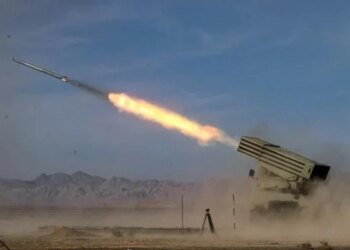
In retaliation, Iran’s Revolutionary Guards targeted four sites at the U.S. al-Azraq base in Jordan with long-range missiles. Targets included F-35 fighter jet hangars and a command center, with warnings that further U.S. attacks would meet a “crushing and decisive” response.
Jordanian forces intercepted and shot down five missiles aimed at al-Azraq. Debris from the interceptions fell on Jordanian territory but caused no injuries or damage.
The Kuwaiti military reported engaging hostile aerial targets and urged citizens to follow official safety protocols after Iran’s Guards claimed to have targeted the Ali Al Salem base with drones.
Iran’s Guards also claimed targeted strikes against the U.S. Fifth Fleet in Bahrain with drones, threatening more severe responses if tensions persisted. Bahrain’s Interior Ministry issued a warning siren and advised the public to seek safety. Bahrain’s defense systems reportedly repelled Iranian attacks.
An anonymous U.S. official stated that nearly all Iranian missiles and drones were intercepted, with no immediate reports of U.S. casualties or damage. The Pentagon has not yet issued an official comment, and battlefield verification remains pending.
Oil prices rose approximately 1% early Wednesday in Asian markets amid these hostilities.
On Tuesday, an Iranian attack drone downed a U.S. Apache helicopter, though the two U.S. pilots involved were unharmed, according to Trump.
Iran’s state media recounted that no offensive air operations occurred in the Strait of Hormuz in the past 24 hours.
A U.S. Navy drone rescued the two crew members after their helicopter went down off Oman’s coast during patrol around 3 a.m. Tuesday. The U.S. Central Command provided no explanation for the crash, stating the pilots are in stable condition.
Iranian Foreign Minister Abbas Araghchi did not directly comment on the helicopter incident but warned via X that external forces in the region might become involved in accidents or crossfire. “The best way to reduce risk is for foreign forces to leave,” he wrote.
Trump minimized the incident during a call with The Wall Street Journal, emphasizing that it “wasn’t a big deal” and that “the pilot is fine.”
Nonetheless, this episode could hinder ongoing peace negotiations to de-escalate the broader Middle East conflict and reopen the Strait of Hormuz.
Though Trump stated Iran and the U.S. are close to an agreement, tangible progress remains elusive since a tentative ceasefire was enacted in early April. Ongoing fighting between Israel and Hezbollah, along with Tehran’s restrictions on shipping through the Strait, have kept tensions high. Before the conflict, this route managed about 20% of the world’s crude oil and natural gas exports. The U.S. also maintains its own blockade of Iranian ports.
U.S. Energy Secretary Chris Wirth said traffic in Hormuz is steadily increasing but cautioned that full recovery of energy flows could take many months after the war ends.
Trump insists any peace deal must include guarantees that Iran will not develop nuclear weapons, though Tehran denies pursuing such weapons.
Iran’s demands include the lifting of sanctions, the release of frozen assets, and recognition of its control over the Strait.
 ChatGPT
 Perplexity
 Gemini AI
 Grok AI