الوسم: gulf

  • US-Iran Tensions Rise as Diplomacy Falters, Risks of Escalation Return

    US-Iran Tensions Rise as Diplomacy Falters, Risks of Escalation Return

    Iran and the United States are still at odds over reaching a definitive end to the Gulf conflict, according to a senior Iranian diplomat. Negotiations to revive the interim agreement from June and establish a timeline for its implementation have seen no progress.

    Meanwhile, U.S. President Donald Trump has criticized Iran’s leadership once again, further undermining hopes for a peaceful resolution amid recent attacks on regional shipping lanes.

    The June deal called for an immediate and permanent halt to military activities on all fronts but fell apart quickly. Trump declared it “over” in July, and Iran’s foreign ministry announced it was “suspended” a week later. The U.S. accuses Iran of not honoring its commitments under the deal, such as reopening key shipping routes in the Strait of Hormuz, while Tehran claims Washington has reneged on promises including lifting sanctions and unfreezing Iranian assets.

    “Discussions facilitated by mediators include the U.S. returning to the interim deal and setting a clear schedule for fulfilling its obligations. There has been zero progress,” the Iranian source told Reuters.

    Trump asserted on Wednesday that the U.S. controls the Strait of Hormuz, but Iran’s Strait Authority, which manages the waterway, states it remains closed until Iran’s conditions are met. Trump also called Iran “all talk and no action,” dismissing Iran’s threats and actions as the Middle East’s “bully.”

    The conflict has resulted in significant casualties, mainly in Iran and Lebanon, since February 28, when U.S. and Israeli strikes targeted Iran. Iran has retaliated by attacking U.S. assets and infrastructure across nations including Oman, Jordan, Kuwait, Israel, the UAE, and Saudi Arabia.

    The initial 60-day ceasefire set in June was meant to facilitate negotiations for a comprehensive nuclear agreement and the lifting of sanctions, but Iran’s government insists there is no extension because the period never officially began. The U.S. withdrew from the interim agreement shortly after it was signed, accusing Iran of violating the terms.

    The Strait of Hormuz, a narrow passage between Iran and Oman, was a major route for about 20% of the world’s oil and liquefied natural gas shipments before the conflict escalated. Oil prices soared since February, peaking at around $126 per barrel, about 75% higher than pre-war levels, with fluctuations reflecting ongoing tensions.

    Recent attacks include a suspected Houthi assault on a cargo vessel in the Bab el-Mandeb Strait, which killed four crew members, and a U.S. missile strike on a Panama-flagged cargo ship’s steering gear. Oil prices experienced volatility, with Brent crude around $88 and U.S. WTI crude near $83 per barrel as forecasts for 2026 oil demand were revised downward.
  • Iran hits Bahrain and Kuwait with attacks on power and water plants

    Iran hits Bahrain and Kuwait with attacks on power and water plants

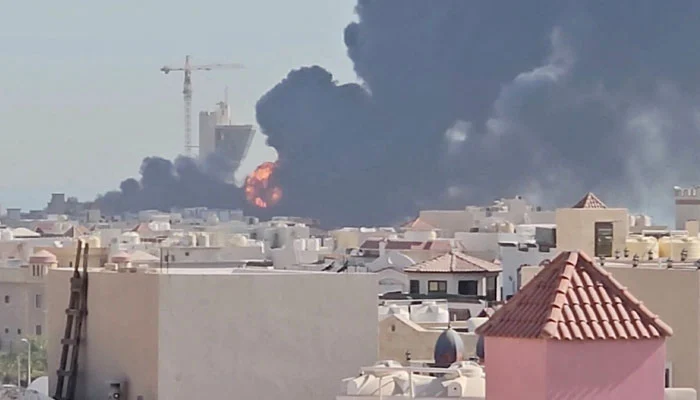
    Kuwait reports that Iran attacked a power and water plant Sunday, sparking a fire. This follows a series of strikes on energy facilities in the Gulf nation, with authorities stating it’s the third attack in three days; a water and power plant was hit on Saturday as well. Kuwait has urged residents to reduce their electricity use to help manage the added pressure on its power grid due to ongoing Iranian assaults.

    Earlier, Iran acknowledged launching attacks on U.S. assets in Kuwait amid heightened tensions over the Strait of Hormuz that have persisted for over a week. The Kuwaiti Ministry of Electricity, Water, and Renewable Energy confirmed the attack via X (formerly Twitter), noting it caused damage to multiple power generators and prompted an emergency response. Firefighters are actively working to extinguish the blaze.

    Both Kuwait and Bahrain’s militaries have reported responding to Iranian aerial strikes. Air raid sirens sounded across both countries as Tehran intensified its regional retaliations. An AFP journalist in Kuwait observed warning sirens, while in Bahrain, blasts were reported in the northern areas, and a siren was heard in the capital, Manama.

    Bahrain, home to the U.S. Fifth Fleet, accused Iran of targeting civilian sites in these attacks. Alongside this, Iran announced early Sunday that its military had targeted two U.S. bases in Kuwait with drones, responding to U.S. strikes on Iranian territory. Iran’s state media detailed large-scale attacks involving kamikaze drones against Camp Udairi’s ammunition depot and radar systems at Ali Al Salem Air Base.

    Since renewed hostilities commenced earlier this month, Kuwait and Bahrain, both hosting U.S. military installations, have endured the brunt of Iran’s strikes on Gulf neighbors, despite a formal ceasefire and agreements between Washington and Tehran. The U.S. Central Command reported that two service members were killed on Friday during defensive operations against Iranian missile and drone attacks, with one service member still listed as missing.

  • Iran Responds to US Strikes with New Attacks After Six Days

    Iran Responds to US Strikes with New Attacks After Six Days

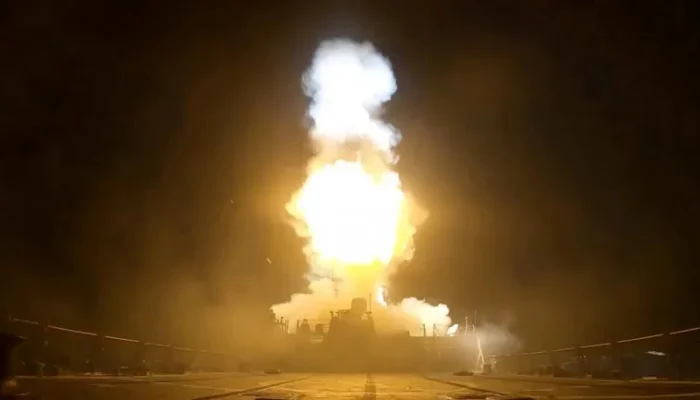
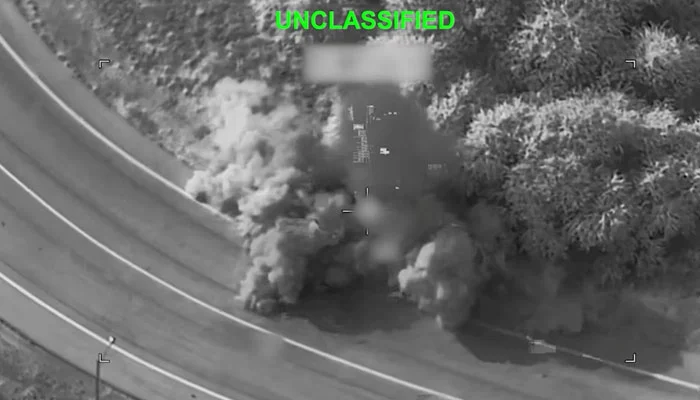
    Smoke rises after a strike at an undisclosed location, described by the US military as part of its latest series of attacks on Iran. These airstrikes targeted Iranian military sites, including coastal surveillance and air defense installations, military logistics hubs, and maritime facilities, according to a still frame from a handout video released on July 16, 2026. — Reuters

    – Iran launched new assaults on US facilities in the Gulf region on Friday, following a sixth straight night of US strikes on Iranian military targets, amidst a cycle of daily attacks and responses since last month’s ceasefire failed to hold.

    – The US military announced it conducted another night of precision strikes aimed at weakening Iran’s military capabilities, focusing on locations such as Qeshm Island and near Bandar Abbas, which hosts Iran’s largest port, navy, and Revolutionary Guard bases.

    – According to a statement from US Central Command, US forces—using fighter jets, drones, and warships—targeted dozens of Iranian military sites, including coastal surveillance and air defense systems, logistics infrastructure, and maritime assets.

    – Iran has responded by firing missiles and drones at US military installations in neighboring countries, including an airbase in Jordan.

    – Early Friday, Iran’s military reported attacks on US facilities in Bahrain and Kuwait. Witnesses in Doha, Qatar, heard multiple explosion-like sounds, and the country’s Interior Ministry confirmed that a child was wounded by shrapnel.

    – Iranian media authorities noted that five bridges, the train station in Bandar Khamir, and Iranshahr Airport in southeastern Iran were struck in the latest US raids.

    – Reports from Iran’s state news agency IRNA indicated that seven individuals were killed when US forces attacked bridges in Bandar Khamir, a southern port city. IS of Reuters could not independently confirm these claims.

    ### Shipping Traffic Blocks Again in the Strait of Hormuz

    The ongoing hostilities have again largely halted maritime traffic through the Strait of Hormuz, a critical channel for global oil and gas shipments, causing a surge in worldwide energy prices.

    Tehran has resumed its blockade of the Strait, and the US has prohibited Iranian ships from entering since Wednesday. There are indications Tehran might influence its Houthi allies in Yemen to close the Bab al-Mandeb Strait at the mouth of the Red Sea if Washington continues its attacks on Iranian infrastructure.

    ### Iran Maintains Control in the Strait

    Iran aims to route all ships through a narrow passage near its coast and plans to impose transit fees following a 60-day negotiation window outlined in a recent memorandum. The US has promoted using an alternative route along Oman’s coast to bypass the Strait.

    US military operations have targeted coastal military installations to impair Iran’s ability to control the Strait. Iranian Army spokesperson Brigadier General Mohammad Akraminia stated Thursday that such efforts would fail, asserting Iran could block the Strait from anywhere on its territory.

    Former President Trump has left open the possibility of deploying ground forces, including plans to seize Kharg Island, Iran’s main oil export terminal. He has also threatened to target Iran’s power plants and bridges next week if Tehran does not resume negotiations.

  • Iran-US Exchange Renewed Missile and Drone Strikes in the Gulf

    Iran-US Exchange Renewed Missile and Drone Strikes in the Gulf

    The U.S. claims it targeted hundreds of Iranian sites after attacks on ships, while Tehran reports it has once again shut down the Strait of Hormuz. Iran also launched attacks on U.S. facilities across Gulf nations.

    On Sunday, there was intense exchanging of missile and drone assaults between U.S. and Iranian forces, with Tehran targeting U.S. installations in multiple Gulf countries and announcing the closure of the Strait of Hormuz. This surge in violence raises questions about the viability of the temporary U.S.-Iranian agreement signed last month, which aimed to reopen the strait and halt the ongoing conflict after another 60 days of negotiations.

    Iran’s military strikes extended to Qatar, a mediator in ongoing ceasefire talks, which had previously been untouched since April. The United Arab Emirates, which had been out of reach since early May, stated that its air defenses intercepted missiles and drones originating from Iran.

    According to the U.S. Central Command, strikes launched on Sunday evening were part of an effort to diminish Iran’s capacity to attack maritime traffic and commercial vessels moving through the Strait of Hormuz. U.S. military officials reported downing an Iranian cruise missile and a one-way attack drone.

    President Donald Trump briefly commented on the weekend’s developments, telling Reuters, “We’re beating them up.”

    Iranian media reported missile strikes and explosions near the port cities of Sirik and Bandar Abbas, which host military facilities along the strait, as well as on nearby Qeshm Island. Iran’s foreign ministry condemned what it called aggressive U.S. actions over the weekend and accused the U.S. of applying excessive pressure on Oman, which hosted talks on managing the strait and transit routes in Muscat on Saturday—they were unable to reach an agreement.

    In recent days, Trump has declared the ceasefire over but remains open to future talks. Iran’s chief negotiator, Mohammad Baqer Qalibaf, posted on X (formerly Twitter), stating, “The era of one-sided deals is over. Keep your word or pay the price. Reality is knocking.”

    The conflict, initiated by the U.S. and Israel against Iran on February 28, has destabilized the Gulf region, with Iran striking U.S.-aligned countries. Its blockade of the Strait has caused energy prices to rise globally, fueling inflation. This leads to political sensitivity in the U.S., especially with the upcoming November congressional elections, due to rising fuel costs.

    Iran aims to establish a system for collecting tolls in the Strait, which historically carried about 20% of world oil and natural gas shipments prior to the conflict. The country has warned vessels to avoid sailing without Iran’s permission.

    Late Saturday, Iran claimed to have closed the waterway after firing a warning shot that hit an unpermitted vessel. On Sunday, it announced disabling a second ship. India reported one of its nationals missing following an attack on the container ship GFS Galaxy off Oman’s coast, with Oman rescuing 23 crew members. Qatar advised all vessels, including leisure and fishing boats, to suspend operations.

    Iran’s newly formed Persian Gulf Strait Authority stated that passage through the strait is currently impossible due to “recent illegal movements” by U.S. military forces. Permits will be issued once stability is restored.

    Despite revoking licenses for Iranian crude sales after previous shipping attacks, the U.S. insists its forces are positioned to protect navigation rights and continue to challenge Iran’s provocations.

    The U.S. Navy’s Joint Maritime Information Center confirmed that, despite heightened threats, alternative routes near Oman remain open for traffic in both directions.

    On Saturday, U.S. Central Command reported striking 140 Iranian military targets, with over 300 targets hit during the week to weaken Iran’s ability to threaten shipping in the Strait. Iran’s Revolutionary Guards retaliated by destroying a U.S.-linked command center and drone hangars in Jordan, targeting U.S. radar and missile systems in Kuwait, and attacking assets in Oman and Qatar.

    Qatar, which has previously refused to mediate while under attack, reported injuries from shrapnel and held Iran responsible for the attack. The UAE detected threats outside its borders, Bahrain intercepted multiple Iranian aerial assaults, Jordan reported missile strikes, and Oman was targeted with drones. Kuwait’s military later reported damage from strikes, including an injury on an oil platform worker.

    Oman summoned Iran’s ambassador to protest drone attacks, while the U.S. embassy in Oman advised Americans in Duqm and Musandam to remain in shelter.

  • Iran and US Reach Deal to Pause Attacks and Resume Negotiations

    Iran and US Reach Deal to Pause Attacks and Resume Negotiations

    Iran and the U.S. have agreed to cease hostilities in the Persian Gulf and restart discussions concerning their conflict over the Strait of Hormuz, according to a U.S. official on Sunday. This development offers hope of preserving a temporary peace agreement amid recent exchanges of strikes that have heightened tensions.

    “Technical negotiations are expected to continue on all aspects of the Memorandum of Understanding (MOU). Both parties will temporarily stand down, allowing vessels to move freely,” the official stated. The MOU, signed on June 17, outlines the reopening of the Strait of Hormuz for maritime traffic.

    Axios, reporting first on the ceasefire, cited a senior U.S. official indicating that discussions will reconvene Tuesday in Qatar. This diplomatic effort follows days of tit-for-tat military actions triggered after Iran attacked a cargo vessel in the Strait of Hormuz last week, with both nations accusing each other of violating the ceasefire agreement brokered in June.

    Earlier on Sunday, Iran launched missile and drone strikes against U.S. military targets in Kuwait and Bahrain, shortly after President Donald Trump warned that Iran risks its existence if it refuses to honor commitments to cease hostilities.

    Concurrently, Israel reported striking Iranian-backed Hezbollah positions in southern Lebanon again, destroying underground facilities used by the group. This strike followed a recent ceasefire agreement with Lebanon. Iran has emphasized that the conflict in Lebanon must end if the broader peace efforts are to succeed.

    The U.S. military also conducted strikes on Iran following an attack on a commercial tanker in the Strait, a critical global energy shipping route that Iran has largely hindered during the ongoing conflict.

    Trump, expressing increasing frustration, warned on social media that if Iran refuses to abide by the peace process, the U.S. might be compelled to “militarily complete the job” they initially began, declaring, “The Islamic Republic of Iran will no longer exist!”

    The initial 14-point peace plan was designed to stop the violence instigated by the U.S. and Israel, which started on February 28, involve reopening the Strait of Hormuz, and facilitate negotiations on Iran’s nuclear program.

    Despite a recent round of mediated talks led by U.S. Vice President JD Vance and Iranian parliamentary speaker Mohammad Baqer Qalibaf in Switzerland, fighting has continued and even intensified after the U.S. waived some sanctions on Iran.

    Shortly after Trump’s warning, Kuwait reported its air defenses intercepting missile and drone attacks, and Bahrain issued alerts of siren sounds in response to what was described as an Iranian attack, damaging a residential building with no reported casualties. Bahrain has urged the UN Security Council to hold an urgent session to address Iran’s actions.

    Kuwait also intercepted two ballistic missiles, with no casualties or damage reported. Meanwhile, Qatar announced that one of its citizens died from shrapnel injuries resulting from a vessel incident linked to military operations, with another person injured during the same event, details of which remain unclear.

  • Iran hits US bases in Jordan and Gulf after Trump strikes near Hormuz

    Iran hits US bases in Jordan and Gulf after Trump strikes near Hormuz

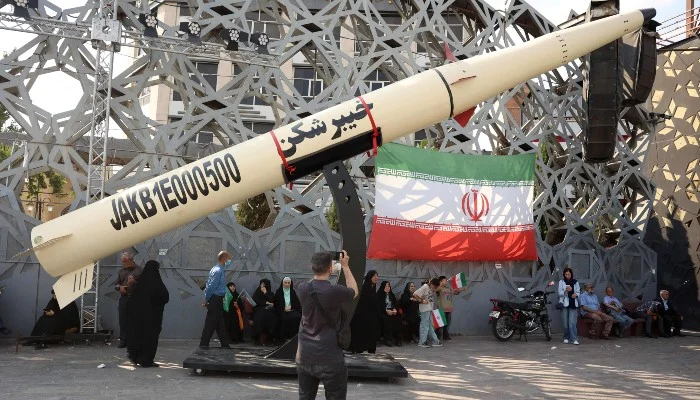
    Iranians gather next to a symbol of a Kheibar missile during a rally in Tehran on June 4, 2026. — AFP

    – Iran’s Revolutionary Guards claim they targeted U.S. military bases.
    – The U.S. military previously conducted strikes against Iranian sites.
    – This escalation endangers a delicate ceasefire and long-term peace efforts.

    Iran’s Revolutionary Guards announced they launched attacks against a U.S. base in Jordan and 21 additional targets across the Gulf on Wednesday. This was in response to U.S. strikes around the Strait of Hormuz, according to Iranian media reports.

    These clashes represent one of the largest exchanges of hostilities since the ceasefire was established in April.

    The Iranian attacks, which included locations in Kuwait and Bahrain, followed a U.S. military statement on X (formerly Twitter), revealing targeted strikes on Iranian air defense systems, ground control stations, and surveillance radar sites near the Strait. U.S. President Donald Trump described the strikes as a strong and powerful response to the downing of a U.S. Apache helicopter on Tuesday.

    “We need a very robust and forceful response, and that’s what this is,” Trump told ABC News on Tuesday.

    The increase in hostilities casts doubt on prospects for a peace agreement to end the conflict that began with U.S.-Israeli strikes against Iran on February 28. Iran responded by firing at Gulf neighbors hosting U.S. bases and restricting navigation through the Strait of Hormuz, a critical route for global oil and gas shipments.

    The recent U.S. strikes, which lasted about four hours, concluded just before 9 p.m. ET (1 a.m. GMT Wednesday), with nearly 20 Iranian targets hit, according to a U.S. official.

    Iranian state media reported attacks on Qeshm Island and the port city of Sirik in the Strait of Hormuz.

    Sounds of explosions were reported in Bandar Abbas and later near Jask, close to the Strait’s entrance, citing local sources.

    In retaliation, Iran’s Revolutionary Guards targeted four sites at the U.S. al-Azraq base in Jordan with long-range missiles. Targets included F-35 fighter jet hangars and a command center, with warnings that further U.S. attacks would meet a “crushing and decisive” response.

    Jordanian forces intercepted and shot down five missiles aimed at al-Azraq. Debris from the interceptions fell on Jordanian territory but caused no injuries or damage.

    The Kuwaiti military reported engaging hostile aerial targets and urged citizens to follow official safety protocols after Iran’s Guards claimed to have targeted the Ali Al Salem base with drones.

    Iran’s Guards also claimed targeted strikes against the U.S. Fifth Fleet in Bahrain with drones, threatening more severe responses if tensions persisted. Bahrain’s Interior Ministry issued a warning siren and advised the public to seek safety. Bahrain’s defense systems reportedly repelled Iranian attacks.

    An anonymous U.S. official stated that nearly all Iranian missiles and drones were intercepted, with no immediate reports of U.S. casualties or damage. The Pentagon has not yet issued an official comment, and battlefield verification remains pending.

    Oil prices rose approximately 1% early Wednesday in Asian markets amid these hostilities.

    On Tuesday, an Iranian attack drone downed a U.S. Apache helicopter, though the two U.S. pilots involved were unharmed, according to Trump.

    Iran’s state media recounted that no offensive air operations occurred in the Strait of Hormuz in the past 24 hours.

    A U.S. Navy drone rescued the two crew members after their helicopter went down off Oman’s coast during patrol around 3 a.m. Tuesday. The U.S. Central Command provided no explanation for the crash, stating the pilots are in stable condition.

    Iranian Foreign Minister Abbas Araghchi did not directly comment on the helicopter incident but warned via X that external forces in the region might become involved in accidents or crossfire. “The best way to reduce risk is for foreign forces to leave,” he wrote.

    Trump minimized the incident during a call with The Wall Street Journal, emphasizing that it “wasn’t a big deal” and that “the pilot is fine.”

    Nonetheless, this episode could hinder ongoing peace negotiations to de-escalate the broader Middle East conflict and reopen the Strait of Hormuz.

    Though Trump stated Iran and the U.S. are close to an agreement, tangible progress remains elusive since a tentative ceasefire was enacted in early April. Ongoing fighting between Israel and Hezbollah, along with Tehran’s restrictions on shipping through the Strait, have kept tensions high. Before the conflict, this route managed about 20% of the world’s crude oil and natural gas exports. The U.S. also maintains its own blockade of Iranian ports.

    U.S. Energy Secretary Chris Wirth said traffic in Hormuz is steadily increasing but cautioned that full recovery of energy flows could take many months after the war ends.

    Trump insists any peace deal must include guarantees that Iran will not develop nuclear weapons, though Tehran denies pursuing such weapons.

    Iran’s demands include the lifting of sanctions, the release of frozen assets, and recognition of its control over the Strait.

  • US Warns Iran Offense Over, Keeps Force as Backup Option

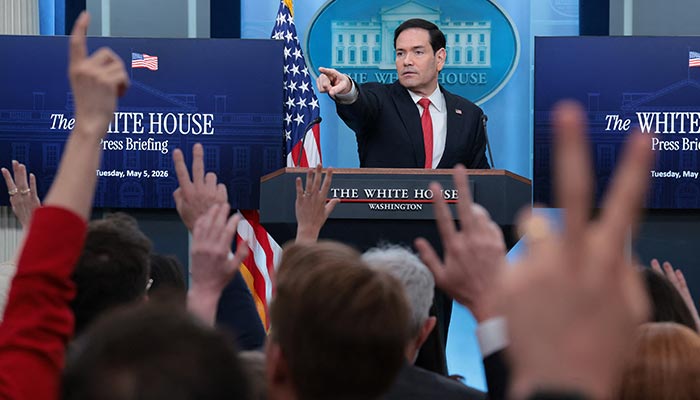
    US Secretary of State Marco Rubio points as members of the media raise their hands during a press briefing in the James S Brady Press Briefing Room at the White House in Washington, DC, US, May 5, 2026. — Reuters
    US Secretary of State Marco Rubio gestures as journalists raise their hands during a press briefing in the James S Brady Press Briefing Room at the White House in Washington, DC, May 5, 2026. — Reuters

    • The US and Gulf allies have drafted a UN Security Council resolution addressing Iran’s mining activities.
    • Rubio describes the Hormuz resolution as a critical test for the UN, urging member states to oppose vetoes.
    • The US states it is prepared to deliver a “devastating” response to any future attacks.

    The United States has announced the conclusion of its offensive operations targeting Iran, according to Secretary of State Marco Rubio on Tuesday. Meanwhile, Washington cautioned that it stands ready to deliver a “devastating” response to any new threats or attacks on shipping through the Strait of Hormuz.

    Rubio’s statement followed remarks from the top military official, who indicated that American forces remain prepared to resume combat if necessary, amidst ongoing tensions and clashes that threaten to disrupt a fragile ceasefire in the region.

    Iran’s Revolutionary Guards navy issued a warning of a “firm response” if ships deviate from the authorized route through the strait. Iran’s chief negotiator added that Tehran “has not even begun yet,” in response to recent attacks along the vital trade corridor.

    The UAE reported intercepting a barrage of missiles and drones from Iran for the second consecutive day, a claim Iran firmly denied. “The armed forces have not launched any missile or drone operation,” Iran’s Khatam al-Anbiya command asserted.

    On Monday, Iran targeted US forces with missiles and drones, while Washington claimed to have struck six Iranian boats, accusing them of endangering commercial vessels. This marks the most serious escalation since a temporary ceasefire was established a month ago.

    General Dan Caine of US Central Command reiterated that the US remains “ready to resume major combat operations… if ordered.” He added, “No adversary should mistake our current restraint for a lack of resolve.”

    President Donald Trump urged Iran to “do the smart thing” and reach a deal, emphasizing that he wishes to avoid further loss of Iranian lives, even as the ceasefire remains fragile. Earlier, Trump dismissed the conflict as “a little skirmish,” confidently stating, “Iran has no chance.”

    The Pentagon’s Secretary, Pete Hegseth, noted that the US is “not seeking a fight” but warned that any attacks would be met with “overwhelming and devastating” force.

    Iran’s “Malign Presence”

    Iranian parliamentary speaker Mohammad Bagher Ghalibaf declared that the status quo is “intolerable” and warned that the US “malign presence will diminish,” as Tehran affirms its intention to maintain control over the Strait of Hormuz.

    The recent exchange of fire comes amid conflicting maritime blockades following President Trump’s directive to accelerate shipping out of the Gulf region. The ongoing conflict, ignited over two months ago by US-Israeli strikes, continues to undermine global economic stability despite a fragile ceasefire.

    Israel’s air force chief, Omer Tischler, stated that the military is prepared to “deploy the entire air force eastward if necessary.” Eyal Zamir, the military chief, noted that forces remain on “high alert” to respond to threats in the Gulf.

    Iran denies naval losses but accuses Washington of killing five civilians aboard boats. Despite rising tensions, shipping company Maersk confirmed one of its vessels transited the Strait of Hormuz under US escort.

    The UAE called the recent attacks “a dangerous escalation,” with Saudi Arabia calling for renewed efforts towards a political resolution.

    Rubio accused Iran of “holding the world’s economy hostage” through threats to shipping routes and the mining of the waters. He stated that the US and Gulf allies have drafted a UN Security Council resolution demanding Iran cease attacks, reveal the location of mines, and stop efforts to impose tariffs via the strait. A vote on the resolution is anticipated in the coming days.

    European and US markets rose on Tuesday, whereas Asian markets faced pressure amid fears the ceasefire could break down. Thus far, only one round of direct negotiations has taken place, leaving talks deadlocked.

    Iran’s President, Masoud Pezeshkian, expressed openness to dialogue but dismissed US “maximum pressure” tactics as “impossible.” Rising energy prices due to ongoing tensions are complicating the global economic outlook, adding political challenges ahead of US midterm elections.

    European allies warned that prolonged instability would adversely affect their economies. EU chief Ursula von der Leyen posted on X, warning that Gulf security issues have “direct consequences for Europe.” German Chancellor Friedrich Merz, French President Emmanuel Macron, and UK Prime Minister Keir Starmer also called for Iran to return to negotiations.

  • Mojtaba Khamenei: Fresh Strait of Hormuz Management Will Calm Tensions

    Iran’s new Supreme Leader, Mojtaba Khamenei, the second son of the late Ayatollah Ali Khamenei, the former Iran Supreme Leader, attended a meeting in Tehran on October 13, 2024. (Reuters/File)

    Mojtaba Khamenei issued a written statement Thursday, indicating that a new era is beginning for the Gulf and the Strait of Hormuz since the outbreak of conflict involving the U.S. and Israel on February 28.

    He emphasized Tehran’s commitment to safeguarding the Gulf region and eradicating what he called “the enemy’s misuse of the waterway.”

    Khamenei stated that overseeing the Strait of Hormuz differently would foster stability, growth, and economic advantages for all Gulf countries.

    “Today, two months after the largest military deployment and aggression by regional bullies and after the U.S. faces a humiliating defeat in its plans, a new chapter is opening for the Persian Gulf and the Strait of Hormuz,” he declared, asserting Iran’s influence over maritime traffic through the strait.

    Khamenei was injured in the initial U.S.-Israeli strikes that killed his father, Ali Khamenei, and has not appeared publicly since being appointed his successor last month.

    The U.S. recently imposed a blockade on Iran’s ports, even as Iran has continued to control the strategic Strait of Hormuz since the Middle East conflict began in February.

    A State Department official told AFP that Washington is attempting to form an international coalition of allied nations and shipping companies to coordinate secure passage through Hormuz while maintaining its own blockade of ships linked to Iran.

    “Iran’s President Masoud Pezeshkian responded, condemning the blockade as a violation of international law and warning it would disrupt the stability of the Persian Gulf,” saying it would be “counterproductive to long-term stability.”

    Mohammad Bagher Ghalibaf, Iran’s parliament speaker and an influential figure, suggested that control of Hormuz might allow Iran to “secure a future free from American interference for itself and neighboring countries.”

    Meanwhile, President Trump is scheduled to receive a briefing on potential military options in Iran from CENTCOM commander Admiral Brad Cooper. Reports suggest Trump has advised oil executives and security officials to prepare for a prolonged U.S. blockade aimed at forcing Iran to abandon its nuclear pursuits.

    Recently, U.S. CENTCOM announced completing a major milestone by redirecting the 42nd commercial vessel in efforts to enforce the blockade, which has kept over 69 million barrels of oil worth more than $6 billion out of Iran’s reach.

    Oil prices surged to their highest in four years, with Brent crude exceeding $126 per barrel — an increase of over 7% — before retreating slightly during midday trading in London.

    UN Secretary-General Antonio Guterres warned that the closure of Hormuz was choking the global economy, while International Energy Agency chief Fatih Birol called it the “largest energy crisis in history.”

    European Central Bank officials cautioned that prolonged conflict and elevated energy costs could significantly impact inflation and the broader economy.

    Domestically, President Trump faces mounting pressure to end the war, which remains unpopular among many of his supporters, has increased costs for American consumers, and unsettled allies. Iran’s economy continues to suffer, with the rial hitting record lows against the dollar.

  • When Is Hayat Al-Fahed’s Funeral?

    When Is Hayat Al-Fahed’s Funeral?

    Digital Phablet – Kuwait’s leading actress Hayat Al-Fahed passed away at the age of 78 after battling a prolonged illness, her official page announced on Tuesday.

    Yesterday, the Kuwaiti actress was moved to intensive care following a sudden decline in her health that necessitated urgent medical intervention, the statement revealed.

    The Al-Fahd Artistic Production Foundation issued a statement saying, “To God we belong, and to Him we shall return.”

    The statement continued, “With hearts filled with faith in God’s will and decree, we mourn the loss of the esteemed artist Hayat Al-Fahed, who left this world after a struggle with illness, leaving behind a legacy rich in artistic and humanitarian contributions.”

    “She was a symbol of Gulf drama, and her enduring legacy will remain in the memories of generations. We pray that God envelops her with His infinite mercy, grants her a place in His vast paradise, and provides patience and comfort to her family and loved ones.”

    When is Hayat Al-Fahed’s funeral?

    The Al-Fahd Artistic Production Foundation issued a statement on Tuesday regarding the funeral arrangements for the celebrated Kuwaiti star, often called the “First Lady of Gulf Cinema.”

    They announced, “Hayat Ahmed Youssef Al-Fahed will be laid to rest on Tuesday, April 21, 2026, after the afternoon prayer at Sulaibikhat Cemetery.”

    Condolences for men will be received exclusively at the cemetery.

    Mourners of women will gather tomorrow, Wednesday, and the condolence process will continue for three days.

    The foundation also provided the location of the women’s mourning house for those wishing to pay their respects.

  • Shippers cautiously watch Iran-Hormuz reopening prospects

    Shippers cautiously watch Iran-Hormuz reopening prospects

    On Friday, representatives from the shipping sector responded cautiously to Iran’s declaration that it has reopened the critical Strait of Hormuz trade route after nearly seven weeks of closure. The Strait’s closure by Iranian forces had stranded hundreds of ships in the Gulf and raised shipping costs, as captains avoided the area due to concerns over potential attacks or mines.

    A spokesperson for German shipping giant Hapag-Lloyd, which has vessels stranded in the Gulf, told AFP via phone that the reopening was generally positive news. However, he emphasized that further information was needed regarding safe routes for vessels and the sequence in which they could transit, given lingering fears about sea mines. “It’s not feasible for a thousand ships to all head straight for the strait’s entrance simultaneously; that would create chaos. Iran needs to provide clear instructions,” said Nils Haupt. “We’re prepared to set sail soon if these outstanding questions can be addressed over the weekend.”

    Bloomberg data from Thursday revealed approximately 770 ships transmitting transponder signals within the Gulf, with around 360 of those being oil and gas carriers. Prior to the conflict, the average daily crossings of the strait reached about 120 vessels, according to industry source Lloyd’s List.

    US President Donald Trump subsequently claimed that Iran had declared the waterway fully open and accessible. However, Jakob Larsen, chief security officer at the shipping association Bimco, countered via email, stating this assertion was “inaccurate.” He explained that the mine threat status within Iran’s maritime traffic separation scheme remains unclear and recommended that shipping companies consider avoiding the area altogether.

    Kazakos, secretary general of the International Chamber of Shipping, described the Iranian announcement as a “positive step,” but warned that “significant uncertainty” remains about its practical implications. In a statement to AFP, he expressed that while this development might offer some reassurance to the thousands of seafarers stranded in the Gulf due to regional conflict, it must mark the start of a broader and lasting return to navigational freedom. Kazakos underscored the importance of restoring unrestricted navigation through this vital corridor beyond the current ceasefire, urging lasting peace and stability in the region.

  • Helplines Surge with Reports of War-Stranded Seafarers

    Helplines Surge with Reports of War-Stranded Seafarers

    Cargo ships and tankers are visible off the coast of Fujairah, in the Strait of Hormuz, in the northern Emirates, on February 25, 2026. — AFP

    Seafarers’ helpline operators report being inundated with messages from crews stranded in the Gulf due to the ongoing conflict in the Middle East, urgently requesting help with repatriation, compensation, and supplies on board.

    One seafarer’s email to the International Transport Workers’ Federation (ITF) Seafarer Support team on March 24 described a “critical situation” regarding provisions and crew health. The message emphasized the immediate need for food, drinking water, and basic necessities to keep the crew afloat.

    Since the conflict began with US-Israeli strikes on Iran on February 28, the ITF has received over 1,000 emails and messages from sailors stuck near the Strait of Hormuz and the surrounding region.

    Some crew members seek clarification about their rights in a war zone, while others send videos of nearby bombings and ask for assistance in leaving their ships, according to ITF documents reviewed by AFP.

    A handout photo from March 11, 2026, shows smoke billowing from the Thai bulk carrier ‘Mayuree Naree’ near the Strait of Hormuz after an attack.

    Mohamed Arrachedi, ITF’s Network Coordinator for the Arab World and Iran, described the situation as “extraordinary,” with widespread panic and “really shocking” conditions. He receives late-night calls from sailors desperate for help: “One called in a state of panic, saying, ‘We’re bombed here. We don’t want to die. Please help us get out of here.’”

    Approximately 20,000 seafarers are currently stranded in the Gulf region, according to the International Maritime Organization (IMO), with at least eight casualties involving seafarers or dock workers since February 28. All information shared with AFP is confidential to protect seafarers’ identities.

    The International Bargaining Forum (IBF), which oversees global maritime labor standards, has officially designated the area a war zone. This usually grants sailors significant rights, including repatriation at the shipping company’s expense and doubled pay for ships under IBF agreements—around 15,000 vessels worldwide, according to ITF.

    However, many sailors on ships without these agreements report difficulties in returning home. An email from March 18 described a crew member’s frustration with the ship operator, who refused their requests to leave, citing a lack of available flights from Iraq and denying alternative routes. “They are forcing us to carry out cargo and ship-to-ship transfers despite raising safety concerns,” the email states.

    The International Seafarers’ Welfare and Assistance Network (ISWAN) has also noted a 15-20% increase in calls and messages since the conflict began, with about one-third related to difficulties in getting repatriated.

    Another pressing issue is pay. Many seafarers report working in dangerous conditions for as little as $16 a day. One email questioned whether their salary would double to $32 because they were in a war zone. The ITF points out that such low wages suggest the shipowners lack labor agreements that promote fair compensation.

    Seafarers on ships without proper agreements are especially vulnerable, as their contracts often exclude operations in war zones, and owners tend to ignore requests for assistance. When that happens, the ITF contacts flag states and, if needed, the vessel’s port authorities.

    Arrachedi highlighted that numerous cases in the Gulf remain unresolved, with crew members anxiously awaiting responses from their employers.

  • Hormuz Strait Blockade Boosts Gulf Food Prices

    Hormuz Strait Blockade Boosts Gulf Food Prices

    In a Bahrain supermarket, Mahmoud Ali shops as usual, filling his cart. Despite ongoing conflict in the Middle East, store shelves remain stocked, but the impact of the disrupted shipping routes into the Gulf is now evident at checkout.

    “There’s no shortage,” he says, “but over the past few days, I’ve noticed a significant rise in the prices of certain food items.” The cost of meat, in particular, has nearly doubled, he adds.

    Like many neighboring countries in this dry region, the small Gulf nation depends greatly on imports, especially for food. However, the war that began on February 28 with Israeli and U.S. strikes against Iran has severely affected goods transportation through the vital Strait of Hormuz, which is now effectively closed.

    Frederic Schneider, an economist with the Middle East Council on Global Affairs, explains, “Most major ports in the UAE, Qatar, Kuwait, and Bahrain have either suspended or significantly reduced cargo operations.” Additionally, air freight, another critical logistics component, is operating below capacity due to ongoing Iranian drone and missile attacks.

    With key ports such as Abu Dhabi, Jebel Ali in Dubai, and Dammam in eastern Saudi Arabia becoming nearly inaccessible, vessels are rerouting to ports located in Oman and the Emirates further south of the strait.

    Saudi Arabia is positioning itself as a central supply hub, with open airspace and ongoing maritime traffic to its Red Sea ports. The country has launched initiatives to bolster its transport infrastructure by establishing new logistics routes and operational corridors to manage cargo diverted from its eastern ports, according to officials.

    Recent observations by AFP journalists show a steady flow of heavy trucks crossing into Qatar by land. Alternative land routes exist through corridors connecting to the Mediterranean via Syria or Jordan, but these are too congested, costly, and insufficient to compensate for the halt of traditional sea routes, Schneider notes.

    Perishable goods, mainly imported from Asia and with limited storage life, are the first to feel the pinch.

    ‘A Tangible Risk’

    The Gulf states’ levels of preparedness vary. Saudi Arabia has direct access to the Red Sea, while the UAE claims to have stockpiled enough supplies to last four to six months. Qatar invested heavily in its reserves after a three-year blockade by neighboring countries starting in 2017.

    Bahrain and Kuwait are already experiencing the effects of the conflict at the consumer level. After an initial rush to supermarkets at the onset of the war, Kuwaiti authorities froze prices on certain essential items and subsidized meat imports.

    “Overall, prices have stayed relatively stable,” an official from Kuwait’s commerce ministry told AFP, requesting anonymity. “But meat and fish prices have jumped over 30% due to the suspension of Gulf fishing activities and halted imports from Iran, India, and Pakistan.”

    The private sector is taking steps to mitigate the effects of the blockade. Lulu, a retail chain operating 280 supermarkets across the region, reports maintaining reserves of non-perishable goods for four to six months and has chartered special flights to bring in fresh produce, meat, seafood, and poultry.

    So far, “37 chartered flights have delivered more than 6,000 tons of fresh goods,” according to Lulu’s communications director V Nandakumar. He adds that these increased costs are not yet being passed on to consumers.

    Schneider emphasizes, “There is a reasonable level of anticipation, and prices are under control for now.” However, he warns that if the conflict continues for an extended period, there is a tangible threat of prices for imported foods significantly escalating.

  • UAE President: Country Is Stable and Not an Easy Target After Iran Attacks

    UAE President: Country Is Stable and Not an Easy Target After Iran Attacks

    The President of the United Arab Emirates stated that despite the nation being in a state of war, it remains resilient and confident. He assured that his country was strong and warned adversaries that they are not easily taken down. Sheikh Mohammed bin Zayed Al Nahyan, also the ruler of Abu Dhabi, made these remarks during a visit to the injured, which aired on Abu Dhabi TV Saturday.

    He emphasized his dedication to serving his nation, its people, and residents who are considered part of the family. Sheikh Mohammed declared that the UAE is currently enduring a war but will come out of it stronger. He assured that all residents across the seven emirates, including Dubai, will be protected.

    An Emirati official added that the UAE demands Iran cease its aggression against neighboring Gulf states immediately. “Any escalation is concerning. Our goal is to prevent the conflict from spreading further. We want Iran to realize attacking its neighbors only harms themselves and to stop these attacks,” the official stated.

    Earlier today, the UAE’s defense ministry reported intercepting 15 ballistic missiles and 119 drones amid ongoing attacks by Iran on its Gulf neighbor. The ministry said, “Today, UAE air defense systems detected 16 ballistic missiles; 15 were intercepted and destroyed, and one fell into the sea. Additionally, 121 UAVs were detected — 119 intercepted, two landed inside UAE territory.”

    They noted that a total of 1,305 Iranian UAVs have been detected, with 1,229 intercepted and 76 falling within UAE borders. The attack also involved eight cruise missiles, which were destroyed. Sadly, these assaults resulted in three fatalities—individuals from Pakistan, Nepal, and Bangladesh—and injured 112 people from diverse nationalities.

  • Has the Iran Conflict Transformed the Gulf Permanently?

    Has the Iran Conflict Transformed the Gulf Permanently?

    Members of the Reuters Gulf team, like many others in the region, have been forced into sheltering in stairwells and windowless bathrooms. We’ve listened to missiles being intercepted overhead while trying to comfort scared children and handle growing concerns from afar.

    We now pay closer attention to potential dangers—how a window might shatter, where to find scarce supplies like chicken or bananas, and how every minor sound, even a neighbor closing a cabinet, can make our hearts race.

    In a region with increasingly dangerous airspace closures and where the only safe escape is a long desert drive through territory under Iranian attack, we all face the same impossible decisions: to stay or to leave, and how to do so.

    Federico Maccioni, part of Reuters’ finance team based in Dubai, remarked that he’s beginning to sense some doubts about what lies ahead for the city. Meanwhile, Rachna Uppal, the agency’s chief economics correspondent in Abu Dhabi, noted how life remains remarkably normal—people are shopping, going to dental appointments, and even jet skiing.

    Reporters across the Gulf are trying to piece everything together. Iran’s drones continue relentless strikes, penetrating defenses and targeting airports, hotels, and data centers. Tourism is collapsing, business centers are frozen, and the Gulf’s decades-long development efforts now seem uncertain. This overview examines the economic impact, strategic risks, and potential lasting changes caused by this conflict.

    Gulf fundamentals

    The Gulf’s growth over the years stood on two main beliefs: its cities provided a safe refuge in a turbulent region, and its vast wealth from continuous energy exports would keep flowing. Recent events threaten to dismantle both assumptions, possibly forever.

    First, the idea of the Gulf as a safe haven has been shattered. Dubai, seen as an oasis of stability, was built on the premise that regional chaos would end at its borders. But weeks of Iranian missile and drone attacks on key points like airports and ports have exposed that illusion.

    While Sheikh Mohammed bin Zayed of the UAE tried to project normality strolling through Dubai Mall, outside, flights were canceled, markets closed, and residents queued anxiously for supplies. The constant barrage of air defense interceptions has added to the fear, raising questions about whether cities like Dubai, Abu Dhabi, and Riyadh—dependent on confidence, ease of movement, and perception—can sustain their reputation as premium destinations when visibly vulnerable.

    Economic fragility and ripple effects

    The second, deeper crisis stems from economic disruption. Closing the Strait of Hormuz and halting QatarEnergy’s massive LNG operations—responsible for a fifth of global LNG—have triggered an unthinkable supply shock.

    Iraq has cut back oil production; Saudi Arabia is adjusting its crude shipments; and hundreds of tankers remain idling near Fujairah—still smoldering after an attack—unable to pass safely. Prices for oil, natural gas, and related commodities have surged.

    The Gulf’s capacity to fund diversification, major investments, and maintain its generous social contracts depends heavily on stable energy exports. That foundation is now under threat, with some damages permanent.

    What’s next?

    This conflict has exposed a broader uncertainty: what will the future relationship between the Arab Gulf and Iran look like after this? After years of tentative diplomacy, the Gulf states had started to recalibrate ties with Iran, recognizing mutual interests and geography. That fragile trust has now been shattered.

    Iran’s widespread missile and drone assaults have erased the political space previously available for dialogue. As Gulf capitals confront this new reality, they face a tough question: can they ever trust Iran again, or is this the beginning of a prolonged hostile freeze?

    The consequences are significant. The Gulf’s economic model, energy security, and regional diplomacy—constants for years—have been shaken. Even if active fighting ceases soon, this may mark the end of the era where engagement with Iran was considered manageable. A more cautious, security-focused Gulf is likely to emerge.

  • Saudi Arabia and Qatar agree on high-speed rail connection

    Saudi Arabia and Qatar agree on high-speed rail connection

    Saudi Arabia and Qatar have signed an agreement to build a high-speed rail connecting their capitals, highlighting a warming of relations between the two Gulf nations once at odds. The “high-speed electric passenger railway” will link Riyadh and Doha, with plans to include the cities of Al-Hofuf and Dammam along the route. The train is expected to reach speeds over 300 km/h (186 mph), making the trip between Riyadh and Doha approximately two hours, compared to about 90 minutes by direct flight.

    The project is scheduled for completion within six years and aims to serve around 10 million passengers annually. The deal was signed during Emir Sheikh Tamim bin Hamad Al Thani’s visit to Riyadh by Saudi Crown Prince Mohammed bin Salman and Qatar’s emir, marking a significant step in the recent improvement of Gulf relations.

    Relations between Saudi Arabia, the UAE, Bahrain, and Egypt with Qatar had been severed in June 2017 but were fully restored in January 2021 after a summit in AlUla. Prince Mohammed’s visit to Doha in December 2021 was the first since the thaw began. Since then, leaders from both countries have met regularly and collaborated on diplomatic efforts, including advocating for a ceasefire in Gaza. Riyadh also expressed support for Qatar following Israeli strikes on Doha over the summer.

  • Iran Guards Confirm Seizure of Oil Tanker in the Gulf

    Iran Guards Confirm Seizure of Oil Tanker in the Gulf

    Iran’s Revolutionary Guards announced on Saturday that they have detained an oil tanker in the Persian Gulf near their coast, just one day after security firms indicated they might be responsible.

    The IRGC released a statement stating, “Yesterday at 7:30 AM, following a judicial order to confiscate the cargo of an oil tanker named Talara, flying the Marshall Islands flag, the IRGC naval rapid response units monitored, intercepted, and seized it.” They added that the vessel was found to be in violation of legal regulations by transporting unauthorized cargo—specifically, 30,000 tons of petrochemical materials en route to Singapore.

    The ship had left Ajman in the United Arab Emirates and was heading south through the Strait of Hormuz when it was approached by three small vessels. The ship then made a sudden change in course, according to maritime security company Ambrey.

    The U.S. Navy confirmed it was “closely observing the situation.” The U.S. 5th Fleet stressed that commercial ships generally have the right to navigate freely and conduct commerce on international waters.

    The Strait of Hormuz, a crucial passage for global oil and liquefied natural gas shipments, has been the site of similar incidents in the past. Last year, Iran’s Revolutionary Guards seized a container ship believed to be linked to Israel, following a deadly attack on Iran’s consulate in Syria that Israel was accused of orchestrating.