Tag: missile

  • Indonesia to Acquire Indian Supersonic Cruise Missiles During Modi’s Visit

    Indonesia to Acquire Indian Supersonic Cruise Missiles During Modi’s Visit

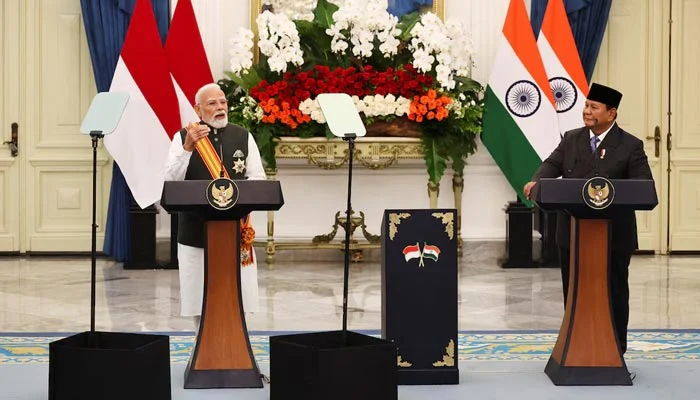
    India plans to supply BrahMos supersonic cruise missiles along with Astra air-to-air missiles to Indonesia, according to an Indian government official on Tuesday, coinciding with Prime Minister Narendra Modi’s two-day visit to Jakarta. Earlier reports from Indian sources indicated that a deal, valued at approximately $630 million, is likely to be signed during Modi’s stay.

    Indonesia is set to become the third country to formalize an agreement to purchase these missiles, produced by BrahMos Aerospace Private Limited. This deal signifies a significant boost in India’s defense exports and strengthens strategic partnerships with Southeast Asia’s largest economy.

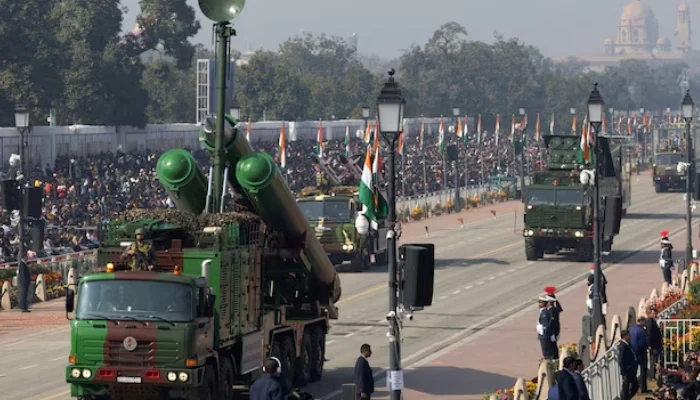
    Developed collaboratively by India and Russia, BrahMos missiles are among the fastest in the world and can be launched from land, sea, and air platforms. The Astra beyond-visual-range air-to-air missile can be integrated with Indonesian Sukhoi fighters, which are domestically made by Russia.

    Officials on both sides did not immediately respond to requests for comments. Indonesia had previously announced in March an agreement with India to acquire the BrahMos missile system. At that time, Indonesia’s Defense Ministry described the deal as being in advanced negotiations, with an expected value between $200 million and $350 million.

    India has also reached agreements to sell BrahMos missiles to Vietnam and the Philippines and has garnered interest from more than half a dozen other nations, including the United Arab Emirates.

    During his visit, Modi is expected to discuss maritime security, defense industrial cooperation, regional connectivity, and broader strategic coordination within the Indo-Pacific region with Indonesian President Prabowo Subianto. The negotiations around the BrahMos deal are expected to emphasize a phased approach, allowing Indonesia to incrementally expand its missile capabilities. The package under consideration may include missile systems, supporting infrastructure, operator training, maintenance services, and other technical support aimed at long-term deployment.

    Trade between India and Indonesia reached $28.15 billion in the 2024-2025 fiscal year, positioning Indonesia as India’s second-largest trading partner within ASEAN.

    Ahead of the visit, Modi emphasized that his trips to Indonesia, Australia, and New Zealand are designed to bolster India’s “Act East” policy, its commitment to regional security, and its vision for a free, open, and inclusive Indo-Pacific region.

  • India Approves $5.46 Billion Military Equipment Purchase

    India Approves $5.46 Billion Military Equipment Purchase

    India has given the green light for a $5.46 billion purchase of various military systems, including missiles, electronic warfare gear, and Kamikaze drones. The move was approved “in-principle” by the Defense Acquisition Council, which includes top military leaders and is led by the defense minister, according to a government statement.

    The expected cost of the entire deal is approximately 520 billion Indian Rupees ($5.46 billion). The statement did not specify whether these systems would be imported or produced domestically, nor did it specify the timeline for completing the acquisition.

    Over the past decade, India has been working to lessen its reliance on Russia, its traditional military equipment supplier, shifting toward purchases from the United States and France, alongside efforts to boost local manufacturing.

    The approved procurement includes anti-drone and electronic warfare systems, medium-range surface-to-air and portable anti-tank missiles, and a “Jet-Based Kamikaze Drone System” for the Indian Army. The government also greenlit the acquisition of new naval mines, shipborne drones, and a maritime testing facility to enhance naval defense and surveillance. Additionally, India plans to acquire a high-altitude unmanned aircraft platform for intelligence and remote sensing purposes.

    India’s current defense spending is around $85 billion, as the country pushes forward with modernization efforts. Recently, Delhi ordered at least 75 ships and submarines, most of which are domestically built, and approved defense spending worth approximately $39 billion, including Rafale fighter jets from France.

  • Iran hits US bases in Jordan and Gulf after Trump strikes near Hormuz

    Iran hits US bases in Jordan and Gulf after Trump strikes near Hormuz

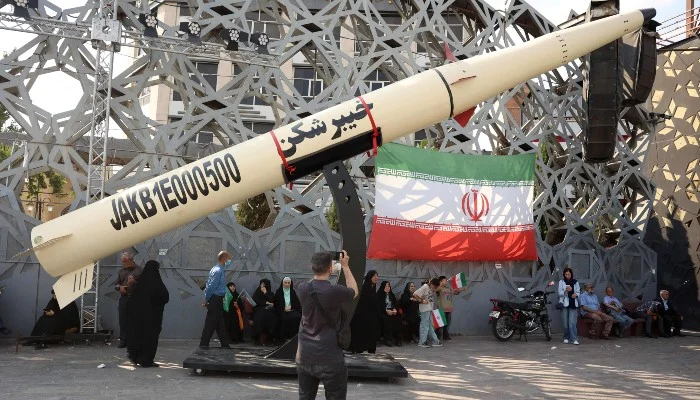
    Iranians gather next to a symbol of a Kheibar missile during a rally in Tehran on June 4, 2026. — AFP

    – Iran’s Revolutionary Guards claim they targeted U.S. military bases.
    – The U.S. military previously conducted strikes against Iranian sites.
    – This escalation endangers a delicate ceasefire and long-term peace efforts.

    Iran’s Revolutionary Guards announced they launched attacks against a U.S. base in Jordan and 21 additional targets across the Gulf on Wednesday. This was in response to U.S. strikes around the Strait of Hormuz, according to Iranian media reports.

    These clashes represent one of the largest exchanges of hostilities since the ceasefire was established in April.

    The Iranian attacks, which included locations in Kuwait and Bahrain, followed a U.S. military statement on X (formerly Twitter), revealing targeted strikes on Iranian air defense systems, ground control stations, and surveillance radar sites near the Strait. U.S. President Donald Trump described the strikes as a strong and powerful response to the downing of a U.S. Apache helicopter on Tuesday.

    “We need a very robust and forceful response, and that’s what this is,” Trump told ABC News on Tuesday.

    The increase in hostilities casts doubt on prospects for a peace agreement to end the conflict that began with U.S.-Israeli strikes against Iran on February 28. Iran responded by firing at Gulf neighbors hosting U.S. bases and restricting navigation through the Strait of Hormuz, a critical route for global oil and gas shipments.

    The recent U.S. strikes, which lasted about four hours, concluded just before 9 p.m. ET (1 a.m. GMT Wednesday), with nearly 20 Iranian targets hit, according to a U.S. official.

    Iranian state media reported attacks on Qeshm Island and the port city of Sirik in the Strait of Hormuz.

    Sounds of explosions were reported in Bandar Abbas and later near Jask, close to the Strait’s entrance, citing local sources.

    In retaliation, Iran’s Revolutionary Guards targeted four sites at the U.S. al-Azraq base in Jordan with long-range missiles. Targets included F-35 fighter jet hangars and a command center, with warnings that further U.S. attacks would meet a “crushing and decisive” response.

    Jordanian forces intercepted and shot down five missiles aimed at al-Azraq. Debris from the interceptions fell on Jordanian territory but caused no injuries or damage.

    The Kuwaiti military reported engaging hostile aerial targets and urged citizens to follow official safety protocols after Iran’s Guards claimed to have targeted the Ali Al Salem base with drones.

    Iran’s Guards also claimed targeted strikes against the U.S. Fifth Fleet in Bahrain with drones, threatening more severe responses if tensions persisted. Bahrain’s Interior Ministry issued a warning siren and advised the public to seek safety. Bahrain’s defense systems reportedly repelled Iranian attacks.

    An anonymous U.S. official stated that nearly all Iranian missiles and drones were intercepted, with no immediate reports of U.S. casualties or damage. The Pentagon has not yet issued an official comment, and battlefield verification remains pending.

    Oil prices rose approximately 1% early Wednesday in Asian markets amid these hostilities.

    On Tuesday, an Iranian attack drone downed a U.S. Apache helicopter, though the two U.S. pilots involved were unharmed, according to Trump.

    Iran’s state media recounted that no offensive air operations occurred in the Strait of Hormuz in the past 24 hours.

    A U.S. Navy drone rescued the two crew members after their helicopter went down off Oman’s coast during patrol around 3 a.m. Tuesday. The U.S. Central Command provided no explanation for the crash, stating the pilots are in stable condition.

    Iranian Foreign Minister Abbas Araghchi did not directly comment on the helicopter incident but warned via X that external forces in the region might become involved in accidents or crossfire. “The best way to reduce risk is for foreign forces to leave,” he wrote.

    Trump minimized the incident during a call with The Wall Street Journal, emphasizing that it “wasn’t a big deal” and that “the pilot is fine.”

    Nonetheless, this episode could hinder ongoing peace negotiations to de-escalate the broader Middle East conflict and reopen the Strait of Hormuz.

    Though Trump stated Iran and the U.S. are close to an agreement, tangible progress remains elusive since a tentative ceasefire was enacted in early April. Ongoing fighting between Israel and Hezbollah, along with Tehran’s restrictions on shipping through the Strait, have kept tensions high. Before the conflict, this route managed about 20% of the world’s crude oil and natural gas exports. The U.S. also maintains its own blockade of Iranian ports.

    U.S. Energy Secretary Chris Wirth said traffic in Hormuz is steadily increasing but cautioned that full recovery of energy flows could take many months after the war ends.

    Trump insists any peace deal must include guarantees that Iran will not develop nuclear weapons, though Tehran denies pursuing such weapons.

    Iran’s demands include the lifting of sanctions, the release of frozen assets, and recognition of its control over the Strait.
  • US Targets Iranian Assets to Aid Gulf Allies’ Reconstruction

    US Targets Iranian Assets to Aid Gulf Allies’ Reconstruction

    People walk past a billboard featuring the late leader of the Islamic Revolution, Ayatollah Ruhollah Khomeini, alongside Iran’s late Supreme Leader Ayatollah Ali Khamenei, on a street in Tehran, Iran, June 6, 2026. — Reuters

    The United States reports shooting down two additional Iranian attack drones. Previously, Iran targeted Kuwait and Bahrain with missiles and drones. Mohsin Naqvi visits Tehran carrying a letter addressed to Iran’s Supreme Leader.

    The US aims to redirect Iranian assets toward rebuilding efforts and damage repairs in Gulf states, a well-informed source revealed. This move follows Iran’s recent drone launches and strikes against Kuwait and Bahrain.

    Treasury Secretary Scott Bessent has tasked a team with assessing the costs associated with damage caused to Gulf allies by Iran, the source said on Saturday. The US is also contemplating using Iranian assets for future repair needs.

    This announcement comes a day after Mohsen Rezaei, an advisor to Iran’s Supreme Leader, told CNN that a peace agreement to end the three-month-long conflict relies on the release of $24 billion in Iranian assets frozen by the US.

    The nature of the assets under review has not been specified. The language suggests measures might extend beyond just frozen funds.

    The possibility of redirecting Iranian assets could complicate the fragile ceasefire between the US and Iran, which was tested again this weekend with strikes from both sides.

    Peace negotiations seem to have stalled. Nevertheless, Mohsin Naqvi traveled to Tehran on Saturday with a letter to Iran’s Supreme Leader, Ayatollah Mojtaba Khamenei, according to Iran’s semi-official ISNA news agency.

    US forces launched strikes early Saturday on Iranian radar sites in Goruk and Qeshm Island, located in the Strait of Hormuz, following Iran’s drone attacks that the US Central Command says threatened maritime traffic. Two more Iranian attack drones, which were endangering shipping, were also shot down late Saturday.

    Iran’s Revolutionary Guards claimed they retaliated against US bases in Kuwait and Bahrain. Kuwait’s military reported intercepting seven ballistic missiles crossing over populated areas, causing material damage but no casualties.

    In Bahrain, sirens sounded, and residents were advised to seek shelter. Both Kuwait and Bahrain condemned the strikes.

    Iran later claimed it hit US bases in both nations with ballistic missiles, though the US military said six missiles were intercepted and one failed to reach its target.

    OPEC+ is considering another increase in oil output, but ongoing conflict continues to hinder shipments. Negotiations between the US and Iran for a temporary deal to halt the conflict have been mostly indirect, leaving unresolved issues like Iran’s nuclear program for future talks.

    Iran seeks access to billions in oil revenue, waivers on sanctions on crude exports, the lifting of US port blockades, and control over the Strait of Hormuz—a waterway now effectively blocked by Iran, which previously accounted for about a fifth of global oil trade before the war.

    US President Donald Trump faces mounting domestic pressure to end the war as fuel prices rise. During an interview with NBC, he stated that most of Iran’s missile and drone manufacturing facilities have been destroyed, though Iran still retains around 20% of its missiles.

    “Some missiles, some drones. Percentage-wise, probably 21% to 22% of their missiles. It’s a significant number, but not as extensive as when we first acted,” Trump told NBC’s “Meet the Press,” excerpts of which were released Friday.

    The conflict has increased global oil prices and driven inflation. On Sunday, OPEC+ is expected to approve a fourth consecutive monthly increase in oil production targets, despite ongoing war-related constraints on several member countries’ production capabilities.

    Israel’s military announced Sunday it intercepted two projectiles that crossed into Israeli territory from Lebanon. This followed Lebanon’s report that Israeli strikes killed two army officers and a soldier in southern Lebanon a day earlier.

  • Russia Tests Nuclear Strength Amid NATO Tensions

    Russia Tests Nuclear Strength Amid NATO Tensions

    Russia announced on Thursday that it has delivered nuclear ammunition to storage sites in Belarus and displayed parts of its strategic nuclear capabilities. This move comes amidst rising tensions with European NATO allies over the Ukraine conflict and increased drone activity in the Baltic region.

    Moscow is currently conducting some of its largest nuclear drills in years, involving approximately 64,000 personnel. The drills focus on preparing and potentially using nuclear forces in response to aggression. The three-day exercise, kicking off Tuesday across both Russia and Belarus, involves the Strategic Missile Forces, the Northern and Pacific Fleets, long-range aircraft, and units from the Leningrad and Central military districts.

    As part of the maneuvers, Russia showcased a Borei-class nuclear submarine, Il-38 anti-submarine aircraft, a MiG-31 fighter armed with a Kinzhal hypersonic missile, and RS-24 Yars intercontinental ballistic missiles. President Vladimir Putin emphasized that nuclear weapon use would be a “last resort,” but highlighted the importance of maintaining a nuclear triad as vital for safeguarding sovereignty and strategic stability.

    In Belarus, a missile unit is training to handle special munitions for the mobile Iskander-M tactical missile system, including loading weapons onto launch vehicles, Russia stated. Most of these exercises use dummy warheads, with the defense ministry releasing footage of a military truck traveling openly with minimal security, as well as images of submarines, aircraft, and ships involved in the drills.

    These activities come at a time when Moscow insists it is engaged in an existential struggle with the West over Ukraine. Throughout the conflict, Putin has repeatedly reminded the world of Russia’s nuclear strength as a warning to Western countries not to escalate their support for Kyiv. Critics from Ukraine and parts of the West dismiss these displays of force as reckless saber-rattling.

    Meanwhile, tensions in the Baltic region are escalating. Moscow has accused Baltic nations of allowing Ukrainian drones to fly over their airspace toward northern Russia, an assertion NATO has denied. These Baltic states, strong supporters of Ukraine, counter that Russia is directing Ukrainian drones into their airspace from their own territories, targeting Russia.

    The Kremlin criticized Lithuanian Foreign Minister Kestutis Briedis’ recent remarks, calling them “near madness” after he suggested NATO should demonstrate to Moscow that it can penetrate Kaliningrad, a heavily militarized Russian exclave nestled between Lithuania and Poland on the Baltic coast. With a population of about one million, Kaliningrad hosts Russia’s Baltic Fleet and remains a strategic point of tension in the region.

  • US and Iran Clash in Hormuz Amid Ceasefire Talks

    On Thursday, the U.S. and Iran fired at each other, marking their most intense conflict since both sides agreed to a temporary ceasefire. Iran stated that everything returned to normal afterward, while the U.S. claimed it didn’t want to escalate the situation.

    Iran’s military alleges that the U.S. attacked two ships entering the Strait of Hormuz and launched strikes on Iranian land. The U.S. military responds that it retaliated against Iranian assaults.

    President Trump told an ABC reporter that the ceasefire was still active and minimized the clash, calling it “just a love tap,” according to her social media post.

    Iranian state media reported that the situation had stabilized following the strikes. These hostilities came as Washington was waiting to hear Iran’s reaction to a U.S. proposal aimed at ending the fighting, though key issues such as Iran’s nuclear program would remain unresolved for now. Since the ceasefire started on April 7, there have been intermittent exchanges of gunfire between the two nations.

    Iran’s top military command accused the U.S. of breaching the ceasefire by attacking an Iranian oil tanker and another vessel, as well as conducting airstrikes on civilian areas on Qeshm Island and nearby coastal regions in Bandar Khamir Sirik. In response, Iran said it targeted U.S. military ships east of the Strait and south of Chabahar. A spokesperson for Iran’s Khatam al-Anbiya Headquarters claimed the strikes caused significant damage, but the U.S. Central Command denied any of its assets were hit.

    CENTCOM indicated Iran used missiles, drones, and small boats in its attack, which targeted three U.S. Navy destroyers. The U.S. responded by striking missile and drone sites and other locations. The military emphasized it does not seek escalation but remains prepared to defend American forces.

    Later, Iran’s Press TV reported that after hours of fighting, the situation on Iranian islands and coastal cities near the Strait of Hormuz had returned to normal.

    This isn’t the first time the sides have exchanged fire since the ceasefire. Just days earlier, the U.S. military said it destroyed six Iranian small boats and intercepted cruise missiles and drones to prevent Iran from disrupting a U.S. naval effort to facilitate shipping through the Strait.

    Previously, the U.S. floated a proposal to formally end the conflict, although it does not address Iran’s nuclear activities or the reopening of the Strait—an essential route that handles about 20% of global oil and gas shipments. Iran has not yet committed to the plan.

    Separately, the U.S. imposed sanctions on Iran-supported figures, including Iraq’s deputy oil minister and three militia leaders. Meanwhile, Israel announced it had killed a Hezbollah commander in an airstrike in Beirut, the first such attack there since last month’s ceasefire. A key Iranian demand in negotiations with Washington has been a halt to Israeli strikes in Lebanon.

  • UN Summit on Nuclear Proliferation Amid Global Conflicts

    Signatories of the historic nuclear non-proliferation treaty will gather at the United Nations starting Monday, as optimism dims about reaching a consensus and tensions escalate among nuclear-armed nations. In 2022, during the previous review, UN Secretary-General Antonio Guterres warned that humanity was “just one misunderstanding, one miscalculation away from nuclear annihilation.” The situation has only deteriorated since then.

    Izumi Nakamitsu, the UN High Representative for Disarmament Affairs, expressed concern, stating, “All member states seem to share a sense of crisis.” She highlighted that there are currently no bilateral arms control agreements between the world’s two largest nuclear powers, especially noting the expiration of the New START treaty between Moscow and Washington in February. She added, “We are also seeing an overall increase in nuclear capabilities across all nuclear-armed nations.”

    Nakamitsu emphasized that rising geopolitical conflicts have halted the post-Cold War momentum toward disarmament. The nuclear non-proliferation treaty (NPT), ratified by nearly every country—except notable outliers like Israel, India, and Pakistan—aims to curb nuclear weapons proliferation, promote disarmament, and foster cooperation on civilian nuclear technology.

    As of January 2025, the nine countries with nuclear arsenals—Russia, the United States, France, the UK, China, India, Pakistan, Israel, and North Korea—possessed a combined total of 12,241 nuclear warheads, according to SIPRI. The U.S. and Russia hold nearly 90% of these weapons and have recently invested heavily in modernizing them. China’s nuclear stockpile has also expanded rapidly, prompting G7 nations to warn about Moscow and Beijing’s growing nuclear capabilities.

    Former President Donald Trump has hinted at the possibility of conducting new nuclear tests, citing other countries’ actions. In March, French President Emmanuel Macron announced a significant upgrade to France’s nuclear force, which now totals about 290 warheads.

    Seth Sheldon from the International Campaign to Abolish Nuclear Weapons (ICAN), a Nobel laureate organization, noted, “Trust is clearly eroding inside and outside the NPT framework.” He questioned the summit’s prospects, pointing out that decisions require consensus and previous conferences failed to produce formal political statements. In 2015, disagreements mainly stemmed from U.S. opposition to establishing a nuclear-free zone in the Middle East, while in 2022, disputes centered around Russia’s objections to references to Ukraine’s Zaporizhzhia nuclear plant, which Moscow occupies.

    This year’s summit faces numerous hurdles, including ongoing conflicts in Ukraine, Iran’s nuclear ambitions, proliferation fears among non-nuclear states, and North Korea’s expanding nuclear arsenal. If the summit ends in failure for a third consecutive time, experts suggest the NPT could gradually disintegrate, even if it doesn’t collapse overnight.

    Artificial intelligence is emerging as a key issue on the agenda, with some nations advocating for maintaining human control over nuclear weapons to prevent accidental or unauthorized use.

  • US missile reserves dwindle significantly amid Iran conflict: report

    US missile reserves dwindle significantly amid Iran conflict: report

    A Terminal High Altitude Area Defense (THAAD) interceptor is launched during a successful intercept test, in this undated handout photo provided by the US Department of Defense, Missile Defence Agency. — Reuters

    The U.S. military used nearly half of its Patriot interceptor missile supply during a seven-week operation against Iran, according to an analysis by the Center for Strategic and International Studies (CSIS).

    A report from Washington-based outlet The Hill highlighted significant missile stockpiles depletion across several key weapon types, raising concerns about the United States’ readiness for a potential conflict with China.

    CSIS’s study released Tuesday indicates that U.S. forces fired almost 50% of their Patriot missiles during the Iran operation. Additionally, more than half of Terminal High Altitude Area Defense (THAAD) interceptors were used, along with over 45% of Precision Strike Missiles (PrSMs) during the Iran air and missile campaign.

    The report further noted that over 20% of Joint Air-to-Surface Standoff Missiles (JASSMs), more than 30% of SM-3 interceptors, and at least 10% of SM-6 missiles were expended under Operation Epic Fury.

    Rebuilding these stockpiles—including Tomahawk cruise missiles and JASSMs—could take between one to four years, CSIS warns. These weapons are critical for any future conflict in the Western Pacific.

    “Even before the Iran conflict, stockpiles were considered insufficient for a fight against a peer adversary. That shortfall is now even more urgent, and restoring adequate levels for a potential war with China will require additional time,” the authors stated.

    While the U.S. is currently capable of maintaining operations against Iran, the remaining arsenal would be inadequate in a showdown with a major opponent like China, the report suggests.

    In response to these findings, United States Central Command (Centcom), which led the Iran campaign, announced that it is actively rebuilding its capacity during the ceasefire. Centcom posted on social media that its forces “remain prepared.”

    Centcom Commander Admiral Brad Cooper, speaking alongside Defense Secretary Pete Hegseth, said, “We are rearming, retooling, and adjusting our tactics, techniques, and procedures.”

    “No other military adjusts as swiftly as ours, especially during a ceasefire,” he added.

    The report coincides with earlier remarks by President Donald Trump in March, following talks with top defense contractors, where he announced plans to increase the production of high-end weapons four times over.

    Pentagon spokesperson Sean Parnell defended the military’s capabilities, telling The Hill that the U.S. remains fully equipped. “The U.S. military is the strongest in the world and has everything needed to carry out missions at the President’s direction,” he stated.

    “As Secretary Hegseth has pointed out repeatedly, less than 10% of America’s navy handled traffic through the Strait of Hormuz. Since President Trump took office, we’ve executed multiple successful missions across various commands, all while maintaining a robust arsenal to safeguard our interests,” Parnell added. “Efforts to alarm Americans about munitions shortages are unfounded and unpatriotic.”

    Additionally, Pentagon Comptroller Jules ‘Jay’ Hurst mentioned plans to extend multi-year munitions contracts up to seven years, aiming to improve supply chains and support long-term investment. This initiative forms part of the proposed $1.5 trillion defense budget.

    “Once Operation Epic Fury concludes, naval assets sent to the Middle East will return to the Pacific. Munitions stocks will gradually recover, but restoring and maintaining proper levels could take many years,” the report authors, Mark F. Cancian and Chris H. Park, concluded.

  • North Korea Launches Ballistic Missiles Amid Iran Conflict

    North Korea Launches Ballistic Missiles Amid Iran Conflict

    North Korea fired ballistic missiles into the ocean on Sunday, accelerating its missile testing amid rising tensions related to Iran’s conflict and rumors of potential meetings with the U.S. and South Korea. Pyongyang’s increased missile activity—this being the fourth launch this month and the seventh in the year—is viewed by analysts as a demonstration of its defensive strength and a move to strengthen its international standing.

    Experts suggest these missile tests serve to showcase North Korea’s self-defense capabilities, setting it apart from Iran, according to Kim Ki-jung, a former security adviser to South Korea’s president. “The missile launches could be a way for North Korea to prove that, unlike Iran, it possesses credible self-defense systems,” he explained. “It also seems designed to exert pressure and display strength ahead of any negotiations with the U.S. and South Korea,” he added.

    With the ongoing seven-week conflict between the U.S. and Israel against Iran—aimed at limiting Tehran’s nuclear ambitions—some speculate that North Korea’s nuclear program may be emboldened by the turmoil. Both U.S. President Donald Trump, during preparation for a summit in China next month, and South Korean leader Lee Jae Myung have shown interest in meeting with Kim Jong Un; however, no official plans have been announced.

    Sunday’s missile launches originated near Sinpo on North Korea’s eastern coast, traveling approximately 140 km (about 90 miles) before landing in the sea, South Korea’s military reported. Japan indicated that the missiles likely fell close to the Korean Peninsula’s eastern coast, with no impact on Japan’s exclusive economic zone confirmed. South Korea’s presidential office condemned the launches as provocative acts, violating UN Security Council resolutions, and called for Pyongyang to cease such actions.

    Details about the missile types remain unclear, but Sinpo hosts submarines and equipment capable of testing submarine-launched ballistic missiles. North Korea’s previous submarine missile launch occurred in May 2022, reaching distances of up to 600 km (around 370 miles). Additionally, the International Atomic Energy Agency’s chief, Rafael Grossi, noted that Pyongyang has made significant advances in nuclear weapon production, possibly including a new uranium enrichment facility. North Korean leader Kim Jong Un earlier in March affirmed the country’s irreversible nuclear status and emphasized the importance of expanding its “self-defensive nuclear deterrent” for national security.

  • India approves $25bn for aircraft & Russian S-400 missile acquisitions

    India approves $25bn for aircraft & Russian S-400 missile acquisitions

    India’s “Akash” missiles, mounted on trucks, are showcased during the Republic Day parade in New Delhi on January 26, 2020. — Reuters

    – India’s military budget has hit $71 billion for this fiscal year.
    – The country has recorded its highest defense expenditure ever in a single year.
    – India ranks as the world’s second-largest importer of arms.

    India has greenlit $25 billion in new defense procurement proposals, including transport aircraft, Russian S-400 missile systems, and remotely piloted attack aircraft, as part of its efforts to modernize its military and replace outdated equipment following recent conflicts with Pakistan.

    This decision follows a previous major approval last month for a $40 billion package to purchase additional French Rafale fighter jets for the Air Force and Boeing P-8I reconnaissance planes for the Navy.

    The recent approvals also encompass the acquisition of armor-piercing tank ammunition, artillery systems, aerial surveillance technology, upgrades for Sukhoi-30 fighters used by the Air Force, and hovercraft for the Coast Guard, according to a statement from the defense ministry.

    Additionally, India signed a 4.45 billion rupee ($47 million) contract with Russia’s JSC Rosoboronexport to purchase Tunguska air defense missile systems for the Army.

    Overall, during the fiscal year ending March 31, India approved 55 proposals valued at 6.73 trillion rupees ($71 billion) and signed contracts for 503 proposals totaling 2.28 trillion rupees. Both figures represent record highs for a single fiscal year.

    Currently, India is the fifth-largest military spender globally and ranks as the second-largest arms importer after Ukraine, based on data from the Stockholm International Peace Research Institute.

    For decades, India has been modernizing its largely Soviet-era military equipment and increasingly sourcing new technology from France, Israel, the United States, and Germany. In recent years, the country has emphasized domestically producing a variety of military hardware—including firearms, drones, fighter jets, and submarines—either independently or through international collaborations.

  • North Korea launches 10 ballistic missiles amid US-South Korea drills

    North Korea launches 10 ballistic missiles amid US-South Korea drills

    North Korea launched over ten ballistic missiles into the sea on Saturday, according to South Korea’s military. This occurred during joint military drills conducted by the U.S. and South Korea, with U.S. President Donald Trump re-engaging in diplomatic efforts with Pyongyang.

    Japan’s coast guard reported detecting perhaps a ballistic missile that landed in the ocean, likely outside Japan’s exclusive economic zone, as per NHK, citing military sources.

    The missiles were fired from near Pyongyang around 1:20 p.m., targeting waters off North Korea’s east coast, South Korea’s Joint Chiefs of Staff announced. North Korea has been testing a variety of ballistic and cruise missiles for more than twenty years, striving to develop nuclear delivery capabilities, which it is believed to have accomplished.

    Despite multiple United Nations Security Council sanctions imposed since 2006, Pyongyang continues to defy international pressure, facing significant economic and trade restrictions.

    This week, South Korea and the United States launched their annual large-scale military exercises, emphasizing their defensive purpose—focused on evaluating readiness against potential North Korean threats.

    On Saturday, hundreds of U.S. and South Korean troops participated in river-crossing maneuvers, utilizing tanks and armored vehicles, led by the commanding officer of their combined forces. The U.S. has approximately 28,500 military personnel and numerous fighter jets stationed in South Korea.

    North Korea often protests these exercises, viewing them as rehearsals for potential aggression by the allies.

    Earlier in the week, South Korea’s Prime Minister Kim Min-seok met with President Trump in Washington, discussing strategies to reopen dialogue with North Korea. Trump expressed a strong interest in meeting with North Korean leader Kim Jong Un, which Kim conveyed to reporters.

  • US Missile Strike on Iran School Caused by ‘Targeting Error’: Report

    US Missile Strike on Iran School Caused by ‘Targeting Error’: Report

    The U.S. carried out a Tomahawk missile strike on an Iranian elementary school due to a targeting mistake, according to The New York Times. The investigation into the February 28 attack is still underway, but early findings point to U.S. responsibility. The military was striking an adjacent Iranian base, and the coordinates used for targeting were based on outdated information.

    Previously, President Donald Trump suggested Iran might have been behind the strike but later stated he was comfortable with whatever conclusion the investigation reached. When asked about the NYT report, Trump responded, “I don’t know about it.” Iran claims that over 150 people were killed in the missile attack on the school in Minab.

    The newspaper reports that U.S. Central Command officials used obsolete data from the Defense Intelligence Agency to determine the strike targets. Investigators are examining why this outdated data was used and who failed to verify its accuracy. The site of the attack was adjacent to facilities operated by Iran’s Revolutionary Guard Navy, and the school was situated on the same block as these military buildings, which had been fenced off from the base between 2013 and 2016.

    Independent verification remains elusive, as AFP has not been able to access the strike location or confirm the reported civilian casualties. Iran attributes the attack to the U.S. and Israel; however, Israel denies involvement or any prior knowledge. U.S. Secretary of State Marco Rubio stated that the U.S. would not intentionally target a school.

  • Dubai: Iran’s Banker Targeted in Bombing

    Dubai: Iran’s Banker Targeted in Bombing

    On November 14, 1979 — just ten days after Iranian students seized the US embassy in Tehran — then-President Jimmy Carter issued Executive Order 12170. This order instantly froze approximately $8 billion in Iranian government assets held in the United States. The action was carried out through the US Treasury’s Office of Foreign Assets Control, marking the start of America’s modern sanctions campaign against Iran.

    As sanctions intensified, major global banks and corporations like Citibank, Chase Manhattan, Bank of America, HSBC, Standard Chartered, BNP Paribas, Deutsche Bank, Commerzbank, Credit Suisse, and Barclays, along with energy giants Shell, Total, ENI, and industrial leaders like Siemens, General Electric, and Boeing, all distanced themselves from Iran. This collective withdrawal left Iran increasingly isolated financially.

    Iran faced the urgent need to convert its oil revenues into foreign currency usable on the international stage. It also required funds to procure missile components, electronics, and weapons through global supply networks. Iran relied heavily on proxy groups like Hezbollah and the Houthis for political influence and military operations. To keep these operations running, Iran had to develop covert banking channels for cross-border transactions, utilizing front companies and shadow traders to continue selling oil despite sanctions. Drones, cash shipments, and logistical connections across Iraq, Syria, and Lebanon became vital cogs in Iran’s clandestine power-building machine. Essentially, Iran didn’t just depend on oil revenue; it depended on a sophisticated global infrastructure to bypass sanctions and turn oil into influence.

    For nearly five decades, Dubai served as the nerve center for Iran’s financial evasion network—a neutral trading hub where money from tangled origins could flow unimpeded. Despite attempts by the US Treasury over two decades to dismantle this web, Dubai’s economic independence and strategic geographic position kept the architecture largely intact, with the UAE often choosing not to cooperate fully.

    On February 28, 2026, Iran launched a barrage of missile, drone, and cruise missile attacks against the UAE. Why would Iran strike its own financial lifeline? Perhaps regime survival trumped economic logic, or maybe the relationship with the UAE had become too compromised—especially since the UAE had been quietly coordinating with Israel since the Abraham Accords of 2020. Alternatively, it could reflect a deeper institutional failure: the IRGC, operating as a parallel state, may have made decisions outside of Iran’s national interests, acting on its own agenda rather than central government strategy. Instead of consulting the cabinet, the missile commands appeared to follow their own calculations.

    From February 28 to March 4, Iran launched a total of 189 ballistic missiles, 941 drones, and three cruise missiles at the UAE—more than a thousand projectiles in just six days.

    The Wall Street Journal reports that the UAE is now considering shutting off Iranian access to billions of dollars stored within its borders. After nearly five decades of building a financial architecture in Dubai—one that US authorities never fully dismantled—Iran’s recent attack might finally force Dubai to sever its longstanding links, effectively doing what Washington has spent twenty years trying to achieve.

    In essence, Iran’s missile assault was not merely an attack on a city but potentially a strike against its own covert financial infrastructure. This could be the moment that finally pushes the last banks to cut Iran loose, leaving Tehran without the financial channels it has relied on for so long.

  • Israel plans second-stage strike on Iran’s underground missile sites

    Israel plans second-stage strike on Iran’s underground missile sites

    A second phase of Israel’s operations in Iran is underway, focusing on attacking underground ballistic missile facilities and related equipment, according to two military source familiar with the campaign. The first week of joint Israeli and U.S. strikes has targeted above-ground Iranian missile launchers capable of striking Israeli cities. The upcoming phase involves penetrating deep underground bunkers used for storing missiles and military gear.

    One source indicated Israel’s goal is to disable Iran’s capacity to carry out aerial attacks by the war’s end while also targeting the country’s leadership. The Israeli military has not publicly confirmed plans to strike underground facilities but previously claimed control over much of Iran’s airspace during early attacks.

    Recently, the military announced overnight airstrikes on a subterranean site used by Iran to store ballistic missiles and related missile storage facilities. It’s the first time Israel has publicly acknowledged targeting underground missile infrastructure since the joint U.S.-Israeli campaign began Saturday.

    Iran’s missile stockpile estimates vary significantly—ranging from about 2,500 to as many as 6,000 missiles, depending on the source. The remaining stockpiles’ size could greatly influence how the conflict unfolds, as Iran continues launching missiles at Israel and other regional targets.

    Strategic analysts, including Douglas Barrie from the UK’s International Institute for Strategic Studies, noted that Iran still possesses some land-attack cruise missiles and precision-guided low-flying weapons designed to evade radar detection.

    Since Saturday, Israeli air operations have been extensive, intensifying after Hezbollah in Lebanon launched rockets at Israel, prompting substantial Israeli strikes as far north as Beirut. In some cases, Israeli jets have struck both Iran and Lebanon in one sortie—targeting Tehran and western Iran before returning to strike Hezbollah positions, according to sources with knowledge of the plans.

    Since the start of the attacks, launches of ballistic missiles and drones from Iran have declined, a trend attributed partly to Israeli and U.S. strikes on Iranian launch sites and military infrastructure. Israel suggests Iran may also be holding back to conserve missile stocks for prolonged conflict.

    Eran Lerman, a former Israeli deputy national security adviser, expressed that early expectations were for Iran’s regime to begin collapsing quickly following initial strikes. However, this has not yet happened, and he emphasized the need to further degrade Iran’s military and leadership capabilities.

  • Are Iran’s missiles draining US interceptor supplies?

    Are Iran’s missiles draining US interceptor supplies?

    US forces have intercepted and shot down hundreds of Iranian ballistic missiles recently, prompting concerns about how long American air defense stocks will last in a conflict that could stretch on for weeks or more.

    Iran responded to the extensive US-Israeli air campaign launched over the weekend by unleashing hundreds of missiles and drones on countries throughout the Middle East that host American forces and installations.

    Since the conflict began, the United States has intercepted hundreds of missiles aimed at US personnel, allies, and regional stability, according to General Dan Caine, the top US military official, on Monday.

    While these interceptions have successfully prevented the missiles from hitting their targets, they also rely on expensive, high-tech interceptors that are currently in limited supply.

    “There’s a risk that the US and its allies could run out of interceptors before Iran depletes its missile stockpile, though it’s not a certainty,” explained Kelly Grieco, a senior researcher at the Stimson Center think tank.

    Initially, Israel estimated Iran possessed approximately 2,500 ballistic missiles—”almost certainly exceeding the combined missile interception capacity of Israel and the U.S.,” Grieco noted.

    However, both the US and Israel are conducting efforts to locate launchers and storage sites. “The race is essentially between Iranian missile launchers and American and Israeli strikes on those launch sites,” she added.

    Demand for interceptors is now outpacing production. General Caine mentioned that Iranian drones also pose a threat but did not specify how many had been shot down, only stating that “our systems have proven effective against these platforms, engaging targets swiftly.”

    Grieco emphasized that while drones are consuming interceptors, the most critical shortage currently is in ballistic missile interceptors.

    The length of the conflict remains uncertain, and how long the US can sustain its missile defense efforts depends heavily on how long it continues. Former President Donald Trump has mentioned a multi-week war, though he also said Monday that “we’re already ahead of our projections.”

    “Initially, we estimated four to five weeks, but we have the capacity to extend the fight if needed,” Trump stated.

    Pentagon Secretary Pete Hegseth suggested timelines ranging from two to six weeks, noting that the situation could accelerate or slow down.

    Joe Costa, who oversees defense programs at the Atlantic Council, warned that prolonged conflict with Iran could severely deplete US stocks of critical air defense interceptors, affecting both the China front and other global priorities.

    “The key factor is how effective the US and Israel are in dismantling Iran’s missile and drone launch capabilities,” he said.

    Grieco pointed out that manufacturing of interceptors simply can’t keep up with current demand. “Every theater—whether in Europe, the Indo-Pacific, or the Middle East—has an urgent need for missile defense systems, and the US is consuming them faster than we can produce more.”

  • Iran Approaching Agreement to Purchase Chinese Supersonic Anti-Ship Missiles

    Iran Approaching Agreement to Purchase Chinese Supersonic Anti-Ship Missiles

    A newly revealed hypersonic ballistic missile named “Fattah,” capable of reaching 1,400 km, was showcased in Tehran on June 6, 2023.— Reuters/File

    • Supersonic missile designed to bypass ship defenses.
    • Iran and China are also negotiating for anti-ballistic weapon systems.
    • Transfer of missiles aims to circumvent UN arms embargo.

    Iran is nearing an agreement with China to purchase anti-ship cruise missiles, according to six sources familiar with the negotiations, just as the US has positioned a large naval force near Iran’s coast amid the threat of potential military strikes.

    The talks for Chinese-made CM-302 missiles are close to finalization, although a delivery date has not yet been set, the sources said. These supersonic missiles can travel approximately 290 kilometers and are designed to evade ship-based defenses by flying low and at high speeds. Their deployment would significantly boost Iran’s offensive capabilities and threaten US naval forces in the region, experts noted.

    The negotiations, which started at least two years ago, gained momentum after Israel and Iran engaged in a 12-day conflict in June, the sources added. Some of the officials involved in the talks include three Iranian government officials and three security personnel who have been briefed on the process.

    In the final stages of negotiations last summer, senior Iranian military and government officials, including Deputy Defense Minister Massoud Oraei, traveled to China, according to two security officials. Oraei’s visit had not been publicly reported before.

    “If Iran acquires the capability to launch supersonic attacks on ships, it would be a game-changer,” said Danny Citrinowicz, a former Israeli intelligence officer and now a senior researcher at Israel’s Institute for National Security Studies. “These missiles are very hard to intercept.”

    Reuters could not confirm the number of missiles involved in the potential deal, how much Iran is prepared to pay, or whether China intends to proceed given the rising tensions in the region.

    An Iranian Foreign Ministry official told Reuters, “Iran has security and military pacts with its allies, and now is the right time to utilize them.”

    The Chinese UN delegation referred inquiries to Beijing’s Foreign Ministry, which has not responded to requests for comment. The U.S. administration also did not directly comment on the negotiations. A White House official stated that President Donald Trump has warned Iran that there’s a 10-day window to reach an agreement over its nuclear program or face tough action, referencing ongoing tensions.

    The proposed arms transfer would include some of the most sophisticated military hardware China has supplied to Iran, violating a UN weapons embargo first enacted in 2006. The sanctions were lifted in 2015 as part of a nuclear deal and reimposed last September.

    U.S. Forces Close to Iran

    The potential arms deal highlights expanding military collaboration between China and Iran amidst escalating regional tensions, complicating U.S. efforts to limit Iran’s missile and nuclear programs. It also demonstrates China’s increasing willingness to project power in a region traditionally dominated by U.S. military influence.

    During a September visit to Beijing, Chinese President Xi Jinping told Iranian President Masoud Pezeshkian that “China supports Iran in defending its sovereignty, territorial integrity, and dignity.”

    China, Russia, and Iran jointly expressed opposition on October 18 to the reimposition of sanctions, calling the move flawed.

    “Iran has become a battleground between the US on one side and Russia and China on the other,” said one official familiar with the missile negotiations.

    This comes as the U.S. has assembled a naval force near Iran, including the aircraft carrier USS Abraham Lincoln and its strike group, as well as the USS Gerald R. Ford and its escorts, capable of supporting more than 5,000 personnel with over 150 aircraft combined.

    “China does not want a pro-Western regime in Iran,” Citrinowicz explained. “They hope the current regime stays in power.”

    On February 19, Trump warned Iran to reach an agreement on its nuclear program within 10 days or face military action. Preparations for prolonged operations against Iran have been reported, suggesting the possibility of weeks-long military activity if ordered.

    Iran’s Arsenal Strengthens

    The purchase of CM-302 missiles would significantly enhance Iran’s military capabilities, which have been diminished after last year’s conflict, said Pieter Wezeman from the Stockholm International Peace Research Institute.

    Manufactured by China Aerospace Science and Industry Corporation (CASIC), the CM-302 is considered one of the world’s top anti-ship missiles, capable of sinking aircraft carriers or destroyers. It can be mounted on ships, aircraft, or ground vehicles and can also target land-based facilities.

    CASIC did not respond to requests for comment.

    Reports also indicate Iran is in talks to acquire Chinese surface-to-air missile systems, anti-ballistic weapons, and anti-satellite systems, the sources added.

  • Iran rejects talks on missile program integrity

    Iran rejects talks on missile program integrity

    Iran states that its missile capabilities are a non-negotiable red line, refusing to enter negotiations over them, according to an adviser to the Supreme Leader. This announcement coincides with ongoing indirect talks between Iran and the U.S. in Oman, aimed at preventing escalation in the region amid increased naval activity by the U.S. that challenges Iran.

    Ali Shamkhani, appearing during a march marking the 47th anniversary of the Islamic Revolution, emphasized, “The missile capabilities of the Islamic Republic are non-negotiable.” The U.S. has long sought to expand negotiations to include Iran’s missile program alongside its nuclear activities. While Iran has expressed willingness to discuss limits on its nuclear work in exchange for sanctions relief, it has consistently rejected linking this issue to missile restrictions.

    Israeli Prime Minister Benjamin Netanyahu plans to use his upcoming meeting with President Trump in Washington to advocate for including missile limitations in any future U.S.-Iran agreement. The meeting marks Netanyahu’s seventh discussion with Trump since his return to office nearly 13 months ago, with the Israeli leader aiming to influence U.S. policy on Iran beyond nuclear negotiations, which recently took place in Oman.

    President Trump, expressing a tough stance, has warned that failing to reach an agreement could result in military strikes. He reiterated his support for Israel’s security and indicated he might send a second aircraft carrier strike group near Iran as part of a substantial U.S. military buildup. Trump also mentioned that an ideal deal would eliminate Iran’s nuclear weapons and missile programs but provided few specifics.

    Sources close to Israel worry the U.S. may pursue a restricted nuclear accord that excludes limitations on Iran’s ballistic missile arsenal. Netanyahu intends to brief the President on negotiating principles and discuss potential military options if diplomacy proves unsuccessful.