
Select Language:
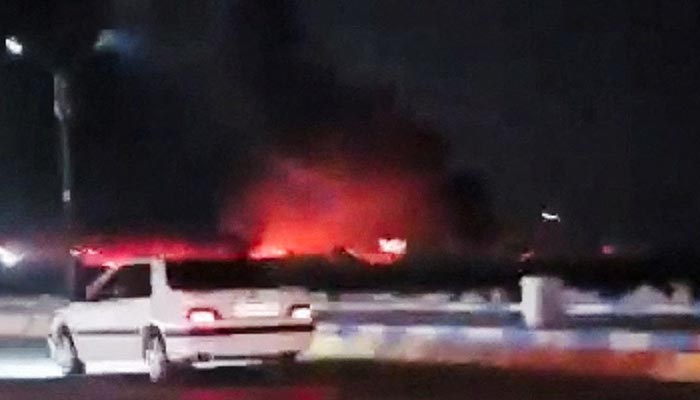
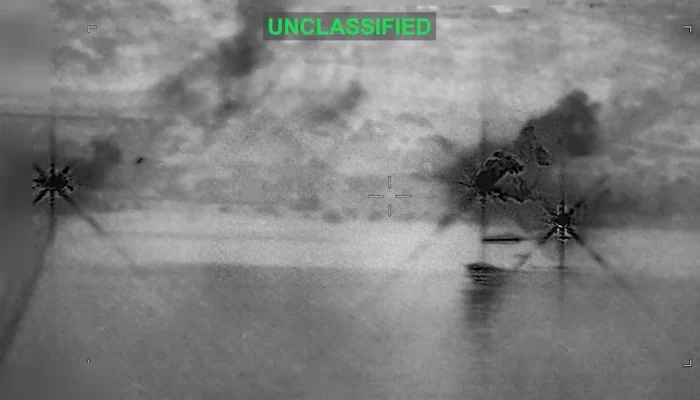
Smoke ascends from an undisclosed location following a new wave of strikes against Iran, according to the US Central Command. This occurred after three tankers were hit by projectiles in the Strait of Hormuz, as depicted in this still image from a video released on July 7, 2026. — Reuters
– US military launches strikes to reopen the Strait of Hormuz.
– Iran targets Kuwait and Bahrain, which host US military bases.
– President Trump states the strikes are revenge for Tuesday’s ship attacks.
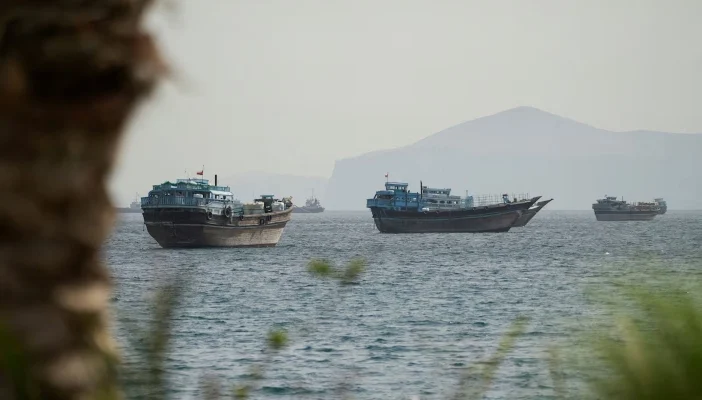
The US military announced on Wednesday that it had conducted additional strikes on Iran to ensure the Strait of Hormuz remains open for shipping. This escalation prompted Iran to attack Kuwait and Bahrain, aiming to disrupt peace efforts. The latest military action was a response to Tuesday’s assault on three cargo ships navigating the strait, just hours after President Donald Trump suggested that a temporary ceasefire with Iran was over.
“US Central Command forces have begun executing further strikes against Iran to weaken their capacity to threaten navigation freedom in the Strait of Hormuz,” Central Command stated on X.
“The United States is holding Iran responsible for recent unwarranted aggression against commercial ships and crews navigating this critical international waterway.”
The US strikes caused disturbances in several southern Iranian cities, some losing power. Iran retaliated with a second day of attacks targeting Kuwait and Bahrain, where US military bases are located.
Kuwait’s Defense Ministry reported intercepting missiles and drones, while Qatar briefly issued a heightened security alert before lifting it. A US official revealed that Wednesday’s strikes would surpass those on Tuesday in scale.
President Trump tweeted on Truth Social: “This is retribution for yesterday’s ship bombings by Iran. If it happens again, things will get a lot worse!”
Control of the Strait, which once accounted for about 20% of global oil shipments before the conflict, has granted Iran significant sway, allowing it to maintain a stalemate with the world’s strongest military. While Iran has not officially claimed responsibility for the ship attacks, analysts believe Tehran uses such incidents to influence negotiations.
Iranian top negotiator Mohammad Baqer Qalibaf warned on X, “The US has yet to learn that más intimidation and broken commitments come at a cost. Make no mistake: If you strike, you will be struck back.”
He added, “The Strait of Hormuz will only reopen under Iranian terms, not through US threats.”
This wave of military strikes appears to dampen hopes of turning a June 17 memorandum into a lasting peace agreement, which was initially seen as a step toward ending the ongoing conflict that started with US-Israeli assaults on Iran on February 28.
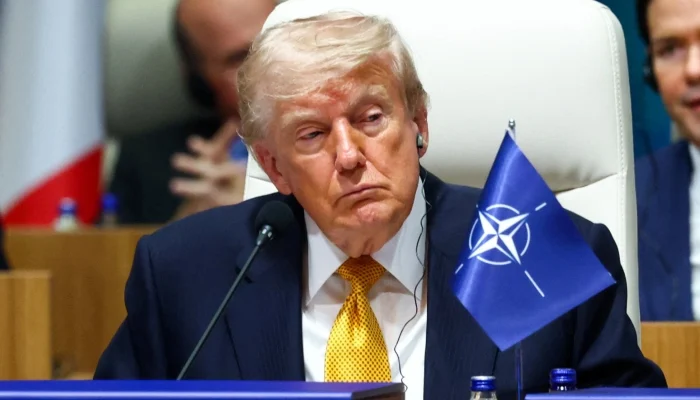
Asked before a NATO summit in Turkey whether the agreement was dead, Trump indicated he believed so, saying, “It’s a very interesting question. To me, I think it’s over. I don’t want to deal with them.”
Later, Trump expressed skepticism about the deal’s viability, calling Iran dishonorable, but suggested that a full-scale war was unlikely and that negotiations might not continue.
He also claimed that any new conflict would be brief and that stability — including for oil markets — would be restored quickly.
Oil prices rose, with Brent crude futures climbing approximately 1% to $78.80 a barrel by 0054 GMT, though prices remain well below the over $120 levels seen in late April.
Iran’s southern coast was heavily impacted, with strikes hitting key ports and military facilities. Among the cities targeted was Bandar Abbas, Iran’s largest port and strategic military hub, along with Konarak and Chabahar near Iran’s border with Pakistan.
Labor reports indicated that power had been restored in most parts of Chabahar after strikes caused outages earlier, and a maritime traffic control tower there was reportedly hit as well.
In addition, a firefighter was killed in an attack on Iranshahr’s airport, and a railway bridge near Aqqala in northern Iran was damaged in a US strike, as reported by Iranian state media.
Before the recent US attacks, Iran’s Foreign Ministry spokesperson Esmaeil Baghaei accused American strikes of violating the June 17 memorandum by challenging Iran’s responsibility to oversee safe passage through the Strait of Hormuz.
A parliamentary source mentioned options Iran might consider for retaliation, including withdrawing from the nuclear Non-Proliferation Treaty, revising nuclear policies, or closing the Bab-el-Mandeb Strait at the Red Sea’s entrance—another critical shipping route.
Iran’s UN mission sent a letter accusing the US of violating international law and the terms of the agreement, condemning recent strikes as breaches of the deal signed between the nations.
 ChatGPT
 Perplexity
 Gemini AI
 Grok AI