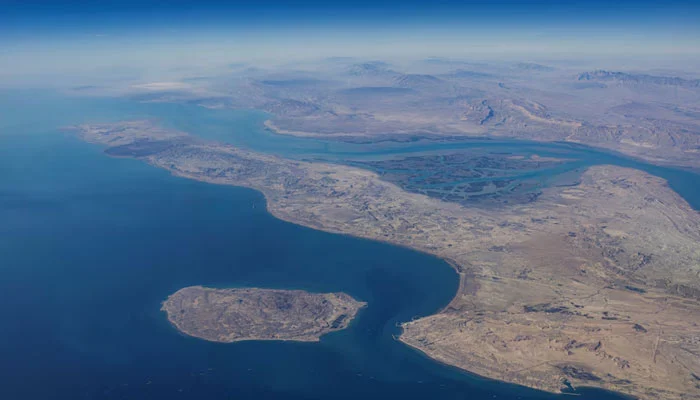
Tag: shipping

  • Iran Claims Progress on Strait of Hormuz Deal, but Waterway Remains Blocked

    Iran Claims Progress on Strait of Hormuz Deal, but Waterway Remains Blocked

    Iran has indicated that negotiations with Oman regarding control of the Strait of Hormuz are nearing completion, but additional actions are necessary before the waterway can be fully reopened. The United Arab Emirates reports that Iran has targeted another vessel in the strait with a missile, with no injuries reported.

    Iran stated Saturday that an agreement with Oman is close, but emphasized that it alone won’t resolve issues related to the strait. The UAE also reports that Iran launched a missile strike on a ship passing through the strait. Tensions have escalated as Iran responded to recent US attacks by striking at US military bases in the Gulf region and Jordan, along with targeting merchant vessels in the critical shipping corridor, which before the conflict carried about 20% of the world’s oil and gas exports.

    An unnamed US official mentioned that Washington expects an imminent deal between Iran and Oman, both of whom border the strait, which could allow for the resumption of normal oil shipments. Iran’s Foreign Minister Abbas Araghchi said that Iran and Oman are very close to agreeing on a new shipping route but that the reopening hinges on other factors, including US compensation. Iran’s top national security officials listed additional demands, such as ending US threats, stopping hostilities against Iran’s allies, lifting sanctions, and freeing Iranian assets.

    Oman has condemned repeated attacks on vessels passing through the strait but characterized negotiations with Iran as positive and constructive. It asserted the importance of avoiding actions that could hinder progress. Iran has rejected the previous traffic separation scheme and is discussing a temporary route with Oman while resolving technical and legal issues for a permanent solution.

    Iranian President Masoud Pezeshkian expressed optimism about reaching an agreement, citing national cohesion and the country’s strength in the ongoing conflict. Iran’s recent actions include targeting US bases and attacking shipping in the strait, which was a major route for energy exports before the conflict escalated.

    The UAE reports that Iran attacked a vessel operated by its national oil company with a missile, though no injuries occurred. A UK maritime source mentioned a vessel caught fire after being hit by an unknown projectile, but the fire was extinguished without environmental impact. Iranian officials have not yet responded.

    In recent weeks, the US has suggested that a resolution allowing for the opening of the strait could be near, although Iran counters that no formal negotiations are underway. A US official indicated that once an agreement restores free commercial shipping, the US would lift sanctions on Iranian ports, contingent upon Iran fulfilling its commitments.

    Iran’s Revolutionary Guard claims that the reopening of the strait depends on Washington accepting Iran’s conditions and remains separate from Iran-Oman negotiations. A high-level Iranian source told Reuters that a proposed deal might grant Iran some control over ships entering the Gulf through the strait, which would be a significant concession. The US has consistently rejected Iran’s control over this strategic trade route for energy, and it remains uncertain if the terms of this new deal are acceptable to the US.

    Iran has leveraged hostilities to impose a toll on oil tankers and to justify attacking vessels that attempt to cross the strait without permission, leading to disruptions in global energy supplies, rising prices, and increased inflation.

  • Iran reports progress in Oman talks on managing the Strait of Hormuz

    Iran reports progress in Oman talks on managing the Strait of Hormuz

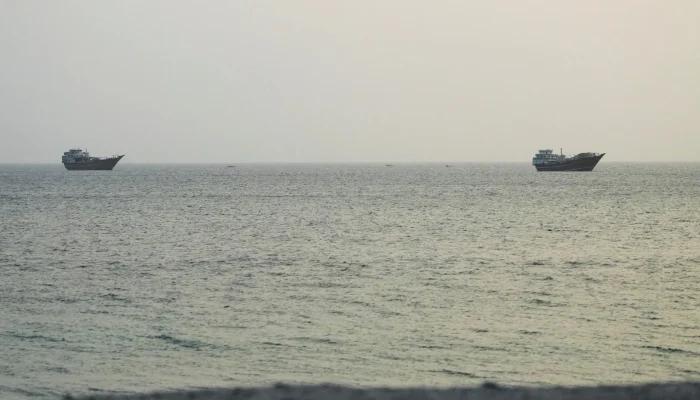
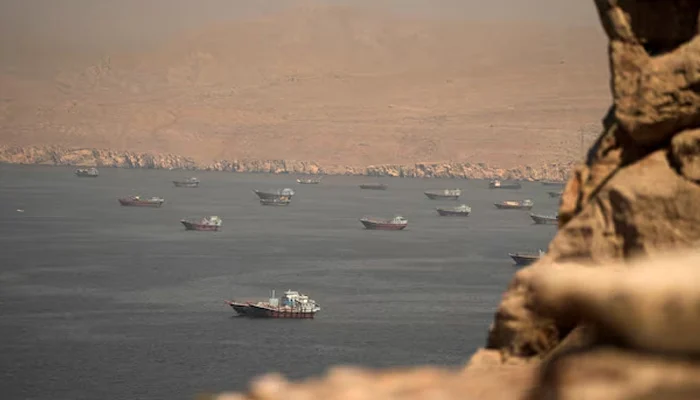
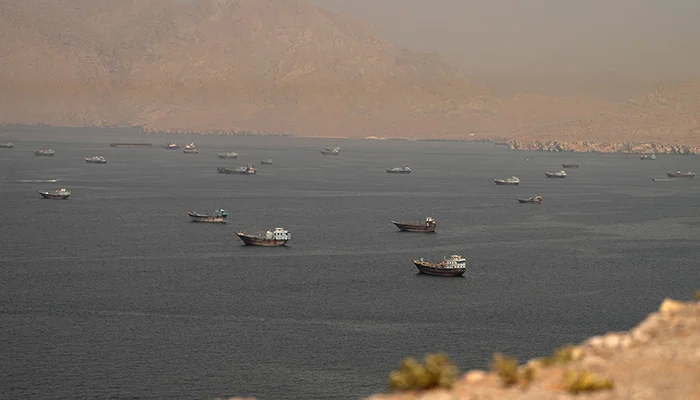
    Ships and tankers are navigating through the Strait of Hormuz off Musandam, Oman, as seen on April 18, 2026. — Reuters

    Negotiations are centered on managing the Strait of Hormuz. Discussions addressed shipping safety and sovereignty concerns. Previously, Oman and Iran discussed transit service fees.

    Iran announced on Sunday that it has made progress in talks with Oman regarding the management of the Strait of Hormuz, a vital waterway for oil and gas shipments that both nations border.

    These recent talks follow the resumption of U.S. attacks on Iran, aimed at ending Tehran’s control over the strait. This development comes after a June agreement intended to de-escalate tensions, which had temporarily eased hostilities.

    Iran’s foreign ministry spokesperson, Esmaeil Baqaei, said several rounds of negotiations took place in Tehran on Friday and Saturday, involving deputy foreign ministers from Iran and Oman.

    The discussions focused on establishing “common principles and operational mechanisms” to ensure safe passage for shipping through the strait, while respecting each other’s sovereign rights, Baqaei explained.

    He described the talks as productive, noting that significant progress had been made and that both technical and political consultations are ongoing.

    In June, Oman and Iran indicated they would discuss the possibility of imposing transit service fees, a move opposed by the United States.

    Oman also stated that ships could pass through Hormuz via Omani waters, which angered Iran and led to a pattern of escalation.

    Iran reported on Saturday that it has not recorded any US strikes after nearly two weeks of strikes.

    According to Axios, the Pentagon presented President Donald Trump with a plan for a 14th night of strikes, but he declined to approve it, opting instead for renewed negotiations.

    The report states Trump ordered a halt to hostilities following the arrival of an Omani delegation in Tehran to discuss a new arrangement for reopening the Strait of Hormuz.

    Regarding the current status of shipping traffic, Baqaei confirmed there has been no change.

  • Shipping Firms Steer Clear of US-Guided Hormuz Route Post-Iran Attacks

    Shipping Firms Steer Clear of US-Guided Hormuz Route Post-Iran Attacks

    Images captured from Musandam, Oman, showcase vessels navigating the Strait of Hormuz as of July 15, 2026 — Reuters

    – The IRGC has claimed responsibility for attacks on two Emirati supertankers.
    – Greek maritime companies are advising ships to postpone voyages due to escalating dangers.
    – The United States maintains that the Strait of Hormuz remains accessible to commercial shipping.

    Shipping firms are steering clear of a U.S.-guided transit route through the Strait of Hormuz following a series of Iranian assaults on ships, according to seven sources from the maritime and shipping sectors. For many years, vessels entered and exited the Gulf via a secure pathway established by the U.N. shipping agency in 1968, known as the Traffic Separation Scheme. Since Iran’s conflict began on February 28, Iran has mined the area, prompting ships to choose alternative, makeshift routes near either the Iranian or Oman coast.

    In June, Reuters reported that the U.S. military had assisted vessels through this region as part of a covert operation involving numerous ship-to-ship oil transfers to sustain Gulf energy exports, utilizing aerial and water drones along with helicopters. This aid enabled the export of tens of millions of barrels of oil, helping mitigate the energy market impact caused by the largest disruption in oil and gas supplies on record.

    However, shippers are now perceiving the Omani side of the strait as increasingly perilous following recent attacks on ships. Iranian Revolutionary Guards claimed responsibility on Tuesday for assaults on two Emirati crude supertankers. Since July 7, approximately five ships, including three crude supertankers, one LNG tanker, and one container ship, have been targeted in Omani waters under the U.S. scheme, based on data analysis from the U.N. shipping agency. It remains unclear whether all these vessels were navigating the U.S.-endorsed route.

    One shipping expert noted, “The U.S. appears to lack control over the situation,” and added that their company decided not to traverse the strait because of crew safety and security concerns. Torbjorn Solvedt, a senior Middle East analyst with Verisk Maplecroft, commented, “Iran’s continued ability to target ships on the Omani route suggests that the Trump administration’s proposed strategy to keep maritime traffic moving is unlikely to succeed.”

    The White House spokesperson Olivia Wales stated that despite recent incidents, the Strait of Hormuz is still open and operational. “The Strait remains open, and oil continues to flow. Iran is engaging in acts of international terrorism by attacking peaceful commercial vessels, targeting and killing innocent civilians. The United States is responding decisively.”

    A U.S. defense official, speaking anonymously, confirmed that over the past week, more than 100 vessels coordinated with the U.S. military to transit the strait, with over 300 passing through the broader area, indicating that U.S.-led efforts are effective, even if current traffic volumes are below pre-conflict levels.

    Iran issued threats on Wednesday to halt additional regional energy shipments following the reimposition of a naval blockade on Iranian ports by the U.S., coupled with increased strikes from both sides as they contest control over the strait. Tehran is hinting at the possibility of leveraging its Yemeni Houthi allies to block the Bab el-Mandeb Strait, which connects to the Red Sea, potentially opening a new front against the U.S. and threatening two of the world’s key shipping routes.

    Several Greek-operated LNG tankers that had entered the Gulf via Hormuz for loading last week are now stuck within the strait amid security fears. Additionally, since July 7, two more tankers have been attacked in open waters outside the strait.

    U.S. President Donald Trump announced on Truth Social that the Strait of Hormuz “is open to ALL Ship traffic except for Iran.” The U.S. reimposed its sanctions blockade on Iran-related shipping on Tuesday. Last week, the U.S. Navy’s Joint Maritime Information Center upgraded the risk level for ships in the region from “substantial” to “severe,” just below the “critical” highest level, following attacks on three tankers.

    US authorities have advised shipping companies that, despite their efforts, real-time threat communication may be limited. Multiple sources indicate the U.S. has not provided complete clarity on the actual risks for ships traveling through the Omani route. One maritime security expert questioned, “If the U.S. states the strait is ‘not closed’ and remains open, why then do operators feel it is unsafe?”

    Greek security firms, such as Diaplous and MARISKS, have issued advisories warning that the threat level remains high, recommending that voyages be postponed until at least Saturday to ensure safety.

  • Trump’s Push for Hormuz Fees Mirrors Iran’s, But Is It Legal?

    Trump’s Push for Hormuz Fees Mirrors Iran’s, But Is It Legal?

    Vessels are seen at the Strait of Hormuz from Musandam, Oman, on June 18, 2026, as captured by Reuters.

    On Monday, President Donald Trump announced that the U.S. plans to impose a 20% charge on cargo passing through the Strait of Hormuz after a ceasefire with Iran disintegrated amidst ongoing tensions over Iran’s attempts to maintain control of this critical waterway.

    Iran had previously shut down the 21-mile-wide strait, which serves as the main conduit for 20% of global oil exports and other essential commodities, including fertilizers, when the U.S. and Israel launched attacks on February 28, resulting in a severe energy crisis worldwide.

    The significance of this issue lies in differences between Trump’s and Iran’s positions, and how these stances impact global stability:

    Has the U.S. Changed Its Approach on Charging Tolls in Hormuz?
    In late June, Secretary of State Marco Rubio asserted during talks with Gulf nations that “no country has the right to charge for the use of international waterways” and emphasized that shipping costs would not be subject to fees in any agreements.

    However, Trump had previously floated the idea of collecting tolls if negotiations with Iran failed.
    In a social media statement on June 20, he wrote, “There will be NO TOLLS in the Hormuz Strait for 60 days during the Cease Fire Period, and there will be NO TOLLS after that unless imposed by the United States, in compensation for services as the Guardian Angel to Middle East nations, covering past, present, and future costs.”

    Now that the ceasefire has collapsed, he appears to be reverting to his earlier stance.
    On Monday, he tweeted, “The USA will be, from now on, known as ‘THE GUARDIAN OF THE HORMUZ STRAIT,’ and as such, shall be reimbursed at a rate of 20% on all cargo shipped.”

    Trump has not clarified how such tolls would be enforced or by what legal authority passage could be demanded under these charges.

    How does Trump’s proposed toll differ from Iran’s planned fees?
    Iran regards maintaining control over the Strait—shared with Oman—as its strategic shield and a secure guarantee against future attacks. It considers this control its strongest negotiating point with the outside world.

    Iran believes that last month’s interim deal implied it would facilitate safe passage without fees for 60 days, as the language suggested.
    Meanwhile, the U.S. sees it as an obligation for Iran to ensure vessels can pass safely without restriction, not to impose force-backed restrictions or fees.

    During the war, Iran established the Persian Gulf Strait Authority, claiming that all vessels must coordinate with it and transit near Iranian shores. It has targeted ships attempting to pass along the Omani coast without permission.
    Iran has indicated it might eventually charge transit fees but has yet to specify the amounts.

    What was the situation before the conflict, and is charging for passing through the strait legally permissible?
    The Strait encompasses territorial waters of Iran and Oman, divided by a maritime boundary along its center.

    As per the United Nations Convention on the Law of the Sea (UNCLOS)—which governs international maritime law—coastal states cannot demand payment simply for the privilege of passing through straits.
    They may, however, levy limited fees for certain services like piloting, towing, or port facilities, provided these charges are not discriminatory.

    Neither Iran nor the U.S. has ratified UNCLOS, but it’s widely accepted as the standard for maritime conduct; the Strait of Hormuz is considered internationally recognized.

    In 1968, Iran and Oman agreed on a traffic scheme with the International Maritime Organization (IMO), stipulating that major vessels should use designated sea lanes along the strait’s center. War-related mine-laying has rendered some passages unsafe, complicating transit safety further.

    Would other nations accept tolls or fees for crossing Hormuz?
    According to shipping officials, no recent instance of a country unilaterally demanding transit fees through a strait has occurred in modern history.

    Oman has engaged in talks with Iran on this issue, issuing guidance last month allowing vessels to traverse the Strait without fees through its waters.

    Countries in the Gulf region, heavily reliant on the Strait for energy exports, are particularly wary of such fees.
    Major buyers of Gulf energy and fertilizers might also be concerned, notably because Trump’s proposal for a 20% surcharge on cargo could significantly elevate global oil prices.

  • US conducts new strikes on Iran, prompting attacks on Kuwait and Bahrain

    US conducts new strikes on Iran, prompting attacks on Kuwait and Bahrain

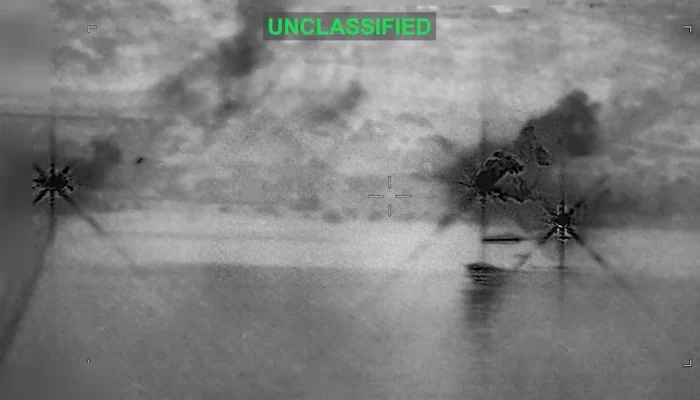
    Smoke ascends from an undisclosed location following a new wave of strikes against Iran, according to the US Central Command. This occurred after three tankers were hit by projectiles in the Strait of Hormuz, as depicted in this still image from a video released on July 7, 2026. — Reuters

    – US military launches strikes to reopen the Strait of Hormuz.
    – Iran targets Kuwait and Bahrain, which host US military bases.
    – President Trump states the strikes are revenge for Tuesday’s ship attacks.

    The US military announced on Wednesday that it had conducted additional strikes on Iran to ensure the Strait of Hormuz remains open for shipping. This escalation prompted Iran to attack Kuwait and Bahrain, aiming to disrupt peace efforts. The latest military action was a response to Tuesday’s assault on three cargo ships navigating the strait, just hours after President Donald Trump suggested that a temporary ceasefire with Iran was over.

    “US Central Command forces have begun executing further strikes against Iran to weaken their capacity to threaten navigation freedom in the Strait of Hormuz,” Central Command stated on X.

    “The United States is holding Iran responsible for recent unwarranted aggression against commercial ships and crews navigating this critical international waterway.”

    The US strikes caused disturbances in several southern Iranian cities, some losing power. Iran retaliated with a second day of attacks targeting Kuwait and Bahrain, where US military bases are located.

    Kuwait’s Defense Ministry reported intercepting missiles and drones, while Qatar briefly issued a heightened security alert before lifting it. A US official revealed that Wednesday’s strikes would surpass those on Tuesday in scale.

    President Trump tweeted on Truth Social: “This is retribution for yesterday’s ship bombings by Iran. If it happens again, things will get a lot worse!”

    Control of the Strait, which once accounted for about 20% of global oil shipments before the conflict, has granted Iran significant sway, allowing it to maintain a stalemate with the world’s strongest military. While Iran has not officially claimed responsibility for the ship attacks, analysts believe Tehran uses such incidents to influence negotiations.

    Iranian top negotiator Mohammad Baqer Qalibaf warned on X, “The US has yet to learn that más intimidation and broken commitments come at a cost. Make no mistake: If you strike, you will be struck back.”

    He added, “The Strait of Hormuz will only reopen under Iranian terms, not through US threats.”

    This wave of military strikes appears to dampen hopes of turning a June 17 memorandum into a lasting peace agreement, which was initially seen as a step toward ending the ongoing conflict that started with US-Israeli assaults on Iran on February 28.

    Asked before a NATO summit in Turkey whether the agreement was dead, Trump indicated he believed so, saying, “It’s a very interesting question. To me, I think it’s over. I don’t want to deal with them.”

    Later, Trump expressed skepticism about the deal’s viability, calling Iran dishonorable, but suggested that a full-scale war was unlikely and that negotiations might not continue.

    He also claimed that any new conflict would be brief and that stability — including for oil markets — would be restored quickly.

    Oil prices rose, with Brent crude futures climbing approximately 1% to $78.80 a barrel by 0054 GMT, though prices remain well below the over $120 levels seen in late April.

    Iran’s southern coast was heavily impacted, with strikes hitting key ports and military facilities. Among the cities targeted was Bandar Abbas, Iran’s largest port and strategic military hub, along with Konarak and Chabahar near Iran’s border with Pakistan.

    Labor reports indicated that power had been restored in most parts of Chabahar after strikes caused outages earlier, and a maritime traffic control tower there was reportedly hit as well.

    In addition, a firefighter was killed in an attack on Iranshahr’s airport, and a railway bridge near Aqqala in northern Iran was damaged in a US strike, as reported by Iranian state media.

    Before the recent US attacks, Iran’s Foreign Ministry spokesperson Esmaeil Baghaei accused American strikes of violating the June 17 memorandum by challenging Iran’s responsibility to oversee safe passage through the Strait of Hormuz.

    A parliamentary source mentioned options Iran might consider for retaliation, including withdrawing from the nuclear Non-Proliferation Treaty, revising nuclear policies, or closing the Bab-el-Mandeb Strait at the Red Sea’s entrance—another critical shipping route.

    Iran’s UN mission sent a letter accusing the US of violating international law and the terms of the agreement, condemning recent strikes as breaches of the deal signed between the nations.

  • Shipping & Unions View Hormuz as a Warzone Still

    Shipping & Unions View Hormuz as a Warzone Still

    A vessel is seen navigating through the Strait of Hormuz from Musandam, Oman, on June 29, 2026. — Reuters/File

    Unions and shipping firms announced on Wednesday their decision to keep the Strait of Hormuz classified as a warzone area, following two attacks on ships despite a ceasefire between Iran and the United States.

    “This move acknowledges the ongoing and serious threat to life, along with the rapidly changing circumstances in the region,” stated a joint release from the International Transport Workers’ Federation (ITF) and the Joint Negotiating Group (JNG), a coalition representing shipowners.

    A source involved in the discussions told AFP that if the ships hadn’t been targeted on two separate days since last Thursday and if maritime access had remained smooth, a change in designation might have taken place this week.

    The designation will now remain in effect until at least July 9, with weekly reviews planned, the statement added.

    The Strait of Hormuz was first declared a war operational zone on March 5 after ships attempting to traverse this crucial energy corridor came under attack.

    This status applies to vessels whose owners are part of the International Bargaining Forum (IBF) labor agreements—amounting to approximately 15,000 ships worldwide, according to the IBF.

    Mariners on these ships are entitled to double pay, which increases operational costs for shipping companies, among other advantages.

    Since March 1, when Iran responded to US and Israeli strikes by closing the vital waterway, merchant ships have been significantly impacted by the regional conflict.

    During this period, at least 14 crew members have lost their lives, and more than 40 ships have been targeted.

    The most recent attacks occurred last Thursday and Saturday, prompting the International Maritime Organization (IMO) to suspend an emergency plan to evacuate the 11,000 mariners still stranded in the Gulf.

  • Hormuz Traffic Rises Sharply but Still Below Normal

    Hormuz Traffic Rises Sharply but Still Below Normal

    The traffic through the Strait of Hormuz has surged significantly, although it still registers at about half the normal peacetime volume, officials reported Thursday as stranded sailors began to leave the waterway. On Wednesday, a total of 70 confirmed crossings were documented, according to an X post by analytics firm Kpler. This number represents the highest for a single day since Iran closed the Strait on March 1 in response to U.S.-Israeli strikes. Data from Kpler indicated that at least 56 commercial vessels—such as oil and gas tankers and dry bulk carriers like fertilizers—had traversed the strait that day. By midday Thursday, 15 commercial ships had crossed, exceeding the usual average of 10 daily crossings recorded between March 1 and June 14, when Iran and the U.S. agreed to begin discussions aimed at ending hostilities. For the first time since March 1, dry bulk tankers reached 2025-level traffic in the waterway on Wednesday, with 22 crossings noted by maritime tracker AXSMarine.

    The uptick in traffic corresponds with the gradual departure of some of the approximately 11,000 seafarers stranded in the Gulf due to ongoing conflict. A United Nations-led evacuation plan launched Tuesday evening is facilitating their exit. Maersk announced that two of its ships cleared the Gulf on Wednesday evening and Thursday morning, although three others remain stuck. Since June 15, shipping activity has been gradually increasing through the strait, a crucial conduit for roughly 20% of the world’s oil and natural gas exports. Vessels are now taking multiple different routes exiting the Gulf, leading to confusion and indicating that traffic has not yet reverted to pre-war conditions, when ships commonly moved through a toll-free central corridor.

    Experts note that Iran continues to strictly control northern routes, issuing selective permits and phased agreements. Tehran issued a warning Thursday against unauthorized crossings of the Strait, stating vessels lacking proper authorization “will be dealt with.” Additionally, ships relying on the southern Omani corridor under U.S. Navy surveillance should not mistake this situation for normalcy. European mine-clearing vessels are now en route to the region to remove mines threatening safe passage in the strait’s main route, as announced by Britain’s navy on Tuesday. Furthermore, a cargo ship in the strait was struck by an unidentified projectile on Thursday, according to the UK Maritime Trade Operations (UKMTO), with no casualties reported.

  • Iran declares Strait of Hormuz closed following Israel’s Lebanon strikes

    Iran declares Strait of Hormuz closed following Israel’s Lebanon strikes

    Iran announced the closure of the Strait of Hormuz again on Saturday, citing Israeli attacks in Lebanon as the reason, shaking an already delicate US-Iran agreement just as negotiators headed to Switzerland to attempt to de-escalate the ongoing Middle East conflict.

    Scheduled talks in Switzerland were postponed at the last minute after Israel carried out deadly strikes in Lebanon following the loss of four Israeli soldiers in combat. The US later announced a renewed ceasefire in Lebanon, aligning with the terms of its agreement with Iran. However, fighting broke out again on Saturday as Israeli forces clashed with Hezbollah militants, each accusing the other of violating the truce.

    Iran’s military command cited a breach of the agreement by the US and ongoing violations by Israel’s government, saying that “the Strait of Hormuz will be closed to vessel traffic.” The Revolutionary Guards naval forces warned ships to stay away from the waterway, warning that their security could be compromised.

    The Strait of Hormuz, a crucial passageway for global oil and gas shipments, had been blockaded by Iran for much of the recent conflict, causing ripples across international energy markets. Tehran had agreed to reopen the strait under a preliminary deal signed earlier this week by President Donald Trump and Iran’s President Masoud Pezeshkian. Shipping traffic was beginning to pick up again before Iran’s decision to close it once more.

    The US Central Command stated that international shipping remained safe despite Iran’s announcement and that US forces in the region remained alert and present. President Trump warned that if the negotiations do not succeed, Washington might impose its own tolls on the corridor—defining “tolls” as measures solely imposed by the United States.

    A delegation representing Iran left for Switzerland on Saturday afternoon, reportedly including parliamentary speaker Mohammad Bagher Ghalibaf and Foreign Minister Abbas Araghchi. The delegation intends to push for Iran’s implementation of its commitments under the deal, warning that failure to do so could jeopardize the entire agreement.

    Meanwhile, Vice President JD Vance flew from Washington to Switzerland to join the talks, expressing hope for progress on nuclear issues and the Lebanon ceasefire. US negotiators Jared Kushner and Steve Witkoff were already in Switzerland handling technical details and reported that negotiations were progressing smoothly.

    Pakistan, acting as a mediator, indicated that technical talks would resume this Sunday in Burgenstock, with representatives from Pakistan, Qatar, the US, and Iran, aiming to negotiate unresolved issues related to Iran’s nuclear program—a key sticking point left from the initial deal.

    In Lebanon, fighting persisted in the south with Israel and Hezbollah exchanging accusations. One Israeli soldier has been killed—the fifth since the recent escalations began. Israeli troops have received orders from political leadership to cease proactive operations, operating now only in defense. Reports emerged of ongoing hostilities following Hezbollah’s launch of over 50 projectiles overnight, with Hezbollah accusing Israel of infiltrating strategic areas. Israel responded with airstrikes on approximately 20 sites across Lebanon, resulting in more than 20 civilian casualties, including 16 in Nabatieh and seven near Sidon. The total death toll from the renewed violence has now surpassed 4,000.

    Lebanese officials and Hezbollah representatives asserted their right to defend themselves, blaming Israel entirely for breaking the ceasefire. Israel’s ambassador to the US claimed Hezbollah was responsible for violations, while Hezbollah held Israel accountable. The group had previously escalated tensions in March by firing rockets into Israel in retaliation for the killing of Iran’s supreme leader via US and Israeli military actions. Attempts at a ceasefire earlier this year failed, with both sides citing violations by the other.

  • UAE Denounces Iran’s Gulf Dominance Plan as Unrealistic

    UAE Denounces Iran’s Gulf Dominance Plan as Unrealistic

    A map illustrating the Strait of Hormuz and Iran is depicted in this image taken on June 22, 2025. — Reuters

    – Claimed zone extends near a UAE port.
    – Ships are instructed to seek Iranian approval.
    – UAE accelerates development of Hormuz bypass pipeline.

    A senior UAE official dismissed Iran’s assertion of control over Emirati waters in the contested Strait of Hormuz as fantasy, following a statement by an Iranian authority overseeing the strait.

    “The regime is attempting to create a new reality, emerging from a clear military setback. However, any efforts to control the Strait of Hormuz or infringe upon the UAE’s maritime sovereignty are merely illusions,” stated UAE presidential adviser Anwar Gargash on X.

    Iran’s newly established body managing the Strait of Hormuz claimed its jurisdiction extends into waters south of Fujairah, a UAE port equipped with oil infrastructure designed to circumvent the strategic waterway.

    Since hostilities between Israel and the US erupted on February 28, Iran has taken effective control of shipping traffic through Hormuz, a critical global trade artery. The country has kept the strait largely closed since the conflict began and is demanding tolls for passing ships. It insists that vessels require permission from Iranian armed forces to traverse the waterway.

    On Wednesday, Iran’s Persian Gulf Strait Authority posted a map and announced that it has defined “the regulatory jurisdiction for strait management.” This area stretches from “Kuh-e Mubarak in Iran down to Fujairah in the UAE, and from the tip of Qeshm Island in Iran to Umm Al-Quwain in the UAE.” The authority specified that “transit through this region for passing through the Hormuz Strait must be coordinated with, and authorized by, the Persian Gulf Strait Authority.”

    Relations between Iran and the UAE remain tense, especially after Tehran launched missile and drone strikes against Gulf nations in retaliation for US-Israeli assaults. The UAE has opposed Iran’s control over the strait and called for joint measures to preserve navigation freedom.

    In response, the UAE announced plans to expedite the construction of a new oil pipeline bypassing Hormuz via Fujairah port. The West-East Pipeline aims to double ADNOC’s export capacity through this port and is expected to be operational next year.

    Iran has repeatedly accused neighboring countries of allowing US forces to launch attacks from their territories. Gulf nations deny these accusations, asserting they would not permit their land or airspace to be used for attacks against Iran.

    Recently, Iran’s Revolutionary Guard reported permitting 26 ships, including oil tankers and other vessels, to pass through the strait in the past 24 hours. Last week, Iran stated that over 30 ships, some Chinese, had been authorized to transit, highlighting Iran’s ongoing assertion of control over the strategic lane.

  • Iran Formally Creates New Authority for Strait of Hormuz, Says Security Council

    Iran Formally Creates New Authority for Strait of Hormuz, Says Security Council

    Iran’s top security agency announced on Monday that it has established a new organization to oversee the Strait of Hormuz, which Tehran has effectively sealed off and now intends to charge ships for passage. The official X account of the Supreme National Security Council posted about the Persian Gulf Strait Authority (PGSA), stating it will offer “real-time updates on Hormuz Strait operations and recent developments.” The Revolutionary Guards’ navy also shared the same statement.

    Details about the functions of this new body remain unclear, but earlier this month, Iran’s English-language broadcaster Press TV described it as a “system to exercise sovereignty over the Strait of Hormuz,” noting that ships passing through have been given “regulations” via an email address.

    Since the outbreak of hostilities with the U.S. and Israel on February 28, Iran has largely blocked maritime traffic through this critical waterway. A fragile ceasefire has been in effect since April 8, yet Iran’s control of the strait has unsettled global markets and increased Tehran’s strategic influence, with the U.S. counteracting by imposing a naval blockade on Iranian ports.

    Under normal circumstances, about 20% of the world’s oil and liquefied natural gas shipments—along with other key commodities like fertilizer—pass through the Strait of Hormuz. Since the conflict began, Iran has repeatedly stated that maritime traffic will not return to pre-war levels. Last month, Iran also announced it had begun collecting tolls on ships traversing the waterway and received initial revenue from those tolls.

    On Saturday, Ebrahim Azizi, head of Iran’s parliament’s national security committee, claimed Iran “has prepared a professional mechanism to manage traffic” through the strait and indicated it would be revealed soon.

  • Iran claims to have pushed back U.S. warship from Strait of Hormuz

    Iran claims it has prevented a U.S. warship from entering the Strait of Hormuz on Monday, asserting it fired a warning shot. A senior Iranian official told Reuters that it remains unclear if the warship was damaged. Meanwhile, the U.S. Central Command promptly dismissed reports of a missile strike against the vessel.

    Oil prices surged by 5% amid fears that the critical shipping route, which has been shut for over two months, might stay blocked even longer. This ongoing blockage has already caused significant disruptions to the global economy and a spike in oil costs, with prices increasing by more than 50%.

    Iran’s navy asserted it had issued a swift and firm warning to stop “American-Zionist” ships from crossing into the strait. Fars News Agency, an Iranian semi-official outlet, reported that two missiles hit the warship near the port of Jask at the southern entrance to the strait, although Centcom denied any vessel was struck.

    U.S. forces are supporting President Trump’s “Project Freedom,” which aims to guide stranded commercial ships out of the Gulf—ships that are running low on supplies amid the U.S.-Israeli conflicts with Iran—and are enforcing a blockade of Iranian ports.

    Trump provided limited details about his plan to assist ships and their crews, who are stranded and facing shortages. Shipping companies have not shown signs of resuming operations. Trump stated on Truth Social that the U.S. would guide ships safely through the restricted waters so they could continue their business operations freely.

    Iran’s military responded to Trump’s announcement by instructing commercial ships and oil tankers to avoid any movements unless coordinated with Iran’s armed forces. Ali Abdollahi, the leader of Iran’s unified military command, warned that any foreign armed forces, especially the U.S. military, trying to approach or enter the strait would be attacked.

    Since the conflict began, Iran has largely blocked all shipping into and out of the Gulf except for its own vessels, cutting off about 20% of the world’s oil and gas shipments. This has caused oil prices to spike dramatically.

    The U.S. Central Command has committed 15,000 troops, along with numerous aircraft, warships, and drones, to support Trump’s “Project Freedom,” emphasizing that their support is essential for regional stability and the global economy, while also maintaining the naval blockade.

    Despite these efforts, hundreds of merchant vessels and around 20,000 crew members remain unable to traverse the strait, according to the International Maritime Organization. Shipping companies like Hapag-Lloyd report that the transit remains impossible, and industry leaders stress that military convoys alone won’t resolve the situation; a cessation of hostilities and peace negotiations are necessary for normal shipping to resume.

    Additionally, the United Arab Emirates accused Iran of attacking an empty crude oil tanker belonging to ADNOC, the UAE’s state oil company, with drones during its passage through the strait.

    In a rare piece of positive news, Pakistan announced it had handed over 22 crew members from an Iranian container vessel that U.S. forces had seized last month. Islamabad called this a “confidence-building measure” as it continues to seek a diplomatic solution.

    The Trump administration is seeking international support to secure shipping lanes, combining diplomatic and military efforts. However, details about the specific countries involved or how the operation will be conducted remain undisclosed. It’s also unclear whether U.S. Navy ships will escort commercial vessels, according to reports.

    Iran is reviewing the U.S. response to its proposed peace initiatives. Although Washington and Israel paused their bombing campaign against Iran four weeks ago, and a round of dialogue took place, further negotiations have yet to materialize. Iran has conveyed that it considers ending the war on all fronts—including Israel’s attacks on Lebanon—more urgent than resolving the shipping crisis, with hopes of addressing nuclear issues later.

    The U.S. demands Iran relinquish its stockpile of over 900 pounds of highly enriched uranium, which Washington fears could be used to make a nuclear weapon. Iran insists its nuclear program is peaceful and has proposed some restrictions in return for sanctions relief, similar to the 2015 nuclear deal abandoned by Trump.

    With midterm elections approaching, President Trump faces pressure to dismantle Iran’s hold on the Strait of Hormuz to prevent soaring fuel prices, which could impact his political prospects.

  • Shipping Traffic Through Hormuz Remains Mostly Halted

    Shipping Traffic Through Hormuz Remains Mostly Halted

    Shipping activity in the Strait of Hormuz largely paused on Tuesday, with only three vessels passing through in the last 24 hours according to shipping data. A U.S. blockade of Iranian ports has angered Tehran, leading it to impose its own restrictions on the strait, which has historically transported around 20% of the world’s oil and liquefied natural gas.

    The Ean Spir oil tanker, whose flag and ownership remain unknown, transited the strait on Tuesday after stopping at an Iraqi port, as shown by MarineTraffic tracking data. Similarly, the Lian Star cargo vessel, also without known flag or ownership, sailed through from an Iranian port. Additionally, the Meda liquefied petroleum gas tanker, which previously called at a UAE port and also lacks transparent ownership, attempted to exit the Gulf again on Monday after turning back, based on satellite data from SynMax.

    This volume represents only a tiny fraction of the approximately 140 ships that usually pass through daily before the escalation of U.S. and Israeli actions against Iran began on February 28. After Iran briefly announced reopening the strait last Friday, more than a dozen tankers moved through, only for Tehran to declare it closed again on Saturday amid reports of shots fired at vessels.

    A shipping broker, BRS, noted this week that even vessels that appear compliant with transit requirements can find themselves in danger and be prevented from passing.

    Tensions heightened Tuesday, risking a collapse of the US-Iran ceasefire, as Tehran refused to commit to new peace negotiations, and the U.S. military announced the seizure of a tanker linked to Iran in international waters.

    Meanwhile, hundreds of ships and about 20,000 crew members are stranded in the Gulf, unable to sail. Arsenio Dominguez, the UN shipping agency’s secretary-general, told reporters at Singapore’s maritime week, “We cannot risk the lives of seafarers.” He added that last weekend, when some ships attempted to sail amidst the chaos, some were targeted, but fortunately, no casualties or vessel damage occurred.

    Iran’s military claimed that an Iranian tanker entered its territorial waters from the Arabian Sea on Monday, with assistance from navy forces, despite US warnings and threats. BRS estimates that currently, 61 supertankers unrelated to Iran are trapped within the Gulf, 50 of which carry up to 2 million barrels of oil each.

    In times when global oil demand is high, releasing even an additional 2 million barrels from the Middle East Gulf would be highly welcomed.

  • Security Firm Warns of Scam Messages Promising Safe Passage Through Hormuz

    Security Firm Warns of Scam Messages Promising Safe Passage Through Hormuz

    Greek maritime risk management company MARISKS has issued a warning regarding scam messages sent to certain shipping companies, promising safe passage through the Strait of Hormuz in exchange for cryptocurrency payments. These messages falsely claim to represent Iranian authorities and demand transit fees in Bitcoin or Tether for clearance. MARISKS emphasized that these communications are fraudulent and were not issued by Iranian officials, and Iran has yet to comment on the matter.

    Currently, hundreds of vessels and approximately 20,000 seafarers are stranded in the Gulf region. On April 18, Iran briefly reopened the strait for checks, but attempts to pass were thwarted when some ships reportedly faced gunfire from Iranian boats, which caused them to retreat. MARISKS believes at least one ship shot at during this incident may have fallen victim to the scam.

    A suspicious message circulating among shipowners stated: “After providing the documents and assessing your eligibility by the Iranian Security Services, we will determine the fee to be paid in cryptocurrency (BTC or USDT). Only then will your vessel be able to transit the strait unimpeded at the pre-arranged time.” This message has been flagged as a scam, and there’s no official confirmation from Tehran.

  • Shippers cautiously watch Iran-Hormuz reopening prospects

    Shippers cautiously watch Iran-Hormuz reopening prospects

    On Friday, representatives from the shipping sector responded cautiously to Iran’s declaration that it has reopened the critical Strait of Hormuz trade route after nearly seven weeks of closure. The Strait’s closure by Iranian forces had stranded hundreds of ships in the Gulf and raised shipping costs, as captains avoided the area due to concerns over potential attacks or mines.

    A spokesperson for German shipping giant Hapag-Lloyd, which has vessels stranded in the Gulf, told AFP via phone that the reopening was generally positive news. However, he emphasized that further information was needed regarding safe routes for vessels and the sequence in which they could transit, given lingering fears about sea mines. “It’s not feasible for a thousand ships to all head straight for the strait’s entrance simultaneously; that would create chaos. Iran needs to provide clear instructions,” said Nils Haupt. “We’re prepared to set sail soon if these outstanding questions can be addressed over the weekend.”

    Bloomberg data from Thursday revealed approximately 770 ships transmitting transponder signals within the Gulf, with around 360 of those being oil and gas carriers. Prior to the conflict, the average daily crossings of the strait reached about 120 vessels, according to industry source Lloyd’s List.

    US President Donald Trump subsequently claimed that Iran had declared the waterway fully open and accessible. However, Jakob Larsen, chief security officer at the shipping association Bimco, countered via email, stating this assertion was “inaccurate.” He explained that the mine threat status within Iran’s maritime traffic separation scheme remains unclear and recommended that shipping companies consider avoiding the area altogether.

    Kazakos, secretary general of the International Chamber of Shipping, described the Iranian announcement as a “positive step,” but warned that “significant uncertainty” remains about its practical implications. In a statement to AFP, he expressed that while this development might offer some reassurance to the thousands of seafarers stranded in the Gulf due to regional conflict, it must mark the start of a broader and lasting return to navigational freedom. Kazakos underscored the importance of restoring unrestricted navigation through this vital corridor beyond the current ceasefire, urging lasting peace and stability in the region.

  • Hormuz Strait Blockade Boosts Gulf Food Prices

    Hormuz Strait Blockade Boosts Gulf Food Prices

    In a Bahrain supermarket, Mahmoud Ali shops as usual, filling his cart. Despite ongoing conflict in the Middle East, store shelves remain stocked, but the impact of the disrupted shipping routes into the Gulf is now evident at checkout.

    “There’s no shortage,” he says, “but over the past few days, I’ve noticed a significant rise in the prices of certain food items.” The cost of meat, in particular, has nearly doubled, he adds.

    Like many neighboring countries in this dry region, the small Gulf nation depends greatly on imports, especially for food. However, the war that began on February 28 with Israeli and U.S. strikes against Iran has severely affected goods transportation through the vital Strait of Hormuz, which is now effectively closed.

    Frederic Schneider, an economist with the Middle East Council on Global Affairs, explains, “Most major ports in the UAE, Qatar, Kuwait, and Bahrain have either suspended or significantly reduced cargo operations.” Additionally, air freight, another critical logistics component, is operating below capacity due to ongoing Iranian drone and missile attacks.

    With key ports such as Abu Dhabi, Jebel Ali in Dubai, and Dammam in eastern Saudi Arabia becoming nearly inaccessible, vessels are rerouting to ports located in Oman and the Emirates further south of the strait.

    Saudi Arabia is positioning itself as a central supply hub, with open airspace and ongoing maritime traffic to its Red Sea ports. The country has launched initiatives to bolster its transport infrastructure by establishing new logistics routes and operational corridors to manage cargo diverted from its eastern ports, according to officials.

    Recent observations by AFP journalists show a steady flow of heavy trucks crossing into Qatar by land. Alternative land routes exist through corridors connecting to the Mediterranean via Syria or Jordan, but these are too congested, costly, and insufficient to compensate for the halt of traditional sea routes, Schneider notes.

    Perishable goods, mainly imported from Asia and with limited storage life, are the first to feel the pinch.

    ‘A Tangible Risk’

    The Gulf states’ levels of preparedness vary. Saudi Arabia has direct access to the Red Sea, while the UAE claims to have stockpiled enough supplies to last four to six months. Qatar invested heavily in its reserves after a three-year blockade by neighboring countries starting in 2017.

    Bahrain and Kuwait are already experiencing the effects of the conflict at the consumer level. After an initial rush to supermarkets at the onset of the war, Kuwaiti authorities froze prices on certain essential items and subsidized meat imports.

    “Overall, prices have stayed relatively stable,” an official from Kuwait’s commerce ministry told AFP, requesting anonymity. “But meat and fish prices have jumped over 30% due to the suspension of Gulf fishing activities and halted imports from Iran, India, and Pakistan.”

    The private sector is taking steps to mitigate the effects of the blockade. Lulu, a retail chain operating 280 supermarkets across the region, reports maintaining reserves of non-perishable goods for four to six months and has chartered special flights to bring in fresh produce, meat, seafood, and poultry.

    So far, “37 chartered flights have delivered more than 6,000 tons of fresh goods,” according to Lulu’s communications director V Nandakumar. He adds that these increased costs are not yet being passed on to consumers.

    Schneider emphasizes, “There is a reasonable level of anticipation, and prices are under control for now.” However, he warns that if the conflict continues for an extended period, there is a tangible threat of prices for imported foods significantly escalating.

  • Oil & Gas Shipping Costs Spike Amid Iran’s Strait Closure Threat

    Oil & Gas Shipping Costs Spike Amid Iran’s Strait Closure Threat

    Oil and gas shipping rates worldwide have surged sharply, with supertankers in the Middle East reaching record-high costs amid escalating US-Iran tensions. The conflict intensified after Tehran targeted ships navigating the Strait of Hormuz, causing a near halt in maritime traffic through this vital corridor—responsible for about 20% of the world’s oil and a significant volume of liquefied natural gas.

    This disruption has led to a spike in energy prices, with Brent crude futures jumping nearly 10% over the week as multiple oil and gas facilities in the Middle East have shut down due to fears of prolonged closures and retaliation strikes from Iran. The cost for shipping 2 million barrels of crude from the Middle East to China via very large crude carriers (VLCCs), known as the TD3 route, hit an all-time industry high on Monday, reflecting rates of approximately $423,736 per day or a W419 on the Worldscale measure—a doubling from just last Friday.

    Shipping costs from the Middle East to Asia have soared, driven by U.S. and Israeli strikes that targeted Iran’s leadership, prompting Iranian retaliation against Gulf nations. Iran’s Revolutionary Guards publicly announced the Strait of Hormuz is closed and vowed to fire on any passing vessels. However, the U.S. Central Command disputed these claims, stating the strait remains open.

    Meanwhile, liquefied natural gas (LNG) shipping rates have also spiked—over 40% on Monday—after Qatar announced halts in its gas production. Atlantic routes now see daily rates reaching around $61,500, up 43% from the previous week, while Pacific rates are approximately $41,000, up 45%.

    Energy analysts forecast that spot LNG rates could exceed $100,000 per day this week amid tight supply conditions, as vessel availability is limited due to weather-related delays earlier in February. Shipping companies are suspending operations altogether or seeking alternative routes and ports, with South Korean shipping giant Hyundai Glovis planning contingency measures.

    South Korea’s maritime authorities have advised shippers to pause activities in the Middle East region and are discussing additional safety protocols following Iran’s threats to target passing ships. Until safe passage through the Strait of Hormuz can be guaranteed, maritime transportation remains largely idle, causing ripple effects across the global oil and gas markets.

  • How to Successfully Get Shipping Logs in Arc Raiders: Solving the Puzzle

    Raiders face many challenges in ARC Raiders. The game isn’t just about fighting ARC entities that want to eliminate any human on the surface. Raiders also have to contend with hostile fellow Raiders, internal conflicts, illnesses, and other hidden issues that don’t get much attention.

    Many Raiders suffer from hearing problems caused by constant explosions from grenades and the intense pressure from large ARC machines. Lance wants to help them, but he needs to investigate old research and prototypes at Stella Montis first.

    Where To Find The Guest Logs

    To complete Lance’s quest, you’ll need to go to Stella Montis and gather information from several locations.

    Your first stop is the Lobby. Head there and look for the green desks on the north side of the area, past the security bridge. Go behind the desk and interact with the computer next to the desk lamp to finish this part of the quest.

    Caution: Be careful of the Shredders, as two of them spawn near the Lobby. They patrol the area and might pass by the desks where the guest logs are, so stay alert.

    Where To Find The Researcher’s Notes

    Next, you need to find a computer in the Auditorium, which is not far from the Lobby. Stay on the upper floors of the Lobby, exit through the doors in the lower-right corner, and follow the hallways to reach the Business Center.

    The doors on the south side lead to the Auditorium. Go behind the desk at the bottom of the room and interact with the computer there to send the data to Lance and complete this step.

    Where To Find The Prototype Information

    The third location is the Medical Research wing on the western side of the map. This is one of the more dangerous areas because of lurking Shredders and frequent Player vs. Player encounters.

    The easiest way to get there is to go back to the Lobby after reaching the Auditorium, then take the Central Corridor west to bypass enemies like the Bastion and Cargo Docks. Head south at the end of the corridor, enter the second room on the upper floor, and look for a computer at the end of four desks pushed together near the door. Interact with it to complete the third objective.

    Where To Find The Shipping Logs

    The fourth location is the Assembly Workshop. Most areas in Stella Montis have routes leading to this section, especially if you’re already in the Medical Research wing.

    To find the Shipping Logs, go to the northern part of the map where the Assembly Workshop is located. Climb the stairs next to the Raider Hatch to reach the rooms above. Inside the first room, you’ll see a box with folders on top, near the window. Search the box to finish this objective.

    Note: Some players have reported issues with getting the papers from this step. The papers might not drop immediately and could require multiple searches or visiting Stella Montis again. It’s suggested to try rushing into the room first, as some believe the game might only issue one paper per raid.

    Once you complete the fourth objective, extract and return to Speranza, then talk to Lance. As a reward, you’ll get the Navy Blue color palette for the Warden outfit, three Lure Grenades, five Noisemakers, and one Shaker. Completing this will unlock the next quest, On The Map, in the chain from Lance.