
Select Language:
- U.S. Central Command reports striking over 80 targets in Iran.
- U.S. launches strikes following revocation of oil sales authorization.
- Several injuries reported due to shrapnel in Sirik.
The U.S. military launched a fresh set of airstrikes against Iran on Tuesday and revoked a license permitting the country to sell oil after three tankers were hit by projectiles in the Strait of Hormuz, increasing tension in an already delicate ceasefire.
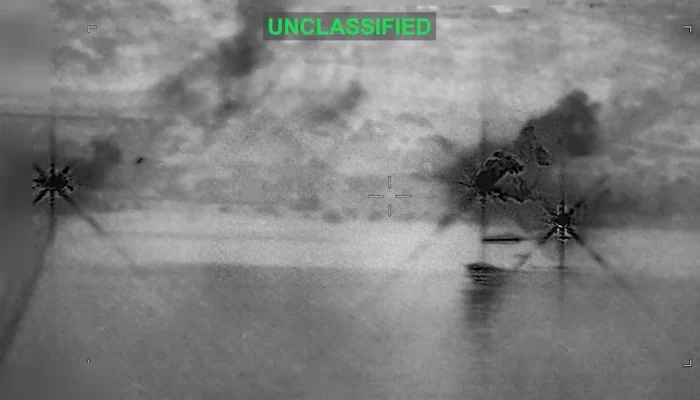
Following a day marked by large crowds mourning Iran’s late Supreme Leader Ayatollah Ali Khamenei in the holy city of Qom, U.S. Central Command announced it conducted strikes targeting more than 80 sites to impose significant costs on Iran.
The military said it targeted over 60 small boats operated by the Islamic Revolutionary Guard Corps to weaken Iran’s capacity to threaten commercial shipping.
“Iranian forces’ unprovoked aggression is a blatant and reckless breach of the ceasefire, jeopardizing freedom of navigation,” CENTCOM stated.
Iran’s top joint military authority, Khatam al-Anbiya Central Headquarters, condemned the U.S. strikes as an “overt act of aggression,” promising a “forceful response,” and warned that Tehran will not tolerate U.S. interference in the Strait’s management.
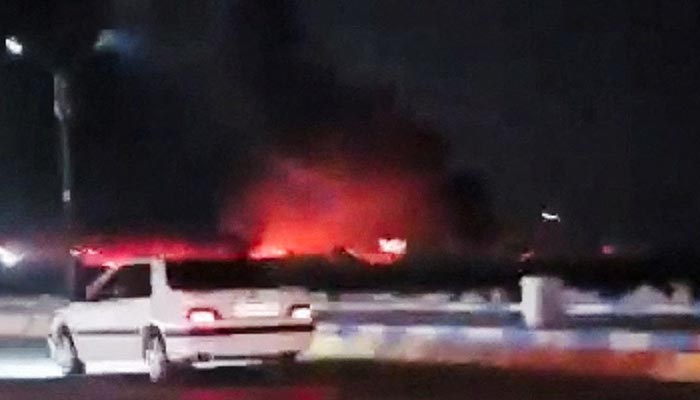
Iranian reports indicated explosions early Wednesday local time on Kharg Island, Iran’s primary oil hub, as well as on Qeshm Island and in the southern ports of Sirik and Bandar Abbas. No civilian casualties have been confirmed, but some individuals suffer injuries from shrapnel after an “enemy projectile” struck a commercial dock in Sirik, according to Iranian state television. Strikes also damaged fishing docks in Sirik and Bandar Abbas, with reports of several fishing boats catching fire.
Press TV in Iran reported multiple blasts on Kharg Island, but did not specify damage extent or casualties. The U.S. Central Command’s statement did not mention Kharg Island, from which Iran exports about 90% of its crude oil. The island was last targeted in April.
A U.S. official informed Reuters that the strikes targeted Iranian air defense systems, coastal surveillance networks, surface-to-air missiles, anti-ship cruise missiles, and drone launch sites.
These incidents are part of ongoing threats to the ceasefire agreement reached last month, which paused hostilities that initially began in February with U.S. and Israeli strikes across Iran.
In a significant setback for the agreement, the U.S. moved on Tuesday to revoke an important concession that allowed Iran to sell oil internationally.
According to a U.S. official, talks continue in good faith toward an overall deal, but Iran’s strategic control of the Strait provides it with substantial leverage, effectively allowing it to stall negotiations with the world’s strongest military assistance. Under the interim U.S.-Iran deal, the U.S. Treasury issued a general license on June 22 to permit Iranian oil sales through August 21. The license was revoked Tuesday, providing Iran until July 17 to expire or wind down existing transactions.
Response measures deemed necessary
Iran’s Foreign Ministry labeled the move as a violation of the framework agreement aimed at ending the conflict and warned that Iran will hold Washington responsible for any consequences.
Early Wednesday, the ministry stated Iran will take any necessary actions to protect its interests and sovereignty.
Qatar accused Iran of attacking vessels, including the large Qatari LNG tanker Al Rekayyat, which was reportedly hit overnight by a drone causing a fire in its engine room. The crew is safe and being evacuated.
A Saudi-flagged oil tanker, believed to be the supertanker Wedyan, also sustained damage off Oman; the cause remains unclear.
Qatar’s foreign ministry has summoned Iran’s deputy ambassador, delivering a protest note following the attack on the tanker.
Iran’s foreign ministry dismissed these accusations as confusing, asserting that Tehran is faithfully executing its commitments but adding that vessels using uncoordinated routes face risks.
A second U.S. official anonymously stated that initial evidence suggests Iran targeted three commercial vessels.
Iran aims to establish a permanent fee collection system, shifting regional power and challenging the long-standing security guarantee provided by Washington.
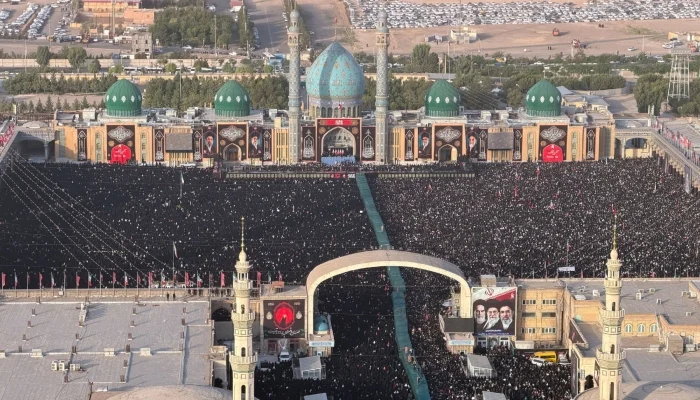
Domestically, the leadership leveraged the mourning period for Khamenei, who was martyred along with his family on the conflict’s first day, to reinforce control. The bodies of Khamenei and his family were paraded through Qom on Tuesday. Later, Iranian media aired footage claimed to show an aircraft carrying Khamenei’s coffin at Najaf Airport in Iraq.
President Masoud Pezeshkian, who traveled to Iraq for the funeral ceremonies, left Iran following the U.S. strikes in southern Iran, according to state TV.
The ceasefire was initially meant to last 60 days, providing time for negotiations on a permanent agreement, but talks in Qatar ended last week without progress.
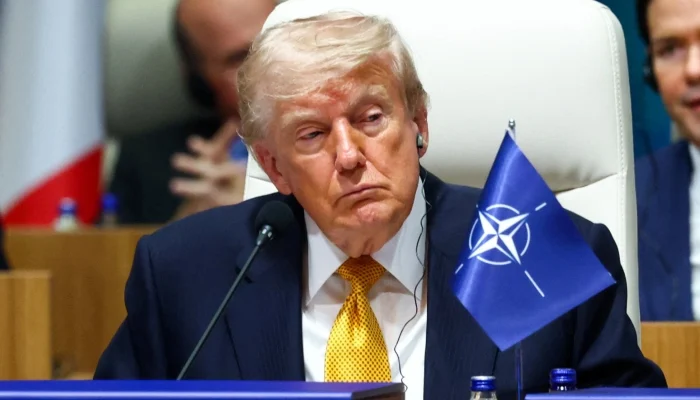
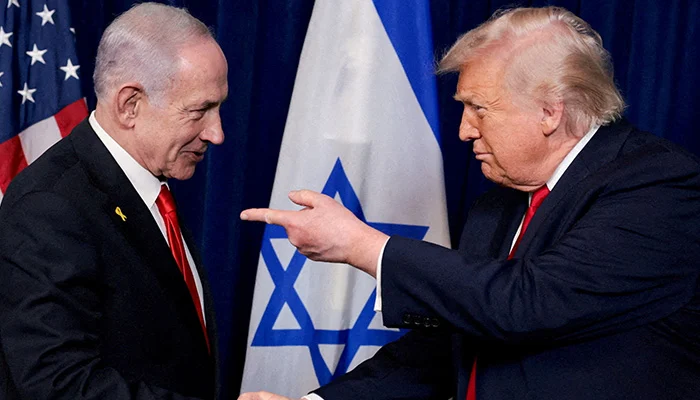
President Donald Trump has repeatedly threatened to resume bombing, most recently on Monday, stating in the Oval Office, “We’re either going to make a deal or we’re going to finish the job… We could destroy their bridges in an hour, knock out their energy supplies.”
Iran’s Foreign Minister Abbas Araghchi emphasized that, under the interim ceasefire, negotiations for a final deal cannot start if threats persist.
 ChatGPT
 Perplexity
 Gemini AI
 Grok AI