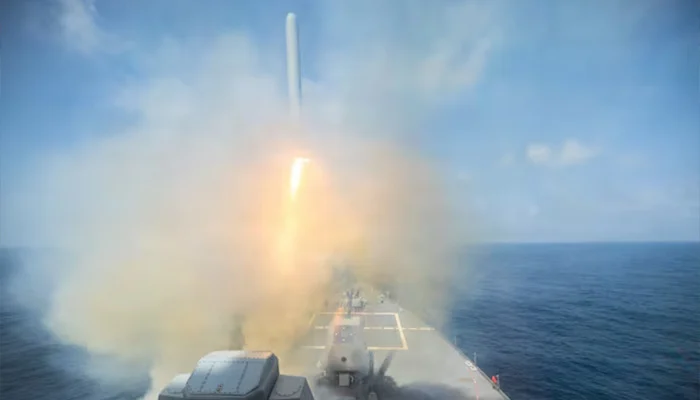
Tag: US Military

  • Iran ramps up diplomacy to challenge US military in Europe

    Iran ramps up diplomacy to challenge US military in Europe

    Iran’s Foreign Minister Abbas Araqchi has called on Bulgaria to reconsider its recent decision to permit the temporary deployment of U.S. military aircraft at the Bezmer air base, according to Iranian state media on Thursday. During a phone conversation with Bulgarian Foreign Minister Velislava Petrova-Chamova, Araqchi argued that Bulgaria’s approval of a U.S. request to station aircraft there to support military operations effectively enables aggression against Iran. He emphasized that such actions are unacceptable and undermine the traditionally friendly relations between the two nations.

    Iran has issued repeated warnings to countries allowing their territories to be used for U.S. military actions against Iran, warning of potential consequences. Separately, Araqchi spoke with Cypriot Foreign Minister Constantinos Kombos, stressing the need to ensure that foreign military bases in Cyprus are not utilized for any operations targeting Iran.

    Last week, Bulgaria’s parliament approved the temporary stationing of up to eight U.S. KC-135 tanker aircraft and 250 personnel at Bezmer air base, despite Iranian objections. Bulgarian authorities clarified that no offensive weapons would be deployed and that the move does not make Bulgaria a participant in military operations.

    Cyprus hosts two British military bases, including RAF Akrotiri, which was targeted by an Iranian drone in early March — shortly after Israel and the U.S. launched strikes against Iran. Britain had previously agreed to a U.S. request to use British bases for defensive strikes against Iranian missile depots; however, they later clarified that RAF Akrotiri would not participate in these defensive operations. The defense arrangements were maintained by Britain’s new Prime Minister, Andy Burnham, in July, prompting warnings from Iran’s Revolutionary Guards against Britain’s involvement in facilitating U.S. military actions against Iran.

  • US launches strikes amid expanding global conflict with Iran

    US launches strikes amid expanding global conflict with Iran

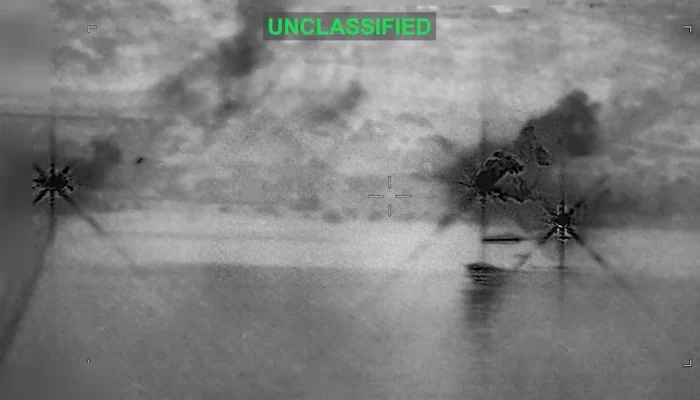
    Smoke rises after an explosion at an unknown site during what U.S. Central Command (CENTCOM) reports are strikes on Iran on July 29, 2026. — Reuters

    – Ambery reports a drone struck a U.S. floating storage tanker.
    – Egypt’s Ministry of Petroleum confirms a fire at a port.
    – Oil prices climb above $90 per barrel as diplomatic efforts stall.

    The U.S. announced new strikes in Iran on Wednesday, escalating a conflict that has already lasted five months and spreading beyond its initial frontlines to involve additional regional countries.

    “U.S. forces began launching strikes against Iran at 8:00 p.m. ET today,” according to a statement from CENTCOM. “These strikes are a strong response to Iran’s attempted attacks on U.S. forces in the Middle East yesterday.”

    Earlier that day, a drone attacked a U.S.-owned gas storage tanker at Egypt’s Damietta port, according to Ambrey, a British maritime security firm. Meanwhile, U.S. and Saudi forces targeted Iran-backed groups in eastern Iraq, and Iran launched missiles at U.S. troops in Jordan.

    Egypt’s petroleum ministry confirmed a fire at the port but did not specify the cause. Responsibility for the attack remains unclear.

    These recent strikes in Iraq and Egypt threaten to expand the conflict, particularly after Yemen’s Houthis declared a naval blockade of Saudi Arabia last week.

    The Wednesday strikes in Iran followed President Donald Trump’s vow earlier in the day to retaliate against Iran for its attacks on U.S. forces.

    “Now it’s our turn,” Trump told reporters at the White House, vowing to “hit them very hard,” while also stating that the U.S. continues to seek peace with Tehran.

    Iran confirmed it fired on U.S. bases in Jordan and at ships in the Strait of Hormuz overnight and rejected an Omani proposal to jointly manage the strait, a vital maritime route for oil and gas.

    The conflict began in February when the U.S. and Israel launched airstrikes on Iran. Trump initially claimed the campaign would last only a few weeks. However, a ceasefire in June collapsed amid renewed fighting over the Strait of Hormuz, which Iran now claims to control.

    Oil prices surged Wednesday, with Brent crude rising over 8% to surpass $90 per barrel—reversing much of a recent decline after Trump unexpectedly halted U.S. strikes.

    For the first time, Riyadh publicly joined U.S.-led strikes in a joint action.

    Iraq’s Popular Mobilization Forces reported at least 20 fighters killed and 32 wounded in U.S.-Saudi strikes targeting several bases across the country. Iraqi civilians shouted “Death to America” as they carried the bodies of killed fighters.

    U.S. and Saudi forces asserted their strikes targeted armed groups in Iraq in retaliation for drone attacks against Saudi oil facilities launched from Iraqi territory.

    Following the joint strikes, Saudi defense officials met with Vice President Vance in Washington to urge caution against escalating the war further, particularly by attacking Yemen’s Houthis or conducting additional strikes in Iraq. They warned that such actions could introduce “major unknown risks.” The White House and the Saudi embassy declined immediate comment.

    U.S. officials have privately warned that resuming full-scale operations against Iran could deplete munitions stocks and carry significant risks.

    The Center for Strategic and International Studies estimates the U.S. currently has fewer than 1,000 Patriot interceptors and under 250 THAAD interceptors, key components of the nation’s air defense system.

    Iran denies it has directly launched strikes from Iraqi territory, but an Iranian newspaper, Hamshahri, reported that four Iranian Revolutionary Guards advisers were killed in strikes on Iraq.

    The strikes reveal a fragile and deeply divided Iraq, which maintains close military and diplomatic ties with both Tehran and Washington—an arrangement that fuels ongoing tensions and unrest.

    Prime Minister Ali al-Zaidi, in office for just two months, called for avoiding escalation and emphasized the importance of keeping Iraq out of regional conflicts.

    The Iraqi president condemned the strikes on paramilitary groups as “an unacceptable violation of Iraq’s sovereignty,” while urging all parties to halt attacks on neighboring countries.

    Iran’s close relationship with Iraq remains evident this week as hundreds of thousands of Iranian pilgrims visit Iraqi shrines for an annual mourning observance.

    Before launching attacks in Iraq, U.S. military officials reported thwarting a surprise Iranian attack on U.S. troops in the region through air defenses.

    Jordan’s military reported shooting down five Iranian missiles. U.S. bases in Jordan have become prime targets recently, with three U.S. service members killed earlier this month—the worst U.S. losses since March.

    Iran’s Revolutionary Guards claimed to have launched multiple ballistic missiles at U.S. military facilities in Jordan and hit three oil tankers attempting to pass through the Strait of Hormuz via an unauthorized route.

  • US Troops’ Phone Footage Assists Iran in Real-Time Strike Assessment

    US Troops’ Phone Footage Assists Iran in Real-Time Strike Assessment

    The top U.S. commander for the Middle East has issued a warning to troops that sharing videos online via cellphones could aid Iran in targeting American military bases. Sources told Reuters that some personnel already deployed might soon be instructed to surrender their phones.

    Any restrictions on mobile device use would introduce a new challenge for the thousands of U.S. troops in the region, many of whom still depend on their phones to stay in touch with loved ones and reassure them of their safety.

    Admiral Brad Cooper, in a previously undisclosed letter, highlighted how Iran benefits from real-time insights into its strikes’ outcomes by analyzing news reports or posts by journalists that include “reactions, photos, and footage from the cellphones of our troops.”

    “The immediate, unavoidable cost of this open-source intelligence could be measured in the lives of American service members and civilians living in the Gulf,” Cooper, who heads U.S. Central Command, wrote on July 28, a copy of which was obtained by Reuters.

    He urged troops to “redouble our focus on operational security” but did not specify particular measures in the memo.

    This warning emphasizes the increasing tension between real-time war reporting—often supported by satellite imagery and first-person accounts—and the military’s effort to limit information that could help Iran target U.S. forces.

    In Jordan, which has frequently been targeted by Iranian strikes, some soldiers have been told their phones will be confiscated in the coming days, according to two sources familiar with the situation. A third source suggested this move is under consideration due to security concerns but did not confirm it as certain.

    When asked for comment, U.S. Central Command spokesperson Captain Timothy Hawkins said, “The message is a general reminder to our service members about the importance of operational security. This is one of many ways Admiral Cooper has communicated operational priorities.”

    Running for Shelter During Iran Attack

    A recent online video shows U.S. soldiers rushing for safety during a deadly Iranian attack on Muwaffaq Salti Air Base in Jordan on July 17. Cooper referenced the footage in his letter, noting it was captured using Meta smart glasses with an integrated camera.

    “Video taken from a service member’s Meta glasses was posted on Instagram, showing how and where they evacuated to a bunker amid missile and drone strikes,” Cooper stated.

    Iran might find it difficult to accurately assess the success or failure of its strikes without such accounts, Cooper explained, as U.S. electronic jamming and other tactics in war zones obscure strike outcomes.

    “While Iran is aware that weapons were fired, they can’t tell if they missed by 50 meters, hit an empty tarmac, or successfully attacked a crowded target,” he said. “Detailed reports, descriptions, and analyses from news outlets essentially serve as Iran’s Battle Damage Assessment—free of charge.”

    Since February 28, around 18 U.S. service members have died in conflicts with Iran, and more than 600 have been wounded. These casualties have deepened American concerns over a potential war, which only about a third of the U.S. population supports.

    Democratic lawmakers are demanding more information about the conflict, including data on damage to U.S. infrastructure at bases—covering radar towers, barracks, and aircraft hangars—and are calling for the release of a U.S. military investigation into an incident involving a suspected strike on a girls’ school in Iran, first reported by Reuters at the war’s outset.

    Is Cell Phone Seizure on the Horizon?

    Rules governing cell phone use among deployed troops differ widely across military branches. Many service members are required to lock away their phones, and in highly sensitive missions—like special operations—cell phones can even be banned altogether.

    The possibility of confiscating phones has caused anxiety among some families, who are already on edge due to Iranian claims of deadly strikes on bases across the Middle East over recent months.

    U.S. officials have long warned that certain mobile applications, such as fitness trackers, could be exploited by adversaries to gather location data and aid in targeting. Reuters reported in May that commercially available location data from smartphones has been used to monitor or target U.S. forces.

    At the same time, the Pentagon has been cautious about releasing detailed information about Iranian attacks or incidents involving U.S. casualties, citing operational security.

    Cooper emphasized that details about strikes could help Iran plan subsequent, potentially more destructive attacks.

    “Publicly sharing detailed information can serve as a green light for Iran to launch secondary attacks that could be far more devastating,” he said.

  • US-Iran Conflict Has Cost $37.5 Billion to Date

    US-Iran Conflict Has Cost $37.5 Billion to Date

    The cost of the U.S. military engagement in Iran has now reached $37.5 billion, according to Defense Secretary Pete Hegseth. He briefed Congress amidst growing skepticism, especially with heavy bombings resuming and urgent funding requests being made.

    As the midterm elections approach—highlighting the political stakes—Democrats are leveraging public opinion polls that show increased opposition to the Iran conflict to argue for budget reforms. Hegseth explained that the $37.5 billion figure encompasses current expenses and projected costs through September 30. However, how the Pentagon calculated this total remains unclear. In March, sources indicated that the initial six days of the conflict cost at least $11.3 billion.

    Last month, Trump’s administration requested nearly $90 billion more in funding, predominantly to support ongoing military operations against Iran, setting the stage for intense debates in Congress. Both parties have criticized the administration for lack of transparency about the conflict’s progression and plans.

    Senator Patty Murray, Democrat and top member of the Appropriations Committee, warned that escalation could lead to a prolonged war, citing threats made by Trump that could threaten civilian infrastructure—a move critics argue might constitute war crimes. With Republicans holding slim majorities, passing appropriations bills often requires Democratic support. Senator Kirsten Gillibrand criticized the administration’s conflicting statements about the conflict’s scope and timeline.

    Hegseth announced that military readiness could suffer without additional funding. The ongoing war strains the Pentagon’s nearly $1 trillion budget, threatening to impact personnel and maintenance costs. General Dan Caine acknowledged potential financial challenges, emphasizing the necessity of substantial future funding—specifically, a proposed $1.5 trillion budget for 2027—that Hegseth claimed is vital for national security.

    A ceasefire between the U.S. and Iran earlier this month collapsed, leading to daily exchanges of strikes. The U.S. troop death toll has risen to 18, with about 430 injured. The Pentagon reported 100 injuries since July 7, nearly all of whom have returned to duty.

    In recent weeks, Trump has threatened to expand military targets within Iran, including energy infrastructure and bridges, deploy ground troops to seize Iran’s vital Kharg Island oil facility, and attack an underground nuclear site called Pickaxe Mountain. On Tuesday, Trump stated he plans to target the mountain “pretty soon.”

  • US Military Conducts Fresh Strikes Targeting Iran

    US Military Conducts Fresh Strikes Targeting Iran

    The U.S. military announced Saturday that it has conducted a new series of strikes against Iran following Tehran’s explicit attack on a container ship in the Strait of Hormuz. The strikes began at 7:15 p.m. Washington time (23:15 GMT), directly targeting forces of the Islamic Revolutionary Guard Corps after they attacked a Cyprus-flagged vessel navigating the narrow waterway, according to U.S. Central Command.

    Centcom stated, “The United States is making Iran pay a heavy price by continuing to diminish their ability to threaten civilian mariners and commercial ships passing through the strait.” These military actions were carried out under the orders of President Donald Trump.

    Meanwhile, Iran’s Revolutionary Guards declared that the Strait of Hormuz would remain closed “until further notice.” Reports indicate that the Guards had fired warning shots at a vessel using an unauthorized route. This escalation complicates ongoing efforts to negotiate with Iran, especially after recent exchanges of military actions. A major obstacle to a comprehensive agreement remains the control of the Strait—Tehran insists it will oversee shipping through the waterway, while Washington demands freedom of navigation without restrictions.

  • US conducts new strikes on Iran, prompting attacks on Kuwait and Bahrain

    US conducts new strikes on Iran, prompting attacks on Kuwait and Bahrain

    Smoke ascends from an undisclosed location following a new wave of strikes against Iran, according to the US Central Command. This occurred after three tankers were hit by projectiles in the Strait of Hormuz, as depicted in this still image from a video released on July 7, 2026. — Reuters

    – US military launches strikes to reopen the Strait of Hormuz.
    – Iran targets Kuwait and Bahrain, which host US military bases.
    – President Trump states the strikes are revenge for Tuesday’s ship attacks.

    The US military announced on Wednesday that it had conducted additional strikes on Iran to ensure the Strait of Hormuz remains open for shipping. This escalation prompted Iran to attack Kuwait and Bahrain, aiming to disrupt peace efforts. The latest military action was a response to Tuesday’s assault on three cargo ships navigating the strait, just hours after President Donald Trump suggested that a temporary ceasefire with Iran was over.

    “US Central Command forces have begun executing further strikes against Iran to weaken their capacity to threaten navigation freedom in the Strait of Hormuz,” Central Command stated on X.

    “The United States is holding Iran responsible for recent unwarranted aggression against commercial ships and crews navigating this critical international waterway.”

    The US strikes caused disturbances in several southern Iranian cities, some losing power. Iran retaliated with a second day of attacks targeting Kuwait and Bahrain, where US military bases are located.

    Kuwait’s Defense Ministry reported intercepting missiles and drones, while Qatar briefly issued a heightened security alert before lifting it. A US official revealed that Wednesday’s strikes would surpass those on Tuesday in scale.

    President Trump tweeted on Truth Social: “This is retribution for yesterday’s ship bombings by Iran. If it happens again, things will get a lot worse!”

    Control of the Strait, which once accounted for about 20% of global oil shipments before the conflict, has granted Iran significant sway, allowing it to maintain a stalemate with the world’s strongest military. While Iran has not officially claimed responsibility for the ship attacks, analysts believe Tehran uses such incidents to influence negotiations.

    Iranian top negotiator Mohammad Baqer Qalibaf warned on X, “The US has yet to learn that más intimidation and broken commitments come at a cost. Make no mistake: If you strike, you will be struck back.”

    He added, “The Strait of Hormuz will only reopen under Iranian terms, not through US threats.”

    This wave of military strikes appears to dampen hopes of turning a June 17 memorandum into a lasting peace agreement, which was initially seen as a step toward ending the ongoing conflict that started with US-Israeli assaults on Iran on February 28.

    Asked before a NATO summit in Turkey whether the agreement was dead, Trump indicated he believed so, saying, “It’s a very interesting question. To me, I think it’s over. I don’t want to deal with them.”

    Later, Trump expressed skepticism about the deal’s viability, calling Iran dishonorable, but suggested that a full-scale war was unlikely and that negotiations might not continue.

    He also claimed that any new conflict would be brief and that stability — including for oil markets — would be restored quickly.

    Oil prices rose, with Brent crude futures climbing approximately 1% to $78.80 a barrel by 0054 GMT, though prices remain well below the over $120 levels seen in late April.

    Iran’s southern coast was heavily impacted, with strikes hitting key ports and military facilities. Among the cities targeted was Bandar Abbas, Iran’s largest port and strategic military hub, along with Konarak and Chabahar near Iran’s border with Pakistan.

    Labor reports indicated that power had been restored in most parts of Chabahar after strikes caused outages earlier, and a maritime traffic control tower there was reportedly hit as well.

    In addition, a firefighter was killed in an attack on Iranshahr’s airport, and a railway bridge near Aqqala in northern Iran was damaged in a US strike, as reported by Iranian state media.

    Before the recent US attacks, Iran’s Foreign Ministry spokesperson Esmaeil Baghaei accused American strikes of violating the June 17 memorandum by challenging Iran’s responsibility to oversee safe passage through the Strait of Hormuz.

    A parliamentary source mentioned options Iran might consider for retaliation, including withdrawing from the nuclear Non-Proliferation Treaty, revising nuclear policies, or closing the Bab-el-Mandeb Strait at the Red Sea’s entrance—another critical shipping route.

    Iran’s UN mission sent a letter accusing the US of violating international law and the terms of the agreement, condemning recent strikes as breaches of the deal signed between the nations.

  • Israeli Journalist Confesses to Covering US Airman Rescue Amid Trump Leak Threat

    Israeli Journalist Confesses to Covering US Airman Rescue Amid Trump Leak Threat

    Israeli journalist Amit Segal has publicly admitted that he was the first to reveal that a U.S. airman in Iran was rescued. This rare confession comes amidst threats from President Donald Trump, who is pressuring the journalist behind the story to disclose their source or face imprisonment.

    Newsweek reports that Segal confirmed he based his story on credible sources but refused to reveal who provided the information. “I will protect my sources at all costs,” Segal stated, emphasizing the challenges journalists face when covering sensitive military operations.

    The story broke following a tense U.S. military mission after an F-15E Strike Eagle was shot down over southwestern Iran on April 3. One of the two airmen onboard was rescued shortly after the crash, and efforts to recover the second continued for two days, raising concerns in military and diplomatic circles.

    In response, Trump sharply criticized the press on Monday, insisting he would demand the reporter who broke the story to reveal how they obtained the information. Trump claimed that the leak jeopardized the ongoing mission to rescue the second airman, who was eventually rescued safely as well.

    “We didn’t talk about the first one for an hour. Then someone leaked information, and we’re going to find that leaker. We’re looking very hard to identify them,” Trump told reporters at the White House.

    He added, “We’re going to approach the media outlet that released this and say, ‘National security, hand over the information or face jail time.’” It was unclear which media organization or journalist Trump was referring to specifically. Several outlets, including The New York Times, CBS News, and Axios, reported shortly afterward that U.S. rescue forces successfully recovered one of the airmen after the fighter jet was shot down over Iran.

    The White House did not immediately respond to inquiries about which journalist Trump was threatening. This incident marks a significant escalation in the Trump administration’s critique of the media. Recently, Trump has privately voiced frustrations to aides over what he perceives as overly negative coverage of the U.S.-Israeli stance on Iran. Publicly, he and his allies have criticized various news outlets for their reporting on the conflict.

    Moreover, government officials have intensified pressure on broadcasters. Last month, FCC Chairman Brendan Carr warned media outlets on X (formerly Twitter) that airing “fake news” could jeopardize their license renewals. He accompanied his message with a screenshot of Trump’s post, in which the former president claimed that “Lowlife ‘papers’ and media actually want us to lose the war.”

  • Suspected Iranian Attack Hits F-35, First Known Strike on US Aircraft

    Suspected Iranian Attack Hits F-35, First Known Strike on US Aircraft

    A suspected Iranian attack caused a US F-35 stealth fighter to make an emergency landing at a Middle Eastern air base, reports indicate. The pilot is reported to be in stable condition, and officials confirm the aircraft landed safely. US Central Command spokesperson Captain Tim Hawkins stated, “The aircraft landed safely, and the pilot remains in stable condition,” though he did not verify specific media reports. The incident is currently under investigation.

    Historically, the US has experienced the loss of multiple aircraft during heightened conflicts, including three F-15s accidentally shot down by Kuwaiti forces and a KC-135 refueling tanker that crashed in Iraq. However, there’s no confirmed record of any aircraft previously being struck by Iranian fire.

    In response to Iran’s military activities and significant troop buildup in the region—featuring F-35s—the US and Israel have launched extensive air campaigns targeting Iran. Since hostilities ignited on February 28, thirteen US service members have lost their lives—six in a KC-135 crash and seven in early Iranian attacks. Additionally, about 200 US military personnel have been wounded across seven Middle Eastern countries; most have returned to duty.

    Meanwhile, sources suggest that President Trump is contemplating deploying thousands more troops to the Middle East amid ongoing violence that has resulted in over 2,000 deaths worldwide. However, on Thursday, Trump stated, “I don’t plan to send ground troops anywhere.” Israeli Prime Minister Netanyahu later confirmed that Israel conducted a solo operation bombing Iran’s South Pars gas field, despite Trump previously requesting Israel to hold off on such strikes.

    Despite US and Israeli air assaults leaving Iran “decimated” after 20 days, effectively crippling its uranium enrichment and missile capabilities, Netanyahu emphasized that a revolutionary change within Iran would require ground intervention, not just airstrikes. Concurrently, Iran launched a fresh missile attack targeting Israel, according to military statements from both sides.

  • US spots drones near Rubio, Hegseth’s base, says Washington Post

    US spots drones near Rubio, Hegseth’s base, says Washington Post

    US officials spotted unidentified drones flying over a military base in Washington where Secretary of State Marco Rubio and Defense Secretary Pete Hegseth reside, according to a report by the Washington Post on Wednesday, citing three sources familiar with the matter.

    The origin of the drones remains unclear, the sources added. The presence of drones above Fort McNair prompted officials to consider relocating Rubio and Hegseth for safety reasons. However, both secretaries have not been moved, according to a senior administration official.

    The publication noted that the U.S. military has intensified its monitoring of potential threats amid increased alert levels due to ongoing tensions between the US and Israel against Iran.

    Immediately, Reuters could not verify the report independently. The Pentagon and State Department did not respond to requests for comment. Pentagon spokesperson Sean Parnell refused to address the drones directly, stating, “The department cannot comment on the secretary’s movements for security reasons, and reporting on such movements is highly irresponsible,” he told the Post.

  • Six US service members killed in Iraq plane crash: CENTCOM

    Six US service members killed in Iraq plane crash: CENTCOM

    Six crew members aboard a U.S. military refueling aircraft have been confirmed dead following a crash in western Iraq on Thursday. The incident involved another aircraft but was not caused by hostile or friendly fire, according to the military. The fatalities increase the overall US military toll in operations against Iran that started on February 28, with at least seven American service members previously killed.

    A U.S. official informed Reuters that the second aircraft involved, which landed safely, was also a KC-135 refueling plane. The United States has deployed numerous aircraft to the Middle East for operations targeting Iran, and this event underscores the dangers faced not only during active missions but also during refueling in midair.

    The KC-135, developed by Boeing in the 1950s and early 1960s, remains a vital component of the US military’s aerial refueling capability, enabling aircraft to complete missions without landing. Meanwhile, an Iran-backed coalition claimed responsibility for shooting down the military aircraft.

    Reuters reported on Tuesday that approximately 150 U.S. troops had been wounded in the ongoing U.S.-Israeli conflict against Iran. The news of the crash coincides with injuries to two U.S. sailors following a non-combat fire aboard the USS Gerald Ford. In addition, seven U.S. service members lost their lives when a drone struck a U.S. military installation in Port Shuaiba, Kuwait.

    President Donald Trump and other top officials have warned that the conflict with Iran could lead to more American military casualties as Tehran retaliates against U.S. and Israeli actions.

  • White House denies US Navy escort in Hormuz Strait

    White House denies US Navy escort in Hormuz Strait

    The Callisto tanker remains anchored while traffic through the Strait of Hormuz remains minimal amidst escalating tensions between the US, Israel, and Iran in Muscat, Oman, March 10, 2026. — Reuters

    The White House announced Tuesday that the US military has not conducted any escort operations for commercial ships traveling through the Strait of Hormuz, following reports that were later retracted. Earlier, US Secretary of Energy Chris Wright shared on X that the US Navy had successfully guided an oil tanker through this critical waterway, but he later deleted the post for reasons unknown.

    The ongoing conflict between the US, Israel, and Iran has already disrupted shipments traversing the Strait along Iran’s coastline. This area typically handles about 20% of the world’s oil and liquefied natural gas, but now many Middle Eastern oil producers have exhausted their storage capacities and halted production.

    On March 3, President Donald Trump pledged that the US would shield oil tankers passing through the Strait. The Pentagon followed this by reiterating threats to strike Iran more forcefully unless shipping routes are reopened, stating it targeted Iranian mine-laying vessels and storage facilities.

    Wright initially tweeted that the US Navy had escorted an oil tanker to keep oil supplies flowing globally but later removed the message, with unclear reasons for the deletion.

    White House Press Secretary Karoline Leavitt clarified that no oil tankers or vessels have been escorted through the Strait of Hormuz yet. Meanwhile, an Iranian Revolutionary Guards spokesperson dismissed Wright’s claims, warning that any US or allied movement in the area would be blocked by Iran’s missiles and drones.

    Earlier on Tuesday, the top US military officer indicated that the military is exploring options to escort ships through the Strait if ordered. General Dan Caine told reporters at the Pentagon, “We’re considering a range of potential actions.”

  • Iran shuts airspace amid live-fire drills over Strait of Hormuz

    Iran shuts airspace amid live-fire drills over Strait of Hormuz

    Iran has issued a NOTAM (Notice to Airmen) announcing live-fire military exercises in the skies near the Strait of Hormuz, just hours after U.S. military units arrived in the Middle East, signaling increased regional tensions. The alert specifies that Iranian forces will conduct live-fire drills from January 27 to January 29 within a five-nautical-mile radius around the strait. During this period, airspace from ground level up to 25,000 feet will be restricted and deemed hazardous.

    The Strait of Hormuz, a critical global trade choke point, sees millions of barrels of oil pass through daily. Any disturbance there could impact worldwide energy markets and elevate geopolitical concerns. This NOTAM coincides with an expanded U.S. military presence in the region, including a multi-day readiness exercise led by U.S. Air Forces Central (AFCENT), aimed at showcasing rapid deployment and support capabilities.

    U.S. officials have indicated that all options remain on the table regarding Iran, including potential military action, as Washington and Israel continue to counter Tehran’s influence. Iranian leaders have warned that any attack would trigger a swift and comprehensive response, escalating regional tensions.

    The airspace restrictions will affect civilian and military flights during the exercises. Typically, NOTAMs are issued ahead of live-fire events to alert pilots and airlines of potential hazards and temporary closures.

    In regional developments, the USS Abraham Lincoln aircraft carrier, accompanied by several guided-missile destroyers, has entered Middle Eastern waters under U.S. Central Command. President Donald Trump stated that a U.S. naval “armada” is en route to Iran, expressing hope that military force would not be necessary. The deployment came after rising tensions following Iran’s crackdowns on protests. Trump has previously threatened intervention if Iran’s actions against protesters persist, although recent protests have diminished, and he reports that killings are reducing.

    The U.S. has historically increased military presence in the Middle East during periods of tension, including a significant buildup before June’s strikes on Iran’s nuclear program. Along with ships, fighter jets and air-defense systems are being repositioned to the region.

    Israeli Prime Minister Benjamin Netanyahu remarked that “Trump will decide what he decides, and Israel will decide what it does,” warning that any Iranian attack on Israel would be met with an unprecedented response.

    Iranian authorities have warned the U.S. against aggression, with President Masoud Pezeshkian condemning American threats as destabilizing regional security. Iran’s Revolutionary Guards have also issued warnings to neighboring countries, emphasizing that if Iran’s soil, sky, or waters are used against it, those states would be considered hostile. A senior Iranian official has stated that any attack would be viewed as full-scale war, and Iran’s military is prepared for the worst, ready to respond aggressively.

    Saudi Arabia and the United Arab Emirates have assured Iran they will prevent their airspace, land, or waters from being used for hostile military activities against Iran. Meanwhile, U.S. military bases like Al Dhafra in the UAE continue to be pivotal in supporting operations against ISIS and regional reconnaissance efforts.

  • US Capture of Venezuela’s Maduro Under UN Scrutiny

    US Capture of Venezuela’s Maduro Under UN Scrutiny

    U.S. veto power limits accountability at the UN Security Council. The U.S. justifies its actions under UN Charter Article 51, citing the right to self-defense. However, legal analysts argue that the U.S. operation breached international law.

    The UN Security Council, composed of 15 members, is set to review the legality of the recent U.S. operation that resulted in the detention of Venezuelan President Nicolas Maduro in New York, where he awaits a court hearing on drug charges. The raid on Saturday disrupted power in parts of Caracas and targeted military sites, with reports of casualties from Venezuelan authorities.

    While Russia, China, and Venezuela’s other allies accuse the U.S. of violating international law, most U.S. allies—many of whom oppose Maduro—have been cautious in voicing explicit concerns about the military intervention. Richard Gowan, an expert at the International Crisis Group, suggests that European nations will likely hesitate or hedge their statements within the Security Council.

    UN Secretary-General Antonio Guterres expressed concern, warning that such actions could set a dangerous precedent. Many legal scholars contend the U.S. operation was unlawful since it lacked UN Security Council approval, did not involve Venezuelan consent, and did not respond to an armed attack, which is necessary for a justified self-defense claim.

    The U.S. officials defend the operation by citing Article 51, which permits self-defense if there is an armed attack. U.S. Ambassador to the UN, Mike Waltz, argued that Maduro’s alleged involvement in drug trafficking with nations like China, Russia, Iran, and terrorist groups posed a threat that justified the military action.

    Legal experts counter that drug smuggling alone does not qualify as an armed attack, and therefore does not justify the use of force. They emphasize that the U.S. cannot invoke extraterritorial jurisdiction freely and that Maduro’s indictment in the U.S. on narco-terrorism conspiracy charges does not legally warrant military intervention without international approval.

    The U.S. has the power to veto any Security Council resolutions criticizing its actions, as it, along with Russia, China, the UK, and France, holds veto authority. Maduro, who was indicted in 2020 on charges including narco-terrorism, denies any criminal wrongdoing. Critics such as Professor Milena Sterio point out that even if Maduro was involved in drug trafficking, that does not constitute an armed attack warranting military response under international law.

    Cuba reports that 32 of its citizens lost their lives during the U.S. raid. The Cuban government announced a mourning period and confirmed that those killed were members of its armed forces and intelligence services who fought fiercely against the attack. Cuba has historically provided security for Maduro, although it is unclear how many Cubans were present at the time of the raid or were killed.

    Maduro, aged 63, and his wife, Cilia Flores, were captured in Caracas and flown to the United States. Maduro is currently held in a New York detention center, awaiting his court appearance.

  • US President Launches ‘Trump-Class’ Battleship Initiative to Strengthen Sea Power

    US President Launches ‘Trump-Class’ Battleship Initiative to Strengthen Sea Power

    President Trump announced on Monday the development of a new “Trump class” battleship, signaling a significant boost to the Navy’s fleet and sparking increased oversight of defense contractors for delays and budget overruns. This initiative exemplifies the president’s tendency to reshape government projects in his image, with Trump personally involved in the ship’s design process.

    He stated the vessels will exceed 30,000 tons, surpassing current destroyers, and will feature cutting-edge technology such as artificial intelligence and directed-energy laser weapons. “We haven’t built a battleship since 1994. These state-of-the-art ships will be some of the most formidable surface combatants… apart from our submarines,” he declared.

    Some U.S. officials have expressed concern that neglecting to produce new battleships recently has given China an edge militarily and economically. Trump dismissed these worries, framing the expansion as a response to global competition.

    The naval growth plan will also involve heightened pressure on defense firms to accelerate production and control costs. Trump indicated he will meet with leading defense companies next week to address project delays and budget issues, scrutinizing whether executive salaries, stock buybacks, and dividends are contributing to missed targets.

    “We don’t want executives earning $50 million annually, handing out big dividends, and doing buybacks while the production of jets like the F-35 stalls,” he emphasized.

    Last week, Reuters reported the administration’s intention to issue an executive order limiting dividends, buybacks, and executive compensation for defense contractors with costly, delayed projects. Trump and Pentagon officials have criticized the defense industry for its slow, costly, and entrenched processes and promised to implement major reforms to make the production of military equipment more efficient.

  • Trump’s Nuclear Tests Spark Fears and Confusion in Washington

    Trump’s Nuclear Tests Spark Fears and Confusion in Washington

    A broad view of the White House in Washington, D.C., USA — Reuters

    – Trump instructs Pentagon to begin nuclear weapons testing.
    – Experts warn that explosion tests could cause significant disruptions.
    – Resuming nuclear testing would undermine the long-standing testing moratorium, potentially giving adversaries like Russia and China an advantage.

    During his confirmation hearing on Thursday morning, Vice Admiral Richard Correll expected a straightforward process to become the head of America’s nuclear forces. However, just before his testimony, President Donald Trump caused a stir by posting on social media, announcing he had directed the military to “start testing our Nuclear Weapons,” asserting that the U.S. must keep pace with Russia and China.

    “Russia is second, and China is a distant third, but will be even within 5 years,” Trump claimed.

    Throughout the roughly 90-minute Senate Armed Services Committee hearing, Correll faced repeated questions from lawmakers puzzled by Trump’s remarks, reflecting the confusion sparked across Washington and beyond.

    Senator Jack Reed, the top Democrat on the committee, asked whether restarting U.S. nuclear explosive tests might destabilize the global nuclear balance and trigger a new arms race.

    Correll responded that if confirmed as the commander of STRATCOM, his role would be to provide military advice regarding any testing discussions.

    While the nomination for STRATCOM leadership was announced in early September, Correll answered questions cautiously during the hearing.

    At one point, Senator Angus King asked if Trump’s statement might refer to testing delivery systems like missiles rather than nuclear explosive testing.

    Correll admitted he did not have insight into the president’s specific intent but acknowledged that this could be a reasonable interpretation.

    ### U.S. Moratorium
    Officials from the U.S. did not clarify whether Trump’s call was for testing nuclear delivery systems or ending a 33-year-old moratorium on nuclear explosion tests, which experts warn would be disruptive and risk escalating tensions with rivals, reminiscent of Cold War fears.

    Vice President JD Vance emphasized that testing is part of maintaining the functionality of the U.S. nuclear stockpile.

    The U.S. and other nuclear powers have largely halted underground detonation testing, relying instead on advanced computer simulations to ensure arsenal readiness.

    Tara Drozdenko, director of the Global Security Program at the Union of Concerned Scientists, stated, “There’s no valid reason for the U.S. to resume nuclear explosive testing—it would actually make the nation less secure.”

    She added, “From a strategic standpoint, resuming tests offers little gain and could jeopardize our safety.”

    ### Sending a Signal to Moscow and Beijing
    Many analysts believe Trump’s provocative posturing aims to send a message to Russia and China. In a social media post issued before a summit with Chinese President Xi Jinping in South Korea, Trump said he had instructed the Pentagon to begin testing “on an equal basis,” claiming this process would begin immediately.

    Only North Korea has conducted nuclear tests this century, with the last in 2017. Russia recently tested two new nuclear-powered weapons and has been accused of conducting low-yield tests without transparency. Moscow has warned that if any other country tests a nuclear weapon, it will too, according to a Kremlin spokesperson.

    China has resisted U.S. efforts to hold nuclear arms talks, even as it seeks to rapidly expand its nuclear arsenal. Beijing has shown little interest in negotiations with Russia or the U.S., arguing that their nuclear forces remain significantly larger.

    James Acton, co-director of the Nuclear Policy Program at the Carnegie Endowment for International Peace, commented, “If the goal is to pressure China into negotiations, that’s unlikely to succeed.” China expects the U.S. to honor its commitments to a testing ban and moratorium, according to Beijing’s foreign ministry.

    ### Potential Benefits for U.S. Adversaries
    Breaking the testing moratorium could advantage Russia and China, allowing them to conduct more nuclear tests and advance their weapons programs, according to the Ploughshares Fund, an organization dedicated to reducing nuclear threats.

    The U.S. has led the world in nuclear testing, conducting over 1,030 tests since 1945, and continues to maintain extensive data from that history.

    STRATCOM, where Correll is currently the second-in-command, certified the U.S. nuclear arsenal as recently as January.

    “Resuming testing would benefit adversaries by allowing them to catch up in nuclear research and weapon development,” the Ploughshares Fund warned.

    A Department of Energy source, speaking anonymously, indicated any future test would occur deep underground at a Nevada site prepared for such activity within 36 months.

    During the hearing, Senator Jacky Rosen from Nevada emphasized the state’s history with nuclear testing, from 1951 to 1992, vowing to prevent any resumption: “Let me be clear: I will not let this happen. Not on my watch.”

  • EU Engages Taliban on Afghan Migrant Returns

    EU Engages Taliban on Afghan Migrant Returns

    The European Union has announced it has begun informal discussions with the Taliban regime in Afghanistan to facilitate the repatriation of unsuccessful asylum seekers. This move comes despite widespread concerns about the Taliban’s human rights abuses and their international legitimacy. The initiative follows a majority in EU countries urging Brussels to engage with Kabul to expedite deportations.

    A spokesperson for the European Commission, Markus Lammert, stated during a Brussels press briefing that the EU is working to coordinate efforts among member states. “Earlier this year, we’ve started technical-level contacts with the de facto authorities in Afghanistan,” he explained.

    Since retaking control in 2021 and imposing strict laws, the Taliban have faced global isolation. Nonetheless, in a letter led by Belgium, 20 EU nations called on the European Commission to take measures to support both voluntary and forced returns of Afghans who lack legal residence. Belgian migration minister Anneleen Van Bossuyt emphasized, “We cannot deport unauthorized Afghan nationals, even after they have been convicted. This undermines public trust in our asylum policies and compromises our collective security. It’s time for Europe to unite in action.”

    The signatory countries include Austria, Germany, Greece, Italy, the Netherlands, Norway, Poland, and Sweden, many of which are part of a bloc pushing for stricter immigration controls amid shifting public opinions and rising support for far-right parties. Currently, fewer than 20% of those ordered to leave the EU are actually deported, according to official data.

    Swedish migration minister Johan Forssell suggested that the EU could pool resources for deportations, such as using joint flights to Afghanistan. Discussions with Kabul are reportedly ongoing on technical issues related to repatriation.

    While the EU maintains a diplomatic presence in Afghanistan, interactions are limited mainly to humanitarian efforts. The EU emphasizes that such engagement does not legitimize the Taliban government, which has been condemned for repressive policies—particularly against women who are now barred from many jobs, travel without male guardians, or studying after age 12. Public spaces and gyms are also off-limits to women, reflecting the regime’s harsh restrictions.

  • Major Media Reject Pentagon’s New Reporting Rules

    Major Media Reject Pentagon’s New Reporting Rules

    Washington: In June 2025, US Secretary of Defense Peter Hegseth addressed the press at the Pentagon, as reported by AFP. That same day, major U.S. and international news organizations, including The New York Times, AP, AFP, and Fox News, chose not to sign the new restrictive media policies introduced by the Pentagon, leading to potential loss of press credentials.

    These recent policies follow ongoing restrictions inside the Pentagon, which have included forcing certain outlets to vacate their offices and significantly curtailing briefing opportunities for journalists. The Pentagon’s new media guidelines have been criticized by the Pentagon Press Association (PPA) for silencing employees and threatening retaliation against reporters seeking unapproved information.

    AFP released a statement explaining it cannot agree to policies that demand media to acknowledge vague rules which seem to conflict with American constitutional principles and foundational journalistic standards. The agency reaffirmed its commitment to continue comprehensive coverage of the Pentagon and U.S. military matters.

    Major broadcast networks such as ABC, CBS, CNN, Fox, and NBC issued a joint statement opposing the new policies, asserting they hinder journalists’ ability to inform the public on critical national security issues. Conservative outlets including The Washington Times and Newsmax reportedly also refuse to accept the new rules, risking the revocation of approximately 100 press privileges.

    This move is part of broader efforts by the Pentagon to limit journalists’ access, including earlier actions that saw eight media outlets, like The Washington Post, CNN, NBC, and NPR, removed from their dedicated offices—purportedly to accommodate more conservative media. Additionally, journalists now require escorts for restricted areas within the Pentagon, and the frequency of briefings has been sharply reduced—down from multiple sessions weekly during Biden’s administration to about half a dozen this year.

    Defense Secretary Pete Hegseth, a former Fox News host and Army National Guard veteran, has been outspoken against leaks from the department. However, earlier this year, he inadvertently shared sensitive information about imminent strikes on Yemen’s Huthi rebels via a messaging app, Signal, after being mistakenly added to a chat. Reports suggest he also used Signal to discuss U.S. strikes in Yemen with his wife and others not involved in official briefings. These actions have prompted an investigation by the Pentagon inspector general.