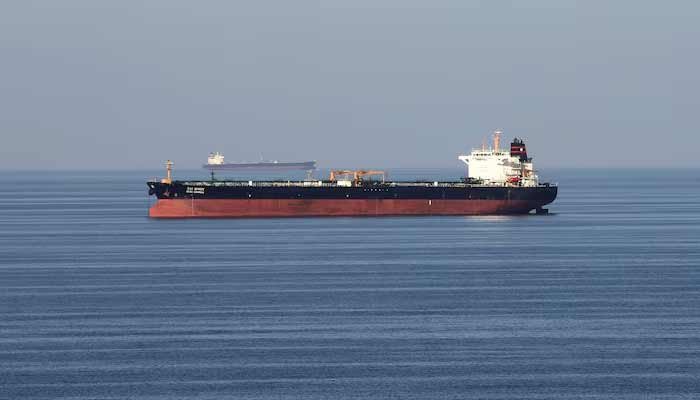
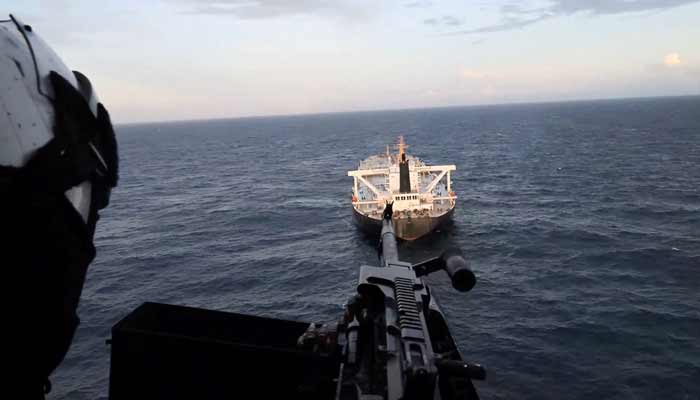
Iran announced it has blacklisted 45 oil tankers that violated its regulations when transiting the Strait of Hormuz. The Persian Gulf Strait Authority, Iran’s recently established body responsible for overseeing the waterway, stated that the vessels could face fines, detention, and cargo seizures. Some of these ships are owned by the United Arab Emirates’ ADNOC Logistics & Shipping, its subsidiary Navigate Tankers, as well as Saudi Arabia’s national shipping company Bahri. The authority also warned that any ships involved in ship-to-ship transfers with these vessels might also be added to the blacklist.
This development comes just days after the U.S. government threatened Iran with the harshest sanctions ever and warned that any new U.S. threats would be met with “devastating” responses. The ships on the list include very large crude carries, LNG and LPG tankers, and vessels carrying clean products, among others.
Tehran did not specify the exact nature of its rules but has previously stated that vessel owners must obtain permission to transit the Strait of Hormuz and are responsible for paying for security and services. The U.S. has also implemented a naval blockade targeting Iran-related shipping.
Before the conflict, the Persian Gulf supplied roughly 20% of the world’s daily crude oil and LNG. U.S.-led efforts to facilitate clandestine tanker movements through the Strait—allowing oil to flow from waiting supertankers just outside the waterway—are helping to restore some export volumes. U.S. Energy Secretary Chris Wray noted on social media that the average daily oil exports through the Strait are over 8 million barrels, emphasizing that U.S. naval forces are ensuring oil continues to move through this critical route.
Other shipping companies named on the blacklist include Klaveness Ship Management, South Korea’s Sinokor, and Stolt Tankers. They have yet to comment on the listing.
Iran’s maritime authorities advised cargo owners to consult an updated list of vessels deemed non-compliant for operations related to the Gulf. Ships seeking to be removed from this list are instructed to submit detailed requests to Iran’s maritime authorities.
The list of vessels marked as non-compliant includes Kiku, Mubaraz, Minoan Pioneer, Hafeet, Al Rekayyat, Wedyan, Cyprus Prosperity, Al Rawdah, Rasheeda, Lebrethah, Lila Vadinar, Maha Roos, GFS Galaxy, Al Bahyah, Mombasa B, Stolt Magnesium, Al Watan, Navig8 Messi, Singapore Prosperity, Disha, Gaslog Shanghai, Lubna, Hazi 1, Ryujin, Anna Barbara, Sunbird Arrow, Minoan Dignity, Maria, Kavomaleas, Mardan, Sweden Prosperity, Jarnain, Kaifan, Nissos Kea, Rotterdam Energy, Al Hamra, Umm Al Ashtan, Marigold LNG, Banastar, Navara, Nissos Heraclea, Blue Star 1, Ashley, Mraweh, and Al Lulu.
The U.S. plans to implement new sanctions targeting Iranian trading partners, sparking concerns from China. Traffic through the Strait of Hormuz has sharply decreased, causing oil prices to continue climbing. Iranian officials remain confident yet acknowledge the economic strain caused by ongoing sanctions.
Iran condemned the United States on Saturday for announcing upcoming sanctions that threaten to further damage the country’s economy and its key trading partners, including China. Since the U.S. and Israel launched airstrikes against Iran on February 28, nearly six months ago, the conflict has not escalated to direct military exchanges, nor has there been progress toward peace negotiations.
Oil export movement in the Strait of Hormuz has halted almost entirely, with Iran warning it will target any unapproved oil tankers trying to navigate the crucial waterway. The Iranian economy is already under significant pressure due to sanctions.
U.S. Treasury Secretary Scott Bessent is scheduled to hold a press conference Monday at 2 p.m. EDT (6 p.m. GMT) after vowing to impose “the toughest sanctions in history” on Iran. Bessent has also called on China to work with the U.S., as it imports over 80% of Iran’s oil, according to 2025 data from Kpler. China has emphasized the importance of diplomatic solutions.
Iran’s Foreign Ministry spokesperson Esmaeil Baghaei accused the U.S. of overreach, calling the upcoming sanctions an “assertion of extraterritorial sovereignty over every independent member state of the United Nations.” He stated on X that such secondary sanctions have no legal basis internationally.
Mohsen Rezaei, the secretary of Iran’s Supreme National Security Council, threatened that Iran would target the interests of countries aiding the U.S. in its efforts. “We advise neighboring countries not to join the U.S. economic war; otherwise, we will consider them enemies,” he warned.
U.S. President Donald Trump, who has warned of severe economic consequences against any country providing aid to Iran, remarked Friday that the U.S. is watching the situation closely. He opined that Iran wants to negotiate but isn’t ready to make the right deal.
While the U.S. has effectively blockaded Iranian vessels, traffic through the Strait of Hormuz remains minimal, with only four small cargo ships passing Thursday, none being major crude or LNG carriers. Iran has granted passage to several Iraqi oil tankers following Baghdad’s repeated requests, according to IRNA, Iran’s state news agency.
Prior to the conflict, around 20 million barrels of oil per day traversed the Strait, but current estimates suggest the U.S. military now moves about 8 million barrels daily—a fraction of global consumption. Despite severe damage to Iran’s navy and air force from sanctions and strikes, Tehran retains missile and drone capabilities potentially threatening tanker traffic.
Iran’s armed forces chief of staff, Abdollahi, highlighted the country’s missile manufacturing advancements. During a visit to an underground ballistic missile production facility, he stated the plant now produces equipment of higher capacity and quality than in the past.
Qalibaf, Iran’s parliamentary speaker, mentioned that several neighboring nations have expressed interest in forming new regional security frameworks and enhancing economic cooperation. Without naming specific countries, he accused the U.S. of jeopardizing regional stability for Israel’s benefit and advocated for a regional order based on independence and self-reliance to secure peace.
Despite ongoing conflict, President Masoud Pezeshkian has called for diplomatic resolution, emphasizing Iran’s strength and international support. He stated it would be better to end the war immediately, asserting Iran’s victory and condemning U.S. attacks on civilian infrastructure.
Thousands have lost their lives, primarily in Iran, where 168 schoolchildren were killed on the war’s first day. The U.S. reports over 750 American military injuries and 18 deaths. Iran remains resilient but open to dialogue, with some officials urging negotiations over continued conflict.
People pass by a mural portraying Iran’s late Supreme Leader Ayatollah Ali Khamenei on a street in Tehran, August 13, 2026. — Reuters
China rejects U.S. sanctions on Iran, stating that pressure alone won’t resolve the ongoing crisis.
According to Kpler data, Beijing imports over 80% of Iran’s exported oil.
Former President Trump issued a warning about potential economic repercussions targeting countries supporting Iran.
The U.S. Treasury Secretary, Scott Bessent, announced plans to impose what he described as “the harshest sanctions in history” on Iran, aiming to reduce the need for extensive military action. His comments came Thursday after President Donald Trump previously threatened “economic warfare” and warned of severe economic sanctions against any nation providing support or “lifelines” to Iran. Bessent indicated he would release more details next week.
Oil prices soared to their highest levels in over three weeks on Thursday, driven by U.S. threats of financial penalties believed to pressure Iran into ending a nearly six-month conflict that has kept millions of barrels of Middle Eastern oil stranded.
Bessent told CNBC, “I’m not entirely sure why oil prices jumped on this news. If we’re applying maximum economic pressure, that likely means there won’t be a large-scale military escalation,” referring to military interventions.
The ongoing conflict has resulted in thousands of deaths and involved Gulf nations, causing market instability. Iran has demonstrated its ability to restrict shipping through the Strait of Hormuz, a strategic waterway that transported around 20% of global oil trade before February.
Both the U.S. and Iran previously announced ceasefire agreements in April and June meant to restore free shipping through the Strait and move towards ending hostilities. However, these deals quickly fell apart each time.
Details on the sanctions are expected soon
Iran has endured nearly five decades of strict economic sanctions since its 1979 Islamic Revolution. Before Bessent made his statements, Iran’s foreign ministry condemned U.S. sanctions, describing them as “economic terrorism” and asserting they would not diminish Iran’s resolve to protect its independence, dignity, and sovereignty.
Bessent plans to provide more specifics about the upcoming sanctions package and outline exact measures during a Monday press conference. “It’s a coordinated effort—the blockade on Iran coupled with the toughest sanctions ever,” he stated, referencing a U.S. naval blockade enacted in April and temporarily paused in June.
He emphasized, “This approach will destabilize Iran’s regime. It’s time for our allies and the entire international community to decide what they want to do.”
According to 2025 data from analytics firm Kpler, China purchases over 80% of Iran’s oil exports. Engaging in further economic measures targeting China—an important trading partner that supplies the U.S. with vital rare-earth minerals—could provoke retaliation.
When asked about the possibility of targeting China for its business ties to Iran, Bessent responded that such discussions are best kept private. “Remember, China sources about 50% of its energy from the Gulf. It would serve them well to cooperate with us,” he added.
The Chinese embassy in Washington stated, “Sanctions and pressure do not resolve the issues,” urging all parties to engage in political and diplomatic efforts to find a solution.
Potential severe economic consequences
On social media Wednesday, Trump vowed to pursue “economic warfare and unprecedented isolation,” though he did not specify exact actions or name any nations, including allies involved in peace mediation. “Any country that allows its financial institutions, businesses, airports, or government agencies to support Iran will face enormous economic consequences,” he wrote.
Domestically, Trump faces pressure to end the unpopular conflict, especially as high fuel prices hurt his approval ratings and threaten his party’s control of Congress in midterm elections scheduled for November.
Iranian Foreign Minister Abbas Araqchi dismissed Trump’s comments as an attempt to distract from U.S. internal financial problems, such as record-high debt and rising interest rates. He argued that continuing failed policies would only lead to further setbacks and deepen Iranian resistance.
It’s worth noting that Trump’s social media threats and statements are not always followed by concrete action.
People walk past a billboard featuring Iran’s late Supreme Leader Ayatollah Ali Khamenei on a street in Tehran, August 3, 2026. — Reuters
– Trump claims negotiations with Iran are set to begin Monday.
– Iran’s foreign ministry denies any such talks are scheduled.
– Oil prices drop after Trump decides against military action.
Iran announced Monday that there are no ongoing negotiations with the U.S. and no meetings planned, contradicting President Donald Trump’s statements earlier that day about talks scheduled for that afternoon, which he cited as reason to cancel proposed attacks.
Over the past five months, Trump has repeatedly announced plans for large-scale strikes on Iran only to back away at the last minute.
“I’d prefer a deal, honestly. I’m not interested in killing people,” Trump said aboard Air Force One on Sunday.
He added, “What we’re doing now is talking with them, in the form of negotiations. It starts tomorrow afternoon,” without specifying where or with whom the talks would take place.
Iran’s Foreign Ministry spokesperson Esmaeil Baghaei dismissed the claims, stating that no negotiations are in progress and no meetings are scheduled. Iran is not planning to host foreign delegations or send representatives abroad in the near future.
Baghaei further explained that all Iranian negotiators are currently inside the country, except Foreign Minister Abbas Araghchi, who is on a religious pilgrimage in Iraq. The only active discussions are with Oman regarding the management of the Strait of Hormuz.
A senior Iranian source also told Reuters that no negotiations are planned and that Araghchi will be unavailable until at least the end of the week.
### Repeating Pattern
Monday’s events fit a trend observed over the last five months, since Trump launched “Operation Epic Fury” alongside Israel. On several occasions, Trump has threatened military strikes but then cited diplomatic efforts as reasons for retreating.
Publicly, Iran has rejected negotiations with Washington since a June memorandum aimed at de-escalation collapsed in early July.
Trump has yet to achieve his initial objectives, which include dismantling Iran’s nuclear program, limiting its ability to target regional neighbors, and creating conditions for Iranian regime change.
US escalations have been met with Iran’s increased military responses targeting US forces in the Middle East, along with threats against Washington’s regional allies and shipping lanes. Each time, Trump has retracted his threats.
The dispute over control of the Strait of Hormuz remains a main point of contention. Washington insists the June agreement requires Iran to open the vital waterway, while Tehran argues the text maintains its authority over shipping traffic.
This would grant Iran greater influence over the strait than before the conflict, posing a setback to Trump’s goals.
So far, the U.S. has been unable to force Iran to relinquish control, which has led to higher global oil prices and increased gasoline costs in the U.S.
Oil prices fell Monday after Trump’s latest decision to halt military action, with Brent crude futures dropping more than 4% to approximately $84 a barrel.
In the latest incident reported in the Strait of Hormuz, UK Maritime Trade Operations (UKMTO) said overnight that the captain of a vessel reported an explosion near the ship. No injuries were reported.
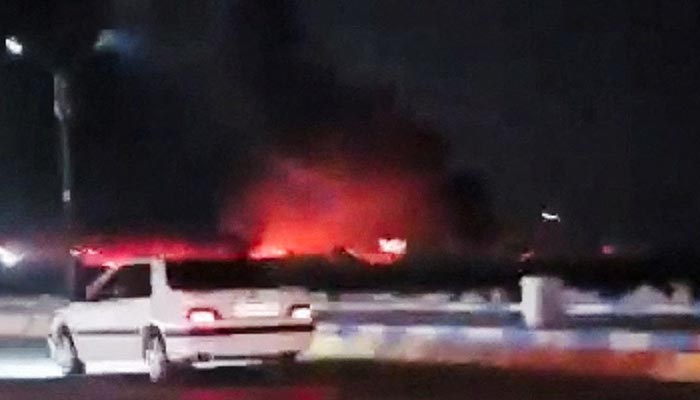
Smoke rises from a fire after an explosion, amid reports of explosions by Iranian state media, in Bandar Abbas, Hormozgan Province, Iran in this screengrab obtained from a social media video released July 8, 2026. — Reuters
U.S. Central Command reports striking over 80 targets in Iran.
U.S. launches strikes following revocation of oil sales authorization.
Several injuries reported due to shrapnel in Sirik.
The U.S. military launched a fresh set of airstrikes against Iran on Tuesday and revoked a license permitting the country to sell oil after three tankers were hit by projectiles in the Strait of Hormuz, increasing tension in an already delicate ceasefire.
Following a day marked by large crowds mourning Iran’s late Supreme Leader Ayatollah Ali Khamenei in the holy city of Qom, U.S. Central Command announced it conducted strikes targeting more than 80 sites to impose significant costs on Iran.
The military said it targeted over 60 small boats operated by the Islamic Revolutionary Guard Corps to weaken Iran’s capacity to threaten commercial shipping.
“Iranian forces’ unprovoked aggression is a blatant and reckless breach of the ceasefire, jeopardizing freedom of navigation,” CENTCOM stated.
Iran’s top joint military authority, Khatam al-Anbiya Central Headquarters, condemned the U.S. strikes as an “overt act of aggression,” promising a “forceful response,” and warned that Tehran will not tolerate U.S. interference in the Strait’s management.
Iranian reports indicated explosions early Wednesday local time on Kharg Island, Iran’s primary oil hub, as well as on Qeshm Island and in the southern ports of Sirik and Bandar Abbas. No civilian casualties have been confirmed, but some individuals suffer injuries from shrapnel after an “enemy projectile” struck a commercial dock in Sirik, according to Iranian state television. Strikes also damaged fishing docks in Sirik and Bandar Abbas, with reports of several fishing boats catching fire.
Press TV in Iran reported multiple blasts on Kharg Island, but did not specify damage extent or casualties. The U.S. Central Command’s statement did not mention Kharg Island, from which Iran exports about 90% of its crude oil. The island was last targeted in April.
A U.S. official informed Reuters that the strikes targeted Iranian air defense systems, coastal surveillance networks, surface-to-air missiles, anti-ship cruise missiles, and drone launch sites.
These incidents are part of ongoing threats to the ceasefire agreement reached last month, which paused hostilities that initially began in February with U.S. and Israeli strikes across Iran.
In a significant setback for the agreement, the U.S. moved on Tuesday to revoke an important concession that allowed Iran to sell oil internationally.
According to a U.S. official, talks continue in good faith toward an overall deal, but Iran’s strategic control of the Strait provides it with substantial leverage, effectively allowing it to stall negotiations with the world’s strongest military assistance. Under the interim U.S.-Iran deal, the U.S. Treasury issued a general license on June 22 to permit Iranian oil sales through August 21. The license was revoked Tuesday, providing Iran until July 17 to expire or wind down existing transactions.
Response measures deemed necessary
Iran’s Foreign Ministry labeled the move as a violation of the framework agreement aimed at ending the conflict and warned that Iran will hold Washington responsible for any consequences.
Early Wednesday, the ministry stated Iran will take any necessary actions to protect its interests and sovereignty.
Qatar accused Iran of attacking vessels, including the large Qatari LNG tanker Al Rekayyat, which was reportedly hit overnight by a drone causing a fire in its engine room. The crew is safe and being evacuated.
A Saudi-flagged oil tanker, believed to be the supertanker Wedyan, also sustained damage off Oman; the cause remains unclear.
Qatar’s foreign ministry has summoned Iran’s deputy ambassador, delivering a protest note following the attack on the tanker.
Iran’s foreign ministry dismissed these accusations as confusing, asserting that Tehran is faithfully executing its commitments but adding that vessels using uncoordinated routes face risks.
A second U.S. official anonymously stated that initial evidence suggests Iran targeted three commercial vessels.
Iran aims to establish a permanent fee collection system, shifting regional power and challenging the long-standing security guarantee provided by Washington.
Domestically, the leadership leveraged the mourning period for Khamenei, who was martyred along with his family on the conflict’s first day, to reinforce control. The bodies of Khamenei and his family were paraded through Qom on Tuesday. Later, Iranian media aired footage claimed to show an aircraft carrying Khamenei’s coffin at Najaf Airport in Iraq.
President Masoud Pezeshkian, who traveled to Iraq for the funeral ceremonies, left Iran following the U.S. strikes in southern Iran, according to state TV.
The ceasefire was initially meant to last 60 days, providing time for negotiations on a permanent agreement, but talks in Qatar ended last week without progress.
President Donald Trump has repeatedly threatened to resume bombing, most recently on Monday, stating in the Oval Office, “We’re either going to make a deal or we’re going to finish the job… We could destroy their bridges in an hour, knock out their energy supplies.”
Iran’s Foreign Minister Abbas Araghchi emphasized that, under the interim ceasefire, negotiations for a final deal cannot start if threats persist.
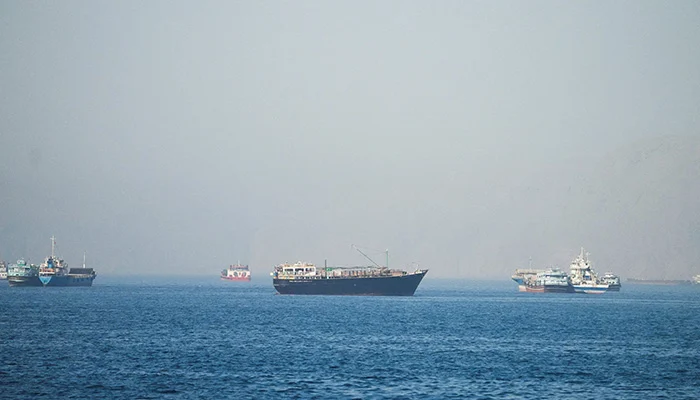
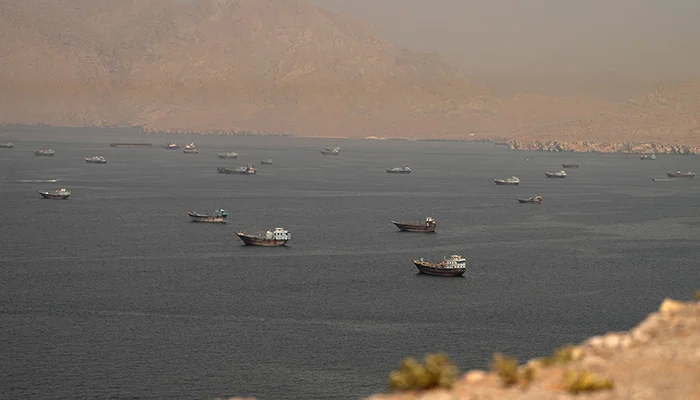
Vessels are visible at the Strait of Hormuz, as observed from Musandam, Oman, on June 1, 2026. — Reuters
– Iran’s envoy states that ships passing through Hormuz will be subjected to service fees.
– Tehran is collaborating with Oman on establishing new arrangements for the Strait.
– The fees collected are intended to enhance security and oversee vessel passage, according to Fazli.
Iran’s ambassador to China emphasized on Saturday that new charges will be imposed on ships traveling through the Strait of Hormuz, a move rejected by U.S. officials. He assured that “friendly” nations will receive special treatment.
The initial agreement between Iran and the U.S. aimed to allow commercial ships to transit the strait without fees for 60 days. The future framework beyond this period remains uncertain.
Ambassador Abdolreza Rahmani Fazli, speaking at the World Peace Forum in Beijing, said Iran is working in partnership with Oman to develop “new arrangements” for the crucial waterway.
“As a country that considers the Strait of Hormuz part of its territorial waters, we will indeed implement service fees,” Fazli explained in translated remarks, clarifying these would not be tolls.
He added that these new arrangements would focus on ensuring safe passage, overseeing vessel movements, and addressing environmental impacts stemming from the high volume of ships.
Furthermore, Fazli noted that Iran intends to offer special considerations for countries that have shown friendship and support during difficult times.
The Strait of Hormuz typically facilitates about 20% of global crude oil and liquefied natural gas shipments. However, Iran had largely closed the strait during regional conflicts, causing energy prices to spike.
Iran resumed allowing passage through Hormuz following an initial agreement with the U.S. aimed at ending regional hostilities, with negotiations ongoing for a permanent resolution.
Iran announced the closure of the Strait of Hormuz again on Saturday, citing Israeli attacks in Lebanon as the reason, shaking an already delicate US-Iran agreement just as negotiators headed to Switzerland to attempt to de-escalate the ongoing Middle East conflict.
Scheduled talks in Switzerland were postponed at the last minute after Israel carried out deadly strikes in Lebanon following the loss of four Israeli soldiers in combat. The US later announced a renewed ceasefire in Lebanon, aligning with the terms of its agreement with Iran. However, fighting broke out again on Saturday as Israeli forces clashed with Hezbollah militants, each accusing the other of violating the truce.
Iran’s military command cited a breach of the agreement by the US and ongoing violations by Israel’s government, saying that “the Strait of Hormuz will be closed to vessel traffic.” The Revolutionary Guards naval forces warned ships to stay away from the waterway, warning that their security could be compromised.
The Strait of Hormuz, a crucial passageway for global oil and gas shipments, had been blockaded by Iran for much of the recent conflict, causing ripples across international energy markets. Tehran had agreed to reopen the strait under a preliminary deal signed earlier this week by President Donald Trump and Iran’s President Masoud Pezeshkian. Shipping traffic was beginning to pick up again before Iran’s decision to close it once more.
The US Central Command stated that international shipping remained safe despite Iran’s announcement and that US forces in the region remained alert and present. President Trump warned that if the negotiations do not succeed, Washington might impose its own tolls on the corridor—defining “tolls” as measures solely imposed by the United States.
A delegation representing Iran left for Switzerland on Saturday afternoon, reportedly including parliamentary speaker Mohammad Bagher Ghalibaf and Foreign Minister Abbas Araghchi. The delegation intends to push for Iran’s implementation of its commitments under the deal, warning that failure to do so could jeopardize the entire agreement.
Meanwhile, Vice President JD Vance flew from Washington to Switzerland to join the talks, expressing hope for progress on nuclear issues and the Lebanon ceasefire. US negotiators Jared Kushner and Steve Witkoff were already in Switzerland handling technical details and reported that negotiations were progressing smoothly.
Pakistan, acting as a mediator, indicated that technical talks would resume this Sunday in Burgenstock, with representatives from Pakistan, Qatar, the US, and Iran, aiming to negotiate unresolved issues related to Iran’s nuclear program—a key sticking point left from the initial deal.
In Lebanon, fighting persisted in the south with Israel and Hezbollah exchanging accusations. One Israeli soldier has been killed—the fifth since the recent escalations began. Israeli troops have received orders from political leadership to cease proactive operations, operating now only in defense. Reports emerged of ongoing hostilities following Hezbollah’s launch of over 50 projectiles overnight, with Hezbollah accusing Israel of infiltrating strategic areas. Israel responded with airstrikes on approximately 20 sites across Lebanon, resulting in more than 20 civilian casualties, including 16 in Nabatieh and seven near Sidon. The total death toll from the renewed violence has now surpassed 4,000.
Lebanese officials and Hezbollah representatives asserted their right to defend themselves, blaming Israel entirely for breaking the ceasefire. Israel’s ambassador to the US claimed Hezbollah was responsible for violations, while Hezbollah held Israel accountable. The group had previously escalated tensions in March by firing rockets into Israel in retaliation for the killing of Iran’s supreme leader via US and Israeli military actions. Attempts at a ceasefire earlier this year failed, with both sides citing violations by the other.
US forces intercepted the sanctioned, stateless oil tanker Davina in the Indo-Pacific region, according to Reuters.
A final agreement between the US and Iran is scheduled to be signed this Friday. Despite progress toward the deal, Israeli military strikes continue in Lebanon, and analysts warn that the conflict there still poses a diplomatic threat.
On Wednesday, tracking websites reported that the first Iranian oil tankers had broken through a US blockade in the Strait of Hormuz, just days before the upcoming negotiations in Switzerland. These talks aim to finalize a peace agreement, with key issues like Iran’s nuclear activities and sanction relief still unresolved.
The final negotiations are set to take place at Switzerland’s Burgenstock resort, after the Strait’s reopening caused global oil prices to drop. However, fresh Israeli strikes in southern Lebanon have dampened hopes for a swift resolution, especially after recent hostilities involving Hezbollah and Israel, which have escalated tensions in the region.
Oil tracking data confirmed that Iran’s “first crude oil exports in two months” had occurred, with at least two Iranian tankers, Diona and Hero2—operated by the National Iranian Tanker Company—leaving the blockade zone carrying a combined 3.8 million barrels of crude. A third tanker was also reported to have exited the area.
Negotiations are expected to commence immediately after the signing in Switzerland, continuing over the subsequent 60 days to decide Iran’s nuclear future and the lifting of economic sanctions. The US is expected to permit Iran to resume oil and fuel sales immediately under the deal, including services like banking, shipping, and insurance, according to the Wall Street Journal.
Some conservative voices in the US have expressed concern, with Senate Republicans requesting access to the agreement’s details and briefs from the Trump administration. Senate Majority Leader John Thune remarked, “We should review it to understand what it really entails.”
Oil prices have fallen despite the announcement. The average Brent North Sea crude dropped to about $78.74 per barrel, and West Texas Intermediate traded around $75.85. Meanwhile, Israel launched a strike in southern Lebanon after identifying a suspicious vehicle and intercepting rockets, leading to casualties and promising retaliatory action from Iran-backed forces.
A senior US official, speaking anonymously, indicated that the framework agreement had already been signed electronically by Trump, Vice President Vance, Iran’s deputy foreign minister, and Iran’s chief negotiator. Iranian Foreign Minister Abbas Araghchi stated that negotiations for a final deal would resume on Friday, focusing on nuclear issues and sanctions relief.
Although optimism surrounds the Strait of Hormuz reopening, there remain important hurdles. Despite months of indirect negotiations facilitated by Pakistan and Qatar, a comprehensive agreement on Iran’s nuclear program and Western sanctions has yet to be achieved. The US and Israel seek to eliminate Iran’s stockpile of highly enriched uranium, while Iran insists on its right to enrichment, maintaining a stalemate.
Iran’s government has been cautious, with the conservative newspaper Vatan-e Emrooz calling the deal a “Trump surrender document,” while Iranian officials express skepticism based on past unfulfilled commitments. Conversely, US officials, like Vice President Vance, have assured that no taxpayer money will go to Iran and that frozen assets worth $12 billion could be released. Inspectors from the UN are also expected to gain entry into Iran as part of the deal.
The ongoing conflict in Lebanon, involving Israel and Hezbollah, remains a significant threat to the diplomatic process. Hezbollah’s attacks on Israel earlier this year, following Iran’s supreme leader’s death, escalated the regional conflict and could undermine the negotiations if tensions persist. Experts warn that this confrontational environment could act as a major spoiler for the diplomatic efforts moving forward.
A fresh wave of reciprocal strikes has erupted between the United States and Iran. President Donald Trump announced on Thursday that the U.S. plans to deliver a forceful response to Iran, targeting Kharg Island, Iran’s primary oil hub, after recent clashes in the Gulf undermined a fragile ceasefire.
Sources from Iran and Western officials confirmed that indirect talks on an initial peace agreement have picked up steam. However, recent escalations this week have dimmed hopes for a quick resolution after more than three months of conflict.
Trump issued a stern warning, signaling more aggressive actions against Iran. “The United States will be striking Iran very hard tonight,” he posted on social media, claiming that Iran’s naval and air forces, radar systems, and defenses are nearly disabled. He added, “Sooner rather than later, we will seize Kharg Island and other vital oil facilities to control their oil and gas markets.”
Kharg Island is Iran’s main oil export point, typically shipping around 2 million barrels daily, representing roughly 2% of the world’s oil supply, mainly to China. Iran’s foreign ministry stated that the recent US attacks have effectively nullified the ceasefire established in early April.
The ongoing conflict has claimed thousands of lives, predominantly in Iran and Lebanon, and has driven up global oil prices since U.S. and Israeli airstrikes against Iran began on February 28. Despite this, oil prices remained relatively stable Thursday, as traders balanced Trump’s aggressive rhetoric against actual disruptions in oil supplies caused by the war.
While an attempt to control Kharg Island would not immediately impact oil shipments—due to recent suspension caused by U.S. sanctions and Iran’s blockade of the Strait of Hormuz—it would still be a significant strategic move.
Despite these hostilities, reports indicate that negotiations between the U.S. and Iran have grown more active. Some issues remain under discussion, including mechanisms for unfreezing billions of dollars in Iranian assets frozen abroad. An Iranian official remarked that the conflict is reaching a dead end militarily, and progress is being made diplomatically. Iran wants its funds released directly to Tehran, while the U.S. prefers a staged approach, releasing funds incrementally for humanitarian purposes.
Iran’s demands include ending Israeli assaults in Lebanon—following cross-border strikes by Hezbollah—lifting sanctions, and recognizing Iran’s control over the Strait of Hormuz. Trump insists Iran must lift restrictions on shipping through the strait and that any peace agreement should prevent Iran from developing nuclear weapons—a claim Iran denies.
The U.S. maintains that a resolution is close, with Defense Secretary Pete Hegseth stating, “If negotiations require using force, we’re capable and willing.” Trump confirmed to Fox News that talks are ongoing but expressed uncertainty about his appetite for seizing Kharg Island, hinting at the possibility of larger, more intense bombing campaigns.
In recent exchanges, U.S. forces targeted sites across Iran, while Tehran launched retaliatory strikes at U.S. military bases in the region following the downing of a US helicopter near the Strait of Hormuz earlier in the week. Several cities experienced explosions, with five injuries reported. Iran’s Islamic Revolutionary Guard Corps claimed responsibility for attacks on U.S. military outposts in Kuwait, Jordan, Bahrain, and on the Navy’s Fifth Fleet in Bahrain. One child sustained minor injuries in Bahrain, and Kuwait temporarily closed its airspace amid threats.
President Donald Trump announced Wednesday that the U.S. military secretly facilitated the passage of over 100 million barrels of oil through the Strait of Hormuz, which Iran had largely sealed off in retaliation for U.S. and Israeli attacks.
“In the past month, I directed our great U.S. military to carry out a covert operation supporting oil tankers and commercial vessels navigating through the Strait of Hormuz,” Trump stated on his Truth Social platform, asserting that the U.S. “exercises control” over the body of water.
He added, “Today, I am proud to report that this effort has enabled more than 100 million barrels of oil to flow into the open market,” noting that over 200 commercial ships have successfully passed through.
The U.S. launched a military operation called Project Freedom in early May to escort ships through the strait but abandoned it after just one day, claiming it was part of an effort to bring an end to the Middle East conflict initiated by Washington and Israel on February 28.
Later in May, U.S. media reports suggested the operation had resumed, but Central Command, which oversees U.S. forces in the region, denied these claims, stating that reports of resumed escort missions were false.
The UAE has announced that its new crude oil pipeline, designed to bypass the Strait of Hormuz, is approximately 50% complete. ADNOC’s leader indicated that it could take at least four months for global oil flows to resume to 80% of pre-conflict levels once the Iran war concludes. Tehran has kept the critical waterway largely shut to all ships except its own since U.S.-Israeli strikes on February 28, causing energy prices and inflation to spike and raising fears of an economic downturn.
Last week, the Abu Dhabi Media Office disclosed details of the West-East Pipeline project, revealing that Crown Prince Sheikh Khaled bin Mohamed bin Zayed instructed ADNOC to expedite building the pipeline. The goal is to double export capacity through the Fujairah port by 2027. Sultan Al Jaber, ADNOC’s CEO, stated during a live stream with the Atlantic Council that the project is nearly halfway finished and that momentum is accelerating toward the 2027 target.
Al Jaber emphasized that a significant amount of the world’s energy currently passes through too few choke points, which motivated the UAE’s decision over a decade ago to invest in infrastructure that circumvents the Strait of Hormuz. The existing Abu Dhabi Crude Oil Pipeline (ADCOP), capable of transporting up to 1.8 million barrels daily, has been vital for maximizing exports from the Gulf of Oman outside the Strait.
Iran has extended its control over the waterway, attacking vessels and asserting authority over the UAE’s Gulf of Oman coastline. Meanwhile, the U.S. has placed its own blockade on Iranian ports and attempted, but failed, to reopen the chokepoint.
UAE and other Gulf Arab nations, hosting U.S. military bases, have faced attacks during the ongoing conflict, even after a fragile ceasefire began on April 8. The UAE was targeted by over 3,000 missiles and drones aimed at civilian infrastructure, including ADNOC facilities. Damage assessments are ongoing, and returning full operational capacity could take weeks or even months, according to Al Jaber. He described the attacks as retaliation for the UAE’s development model.
Even if the conflict ends immediately, Al Jaber warned that oil flow through the Strait likely won’t fully recover until sometime in 2027’s first or second quarter. He expressed concern that if a single country can hold the waterway hostage, the principle of free navigation is compromised, potentially leading to a decade of heightened efforts to defend it and avoid economic fallout.
Following its withdrawal from OPEC on May 1, the UAE is no longer bound by production quotas. Al Jaber characterized the decision as a strategic move driven by global energy needs, stressing it was not directed against any specific party nor intended to damage relationships. He highlighted that the energy sector remains dangerously underfunded, with current upstream investments around $400 billion annually barely offsetting natural declines. He pointed out that global spare crude capacity, currently approximately 3 million barrels per day, should be closer to 5 million barrels.
Looking ahead, Al Jaber warned that artificial intelligence (AI) will intensify demands on the energy grid, and the world is underestimating the energy-intensive aspects of this technological revolution. He likened the AI race to an “electron race,” where rapid decision-making can mean the difference between stability and disruption during crises.
The UAE remains committed to deepening its investments in the United States. ADNOC, along with its international arm XRG and renewable energy investor Masdar (where Al Jaber is chairman), has already committed $85 billion across 19 states. Al Jaber concluded that the UAE and the U.S. are not just trade partners but co-investors shaping the economy of the coming century.
Two Chinese oil tankers have recently left the Strait of Hormuz, each transporting around 2 million barrels of crude, totaling approximately 4 million barrels. This development offers some optimism that the ongoing US-Israeli conflict with Iran might reach a peaceful resolution soon, especially after encouraging remarks from the U.S. administration.
President Donald Trump indicated on Tuesday that the conflict could end “very quickly,” while Vice President JD Vance highlighted significant progress in negotiations with Tehran. Vance expressed confidence during a White House briefing, stating, “We’re in a pretty good spot here.” Trump, a day earlier, had paused plans to renew hostilities following Iran’s new proposal to end the strife, saying, “I was just about to make the decision to act today.” He also claimed that Iranian leaders are eager for a deal but warned that if no agreement is reached soon, a U.S. attack could still occur within days.
The U.S. has been working to conclude the nearly three-month-old conflict initiated with Israel. Trump has repeatedly claimed that an agreement with Iran was close and has threatened severe military strikes if Iran refused to cooperate. Domestically, Trump faces mounting political pressure to reopen the Strait of Hormuz, a vital artery for global oil supplies. High gasoline prices and poor approval ratings ahead of November congressional elections have added to the urgency.
This conflict has severely disrupted global energy markets, blocking hundreds of tankers from leaving the Gulf and damaging regional energy infrastructure. Data from LSEG and Kpler indicates that two supertankers, carrying Iraqi crude and among a handful of vessels, recently exited the Gulf, passing through the narrow strait with an estimated 4 million barrels of oil.
Oil prices responded positively to the recent signals from Washington and the Gulf region, with Brent crude decreasing to as low as $110.16 per barrel before recouping much of its losses. Market analysts, such as Toshitaka Tazawa from Fujitomi Securities, noted that investors are eager to see whether Washington and Tehran can find common ground and secure a peace agreement, although U.S. foreign policy remains fluid.
Vance acknowledged at the White House that negotiating with Iran presents difficulties, partly due to internal divisions within Iran’s leadership. “Sometimes it’s not entirely clear what Iran’s negotiating position is,” he said, emphasizing the U.S. effort to establish clear red lines. He also stressed that part of Trump’s strategy is to prevent the proliferation of nuclear arms in the region.
Iran’s parliament foreign affairs chief, Ebrahim Azizi, suggested on X (formerly Twitter) that Trump’s decision to pause an attack stemmed from the realization that Iran would respond decisively if attacked. Iran’s latest peace proposal reportedly involves a comprehensive end to hostilities across multiple fronts, including Lebanon, the withdrawal of U.S. forces from nearby areas, and reparations for damages caused by U.S.-Israeli strikes. Tehran also seeks the removal of sanctions, release of frozen funds, and an end to the U.S. marine blockade, according to Deputy Foreign Minister Kazem Gharibabadi as cited by IRNA.
Much of Iran’s previous proposal remains unchanged from its last offer, which Trump dismissed last week as “garbage.”
The ceasefire, initiated after devastating US-Israeli airstrikes that caused thousands of Iranian casualties and destruction in Lebanon, has mostly held. Nonetheless, recent drone launches from Iraq targeting Gulf nations such as Saudi Arabia and Kuwait continue to pose threats. The conflict was launched by the U.S. and Israel to curtail Iran’s regional influence, dismantle its nuclear program, destroy missile capabilities, and foster regime change. Despite efforts, Iran still maintains significant nuclear stockpiles and missile and drone threats, and its leadership shows resilience against the superpower’s pressures.
President Donald Trump delivered a new warning to Iran on Sunday, insisting the country must act swiftly toward a peace agreement or face severe consequences. Washington has been engaged in ongoing conflicts with Tehran since U.S. and Israeli forces launched significant strikes against Iran starting February 28. Efforts to break the deadlock and reach a resolution have been unsuccessful, prolonging a conflict that destabilizes the Middle East and causes energy prices to rise.
Trump stated on his Truth Social platform, “Time is running out for Iran. They need to act quickly, or there might be nothing left of them.” The fighting has resulted in a de facto blockade of the Strait of Hormuz—through which around 20% of the world’s oil passes during peacetime—and has drawn neighboring countries Israel and Lebanon into further turmoil.
Iran’s government, which exerts control through its clerical leadership, has insisted on a permanent ceasefire in Lebanon before any wider peace talks with Trump. Iran remains resistant to a deal on U.S. terms, frustrating American negotiators. An Israeli military official reported that Hezbollah fired approximately 200 projectiles at Israel and its forces over the weekend, despite ongoing ceasefire agreements between Israel and Lebanon.
Lebanese authorities reported that Israeli strikes on southern Lebanon Sunday killed five people, including two children. Since the war began, Israeli attacks have resulted in over 2,900 deaths in Lebanon, with 400 fatalities since a ceasefire went into effect on April 17.
Despite a ceasefire agreement reached on April 8, peace negotiations have stalled, and sporadic violence persists. Iranian media indicated that the U.S. did not make any meaningful concessions in response to Iran’s proposals for ending the conflict. The Fars news agency reported that Washington presented a list of five demands, including Iran maintaining just one nuclear site and transferring its stockpile of highly enriched uranium to the U.S. They also reportedly refused to release more than 25% of Iran’s frozen foreign assets or pay reparations for damages caused during the war.
Meanwhile, a drone attack in Abu Dhabi caused a fire near a nuclear power plant. Authorities confirmed no injuries or radiation issues. Iran-backed militia groups in Iraq and Yemen—such as the Houthi rebels—operate armed drones capable of offensive strikes.
Pakistan has been mediating the talks, with Interior Minister Mohsin Naqvi meeting in Tehran with Iran’s chief negotiator and parliament speaker, Mohammad Bagher Ghalibaf. Ghalibaf later warned that the U.S. and Israel’s military actions have destabilized the entire Middle East. He expressed disappointment that U.S. presence in the region has failed to ensure security and instead fosters insecurity.
Earlier this week, Trump also discussed Iran during a summit with Chinese President Xi Jinping. While Xi assured Trump China was not providing military aid to Iran, the Chinese Foreign Ministry emphasized the importance of reopening shipping lanes in the region.
Conan Exiles Enhanced is full of rare resources needed to rebuild civilization in the Exiled Lands. Whether you’re new to the game or have been banished to the crucifix multiple times, it’s always good to review where some of the most valuable resources come from—like oil!
We’ll help you find the resources you need to make oil so you can keep crafting easily at your base, no matter which biome you settle in. Here’s everything you need to know about ways to quickly acquire large amounts of oil in Conan Exiles Enhanced.
How to Make Oil
Oil is an excellent fuel source, but it’s not easy to gather at first. There are several ways to get it, and understanding each method is key.
How to Get Oil from a Fluid Press
The first method is to use a fluid press. Once you unlock this device, you can set it to press various resources into oil while you’re away. Here is a list of ingredients you can use:
Ingredients Needed to Produce Oil via Fluid Press:
Aloe Seeds (5)
Anglerfish (1)
Asura’s Glory Seeds (5)
Black Lotus Seeds (5)
Catfish (1)
Crimson Lotus Seeds (5)
Desert Berry-Bush Seeds (5)
Dogfish (1)
Exotic Fish (1)
False Mandrake Seeds (5)
Frost Lotus Seeds (5)
Golden Lotus Seeds (5)
Grey Lotus Seeds (5)
Grouper (1)
Additional ingredients include:
Highlands Berry-Bush Seeds (5)
Hops Seeds (5)
Leavening Plant Seeds (5)
Lupin Seeds (5)
Midnight Blue Flower Seeds (5)
Moray Eel (1)
Orange Phykos Cuttings (5)
Purple Lotus Seeds (5)
Savory Fish (1)
Seeds (5)
True Indigo Seeds (5)
Unappetizing Fish (1)
Yellow Lotus Seeds (5)
How to Get Oil from a Cauldron
Another way is using a cauldron. However, this method is more time-consuming and requires progressing further in the game. To make oil in a cauldron, you need to put in:
100 coal
One serving of Pure Sorcerous Lifeblood
Pure Sorcerous Lifeblood is the refined form of blood after it has been purified twice, making it a lengthy process. Each batch produces 50 oil.
How to Get Oil from an Alchemist’s Bench
At the alchemist’s bench, you can combine bark and ichor to produce oil. For each batch, you use bark and ichor, making this method more cost-effective than using blood. However, it’s still less efficient than using a fluid press.
By understanding these options, you can gather oil from multiple sources depending on your resources and stage of gameplay.
The UAE is planning to speed up the development of a new oil pipeline to double its export capacity through Fujairah by 2027. This move will significantly enhance the country’s ability to bypass the Strait of Hormuz. The Abu Dhabi Media Office announced that Crown Prince Sheikh Khaled bin Mohamed bin Zayed directed ADNOC to expedite the West-East Pipeline project during a recent executive meeting. Construction is underway, with operations projected to begin in 2027, though no details were given about the original schedule.
Currently, the UAE’s Abu Dhabi Crude Oil Pipeline (ADCOP), also called the Habshan-Fujairah pipeline, can transport up to 1.8 million barrels daily. It has proven essential for increasing direct exports from the Gulf of Oman region. Among Gulf nations, only the UAE and Saudi Arabia have pipelines for exporting crude outside the Strait of Hormuz, while Oman’s long coastline borders the Gulf of Oman.
Iran’s closure of the narrow waterway separating it from Oman—initially a response to US-Israeli air and naval operations launched on February 28—has cut off about 20% of global oil supplies heading to Asia and other areas. Kuwait, Iraq, Qatar, and Bahrain depend heavily on the Strait for their shipment routes. This disruption has driven up energy prices, prompting government rationing of fuel and stoking fears of economic slowdown amid rising inflation.
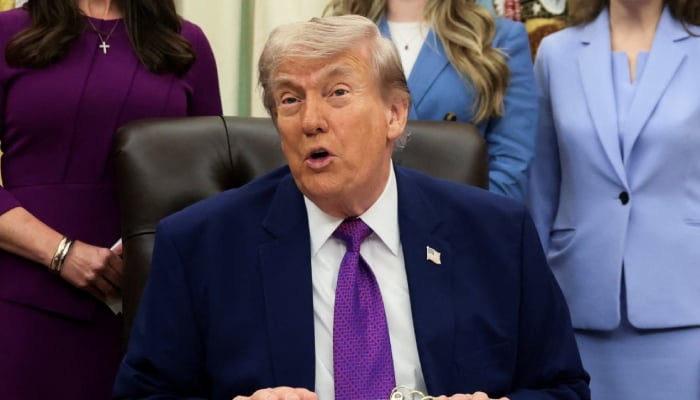
US President Donald Trump speaks during a maternal health event in the Oval Office at the White House in Washington, DC, US, May 11, 2026. — Reuters
Trump dismisses Tehran’s proposal as “stupid”.
Says he didn’t even finish reading Iran’s response.
Iran willing to give the US “the nuclear dust”: Trump.
U.S. President Donald Trump declared Monday that a ceasefire with Iran is essentially “on life support,” after he rejected Tehran’s response to a US peace offer. This has raised fears of renewed fighting in the ongoing 10-week conflict, which has already resulted in thousands of casualties and disrupted global energy supplies.
A few days after the US put forward a proposal to restart negotiations, Iran responded on Sunday, emphasizing the need to end the war on all fronts, including Lebanon, where Israel—an ally of the US—is fighting Iranian-backed Hezbollah.
Trump swiftly dismissed Iran’s reply.
When asked about the status of the ceasefire brokered by Pakistan, Trump responded: “I’d call it the weakest right now, after reading that garbage they sent us. I didn’t even finish reading it.”
In its response, Iran also demanded compensation for damages caused by the war, reaffirmed its sovereignty over the Strait of Hormuz, and urged the US to lift its naval blockade, ensure no further attacks, lift sanctions, and allow Iran to resume oil exports.
The US had proposed halting hostilities before engaging in talks about more sensitive issues, such as Iran’s nuclear program.
Iran defended its stance on Monday, with Foreign Ministry spokesperson Esmaeil Baghaei stating: “Our demands are valid—ending the war, lifting the US blockade and piracy, and releasing Iranian assets that have been unjustly frozen due to US pressure.”
He added: “Guaranteeing free passage through the Strait of Hormuz and establishing regional and Lebanese security are also key parts of Iran’s generous and responsible proposal.”
Brent crude oil futures rose by approximately 2.7%, trading around $104 per barrel, as the deadlock keeps the Strait of Hormuz largely shut down.
Prior to the conflict that started on February 28, this narrow waterway transported about 20% of the world’s oil and liquefied natural gas, making it a critical strategic choke point.
The near-closure of the strait has forced oil producers to cut exports, and an OPEC survey reported a decline in oil output in April to the lowest level in over twenty years.
Reduced Shipping Traffic Through Hormuz
Today, shipping flow is minimal compared to pre-war levels. Data from Kpler and LSEG showed that only three oil tankers left the strait last week, with some trackers intentionally switched off to avoid Iranian attacks.
Recent sporadic clashes near the strait have challenged the ceasefire, which has prevented full-scale warfare since early April.
In the U.S., public opinion surveys indicate that the war is unpopular among voters, especially with rising gasoline prices ahead of the upcoming elections that could determine whether Trump’s Republican Party retains control of Congress.
International support has also been limited; NATO allies have refused to send ships to reopen the strait without a comprehensive peace agreement and a UN-mandated mission.
Turkish Foreign Minister Hakan Fidan, who has been coordinating closely with the US, Iran, and Pakistan, is scheduled to visit Qatar on Tuesday to discuss the conflict and ensure safe navigation through the strait, according to a Turkish diplomatic source.
Upcoming Talks Between Trump and China
Uncertain of the next steps, Trump is expected to arrive in Beijing on Wednesday, where Iran may be among the topics discussed with Chinese President Xi Jinping.
Trump is counting on China to leverage its influence and push Tehran toward a diplomatic solution.
Iran’s Foreign Ministry spokesperson, Baghaei, suggested China could also use the visit to counter US goals in the Gulf region:
“Our Chinese friends know how to use these opportunities to warn about the consequences of US illegal and aggressive actions in regional peace and security,” he said.
Regarding whether military operations against Iran are over, Trump stated Sunday: “They are defeated, but that doesn’t mean they’re done.”
Israeli Prime Minister Benjamin Netanyahu said the conflict isn’t over, citing more work needed to remove Iran’s enriched uranium, dismantle nuclear facilities, and address its proxy forces and missile programs.
In an interview with 60 Minutes on CBS, Netanyahu expressed preference for diplomacy but didn’t rule out military action.
Despite a US-brokered ceasefire—announced on April 16—clashes continue in southern Lebanon between Israel and Hezbollah.
A woman from Iran walks past a mosque decorated with a banner showing Iran’s current leader, Ayatollah Mojtaba Khamenei, in Tehran on May 9, 2026. — AFP
– The IRGC warns that any attack on Iranian ships will be met with a strong response.
– Trump anticipates Iran’s reply to a U.S. peace proposal soon.
– The U.S. deems it unacceptable for Tehran to control the vital oil route.
Iran’s Revolutionary Guards have issued a warning that any assault on Iranian commercial vessels will provoke a severe retaliatory strike against U.S. bases and enemy ships in the region. This warning comes following U.S. actions the previous day targeting two Iranian tankers in the Gulf of Oman.
President Donald Trump indicated on Friday that he expects Iran’s response to a recent U.S. peace offer “very soon.” However, there has been no public response from Tehran, and Iran’s Foreign Minister Abbas Araghchi questioned American leadership’s credibility, stating that recent U.S. provocations in the Persian Gulf have increased suspicions about America’s true intentions in diplomacy.
Earlier this week, a U.S. fighter jet fired to disable two Iranian-flagged ships accused of challenging the U.S. blockade of Iran’s ports. Iran’s navy reportedly responded with strikes of their own. This incident follows another clash in the Strait of Hormuz, a critical international waterway, where Iran aims to exert control to benefit economically from tolls and challenge U.S. influence.
The U.S. has proposed a ceasefire extension in the Gulf through mediators in Pakistan to facilitate negotiations aimed at resolving the ongoing conflict that started 10 weeks ago with U.S. and Israeli strikes on Iran. Trump told a French reporter that he expects to hear Iran’s reply “very soon,” while Iran’s foreign ministry has said the proposal remains under review.
Meanwhile, U.S. diplomat Marco Rubio met with Qatar’s leadership to coordinate efforts to deter threats and promote stability across the Middle East. Qatar’s Sheikh Mohammed bin Abdulrahman Al Thani met with Vice President Vance to discuss Pakistani-backed peace negotiations, although Iran has previously attacked sites within Qatar, citing the emirate’s hosting of a major U.S. airbase.
Satellite images reveal an oil spill spreading off Iran’s Kharg Island, a key oil export terminal. The spill’s cause is unclear, but it is estimated to cover over 20 square miles. The Conflict and Environment Observatory suggests the spill could be due to leaks from oil infrastructure. Kharg Island plays a crucial role in Iran’s oil exports, which are vital to its struggling economy, especially after Iran closed the Strait of Hormuz earlier this year, upsetting global markets.
In Lebanon, conflicts persist along the tense front with Israel. There have been daily exchanges of fire between Israel and Hezbollah, backed by Iran. Recent Israeli airstrikes in southern Lebanon resulted in at least nine deaths, with targeted attacks including strikes on a highway near Beirut. Hezbollah claims to have responded with drone attacks in northern Israel. Israel reports its forces have shot down explosive drones, with injuries among army reservists. The ongoing hostilities occur as Lebanon and Israel prepare for direct talks in Washington, which Hezbollah strongly opposes.