
Select Language:
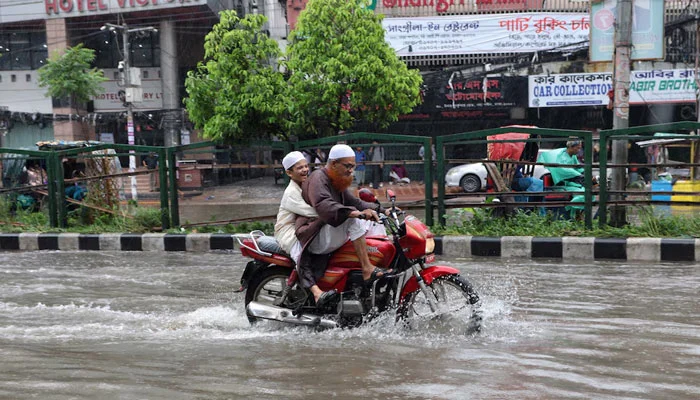
Floodwaters and landslides caused by days of intense monsoon rains have claimed the lives of at least 44 individuals in southeastern Bangladesh, leaving over a million people stranded as authorities scramble to provide aid to affected communities.
According to the disaster management ministry, flooding in seven districts—Chattogram, Cox’s Bazar, Bandarban, Rangamati, Khagrachhari, Moulvibazar, and Habiganj—has severely disrupted daily life, isolating thousands of families and leaving 267,918 households stranded. Power outages, damaged roads, and broken communication lines have hampered rescue efforts. Many residents haven’t been able to cook for days as floodwaters have submerged their homes, while others are battling efforts to clean thick mud from their kitchens and living spaces.
Nurul Islam, a resident from a flood-affected area in Chattogram, described the dire situation: “There’s still water inside our home, and we have no way to cook. Our stocks of dry food have run out, and we’re spending nights in the dark with our children because there’s no electricity.”
Many families are relying on non-perishable foods such as flattened rice, puffed rice, or biscuits that require no cooking, but damaged roads and broken bridges have hindered aid delivery to some of the worst-affected areas. The military and navy are actively transporting food, drinking water, medicines, and other essentials by boat to isolated communities to ramp up relief efforts.
During a visit to the affected zones, Disaster Management and Relief Minister Iqbal Hossain emphasized the government’s commitment: “We are doing everything possible to support flood victims. Relief supplies, safe drinking water, and medical aid are being distributed. People whose homes have been inundated are advised to move to the nearest shelters.”
Earlier this week, heavy rains also caused landslides in Rohingya refugee camps in Cox’s Bazar, resulting in 16 fatalities, including women and children. These camps house over a million Rohingya refugees in makeshift shelters perched on steep, deforested hillsides, making them extremely vulnerable during the monsoon season.
Bangladesh is among the world’s most disaster-prone nations, regularly experiencing floods, river erosion, and landslides due to seasonal monsoon rains. Climate scientists warn that climate change is intensifying these extreme weather events, making heavy rainfall more frequent and severe, thereby increasing the scale and impact of such disasters.
 ChatGPT
 Perplexity
 Gemini AI
 Grok AI