Tag: flood

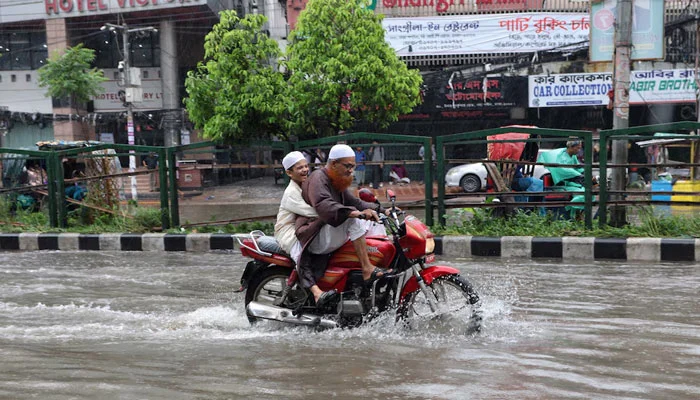
  • Bangladesh Floods Kill 44, Stranding Over a Million People

    Bangladesh Floods Kill 44, Stranding Over a Million People

    Floodwaters and landslides caused by days of intense monsoon rains have claimed the lives of at least 44 individuals in southeastern Bangladesh, leaving over a million people stranded as authorities scramble to provide aid to affected communities.

    According to the disaster management ministry, flooding in seven districts—Chattogram, Cox’s Bazar, Bandarban, Rangamati, Khagrachhari, Moulvibazar, and Habiganj—has severely disrupted daily life, isolating thousands of families and leaving 267,918 households stranded. Power outages, damaged roads, and broken communication lines have hampered rescue efforts. Many residents haven’t been able to cook for days as floodwaters have submerged their homes, while others are battling efforts to clean thick mud from their kitchens and living spaces.

    Nurul Islam, a resident from a flood-affected area in Chattogram, described the dire situation: “There’s still water inside our home, and we have no way to cook. Our stocks of dry food have run out, and we’re spending nights in the dark with our children because there’s no electricity.”

    Many families are relying on non-perishable foods such as flattened rice, puffed rice, or biscuits that require no cooking, but damaged roads and broken bridges have hindered aid delivery to some of the worst-affected areas. The military and navy are actively transporting food, drinking water, medicines, and other essentials by boat to isolated communities to ramp up relief efforts.

    During a visit to the affected zones, Disaster Management and Relief Minister Iqbal Hossain emphasized the government’s commitment: “We are doing everything possible to support flood victims. Relief supplies, safe drinking water, and medical aid are being distributed. People whose homes have been inundated are advised to move to the nearest shelters.”

    Earlier this week, heavy rains also caused landslides in Rohingya refugee camps in Cox’s Bazar, resulting in 16 fatalities, including women and children. These camps house over a million Rohingya refugees in makeshift shelters perched on steep, deforested hillsides, making them extremely vulnerable during the monsoon season.

    Bangladesh is among the world’s most disaster-prone nations, regularly experiencing floods, river erosion, and landslides due to seasonal monsoon rains. Climate scientists warn that climate change is intensifying these extreme weather events, making heavy rainfall more frequent and severe, thereby increasing the scale and impact of such disasters.

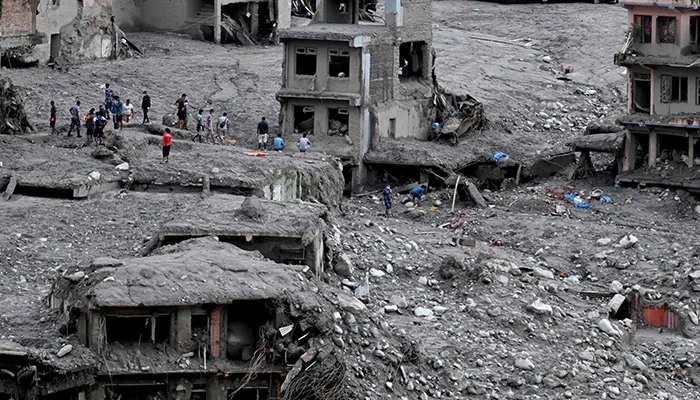
  • Tragic Indonesia Landslide Claims 8 Lives, Over 80 Still Missing

    Tragic Indonesia Landslide Claims 8 Lives, Over 80 Still Missing

    A landslide on Indonesia’s main island of Java resulted in at least eight fatalities and over 80 people reported missing this Saturday, according to disaster officials. The event was caused by heavy rainfall and impacted two villages in West Bandung around 2:30 a.m. local time (7:30 p.m. Friday GMT), covering residential areas under mud and debris.

    Abdul Muhari, spokesperson for Indonesia’s national disaster management agency (BNPB), confirmed the death toll. “As of 10:30 a.m. Saturday, dozens of residents have been accounted for safe, but 82 individuals are still missing,” he stated.

    This disaster follows severe flooding and landslides late last year that claimed approximately 1,200 lives and displaced over 240,000 residents on Sumatra Island. Experts and environmental advocates have highlighted deforestation as a significant factor contributing to the increased risk of floods and landslides, noting that clear cutting of forests removes crucial natural barriers that absorb rainfall and stabilize soil.

    The mayor of West Bandung, Jeje Ritchie Ismail, reported that military personnel, police, and volunteers are working together to search for the missing. He cautioned, however, that the terrain remains extremely challenging and that the ground is still unstable. Search teams are conducting manual excavations, using water pumps to spray soil, and deploying drones in their rescue efforts.

    Flooding and landslides are common during Indonesia’s rainy season, which spans from October to March. Last year’s intense monsoon and tropical storms triggered deadly landslides across South and Southeast Asia, from Sumatra’s rainforests to Sri Lanka’s highland plantations. Environmentalists emphasize that deforestation exacerbates these natural disasters, as forests play a vital role in absorbing rainfall and anchoring soil with their roots. Their loss increases the vulnerability of lands to rapid flooding and mudslides.

    In 2024, more than 240,000 hectares of primary forests were lost, according to the Nusantara Atlas project by conservation organization The TreeMap. Indonesia regularly ranks as one of the top countries experiencing the largest annual deforestation, primarily due to activities like mining, agriculture plantations, and wildfires, which have cleared vast areas of its lush rainforests over decades.

    Recently, the government revoked over 24 permits for forestry, mining, and hydroelectric projects on Sumatra to curb environmental damage. The landslide on Saturday follows a month of heavy rains that also caused a flash flood on Siau Island, resulting in at least 16 deaths.

  • Heavy Rains and Flash Floods Cover Southern California Homes in Mud

    Heavy Rains and Flash Floods Cover Southern California Homes in Mud

    Several dozen homes in Wrightwood sustained mud damage. The atmospheric river receded after three days of relentless rainfall. A flood watch remains active for much of Los Angeles County.

    Three days of intense rain caused flash flooding and mudslides across Southern California before easing on Friday. Residents in Wrightwood, a mountain resort town severely affected, began removing mud and assessing the destruction. The storm dumped up to 6 inches of rain in the greater Los Angeles area, with some mountains east of the city recording over 12 inches, according to the National Weather Service.

    The storm, which started around Christmas Eve, was driven by a massive atmospheric river—an air stream laden with moisture from the Pacific moving inland. The heavy rains were accompanied by strong, gusty winds that felled trees and disrupted power lines, leading to outages. Snow also accumulated in the high mountain regions.

    Authorities had issued evacuation warnings for neighborhoods prone to flash floods and debris flows, especially near hillsides previously burned by wildfires. Drivers were advised to avoid unnecessary travel.

    Even as rainfall decreased on Friday, the flood watch persisted across much of Southern California.

    Homes in Wrightwood, a town of about 5,000 nestled in the San Gabriel Mountains northeast of Los Angeles, experienced extensive mudslides. County safety officials began inspecting property damages. Several dozen houses suffered severe damage from mud rushing through the area on Wednesday, with officials prepared for additional debris flows.

    “Evacuation warnings are still in effect for Wrightwood, and all roads in the area are closed except to residents,” said San Bernardino County Fire Department spokesperson Ryan Beckers.

    Misty Cheng, 49, an accountant and homeowner in Wrightwood, learned about her property’s fate through a neighbor’s video. “My house is buried under over 5 feet of mud,” she told Reuters via cellphone from her primary residence in Upland, where she was staying during the storm. A mudslide had broken through a wall in the attached garage, flooding the living room. When she visited the house to assess damage and retrieve belongings, the mud had hardened into a solid mound.

    “I managed to recover a truckload of personal items, mostly from the second floor, which remained intact. Without flood insurance, I’ve started a GoFundMe to fund repairs,” she explained.

    Aerial footage showed homes and vehicles coated in mud with crews beginning cleanup efforts. Emergency responders rescued about 20 people trapped in their homes or vehicles by floodwaters and debris, but no fatalities or serious injuries were reported.

    The Weather Service expects Southern California to dry out over the weekend. Meanwhile, a significant winter storm may bring record snowfall to parts of New York state starting Friday night.

  • Floods Displace Thousands in Thailand and Malaysia, Killing at Least 8

    Floods Displace Thousands in Thailand and Malaysia, Killing at Least 8

    Floodwaters from days of heavy rain have claimed at least eight lives in southern Thailand and prompted thousands to evacuate to shelters in neighboring Malaysia. Authorities are intensifying efforts to provide emergency support and shelter.

    In some locations, floodwaters reach waist-high, impacting ten provinces in southern Thailand and eight states in Malaysia—regions stretching hundreds of miles, which were also severely affected by monsoon flooding last year that resulted in at least 12 fatalities.

    In Thailand’s southern trading city, Hat Yai, on Friday, the rainfall was the heaviest in over three centuries, according to the irrigation department. Video footage from the weekend shows people wading through muddy waters in commercial districts, where shops and parked motorcycles were submerged. Some residents used plastic containers as makeshift boats to move children, while outside the city, trucks and buses lined up along sparse dry roads amid slow-moving traffic through floodwaters.

    Authorities reported that the eight deaths in Thailand were mainly due to electrocution and related accidents. The government has deployed hundreds of boats and high-clearance vehicles to deliver aid, affecting more than 700,000 households since last week. Prime Minister Anutin Charnvirakul has ordered additional water pumps and emphasized that aid must be timely, comprehensive, and sufficient.

    In Malaysia, over 15,000 people are sheltering in 90 evacuation centers, with no fatalities reported so far. Deputy Prime Minister Ahmad Zahid Hamidi stated that civil defense teams are on standby, with over 90 land and water rescue assets including trucks, four-wheel-drive vehicles, and rescue boats in operation. He expressed hope that the disaster would not cause widespread damage and urged resilience and patience among those affected.

    Meanwhile, in central Vietnam, flooding and landslides over the past week have killed 91 people and disrupted infrastructure, leaving over 1.1 million households and businesses without power. The government estimates property damages at approximately $493 million and has provided cash and rice aid to victims. More than 200,000 homes, 200,000 hectares of crops, and over 1,150 hectares of fish farms have been flooded. The water levels are now receding, but the region’s coffee farms—especially in the central highlands—suffered damage that hampers the upcoming harvest, highlighting the ongoing struggle with the severe weather patterns common in the area.

  • Mexico Floods: Death Toll Hits 76 with Many Unaccounted For

    Mexico Floods: Death Toll Hits 76 with Many Unaccounted For

    Floodwaters caused by heavy rains have forced a man to wade through the streets of Alamo, Mexico, on October 17, 2025. The recent floods and mudslides have resulted in significant devastation across the country, particularly affecting central and eastern regions.

    According to official reports, 76 people have lost their lives due to the disaster, with an additional 27 reported missing. Thousands of residents remain cut off as roads and highways are either blocked or completely destroyed, leaving nearly 120 communities isolated. President Claudia Sheinbaum stated during a press conference that relief efforts are ongoing, and a relief package of 10 billion pesos (roughly $544 million) has been allocated to assist around 100,000 affected families.

    The state of Hidalgo has seen the most severe disruptions, with 65 municipalities cut off—many in mountainous areas where landslides have damaged access routes. Veracruz, situated along the Gulf of Mexico in the east, has also experienced severe flooding. Over 12,700 soldiers continue to provide aid, deliver supplies, and support recovery efforts in impacted communities.

    These intense rains, typical of Mexico’s rainy season from May to October, were intensified last week due to a tropical system from the Gulf of Mexico combining with a cold front moving down from the north. This convergence created particularly dangerous conditions, exacerbating the ongoing crisis.

  • 64 Dead, 65 Missing as Floods Devastate Central and Eastern Mexico

    64 Dead, 65 Missing as Floods Devastate Central and Eastern Mexico

    Floodwaters submerge open fields scattered with trees across Veracruz, one of the most affected regions after several days of heavy rainfall and severe flooding. —AFP

    – Small towns remain isolated; residents are clearing roads to enable aid delivery.
    – Emergency shelters have been opened for those displaced, with helicopters ferrying food and water to stranded communities.
    – Intense rains have caused landslides, destroying entire neighborhoods and washing away infrastructure.

    Rescue teams are working tirelessly Monday to reach individuals trapped by the catastrophic floods that have resulted in 64 deaths in central and eastern Mexico, with 65 people missing. Heavy rains over last week transformed streets into raging rivers, triggered landslides, and washed out roads and bridges.

    Many small communities are still cut off by road, days after the storms, with residents making great efforts to clear pathways for supplies. President Claudia Sheinbaum announced Monday that about 10,000 military personnel equipped with boats, aircraft, and helicopters are involved in rescue and relief operations, providing critical food and water supplies to those affected.

    Shelters are in place for displaced residents, and aerial flights continue to deliver essentials to those cut off. “Multiple flights are necessary to get enough food and water to everyone,” the president stated.

    Laura Velázquez, head of Mexico’s Civil Defense, reported that Veracruz, Hidalgo, and Puebla were the hardest hit by the flooding caused by relentless heavy rains. In Hidalgo alone, 43 individuals remain missing, and the death toll was updated from 47 to a higher number within just 12 hours, underscoring the rapidly evolving scale of the crisis.

    This year has seen particularly intense rainfall in Mexico, including a record amount for Mexico City.

    Residents in Tenango de Doria, Hidalgo, walked kilometers in search of food and water as flooded roads and inaccessible terrain hinder transportation. Many carried belongings, hoping to find shelter. Marco Mendoza, a 35-year-old farmer, shared, “We walked two and a half hours through the mud… Everything is ruined; we have no supplies or food.” Stores in the town center lacked electricity, and locals gathered in the main plaza, seeking updates on road openings and aid arrivals.

    Farmer Francisco Hernandez from nearby El Texme explained that a river overflowing its banks has left his community “trapped.” Although Mexico’s rainy season typically occurs from May to October, last week’s downpour was exacerbated by a tropical system moving from the Gulf of Mexico combined with a cold front from the north, meteorologists said.

    Due to rising waters, coastal cities and towns in Veracruz, rich with numerous rivers, were advised to evacuate last Friday. In some elevated areas, persistent rains caused landslides, sweeping away parts of mountainsides.

    Sheinbaum dismissed questions regarding early warnings and preparedness, noting that such events are challenging to predict with precision unlike hurricanes. “It was difficult to have advance notice about this situation because of the unpredictable nature of the weather,” she explained.

    Many areas began clearing debris with heavy machinery on Sunday as skies cleared.

  • Nearly 1,000 Stranded on Tibet’s Mount Everest Amid Blizzard

    Nearly 1,000 Stranded on Tibet’s Mount Everest Amid Blizzard

    A man carries a bag as he navigates through a flooded street along the banks of the overflowing Bagmati River after heavy rains, in Kathmandu, Nepal, October 4, 2025. — Reuters

    Rescue operations are ongoing on Sunday to reopen access to campsites on Tibet’s eastern slope of Mount Everest, where nearly 1,000 people remain stranded due to a snowstorm that has blocked roads, according to Chinese state media.

    Local villagers and rescue teams have been dispatched to clear the snow from the area, which sits at an altitude exceeding 4,900 meters (16,000 feet), as reported by Jimu News. Some tourists on the mountain have already been evacuated.

    The snow began falling on Friday evening and continued through Saturday, with authorities suspending ticket sales and entry to the Everest Scenic Area from late Saturday, as per notices on the official WeChat accounts of Tingri County’s Tourism Department.

    Just across the border in Nepal, intense rains have caused landslides and flash floods, damaging roads, destroying bridges, and resulting in at least 47 fatalities since Friday, police said.

    In the eastern Ilam district bordering India, 35 people lost their lives in separate landslides. Additionally, nine individuals are reported missing after being swept away by floodwaters, and three others died due to lightning strikes elsewhere in the country.

  • Typhoon Bualoi Strikes Vietnam, 13 Dead and 46 Hurt

    Typhoon Bualoi Strikes Vietnam, 13 Dead and 46 Hurt

    On September 29, 2025, Typhoon Bualoi made landfall in Nghe An province, Vietnam, causing significant disruption. People are seen navigating a street partially submerged in floodwaters following the storm’s arrival. Prior to the typhoon, authorities evacuated over 28,500 residents to ensure their safety. The storm destroyed more than 44,000 homes, flooded nearly 6,000 hectares of farmland, and prompted rainfall of up to 20 inches in various regions starting Sunday.

    The government reports that the typhoon resulted in at least 13 fatalities and left 46 people injured. It also caused the loss of several fishing boats, especially off Quang Tri province, with some vessels washed away and others losing contact. A local resident from Nghe An recounted staying awake all night out of fear that strong winds might damage his home. Neighbors spent the night reinforcing their residences after power was lost in their apartment complex.

    Authorities closed four airports in central provinces, delaying or canceling hundreds of flights. In Ninh Binh province, winds and rain caused nine deaths and injured seven others. Floodwaters also claimed the life of a person in Hue city and a falling tree caused another death in Thanh Hoa province.

    Farmland has suffered extensive damage, with rice and other crops inundated over 14,800 acres. While no significant industrial damage has been reported, factories operated by major companies such as Foxconn, Formosa Plastics, Luxshare, and Vinfast are located near the storm’s path. Prime Minister Pham Minh Chinh has ordered military and police forces to mobilize quickly to assist with disaster response efforts.

    Since the storm’s landfall, Vietnam has experienced heavy rainfall stretching from Saturday onward, heightening the risk of severe floods and landslides. Water levels in rivers and reservoirs swelled dangerously in Nghe An, Ha Tinh, and Thanh Hoa provinces, with thousands of households affected by power outages. Meteorologists forecasted rainfall of up to 20 inches across several areas through Tuesday.

    Vietnam’s extensive coastline along the South China Sea makes it particularly vulnerable to typhoons forming east of the Philippines, where Bualoi recently caused at least 10 fatalities last week.

  • Villages Isolated Following Devastating Floods in India

    Villages Isolated Following Devastating Floods in India

    Floodwaters have submerged around 1,000 villages in Punjab, India, prompting many residents to seek refuge in relief camps. Officials report at least 29 deaths and over 250,000 affected individuals last month. The chief minister described the flooding as one of the worst in decades. Although Punjab is known as India’s granary, more than 940 square kilometers (360 square miles) of farmland are under water, causing severe crop damage. In response, Prime Minister Narendra Modi assured the state’s chief minister of full federal support.

    Concerns are mounting over significant livestock losses, though the full impact will only be known once waters recede. The Indian military along with disaster response teams have launched extensive rescue efforts, deploying over 1,000 boats and 30 helicopters to aid stranded individuals and deliver supplies. The chief minister emphasized that saving lives—both human and animal—is the top priority.

    The floodwaters do not stop at the border; rivers in Punjab flow into Pakistan, where flooding has also damaged large areas of land. Flooding and landslides are typical during the monsoon season from June to September, but climate change and poorly planned development are making such extreme weather events more frequent and intense. Rainfall in northwest India has increased by more than 33% during this period, according to the national weather agency.

    In Delhi, persistent rains have swollen the Yamuna River, which crossed safety thresholds earlier this week, flooding neighborhoods and causing traffic chaos that lasts for hours. Last month, record-breaking rains also caused deadly floods in India’s Jammu and Kashmir region.

  • Heavy Rain in IIOJK Causes 34 Deaths, Over 200 Missing

    Heavy Rain in IIOJK Causes 34 Deaths, Over 200 Missing

    Heavy rainfall in Indian Illegally Occupied Jammu and Kashmir (IIOJK) resulted in at least 34 fatalities and over 200 people reported missing Thursday, marking the second such calamity in the Himalayan region within just over a week. The disaster struck the town of Chasoti in Kishtwar district, a waypoint on a notable pilgrimage trail. This incident follows a massive flood and mudslide that buried an entire village in Uttarakhand earlier this month.

    The flood swept away a community kitchen and a security post in the village, a halt on the route leading pilgrims to the Machail Mata temple. An official, speaking anonymously, explained that many pilgrims had been gathered for lunch when they were caught in the deluge.

    “I can confirm the tragic news, but information from the area affected by the cloudburst is slow to come in,” said Omar Abdullah, the chief minister of IIOJK, via a post on X.

    Footage aired on television showed terrified pilgrims crying as floodwaters inundated the village. The event occurred around 11:30 a.m. local time. Ramesh Kumar, the divisional commissioner of Kishtwar, told ANI that local police and disaster response teams had arrived at the scene, with military and air force units also activated to assist in search and rescue efforts.

    Indian meteorological officials described a cloudburst as a sudden, intense rainfall exceeding 100 millimeters (about 4 inches) within an hour, often triggering flash floods and landslides, especially in mountainous terrains during the monsoon season. The Srinagar weather station forecasted heavy showers for several parts of Kashmir that day, including Kishtwar, advising residents to stay clear of unstable structures, tall trees, and electrical poles due to the risk of further mudslides and flash floods.

  • Northern China faces year’s worth of rain, 19,000 evacuated due to storms

    Northern China faces year’s worth of rain, 19,000 evacuated due to storms

    Heavy rainfall across northern China has dumped nearly a year’s worth of rain on Baoding, a key industrial city near Beijing, displacing over 19,000 residents as streets flooded and transportation networks became impassable. In Yi, located in western Baoding, a record 447.4 mm (17.6 inches) of rain fell within 24 hours before dawn Friday, prompting weather stations across Hebei province to record historic rainfall levels.

    The China Meteorological Administration (CMA) reported that approximately 19,453 individuals from 6,171 households had been evacuated. While their exact relocation sites weren’t specified, footage showed police officers in neon rain gear wading through waterlogged streets during the night. The rainfall has been likened to the severe typhoon in 2023 that caused unprecedented floods in Beijing, marking the most intense rains recorded in 140 years.

    In Zhuozhou, which experienced catastrophic flooding two years ago, access to several bridges and roads was again cut off after over 190 mm of rain fell by Friday morning. This pattern of extraordinary precipitation is becoming more common in northern China, with some experts attributing the increased rainfall to climate change.

    Last year, Hebei province had an annual rainfall of 640.3 mm—26.6% above its long-term average—and has seen consecutive years of above-average precipitation since 2020. Summer storms contributed to 40% more-than-normal rainfall in Baoding and nearby cities, with some localized areas experiencing up to 80% more rain than usual.

    This trend ties into broader climate shifts driven by the East Asian monsoon, leading to severe weather events that threaten economic stability and infrastructure. Authorities remain vigilant as they contend with aging flood defenses and the potential for widespread displacement and damage to the region’s $2.8 trillion agricultural sector.

    Baoding issued a red alert for heavy rains Friday morning, and Hebei activated heightened emergency protocols. Meanwhile, Beijing—about 160 km away—was also affected, with forecasts predicting heavier rains that could bring more than 50 mm (2 inches) of rain within six hours, possibly triggering flash floods, landslides, and other secondary disasters.

    In northern China, railway services in Inner Mongolia were disrupted as authorities suspended multiple passenger trains passing through high-risk areas from Friday through Tuesday, further underscoring the widespread impact of these intense storms.

  • Dozens Unaccounted for Following Floods at Nepal-China Border

    Dozens Unaccounted for Following Floods at Nepal-China Border

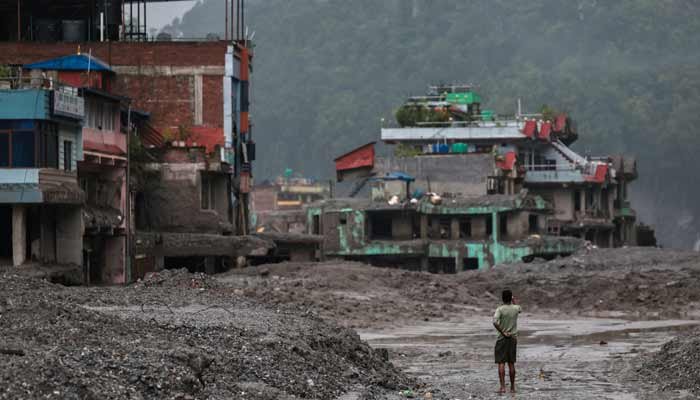
    A Nepalese army member airlifting individuals stranded by floods at the Bhotekoshi river, Nepal, on July 8, 2025. — Reuters

    • Experts suggest the flooding may stem from an overflowing glacial lake in Tibet.
    • In Nepal, those reported missing include six Chinese workers and three police officers.
    • Torrential rainfall has destroyed the “Friendship Bridge,” which connects China and Nepal.

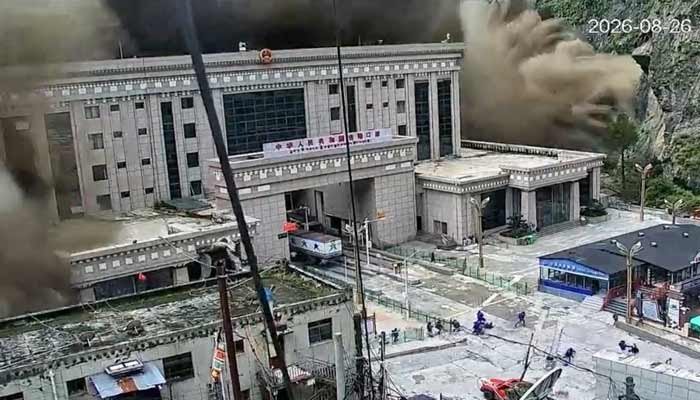
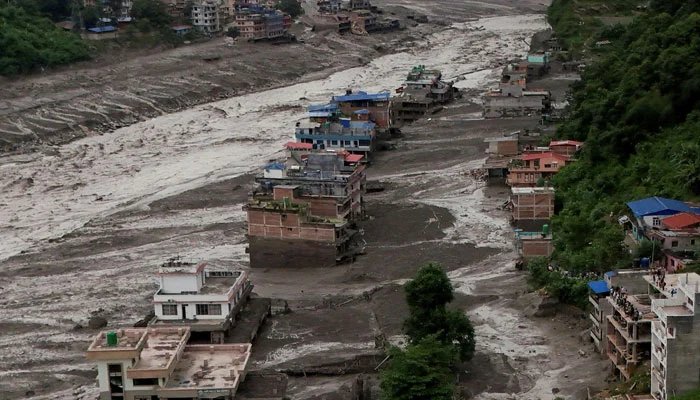
    KATHMANDU: Over two dozen individuals are unaccounted for following heavy rainfall in Tibet, China, which caused a surge in the Bhote Koshi River, resulting in the collapse of the “Friendship Bridge” connecting China and Nepal, officials reported on Tuesday.

    Weather specialists indicated that the flooding might have originated from an overflowing glacial lake in Tibet, as there wasn’t any significant rainfall in the river’s immediate catchment area within the last 24 hours.

    A total of 18 people are missing in Nepal, while the Chinese state-run Xinhua news agency reported that 11 individuals are untraceable on the Chinese side of the border.

    The individuals missing in Nepal include six Chinese construction workers and three police officers, according to the National Disaster Risk Reduction and Management Authority (NDRRMA) via X.

    The agency also noted that eight electric vehicles were swept away and a small hydroelectric facility suffered damage due to the floods.

    Officials stated that trade activities between Nepal and China have been hindered as a result of the bridge’s destruction.

    The missing Chinese nationals were employed at an Inland Container Depot under construction with Chinese support, located around 80 km north of Kathmandu, stated Arjun Paudel, a senior administrative official in Rasuwa district.

    “The river also carried away some containers filled with goods imported from China… This represents a substantial loss [of property], and we are gathering information,” he told Reuters.

    The Nepali army successfully rescued 11 individuals, and search and rescue operations are ongoing, said spokesperson Raja Ram Basnet.

    In recent years, China has ramped up its investments in Nepal, focusing on areas such as infrastructure, power generation, and healthcare.

    China has been severely impacted by recent downpours and flash floods, which have caused extensive damage, and the nation is now preparing for a tropical storm anticipated later this week.

    Nepal’s weather forecasting department is collaborating with Sentinel Asia—an international program utilizing space-based technology to aid disaster management in the Asia-Pacific region—to identify the causes of the flooding.

    “We have submitted an Emergency Observation Request to Sentinel Asia for satellite data to help determine the potential causes and effects of the flood,” they stated.

    Meanwhile, in Pakistan, at least 79 fatalities have been reported since June 26 due to floods and rain-related incidents, including landslides and building collapses, according to the National Disaster Management Authority (NDMA) on Tuesday.

    The NDMA has issued new warnings about potential flash flooding and glacial lake outburst floods in Pakistan’s northern and northwestern provinces of Gilgit-Baltistan and Khyber Pakhtunkhwa, citing “a notable increase in temperatures and an approaching weather system.”

  • Nigeria Floods Claim 151 Lives, Displacing Thousands from Homes

    Nigeria Floods Claim 151 Lives, Displacing Thousands from Homes

    Debris from destroyed homes in the Anguwar Hausawa Gangari community, following devastating flooding that resulted in 151 fatalities and displaced thousands in Mokwa, Niger State, Nigeria, on May 31, 2025. — Reuters

    • Flooding in Mokwa overnight leads to extensive rescue efforts.
    • Nigeria braces for seasonal flooding as the rainy season commenced in April.
    • The 2022 floods resulted in 600 deaths, displacing millions and devastating vast agricultural land.

    This week, catastrophic flooding in Niger State, Nigeria, has claimed the lives of 151 individuals and forced thousands to evacuate their homes, as reported by an emergency official to Reuters on Saturday.

    Ibrahim Audu Hussaini, the director of information at the Niger State Emergency Management Agency, updated the death toll, which had previously been reported as 117 the day before.

    He noted that more than 500 households were affected, with over 3,000 people displaced.

    The flooding in Mokwa occurred overnight from Wednesday to Thursday and rescue teams are still sifting through mud and debris in their search for victims days later.

    Nigeria is susceptible to flooding each rainy season, which commenced in April.

    In 2022, the country experienced its worst flooding in over a decade, resulting in more than 600 fatalities, displacing approximately 1.4 million individuals, and destroying 440,000 hectares (about 1.09 million acres) of farmland.

  • Australia Floods Claim Four Lives, Thousands Left Stranded

    Australia Floods Claim Four Lives, Thousands Left Stranded

    Here’s a rewritten version of the content in American English, made unique and plagiarism-free:

    Drone footage reveals a flooded area after heavy rains in Tinonee, New South Wales, Australia, on May 21, 2025. — Reuters

    SYDNEY: On Friday, authorities recovered the body of a man from a vehicle caught in floodwaters in southeastern Australia, bringing the death toll to four. This follows three days of relentless rain that cut off towns, swept away livestock, and obliterated homes.

    Police reported that the man was discovered near Coffs Harbour, approximately 550 kilometers (342 miles) north of Sydney. Search efforts are ongoing for another individual reported missing since the onset of the flooding earlier this week.

    Emergency services indicated that around 50,000 individuals remain isolated, while residents returning to their homes faced warnings about potential hazards.

    “Floodwaters can harbor contaminants, including vermin and snakes, so it’s crucial to evaluate those risks. There’s also the danger of electricity,” stated Damien Johnston, Deputy Commissioner of State Emergency Services, during a news conference.

    Video footage from television showed submerged intersections and street signs, with vehicles nearly entirely submerged, as rapidly rising waters overflowed riverbanks in the Hunter and Mid North Coast regions of New South Wales, Australia’s most densely populated state.

    Debris washed ashore from the floods, alongside lost and deceased livestock.

    Prime Minister Anthony Albanese was forced to postpone his planned visit to Taree, one of the most severely affected towns, due to the flooding.

    “We attempted to go through with the visit, but circumstances made it impossible, which I believe people can understand,” Albanese informed reporters from Maitland in the Hunter region.

    “Our thoughts are with the communities currently cut off. We are here to emphasize that you are not alone.” Australia has been experiencing increasingly severe weather patterns that some experts attribute to climate change. Following droughts and catastrophic wildfires at the end of the last decade, frequent flooding has devastated regions since early 2021.

    “What were once infrequent storms are now becoming the new standard—climate change is reshaping Australia’s weather patterns, one flood at a time,” commented Davide Faranda, a weather researcher at ClimaMeter.

    Disruptions in Sydney

    A wild weather system that unleashed approximately four months’ worth of rain over three days moved south towards Sydney on Thursday night, resulting in heavy rainfall, though the weather agency projected a decrease in intensity by Friday evening.

    Drone footage captures a flooded area in Tinonee, New South Wales, Australia, after heavy rains on May 21, 2025. — Reuters
    Drone footage captures a flooded area in Tinonee, New South Wales, Australia, after heavy rains on May 21, 2025. — Reuters

    Waterlogged rail tracks affected various suburban train lines in Sydney, including airport services, while Sydney Airport had to close two of its three runways for one hour Friday morning due to high winds, resulting in flight delays.

    The Warragamba Dam, which supplies 80% of Sydney’s drinking water, is currently operating at about 96% capacity and could overflow, officials reported.

    This version maintains the original meaning while ensuring it is uniquely phrased and tailored in American English.