Tag: Bangladesh

  • Bangladesh seeks India’s position on Hasina’s upcoming New Delhi speech

    Bangladesh seeks India’s position on Hasina’s upcoming New Delhi speech

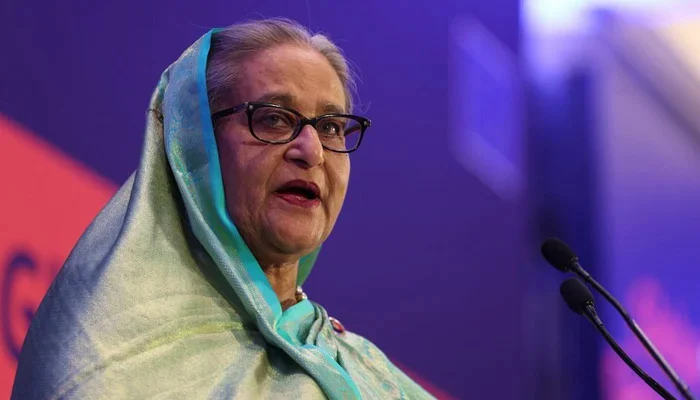
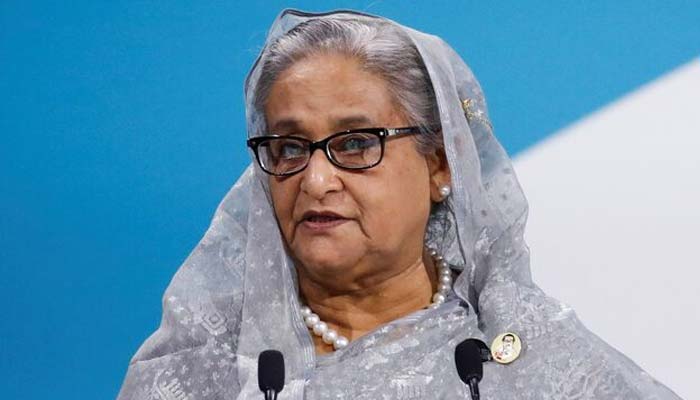
    Bangladesh has requested India clarify its position on former Prime Minister Sheikh Hasina’s upcoming virtual speech from New Delhi. Dhaka warns that permitting a fugitive’s political activities on Indian soil could complicate efforts to enhance bilateral relations.

    This marks Bangladesh’s first official reaction to Hasina’s announced appearance at an August 5 event organized by the Foreign Correspondents’ Club of South Asia in New Delhi, commemorating the second anniversary of a student-led uprising that ousted her government.

    The situation arises as Dhaka continues to push for Hasina’s extradition, given that she has been residing in India since fleeing Bangladesh in August 2024. Despite facing several legal cases, Hasina told Reuters she intends to return to Bangladesh in December.

    “India needs to be clear about its stance,” said Shama Obaid Islam, Bangladesh’s State Minister for Foreign Affairs. “We are engaging with India with a positive outlook and hope that this progress remains unaffected.”

    The Foreign Correspondents’ Club of South Asia confirmed that Hasina, 78, will deliver her address via video link, alongside her son, Sajeeb Wazed Joy, and other speakers. The club has yet to comment on Bangladesh’s concerns.

    Islam emphasized that Bangladesh has repeatedly expressed its concerns to India regarding the political statements made by Hasina and other Awami League leaders from Indian territory.

    “We do not want India-Bangladesh relations to be jeopardized by statements from individuals accused of fleeing justice,” she said, noting that India has previously indicated it does not expect fugitives to partake in political activities from within its borders.

    Although she clarified that the event was not organized by the Indian government, Islam said Dhaka would use diplomatic channels if necessary to address the issue.

    No immediate response has been received from India’s foreign ministry.

    Relations between the two countries have been tense since Hasina was removed from office. However, recent signals show both sides are interested in rebuilding ties through increased engagement and cooperation, especially since Tarique Rahman’s government took power following elections in February.

    Hasina has been in India since her government’s overthrow amidst weeks of violent protests. Bangladesh has since sought her extradition, and in 2025 she was sentenced to death for crimes against humanity related to the deadly crackdown in 2024, which the UN estimates resulted in up to 1,400 deaths. Hasina has dismissed the ruling as legally invalid.

  • Bangladesh Recovers $6.2B Linked to Ousted Prime Minister Hasina

    Bangladesh Recovers $6.2B Linked to Ousted Prime Minister Hasina

    Bangladesh has seized assets totaling 760 billion taka (roughly $6.2 billion) linked to former Prime Minister Sheikh Hasina, her family, and ten business conglomerates, according to officials on Wednesday.

    Since Hasina was ousted during a student-led mass uprising in 2024 and fled to India, authorities have scrutinized her wealth, investigating her relatives and major corporations accused of benefiting during her 15-year, autocratic leadership.

    The Bangladesh Financial Intelligence Unit reported confiscating 570 billion taka within the country and an additional 190 billion taka abroad.

    Its director, Ikhtiar Mohammad Mamun, told media while presenting their annual review that 98 cases had been initiated as part of these investigations involving Hasina and her affiliates.

    “We are actively working to recover money laundered overseas,” Mamun stated. “We aim to provide positive updates before the year ends.”

    Since her departure, Hasina has been convicted in absentia in multiple cases, including charges of corruption related to land allocations in a high-end district of Dhaka. Courts have also sentenced her to death over crimes against humanity.

    She has been residing in India since fleeing Bangladesh in August 2024 and recently expressed intentions to return by year’s end.

    Home Minister Salahuddin Ahmed emphasized that the government, which has requested her extradition, is determined to ensure she faces justice.

    “The verdict will be enforced. The court will determine if there is an avenue for appeal,” he asserted.

  • Bangladesh Floods Kill 44, Stranding Over a Million People

    Bangladesh Floods Kill 44, Stranding Over a Million People

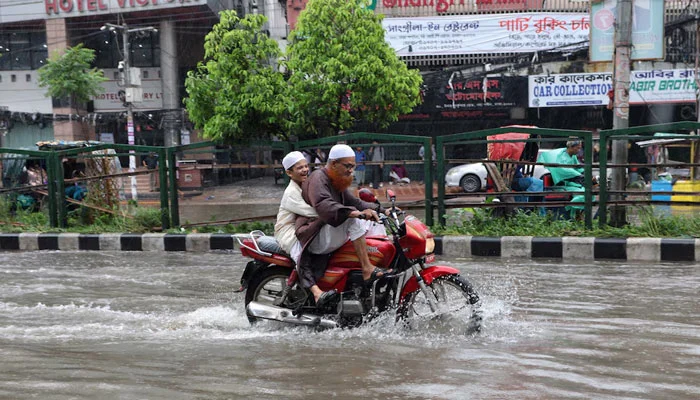
    Floodwaters and landslides caused by days of intense monsoon rains have claimed the lives of at least 44 individuals in southeastern Bangladesh, leaving over a million people stranded as authorities scramble to provide aid to affected communities.

    According to the disaster management ministry, flooding in seven districts—Chattogram, Cox’s Bazar, Bandarban, Rangamati, Khagrachhari, Moulvibazar, and Habiganj—has severely disrupted daily life, isolating thousands of families and leaving 267,918 households stranded. Power outages, damaged roads, and broken communication lines have hampered rescue efforts. Many residents haven’t been able to cook for days as floodwaters have submerged their homes, while others are battling efforts to clean thick mud from their kitchens and living spaces.

    Nurul Islam, a resident from a flood-affected area in Chattogram, described the dire situation: “There’s still water inside our home, and we have no way to cook. Our stocks of dry food have run out, and we’re spending nights in the dark with our children because there’s no electricity.”

    Many families are relying on non-perishable foods such as flattened rice, puffed rice, or biscuits that require no cooking, but damaged roads and broken bridges have hindered aid delivery to some of the worst-affected areas. The military and navy are actively transporting food, drinking water, medicines, and other essentials by boat to isolated communities to ramp up relief efforts.

    During a visit to the affected zones, Disaster Management and Relief Minister Iqbal Hossain emphasized the government’s commitment: “We are doing everything possible to support flood victims. Relief supplies, safe drinking water, and medical aid are being distributed. People whose homes have been inundated are advised to move to the nearest shelters.”

    Earlier this week, heavy rains also caused landslides in Rohingya refugee camps in Cox’s Bazar, resulting in 16 fatalities, including women and children. These camps house over a million Rohingya refugees in makeshift shelters perched on steep, deforested hillsides, making them extremely vulnerable during the monsoon season.

    Bangladesh is among the world’s most disaster-prone nations, regularly experiencing floods, river erosion, and landslides due to seasonal monsoon rains. Climate scientists warn that climate change is intensifying these extreme weather events, making heavy rainfall more frequent and severe, thereby increasing the scale and impact of such disasters.

  • Bangladesh’s Hasina to return in December to surrender with party allies

    Bangladesh’s Hasina to return in December to surrender with party allies

    Bangladeshi ex-premier Sheikh Hasina, who faces a death sentence at home where her party is banned, told Reuters she and top party members intend to return from exile in India around December and surrender voluntarily. The longest-serving leader of Bangladesh said she and her Awami League colleagues plan to come back on their own and appear before the court, challenging the country’s handling of its most prominent political rival.

    A return could intensify political tensions in the nation known for its garment exports, as the Dhaka government seeks stability after two years of turmoil. Conversely, it might help mend the strained relationship with India, which worsened after New Delhi hosted her. Bangladesh has repeatedly urged India to extradite her.

    She revealed she has not discussed her plans with any foreign government and has not set a specific date for her return. She expects to surrender herself, or believes other exiled Awami League leaders will do so. Among them, former Home Minister Asaduzzaman Khan Kamal also faces a death sentence, but Reuters could not reach other party members or verify their whereabouts.

    “The authorities in Dhaka want to bring me back—they keep sending letters to India requesting my return,” she said. “I will go myself.”

    The Bangladeshi government did not respond to requests for comment on her statements, nor did India’s foreign ministry, which in April said it was reviewing Bangladesh’s extradition request and aimed to strengthen bilateral relations.

    Once a champion of democracy, Hasina has been a dominant figure in Bangladesh for nearly half a century, rising to prominence after her father, an independence leader, was assassinated along with much of her family in a military coup. She initially fought for democracy and was praised for her economic progress, but her prolonged rule has faced accusations of silencing dissent and dismantling democratic institutions—charges she denies. According to a UN report, her crackdown resulted in up to 1,400 deaths.

    “Cases have been filed against almost all our leaders and members, and many are in hiding,” she told Reuters from her exile in Delhi. “I’ve decided to return home, and one day, all of you should come back too. We will all surrender in court together.” She declined to specify when she would return or surrender, but emphasized her faith in justice, suggesting that once proceedings begin, the court’s integrity will be questioned, and she wishes to demonstrate that.

    Many Awami League members have faced arrests, legal action, and violence since her government was ousted. She said she has not maintained contact with Dhaka over her return plans and emphasized that democracy, voting rights, and justice are not topics to be negotiated secretly. She expressed no fear of imprisonment, recalling her multiple past arrests—including during her early political activism after her father’s death, her detention in 2007 on corruption charges, and her repeated imprisonments during military rule—believing that the people should be the ultimate judges of her leadership.

    After her exile ending in 1981, she was detained several times during anti-military campaigns, and in 2007, she was jailed before winning elections in 2008. Her current flight was prompted by threats against her life when crowds approached her residence.

    “When a government serves a long time, mistakes happen—no government is perfect,” she said. “But the judgment belongs to the people. That’s why I leave it to them.” She also noted her efforts to reorganize the Awami League through online meetings across Bangladesh’s parliamentary constituencies.

    “Even if I can’t participate in elections anymore, why should the party be suspended? If we’ve done poorly, let the people decide,” she added.

  • Ex-Bangladesh PM, a fugitive, vows to return to Dhaka this year

    Ex-Bangladesh PM, a fugitive, vows to return to Dhaka this year

    Bangladesh’s former Prime Minister Sheikh Hasina has announced her intention to return to her country “this year,” multiple months after being sentenced to death in absentia for human rights violations, according to a recent interview published on Sunday.

    Hasina, who is 78 years old, fled to neighboring India in August 2024 following a student-led uprising that ended her 15-year authoritarian leadership. Since then, she has remained largely out of public view, aside from a rare address broadcast to a crowded press club in New Delhi in January.

    During an interview with Indian broadcaster NDTV, Hasina expressed that she is unafraid of death and dismissed her sentencing as “a part of an illegal, unconstitutional, and politically motivated process.” She stated, “Numerous conspiracies have been plotted against me. Yet, despite these challenges, I was elected Prime Minister five times by the people’s vote and worked tirelessly for the country’s remarkable development.”

    She affirmed her plans to return home despite the death penalty, saying, “I want to make it clear: overcoming all obstacles and conspiracies, I will come back to my country this year.”

    In November, a court in Dhaka convicted Hasina of incitement, ordering her to be hanged for failing to prevent atrocities and encouraging violence. Additionally, her former ruling party, the Awami League, now banned, was once one of the nation’s most influential political entities.

    Relations between India and Bangladesh have improved since Prime Minister Tarique Rahman secured a sweeping victory in Bangladesh’s national elections in February, which has brought the two countries closer. Nonetheless, tensions persist, with Bangladesh repeatedly demanding the extradition of Hasina.

  • India Detains and Deports 5,000 Bangladesh Nationals

    India Detains and Deports 5,000 Bangladesh Nationals

    India has begun setting up detention centers for undocumented migrants, with reports indicating that West Bengal’s chief minister announced that approximately 4,800 migrants have been deported already. Since Prime Minister Narendra Modi’s Hindu-nationalist party came into power last month, nearly 5,000 Bangladeshi citizens have been repatriated, according to official figures.

    Modi’s Bharatiya Janata Party (BJP) secured a decisive victory in the regional elections in West Bengal, a state with a population exceeding 100 million, vowing to intensify efforts to identify, detain, and expel illegal immigrants.

    India’s extensive and porous border with Bangladesh—an overwhelmingly Muslim nation—has historically facilitated migration driven by economic struggles and long-standing familial ties. After assuming office, the new West Bengal government directed the creation of detention facilities for undocumented Bangladeshis and Rohingya refugees, a Muslim minority group fleeing persecution in Myanmar.

    On Sunday in Kolkata, West Bengal’s capital, Chief Minister Suvendu Adhikari stated that roughly 5,000 Bangladeshi nationals had been deported across the border. “We have initiated the deportation process for Bangladeshi infiltrators who are not covered by the Citizenship Amendment Act,” Adhikari explained. He added that holding centers had been established across all districts in May, and that from these centers, 4,800 individuals had already been deported. Currently, 836 people remain in detention, with plans underway to expel them soon.

    This crackdown on immigration comes amid ongoing political debate over border security. Some Indian officials have referred to migrants as “termites” and “infiltrators,” language that critics argue has fueled discrimination and marginalization of India’s Muslim community, which makes up over 200 million of the population. Critics also accuse the BJP of conflating religious identity with illegal migration, exacerbating societal divisions.

    There have been previous allegations that India has forcibly expelled hundreds of Bengali-speaking Muslims into Bangladesh without proper legal procedures. Diplomatic relations between India and Bangladesh have also experienced tension; following a 2024 revolution in Dhaka that ended the autocratic rule of then-Prime Minister Sheikh Hasina—a close ally of India—she fled to India. With a new government elected in Bangladesh earlier this year, relations are gradually improving. In fact, India and Bangladesh’s border authorities are scheduled to hold talks in New Delhi this coming Monday.

  • India Names Modi Ally as Bangladesh Envoy Amid Thaw in Ties

    India has appointed seasoned politician Dinesh Trivedi as its new high commissioner to Bangladesh, marking a rare instance of selecting a non-foreign service officer for the role. This move reflects New Delhi’s effort to mend and strengthen diplomatic ties with its eastern neighbor.

    Relations between India and Bangladesh suffered after a popular uprising in 2024 led to Bangladesh’s longtime Prime Minister Sheikh Hasina fleeing to New Delhi, where she remains. Trivedi’s appointment underscores India’s focus on rebuilding trust and influence in Bangladesh amid fierce competition from China for regional and economic dominance.

    At 75, Trivedi is a former minister of railways and health. He joined Prime Minister Narendra Modi’s Bharatiya Janata Party in 2021, transitioning from a regional party in West Bengal—a crucial border state that influences India-Bangladesh relations. Modi has been actively working to expand his party’s footprint in West Bengal through local elections.

    The Indian government indicated that Trivedi would assume his diplomatic responsibilities soon. Tensions began easing after the February election brought Tarique Rahman of the Bangladesh Nationalist Party to power, replacing an interim government that had leaned strongly towards China.

    Recently, Bangladesh’s foreign minister visited New Delhi to discuss increasing fuel and fertilizer supplies, boosting energy collaboration, and relaxing travel restrictions. However, a major sticking point remains India’s refusal to extradite Sheikh Hasina, continuing the complexity of bilateral relations.

  • Bus plunges into river in Bangladesh during ferry boarding, 24 lives lost

    Bus plunges into river in Bangladesh during ferry boarding, 24 lives lost

    A passenger bus carrying approximately 40 passengers tumbled into the Padma River while attempting to board a ferry in Bangladesh, resulting in at least 24 fatalities, according to officials on Thursday. The incident took place on Wednesday near Daulatdia in Rajbari district, roughly 62 miles from Dhaka, when the bus lost control approaching a ferry dock. The vehicle flipped and sank nearly 30 feet below the water’s surface, with rescuers retrieving 22 bodies, including six men, 11 women, and five children. Confirmed dead numbers now stand at 24, which includes two women who died after being rescued.

    Search and rescue operations involve four fire department units, 10 divers, and support from the army, police, coast guard, and local authorities. Authorities are concerned that more passengers may still be unaccounted for. Bangladesh experiences hundreds of fatalities each year due to road and waterway accidents.

  • India detains suspect linked to Bangladesh uprising leader’s death

    India detains suspect linked to Bangladesh uprising leader’s death

    A Bangladeshi man has been detained by Indian authorities for allegedly assisting two fellow nationals in entering India illegally. The suspects are accused of murdering a well-known student leader in Dhaka.

    Sharif Osman Hadi, a prominent critic of India who participated in Bangladesh’s 2024 mass protests, was shot outside a mosque in Dhaka on December 12. He later died from his injuries at a hospital in Singapore.

    West Bengal police identified Faisal Karim Masud and Alamgir Hossain as the main culprits in Hadi’s murder. They reportedly escaped Bangladesh via the Haluaghat border into India soon after the attack. The two were arrested on March 8 and are currently in police custody.

    Superintendent Indrajit Sarkar of the West Bengal Special Task Force told AFP that Philip Sangma was arrested on suspicion of helping Masud and Hossain cross into West Bengal through the sensitive border. Sangma was detained on Saturday for allegedly facilitating their illegal entry and appeared in a local court before being remanded into police custody for a week.

    Hadi’s death sparked violent protests across Bangladesh, with mobs burning several buildings, including two major newspapers accused of pro-India bias and a prominent cultural venue.

    This incident further strained the already tense relationship between India and Bangladesh, especially since Sheikh Hasina, Bangladesh’s former prime minister, fled a pro-democracy uprising and took refuge in India.

    India’s foreign ministry issued a statement denying any involvement in Hadi’s murder, calling such claims false. Meanwhile, there are signs of improved diplomatic engagement, as Indian Prime Minister Narendra Modi congratulated Bangladesh’s Nationalist Party on its recent election victory, marking the first since Hasina’s departure.

  • Bangladesh Ensures Diesel Supply Amid Widespread Energy Disruptions

    Bangladesh Ensures Diesel Supply Amid Widespread Energy Disruptions

    Vehicles form a long line at a fuel station as worries about fuel availability grow amid tensions stemming from the US-Israel conflict with Iran, in Dhaka, Bangladesh, March 6, 2026.— Reuters

    – Power outages and diesel shortages are disrupting garment factories.
    – Bangladesh is importing diesel to address the fuel shortage.
    – The country depends on imports for about 95% of its energy needs.

    Bangladesh has started receiving diesel supplies from countries including China and India, with officials stating the current stock can meet roughly one month of demand. Preparations are underway to secure another month’s supply, as the US-Israeli conflict with Iran has interrupted shipments, impacting major industries like the clothing sector.

    Home to 175 million people, Bangladesh relies heavily on imported energy, with a dependency rate of around 95%. To cope with the crisis, authorities have implemented vehicle rationing, restricted diesel sales, and shut down universities amid the ongoing turmoil affecting Middle Eastern oil exports.

    Many garment manufacturers—second only to China globally—are already reporting inadequate diesel supplies for their backup generators during power outages. Mahmud Hasan Khan, president of the Bangladesh Garment Manufacturers and Exporters Association, noted that power cuts have doubled to as much as five hours daily since the conflict erupted on February 28.

    “Our power goes out, so we rely on diesel for our generators, but we just can’t buy enough anymore, which is causing us serious problems,” Khan said.

    The Bangladesh Petroleum Corporation (BPC), managed by the government, is currently importing approximately 60,000 metric tons of diesel from three traders. An additional 90,000 metric tons are expected later this month, according to two energy officials who requested anonymity. One shipment of 27,000 metric tons from PetroChina arrived at Chittagong port Monday, while another 28,000 metric tons from Vitol is waiting at the port’s outer anchorage.

    Furthermore, about 5,000 metric tons of diesel are being supplied via a cross-border pipeline from India’s Numaligarh Refinery. Negotiations are ongoing to procure an extra 30,000 metric tons from Indian Oil.

    “We have enough supplies for one month, and arrangements are being made for an additional month,” a BPC representative said. The agency did not immediately respond to requests for comment.

    While Bangladesh generally consumes approximately 380,000 metric tons of diesel each month, figures suggest current consumption has dropped to roughly 270,000 metric tons since rationing began. The ease of securing refined fuel cargoes has been somewhat reassuring, as most traders do not depend on the disrupted Gulf shipping routes responsible for crude oil transportation. Still, prices have risen due to market volatility stirred by the Middle East crisis.

    The country also imports about 1.4 million metric tons of crude oil annually under long-term contracts with Saudi Aramco and the Abu Dhabi National Oil Company (ADNOC). However, shipments from these companies could face delays because their cargoes must pass through the Strait of Hormuz. Already, a shipment of approximately 100,000 tons from Aramco has been delayed in the Gulf.

    Severe gas shortages have already forced Bangladesh to suspend operations at four out of its five state-run fertilizer factories, diverting gas supplies to power plants instead.

  • Bangladesh Closes Universities Early to Conserve Power During Energy Crisis

    Bangladesh Closes Universities Early to Conserve Power During Energy Crisis

    Bangladesh will shut down all universities starting Monday to speed up the Eid ul-Fitr holiday, aiming to conserve electricity and fuel amidst a worsening energy crisis driven by Middle East conflicts. This shutdown affects both government and private universities nationwide, a measure officials say will cut electricity use and reduce traffic congestion that contributes to fuel wastage.

    Campus facilities like dormitories, classrooms, labs, and air conditioning units are significant electricity consumers, and closing early is expected to ease the strain on the power grid. Education institutions, including government and private schools, are already closed for Ramadan, so most schools will remain non-operational during this period.

    This decision comes as Bangladesh faces increased uncertainty over fuel and gas supplies due to turbulence in international energy markets caused by ongoing Middle East conflicts. Since the country depends on imports for about 95% of its energy needs, authorities imposed daily fuel sale limits last Friday following panic buying and stockpiling.

    In addition, the government has ordered all private coaching centers and foreign curriculum schools to suspend operations temporarily to reduce energy consumption. Gas shortages have already led to the shutdown of four of Bangladesh’s five state-run fertilizer factories, with remaining gas redirected to power plants to prevent widespread outages.

    Bangladesh is also purchasing liquefied natural gas (LNG) from spot markets at significantly higher prices and seeking additional cargoes to address supply shortfalls. A senior energy official noted, “We are doing everything possible to reduce consumption and maintain power, fuel, and import stability.”

  • Newly Sworn-In Members of Bangladesh Parliament

    Newly Sworn-In Members of Bangladesh Parliament

    Bangladesh’s recently elected Members of Parliament took their oaths on Tuesday after a landmark election resulted in a victory for the Bangladesh Nationalist Party. The swearing-in ceremony in Dhaka was attended by delegates from multiple regional and Muslim nations.

    The event, held at the parliamentary complex, began with verses from the Holy Quran, followed by the oath administered by Bangladesh’s Chief Election Commissioner, AMM Nasir Uddin.

    This story is still developing and will be updated with additional details as they become available.

  • Yunus Resigns, Signaling End of Bangladesh’s Interim Government

    Yunus Resigns, Signaling End of Bangladesh’s Interim Government

    Bangladesh’s interim leader Muhammad Yunus resigned on Monday, delivering a farewell message to the nation before transitioning power to an elected government. At 85 years old, the Nobel Peace Prize laureate declared, “Today, the interim government is stepping down.” He urged that the progress made in democracy, free speech, and fundamental rights should not be halted.

    Yunus made a return from self-imposed exile in August 2024, shortly after Sheikh Hasina’s authoritarian regime was ousted by a student-led uprising. She fled to India via helicopter. Reflecting on that pivotal moment, Yunus described it as “a day of great liberation,” expressing joy and tears of happiness as Bangladeshis worldwide celebrated the country’s newfound freedom from oppression.

    Having served as the country’s chief adviser during the transition, Yunus now hands over power following a landslide victory for the Bangladesh Nationalist Party (BNP) and its leader Tarique Rahman in recent elections. Yunus praised the election process, highlighting how voters, political parties, and institutions set a positive example for future democratic practices. He noted, “This election has established a standard for the years ahead.”

    Rahman, 60, who leads the BNP and comes from one of Bangladesh’s most influential political families, is expected to assume the role of prime minister, succeeding the outgoing interim administration. The new lawmakers are anticipated to be sworn in on Tuesday.

    Prior to the elections, political clashes resulted in five deaths and injured over 600 individuals. Despite recent turbulence, voting went smoothly, and the country has responded to the results with calm.

    On the same day as the elections, Bangladesh’s voters approved broad democratic reforms through a national referendum, a key aspect of Yunus’s transition plan following the uprising. The “July Charter” proposes measures like term limits for prime ministers, the establishment of an upper house of parliament, enhanced presidential powers, and increased judicial independence. Yunus emphasized that these reforms build on existing efforts: “We did not start from zero — we began with a deficit. By clearing the wreckage, we rebuilt institutions and charted a course for reforms.” While the referendum approved these changes, they still require ratification by the new parliament, with some parties questioning certain aspects.

    Election results showed the BNP alliance securing 212 seats, while the Jamaat-e-Islami-led coalition won 77, according to the Election Commission. Jamaat leader Shafiqur Rahman acknowledged the loss but pledged to serve as a vigilant, principled opposition.

    The upcoming legislative session is expected on Tuesday, where Tarique Rahman will likely become Bangladesh’s next prime minister. Throughout the campaign, police reports documented five fatalities and over 600 injuries from political clashes. Despite this, voting day proceeded peacefully, and the nation has responded with a degree of stability.

  • Dhaka’s Call to Islamabad and Delhi

    Dhaka’s Call to Islamabad and Delhi

    People wave flags during celebrations marking the one-year anniversary of student-led protests that resulted in the removal of Bangladeshi former Prime Minister Sheikh Hasina. The event took place on Manik Mia Avenue, outside the parliament building in Dhaka, Bangladesh, on August 5, 2025. — Reuters

    During a conversation about Bangladesh’s political climate with journalists from Bangladesh, Pakistan, and India in Dhaka, I was reminded of how history often seems to repeat itself.

    In 2024, India is dealing with the fallout from its earlier miscalculations in Dhaka, while Pakistan is finding new diplomatic opportunities. Whether this signifies a break from the past or just its continuation remains uncertain.

    A young Bangladeshi’s remark caught my attention: “We want equal and better relations with both Pakistan and India. Both of you have treated us similarly. We carry wounds from both, but we want to move forward.”

    After Sheikh Hasina traveled to India on August 5, 2024, anti-Indian sentiments still run deep among the people, but they are directed at the Indian government rather than Indian citizens. Bangladesh shares a 4,096-kilometer border with India.

    There are 54 rivers connecting the two nations, including the Padma, Brahmaputra, and Teesta. Bilateral trade is valued between $14 billion and $16 billion, and their interests remain closely linked.

    India’s strategy of heavily relying on Hasina’s Awami League proved to be a costly mistake, though there are signs of effort to repair relations now. India appears to have recognized its policy errors or at least acknowledged that the Bangladesh Nationalist Party (BNP) now holds a clear public mandate.

    When I asked the incoming Prime Minister Tarique Rahman if he would seek Sheikh Hasina’s extradition from India due to public calls in Dhaka for accountability, he responded cautiously, “That depends on the judicial process.”

    Rahman seems to be a seasoned and cautious politician. He avoids inflammatory language and refrains from criticizing the Awami League or Sheikh Hasina.

    An encouraging sign is that Pakistan appears to have an open door in Dhaka. Locals warmly welcome Pakistanis. I met Afroza Begum, whose father served in the Pakistani Air Force; she was born in Rawalpindi in 1958.

    She recalled how she and her siblings were detained after Matiur Rahman attempted to hijack a Pakistani plane. Despite these memories, she also cherishes fond moments—especially the food and landmarks of Karachi and Peshawar.

    “We moved from Pakistan in 1974, but our hearts remain there,” she said. “When we heard about the Peshawari Kitchen restaurant here in Dhaka, we just had to come back to relive those days.”

    Pakistani diplomats, including former High Commissioner Imran Siddiqui, have been actively working to improve relations. The current High Commissioner Imran Haider and his team are focusing on strengthening both social and economic ties. Bilateral trade has grown to approximately $865 million.

    Pakistani policymakers should view Bangladesh as an independent, sovereign nation with its own international relationships, rather than through the lens of India. Likewise, Indian policymakers should see Bangladesh as a country that helped create SAARC and now aims to revive it, not as a pawn in regional rivalries.

    Tarique Rahman stated at a press conference that Bangladesh will seek to reorganize SAARC and plans to engage with regional partners once his government is formed—highlighting that this was Bangladesh’s initiative.

    For Bangladesh’s new leadership, the main focus is the country’s own interests. Rahman emphasizes a “Bangladesh First” approach, rather than prioritizing ties with Pakistan or India. Despite personal hardships—including the assassination of his father and his mother’s death after years in exile—he chooses to avoid criticizing political opponents.

    Domestically, he is reaching across divides—meeting with figures like Dr. Shafiqur Rahman of Jamaat-e-Islami Bangladesh and Nashad Islam, a prominent youth leader of the National Citizens Party (NCP), which played a significant role in Sheikh Hasina’s ousting.

    He seems to grasp that rebuilding a nation requires respecting political adversaries. His hope is that by reinforcing SAARC, Bangladesh can evolve into a hub for regional cooperation instead of a battleground for India-Pakistan tensions.

    Originally published in The News.

  • Bangladesh’s Next Prime Minister Rahman Speaks on Democracy Sacrifices

    Bangladesh’s Next Prime Minister Rahman Speaks on Democracy Sacrifices

    Tarique Rahman, leader of Bangladesh’s Nationalist Party (BNP), flashed a victory gesture during a press conference after BNP secured a win in the 13th general election in Dhaka, February 14, 2026—Reuters.

    • JI pledges to act as a “vigilant, principled, peaceful opposition.”
    • The BNP coalition claimed 212 seats, while JI’s alliance garnered 77.
    • The European Union described Friday’s elections as “credible.”

    Prime Minister-elect Tarique Rahman of Bangladesh paid tribute to those who “sacrificed for democracy” on Saturday, vowing to foster unity following the nation’s first elections since a deadly uprising in 2024.

    At 60, Rahman, an heir to a powerful political dynasty, is poised to lead Bangladesh, a nation of 170 million, after Thursday’s sweeping electoral victory.

    “This victory belongs to Bangladesh and democracy,” Rahman declared in his inaugural speech post-vote. “It is a triumph for the people who aspire to and have sacrificed for democracy.”

    He will assume leadership from an interim government that has guided Bangladesh since the student-led protests ended Sheikh Hasina’s strict rule in August 2024.

    Rahman’s victory signals a significant comeback for a man who only returned from 17 years in exile in Britain last December, away from Dhaka’s political turmoil.

    The BNP-led coalition secured 212 seats, outpacing the 77 seats won by the Jamaat-e-Islami-led alliance, according to the Electoral Commission.


    Calling for Unity

    Jamaat leader Shafiqur Rahman, aged 67, initially alleged “irregularities and fabrications” in the voting process but later conceded defeat.

    He committed to serving as a “vigilant, principled, and peaceful opposition.” Rahman emphasized that his Islamist party, which faced suppression under Hasina, had doubled its parliamentary seats from previous levels, considering this a foundation for future growth.

    Hasina’s Awami League was disqualified from participating. The 78-year-old former Prime Minister, sentenced to death in absentia for crimes against humanity, issued a statement from hiding in India condemning the election as “illegal and unconstitutional.”

    Rahman urged cooperation across political lines, emphasizing the need for national unity amid political upheaval.


    A Pro-Democracy Victory

    Rahman’s father, President Ziaur Rahman, was assassinated in 1981, while his mother, Khaleda Zia, served three terms as prime minister and wielded significant influence in Bangladesh’s politics for decades.

    “The people of a freedom-loving, pro-democracy Bangladesh have once again delivered victory to the BNP,” Rahman stated, initially in English before switching to Bengali.

    Nobel laureate Muhammad Yunus, the former interim leader, earlier stated that Rahman would help steer the country toward stability, inclusion, and progress.

    The U.S. embassy congratulated Rahman and the BNP on their “historic victory,” while neighboring India commended his “decisive win,” marking a shift after years of tense relations.

    China and Pakistan, both strengthening ties with Bangladesh since the 2024 uprising and amid cooling relations with India, also sent their congratulations.

    International observers praised the elections, with the European Union calling them “credible.” Turnout was approximately 59% across 299 of 300 voting districts.

    Only seven women secured seats outright; however, 50 more parliamentary seats reserved for women will be filled through party lists.

    Voters also supported in a referendum a broad democratic reform charter, advocated by Yunus, aimed at overhauling Bangladesh’s “completely broken” governance system and preventing a return to single-party dominance. Proposed reforms include prime ministerial term limits, a new upper house of parliament, enhanced presidential authority, and increased judicial independence.

    Rahman acknowledged that the new administration faces serious hurdles, citing a fragile economy, weakened institutions, and law and order issues left by an authoritarian past.

    “We are about to begin our journey amid economic instability, fragile institutions, and law and order challenges,” he said.

  • BNP’s Core Priorities as Bangladesh Election Winner

    BNP’s Core Priorities as Bangladesh Election Winner

    The Bangladesh Nationalist Party (BNP) secured a clear two-thirds majority in Friday’s general elections, a victory that’s expected to stabilize the country after months of unrest following the removal of former Prime Minister Sheikh Hasina during a youth-led uprising.

    Led by Tarique Rahman, the BNP is set to return to power after two decades. Rahman, the son of BNP founder and ex-president Ziaur Rahman, is widely anticipated to take the oath as prime minister.

    Key commitments in the BNP’s election platform, under the slogan “Bangladesh First,” include:

    Reforms
    Implement all aspects of the July Charter, which aims to establish new constitutional institutions, introduce a bicameral parliament, and make broad political changes aligned with party commitments.

    Trade
    Work to revive closed industries and diversify exports.
    Facilitate foreign businesses operating legally to repatriate profits within 30 days.

    Employment
    Create close to 1 million new jobs in the tech and IT sectors.
    Ensure wages are fair and adjusted for inflation, with a review system every two years.
    Develop technical and language skills among youth and promote merit-based government hiring.

    Economic Growth
    Introduce international payment systems, establish regional e-commerce hubs, and promote the “Made in Bangladesh” initiative.
    Implement a “Family Card” program providing monthly provisions for low-income households to purchase essentials.

    Healthcare
    Gradually increase public health spending to 5% of GDP.
    Hire 100,000 healthcare workers nationwide and expand preventive health initiatives.

    Social Initiatives
    Start a midday meal program for students and introduce a new education policy based on skills and values.
    Improve sports facilities and infrastructure.
    Provide training-based welfare programs for religious leaders across different faiths.

  • Tarique Rahman Emerges as Next Leader in Bangladesh Politics

    Tarique Rahman Emerges as Next Leader in Bangladesh Politics

    A 60-year-old leader of Bangladesh Nationalist Party (BNP), Tarique Rahman, who had been overshadowed for years by his influential family, is finally stepping into the spotlight. As the heir to one of Bangladesh’s most powerful political dynasties, Rahman is now prepared to lead the nation of 170 million people, driven by his desire to “improve” the country.

    Following a deadly uprising that ended Sheikh Hasina’s authoritarian rule roughly a year and a half ago, the BNP claims they secured a “landslide victory” in last Thursday’s parliamentary elections. While official results are pending, the United States has already congratulated Rahman on what they describe as a “historic” win.

    Rahman’s return marks a significant turnaround, especially considering he only came back to Bangladesh in December after spending 17 years in exile in the UK, far from the country’s turbulent politics. Known widely as Tarique Zia, his life has been deeply intertwined with his family’s political legacy. His father, President Ziaur Rahman, was assassinated in 1981 when Tarique was just 15. His mother, Khaleda Zia—who served as prime minister three times and was a dominant political figure—passed away at 80 just days after his return.

    Speaking to AFP two days before the election, Rahman promised to build upon his family’s legacy. “They are them, I am me,” he stated from his office adorned with portraits of his late parents. “I want to do better than them.” He shared that upon arriving in December, he was overwhelmed with mixed emotions—initial joy of returning contrasted with grief over his mother’s passing. “This is my country; I was born and raised here, so I felt very happy,” he said. However, instead of celebrating, he had to say farewell to his mother, who had been in intensive care. “When you come home after so long, any son wants to hug his mother,” he admitted. “I didn’t get that chance.”

    Within days of returning to Dhaka, Rahman took charge of the BNP and its election campaign. Despite his grief, he stepped onto the stage, rallying large crowds with determination.

    His family roots stretch back to a rivalry rooted in politics that dates to the 1970s. His father, Ziaur Rahman, rose to prominence as an army officer after a 1975 coup, establishing a powerbase in opposition to Sheikh Mujibur Rahman, Sheikh Hasina’s father. Both Ziaur Rahman and his successor, Sheikh Zia, were killed in assassinations, fueling a long-standing political rivalry. Tarique’s mother, Khaleda Zia, became Bangladesh’s first female prime minister, often competing against Sheikh Hasina in contentious elections.

    Rahman’s political journey began under the shadow of these family struggles, and it has not been without controversy. U.S. diplomatic cables from 2006 describe him as “an unnerving figure,” associated with corruption and violence. He faced corruption charges in 2007, which he claims were politically motivated, resulting in his exile to London. He consistently denies all accusations, asserting their political nature, but has expressed regret if any mistakes were made in the past.

    He was eventually acquitted of the most serious charges, including a life sentence for a grenade attack on Sheikh Hasina’s rally in 2004, which he has always denied perpetrating. Married to a cardiologist and father to a daughter who is a lawyer, Rahman led a quiet life in Britain until his dramatic return, which was met with a hero’s welcome and viral images of his pet cat, Jebu.

    Acknowledging the enormous challenge ahead, Rahman considers his task to be rebuilding a nation he says was “destroyed” by the previous regime. His return marks a new chapter in Bangladesh’s complex political landscape, with many watching to see how his leadership will unfold.