Tag: monsoon

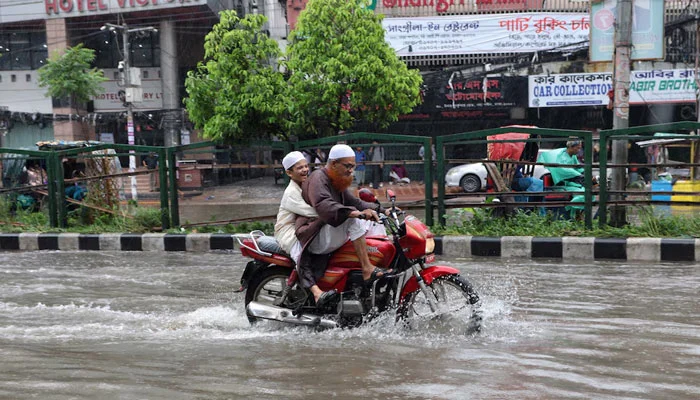
  • Bangladesh Floods Kill 44, Stranding Over a Million People

    Bangladesh Floods Kill 44, Stranding Over a Million People

    Floodwaters and landslides caused by days of intense monsoon rains have claimed the lives of at least 44 individuals in southeastern Bangladesh, leaving over a million people stranded as authorities scramble to provide aid to affected communities.

    According to the disaster management ministry, flooding in seven districts—Chattogram, Cox’s Bazar, Bandarban, Rangamati, Khagrachhari, Moulvibazar, and Habiganj—has severely disrupted daily life, isolating thousands of families and leaving 267,918 households stranded. Power outages, damaged roads, and broken communication lines have hampered rescue efforts. Many residents haven’t been able to cook for days as floodwaters have submerged their homes, while others are battling efforts to clean thick mud from their kitchens and living spaces.

    Nurul Islam, a resident from a flood-affected area in Chattogram, described the dire situation: “There’s still water inside our home, and we have no way to cook. Our stocks of dry food have run out, and we’re spending nights in the dark with our children because there’s no electricity.”

    Many families are relying on non-perishable foods such as flattened rice, puffed rice, or biscuits that require no cooking, but damaged roads and broken bridges have hindered aid delivery to some of the worst-affected areas. The military and navy are actively transporting food, drinking water, medicines, and other essentials by boat to isolated communities to ramp up relief efforts.

    During a visit to the affected zones, Disaster Management and Relief Minister Iqbal Hossain emphasized the government’s commitment: “We are doing everything possible to support flood victims. Relief supplies, safe drinking water, and medical aid are being distributed. People whose homes have been inundated are advised to move to the nearest shelters.”

    Earlier this week, heavy rains also caused landslides in Rohingya refugee camps in Cox’s Bazar, resulting in 16 fatalities, including women and children. These camps house over a million Rohingya refugees in makeshift shelters perched on steep, deforested hillsides, making them extremely vulnerable during the monsoon season.

    Bangladesh is among the world’s most disaster-prone nations, regularly experiencing floods, river erosion, and landslides due to seasonal monsoon rains. Climate scientists warn that climate change is intensifying these extreme weather events, making heavy rainfall more frequent and severe, thereby increasing the scale and impact of such disasters.

  • Northern India landslide claims 15+ bus lives

    Northern India landslide claims 15+ bus lives

    On Tuesday, authorities confirmed that at least 15 individuals lost their lives when a landslide caused by heavy rains struck a passenger bus in Himachal Pradesh, northern India. Rescue teams and local villagers at the scene are working tirelessly, excavating through large boulders and piles of earth in search of survivors. The accident occurred overnight in Bilaspur, approximately 60 miles (100 kilometers) from Shimla, the capital of the scenic Himalayan state.

    The local government issued a statement confirming the death toll and conveyed that three children have been rescued alive and are receiving medical treatment at a nearby hospital. Rescue efforts are still underway. This incident adds to the growing list of calamities in India this monsoon season, which has already seen numerous flash floods and landslides resulting in dozens of fatalities.

    Monsoon rains, spanning from June to September, provide relief from the summer heat and are vital for agriculture in the region. However, they also often lead to destruction, particularly in the fragile Himalayan ecosystems where experts warn that extreme weather events are becoming more frequent and severe.

    Last week, intense rains triggered deadly landslides and floods in northeastern India’s Darjeeling district, destroying key tea plantations and resulting in at least 36 fatalities. The floods devastated about five percent of the district’s famous tea gardens and caused extensive damage to roads and over 500 homes. Many residents and tourists sought shelter, awaiting rescue or for water levels to recede from major roads.

  • 12 Dead as Record Rain Floods Kolkata, India

    12 Dead as Record Rain Floods Kolkata, India

    Heavy rainfall in Kolkata has resulted in at least 12 fatalities, with nine due to electrocution and two from drowning, as the city faces severe flooding. Transportation has come to a halt, with many flights and trains canceled or delayed, and power outages affecting numerous neighborhoods for hours. Streets are submerged, some waist-deep, causing vehicles to be stranded and pedestrians to wade through floodwaters. Authorities have deployed water pumps to drain flooded streets and railway tracks, while emergency services and food distribution efforts are underway. The India Meteorological Department warns of continued rain in the coming days due to a low-pressure system over the Bay of Bengal. Schools and educational institutions across the state will remain closed on Wednesday and Thursday, ahead of festival holidays starting Friday. Residents are advised to exercise caution as water levels gradually recede, aiming for normalcy by Wednesday evening. The flooding has disrupted preparations for Durga Puja, West Bengal’s biggest Hindu festival, damaging many festival structures, clay idols, and disrupting community activities. Local residents express concern over the severity of the situation, emphasizing that conditions should not have deteriorated after just a few hours of rain.

  • Heavy Rain Floods Northern India, Yamuna Surges Past Critical Mark

    Heavy Rain Floods Northern India, Yamuna Surges Past Critical Mark

    Floodwaters swept through northern India on Wednesday, resulting in the loss of at least five lives, according to officials. Authorities warn that more thunderstorms are on the horizon, and media reports indicate that around 10,000 residents have been evacuated from riverbank areas in Delhi, the capital city.

    This year’s monsoon season has been especially severe across India, claiming the lives of at least 130 people in August alone in the northern regions. Entire villages have been submerged, infrastructure has been ravaged, and widespread destruction has ensued.

    Recent floods have impacted Jammu and Kashmir, Himachal Pradesh, Uttarakhand, and Punjab, where the Chenab and Tawi rivers have surpassed dangerous levels in multiple locations. The rising waters have triggered landslides, damaged roads, and effectively cut off parts of the mountainous areas in Indian-controlled Jammu and Kashmir and Himachal Pradesh from the rest of the country.

    On Wednesday, landslides in Rajouri in Jammu and Mandi in Himachal Pradesh claimed five lives, authorities reported. The India Meteorological Department issued warnings for heavy to very heavy rain across the region, with Uttarakhand and Uttar Pradesh expected to see more downpours.

    The Central Water Commission announced that the Yamuna River in Delhi had breached its danger level earlier in the week. In response, nearly 10,000 people have been evacuated to relief camps along major highways, a precautionary move for those living in vulnerable, low-lying areas. Similar floods were seen in Delhi in 2023, when floodwaters entered homes and the river reached its highest point in 45 years.

    In Himachal Pradesh, many tourist destinations have suffered damage from landslides caused by the surging rivers, further disrupting local infrastructure. Schools and other educational institutions have been ordered shut, and residents are advised to stay indoors due to ongoing flood warnings.

    In neighboring Punjab, authorities report 30 fatalities and nearly 20,000 evacuations since August 1. The floods have devastated agriculture across 150,000 hectares of crops, with waters rushing through the plains of India’s breadbasket.

    The continuous heavy rain has led dams to release water, causing flooding in the plains of India and Pakistan. Pakistan has issued alerts for additional flooding in eastern Punjab after India announced plans to release water downstream from its dams. Delhi had previously issued four such warnings to Islamabad.

    Since the monsoon started in late June, at least 881 people have died nationwide, with the worst flooding in four decades affecting more than 3.3 million residents of Punjab since August 26, according to local disaster management authorities.

  • Heavy Rains Trigger Floods and Landslides, Killing 30 on IIOJK Pilgrim Route

    Heavy Rains Trigger Floods and Landslides, Killing 30 on IIOJK Pilgrim Route

    Heavy rainfall triggered a landslide on a well-known Hindu pilgrimage route in occupied Jammu, resulting in at least 30 fatalities, according to ANI. Floodwaters forced authorities to issue warnings for residents to remain indoors overnight. Forecasters predict continued rain and thunderstorms with strong winds across the mountainous Ladakh region, along with heavy downpours expected in Indian-occupied Jammu and Kashmir.

    Officials are struggling to restore communication networks, which are nearly out of service, stated Omar Abdullah, the region’s chief minister. The landslide near the Vaishno Devi shrine on Tuesday killed at least 30 people, ANI reported, with Reuters holding a minor stake in the news agency.

    This event marks the latest in a series of devastating weather impacts in the Himalayan region, which last week saw 60 deaths and around 200 people missing in Kishtwar, IIOJK. Authorities have also shut down schools in Jammu, which experienced 14.5 inches (368mm) of rain on Tuesday. The Tawi, Chenab, and Basantar rivers have surpassed danger thresholds, leading to flooding in lower areas, according to Jammu district official Rakesh Kumar.

    Images broadcast on local TV showed vehicles plunging into large holes after a bridge over the Tawi River collapsed. Several highways connecting Jammu with other parts of India were also damaged. Neighboring Pakistan is similarly affected by intense monsoon rains. On Tuesday, Pakistan’s Punjab province faced a “very high to exceptionally high” risk of flooding, driven by heavy rains and the release of water from two dams in India. Over 150,000 residents have been displaced in Punjab, including nearly 35,000 who evacuated voluntarily due to flood alerts issued since August 14.

  • Lightning Fatalities: 33 Lives Lost in Eastern India

    Lightning Fatalities: 33 Lives Lost in Eastern India

    Lightning strikes illuminate the overcast sky during monsoon storms in Patna on July 16, 2025. — AFP

    PATNA: This week, lightning strikes associated with monsoon storms in eastern India have tragically resulted in the deaths of at least 33 individuals, with many more injured, officials reported on Friday.

    The fatalities occurred in Bihar amid severe storms that swept through the region from Wednesday to Thursday, according to a statement from the state disaster management department. Most of the victims were farmers and laborers working outdoors.

    Forecasters predict additional heavy rain and lightning for various areas of the state.

    Bihar’s disaster management minister, Vijay Kumar Mandal, informed AFP that officials in high-risk districts were instructed to “raise awareness about taking precautionary measures following a lightning alert.”

    The state government has offered compensation of 4 million rupees (approximately $4,600) to the families of those who lost their lives due to lightning strikes.

    According to state officials, at least 243 people died from lightning in 2024, with 275 fatalities the previous year.

    Annual floods in India’s eastern region, including Bihar, commonly lead to numerous deaths and displace hundreds of thousands during the peak monsoon season.

  • Gujarat Floods: Over 18 Lives Lost Amid Intense Rainfall

    A man carries his belongings through a flooded street after heavy rains in Ahmedabad, India.
    A man carries his belongings through a flooded street after heavy rains in Ahmedabad, India. — AFP/File

    • Areas most affected experienced 34 inches of rain in just 24 hours.
    • Fatalities have resulted from storms, lightning strikes, and structural collapses.
    • Emergency response teams are on-site as residents prepare for additional heavy rainfall.

    AHMEDABAD: According to state officials, at least 18 individuals have lost their lives since Monday due to severe rainfall affecting parts of Gujarat in western India.

    Emergency teams have been dispatched to assist residents in southern areas, who are expecting ongoing heavy rains from the monsoon.

    “In total, 18 lives have been claimed by rain-related incidents, with numerous individuals rescued from low-lying regions by our response teams,” stated the state government late Tuesday.

    The hardest-hit locations included the towns of Palitana and Jesar, where a staggering 867 millimeters (34 inches) of rain fell within a single day.

    State relief commissioner Alok Kumar Pandey reported that the deaths were attributed to storms, lightning, and collapses of buildings due to severe weather conditions.

    “The state is fully prepared to manage the situation, and we are enhancing coordination among departments to ensure quick relief and rescue operations,” Pandey added.

    Among those rescued were 18 agricultural workers trapped in mango orchards in the Gadhada region, as well as 22 individuals in Surendranagar district whose homes were inundated by an overflowing river.

    India’s monsoon season, running from June to September, brings relief from the sweltering summer heat and is essential for replenishing water resources.

    However, flash floods and landslides during this period claim numerous lives each year in the country, which has a population of 1.4 billion.

  • Northeast India Floods: Monsoon Rains Claim 30 Lives

    Northeast India Floods: Monsoon Rains Claim 30 Lives

    Women using cycle rickshaws navigate through a flooded street after heavy rainfall in Guwahati, Assam, India on May 31, 2025 — AFP

    At least 30 people have died in northeast India following intense monsoon rains over the past two days, according to officials on Sunday.

    According to state disaster management authorities, eight individuals lost their lives in Assam and nine in Arunachal Pradesh, many of whom perished in landslides triggered by the saturated earth.

    Five deaths were reported due to a landslide in Mizoram, with state officials confirming the toll.

    Six fatalities occurred in Meghalaya, while at least two more were recorded in Nagaland and Tripura.

    A red alert has been issued for multiple districts in the area after an uninterrupted downpour for the last three days.

    Rivers, including the mighty Brahmaputra—which originates in the Himalayas and meanders through northeastern India toward its delta in Bangladesh—overflowed their banks due to the relentless rain.

    The Indian Army reported that they executed a large-scale rescue operation in Manipur, saving hundreds of individuals.

    “People have been relocated to safer areas,” the army stated on Saturday, adding that they provided food, water, and essential medications.

    Conrad K. Sangma, the Chief Minister of Meghalaya, has instructed officials to stay alert, particularly in landslide-prone and low-lying regions, he remarked in an announcement.

    Each year during monsoon season, which spans from June to September, a significant number of lives are lost in India, a nation of 1.4 billion people, due to flash floods and landslides.

    India’s monsoon season brings relief from the scorching summer heat and is vital for replenishing water supplies, yet it also results in widespread devastation and loss of life.

    As South Asia experiences rising temperatures and altering weather patterns in recent years, scientists are still examining the implications of a warming planet on monsoon behavior.

    Last month, India’s financial hub, Mumbai, faced severe rainfall from the monsoon, arriving two weeks earlier than expected, marking the earliest onset in nearly 25 years, as per meteorologists.

  • Above-Average Monsoon Rains Expected in India for 2025

    Above-Average Monsoon Rains Expected in India for 2025

    Sure! Here’s a rewritten version of that content in American English, ensuring it is unique and free from plagiarism:


    A man runs with an umbrella while crossing a busy street during rain in Kolkata, India. — Reuters/File

    The Indian government announced on Tuesday that the country is expected to experience above-average monsoon rains for the second consecutive year in 2025. This projection, consistent with forecasts made in April, raises hopes for increased agricultural output and economic growth.

    Enhanced rainfall is anticipated to lower food prices, keep inflation within acceptable limits set by the central bank, and enable India, the world’s largest exporter of rice, to increase its shipments of this staple food.

    M. Ravichandran, the Secretary of the Ministry of Earth Sciences, reported that monsoon rainfall is expected to reach 106% of the long-term average this year. The India Meteorological Department defines average rainfall as being between 96% and 104% of the 50-year average of 87 cm (35 inches) during the monsoon season from June to September.

    The monsoon is crucial for agriculture in India, providing nearly 70% of the rainfall necessary for irrigating crops and replenishing reservoirs and aquifers. With almost half of the country’s agricultural land lacking irrigation, farmers rely heavily on the rains from June to September to cultivate various crops.

    According to Ravichandran, areas in central and southern India are likely to experience above-average rainfall, while the southwestern regions can expect average levels. Meanwhile, northeastern states may receive below-average rainfall.

    In June, the country is forecasted to receive 108% of the long-term average rainfall, with the monsoon typically arriving at the southern tip of Kerala around June 1. This year, it hit Kerala’s coast on Saturday—eight days earlier than usual—marking its earliest arrival in 16 years. Following its arrival in Kerala, the monsoon rapidly spread across much of the western coastline, reaching the financial hub of Mumbai nearly two weeks ahead of the typical schedule.

    The prediction of above-average rainfall is likely to encourage greater planting of water-intensive crops like rice and sugarcane, as noted by a trader from New Delhi associated with a global trading firm. The dealer mentioned, "Soil moisture levels are already better this year due to increased pre-monsoon rainfall. Now, the IMD’s forecast of surplus rainfall will boost farmers’ confidence."

    India leads the world in rice and onion exports and is the second-largest producer of sugar. After experiencing surplus rainfall in 2024, India lifted restrictions on rice and onion exports, permitting limited sugar exports of 1 million tons.

    If the rains remain favorable throughout the season, there could be an increase in rice and sugar crops this year, which might lead to higher exports, according to a New Delhi trader.


    Let me know if you need any adjustments or further assistance!

  • India’s Monsoon Arrives Early, Marking 16-Year Record

    India’s Monsoon Arrives Early, Marking 16-Year Record

    A worker tidies up the beach at Fort Kochi in Kochi, with pre-monsoon clouds in the background, on May 9, 2019 — Reuters

    The monsoon rains made their first appearance on the coast of Kerala, India’s southernmost state, on Saturday, arriving eight days ahead of schedule. This marks the earliest onset in 16 years, bringing hopes for a bountiful harvest and relief from an intense heatwave.

    The monsoon is crucial for India’s economy, which is valued at $4 trillion, providing nearly 70% of the rainfall necessary to irrigate farms and replenish essential water sources like aquifers and reservoirs. Approximately half of India’s agricultural land, which lacks irrigation systems, relies entirely on the June to September monsoon rains to grow various crops.

    Typically, the summer rains start affecting Kerala around June 1, spreading across the country by mid-July, enabling farmers to sow essential crops such as rice, corn, cotton, soybeans, and sugarcane.

    The India Meteorological Department (IMD) announced on Saturday that this year’s southwest monsoon began over Kerala on May 24, making it the earliest since May 23, 2009.

    The monsoon has already passed over Kerala and parts of neighboring Tamil Nadu and Karnataka, as well as regions in the northeastern state of Mizoram, according to the IMD’s report.

    Favorable conditions are expected to allow the monsoon to extend into Goa, portions of Maharashtra, Andhra Pradesh, northeastern states, West Bengal, and the remaining segments of Karnataka and Tamil Nadu in the next two to three days.

    Early rainfall and the swift arrival of the monsoon are anticipated to assist farmers—especially in southern and central states—in planting summer crops sooner than usual, stated Ashwini Bansod, vice president of commodities research at Phillip Capital India, based in Mumbai.

    “The combination of sufficient soil moisture and early planting could significantly enhance crop yields,” Bansod added.

    Last year, the monsoon reached Kerala’s coast on May 30, with summer rains being the highest since 2020, aiding recovery from drought conditions in 2023.

    The IMD forecasted above-average monsoon rainfall for the second consecutive year in 2025.

    The department considers average or normal rainfall to be between 96% and 104% of a 50-year average of 87 cm (35 inches) for this four-month season.