الوسم: disaster

  • Nepal Teams Search for Hundreds Trapped in Hydropower Tunnels as Flood Toll Reaches 900

    Nepal Teams Search for Hundreds Trapped in Hydropower Tunnels as Flood Toll Reaches 900

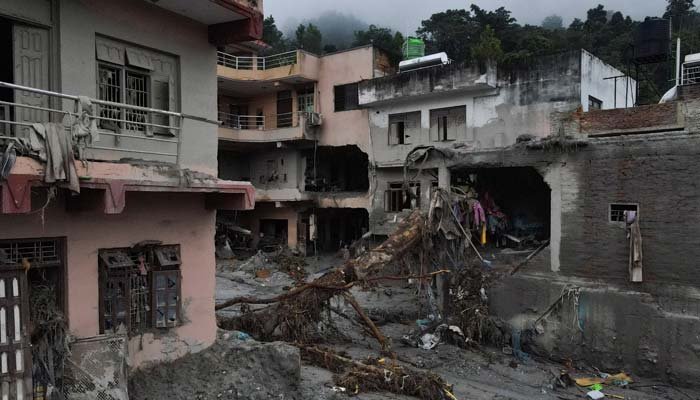
    A drone captures an aerial view of a tree that has been uprooted, alongside damaged houses, following the catastrophic flash floods and mudslide in Devighat, Nuwakot District, Nepal, on August 31, 2026. The scene highlights the extensive destruction wrought by the natural disaster. — Reuters

    – 933 workers are currently missing at hydropower project sites in the flood-affected areas.
    – Dozens of unidentified bodies have been buried in shallow graves amidst the ongoing crisis.
    – Nearly 21,000 security personnel have been mobilized to assist Nepal’s rescue efforts.

    Nepal’s rescue teams, with support from Chinese and Indian experts, worked through the night to reach hundreds of individuals believed to be trapped inside blocked tunnels of hydropower projects. The floods, which tore through the Himalayan region last week, have left a trail of destruction across valley towns, villages, and even into neighboring China.

    The disaster was triggered by a glacier collapse on the Nepal-Tibet border, unleashing an overwhelming flow of ice, rock, mud, and debris that resulted in over 900 deaths, with about 5,000 still unaccounted for. Many bodies, often unrecognized, have been buried hastily in shallow graves as they decomposed in the humid plains after being swept down from the mountains.

    Officials in Nepal are prioritizing efforts to unlock the blocked tunnels of approximately six hydropower projects, where workers are believed to be trapped. Rescue teams used earth-moving machinery to remove mud and rocks under the cover of night, with soldiers employing flashlights to search inside the tunnels. An excavated pit was created in a bid to access one of the affected tunnels.

    The Nepal Disaster Management Authority reports that 933 individuals are missing at hydropower sites in the flood zone. The Red Cross estimates that more than 90,000 people have been impacted by the disaster, which China attributes to climate change effects.

    As of Monday, official counts indicated 903 fatalities and 4,247 people missing in Nepal. On the Chinese side, authorities reported 16 deaths in Gyirong County and 546 individuals missing.

    Nepal’s Prime Minister Balendra Shah described the flood as an “unprecedented and devastating natural disaster,” emphasizing the difficulty of fully assessing the scope of the damage. Despite challenging weather conditions, treacherous terrain, and persistent risks, Nepal is committed to continuing rescue operations, with nearly 21,000 security personnel, alongside civilian workers and volunteers, actively involved.

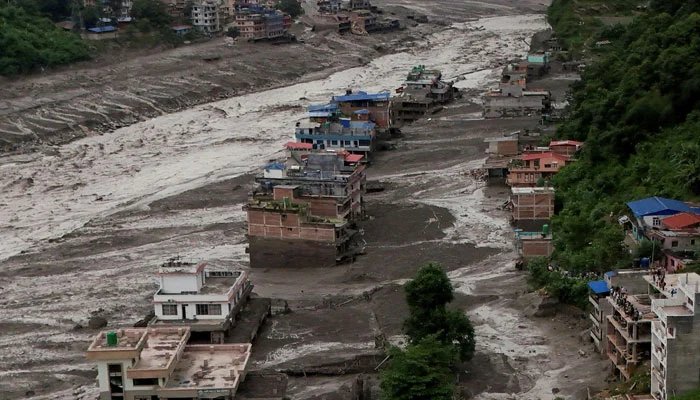
    A drone image shows damaged buildings and homes caked in mud along the Likhu River in Devighat, Nuwakot District, following the deadly floods and mudslides on August 30, 2026. The destruction underscores the severity of the event. — Reuters

    Chinese President Xi Jinping, currently visiting Kyrgyzstan, has stated that Beijing is making every effort to locate and assist missing persons affected by the disaster, as reported by Xinhua. The Chinese authorities have identified 261 foreign nationals from 23 countries unaccounted for in Tibet near the critical border with Nepal.

    China has deployed over 2,100 rescue workers and allocated at least 220 million yuan (roughly $33 million) for relief operations. The country has been air-dropping supplies and deploying life-detection equipment to aid frontline rescue teams.

    Despite Nepal’s assertion that it does not require foreign rescue assistance, it has relied on India and China’s expertise for tunnel rescue operations. Rescue activities faced interruptions since Friday due to adverse weather and the potential threat posed by a newly formed lake on the Nepal-China border, potentially causing further flooding as it overflowed into Nepal’s rivers.

    Reports from China’s CCTV indicate that another upstream lake, created by a landslide, has largely drained naturally. This landslide occurred 2.8 kilometers downstream of the initial glacier debris site. Authorities are monitoring a large impact crater on the Nepal side, which expanded to 174,000 square meters by Saturday evening and holds around 2.5 million cubic meters of water. A breach here could trigger a chain reaction affecting downstream lakes.

    Further landslides along the river pose risks of additional lakes forming, with eight high-risk spots identified for geological disasters. The floods are largely attributed to glacier instability driven by long-term global warming effects, considered a new and significant feature of cryosphere-related disasters on the Tibetan plateau.

    Some Nepali officials have expressed concern over China’s limited sharing of glacier and water level data following earlier cooperation meetings, fearing this could hinder future disaster preparedness. China has yet to respond to inquiries about the extent of data sharing.
  • Nepal Floods Claim 734 Lives in Fifth Day of Rescue Efforts

    Nepal Floods Claim 734 Lives in Fifth Day of Rescue Efforts

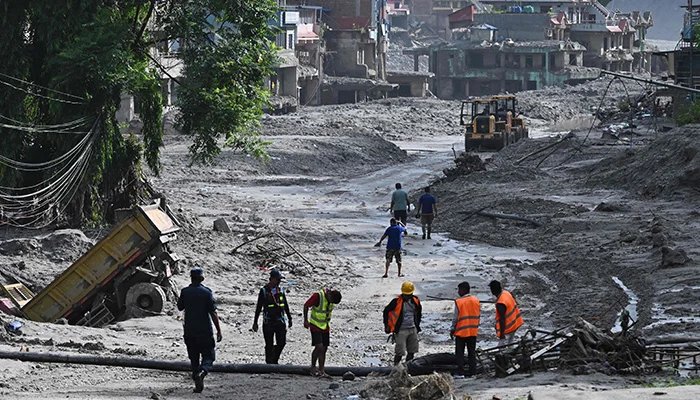
    Rescue efforts are ongoing at Trishuli Center in Nepal’s Nuwakot district following devastating flooding along the Nepal-Tibet border on August 30, 2026, caused by severe monsoon rains.

    The overall death toll has reached 750, with 3,044 individuals still unaccounted for. The disaster has also been linked to a mudslide in China, which authorities attribute to glacier instability driven by climate change. To aid in relief, Beijing has deployed more than 2,100 emergency personnel.

    Nepal’s disaster management agency reported that at least 734 people have died, and the number of missing residents continues to grow. As of the latest update, over 2,426 individuals are listed as missing, including 589 foreigners—an increase from previous figures. Among the missing are 933 workers involved in hydroelectric projects along the river impacted by the floodwaters. Rescue teams have successfully saved over 8,186 people, including 227 foreigners.

    In neighboring India, officials recovered seven bodies pulled from rivers originating in Nepal, though these deaths are not yet included in official counts.

    In Tibet, China reports that 16 people have lost their lives, and 261 foreign nationals from 23 countries remain missing after a mudslide triggered by a glacier collapse. The highest number of missing foreigners is from Nepal, accounting for 104 individuals. Other unaccounted-for nationals include 49 Indians, 33 Latvians, 18 Americans, and 15 Britons. Chinese authorities confirmed the situation during a press conference, indicating increased risk as water levels in the nearby Trishuli River have risen, prompting residents and rescue workers to relocate to higher ground.

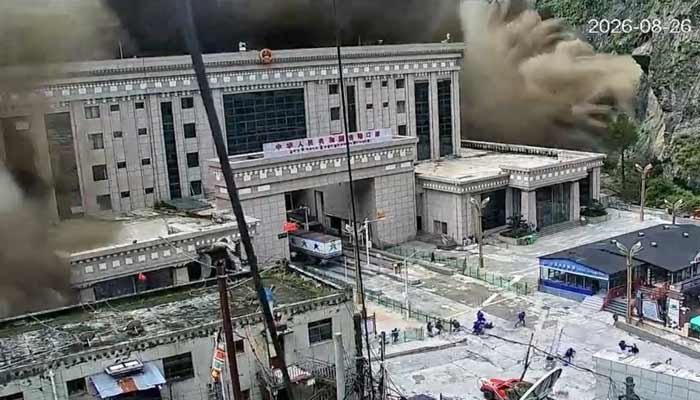
    Chinese officials also stated that the glacier collapse was a result of long-term global warming effects, describing this type of disaster as a new and significant cryosphere-related phenomenon in the region. Surveillance footage shows the rapid flow of water and debris engulfing buildings at the Gyirong border crossing, with the mudslide reaching the area in approximately six to seven minutes.

    Chinese Foreign Minister Wang Yi spoke with his Nepalese counterpart on Saturday, calling this the most severe cross-border disaster in recent years. The Chinese government has mobilized over 2,100 rescue workers and allocated at least 220 million yuan (about $32.7 million) for relief efforts, including emergency funding, supplies, satellite data, and specialized rescue teams. The joint efforts between China and Nepal focus on locating missing persons, improving disaster response, and addressing the impacts of climate change. Experts estimate that more than 90,000 people could have been affected by the disaster.

  • Nepal seeks tech aid as severe weather halts flood rescue efforts

    Nepal seeks tech aid as severe weather halts flood rescue efforts

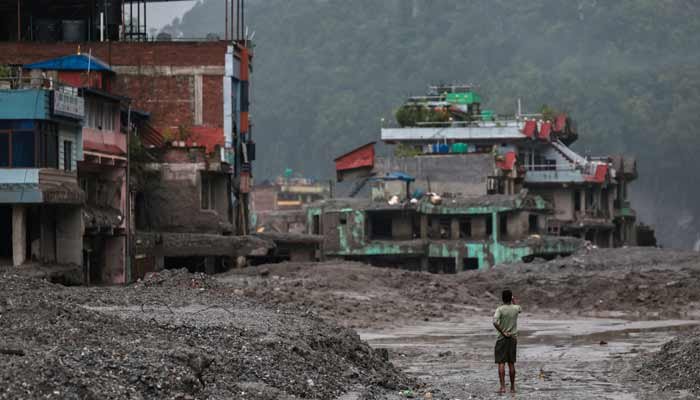
    A man photographs damaged structures following flash floods and a mudslide in Trishuli, Nuwakot district, Nepal, on August 29, 2026. — Reuters

    • China searches for over 500 missing persons after floods.
    • Two lakes being watched as flood alerts remain active.
    • Nepal reports 626 deaths, while Tibet records seven, due to flooding.

    Nepal has paused its search and rescue efforts due to adverse weather conditions and has indicated it requires international technical assistance to handle the devastating flood that struck an area near Tibet.

    The poor Himalayan nation of 30 million people estimates it will need approximately $4 to $5 billion to rebuild following Wednesday’s flood, according to the finance minister interviewed by Reuters.

    The flood, caused by a glacier collapse, sent a massive flow of rock, ice, mud, and debris rushing through mountain river systems on Wednesday, resulting in at least 626 deaths in Nepal and seven in Tibet. The floodwaters submerged buildings, bridges, and power stations in its path.

    Nearly 3,000 individuals are still missing—about 2,426 in Nepal and at least 558 in Tibet’s Gyirong County—including at least 540 foreigners, many of whom are Hindu pilgrims from India.

    Nepal seeks specialized assistance, not just general rescue

    “Search and rescue efforts are temporarily halted due to rain and fog,” said Narendra Pariyar, the senior official for the severely affected Rasuwa district, speaking to Reuters.

    Current priorities include arranging land transportation to evacuate pilgrims to Kathmandu.

    Rescue operations were briefly suspended on Friday when a lake, formed along the Nepal-China border after the flood, began overflowing into Nepal’s Lhende Khola and Trishuli rivers.

    This lake is one of two upstream flood-prone lakes being monitored by Nepal. Authorities warn that flood risks will continue until both lakes drain completely.

    One of the lakes is shrinking, according to China’s state news agency Xinhua, citing analysis from the water resources ministry. However, a Chinese geohazards expert warned the lake’s stability could be compromised, noting over 100 other glacial lakes in the area might also pose threats.

    Nepal’s Foreign Minister Shisir Khanal stated that the country does not need aid for search-and-rescue operations but does require help with evacuating trapped individuals, restoring transport and communication lines where bridges have been destroyed, identifying bodies, conducting DNA testing, and storing bodies for extended periods.

    “We have already requested specialized services and technical expertise in areas where we lack sufficient skills,” he told Reuters.

    China urges global cooperation in disaster response

    India has dispatched three flights carrying roughly 60 tons of relief supplies to Nepal, including blankets, medicines, food, and water purification tablets. Additionally, India plans to send a rescue tunnel team and medical personnel.

    The Indian government also offered its disaster response force and modular bridges, along with technical teams, to aid in restoring connectivity.

    China has called for international aid and cooperation to support Nepal following the floods but hasn’t specified what assistance it will provide.

    Kathmandu’s initial estimate suggests that rebuilding could cost between $4 billion and $5 billion, according to Finance Minister Swarnim Wagle. He emphasized that this is a preliminary estimate and that damage assessments are ongoing.

    Meanwhile, China is racing to locate more than 500 missing persons. On Friday, rescuers reached the heavily impacted Gyirong border crossing, navigating mountain terrain and forests with ropes after roads to the area, surrounded by steep Himalayan slopes, were destroyed.

    Footage from surveillance cameras shows large torrents of water and debris flooding the crossing as residents desperately tried to escape.

  • What Caused the Devastating Flood at the Nepal-Tibet Border?

    What Caused the Devastating Flood at the Nepal-Tibet Border?

    Flash floods that impacted the Himalayan border region of Nepal and China’s Tibet on Wednesday have resulted in at least 165 fatalities. Nearly 1,500 individuals, including at least 800 foreigners, are reported missing following a massive mudslide that caused devastating floods in towns and valleys after a wall of debris collapsed into a Himalayan river.

    Here is a breakdown of the causes and current situation:

    What happened:
    Early Wednesday, a section of a Himalayan glacier broke apart and tumbled into the valley below. While initial speculations suggested an earthquake might have triggered the event, the U.S. Geological Survey clarified that the tremor was seismic energy generated by the glacier’s collapse and subsequent debris flow.

    The ice and rock avalanche descended along the Lhende Khola river, which runs along the Nepal/Tibet border. The resulting mudslide struck Gyirong port in Tibet and parts of Nepal, unleashing rapid flooding that destroyed entire roads, damaged power infrastructure, and inundated multiple villages.

    Casualties and Missing Persons:
    So far, Nepal has recovered 165 bodies, but the number is expected to rise sharply. About 1,500 people are still unaccounted for across both China and Nepal. Among those missing are nearly 750 foreigners, including:

    • 177 Indians, many on a pilgrimage to Kailash Mansarovar
    • 63 Americans
    • 53 Ukrainians
    • 34 Australians
    • 33 British citizens
    • 28 Malaysians
    • 25 Canadians
    • 9 South Koreans working at a hydropower plant

    Additionally, citizens from around 20 other nations are also reported missing. No immediate details are available regarding the foreign nationals missing in Tibet.

    Downstream in India, approximately 5,000 residents in Bihar were evacuated after flood warnings prompted precautionary measures.

    Current Situation:
    Rescue efforts are ongoing, with police and military personnel conducting search and rescue operations. Helicopters are delivering tents, food, and emergency supplies provided by India. Nepal’s army reports that over 5,000 personnel are engaged in recovery activities, and they’ve rescued 125 individuals—including 20 foreigners—by Thursday. The affected areas lack electricity, and flood sediments present additional challenges for responders.

    International aid is arriving:

    • The United Nations is mobilizing supplies and personnel to support flood-affected communities.
    • India is coordinating closely with Kathmandu for rescue and relief efforts.
    • South Korea is dispatching a rapid-response team to assist.

    The disaster highlights the devastating power of Himalayan glacier collapses and their potential to trigger widespread destruction in border regions. Rescue operations continue as authorities work to account for those missing and provide relief to displaced communities.

  • Nepal-Tibet Border Flood: Hundreds Missing, 95 Dead Amid Disaster

    Nepal-Tibet Border Flood: Hundreds Missing, 95 Dead Amid Disaster

    A wide view of muddy properties after a sudden flash flood at Trishuli in Nuwakot district, Nepal, August 26, 2026. — Reuters

    – Prime Minister Shah announces that rescue teams and military units have been deployed.
    – The government urges residents near rivers to stay vigilant and exercise caution.
    – Nepali officials are concerned about the potential for significant casualties and property damage.

    KATHMANDU: The death toll from the flash flood that affected Nepal’s Himalayan border region with Tibet has risen to 95, police reports state.

    A powerful flash flood in Nepal’s Himalayan region has swept away villages and construction sites in areas bordering Tibet, prompting authorities to warn of possible heavy casualties. They are advising residents living along riverbanks to move to higher ground immediately.

    The Tourism Ministry reports that 341 foreign nationals are currently missing following the devastating floods in the area.

    The districts of Syapru Besi and Timure, located in the mountainous Rasuwa region, suffered severe damage, officials said, emphasizing the need for heightened vigilance among people living near the Bhote Koshi River.

    Narendra Pariyar, the district administrator, told Reuters, “We have reports of villages and infrastructure projects being washed away,” but added that detailed estimates of casualties and damages are not yet available.

    He cautioned, “There might be significant casualties or property losses, but it’s too early to confirm.”

    Prime Minister Balendra Shah has confirmed that rescue and relief operations are underway, with police and military personnel dispatched to assist.

    “We have instructed authorities to relocate residents from lower areas to safer locations,” Shah said.

    “The government advises everyone along the river to stay alert and take extra precautions,” the official statement added.

    The Bhote Koshi River begins in Tibet and flows into Nepal’s Trishuli River, which eventually joins India’s Gandak River.

    Officials explained that the recent flooding was caused by the draining of a supraglacial lake on the Tibetan plateau, a phenomenon linked to regional climate changes.

  • 30 Dead as Guinea Landfill Collapses onto Homes After Heavy Rains

    30 Dead as Guinea Landfill Collapses onto Homes After Heavy Rains

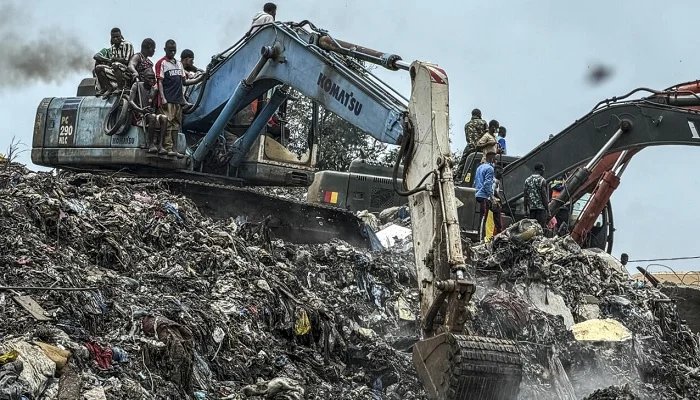
    Guinea’s capital, Conakry, faced a tragedy on Sunday when a pile of garbage in a landfill collapsed just before dawn due to heavy rainfall, resulting in 30 deaths. The incident occurred around 2 a.m. in the Bbessia district’s Dar-es-Salam neighborhood, located on the city’s outskirts. According to a government statement, six other individuals sustained serious injuries during the collapse.

    Emergency teams deployed substantial resources to search for possible survivors still trapped beneath the debris, rescue victims, and recover bodies. Prime Minister Amadou Oury Bah visited the affected site, where photographs captured excavators in action amidst a crowd of onlookers. Measures have been put in place to provide medical treatment to the wounded and support those impacted by the disaster.

    Local leader Lancine Sylla reported pulling out 18 bodies from the rubble, which were taken to the morgue, raising concerns that the death toll could be higher. Opposition figure Cellou Dalein Diallo, who currently resides abroad, described the event as a “tragedy that leaves us devastated” and pointed out that the dump’s closure was announced for the same day, August 23. He urged authorities to thoroughly investigate the circumstances of the collapse and ensure transparency in their findings.

    Prior to the official death toll announcement, there was already concern among residents about the risk of collapse, prompting the government to order the eviction of people near the landfill in recent days. Guinea has been under the leadership of General Mamadi Doumbouya since a coup in 2021; he was elected president in December 2025.

  • Indonesia earthquake rescue efforts ongoing on Independence Day

    Indonesia earthquake rescue efforts ongoing on Independence Day

    Rescue efforts are ongoing in eastern Indonesia after a powerful earthquake left at least 54 people dead. Thousands of residents have been evacuated amid widespread destruction, with many seeking refuge in tents outdoors due to fears of aftershocks. The earthquake—measuring 5.6 on the Richter scale—triggered nearly 1,600 aftershocks, causing landslides and road blockages across the Sikka and Manggarai regions.

    Among the damaged infrastructure is a health center overwhelmed with tents and hospital beds; here, 64-year-old farmer Firmus Woge was being treated for asthma worsened by the quake-induced panic. Nearby, 56-year-old farmer Emilianus Oro reported that approximately 70 residents, mostly women, lacked access to clean water, resulting in children suffering from diarrhea, and some residents had not yet received aid.

    In another scene, 22-year-old Veronika Nggambi was caring for her swaddled baby in the back of a pickup truck after her house became uninhabitable. She expressed desperation, saying, “We only have rice to eat and no other food. We need help immediately. We are just salt farmers.”

    Officials announced that rescue operations would continue with aerial monitoring using helicopters and extrication tools. No missing persons have been reported, and the search faces no significant obstacles. Additionally, plans are underway to deliver supplies—including food and tents—and build emergency field hospitals equipped to handle head injuries and fractures, according to Deputy Health Minister Benjamin Paulus Octavianus.

    Meanwhile, on Indonesia’s Independence Day—about 1,500 kilometers west in Jakarta—President Prabowo Subianto led celebratory events honoring the nation’s 1945 independence from Japanese rule. In the quake-affected villages, residents fled to higher ground, fearing tsunamis, and one local, Gervas, 42, shared that his thoughts are now solely on the safety of his family, saying, “I don’t think about the celebration anymore. I just want my wife and twins to be safe.”

  • More Bodies Found as Survivor Hope Fades in Colombia Earthquake

    More Bodies Found as Survivor Hope Fades in Colombia Earthquake

    Over 290 people have been confirmed dead, with 320 still unaccounted for following Monday’s earthquake. The magnitude 7.4 quake destroyed thousands of homes across the western region. Many residents continue to sleep outdoors in camps because buildings remain unsafe.

    The earthquake hit shortly after 7:30 a.m. in San Jose del Palmar, causing widespread destruction in apartment complexes along with damage to schools, churches, hospitals, and residences stretching from the port city of Buenaventura to Colombia’s coffee-producing areas and major western urban centers.

    Colombia’s disaster management agency reported Saturday that at least 294 lives have been lost, with 320 individuals missing and nearly 4,000 injured. The bulk of the fatalities occurred in Cali and Pereira. “We have just one site showing signs of life,” Cali fire captain Alberto Hernandez told Reuters. “At other locations, sadly, we are now in the phase of recovering bodies.”

    Cali, Colombia’s third-largest city with over 2 million residents, saw rescue teams working tirelessly through the morning amidst piles of debris—concrete, bricks, and metal—hoping to find survivors. Meanwhile, many locals cleaned their neighborhoods with brooms and shovels. Hernandez indicated they might finish recovering bodies by Sunday, after which heavy machinery will be used to clear the remaining debris.

    Juana Catano, who leads a community action group, told Reuters that efforts are now focused on recovery and rebuilding. “Right now, we are overwhelmed with mourning,” she said.

    Many residents in Pereira, located deep within Colombia’s coffee region, spent the night outdoors on mats or in tents at a makeshift shelter in a park. Aid coordinators reported shortages of blankets, tents, hygiene supplies, and food. A government report estimates that thousands of homes were destroyed in the quake, forcing hundreds to sleep outside in shelters, uncertain whether their damaged apartments are at risk of collapsing.

    Since the initial quake, Colombia has experienced around 269 aftershocks, complicating rescue and recovery operations. President Abelardo De La Espriella, a political newcomer sworn in just a week prior, now faces the monumental task of leading relief efforts and rebuilding in what is considered one of Colombia’s worst natural disasters.

    De La Espriella has faced some initial criticism for his response, particularly for not immediately accepting rescue assistance from certain countries. Eventually, rescue teams from Israel and the U.S. arrived to aid in the recovery efforts.

    The disaster also claimed several victims who had become national symbols, further diminishing hope late into the week. Daniela Largo, age 32, died in the hospital after surviving 36 hours trapped under rubble, while 24-year-old Juan Felipe Giraldo was found dead following a intense rescue at a collapsed hotel. Giraldo’s father had spent days waiting near the site for news. The young man was set to marry on Sunday and left behind a 2-year-old son.

    In the cities of Medellin and Bogota, volunteers & residents gathered at donation centers to provide food, clothing, and medical supplies for those affected.

  • Zimbabwe Ferry Capsizing Death Toll Rises to 68: Police

    Zimbabwe Ferry Capsizing Death Toll Rises to 68: Police

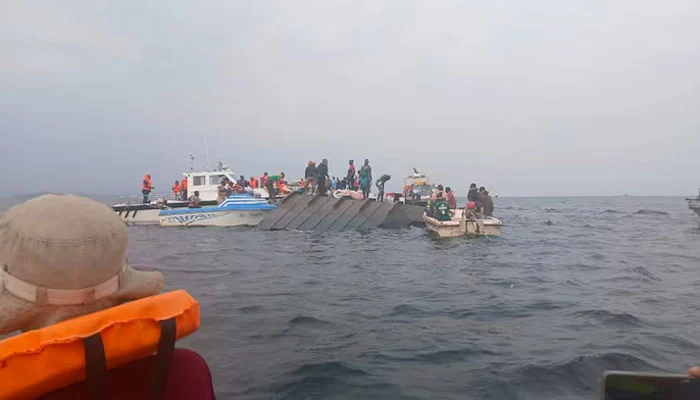
    Rescue workers and local boat operators are actively participating in ongoing search and recovery efforts near the overturned passenger ferry on Lake Kariba, a day after the vessel capsized in Kariba, Zimbabwe, on August 12, 2026. — Reuters

    Authorities recovered 22 bodies from Zimbabwe’s Lake Kariba on Saturday, increasing the death toll from last week’s ferry disaster to 68, as search operations continue for any remaining victims, according to police reports.

    The government-operated passenger ferry, which was overloaded, overturned in turbulent waters on Tuesday—a rare incident on this expansive lake that marks the border with Zambia.

    The police confirmed that “the death toll is now 68 following the retrieval of 22 bodies,” describing it as possibly Zimbabwe’s deadliest maritime disaster.

    Details about the new victims have not been released, but most passengers on the vessel were villagers and fish traders living in the area surrounding the lake.

    Authorities stated that the boat was authorized to carry up to 90 individuals but was reportedly packed with 114 adults, five crew members, and an unspecified number of children.

    The civil protection agency reported on Wednesday that about 77 people had been rescued so far.

    Masses of people gathered at the district hospital in Kariba on Saturday to identify their loved ones’ remains, as seen in a video posted on X (formerly Twitter) by Zimpapers media, which showed long queues outside the facility.

    Lieutenant Colonel Joseph Muchechesi, the commander overseeing the search, said, “So far today, we have managed to recover 22 bodies,” adding that efforts were hampered by cold winter waters, which delayed bodies surfacing.

    A memorial service was held in Kariba on Thursday, nearly 175 miles northwest of Harare, before burial arrangements commenced.

    Survivors recounted pleading with the ferry captain to turn back after the vessel started taking on water shortly after leaving port.

    One survivor described feeling helpless as people scrambled to save themselves during the sinking, with his best friend and seven relatives among those who perished.

    “Thank God a wave pushed the sinking vessel, and we managed to climb onto it,” Chance Siyamavhu shared at the memorial. “Most people scrambled for life jackets when the boat capsized, but many didn’t know how to use them. Unfortunately, most couldn’t make it.”

    Lake Kariba, the world’s largest man-made lake by volume, straddles the border between Zimbabwe and Zambia.

  • Indonesia hit by 7.7M quake; tsunami alert sparks mass evacuations

    Indonesia hit by 7.7M quake; tsunami alert sparks mass evacuations

    A 7.7 magnitude earthquake struck eastern Indonesia early Saturday morning, resulting in at least two confirmed fatalities and prompting thousands to evacuate to higher ground amid a tsunami warning. The disaster response agency identified the victims as a man and a woman, and authorities are still verifying the total number of casualties and structural damage.

    The quake originated offshore from Flores Island at approximately 4:58 a.m. local time, about 42 miles northwest of Ende, according to Indonesia’s earthquake agency (BMKG) and U.S. authorities. It was relatively shallow, occurring at a depth of around 9 miles, and was followed by multiple aftershocks, including a significant 6.1 magnitude tremor.

    Residents in Nagekeo Regency, the area nearest the epicenter, hurried to higher ground after observing the sea withdraw — a potential sign of an impending tsunami. The tsunami warning was eventually lifted, with waves under three feet recorded in several coastal locations.

    One local, 56-year-old Yohanes Babo, described the experience: “The shaking was intense. Luckily, we were already outside. There was panic everywhere — people running around, trying to get to the hills.” He added that his family was unharmed.

    The tremor was strongly felt for about a minute across towns including Nagekeo and Bima. In Maumere, residents rushed into the streets as buildings shook violently. Lukas Lotar, a hospital customer service worker, recounted, “Suddenly the ground started shaking, and I panicked. Patients ran out of the hospital, and I saw some cracks in the walls.”

    Footage from Ende district showed a hospital evacuating patients outdoors following the quake, while videos from Maumere depicted part of a building collapsing amidst dust and rubble as crowds fled. The Australian tsunami warning center confirmed there was no tsunami threat to Australia or its territories following the undersea quake.

    Authorities continue assessing the extent of damage and reviewing casualties as aftershocks persist and residents remain on alert.

  • Colombia Earthquake Claims 254 Lives, Thousands Homeless

    Colombia Earthquake Claims 254 Lives, Thousands Homeless

    Rescuers are actively searching for survivors at the site of a collapsed building in Pereira, Colombia, following an earthquake on August 11, 2026. The devastating 7.4-magnitude quake, the strongest to hit Colombia this century, swept through the coffee-producing region early Monday, damaging numerous buildings including apartments, homes, schools, and healthcare facilities, many cracked, tilted, or completely destroyed.

    By Tuesday morning, reports confirmed a death toll of 254 across affected cities—101 in Pereira, a key coffee region, and 95 in Cali, the nation’s third-largest city. Indigenous groups in the Choco region along the Pacific coast remain without power and essential services, further complicating rescue efforts.

    The quake occurred days after President Abelardo De La Espriella inaugurated the new government, during which he visited impacted areas and pledged financial aid for displaced families. The National Coffee Federation is on the ground coordinating with local families to evaluate damage to farms and rural infrastructure.

    Rescue teams labored through the night and into Tuesday using cranes, excavators, and their bare hands, forming human chains and passing buckets filled with debris in their attempt to free trapped individuals.

    One resident, Rosa Gonzalez, recounted escaping her guesthouse in Pereira just as it started to crack, collapsing moments after she and her family evacuated. She described the chaos with injured individuals screaming and bleeding, and expressed concern for an elderly man trapped on a terrace, fearing he might have perished.

    Meanwhile, Jose Gallego, a social media influencer, was recording live at Pereira airport when the quake hit. He captured the violent shaking and falling ceiling pieces, describing the scene as a waking nightmare. Staying outdoors due to aftershock fears, he witnessed widespread destruction and thousands of displaced residents, with many buildings severely damaged or unsafe for re-entry. Animal shelters called for urgent supplies of food and medicine to care for pets affected by the disaster.

    In Cali, residents pooled resources outdoors and salvaged what they could from debris. Rescue workers, volunteers, and officials worked together at the wreckage of the Torres del Limonar apartment complex, once two high-rise towers in a leafy, upscale neighborhood. Cheers erupted as a woman was rescued alive from the rubble and taken away on a stretcher.

    However, the morgue in Cali quickly filled, prompting authorities to transport additional bodies from the streets. The earthquake also severed critical infrastructure—six airports in Quibdo, Pereira, Manizales, Armenia, Cartago, and Buenaventura are closed due to damage, and many roads remain impassable. Disruptions persist in electricity, water, healthcare, and communications, especially in the Choco region.

    Nubia Cordoba, governor of Choco, described the damage as “unquantifiable” at this stage. The United States has committed $15.5 million for emergency shelter, food, and recovery efforts, while the Inter-American Development Bank has made $50 million available for reconstruction if needed. The United Nations is working to increase aid presence and has food supplies ready for those displaced.

    Due to ongoing communication issues in the hardest-hit areas, authorities estimate that determining the full scope of damage and final death toll could take several days.

  • Colombia Continues Rescue Ops as Quake Death Toll Climbs

    Colombia Continues Rescue Ops as Quake Death Toll Climbs

    Rescue teams in western Colombia continued their efforts into a second day on Tuesday, digging through debris and collapsed structures amid fears that the death toll from the nation’s strongest earthquake in decades could climb further.

    The 7.4-magnitude quake struck Colombia’s coffee-producing region early Monday, claiming at least 164 lives. It obliterated multi-story buildings in Pereira and Cali and caused a tower of a historic cathedral in Manizales to fracture.

    Emergency personnel, including police, soldiers, volunteers, and heavy machinery, toiled through the night—some digging with their bare hands—in search of survivors trapped beneath the wreckage.

    In Cali, a city with approximately 2.2 million residents, at least 85 people lost their lives. Many structures were left tilting dangerously or completely destroyed, forcing residents into the streets. Several upper floors of a local hospital—some pediatric units—collapsed, trapping patients and forcing roughly 600 others outside onto a street covered in rubble, according to hospital director Irne Torres Castro, speaking to Caracol TV.

    Carmen Yasmin Garcia, 43, a resident volunteering with rescue teams in Cali, shared that her group had rescued seven people from a collapsed building by Monday afternoon, but four others and a dog remained trapped. “Just moments ago, we heard scratching, but now we can’t hear anything. We still hope the dog is alive, and we can save these people,” Garcia explained. “We need more people with sticks and shovels—more help makes a difference.”

    In Pereira, the Risaralda province’s capital, authorities confirmed 66 fatalities. The city endured some of the most dramatic destruction, with whole residential blocks reduced to concrete and twisted steel. Social media footage verified by Reuters showed the airport swaying violently during the quake, with large ceiling sections collapsing as frightened individuals sought shelter.

    Meanwhile, 13 additional deaths were reported in Choco, a rural province near the quake’s epicenter.

    President Abelardo De La Espriella, who took office just days prior, announced that the quake claimed 35 lives alone in Cali, with 188 people reported missing. He stated that 1,000 security personnel would be deployed to Cali by dawn to address looting and chaos. Both Cali and Pereira enforced curfews on Monday night.

    “Our aim is to assist in any way we can. There are no political or ideological divisions when it comes to defending our people or showing solidarity,” De La Espriella noted. The disaster has drawn stark comparisons to a devastating 1999 earthquake that struck the same coffee region, killing more than 1,000, and to the catastrophic quakes in neighboring Venezuela that resulted in over 6,300 deaths in June.

  • Colombia Quake Strikes: At Least 22 Dead, Buildings Collapse Nationwide

    Colombia Quake Strikes: At Least 22 Dead, Buildings Collapse Nationwide

    A powerful earthquake struck western Colombia on Monday, resulting in at least 22 fatalities. The quake caused buildings to topple across multiple cities and left numerous individuals trapped under the debris, according to local officials. The highest death toll was reported in Pereira, a city known for coffee production, where Mayor Mauricio Salazar confirmed 18 deaths. In nearby Manizales, Mayor Jorge Eduardo Rojas reported three deaths.

    In Buenaventura, Colombia’s main Pacific port, one fatality occurred when a building collapsed, trapping several people, stated Mayor Ligia del Carmen Cordoba. In Cali, one of the nation’s largest cities, more than two dozen structures fell, trapping people, and Mayor Alejandro Eder indicated that rescue teams from Bogotá and Medellín had been called in to assist with search-and-rescue operations.

    Eder mentioned that two survivors had already been rescued—a woman and a girl—adding that more people remained trapped. Emergency response teams were addressing around 25 collapsed structures and 12 critical points. The earthquake’s epicenter was near San Jose del Palmar in Choco, a less populated province on Colombia’s Pacific coast. Choco’s governor, Nubia Carolina Cordoba-Curi, reported injuries and extensive damage in Quibdo, the provincial capital, and cautioned residents about potential aftershocks.

    Colombia’s civil aviation authority halted flights at airports in Pereira, Manizales, Quibdo, Armenia, Cartago, and Buenaventura pending inspections for structural integrity. The earthquake occurred at 7:34 a.m. local time (12:34 GMT), affecting nine departments and all 32 departmental capitals, prompting evacuations and damage reports. The Colombian geological service recorded the quake as magnitude 7.4, occurring at a depth of 96 kilometers (60 miles). The US tsunami warning system indicated there was no threat of a tsunami.

    Witnesses in Venezuela’s Tachira state and the city of Barquisimeto felt the tremor as well. Venezuela had recently experienced devastating twin earthquakes in June that caused over 6,000 fatalities, mostly along the coast near Caracas.

  • Japan quake death toll climbs to 13 amid mall rescue efforts

    Japan quake death toll climbs to 13 amid mall rescue efforts

    A 7.1 magnitude quake rocked southern Japan on Tuesday, with rescue teams desperately searching for survivors on Wednesday. The earthquake resulted in at least 13 deaths, power outages affecting thousands, and road collapses across the region.

    Eight individuals were rescued from the debris of a shopping mall near Kumamoto that partially collapsed and was struck by an explosion about an hour after the quake. Among those rescued were two women in their twenties who later died. It is estimated that 20 to 30 mall workers are still unaccounted for, according to NHK.

    Prime Minister Sanae Takaichi emphasized the urgency of rescue efforts, stating, “There are still people waiting to be saved, and this is a race against time. We will mobilize all available resources to save as many as possible.” Authorities are also investigating reports of a possible gas explosion at the Aeon mall, with rescue teams detecting the smell of gas inside the building. The cause of the explosion remains under investigation.

    Firefighters, police, and approximately 170 military personnel are focusing their efforts on parts of the building where emergency calls have been received. Over 4,500 soldiers have been dispatched nationwide to assist in recovery efforts. Additionally, seven people are missing after a chimney at a Nippon Paper Industries factory collapsed, and four others are seriously hurt. Hospitals are treating dozens of quake victims.

    Throughout Kumamoto Prefecture, where a significant earthquake occurred a decade ago, about 260,000 residents have been directed to evacuation centers. Emergency services reported receiving 386 calls, including pleas for rescue and reports of collapsed structures. The quake’s epicenter was approximately 20 kilometers south of Kumamoto City, the largest city in central Kyushu with around 700,000 residents.

    Authorities warn residents in the most affected areas to stay alert for more strong tremors over the next week and to watch for landslides. With temperatures reaching around 34°C (93°F), over 36,000 homes remain without power, raising concerns about heat stroke among affected populations.

    One hospital in Uki, near the epicenter, reported being rendered non-operational due to a power outage caused by the earthquake. The hospital’s head described the situation as “like a field hospital,” and another local hospital announced it had suspended new admissions after treating 86 injured patients, including three with severe injuries. Due to the quake, some high-speed train services were halted, with passengers sustaining injuries.

    The damage to the Aeon mall drew particular focus. Footage showed one side of the mall, housing approximately 200 stores, ripped apart, exposing steel supports and debris scattered across the parking lot. Aeon representatives confirmed that customers and staff were evacuated immediately following the initial tremor, but the specific cause of the subsequent explosion remains unclear. As a result, Aeon’s stock prices dipped nearly 2% in early trading in Tokyo, while the Nikkei 225 index gained 0.8%.

    Major local companies, including Sony, Tokyo Electron, and Honda, announced plans to suspend operations at their facilities through Wednesday. TSMC, the world’s largest contract chipmaker, evacuated workers from its local plant but resumed operations late Tuesday. Some roads suffered severe damage, with large cracks disrupting major highways and causing traffic jams.

    Japan is part of the Pacific Ring of Fire, experiencing about 20% of the world’s earthquakes of magnitude 6.0 or greater. A major quake in Kumamoto ten years ago killed 275 people, injured 2,739, and damaged many historic sites, including the city’s castle, a popular tourist attraction. Several historic structures and shrines, including a 17th-century tea house, also suffered damage in Tuesday’s tremors.

  • Indian Tunnel Blast Deaths Climb to 22

    Indian Tunnel Blast Deaths Climb to 22

    Seven additional bodies have been recovered from an under-construction hydroelectric tunnel in India’s Sikkim state, according to officials. This increases the death toll to 22 from a blast that occurred earlier this week.

    The explosion happened Monday at the National Hydroelectric Power Corporation’s (NHPC) project on the Teesta River, in the village of Samardung. The blast, believed to have been caused by methane gas trapped in or released from rocks, produced toxic fumes that filled the tunnel and stranded 25 workers and NHPC personnel.

    Rescue teams are still working to find and extract the remaining victims, with authorities stating that the chances of survival for those trapped are minimal. Efforts are being hindered by accumulated mud and water inside the tunnel, along with breathing difficulties caused by the suspected gas leak.

    On Wednesday, NHPC announced it would provide ₹500,000 (approximately $5,178) in ex-gratia relief to the families of the deceased. Rescue operations continue with specialized teams working in tandem, despite the challenging conditions inside the tunnel.

  • Nine Dead, 15 Trapped in India’s Tunnel Collapse

    Nine Dead, 15 Trapped in India’s Tunnel Collapse

    At least nine people have lost their lives, with 15 others still trapped after a tunnel collapsed during construction work at a hydroelectric project in India’s remote northeast, officials reported Tuesday.

    The incident happened Monday in Sikkim, a Himalayan state, where workers were building a tunnel for a government-operated hydropower facility along the Teesta River.

    “We estimate that around 25 to 27 individuals were trapped,” said Rajiv Roka, head of the Sikkim State Disaster Management Authority, to AFP. “Nine bodies have already been recovered.”

    The collapse was probably caused by an explosion, though technicians have not yet determined the exact cause. Recent heavy monsoon rains in the area may have contributed to the incident.

    Roka mentioned, “We’re unsure of what triggered the blast since it occurred deep within the tunnel,” adding, “Most likely, it was due to natural factors.”

    Rescue efforts are hampered by the presence of dangerous methane gas leaking from underground rock formations, making it necessary for rescue teams to wear oxygen supplies to enter the site.

    “Intensive rescue operations are ongoing, but a lot of gas is present there,” Roka explained. A specialized team with mining accident experience has been brought in to assist the rescue teams.

    While accidents at large infrastructure sites are quite common across India, environmentalists argue that excessive development has increased the frequency of such disasters, especially in the fragile Himalayan environment.

    In 2023, 41 workers were rescued after being trapped for 17 days following a tunnel collapse in northern Uttarakhand.

  • Venezuela Earthquake Deaths Surpass 5,000 Amid IMF Funding

    Venezuela Earthquake Deaths Surpass 5,000 Amid IMF Funding

    The recent double earthquakes in Venezuela resulted in over 5,000 fatalities, according to officials. They also announced that the country secured hundreds of millions of dollars from the International Monetary Fund (IMF) for rebuilding efforts.

    The quakes, with magnitudes 7.2 and 7.5, occurred within a minute of each other on June 24, devastating the coastal region of La Guaira, just north of Caracas.

    According to Telegram updates from Jorge Rodriguez, head of the National Assembly, the death toll reached 5,069, with most casualties concentrated in the coastal areas.

    The injury count remains steady at 16,740, though Rodriguez earlier indicated most of those injured have been released from hospitals.

    Later that day, Interim President Delcy Rodriguez confirmed that Venezuela accessed $346 million from the IMF to aid in earthquake recovery.

    IMF Managing Director Kristalina Georgieva verified the fund’s release of these resources on X (formerly Twitter), explaining that the IMF coordinated with key partners to help Venezuela utilize its own funds for urgent humanitarian needs, drawing from its reserve tranche.

    Approximately 20,000 individuals displaced by the quakes are residing in overcrowded camps, many lacking access to clean water and sanitation.

    Venezuela holds 3.568 billion Special Drawing Rights (SDRs) at the IMF, roughly equivalent to $5.1 billion, which had been previously inaccessible due to the IMF not recognizing Nicolas Maduro as the country’s legitimate president.

    In April, the IMF and the World Bank announced the restoration of diplomatic and financial relations with Venezuela, following the U.S.-led military ousting of Maduro in January. Relations had been frozen since 2019.