
Select Language:
I’ve been meaning to dive into the Yakuza/Like A Dragon series, but I haven’t gotten around to it yet. It’s not due to lack of interest; I’ve heard nothing but positive reviews. The main issue is I want to play the games in chronological order since many of them share storylines and characters, and honestly, there’s quite a few I need to catch up on first.
Because of that, I was immediately drawn to Stranger Than Heaven. It’s a standalone prequel and takes place in a different era, completely removed from the modern-day setting of the other games. Plus, it doesn’t feature younger versions of existing characters from Like A Dragon, which was a relief as a newcomer. That was music to my ears.
I jumped at the chance to try out Stranger Than Heaven during this year’s Summer Game Fest. While I didn’t get to meet or even hear from virtual celebrities like Snoop Dogg or Tupac, I was able to test out some enemy encounters and get a feel for the game’s distinctive combat system.
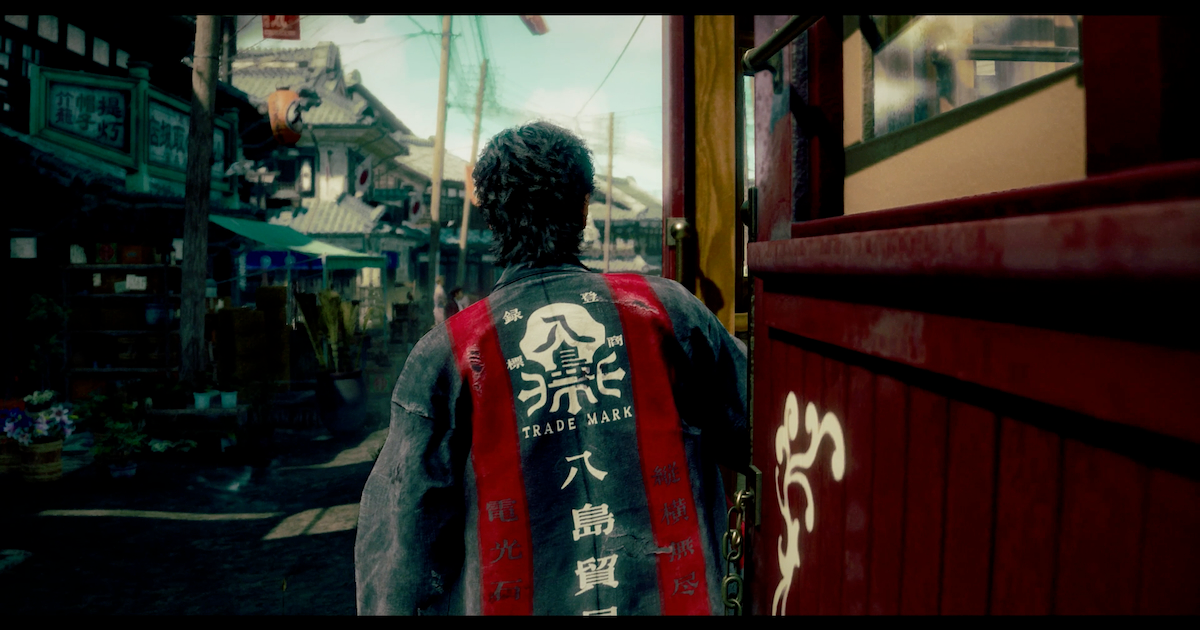
Much like the final game, which spans multiple cities and time periods, the demo released by Sega covered three different eras. I started in Kokura, Fukuoka, in 1915, playing as a younger Makoto Daito, long before he’s climbed the ranks and founded the Tojo Clan. I encountered a group of street thugs bullying a local, and Makoto decided to step in after a racial slur was thrown his way — that’s when the combat system really began to shine.
Makoto is a street fighter through and through, but instead of having to memorize complex combos, you can control each of his hands separately. The left bumper and trigger correspond to light and heavy attacks for his left hand, while the right bumper and trigger do the same for his right hand. You can also hold both triggers to grab enemies or charge up attacks. On paper, it seems straightforward — and it mostly is — but perfecting the timing takes a bit of practice. Thankfully, since it was just an introductory fight, Makoto was able to beat down the outnumbered enemies and walk away mostly unscathed.
In a second fight set in 1929, the streets of Kure, Hiroshima, looked very different with snow covering everything. Makoto found himself swarmed by half a dozen gang members, including a towering brute. This time, he pulled a crowbar out of nowhere, and I started swinging without hesitation. However, wielding a heavy weapon meant Makoto was slower, and dodging became crucial. Blocking was possible, but spamming it drained stamina quickly, so I learned to block from specific directions by holding a bumper for better stamina management.
The final encounter took a few tries to get right. In sunlit Minami, Osaka, in 1943, Makoto faced off against a rival yakuza, identifiable by their tattoos and large katana. I switched to a knife for better reach and defense, knowing I couldn’t rush the fight. Parrying attacks was vital, though I was told some moves can’t be blocked and must be dodged instead. After several attempts, carefully managing healing items and timing my dodges and parries, I managed to take down the swordsman.
There’s still a lot I didn’t experience firsthand. Sega mentioned that combat is just one of three main features — the others are exploring the five detailed cities and trying the “Showbiz” or stage-manager side of things. However, based on these combat trials, I’m already convinced. The dual-control system for Makoto’s hands might seem gimmicky at first, but it really enhances the chaotic, frenetic feel of street brawls that the series is known for. While I only tested two weapons, there will be a dozen in the full game, plus bare-handed fights, so there’s plenty to look forward to.
Overall, Stranger Than Heaven looks promising, and I can’t wait to see how the full experience shapes up. It’s scheduled for release on January 15, 2027.
 ChatGPT
 Perplexity
 Gemini AI
 Grok AI