
Select Language:
A fresh wave of reciprocal strikes has erupted between the United States and Iran. President Donald Trump announced on Thursday that the U.S. plans to deliver a forceful response to Iran, targeting Kharg Island, Iran’s primary oil hub, after recent clashes in the Gulf undermined a fragile ceasefire.
Sources from Iran and Western officials confirmed that indirect talks on an initial peace agreement have picked up steam. However, recent escalations this week have dimmed hopes for a quick resolution after more than three months of conflict.
Trump issued a stern warning, signaling more aggressive actions against Iran. “The United States will be striking Iran very hard tonight,” he posted on social media, claiming that Iran’s naval and air forces, radar systems, and defenses are nearly disabled. He added, “Sooner rather than later, we will seize Kharg Island and other vital oil facilities to control their oil and gas markets.”
Kharg Island is Iran’s main oil export point, typically shipping around 2 million barrels daily, representing roughly 2% of the world’s oil supply, mainly to China. Iran’s foreign ministry stated that the recent US attacks have effectively nullified the ceasefire established in early April.
The ongoing conflict has claimed thousands of lives, predominantly in Iran and Lebanon, and has driven up global oil prices since U.S. and Israeli airstrikes against Iran began on February 28. Despite this, oil prices remained relatively stable Thursday, as traders balanced Trump’s aggressive rhetoric against actual disruptions in oil supplies caused by the war.
While an attempt to control Kharg Island would not immediately impact oil shipments—due to recent suspension caused by U.S. sanctions and Iran’s blockade of the Strait of Hormuz—it would still be a significant strategic move.
Despite these hostilities, reports indicate that negotiations between the U.S. and Iran have grown more active. Some issues remain under discussion, including mechanisms for unfreezing billions of dollars in Iranian assets frozen abroad. An Iranian official remarked that the conflict is reaching a dead end militarily, and progress is being made diplomatically. Iran wants its funds released directly to Tehran, while the U.S. prefers a staged approach, releasing funds incrementally for humanitarian purposes.
Iran’s demands include ending Israeli assaults in Lebanon—following cross-border strikes by Hezbollah—lifting sanctions, and recognizing Iran’s control over the Strait of Hormuz. Trump insists Iran must lift restrictions on shipping through the strait and that any peace agreement should prevent Iran from developing nuclear weapons—a claim Iran denies.
The U.S. maintains that a resolution is close, with Defense Secretary Pete Hegseth stating, “If negotiations require using force, we’re capable and willing.” Trump confirmed to Fox News that talks are ongoing but expressed uncertainty about his appetite for seizing Kharg Island, hinting at the possibility of larger, more intense bombing campaigns.
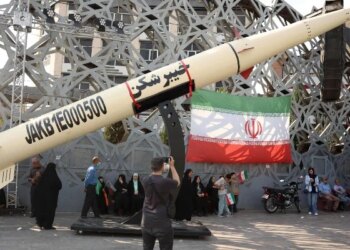
In recent exchanges, U.S. forces targeted sites across Iran, while Tehran launched retaliatory strikes at U.S. military bases in the region following the downing of a US helicopter near the Strait of Hormuz earlier in the week. Several cities experienced explosions, with five injuries reported. Iran’s Islamic Revolutionary Guard Corps claimed responsibility for attacks on U.S. military outposts in Kuwait, Jordan, Bahrain, and on the Navy’s Fifth Fleet in Bahrain. One child sustained minor injuries in Bahrain, and Kuwait temporarily closed its airspace amid threats.
 ChatGPT
 Perplexity
 Gemini AI
 Grok AI