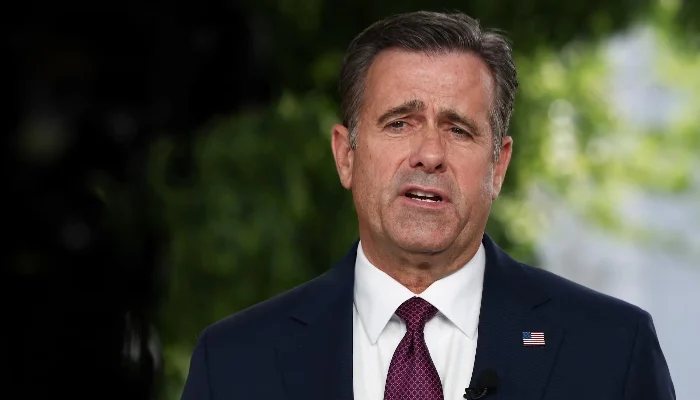
U.S. intelligence agencies have cast doubt within President Donald Trump’s team about Iran’s willingness to make significant nuclear concessions in any final agreement, reported Axios, as mediators prepare to advance negotiations between Washington and Tehran. CIA Director John Ratcliffe informed Trump and top officials that intelligence evidence suggests Iran’s intentions may not align with commitments made, according to Axios’s Barak Ravid. Vice President JD Vance, Steve Witkoff, and Jared Kushner are scheduled to meet with Iranian officials on Friday, accompanied by mediators from Pakistan and Qatar.
Before Sunday’s announcement, Trump and his advisors held several high-level meetings to review intelligence from multiple U.S. agencies. The intelligence indicates inconsistencies between Iranian officials’ private discussions about the deal and what they have communicated to mediators and Washington. An insider confirmed to Axios, “The intelligence shows that Iran’s intentions do not match their commitments under the deal.”
A White House official stated that while Trump considers all viewpoints, he remains the ultimate decision-maker. The current memorandum of understanding (MOU) aligns with the administration’s red lines by aiming to prevent Iran from developing a nuclear weapon, as well as restricting highly enriched uranium and preventing Iran from holding the energy supply hostage. The deal’s nuclear aspects depend on reaching a more comprehensive agreement within the next 60 days.
Vance, Witkoff, and Kushner are expected to meet with Iranian Parliament Speaker Mohammad-Bagher Ghalibaf and Foreign Minister Abbas Araghchi on Friday to discuss the next steps, along with mediators from Pakistan and Qatar.
The full text of the initial 14-point deal has not been publicly released. Its goal is to extend the ceasefire and initiate a 60-day negotiation period that can be extended upon mutual agreement. During negotiations, Iran reaffirms its previous commitment to not acquiring nuclear weapons. A knowledgeable source told Axios that the U.S. and Iran aim to resolve the status of stockpiled enriched material and discuss future enrichment and related nuclear issues, guided by a framework to be established in a final agreement.
Iran is expected to maintain its current nuclear program while talks proceed, with the U.S. refraining from new sanctions or deploying additional forces to the region. If a final deal is struck, the U.S. plans to withdraw its forces within 30 days and lift sanctions incrementally as outlined in an agreed schedule, according to Axios sources.
Some internal skeptics question whether Iran will sign a nuclear deal under U.S. terms, believing the country might benefit more from the memorandum of understanding temporarily. Nonetheless, top U.S. officials emphasized that Iran’s actual actions over the coming weeks will determine mutual benefits; within two to three weeks, Washington expects to see if Tehran is serious about nuclear concessions.
Senator Lindsey Graham expressed concern that Iran’s stance seems different from what U.S. negotiators are presenting and called for the immediate release of the deal’s details.
The MOU also envisions reopening the Strait of Hormuz shortly, with Iran working to ensure the safe passage of commercial vessels at no cost for 60 days, while the U.S. gradually lifts its blockade within 30 days. The release of Iran’s frozen funds remains highly contentious, with officials describing the process as a “pay-for-performance” model.
Axios reports that any final agreement might include a $300 billion fund for Iran’s reconstruction and economic development, along with a mechanism for overseeing its implementation.