Tag: Middle East

  • Trump: US and Israel to Delay Iran Strike

    Trump: US and Israel to Delay Iran Strike

    President Donald Trump stated Saturday that the U.S. and Israel agreed to delay any new military actions against Iran, contingent upon swiftly reaching a resolution. Concerns had been rising that conflict might escalate again after Trump threatened to strike Iran “very hard,” with reports indicating plans for renewed heavy attacks targeting energy infrastructure and other key sites.

    CBS News reported that the U.S. and Israel were planning joint strikes, possibly over the weekend, with targets including oil refineries and power plants. Trump announced on Truth Social that the U.S. is prepared for military action against Iran, emphasizing levels of force not seen since World War II. However, he added that he would hold off for now, citing requests from Iran and other Middle Eastern nations to avoid escalation.

    He said, “Based on this request, I have agreed to hold off on attacking, for the future benefit of the entire world, and to give Iran a chance to reach a quick deal.” The conditions for the deal include the immediate and complete opening of the Strait of Hormuz and an end to Iran’s nuclear proliferation. Trump stated that Israel is standing with him in this commitment and called on everyone to make it happen.

    The conflict, which began on February 28 after the U.S. and Israel launched strikes on Iran, has persisted for over five months with no clear resolution. Recently, there has been a resurgence of tit-for-tat attacks. Saudi Crown Prince Mohammed bin Salman reportedly called Trump to express concerns about the planned strike, urging de-escalation and restraint, according to unnamed U.S. officials cited by Axios. The White House has not yet responded to this report.

  • US launches strikes amid expanding global conflict with Iran

    US launches strikes amid expanding global conflict with Iran

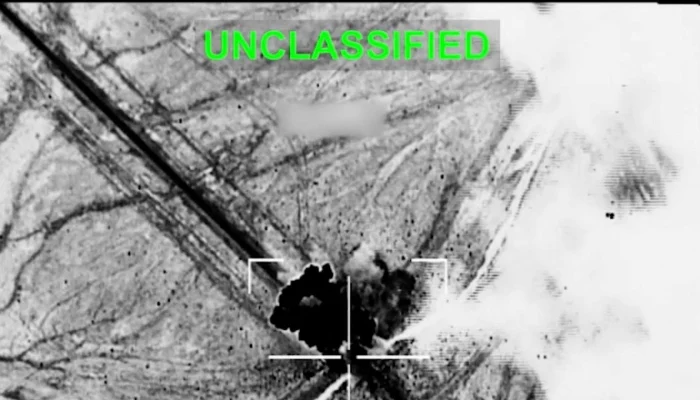
    Smoke rises after an explosion at an unknown site during what U.S. Central Command (CENTCOM) reports are strikes on Iran on July 29, 2026. — Reuters

    – Ambery reports a drone struck a U.S. floating storage tanker.
    – Egypt’s Ministry of Petroleum confirms a fire at a port.
    – Oil prices climb above $90 per barrel as diplomatic efforts stall.

    The U.S. announced new strikes in Iran on Wednesday, escalating a conflict that has already lasted five months and spreading beyond its initial frontlines to involve additional regional countries.

    “U.S. forces began launching strikes against Iran at 8:00 p.m. ET today,” according to a statement from CENTCOM. “These strikes are a strong response to Iran’s attempted attacks on U.S. forces in the Middle East yesterday.”

    Earlier that day, a drone attacked a U.S.-owned gas storage tanker at Egypt’s Damietta port, according to Ambrey, a British maritime security firm. Meanwhile, U.S. and Saudi forces targeted Iran-backed groups in eastern Iraq, and Iran launched missiles at U.S. troops in Jordan.

    Egypt’s petroleum ministry confirmed a fire at the port but did not specify the cause. Responsibility for the attack remains unclear.

    These recent strikes in Iraq and Egypt threaten to expand the conflict, particularly after Yemen’s Houthis declared a naval blockade of Saudi Arabia last week.

    The Wednesday strikes in Iran followed President Donald Trump’s vow earlier in the day to retaliate against Iran for its attacks on U.S. forces.

    “Now it’s our turn,” Trump told reporters at the White House, vowing to “hit them very hard,” while also stating that the U.S. continues to seek peace with Tehran.

    Iran confirmed it fired on U.S. bases in Jordan and at ships in the Strait of Hormuz overnight and rejected an Omani proposal to jointly manage the strait, a vital maritime route for oil and gas.

    The conflict began in February when the U.S. and Israel launched airstrikes on Iran. Trump initially claimed the campaign would last only a few weeks. However, a ceasefire in June collapsed amid renewed fighting over the Strait of Hormuz, which Iran now claims to control.

    Oil prices surged Wednesday, with Brent crude rising over 8% to surpass $90 per barrel—reversing much of a recent decline after Trump unexpectedly halted U.S. strikes.

    For the first time, Riyadh publicly joined U.S.-led strikes in a joint action.

    Iraq’s Popular Mobilization Forces reported at least 20 fighters killed and 32 wounded in U.S.-Saudi strikes targeting several bases across the country. Iraqi civilians shouted “Death to America” as they carried the bodies of killed fighters.

    U.S. and Saudi forces asserted their strikes targeted armed groups in Iraq in retaliation for drone attacks against Saudi oil facilities launched from Iraqi territory.

    Following the joint strikes, Saudi defense officials met with Vice President Vance in Washington to urge caution against escalating the war further, particularly by attacking Yemen’s Houthis or conducting additional strikes in Iraq. They warned that such actions could introduce “major unknown risks.” The White House and the Saudi embassy declined immediate comment.

    U.S. officials have privately warned that resuming full-scale operations against Iran could deplete munitions stocks and carry significant risks.

    The Center for Strategic and International Studies estimates the U.S. currently has fewer than 1,000 Patriot interceptors and under 250 THAAD interceptors, key components of the nation’s air defense system.

    Iran denies it has directly launched strikes from Iraqi territory, but an Iranian newspaper, Hamshahri, reported that four Iranian Revolutionary Guards advisers were killed in strikes on Iraq.

    The strikes reveal a fragile and deeply divided Iraq, which maintains close military and diplomatic ties with both Tehran and Washington—an arrangement that fuels ongoing tensions and unrest.

    Prime Minister Ali al-Zaidi, in office for just two months, called for avoiding escalation and emphasized the importance of keeping Iraq out of regional conflicts.

    The Iraqi president condemned the strikes on paramilitary groups as “an unacceptable violation of Iraq’s sovereignty,” while urging all parties to halt attacks on neighboring countries.

    Iran’s close relationship with Iraq remains evident this week as hundreds of thousands of Iranian pilgrims visit Iraqi shrines for an annual mourning observance.

    Before launching attacks in Iraq, U.S. military officials reported thwarting a surprise Iranian attack on U.S. troops in the region through air defenses.

    Jordan’s military reported shooting down five Iranian missiles. U.S. bases in Jordan have become prime targets recently, with three U.S. service members killed earlier this month—the worst U.S. losses since March.

    Iran’s Revolutionary Guards claimed to have launched multiple ballistic missiles at U.S. military facilities in Jordan and hit three oil tankers attempting to pass through the Strait of Hormuz via an unauthorized route.

  • US Troops’ Phone Footage Assists Iran in Real-Time Strike Assessment

    US Troops’ Phone Footage Assists Iran in Real-Time Strike Assessment

    The top U.S. commander for the Middle East has issued a warning to troops that sharing videos online via cellphones could aid Iran in targeting American military bases. Sources told Reuters that some personnel already deployed might soon be instructed to surrender their phones.

    Any restrictions on mobile device use would introduce a new challenge for the thousands of U.S. troops in the region, many of whom still depend on their phones to stay in touch with loved ones and reassure them of their safety.

    Admiral Brad Cooper, in a previously undisclosed letter, highlighted how Iran benefits from real-time insights into its strikes’ outcomes by analyzing news reports or posts by journalists that include “reactions, photos, and footage from the cellphones of our troops.”

    “The immediate, unavoidable cost of this open-source intelligence could be measured in the lives of American service members and civilians living in the Gulf,” Cooper, who heads U.S. Central Command, wrote on July 28, a copy of which was obtained by Reuters.

    He urged troops to “redouble our focus on operational security” but did not specify particular measures in the memo.

    This warning emphasizes the increasing tension between real-time war reporting—often supported by satellite imagery and first-person accounts—and the military’s effort to limit information that could help Iran target U.S. forces.

    In Jordan, which has frequently been targeted by Iranian strikes, some soldiers have been told their phones will be confiscated in the coming days, according to two sources familiar with the situation. A third source suggested this move is under consideration due to security concerns but did not confirm it as certain.

    When asked for comment, U.S. Central Command spokesperson Captain Timothy Hawkins said, “The message is a general reminder to our service members about the importance of operational security. This is one of many ways Admiral Cooper has communicated operational priorities.”

    Running for Shelter During Iran Attack

    A recent online video shows U.S. soldiers rushing for safety during a deadly Iranian attack on Muwaffaq Salti Air Base in Jordan on July 17. Cooper referenced the footage in his letter, noting it was captured using Meta smart glasses with an integrated camera.

    “Video taken from a service member’s Meta glasses was posted on Instagram, showing how and where they evacuated to a bunker amid missile and drone strikes,” Cooper stated.

    Iran might find it difficult to accurately assess the success or failure of its strikes without such accounts, Cooper explained, as U.S. electronic jamming and other tactics in war zones obscure strike outcomes.

    “While Iran is aware that weapons were fired, they can’t tell if they missed by 50 meters, hit an empty tarmac, or successfully attacked a crowded target,” he said. “Detailed reports, descriptions, and analyses from news outlets essentially serve as Iran’s Battle Damage Assessment—free of charge.”

    Since February 28, around 18 U.S. service members have died in conflicts with Iran, and more than 600 have been wounded. These casualties have deepened American concerns over a potential war, which only about a third of the U.S. population supports.

    Democratic lawmakers are demanding more information about the conflict, including data on damage to U.S. infrastructure at bases—covering radar towers, barracks, and aircraft hangars—and are calling for the release of a U.S. military investigation into an incident involving a suspected strike on a girls’ school in Iran, first reported by Reuters at the war’s outset.

    Is Cell Phone Seizure on the Horizon?

    Rules governing cell phone use among deployed troops differ widely across military branches. Many service members are required to lock away their phones, and in highly sensitive missions—like special operations—cell phones can even be banned altogether.

    The possibility of confiscating phones has caused anxiety among some families, who are already on edge due to Iranian claims of deadly strikes on bases across the Middle East over recent months.

    U.S. officials have long warned that certain mobile applications, such as fitness trackers, could be exploited by adversaries to gather location data and aid in targeting. Reuters reported in May that commercially available location data from smartphones has been used to monitor or target U.S. forces.

    At the same time, the Pentagon has been cautious about releasing detailed information about Iranian attacks or incidents involving U.S. casualties, citing operational security.

    Cooper emphasized that details about strikes could help Iran plan subsequent, potentially more destructive attacks.

    “Publicly sharing detailed information can serve as a green light for Iran to launch secondary attacks that could be far more devastating,” he said.

  • US and Saudis strike Iran-backed groups in Iraq, risking escalation

    US and Saudis strike Iran-backed groups in Iraq, risking escalation

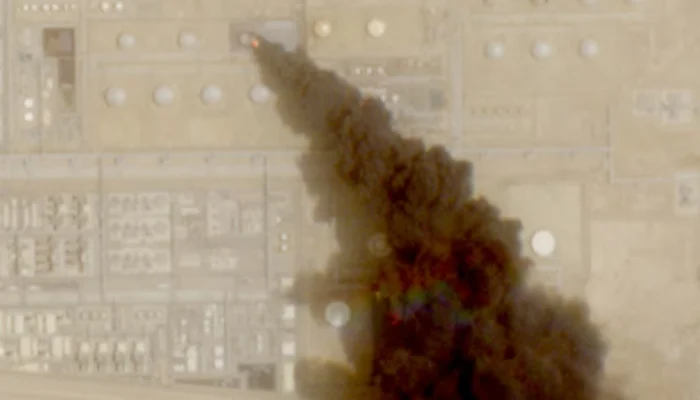
    A satellite image captured on July 26, 2026, reveals a trail of smoke emanating from an oil facility in Jizan, Jazan Province, Saudi Arabia. Meanwhile, the United States and Saudi Arabia targeted Iran-supported groups in Iraq, claiming responsibility for recent drone strikes on Saudi oil installations. Iran responded by warning that accusing it of such attacks is a “major miscalculation.”

    The strikes inside Iraq occurred shortly after the U.S. military announced it thwarted an unexpected Iranian assault on American troops in the region. The Iranian Revolutionary Guards (IRGC) claimed responsibility for launching several ballistic missiles at U.S. military sites in Jordan. These back-and-forth assaults have ended a brief lull in hostilities that followed President Trump’s sudden decision to halt a bombing campaign, with Iran seemingly pausing its actions as well.

    Saudi Arabia reported that its air defenses intercepted multiple drones aimed at its Eastern Province oil facilities, launched from Iraqi territory by Iran-backed militias. In response, the U.S. Central Command and Saudi officials stated they struck multiple locations in eastern Iraq used by Iran to direct drone attacks. Iraq’s Popular Mobilization Forces reported that some of its facilities were attacked—causing casualties and damage.

    Oil prices surged by over $3 per barrel amid fears of escalating conflict. An Iranian defense official denied any Iranian involvement in recent projectile attacks targeting Saudi Arabia, calling allegations “a major miscalculation.” The U.S. military also reported intercepting multiple ballistic missiles launched by Iran attempting a surprise attack on U.S. forces in the Middle East.

    As part of efforts to de-escalate tensions over the Strait of Hormuz—a crucial artery through which approximately 20% of global oil and liquefied natural gas passes—Oman proposed a regional management plan. This approach would involve collecting voluntary fees from ships transiting the strait, similar to arrangements in Asia’s Strait of Malacca. The Gulf Cooperation Council discussed the situation via video call, but a U.S. official rejected the idea of tolls, emphasizing that the strait is an international waterway that should remain free of Iranian control or restrictions.

    The ongoing tensions follow recent Iranian missile tests and attacks on maritime vessels, with both sides warning against further escalation. Diplomatic efforts continue, but the situation remains volatile amid these regional and international maneuvers.

  • Netanyahu and Trump Hold First White House Meeting Amid Iran Conflict

    Netanyahu and Trump Hold First White House Meeting Amid Iran Conflict

    Prime Minister Benjamin Netanyahu made his first face-to-face visit to the White House since the Iran conflict erupted, engaging in discussions with President Donald Trump. The United States military confirmed they had intercepted several missiles fired by Tehran. The private meeting, described as “positive and productive” by the White House, lasted approximately an hour and a half. It aimed to mend public differences regarding the war and reinforce their alliance.

    Following the meeting, Netanyahu expressed in a video message that it was “one of the best conversations I’ve ever had with the president of the United States” and emphasized their mutual goal: preventing Iran from acquiring nuclear weapons. The Iran conflict, which started in late February with joint US-Israeli strikes, has recently paused, with Washington indicating a preference to see diplomatic negotiations proceed.

    Yemen’s Iran-supported Houthi rebels claimed responsibility for ballistic missile attacks against a Saudi oil tanker, NCC Ghazal, in the Red Sea, accusing it of violating a blockade they imposed on the kingdom’s ports. Saudi Arabia has not yet responded publicly but reported intercepting drones targeting eastern oil facilities, blaming Iran-backed militias in Iraq.

    The U.S. Central Command announced that Iran’s Islamic Revolutionary Guard Corps launched multiple ballistic missiles from Iran aimed at U.S. forces in the Middle East, all of which were successfully intercepted. Tensions had been simmering, with nightly U.S. strikes on Iran and missile and drone attacks from Tehran on U.S. allies around the Gulf, though both the U.S. and Iran had temporarily held fire over the weekend.

    Israel has not participated in the recent hostilities between the U.S. and Iran, which escalated earlier this month after a ceasefire broke down. This was the eighth meeting between Netanyahu and Trump since early 2025, taking place ahead of crucial elections in both Israel and the United States—national elections for Netanyahu and midterms for Trump.

    Netanyahu attended a private memorial dinner in Washington honoring the late Senator Lindsey Graham and also participated in a memorial service for the late Israeli ally. Relations between Trump and Netanyahu were strained during last month’s negotiations over Iran’s ceasefire, with Trump criticizing Netanyahu harshly. Trump later referred to Netanyahu as a “very difficult guy” in an interview. Netanyahu minimized these disagreements, calling them “tactical differences” and reaffirming their shared objectives in the conflict.

    On the agenda for Tuesday’s discussions were the implementation of a US-backed framework agreement signed by Israel and Lebanon last month, though ground-level application remains challenging. They also planned to address the ongoing crisis in Gaza, where reconstruction efforts have stalled, and the humanitarian situation remains bleak. Israel continues its frequent targeting of militants in Gaza, nearly three years after the outbreak of hostilities with Hamas.

    Israeli UN ambassador Danny Danon highlighted the timing of Netanyahu’s visit, stressing the ongoing threats from Iran, which continues to support terrorism and block the Strait of Hormuz. International relations expert Yonatan Freeman explained that the main goal was to demonstrate that the U.S. and Israel remain aligned, countering any notions of a falling-out or major disagreements between the allies.

  • Trump’s Frustration with Netanyahu Over Iran Sparks Tensions at Leaders’ Meeting

    Trump’s Frustration with Netanyahu Over Iran Sparks Tensions at Leaders’ Meeting

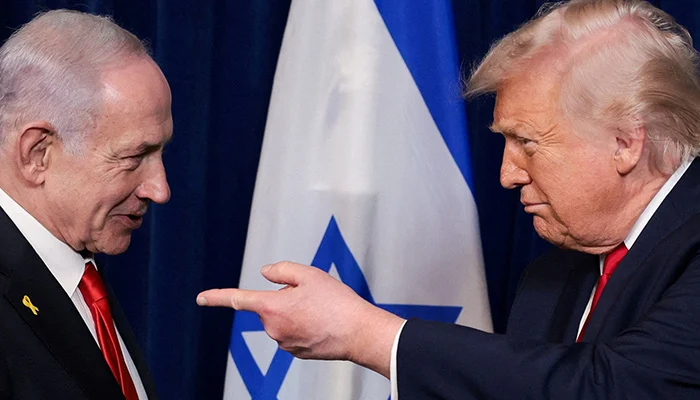
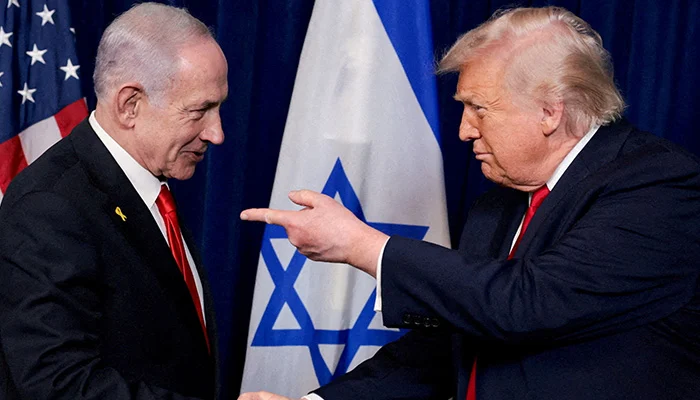
    During a press conference at Trump’s Mar-a-Lago club in Palm Beach, Florida, on December 29, 2025, US President Donald Trump pointed at Israeli Prime Minister Benjamin Netanyahu, signaling a tense moment between the two leaders.

    – Trump and Netanyahu’s meeting comes amid ongoing tensions concerning Iran’s strategies.
    – Netanyahu is actively seeking Trump’s support as Israel prepares for upcoming elections.
    – Trump is under scrutiny over calls for increased US involvement in the Iran conflict.

    Prior to their scheduled White House meeting on Tuesday, Trump expressed frustration with Netanyahu, indicating displeasure over leaked details of the Israeli leader’s talking points on Iran. When asked about reports that Netanyahu planned to discuss Iran’s underground facility near one of its nuclear sites—known as Pickaxe Mountain—Trump dismissed the importance, suggesting Netanyahu only brought it up to keep him engaged. He stated, “I don’t need Bibi to tell me that. Bibi’s telling me that because he wants me to stay involved,” and questioned why Netanyahu would publicly announce such information instead of sharing it privately during their meeting.

    The New York Post reported that Netanyahu was prepared to provide intelligence indicating Iran is expanding its nuclear infrastructure at Pickaxe Mountain while falsely claiming to pursue peace. Netanyahu’s office has yet to respond to comments about Trump’s remarks.

    Photographs shared by Netanyahu’s office showed the two leaders smiling broadly during their meet in the Oval Office, joined by Vice President JD Vance, Secretary of State Marco Rubio, and Defense Secretary Pete Hegseth. Trump had first briefed with Ukrainian President Volodymyr Zelenskyy in private before joining Netanyahu. Both meetings were described as “positive and productive,” with relations between the U.S. and Ukraine warming as Kyiv has made advances against Russian forces. Netanyahu faces increased frustration from the White House over the stalled progress in broader efforts to resolve Iran’s nuclear ambitions and is also under pressure from Trump supporters skeptical of deeper American involvement in the Middle East.

    The Israeli and Ukrainian leaders attended a memorial service in Washington honoring Senator Lindsey Graham, a staunch supporter of both Israel and Ukraine. Meanwhile, the conflicts in Ukraine and the Middle East are at pivotal stages. Trump announced a pause in US airstrikes, hoping to give diplomacy more room, while Zelenskyy emphasized the importance of advancing peace talks to end Russia’s invasion of Ukraine.

    Netanyahu’s relationship with Trump has been inconsistent, at times needing to be restrained from provocative military actions against Hezbollah in Lebanon. Netanyahu is reportedly seeking Trump’s endorsement for his reelection bid on October 27, aiming to bolster his standing at home, where polls remain unfavorable. Their upcoming discussion is expected to cover the Abraham Accords—agreements brokered during Trump’s administration to normalize relations between Israel and the UAE, Bahrain, Morocco, and Sudan. Trump has also expressed interest in including Saudi Arabia in these accords and recent efforts to negotiate a nuclear deal with Riyadh, which has so far rejected joining without a pathway to Palestinian statehood.

    Relations have improved between Trump and Zelenskyy since early tensions, especially as Kyiv has achieved some success in its fight against Russia, including targeted attacks on Moscow’s oil infrastructure. Zelenskyy post-meeting emphasized the need to intensify diplomatic efforts to end Russia’s invasion. They also discussed cooperation on missile defense and drone production, with Zelenskyy mentioning talks about licensing production of interceptors for Patriot systems and joint drone initiatives. Following their discussions, Zelenskyy was scheduled to meet with US senators at the Capitol.

  • US Facilitates Israel-Lebanon Talks in Italy, August 4-6

    US Facilitates Israel-Lebanon Talks in Italy, August 4-6

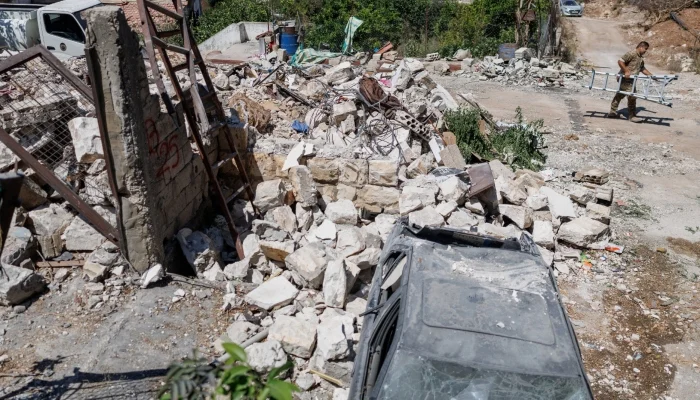
    A Lebanese military officer carrying a ladder walks past a house damaged by an Israeli strike in Zawtar al-Gharbiyeh, a village in southern Lebanon. Lebanese soldiers are deploying in one of three designated pilot zones following Israel’s withdrawal under a US-facilitated agreement, July 27, 2026. — Reuters

    – Israel is preparing to withdraw from two designated pilot zones in southern Lebanon.
    – Border disputes are the primary focus of upcoming US-led negotiations in Rome.
    – The framework agreement aims to cease hostilities, disarm Lebanese militias, deploy Lebanese troops in the south, and facilitate Israeli troop withdrawals from two designated zones.

    The US State Department announced that the next round of talks between Israel and Lebanon will take place in Rome from August 4 to August 6. This follows Israel’s plans to pull back from two “pilot zones” in southern Lebanon.

    Last week, Italian Foreign Minister Antonio Tajani revealed that these US-mediated negotiations are imminent. A State Department official, speaking anonymously to AFP, explained that the discussions will concentrate on advancing the full implementation of the framework agreement. Key topics include expanding pilot zone initiatives, resolving remaining border issues, and working toward a comprehensive peace and security accord.

    This framework deal was formulated after clashes erupted between Israel and the Iran-backed militant group Hezbollah on March 2, amid broader regional conflicts in the Middle East.

    It stipulates ending the hostilities in Lebanon, disarming Hezbollah, deploying Lebanese troops in the south, and Israel’s phased withdrawal from the designated pilot zones. An US official noted that the experience gained from initial zones will inform how to expand pilot efforts gradually. Lebanon’s army recently condemned Israeli military operations in the south, asserting they hinder Lebanon’s full deployment under the agreement.

    Despite a temporary lull in fighting, Lebanon has reported sporadic Israeli strikes and artillery shelling in the southern region.

  • US strikes persist into 11th night amid Iran warning of retaliation

    US strikes persist into 11th night amid Iran warning of retaliation

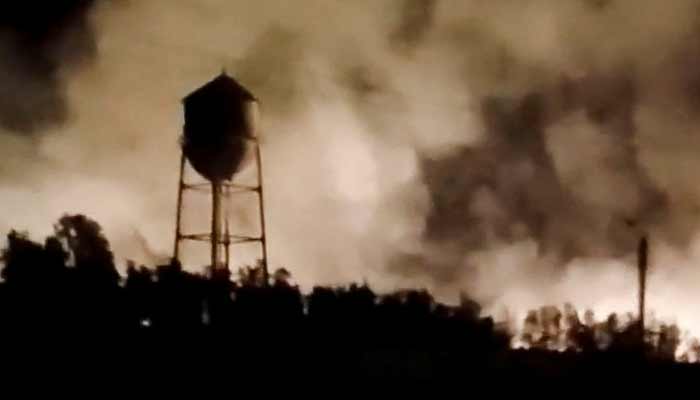
    A water tower stands outlined against smoke rising from a fire following an alleged strike in Behbahan, Khuzestan Province, Iran. — Reuters

    • Negotiations with the U.S. are ongoing through mediators: Baghaei.
    • Iran’s military issues threats of retaliation against the U.S.: report.
    • Regional countries are using Iranian drones in their engagements.

    Fresh American airstrikes prompted anti-air defense responses in Tehran on Wednesday. President Donald Trump warned he isn’t finished with the conflict with Iran, which has already cost the U.S. approximately $37.5 billion.

    Following clashes over the strategic Strait of Hormuz resulting in the collapse of an initial agreement, conflict in the Middle East has extended to include other critical oil transit routes in the region.

    Top U.S. diplomat Marco Rubio reaffirmed that Washington remains open to diplomatic efforts to reach an agreement with Tehran.

    “The challenge we face now is that Iran isn’t taking negotiations seriously,” Rubio stated during a Southeast Asia ministers’ meeting in Manila.

    Iranian Foreign Ministry spokesperson Esmaeil Baghaei mentioned that diplomatic discussions with Washington, mediated by third parties, are still taking place.

    The latest wave of attacks saw U.S. forces target infrastructure including military logistics facilities. Iranian state media reported strikes across the country, including in Bushehr, which is home to a nuclear power plant.

    “Sources just reported hearing air defense activity in the western, eastern, and northeastern parts of Tehran,” state television posted on Telegram.

    As this conflict approaches five months and with November’s legislative elections near, Trump faces mounting political pressure to de-escalate. The war has become increasingly unpopular even among some of his supporters.

    Critics point out the financial toll: Pentagon Chief Pete Hegseth noted Tuesday that costs have risen to $37.5 billion, justifying requests for tens of billions more to support military operations.

    The U.S. military announced it had conducted an 11th night of strikes targeting Iranian military sites with the goal of diminishing Iran’s capacity to threaten maritime traffic through the Strait of Hormuz.

    Earlier, Trump suggested that the next target could be an underground complex called Pickaxe Mountain, near Natanz, where Western intelligence suspects Iran is developing an undeclared uranium enrichment facility.

    Iran has warned of retaliation, with Khatam Al-Anbiya military command stating that any such attack would be seen as an expansion of regional war. The group threatened to strike U.S. interests and allies worldwide, according to state media IRIB.

    This warning coincides with Tehran expanding its strikes against U.S.-aligned Gulf states after its Houthi allies threatened to blockade Saudi ports.

    Two weeks after renewed fighting between longstanding enemies, Trump claimed Iran would need over 20 years to rebuild from the damage inflicted, emphasizing the ongoing conflict.

    “If we withdraw right now, Iran would take 20 to 25 years to recover,” Trump said. “We’re not done yet… we’re not leaving at this moment.”

    Houthi Threats and Regional Tensions

    Kuwait’s military reported engaging with drone attacks believed to be originating from Iran, signaling another round of Tehran’s retaliatory actions.

    Bahrain reported intercepting Iranian assaults last Tuesday, with sirens sounding repeatedly. Kuwait and Jordan also announced intercepting drones and missiles.

    Iran claims it targeted U.S. assets in Kuwait and Bahrain, including air defense systems, radar facilities, and administrative buildings.

    “The enemy should prepare for even stronger waves of drone and missile attacks,” Iran’s Guards announced via state news agency IRNA.

    Trump stated he would intervene if the Houthis carried out their threat to blockade Saudi ports but expressed uncertainty on how they would enforce such a blockade.

    Maritime intelligence providers, like Vanguard Tech, reported that a Singapore-flagged tanker and a Liberia-flagged vessel changed course in the Red Sea after loading crude at Saudi Arabia’s Yanbu port.

    If the Houthis implement the blockade, it could obstruct Saudi Arabia’s ability to export some oil bypassing the Strait of Hormuz, with significant impacts on the global economy.

    Recently, Saudi Arabia and the Houthis exchanged fire, ending a brief lull since the 2022 ceasefire. Still, the rebels have mostly remained silent since Israel and the U.S. launched strikes against Iran in late February.

    Iran’s Revolutionary Guard announced Tuesday that two tankers attempting to traverse the Strait of Hormuz were hit by explosions, causing fires that halted their progress.

    Earlier, the UK Maritime Trade Operations reported an unknown projectile striking a tanker off Oman’s coast.

  • Who is Khalil Al-Hayya, Hamas’ New Leader?

    Who is Khalil Al-Hayya, Hamas’ New Leader?

    Khalil al-Hayya, a prominent Hamas leader who survived an Israeli raid in Qatar last September and is considered to have strong connections with Iran, was officially appointed as the overall head of the Palestinian organization on Monday.

    Hayya, who lost a son in the Gaza conflict and two others in previous wars, has been residing with other Hamas leaders in Doha. His influence within the group has grown as several top Hamas officials, including Ismail Haniyeh during his visit to Iran and Yahya Sinwar in Gaza, have been killed by Israeli strikes.

    Throughout the Gaza war that began when Hamas launched a surprise attack on Israel on October 7, 2023, Hayya played a central role in ceasefire negotiations. These talks, which were mostly indirect and facilitated by the United States, resulted in a ceasefire in October 2025 that ended major hostilities in Gaza. Despite this, Israel has continued its strikes against Hamas and other groups it claims pose an immediate threat.

    Hayya, 64 years old, has become regarded as the most influential Hamas figure abroad, especially following Haniyeh’s death in Iran in July 2024. He is part of a five-member leadership council based in Qatar, which has led the organization since Sinwar was martyred last year. Originally from Gaza, Hayya is a seasoned member of Hamas and maintains close ties to Iran. He has been actively involved in multiple efforts to broker ceasefires with Israel, including ending the 2014 conflict and trying to halt the current Gaza violence.

    Since Hamas’s founding in 1987, Hayya has been a key member. In the early 1980s, he joined the Muslim Brotherhood alongside Haniyeh and Sinwar. His history with Israel includes multiple detentions, and in 2007, an Israeli airstrike targeted his family home in Gaza, killing several relatives. His son Hamza was also killed by an Israeli strike in 2008. During the 2014 Gaza war, Hayya’s eldest son Osama’s house was bombed, killing him, his wife, and their three children.

    Hayya has spent time outside Gaza, serving as Hamas’s liaison to the Arab and Islamic worlds, and has been based in Qatar. He accompanied Haniyeh on a trip to Tehran in July, during which Haniyeh was martyred. Hayya has publicly stated that the October 7 attack was intended as a limited operation to seize soldiers for a hostage exchange, but he claims the Israeli military “completely collapsed.” He believes this attack has reignited the international focus on the Palestinian cause.

    Since Hamas’s attack on Israel, over 67,000 Palestinians have been killed in the Israeli response, according to Gaza’s health ministry. Besides engaging in mediated negotiations for a ceasefire, Hayya has carried out significant political activities for Hamas, including a 2022 mission to Syria to repair diplomatic ties with Bashar al-Assad, which had been strained after Hamas endorsed the uprising against Assad a decade earlier. This reconciliation was crucial in restoring a regional alliance formed by Iran to oppose Israel and the United States.

  • US-Iran Tensions Persist with Seventh Consecutive Night of Strikes

    US-Iran Tensions Persist with Seventh Consecutive Night of Strikes

    Iran escalated its attacks against US allies in the Gulf on Saturday, following a seventh consecutive night of American strikes targeting Iranian military positions, including logistical hubs. This increase in hostilities marks a significant escalation just one week after a fragile ceasefire unraveled.

    Both parties targeted maritime traffic, with the US asserting it was enforcing a naval blockade, while Iran claimed its forces attacked vessels that crossed its rules in the Strait of Hormuz—a key waterway for approximately 20% of the world’s oil.

    Oil prices surged over 4% on Friday, reaching their highest point in more than a month, intensifying political pressure on President Donald Trump as the Republican Party campaigns for control of Congress in November elections.

    Since the ceasefire failed last week, Washington and Tehran have been testing the waters of escalation, with fears mounting of a possible full-scale war. The US Central Command reported launching strikes on surveillance sites, military logistics facilities, underground weapons caches, and maritime assets, employing fighter jets, drones, and naval ships. A statement from Central Command emphasized that over 50,000 American troops remain vigilant across the Middle East, ready to respond.

    Reports emerged from Iranian media that several missiles hit power plants and desalination stations in Jask, a southern Iranian city, cutting off water supplies in nearby villages. Meanwhile, the US announced it had redirected four ships, disabled one vessel, and boarded another to uphold its naval blockade of Iran.

    Iran’s Revolutionary Guards said they intercepted four ships attempting to violate their navigation rules through a combined missile and drone operation. There were claims of explosions and fires on two oil tankers passing a mined route south of the strait, but the US military dismissed those reports as false.

    Additionally, armed individuals seized another vessel off Yemen, raising concerns over security at another critical choke point for oil shipments in the Red Sea. Iran’s state television cited the Revolutionary Guards, stating that without an end to US “aggression,” Iran would be unable to export chemicals or even a single drop of oil or gas from the region.

    Mohsen Rezaei, an advisor to Iran’s Supreme Leader, issued a warning on Friday about US escalation and the potential seizure of Iranian territory.

    The UN Secretary-General, Antonio Guterres, expressed concern about the ongoing escalation, particularly regarding attacks on civilian infrastructure within Iran and across the wider region. His spokesperson emphasized that the UN was closely monitoring the situation.

    Early Saturday, Iran reported strikes in Hormozgan Province along the Strait of Hormuz, resulting in three deaths and eight injuries, with damage to bridges and a road tunnel. Explosions and strikes were also reported in several cities including Sirik, Ahvaz, Yazd, Jask, and Khorramabad late Friday and early Saturday.

    President Trump has threatened widespread airstrikes on Iran’s infrastructure and has not ruled out a ground invasion of Iran’s coast or islands. U.S. officials suggest that attacks in southern Iran serve to provide Trump with multiple options should the situation escalate further.

  • US authorizes close to $2B weapons deal with Saudi Arabia

    US authorizes close to $2B weapons deal with Saudi Arabia

    The U.S. Department of State approved a nearly $2 billion arms sale to Saudi Arabia to enhance its air defense capabilities amid growing tensions in the Middle East. The proposed transaction includes up to 20,000 Advanced Precision Kill Weapon Systems and their warheads, described by the U.S. Navy as an affordable option for destroying targets with minimal collateral damage in close combat. BAE Systems, located in Nashua, New Hampshire, will serve as the primary contractor for this deal.

    The sale aims to bolster Saudi Arabia’s ability to counter existing and emerging threats by strengthening its national defense systems and improving coordination with U.S. and allied forces in the region. Officials emphasized that this sale would not negatively impact U.S. defense readiness.

    This development occurs against a backdrop of renewed hostilities between Saudi Arabia and Yemen’s Iran-backed Houthis, following missile strikes on an airport in Abha by the Houthis earlier this week. The attack came after Yemeni forces targeted Sanaa airport in retaliation for an incident that involved a flight returning from the funeral of Iran’s Supreme Leader, which was diverted amid Houthi involvement. Riyadh has blamed Iran for the escalation.

    The United States is also increasing its military pressure on Iran, resuming a naval blockade as tensions escalate. Military officials assured that this weapons sale does not pose any threat to the U.S. military’s preparedness and stability in the region.

  • Why Is the Iran-US Ceasefire Falling Apart?

    Why Is the Iran-US Ceasefire Falling Apart?

    Renewed tensions between the US and Iran are causing setbacks to the temporary agreement reached in June, highlighting deep disagreements over the Strait of Hormuz and other critical issues, and illustrating the challenges in achieving a durable peace. The 14-point Islamabad Memorandum of Understanding (MoU) aimed to end hostilities and keep the Strait of Hormuz open for commercial ships. However, analysts note the language was ambiguous on key matters and left difficult issues—particularly Iran’s nuclear program—for further negotiations.

    Recent statements about the deal:
    Last week, US President Donald Trump declared the ceasefire agreement “over,” accusing Iranian officials of failing to honor negotiated commitments. He also suggested that the US might assume control of the Strait of Hormuz. Conversely, Iran’s Foreign Ministry spokesperson Esmaeil Baghaei blamed Washington for destabilizing the MoU, claiming the US has repeatedly violated its commitments. Pakistan has called on all parties to honor their promises.

    Issues in the Strait of Hormuz:
    Following the outbreak of conflict, which began with US-Israeli strikes on Iran on February 28, Tehran effectively closed the Strait, a vital route through which about 20% of the world’s oil and liquefied natural gas are shipped. According to Article 5 of the MoU, commercial traffic was to resume immediately, with Iran making efforts to ensure the safe passage of vessels for 60 days without fees, from the Persian Gulf to the Sea of Oman and back. Iran interprets this as the US recognizing its authority to manage the entire waterway, free of tolls for two months. The US and Gulf nations dispute this, viewing the language as requiring Iran only to facilitate safe passage without exerting force or restrictions. The US has stated the Strait will remain toll-free. Recently, Iran has engaged in firing on vessels claiming they attempted to pass via unauthorized routes, and has again declared the Strait closed. Nonetheless, the US Navy reports that a southern route remains open and accommodates two-way traffic.

    US oil waivers and Iranian assets:
    Under Article 10, the US was to grant waivers enabling Iran to export crude oil and related products, including banking, insurance, and transportation services. This was seen as a significant benefit for Iran, which has faced years of economic pressure due to sanctions. However, on July 7, the US revoked a license allowing Iranian oil sales, condemning Iran’s actions in the Strait as “wholly unacceptable” and warning of consequences. Iran views this as a breach of the MoU.

    Regarding frozen assets, Article 11 stipulated the US would make available Iran’s blocked funds, including about $6 billion held in Qatari accounts, with procedures to be agreed upon. Qatar announced on June 30 that it had not transferred these funds to Iran. Vice President JD Vance indicated that once unfrozen, the US and Qatar would control the funds, potentially using them for agricultural imports. Iran’s UN ambassador, Ali Bahreini, insisted Iran would solely decide how to utilize these assets.

    Lebanon’s situation:
    Iran’s parliamentary speaker and main negotiator Mohammad Bagher Ghalibaf accused Israel of violations in Lebanon, citing Israeli attacks related to Hezbollah’s actions in the region. Lebanon was drawn into the conflict after Hezbollah fired at Israel on March 2, prompting an Israeli military response and occupation in southern Lebanon. Iran has demanded Israel cease fire in Lebanon as part of the broader agreement.

    Broader negotiations:
    The MoU commits Washington and Tehran to negotiate a comprehensive deal within 60 days, extendable by mutual agreement. Yet, due to disputes over control of the Strait, no date has been set for further talks. Iran’s pursuit of a 2015 nuclear agreement with global powers took years; former US President Trump withdrew from that deal during his first term.
    Expert Mohanad Hage Ali from the Carnegie Middle East Center stated, “The MoU is in crisis, and a secondary deal is needed to restore stability. The ambiguity reflects the complexity of the issues and the fragile nature of the agreement.”

  • Iran vows to honor ceasefire amid Trump’s truce end

    Iran vows to honor ceasefire amid Trump’s truce end

    Crowds gather along a street around a portrait of Iran’s Supreme Leader Mojtaba Khamenei at the Shrine of Imam Reza, Iran’s most sacred site, in Mashhad on July 9, 2026. — AFP

    – Iran maintains it must control the Strait of Hormuz.
    – Araghchi will travel to Oman for talks, according to state media.
    – Prime Minister Shehbaz Sharik urges Iran to protect the fragile peace they’ve fought to establish.

    Iran asserts it has fulfilled its promise regarding a ceasefire with the United States, despite President Donald Trump claiming the truce has ended, though he also indicated he’s open to further negotiations with Iran. These statements mark a significant decline in relations amidst recent skirmishes that threaten the fragile agreement aimed at solidifying the months-long ceasefire into lasting peace, avoiding a return to full-scale regional conflict.

    On Saturday, Trump intensified the rhetoric, posting on Truth Social that if Iran attempts or manages to assassinate him, he would “completely decimate” Iran. This followed his earlier indication that he was open to further talks, even as he declared the ceasefire was over, just weeks after Washington and Tehran signed an agreement promoting peace.

    While direct negotiations between Iran and the U.S. have not resumed since last month, reports indicate a mediator from Qatar was in Tehran following exchanges of missile fire. Trump tweeted, “The Islamic Republic of Iran has asked us to continue ‘talks’. We’ve agreed, but the U.S. has made it clear that the ceasefire is over.” Earlier at a NATO summit, Trump also declared the ceasefire’s end, dismissing Tehran’s diplomacy as “a waste of time.”

    Iran’s Foreign Minister Abbas Araghchi responded Saturday, asserting that Iran has “kept its word so far,” accusing the U.S. Treasury Secretary of violating the memorandum of understanding. This agreement stipulated Iran would maintain its current nuclear program status, and the U.S. would refrain from imposing new sanctions or deploying additional forces, pending a final deal. Araghchi emphasized that “mutual compliance” is essential, pointing out violations by the U.S.

    Although both nations held one direct round of talks in Switzerland and engaged in indirect negotiations in Qatar, no diplomatic progress has been evident recently.

    The tense rhetoric coincides with reports that Washington has given Iran an ultimatum: cease attacks on commercial ships in the Strait of Hormuz and recognize the waterway’s open status by Saturday. The Strait, a vital shipping corridor for global oil supplies, remains a flashpoint with Iran, which effectively closed it in response to U.S.-Israeli strikes earlier this year. Iran insists it must control Hormuz—covering Iranian and Omani waters—and has proposed charging fees for ships passing through.

    Recent U.S. strikes in the region followed attacks on ships and prompted Iranian reprisals against American bases in the Gulf. Additionally, the U.S. Treasury revoked a temporary waiver allowing Iran to produce and sell crude oil, canceling a license effective through August 21.

    Iranian officials, including Araghchi, are headed to Oman for discussions on the Strait. Qatar continues to advocate diplomacy, with reports noting a Qatari delegation in Tehran trying to reinforce Qatar’s role as a mediator after condemning Iran’s recent attacks on a Qatari LNG tanker. Iran denies involvement.

    Prime Minister Shehbaz Sharif, involved in mediating the crisis, spoke with Qatar’s emir and Iran’s President Pezeshkian to urge protecting the peace. Meanwhile, Iran’s chief negotiator, Mohammad Bagher Ghalibaf, issued a defiant statement, emphasizing that Iran will never surrender in this confrontation and affirming the country’s readiness to defend itself.

  • Iran mourns Khamenei as Gulf tensions rise again

    Iran mourns Khamenei as Gulf tensions rise again

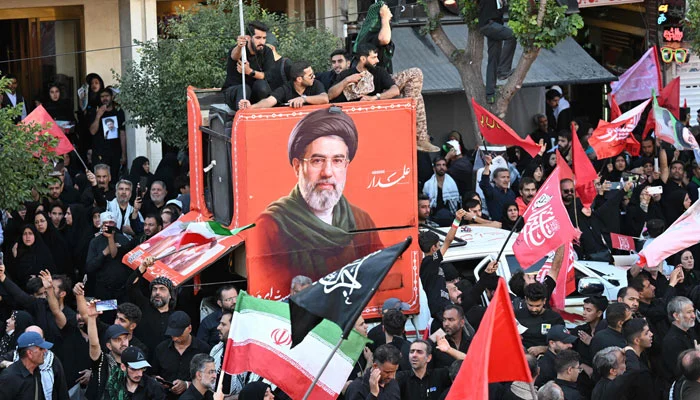
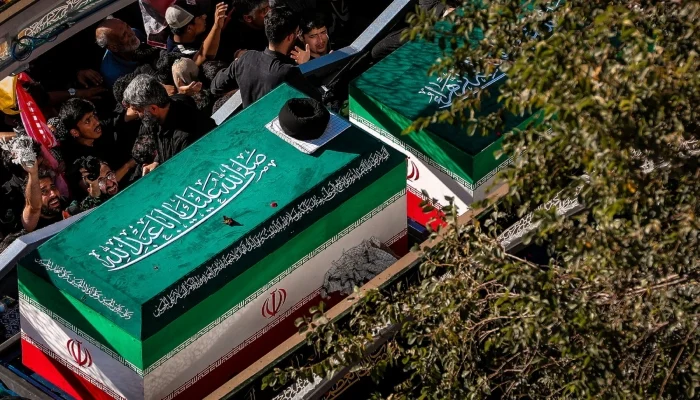
    An Iranian vehicle escorted the coffin of the late Supreme Leader Ayatollah Ali Khamenei, who was killed on February 28 in Israeli and US airstrikes. The coffins of his family members were also present during their burial, marking a large funeral procession in Mashhad, Iran, on July 9, 2026. — Reuters

    – Iran claims to have targeted US facilities in Kuwait, Qatar, and Bahrain.
    – Iranian officials report US strikes resulted in 14 deaths and 78 injuries.
    – President Trump states he does not foresee these strikes escalating into a full-scale war.

    Iranian forces launched retaliatory attacks on US military sites across Gulf nations following US airstrikes on southern and eastern Iranian regions, complicating a ceasefire that had been in place for three weeks. Later reports indicated multiple explosions throughout southern Iran, including near Bushehr—the location of a nuclear power plant—as well as in Konarak, Choghadak, and Bandar Abbas. The US military didn’t immediately comment on these incidents.

    Today also marked the burial of Iran’s slain Supreme Leader, Ayatollah Ali Khamenei, at a shrine in Mashhad, wrapping up a week of funeral gatherings that drew massive crowds. Khamenei was killed in a US airstrike on February 28, coinciding with the outbreak of conflict that has persisted for months, resulting in thousands of deaths and destabilizing global energy markets. Earlier this week, attacks on shipping vessels linked to Qatar and Saudi Arabia disrupted fragile peace talks, leading President Trump to declare the truce “over.”

    During Khamenei’s funeral, large crowds gathered at the most sacred shrine, some bearing banners condemning President Trump and threatening violence against him. Iran’s Revolutionary Guards Navy stated that US efforts to reroute shipping through the Strait of Hormuz have hindered the waterway’s gradual reopening. They reported that about half of the vessels normally transiting the Strait are now doing so under Iranian oversight, only on routes approved by Tehran. The Guards warned that any further US actions would be met with a “crushing” response.

    The US military explained its recent strikes aimed to keep the Strait of Hormuz open after Iran reportedly attacked three tankers in the area. These strikes occurred shortly after Trump suggested the interim ceasefire was over. While Iran hasn’t officially claimed responsibility for the attacks on ships, analysts believe Tehran uses such incidents to strengthen their negotiating position.

    Oil prices, which surged due to fears of disrupted shipping and supply, declined Thursday amid hopes that the escalation might be temporary or that the ceasefire could still hold. Iranian officials reported that US strikes on July 8 and 9 caused 14 deaths and injured 78 across five provinces. The Fars news agency also indicated one US airstrike hit a rail bridge used for trade with Russia and China.

    Multiple explosions were reported in Bushehr province and Bandar Abbas, a port city, on Thursday. Bushehr hosts a Russian-built nuclear reactor, and local authorities later confirmed a US projectile struck the plant’s perimeter, which had already been targeted multiple times before a ceasefire was established in April.

    Iran’s military announced the launch of attacks on US Patriot missile systems in Kuwait, an early-warning site in Qatar, and a US fuel depot in Bahrain. Kuwait reported engagement with a cruise missile, three ballistic missiles, and ten drones, resulting in one injury from shrapnel. Sirens sounded in Jordan following Iranian missile launches; eight were intercepted, with no casualties or damage.

    The Revolutionary Guards later claimed Iran fired ten ballistic missiles at Jordan’s Azraq military base—used by US troops—and a US-controlled command center in the Middle East, without providing further details. Qatar, which hosts the region’s largest US base and often mediates between Washington and Iran, strongly condemned the attacks on commercial shipping but called for diplomacy to resume. Similarly, Turkey and Oman’s foreign ministers emphasized the importance of avoiding further military escalation during separate discussions with Iranian officials. Pakistan also engaged diplomatically, with Iran’s Abbas Araqchi condemning US “warmongering policies.”

    Before the war, the Strait of Hormuz was a crucial conduit for about 20% of global oil supplies. Tehran has largely gained control over it, creating a stalemate in its confrontation with the world’s most powerful military.

    Iran’s top negotiator, Mohammad Baqer Qalibaf, stated on X (formerly Twitter) that the Strait would only reopen under Iranian conditions, rejecting US threats.

    President Trump, while attending a NATO summit in Turkey, claimed that US forces struck approximately 90 Iranian military targets, including air defense, coastal surveillance, missile, and drone storage sites, in response to Iranian attacks on ships. He expressed confidence that the situation would not escalate into full-scale war, assuring that any conflict would be brief and that it could even benefit oil markets. When asked if the Iran ceasefire was over, Trump responded negatively, indicating he did not wish to continue diplomatic dealings with Iran.

  • Netanyahu urges US to halt F-35 sale to Turkey

    Netanyahu urges US to halt F-35 sale to Turkey

    Israeli Prime Minister Benjamin Netanyahu on Monday urged the U.S. to refrain from selling its F-35 fighter jets or their components to Turkey, warning it could disrupt regional power dynamics.

    Later in the day, President Donald Trump was scheduled to visit Ankara for a NATO summit. Turkey might see this visit as an opportunity to push for the acquisition of dozens of jet engines and possibly re-enter the F-35 program.

    However, Netanyahu warned that providing Turkey with advanced military technology like the F-35s would be a mistake, especially considering Turkish President Recep Tayyip Erdogan’s openly hostile stance, which Netanyahu claims includes calls for Israel’s destruction.

    “I don’t think they should be given F-35s or the engines for their fighter jets because that would upset the balance of power in the Middle East,” Netanyahu told Fox News on “Fox & Friends.”

    Last month, Trump assured Erdogan that he would do everything possible to make Turkey “very happy” regarding their interest in obtaining F110 jet engines and rejoining the F-35 program.

    Experts believe Turkey aims to develop its own fifth-generation fighter, the KAAN, utilizing these engines, seeking to join a small group of nations—like the U.S., China, and Russia—that produce advanced combat aircraft.

    Turkey’s purchase of a Russian S-400 missile system in 2017 led to strong displeasure from Washington, which expelled Turkey from the F-35 program in 2019.

    Despite recent tensions, Netanyahu affirmed that his relationship with Trump remains strong. “We are the best of allies,” he said. “My relationship with the president is fine.”

  • Iran refuses US envoy talks, lowering peace hopes

    Iran refuses US envoy talks, lowering peace hopes

    Iran announced on Tuesday that it will not meet with top U.S. officials who traveled to the region amid escalating hostilities, casting doubt on the likelihood of a sustained peace process between the two nations. Iranian representatives also emphasized that both sides need to resolve the terms of the ceasefire signed two weeks earlier before addressing more complex issues, such as potential restrictions on Iran’s nuclear activities.

    These updates suggest substantial gaps remain between Iran and the U.S. on key elements of their initial agreement, which aimed for Iran to ease its control over the Strait of Hormuz in exchange for financial incentives. This framework also set a 60-day window for negotiations to establish a permanent peace accord.

    U.S. President Donald Trump’s son-in-law, Jared Kushner, along with special envoy Steve Witkoff, arrived in Doha for what the White House described as high-level talks. However, both Iran and Qatar clarified that they would be mediating meetings rather than engaging directly with the Americans. Qatar’s Foreign Minister Sheikh Mohammed bin Abdulrahman al-Thani was among those who met with Kushner and Witkoff.

    Iranian Foreign Ministry spokesperson Esmaeil Baghaei stated, “No meetings at any level with the American side are scheduled for the upcoming days.” Meanwhile, Qatar’s foreign ministry indicated that lower-level technical discussions between the countries were set to begin.

    In the meantime, U.S. officials are reportedly considering military options to break the deadlock. The Wall Street Journal cited sources familiar with discussions indicating that President Trump has weighed the possibility of resuming full-scale strikes, though he has currently opted to extend diplomatic efforts. Trump has publicly warned Iran of impending attacks but is currently allowing more time for negotiations.

    Shipping traffic through the Strait of Hormuz has partially resumed, transporting about 20% of the world’s oil and natural gas before the conflict erupted in late February. Iran claims sovereignty over the strait and plans to manage traffic with Oman, a U.S. ally on the opposite side of the waterway, and intends to impose tolls starting in mid-August when the current 60-day period expires. Iran’s top negotiator, Mohammed Baqer Qalibaf, asserted on state TV, “The sovereignty of the Strait of Hormuz belongs to Iran and Oman, and traffic is subject to arrangements determined by Iran.”

    U.S. Vice President JD Vance responded, stating that Iran would not be allowed to collect tolls from ships passing through the strait, emphasizing that “this is not going to end with Iran collecting tolls.” Vance added that oil flows through the strait have returned to pre-war levels, and in some days, even exceeded them, although he did not provide specific figures.

    Despite market relief, with oil prices declining since the weekend when the U.S. launched strikes against Iranian military facilities and Iran responded with attacks on U.S. military sites in Kuwait and Bahrain, economic vulnerabilities remain. The UN trade and development agency warned that food and fuel prices may stay elevated, threatening fragile economies. The ongoing conflict has driven up global inflation and created political pressure on Trump ahead of the midterm elections in November, which will determine control of Congress. Trump and Treasury Secretary Scott Bessent have urged gas retailers to lower prices.

    An interim agreement between the U.S. and Iran also includes provisions to end hostilities between Israel and Hezbollah, a militant group backed by Iran in Lebanon. However, Lebanon’s influential parliament speaker Nabih Berri, an ally of Hezbollah, expressed skepticism about a separate U.S.-brokered deal between Lebanon and Israel to cease military hostilities. Experts warn that such arrangements risk entrenching a stalemate, especially if Israel’s withdrawal from southern Lebanon remains linked to Hezbollah’s disarmament.

  • Qatar’s Insights on US-Iran Deal: Key Highlights

    Qatar’s Insights on US-Iran Deal: Key Highlights

    U.S. officials were in Doha on Tuesday, engaging with Qatari intermediaries to advance conversations with Iran, according to the Gulf nation’s statement. This comes after Tehran and Washington reached a memorandum of understanding earlier this month aimed at stopping the conflict in the Middle East.

    Iran announced that a team would be heading to Doha later this week, but they contradicted U.S. President Donald Trump’s assertion that direct talks would occur. Qatar also clarified that no high-level or direct negotiations between the two nations were scheduled to take place in Doha.

    Here’s what is currently known about the developments:

    Who and When

    On Monday, Trump claimed that Iran had requested new talks in Qatar on Tuesday, stating, “IT WILL TAKE PLACE TOMORROW IN DOHA!”

    Qatar’s Foreign Ministry spokesperson, Majed Al Ansari, confirmed that Witkoff and Kushner were in Doha but emphasized they were not there specifically for negotiations with Iran. Instead, they were meeting with mediators and Qatari officials to discuss regional issues, including negotiations with Iran and Lebanon.

    Meanwhile, Iranian Foreign Ministry spokesperson Esmaeil Baqaei stated Monday that a delegation of experts would only travel to Doha later this week for discussions related to the agreement, dismissing the idea of face-to-face U.S. negotiations at this stage. He indicated that final agreement negotiations have not yet commenced and that there would be no such meetings in the immediate future.

    Key Issues on the Agenda

    A primary concern remains Iran’s control over the strategic Strait of Hormuz, with discussions centered on reopening it after its closure. Traffic through the strait diminished over the weekend following an incident where a vessel was hit while passing through on Saturday.

    A U.S. official indicated that talks would continue across all aspects of the memorandum of understanding (MoU). Iran has also recently engaged with Oman regarding the future management of vessels navigating the Hormuz Strait.

    Another critical topic for Iran is the release of funds frozen due to U.S. sanctions. Iranian President Masoud Pezeshkian announced Monday that steps are being taken to unfreeze these assets, with an estimated $6 billion set to be released out of $12 billion held.

    Baqaei added Tuesday that discussions are expected with Qatar probably on Wednesday about the measures for releasing Iran’s restricted assets.

    Is Calm Returning in the Region?

    Since the Iran-U.S. agreement, sporadic clashes have occurred in the Gulf. Iran’s enforcement of its claims over the Strait of Hormuz has repeatedly sparked tensions. The latest escalation happened early Sunday when the U.S. Central Command reported attacking ten Iranian military targets in response to ongoing Iranian aggression against commercial shipping. Iran retaliated with strikes against U.S. facilities in Kuwait and Bahrain, both of which condemned Tehran.

    However, these hostilities seem to have diminished in the days leading up to the Qatar talks.

    In Lebanon, the ongoing conflict between Israel and Hezbollah has also steadied somewhat recently. Tehran insists that any agreement should include an end to this parallel conflict and demand the withdrawal of Israeli troops from southern Lebanon, portions of which are still occupied. A pause in fighting was observed following the announcement of the Iran-U.S. deal.