
Select Language:
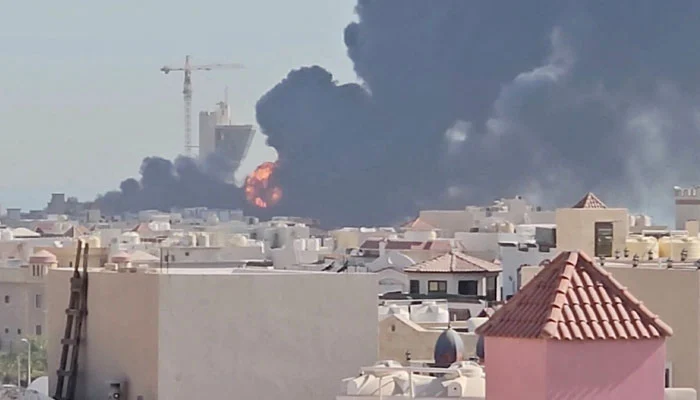
Iran escalated its attacks against US allies in the Gulf on Saturday, following a seventh consecutive night of American strikes targeting Iranian military positions, including logistical hubs. This increase in hostilities marks a significant escalation just one week after a fragile ceasefire unraveled.
Both parties targeted maritime traffic, with the US asserting it was enforcing a naval blockade, while Iran claimed its forces attacked vessels that crossed its rules in the Strait of Hormuz—a key waterway for approximately 20% of the world’s oil.
Oil prices surged over 4% on Friday, reaching their highest point in more than a month, intensifying political pressure on President Donald Trump as the Republican Party campaigns for control of Congress in November elections.
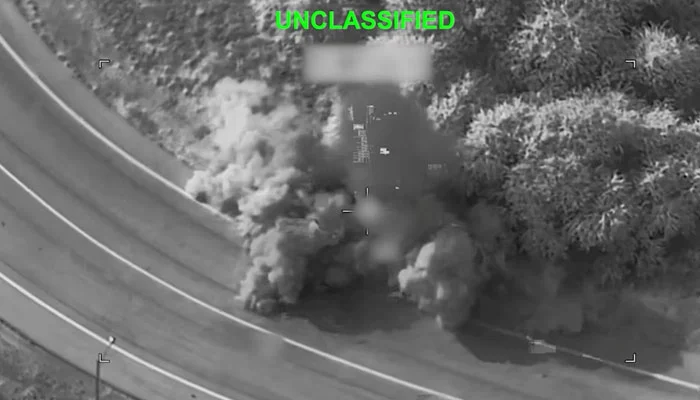
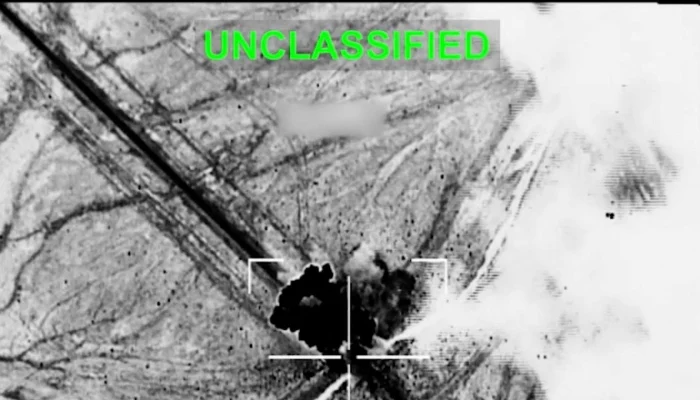
Since the ceasefire failed last week, Washington and Tehran have been testing the waters of escalation, with fears mounting of a possible full-scale war. The US Central Command reported launching strikes on surveillance sites, military logistics facilities, underground weapons caches, and maritime assets, employing fighter jets, drones, and naval ships. A statement from Central Command emphasized that over 50,000 American troops remain vigilant across the Middle East, ready to respond.
Reports emerged from Iranian media that several missiles hit power plants and desalination stations in Jask, a southern Iranian city, cutting off water supplies in nearby villages. Meanwhile, the US announced it had redirected four ships, disabled one vessel, and boarded another to uphold its naval blockade of Iran.
Iran’s Revolutionary Guards said they intercepted four ships attempting to violate their navigation rules through a combined missile and drone operation. There were claims of explosions and fires on two oil tankers passing a mined route south of the strait, but the US military dismissed those reports as false.
Additionally, armed individuals seized another vessel off Yemen, raising concerns over security at another critical choke point for oil shipments in the Red Sea. Iran’s state television cited the Revolutionary Guards, stating that without an end to US “aggression,” Iran would be unable to export chemicals or even a single drop of oil or gas from the region.
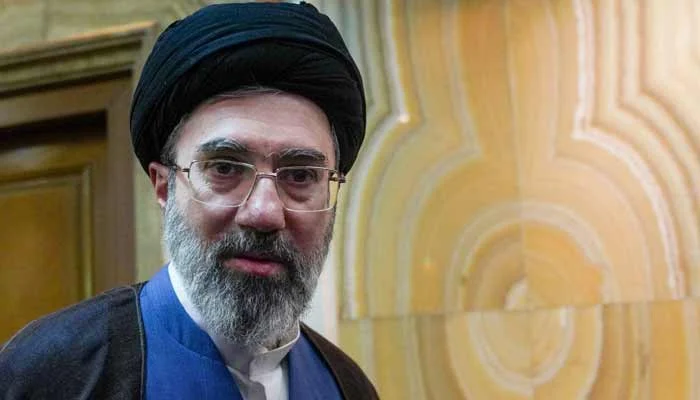
Mohsen Rezaei, an advisor to Iran’s Supreme Leader, issued a warning on Friday about US escalation and the potential seizure of Iranian territory.
The UN Secretary-General, Antonio Guterres, expressed concern about the ongoing escalation, particularly regarding attacks on civilian infrastructure within Iran and across the wider region. His spokesperson emphasized that the UN was closely monitoring the situation.
Early Saturday, Iran reported strikes in Hormozgan Province along the Strait of Hormuz, resulting in three deaths and eight injuries, with damage to bridges and a road tunnel. Explosions and strikes were also reported in several cities including Sirik, Ahvaz, Yazd, Jask, and Khorramabad late Friday and early Saturday.
President Trump has threatened widespread airstrikes on Iran’s infrastructure and has not ruled out a ground invasion of Iran’s coast or islands. U.S. officials suggest that attacks in southern Iran serve to provide Trump with multiple options should the situation escalate further.
 ChatGPT
 Perplexity
 Gemini AI
 Grok AI