الوسم: Oil shipping

  • US-Iran Tensions Persist with Seventh Consecutive Night of Strikes

    US-Iran Tensions Persist with Seventh Consecutive Night of Strikes

    Iran escalated its attacks against US allies in the Gulf on Saturday, following a seventh consecutive night of American strikes targeting Iranian military positions, including logistical hubs. This increase in hostilities marks a significant escalation just one week after a fragile ceasefire unraveled.

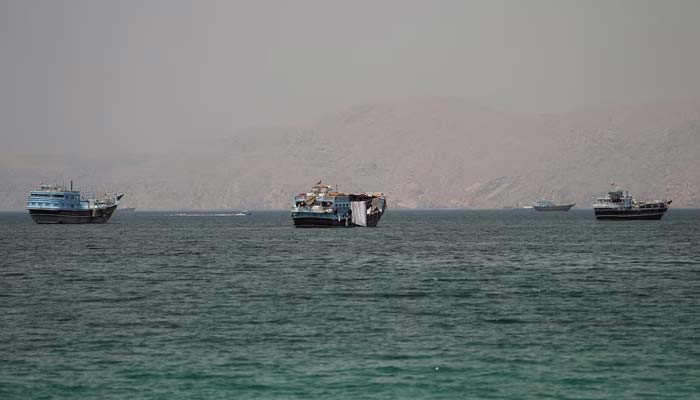
    Both parties targeted maritime traffic, with the US asserting it was enforcing a naval blockade, while Iran claimed its forces attacked vessels that crossed its rules in the Strait of Hormuz—a key waterway for approximately 20% of the world’s oil.

    Oil prices surged over 4% on Friday, reaching their highest point in more than a month, intensifying political pressure on President Donald Trump as the Republican Party campaigns for control of Congress in November elections.

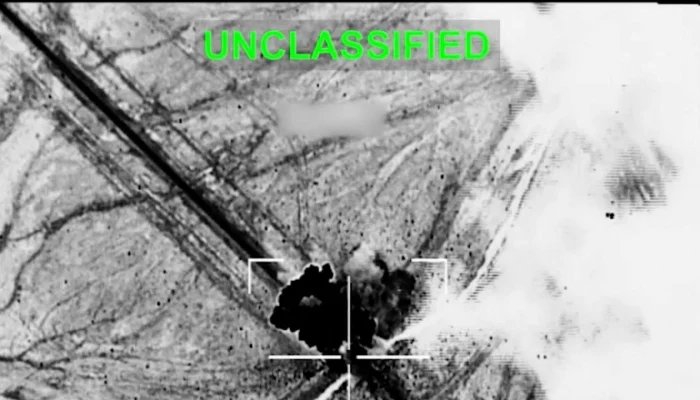
    Since the ceasefire failed last week, Washington and Tehran have been testing the waters of escalation, with fears mounting of a possible full-scale war. The US Central Command reported launching strikes on surveillance sites, military logistics facilities, underground weapons caches, and maritime assets, employing fighter jets, drones, and naval ships. A statement from Central Command emphasized that over 50,000 American troops remain vigilant across the Middle East, ready to respond.

    Reports emerged from Iranian media that several missiles hit power plants and desalination stations in Jask, a southern Iranian city, cutting off water supplies in nearby villages. Meanwhile, the US announced it had redirected four ships, disabled one vessel, and boarded another to uphold its naval blockade of Iran.

    Iran’s Revolutionary Guards said they intercepted four ships attempting to violate their navigation rules through a combined missile and drone operation. There were claims of explosions and fires on two oil tankers passing a mined route south of the strait, but the US military dismissed those reports as false.

    Additionally, armed individuals seized another vessel off Yemen, raising concerns over security at another critical choke point for oil shipments in the Red Sea. Iran’s state television cited the Revolutionary Guards, stating that without an end to US “aggression,” Iran would be unable to export chemicals or even a single drop of oil or gas from the region.

    Mohsen Rezaei, an advisor to Iran’s Supreme Leader, issued a warning on Friday about US escalation and the potential seizure of Iranian territory.

    The UN Secretary-General, Antonio Guterres, expressed concern about the ongoing escalation, particularly regarding attacks on civilian infrastructure within Iran and across the wider region. His spokesperson emphasized that the UN was closely monitoring the situation.

    Early Saturday, Iran reported strikes in Hormozgan Province along the Strait of Hormuz, resulting in three deaths and eight injuries, with damage to bridges and a road tunnel. Explosions and strikes were also reported in several cities including Sirik, Ahvaz, Yazd, Jask, and Khorramabad late Friday and early Saturday.

    President Trump has threatened widespread airstrikes on Iran’s infrastructure and has not ruled out a ground invasion of Iran’s coast or islands. U.S. officials suggest that attacks in southern Iran serve to provide Trump with multiple options should the situation escalate further.
  • Iran Launches Missiles at Commercial Ships in Strait of Hormuz

    Iran Launches Missiles at Commercial Ships in Strait of Hormuz

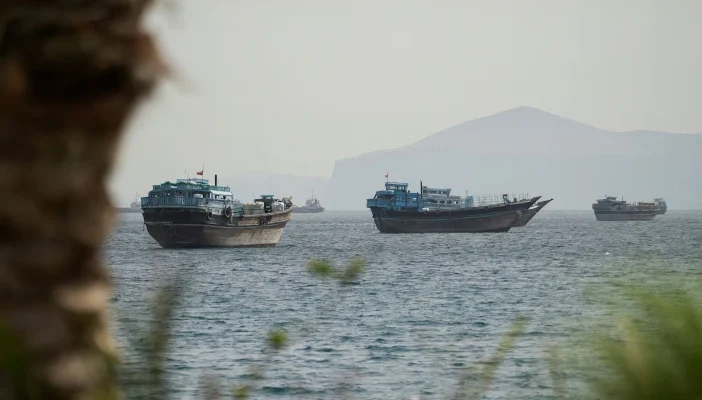
    Iran’s Revolutionary Guards launched at least two missiles targeting commercial ships passing through the Strait of Hormuz on Monday night, according to Axios, citing two U.S. officials. The attack caused significant damage to two ships, but no injuries were reported.

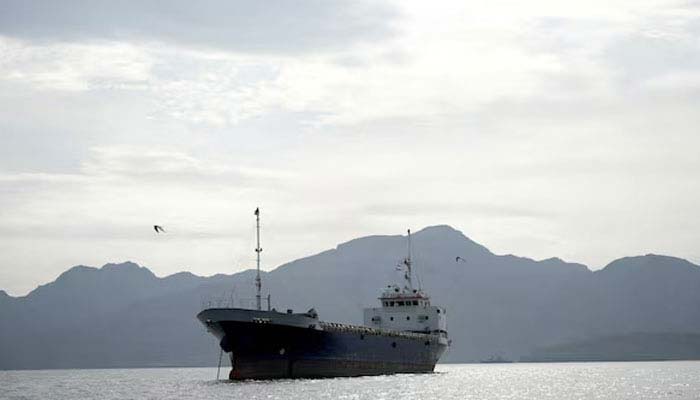
    Meanwhile, Britain’s maritime security authorities announced that a tanker caught fire after being hit by an unidentified projectile east of Oman’s Limah early Tuesday morning. The UK Maritime Trade Operations (UKMTO) reported the vessel was struck on its port side while traveling south about eight nautical miles east of Limah, igniting a fire, with no casualties or environmental damage reported.

    The Axios report couldn’t be independently verified by Reuters, nor could it be confirmed whether the ships mentioned include the tanker referenced in the UKMTO statement. U.S. Central Command has yet to comment on the situation.

    These incidents highlight the increasing dangers to shipping lanes near the Strait of Hormuz, a strategic narrow waterway that serves as a critical conduit for roughly 20% of the world’s oil. Despite ongoing efforts to ensure safe passage under a temporary agreement, attacks on commercial vessels have persisted amid the broader conflict that erupted following U.S. and Israeli strikes on Iran.

    Last week, indirect negotiations between the U.S. and Iran concluded without apparent progress toward lasting peace, even as a 60-day ceasefire remains in effect to facilitate diplomacy after the recent escalation in hostilities. President Donald Trump expressed a hardened stance Monday, stating that the U.S. will either secure a deal with Iran or “finish the job,” reiterating threats of military action as Iran demonstrates defiance after the funeral of former Supreme Leader Ayatollah Khamenei.

    Over the weekend, Iran’s Revolutionary Guards issued warnings via maritime radio, stating, “Our missiles and drones are ready to fire at you,” according to a recording obtained by the Wall Street Journal. One target appeared to be the Al Rekayyat LNG tanker, owned by Qatar Gas Transport Company (Nakilat), which was struck on its port side near the engine room, causing a fire and smoke. All crew members are safe and accounted for. The vessel was operating in the Gulf of Oman at the time.

    Requests for comment sent outside regular business hours to Nakilat, QatarEnergy, and Qatar’s International Media Office have not yet been answered. As tensions remain high, executives and governments continue to monitor developments in Gulf oil exports and shipping safety around the vital Strait of Hormuz.

  • Hormuz Shipping Slumps Following Saturday Vessel Attack

    Hormuz Shipping Slumps Following Saturday Vessel Attack

    Traffic through the Strait of Hormuz slowed over the weekend following an incident where a vessel was hit while crossing the waterway on Saturday. Additionally, a new round of hostilities between the United States and Iran has put their tentative agreement to de-escalate tensions under strain.

    According to maritime tracking data from Kpler, 29 ships moved through the strait on Saturday, with 12 more transiting on Sunday. These numbers reflect a significant drop from last week when, fueled by a memorandum of understanding signed by Tehran and Washington on June 15, the number of crossings peaked at 70 on Wednesday — the highest since the conflict in the Middle East escalated.

    Despite Iran’s warnings against using unauthorized shipping routes, vessels continued to navigate various paths through the strait over the weekend. After a vessel was struck Saturday morning, ships for several hours continued along a southern route through Omani waters before traffic appeared to slow, according to MarineTraffic, which monitors vessels equipped with active transponders. This indicates that some ships may have crossed with signals turned off.

    Over the weekend, more ships entered the Gulf than left, reversing a trend from the previous week when the focus was on evacuating stranded sailors in the region. The UN-led effort to evacuate 11,000 seafarers was halted Thursday after another vessel was hit in the Gulf of Oman.

    On Sunday, four tankers and one container ship used the southern corridor through Oman to enter the Gulf, escorted by U.S. Navy vessels, as reported by HFI Research on X. No ships used that route for exit on the same day, and total crossing figures may rise as additional data, possibly from satellite imagery, becomes available.

    Iran announced on Monday that it conducted its first meeting with Oman to discuss management of the strait. Meanwhile, the U.S. has stated it will not accept transit fees for what it considers an international waterway.

  • Iran warns threat to Hormuz routes could escalate Middle East tensions

    Iran warns threat to Hormuz routes could escalate Middle East tensions

    Iran’s top diplomat warned Sunday that any attempt to circumvent the routes through the Strait of Hormuz, as previously agreed with the U.S., would escalate tensions in the Middle East. The region has seen ongoing exchanges of attacks and accusations, with each side claiming the other violated a fragile ceasefire.

    The situation highlights the delicate nature of a Pakistan-mediated agreement designed to end a conflict initiated by the U.S. and Israel this past February, which disrupted shipping traffic and unsettled global energy markets.

    Iranian Foreign Minister Abbas Araghchi emphasized that any deviation from the current arrangements would complicate efforts to reopen the strait and could cause further delays and conflicts. He urged all involved parties to honor the memorandum of understanding (MoU) and prevent it from veering off course.

    Iran has declared that it will maintain full control and oversight of the Strait of Hormuz for the next 30 days, warning that unilateral moves by any other nation might hinder the waterway’s reopening. The Iranian Revolutionary Guards announced they are implementing measures to regulate maritime traffic through the strait — a vital corridor where about 20% of the world’s oil and liquefied natural gas exports pass during peacetime. They also stated that ships violating the rules would face stricter enforcement than previously.

    Recently, Oman and the International Maritime Organization (IMO) announced a new shipping corridor without consulting Tehran, prompting Iran to warn vessels against using it. The only permitted passage under Iranian authority runs along its coastline, with Iran maintaining strict control over maritime movement.

    Aide to Iran’s Supreme Leader, Mohammad Mokhber, posted on X (formerly Twitter) that as long as Iran manages the strait, U.S. hegemonic ambitions in the region will be thwarted.

    The recent MoU, aimed at ending the hostilities, allows for the safe passage of commercial ships free of charge for 60 days from the Persian Gulf to the Sea of Oman, passing through the strait. Despite a ceasefire that began in April, sporadic violence has persisted, with Iran carrying out retaliatory strikes against U.S. bases in Kuwait and Bahrain on Sunday in response to American attacks.

    Bahrain condemned what it called “treacherous Iranian attacks,” claiming its air defenses intercepted missiles and drones. Kuwait also denounced Iran’s “heinous aggression” in this ongoing escalation.

    In response, U.S. forces reported striking multiple Iranian targets on Saturday, citing retaliatory actions for attacks on shipping in the strait. Experts believe more incidents involving the Hormuz Strait are likely.

    Analysts note that Iran may be choosing a strategy of prolonged negotiations coupled with measured pressure via the waterway to strengthen its position. The US-Iran MoU explicitly states that both nations and their allies agree not to initiate any war or military operations against each other and to refrain from threatening or using force. However, accusations of violations have surfaced from both sides.

    President Donald Trump stated Saturday that Iran would cease to exist if the U.S. is forced to resume hostilities, claiming that recent U.S. strikes targeted Iranian missile, drone storage, and radar sites for violating the ceasefire. The Pentagon confirmed that these strikes were in response to Iran’s drone attack on an oil tanker flying the Panama flag.

    Meanwhile, Israel launched strikes in Lebanon, with Hezbollah’s leader Naim Qassem rejecting the peace deal aimed at ending the conflict there — a development that threatens to undermine broader US-Iran diplomacy. Iran criticized Israeli actions as blatant violations of the ceasefire, and Lebanese officials warned of potential internal conflict over the border agreement signed in Washington, which includes disarmament of Hezbollah.

    Iran’s foreign ministry spokesperson emphasized that Israel’s withdrawal from Lebanon remains a fundamental condition for regional peace, a stipulation not addressed in the recent U.S.-brokered deal. Reports from Lebanon indicated new Israeli strikes in the south, and the Israeli military confirmed a soldier had been killed in ongoing clashes.