
Select Language:
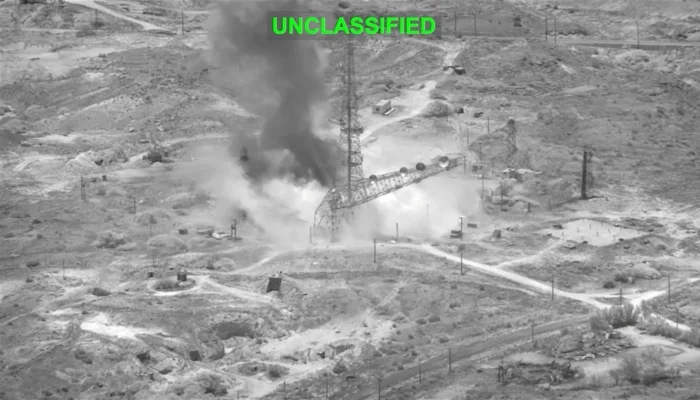
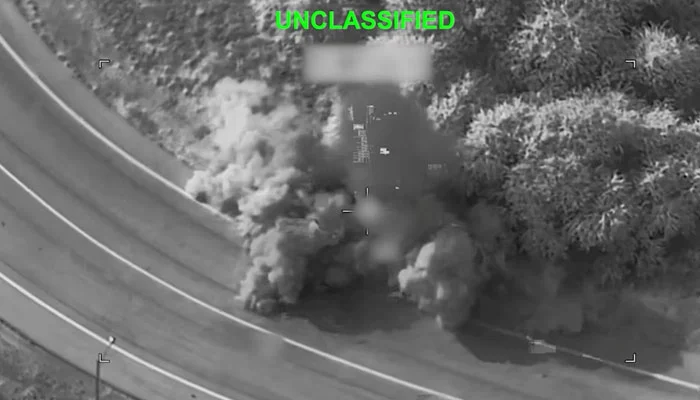
Smoke rises after a strike at an undisclosed location, described by the US military as part of its latest series of attacks on Iran. These airstrikes targeted Iranian military sites, including coastal surveillance and air defense installations, military logistics hubs, and maritime facilities, according to a still frame from a handout video released on July 16, 2026. — Reuters
– Iran launched new assaults on US facilities in the Gulf region on Friday, following a sixth straight night of US strikes on Iranian military targets, amidst a cycle of daily attacks and responses since last month’s ceasefire failed to hold.
– The US military announced it conducted another night of precision strikes aimed at weakening Iran’s military capabilities, focusing on locations such as Qeshm Island and near Bandar Abbas, which hosts Iran’s largest port, navy, and Revolutionary Guard bases.
– According to a statement from US Central Command, US forces—using fighter jets, drones, and warships—targeted dozens of Iranian military sites, including coastal surveillance and air defense systems, logistics infrastructure, and maritime assets.
– Iran has responded by firing missiles and drones at US military installations in neighboring countries, including an airbase in Jordan.
– Early Friday, Iran’s military reported attacks on US facilities in Bahrain and Kuwait. Witnesses in Doha, Qatar, heard multiple explosion-like sounds, and the country’s Interior Ministry confirmed that a child was wounded by shrapnel.
– Iranian media authorities noted that five bridges, the train station in Bandar Khamir, and Iranshahr Airport in southeastern Iran were struck in the latest US raids.
– Reports from Iran’s state news agency IRNA indicated that seven individuals were killed when US forces attacked bridges in Bandar Khamir, a southern port city. IS of Reuters could not independently confirm these claims.
### Shipping Traffic Blocks Again in the Strait of Hormuz
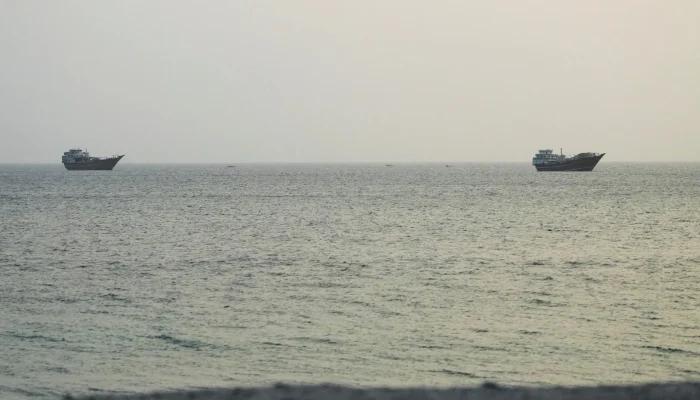
The ongoing hostilities have again largely halted maritime traffic through the Strait of Hormuz, a critical channel for global oil and gas shipments, causing a surge in worldwide energy prices.
Tehran has resumed its blockade of the Strait, and the US has prohibited Iranian ships from entering since Wednesday. There are indications Tehran might influence its Houthi allies in Yemen to close the Bab al-Mandeb Strait at the mouth of the Red Sea if Washington continues its attacks on Iranian infrastructure.
### Iran Maintains Control in the Strait
Iran aims to route all ships through a narrow passage near its coast and plans to impose transit fees following a 60-day negotiation window outlined in a recent memorandum. The US has promoted using an alternative route along Oman’s coast to bypass the Strait.
US military operations have targeted coastal military installations to impair Iran’s ability to control the Strait. Iranian Army spokesperson Brigadier General Mohammad Akraminia stated Thursday that such efforts would fail, asserting Iran could block the Strait from anywhere on its territory.
Former President Trump has left open the possibility of deploying ground forces, including plans to seize Kharg Island, Iran’s main oil export terminal. He has also threatened to target Iran’s power plants and bridges next week if Tehran does not resume negotiations.
 ChatGPT
 Perplexity
 Gemini AI
 Grok AI