
Select Language:
The United States conducted its third consecutive night of strikes against Iran as President Donald Trump announced plans to reimpose a port blockade on Tuesday, along with a 20% cargo transit fee in the strategic Strait of Hormuz.
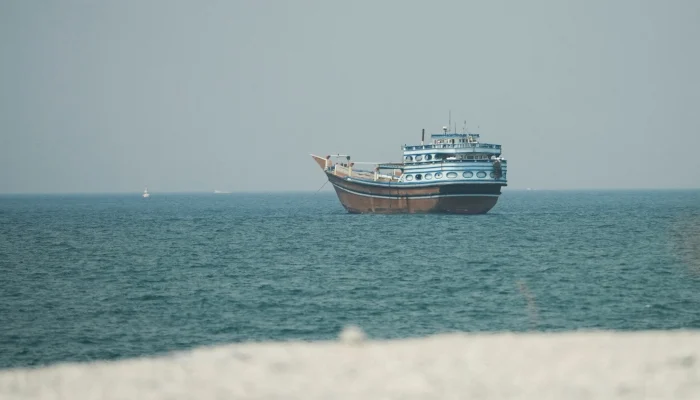
Trump indicated that diplomatic negotiations with Iran remained a possibility despite ongoing hostilities. Iran reportedly struck two ships in the vital waterway, resulting in one crew member’s death, according to the United Arab Emirates.
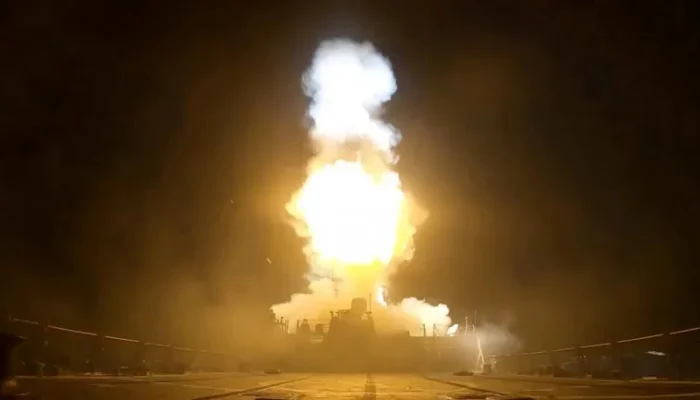
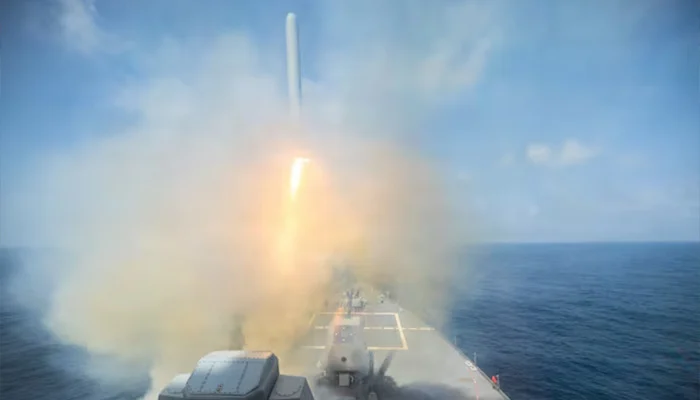
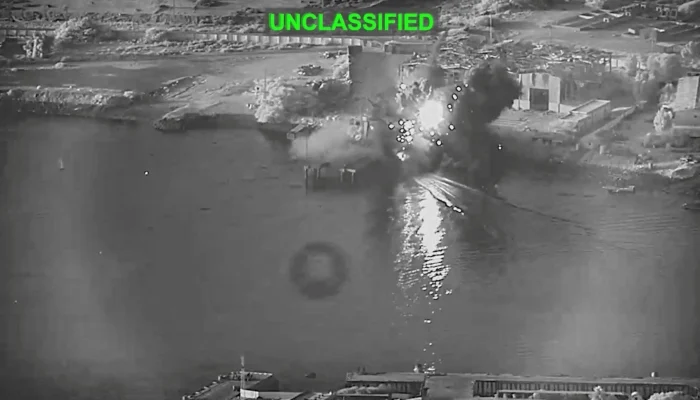
The U.S. military stated that its five-hour operation targeted several locations across Iran, including the coastal areas of Bushehr and Bandar Abbas, aiming to diminish Iran’s capacity to attack commercial shipping.
Following the strikes, Iran’s Revolutionary Guards claimed they retaliated by launching missiles and drones at Bahrain, targeting a residential building associated with U.S. forces and other military sites.
Trump declared at the White House on Monday, “We’re going to hit them very hard tonight, and we’re going to hit them hard tomorrow.” His announcement of a Hormuz port blockade coincided with a spike in US and Iranian clashes, levels of conflict not seen since an April ceasefire in the Middle East conflict, casting doubt on the prospects for a permanent peace.
Iran had previously blocked the Straits after US and Israeli military actions in February. Washington responded with a blockade of Iran’s ports, but restrictions were eased following an initial agreement in June.
On Monday, Trump announced the United States was “taking control” of the strait and would impose a 20% duty on all cargo passing through, a move criticized by Iran and labeled as “piracy.”
The US Central Command (Centcom) confirmed that Iran’s ports along the waterway would be blockaded from 2000 GMT on Tuesday. Oil prices surged over 9% on Monday due to fears of escalating conflict and continued to climb on Tuesday, adding over 1%.
Iranian forces also attacked other U.S. allies in the region, including Jordan, which reported shooting down four Iranian missiles. Iran’s Revolutionary Guards announced assaults on U.S. military installations at an airbase and urged Jordan to demand the removal of American military bases from the region.
These actions followed Iran’s earlier strikes on Bahrain, Jordan, Kuwait, and Oman, announced Monday by the Revolutionary Guards. Though Iran claims its attacks target U.S. interests in the Gulf, its military spokesperson warned that any Gulf country collaborating with the U.S. would be considered “an act of war.”
Last week, Trump officially notified Congress that the U.S. had resumed military hostilities against Iran, providing the Pentagon with an additional 60 days to operate in the region without congressional approval. Besides the events in Hormuz, Trump threatened to destroy Iran’s deep underground nuclear site near Natanz, suspected of housing an undeclared enrichment facility.
Trump told conservative radio host Hugh Hewitt, “Tell the Iranians to be ready. Let them know we’re coming, and there’s nothing they can do about it.” On social media, he declared the U.S. would be “known as ‘THE GUARDIAN OF THE HORMUZ STRAIT,’” and announced a 20% fee on all cargo passing through.
While Iran’s ports would again be blocked, Trump stated that “all other countries will have fair and open use of the strait.” Iranian Foreign Minister Abbas Araghchi sarcastically responded on X, noting that Trump was “absolutely right” that the provider of safe passage should be compensated, but suggested Iran would charge less, adding, “20% is of course too much.”
The U.S. has opposed Iran’s desire to impose tolls on the strait, which international law generally prohibits.
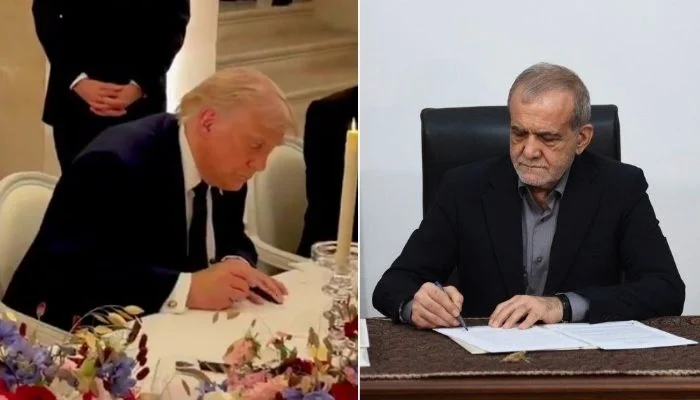
Despite tensions, Trump maintained that diplomacy with Tehran could still be possible. Iran’s Foreign Ministry spokesman, Esmaeil Baqaei, said earlier Monday that the June memorandum that underpinned negotiations and lifted some sanctions was “in crisis.” Iran stated it would disregard its obligations under the deal if the U.S. continued to act unilaterally but emphasized ongoing talks with mediators from Qatar, Pakistan, and Oman to prevent further escalation.
 ChatGPT
 Perplexity
 Gemini AI
 Grok AI