Tag: attack

  • Berlin festival tragedy: Vehicle hits crowd, one dead

    Berlin festival tragedy: Vehicle hits crowd, one dead

    A single individual was killed and 17 others injured, some critically, when a vehicle plowed into a crowd near Berlin’s Pride festivities on Saturday night, prompting a search for those responsible, according to authorities. Officials state the incident occurred around 10 PM in the Tiergarten park, close to the Brandenburg Gate, where the vehicle hit multiple people before stopping after colliding with a tree. The suspect has been identified, and efforts are underway to apprehend him.

    Eight of the injured are in serious condition, with three in life-threatening danger, a fire department spokesperson reports. The vehicle involved is described as a white car, possibly a sedan, minivan, or minibus. Witnesses mentioned it might have been a van, with reports indicating a man exited the vehicle and fled on foot.

    Thousands gathered peacefully in Berlin for the annual Christopher Street Day parade, one of Europe’s largest LGBTQ+ celebrations, before the attack abruptly ended the event. Emergency services responded in force to the scene.

    Julian Miethig, who attended, expressed his shock, saying, “This is one of the worst days for the LGBTQ community, and I never thought I’d experience something like this. I’m devastated.”

    Since its inception in West Berlin in 1979, CSD has grown from a modest demonstration into a prominent cultural and political event. It features a parade along with various political, cultural, and social activities across the city.

    Germany has faced a troubling pattern of vehicular attacks targeting crowds in recent years. In May, a man with mental health issues drove into pedestrians in Leipzig, resulting in two deaths and serious injuries to three others. Last year, a man drove into a crowd in Mannheim, killing two, and another attack in Munich involved a suspect linked to an earlier incident, leaving two dead and over 40 injured, including children. In December 2024, a man killed several people at a Christmas market in Magdeburg; the suspect was a Saudi psychiatrist with a history of anti-Islamic rhetoric, residing in Germany for nearly twenty years.

  • Iran hits Bahrain and Kuwait with attacks on power and water plants

    Iran hits Bahrain and Kuwait with attacks on power and water plants

    Kuwait reports that Iran attacked a power and water plant Sunday, sparking a fire. This follows a series of strikes on energy facilities in the Gulf nation, with authorities stating it’s the third attack in three days; a water and power plant was hit on Saturday as well. Kuwait has urged residents to reduce their electricity use to help manage the added pressure on its power grid due to ongoing Iranian assaults.

    Earlier, Iran acknowledged launching attacks on U.S. assets in Kuwait amid heightened tensions over the Strait of Hormuz that have persisted for over a week. The Kuwaiti Ministry of Electricity, Water, and Renewable Energy confirmed the attack via X (formerly Twitter), noting it caused damage to multiple power generators and prompted an emergency response. Firefighters are actively working to extinguish the blaze.

    Both Kuwait and Bahrain’s militaries have reported responding to Iranian aerial strikes. Air raid sirens sounded across both countries as Tehran intensified its regional retaliations. An AFP journalist in Kuwait observed warning sirens, while in Bahrain, blasts were reported in the northern areas, and a siren was heard in the capital, Manama.

    Bahrain, home to the U.S. Fifth Fleet, accused Iran of targeting civilian sites in these attacks. Alongside this, Iran announced early Sunday that its military had targeted two U.S. bases in Kuwait with drones, responding to U.S. strikes on Iranian territory. Iran’s state media detailed large-scale attacks involving kamikaze drones against Camp Udairi’s ammunition depot and radar systems at Ali Al Salem Air Base.

    Since renewed hostilities commenced earlier this month, Kuwait and Bahrain, both hosting U.S. military installations, have endured the brunt of Iran’s strikes on Gulf neighbors, despite a formal ceasefire and agreements between Washington and Tehran. The U.S. Central Command reported that two service members were killed on Friday during defensive operations against Iranian missile and drone attacks, with one service member still listed as missing.

  • Utah Police: Muslim Man Stabbed Multiple Times Over Faith

    Utah Police: Muslim Man Stabbed Multiple Times Over Faith

    A man was detained in Utah after allegedly stabbing a Muslim man multiple times, with authorities revealing that the suspect claimed his actions were motivated by a desire to target Muslims. According to court documents filed Tuesday, the suspect admitted to police that he “plans to kill Muslims” and poses a significant threat to public safety due to his violent tendencies, ideologies, and history of planning mass casualty events.

    The attack occurred inside Valley Fair Mall in West Valley City on Monday. The victim, a male Muslim kiosk worker, was found to have multiple stab wounds across his body and was bleeding heavily, police reported in an affidavit. Bystanders managed to subdue the suspect until officers arrived at the scene.

    48-year-old Peter Michael Larsen was taken into custody and booked into Salt Lake County Jail on charges of attempted murder and possessing a dangerous prohibited weapon. The victim remains in critical condition in the hospital.

    According to the police report, Larsen approached the victim, inquired about his name and religion, and asked for water. While the victim turned to retrieve the water, Larsen started stabbing him. Imam Shuaib Din of the Utah Islamic Centre, who spoke with the victim’s family, said Larsen targeted the man intentionally because of his faith.

    A friend of the victim has launched a GoFundMe to support him, indicating he was stabbed 15 times and requires surgeries. Larsen was also hospitalized due to injuries sustained during his apprehension by neighbors before he’s been transferred to jail.

    Muslim advocacy groups, including the Council on American-Islamic Relations, have condemned the assault. Experts note a troubling rise in anti-Muslim sentiments over the past two decades, intensified by the aftermath of September 11, 2001, as well as recent tensions caused by anti-immigration policies, white supremacy, and regional conflicts such as Israel’s war in Gaza.

    Recent episodes of violence include a 2023 incident in Illinois where a 6-year-old Muslim child was stabbed, resulting in the attacker receiving a 53-year sentence before dying in custody, and a 2026 shooting at a San Diego mosque that left five people dead, including two teenagers suspected of being involved.

  • US Conducts Third Day of Strikes as IRGC Targets US Bases in Bahrain and Jordan

    US Conducts Third Day of Strikes as IRGC Targets US Bases in Bahrain and Jordan

    The United States conducted its third consecutive night of strikes against Iran as President Donald Trump announced plans to reimpose a port blockade on Tuesday, along with a 20% cargo transit fee in the strategic Strait of Hormuz.

    Trump indicated that diplomatic negotiations with Iran remained a possibility despite ongoing hostilities. Iran reportedly struck two ships in the vital waterway, resulting in one crew member’s death, according to the United Arab Emirates.

    The U.S. military stated that its five-hour operation targeted several locations across Iran, including the coastal areas of Bushehr and Bandar Abbas, aiming to diminish Iran’s capacity to attack commercial shipping.

    Following the strikes, Iran’s Revolutionary Guards claimed they retaliated by launching missiles and drones at Bahrain, targeting a residential building associated with U.S. forces and other military sites.

    Trump declared at the White House on Monday, “We’re going to hit them very hard tonight, and we’re going to hit them hard tomorrow.” His announcement of a Hormuz port blockade coincided with a spike in US and Iranian clashes, levels of conflict not seen since an April ceasefire in the Middle East conflict, casting doubt on the prospects for a permanent peace.

    Iran had previously blocked the Straits after US and Israeli military actions in February. Washington responded with a blockade of Iran’s ports, but restrictions were eased following an initial agreement in June.

    On Monday, Trump announced the United States was “taking control” of the strait and would impose a 20% duty on all cargo passing through, a move criticized by Iran and labeled as “piracy.”

    The US Central Command (Centcom) confirmed that Iran’s ports along the waterway would be blockaded from 2000 GMT on Tuesday. Oil prices surged over 9% on Monday due to fears of escalating conflict and continued to climb on Tuesday, adding over 1%.

    Iranian forces also attacked other U.S. allies in the region, including Jordan, which reported shooting down four Iranian missiles. Iran’s Revolutionary Guards announced assaults on U.S. military installations at an airbase and urged Jordan to demand the removal of American military bases from the region.

    These actions followed Iran’s earlier strikes on Bahrain, Jordan, Kuwait, and Oman, announced Monday by the Revolutionary Guards. Though Iran claims its attacks target U.S. interests in the Gulf, its military spokesperson warned that any Gulf country collaborating with the U.S. would be considered “an act of war.”

    Last week, Trump officially notified Congress that the U.S. had resumed military hostilities against Iran, providing the Pentagon with an additional 60 days to operate in the region without congressional approval. Besides the events in Hormuz, Trump threatened to destroy Iran’s deep underground nuclear site near Natanz, suspected of housing an undeclared enrichment facility.

    Trump told conservative radio host Hugh Hewitt, “Tell the Iranians to be ready. Let them know we’re coming, and there’s nothing they can do about it.” On social media, he declared the U.S. would be “known as ‘THE GUARDIAN OF THE HORMUZ STRAIT,’” and announced a 20% fee on all cargo passing through.

    While Iran’s ports would again be blocked, Trump stated that “all other countries will have fair and open use of the strait.” Iranian Foreign Minister Abbas Araghchi sarcastically responded on X, noting that Trump was “absolutely right” that the provider of safe passage should be compensated, but suggested Iran would charge less, adding, “20% is of course too much.”

    The U.S. has opposed Iran’s desire to impose tolls on the strait, which international law generally prohibits.

    Despite tensions, Trump maintained that diplomacy with Tehran could still be possible. Iran’s Foreign Ministry spokesman, Esmaeil Baqaei, said earlier Monday that the June memorandum that underpinned negotiations and lifted some sanctions was “in crisis.” Iran stated it would disregard its obligations under the deal if the U.S. continued to act unilaterally but emphasized ongoing talks with mediators from Qatar, Pakistan, and Oman to prevent further escalation.
  • Explosions Reported in Damascus During French President’s Visit, Security Sources

    Explosions Reported in Damascus During French President’s Visit, Security Sources

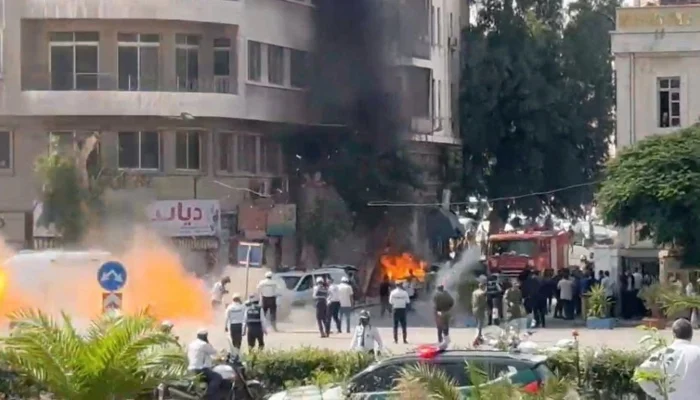
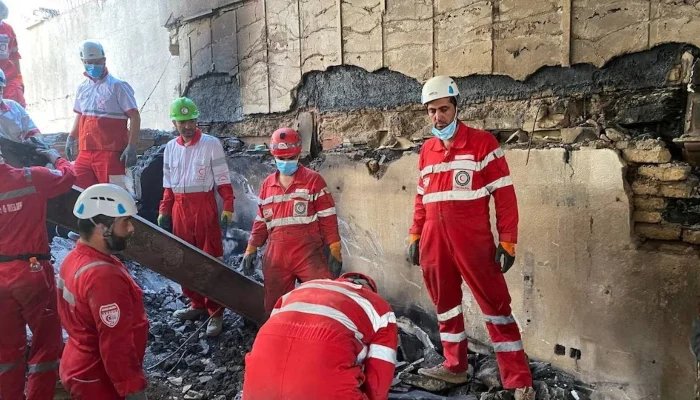
    Explosive devices detonated Tuesday in Syria’s capital, Damascus, close to a hotel where French President Emmanuel Macron was scheduled to stay, according to a security official. Streets were immediately cordoned off, and heightened security measures were put into place following the explosion. Observers on the scene reported hearing loud blasts nearby, and images captured show smoke rising from the area. Macron is the first prominent European Union leader to visit Damascus since Syrian President Bashar al-Assad was deposed. This story is developing and updates are ongoing.

  • Iran Tensions Possibly Linked to Trump Dinner Shooting Suspect

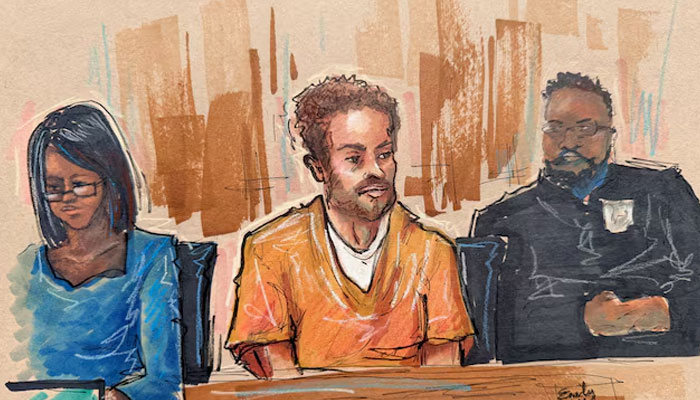
    Suspect Cole Tomas Allen, involved in White House Correspondents' Association dinner shooting, appears in court during a hearing after being charged with attempting to assassinate President Donald Trump, in Washington DC, April 30, 2026, courtroom sketch. — Reuters
    Suspect Cole Tomas Allen, involved in White House Correspondents’ Association dinner shooting, appears in court during a hearing after being charged with attempting to assassinate President Donald Trump, in Washington DC, April 30, 2026, courtroom sketch. — Reuters

    The Department of Homeland Security has identified the ongoing US-Israeli conflict with Iran as a possible reason behind the man accused of trying to assassinate President Donald Trump and high-ranking officials at a White House reporters’ event last month. This assessment was shared with law enforcement agencies across the country and other federal entities via an intelligence report.

    An early analysis from DHS’s Office of Intelligence and Analysis, dated April 27, suggests that Cole Allen harbored numerous social and political frustrations. The report indicates that the Iran conflict “may have influenced his decision to carry out the attack,” supported by Allen’s social media posts criticizing US involvement in the war.

    This new insight adds context to the investigation into the attempted attack on the White House Correspondents’ Dinner on April 25. While still in preliminary stages, the findings provide the strongest evidence yet linking the Iran conflict— which has caused thousands of deaths in the Middle East and impacted the global economy—as a potential trigger.

    The document, labeled as a “Critical Incident Note,” was retrieved through public records requests by the nonprofit organization Property of the People and has been shared with Reuters.

    A DHS spokesperson declined to comment on the report’s specifics.

    “These reports keep our partners informed with the latest intelligence after significant incidents that could impact homeland security,” the spokesperson stated.

    The FBI has also chosen not to comment, and the Justice Department did not respond to requests for further information.

    On Tuesday, the Justice Department announced an additional charge against Allen for assaulting a federal officer. This charge stems from him allegedly firing at a U.S. Secret Service agent at a security checkpoint, on top of charges of attempted murder, discharging a firearm during a violent crime, and illegally transporting firearms and ammunition across state lines. Allen has not yet entered a plea.

    Investigation of Social Media Activity

    U.S. officials have yet to reveal much about Allen’s motivations, apart from an email he sent to relatives on the night of the assault. The message, reportedly a manifesto, expressed anger towards the administration and mentioned his intention to target the “traitor” giving a speech—without explicitly naming Trump.

    Prosecutors allege that Allen disagreed politically with Trump and wanted to oppose government actions he deemed morally wrong. The FBI is thoroughly examining Allen’s social media presence and digital footprint to uncover additional motives, according to an anonymous law enforcement official.

    This review includes posts on a Bluesky account connected to Allen, where he shared several anti-Trump messages leading up to the incident. These posts also criticized U.S. actions in Iran, the Trump administration’s immigration policies, Elon Musk, and Russia’s conflict in Ukraine.

    For example, the account called for Trump’s impeachment after his threat to “destroy Iranian civilization” on April 7—just hours before Trump announced a ceasefire. It also criticized reporters attending the dinner.

    Additionally, a 2024 post quoting a Bible verse included a comment labeling Trump as “the devil” in response to a message from Trump’s daughter, Tiffany.

    The focus on Allen’s online activity aims to dispel conspiracy theories suggesting his motives. Such theories proliferated around the online activity of a man who fired at Trump during a campaign rally in Pennsylvania last year.

  • South Korean fighter pilot fined for photos linked to crash

    South Korean fighter pilot fined for photos linked to crash

    A South Korean fighter pilot has been ordered to pay 88 million won ($59,200) in damages for a mid-air collision in 2021 caused while attempting to photograph himself during a flight, according to an official report released Wednesday.

    The pilot, whose name has not been disclosed, sought to capture footage of his final sortie before a reassignment, as detailed by the Board of Audit and Inspection. During the flight, traveling at 359 mph (578 km/h), he had a teammate and another colleague take photos of him using their phones.

    In his quest for the perfect shot, he performed an acrobatic maneuver, flipping his jet and flying closely past another aircraft. This miscalculation led to his jet’s left stabilator — a horizontal tail stabilizer — hitting the wing of the other aircraft. Although no one was injured, the incident resulted in damages totaling 878 million won.

    The maneuver, which was not coordinated with his squadron, involved inverting his jet up to a 137-degree angle so the aircraft’s top side could be recorded on video, the report stated. Initially, the Defense Ministry ordered him to cover the full cost of the damages, but after he appealed, the Board reduced his liability to 10% of the repair costs.

    The decision considered that other pilots had previously conducted in-flight filming, and that he had safely piloted and returned his aircraft without causing further harm. The report highlighted that since his commissioning in 2010, he has demonstrated safe aircraft management over an extended period as a fighter pilot.

    While the report did not specify the aircraft type involved, Yonhap news agency indicated it was likely an F-15K.

  • Four Dead, 20 Injured in Southern Turkey School Shooting, Governor Announces

    Four Dead, 20 Injured in Southern Turkey School Shooting, Governor Announces

    Four individuals lost their lives, with an additional 20 people injured, when a middle school student opened fire at a school in southeastern Turkey’s Kahramanmaras province on Wednesday, according to Governor Mukerrem Unluer. The victims included a teacher and three students. The shooter, who used his father’s weapons hidden in a backpack, also died during the incident. Authorities have launched an immediate investigation into the shooting, and heightened security measures are now in place around the school.

    Eyewitnesses reported hearing intense gunfire, with footage showing a person being rushed into an ambulance, their face and body covered, and tearful parents gathering outside the school in Kahramanmaras’s main city. Police have responded by increasing security around the area, with ambulances present on scene.

    In a related incident the day prior, a former student opened fire at his previous high school, wounding 16 individuals—including students—before taking his own life in a confrontation with police. School shootings are infrequent in Turkey. However, in May 2024, a former student fatally shot a private high school principal in Istanbul five months after being expelled.

  • Gunfight outside Israel’s Istanbul consulate leaves one dead, two wounded

    Gunfight outside Israel’s Istanbul consulate leaves one dead, two wounded

    A gunman was shot and killed, while two others were injured in a brief gunfight outside the Israeli consulate in Istanbul on Tuesday, according to Turkish authorities. Two police officers sustained minor injuries during the exchange. Governor Davut Gul confirmed that one of the assailants was killed during the incident, which occurred around 12:15 p.m. local time (9:15 a.m. GMT).

    It remains unclear whether the Israeli consulate was the specific target. A source familiar with the situation told AFP that no Israeli diplomats are currently present in Turkey. Following the October 7, 2023, attacks by Hamas on Israeli territory, Israeli diplomatic missions in Turkey and across the region were evacuated for security reasons, the source added.

    Israel stated it would not be intimidated by such threats, with President Recep Tayyip Erdogan condemning the attack as “treacherous” and pledging to combat all forms of terrorism. Erdogan emphasized, “We will not allow provocations to compromise Turkey’s security environment,” during a televised address.

    A police officer remains alert near the scene, with authorities and witnesses describing a scene of chaos. An eyewitness, who chose to remain anonymous, recounted witnessing gunfire that lasted for some time, observing a police officer collapse and widespread panic among the crowd.

    Turkish officials have not officially identified the group behind the attack, but local media speculate it could be linked to ISIS, especially after clashes between militants and police in Yalova—a region near the Sea of Marmara about 55 miles southeast of Istanbul—where three officers were killed and nine wounded in December.

    Following the Yalova incident, Turkish authorities increased their efforts by executing broader raids that led to the detention of 125 suspects. Witnesses described seeing police opening fire in a busy district, with an injured individual being carried away on a stretcher. The entire gunfight reportedly lasted approximately ten minutes, with heavy police presence at the Levent business district where the consulate is situated.

    The area around the consulate is regularly secured by police, with barriers in place even under normal conditions. Istanbul’s prosecutors have launched an investigation, and reports indicate that three suspects have been detained.

    The United States strongly condemned the attack. Ambassador Tom Barrack expressed deep displeasure, stating, “Attacks on diplomatic missions are attacks on the international order and the principles that unite nations.” He also praised Turkish security forces for their swift response.

    Historically, ISIS has carried out lethal attacks in Turkey, including the 2017 nightclub massacre in Istanbul that resulted in 39 deaths.

  • Pentagon considers $200B budget boost amid Iran Gulf oil attacks

    Pentagon considers $200B budget boost amid Iran Gulf oil attacks

    The U.S. military’s plea for an extra $200 billion to fund the ongoing conflict with Iran faced stiff opposition in Congress on Thursday. Both Democrats and some Republicans questioned the necessity of additional funding, especially considering last year’s substantial defense budget, according to The News.

    Meanwhile, energy markets reacted to Iranian assaults on major energy infrastructure. A significant spike in Brent crude oil prices saw it peak at $119 before dropping back to $112, and European natural gas prices surged 35%. This volatility followed Iranian missile strikes on Qatar’s Ras Laffan LNG complex in retaliation for an Israeli attack on Iran’s South Pars gas field. Qatar’s Energy Ministry confirmed extensive damage, highlighting Iran’s defiance of its earlier promises to limit attacks to U.S. interests only.

    Iran threatened to escalate its response if its energy sites are targeted again. Other attacks, including a drone crash at a Saudi refinery and fires at Kuwaiti oil facilities, pointed to increasing regional instability. Even Israel reported damage to a port-based oil refinery amid warnings of Iranian missile launches.

    President Donald Trump stated there would be no repeat of Israel’s attack on Iran’s South Pars, but warned Tehran of a strong U.S. response if attacks persisted. Iran declared it would retaliate with ‘zero restraint’ if its energy infrastructure was once again hit.

    The confrontation spills into international waters, with several European nations expressing concern over the safety of the Strait of Hormuz and options for ensuring free passage. French President Emmanuel Macron criticized the escalation and called for direct U.S.-Iran talks. The U.K. and other allies echoed this call, emphasizing the importance of maintaining stability in the region.

    Global markets remain tense, with fears over prolonged conflict. The International Monetary Fund warned that sustained high energy prices could raise worldwide inflation by up to 2%. The World Trade Organization cautioned that ongoing war could threaten global trade and food security, projecting a slowdown in merchandise trade growth this year.

    Saudi Arabia’s Foreign Minister, Prince Faisal bin Farhan, warned that Iran’s repeated attacks could provoke military responses from Riyadh, which has not ruled out taking action. Turkey’s Foreign Minister urged Iran to avoid expanding its conflict to neighboring countries, emphasizing it holds a ‘historic responsibility’ to refrain from attacks.

    Across the region, tensions remain high, with missile launches reported in Israel, explosions near U.S. bases in Iraq and the UAE, and increased military preparedness among Gulf countries. The situation continues to evolve amidst calls for calmer diplomacy and the risk of further escalation.

    In the political arena, lawmakers considered additional military sales and support packages, including billions in arms to Gulf allies like Kuwait and the UAE, to bolster regional defenses. International efforts to establish safe shipping corridors through the Strait of Hormuz are underway, aiming to protect commercial vessels amid threats of tolls and taxes proposed by Iranian lawmakers.

    Overall, the region remains volatile as global powers attempt to navigate a complex web of military, economic, and diplomatic challenges stemming from these escalating conflicts.

  • UAE Acts to Mitigate Iran’s Impact Amid Rising Tensions

    UAE Acts to Mitigate Iran’s Impact Amid Rising Tensions

    Dubai is working hard to maintain its reputation as a safe haven despite Iran’s recent attacks. Influencers are showing support for the government’s stance while authorities crack down on false news sharing. Historically, the Gulf region was considered a secure refuge in a volatile Middle East, with the UAE promoting itself as the safest nation with minimal crime.

    That perception has now been challenged. Iran launched over 1,800 missiles and drones at the Emirates—more than any other country targeted by Tehran—disrupting its peaceful image, even though most of the projectiles were intercepted by air defenses. Ebraheem Alsamadi, a Kuwaiti-American star from “Dubai Bling,” stated in a video that he intends to stay in the UAE despite U.S. consular advice, asserting it remains “the safest country in the world” and emphasizing his commitment: “This has been my home for 16 years, and I won’t leave it in 16 seconds. I will stand by this country as it has stood by me.”

    Dubai’s official Instagram account shared a heartfelt song vowing, “Dubai is safe, and will always be safe.” Safety has long been a core part of the city’s identity. Geopolitical analyst Ryan Bohl noted that officials are now reconsidering how to adapt their security strategies amidst growing insecurity, but for now, they continue with familiar approaches. The UAE also hopes the conflict will be swift enough so that residents and visitors won’t associate the country with war, minimizing its impact on daily life and the economy.

    Nearly 90% of the UAE’s residents are foreigners—a vital workforce crucial for shifting the economy from oil dependency toward tourism and services. Retaining foreign talent is critical for these efforts. Tourism, highly sensitive to security concerns, faces challenges, but people from different parts of the world have varying levels of risk tolerance, Bohl explained.

    In response, officials emphasize normalcy during this period. Early in the conflict, President Mohamed bin Zayed Al Nahyan was seen walking through Dubai Mall with a large entourage, signaling confidence. Meanwhile, places like Dubai Mall and JBR beach have seen foot traffic decline as some tourists leave the country. Emaar, which operates key shopping centers, has warned retailers against closing or reducing hours, stating that such actions could harm the country’s reputation and economic stability.

    Images of drone strikes and smoke are widely circulated, and some fleeing tourists have recounted escaping Dubai under attack to international media. Dubai police have urged people not to spread rumors or share images of sensitive sites to prevent misinformation. Several Gulf nations have taken strict measures—Qatar has arrested over 300 individuals for disseminating misleading videos.

    The UAE’s attorney general has ordered arrests and trials for those sharing videos of interceptions or fabricated content. Recently, many businesses evacuated Dubai’s financial district amid threats from Iran targeting U.S. and Israeli-linked economic interests. As Dubai cannot solely depend on oil revenues, it is crucial to demonstrate that it remains a secure environment for investments and tourism.

  • Explosion damages Jewish school in Amsterdam—investigation underway

    Explosion damages Jewish school in Amsterdam—investigation underway

    An explosion caused minor damage to a Jewish school in Amsterdam early Saturday morning, which the city’s mayor described as “a targeted attack against the Jewish community.” The blast occurred in an upscale residential neighborhood in the southern part of the city. Mayor Femke Halsema stated in a press release that the damage was limited and that police and firefighters responded swiftly. No injuries have been reported.

    An investigation has been launched, as this incident follows recent nighttime assaults outside synagogues in Liège, Belgium, and Rotterdam, Netherlands. After an arson attack at a Rotterdam synagogue on Friday, security measures at Jewish sites in Amsterdam had already been increased.

    In Belgium, a synagogue in Liège was set on fire following an explosion earlier this week. Halsema condemned the act, calling it “a cowardly attack on the Jewish community,” and noted that police possess CCTV footage of a suspect placing the explosive device.

    She emphasized that antisemitism is increasingly confronting Jews in Amsterdam, calling such acts unacceptable. Rising concerns about potential attacks on Jewish communities worldwide follow recent escalations between the US, Israel, and Iran, and Iran’s retaliatory response.

  • Iranian Girls’ School with Vibrant Website and Long Online History

    Iranian Girls’ School with Vibrant Website and Long Online History

    A girls’ school in Iran’s Minab was struck on February 28, 2026, during the first day of the conflict. Prior to the attack, the school maintained an active online presence, including numerous photos of students engaged in various activities. Investigations, including those by Reuters, reveal that the school’s digital footprint was substantial, with images depicting girls dressed uniformly and playing, dating back to at least 2018 and archived in 2025.

    The school’s online records also include a listing in a local business directory, with photos showing the alleyway marked explicitly as “Girls School.” Satellite imagery from recent months indicates the school was active in the community, with visible playground markings and structural details consistent with educational facilities.

    The school sat adjacent to a military installation, separated by a brightly painted wall. On February 28, the nearby structures, including at least one building in the Islamic Revolutionary Guard Corps (IRGC) complex, were hit during a barrage believed to include a U.S.-made Tomahawk cruise missile. Satellite data, photos, and videos confirm multiple explosions along a 325-meter stretch, with evidence of the destruction of the school and a nearby building that suffered a large hole on its roof.

    Despite no official confirmation, U.S. President Donald Trump suggested Iran may possess Tomahawk missiles, though he provided no supporting evidence. The Pentagon stated that an investigation is ongoing but declined to comment on the specifics of the strike or the targeted location.

    Two anonymous sources told Reuters that outdated targeting information might have contributed to the strike, a concern first reported by the New York Times. Defense analyst Mark Cancian of the Center for Strategic and International Studies indicated that the U.S. had long-term target lists for potential conflicts with Iran and emphasized the need for routine review of such targets.

    The targeted buildings appear to have been specifically chosen, rather than part of a broader bombing campaign, with only six structures—including the school—being damaged within a five-kilometer radius between February 28 and March 2. Minab, located near the Strait of Hormuz and surrounded by farmland, hosts one of Iran’s largest IRGC missile bases, according to state media.

    Post-attack satellite imagery highlighted significant upheaval, notably at the town cemetery, where fresh graves for victims were dug on March 2, arranged neatly in rows. The school was part of the Persian Gulf Martyrs’ Cultural Educational Institute, with its website displaying photos of students in the yard, corroborated by footage taken after the strike.

    Further analysis shows the girls’ school and a similar boys’ school in Minab located in or near IRGC-controlled zones, as per archived website information. The girls’ school’s address is listed on Resalat Blvd, behind the Asef Brigade, a known missile unit under IRGC Navy command, with photos and Maps confirming the presence of the school on that site.

    On the day of the strike, the U.S. Navy released images and videos of a Tomahawk missile launch from the USS Spruance, showing the missile in flight. Support for the missile type’s identity came from military experts who analyzed footage and debris, concluding it was likely a Tomahawk, though some suggested it could have been a glide bomb.

    Satellite images from late 2015 confirm the school area was enclosed and functioning as an educational space since at least 2018, showing murals on the exterior walls. The Iranian media published photographs claiming the remnants of an American missile hit the school, with forensic expert Hany Farid confirming no signs of digital manipulation in the images.

    Parts of the missile recovered from the scene match other Tomahawk segments shown by Yemen’s Houthi forces in 2025, reinforcing the assessment of the missile’s type. Notably, activity at the school persisted into December 2025, with imagery indicating gatherings in the yard.

  • Five Ships Attacked in Gulf and Hormuz Strait Amid Rising Maritime Conflicts

    Five Ships Attacked in Gulf and Hormuz Strait Amid Rising Maritime Conflicts

    A Thailand-flagged cargo ship, Mayuree Naree, was engulfed in black smoke in the Strait of Hormuz on March 11, 2026.— Reuters

    – Iranian armed boats attacked two tankers in Iraqi waters.
    – A Thailand-flagged bulk carrier was damaged off the coast of Oman.
    – Most crew members have been evacuated; three are missing.

    Iranian boats reportedly launched explosives at two fuel tankers in Iraqi waters, igniting fires and resulting in one crew member’s death on Wednesday. The attacks, which involved projectiles hitting three vessels in the Gulf, indicate a rise in hostilities between Iran and US-Israeli forces, bringing the total number of targeted ships in the region to at least 16 since fighting escalated.

    Shipping traffic in the Gulf and through the narrow Strait of Hormuz—responsible for about 20% of the world’s oil—has nearly halted since the U.S. and Israel initiated strikes against Iran on February 28, driving global oil prices to their highest point since 2022.

    The ships targeted in late-night attacks near Iraq include the Marshall Islands-flagged Safesea Vishnu and Zefyros, both of which had loaded fuel cargoes in Iraq, according to Iraqi port officials. “We recovered the body of a foreign crew member from the water,” said one security official. Iraqi rescue teams are still searching for other missing crew members, though it’s unclear which ship the body belonged to.

    Safesea Transport Group and Safesea Group, the U.S.-based operators of Safesea Vishnu, did not respond immediately to inquiries. Zefyros is flagged in Malta, and its crew list was provided by an Iraqi port source. Lloyd’s List Intelligence confirms that Zefyros Trading SA owns the vessel, with UK-based Cygnus Tankers Limited serving as the commercial operator and the George & Vassilis Michael family group of Greek shipowners as the beneficial owner. Cygnus Tankers did not comment, nor could the other parties be reached right away.

    Iran’s Revolutionary Guards have issued warnings that any vessel crossing the Strait of Hormuz may be targeted. U.S. President Donald Trump has threatened to escalate attacks on Iran if it continues to impede the strait.

    Earlier on Wednesday, the Thai-flagged dry bulk vessel Mayuree Naree was hit by two unidentified projectiles in the strait, igniting a fire and damaging its engine room. The Thai operator, Precious Shipping, reported three crew members missing, presumed trapped in the engine room. The remaining 20 crew members were safely evacuated to Oman. Images from the Thai navy show thick smoke billowing from the ship’s stern.

    The Guards claimed the vessel was “fired upon by Iranian fighters,” marking what appears to be their first direct engagement, although previously they have used missiles and drones.

    The U.S. Navy has declined daily requests from shippers for military escorts through the Strait of Hormuz since the conflict with Iran began, citing the high risk of attacks. President Trump has stated that the U.S. is prepared to provide escorts if needed.

    Two other ships have sustained minor damage:
    – The Japan-flagged container ship ONE Majesty was hit 25 nautical miles northwest of Ras Al Khaimah in the UAE, suffering minor hull damage above the waterline. Its crew is safe, and the vessel remains operational. Its owner, Mitsui OSK Lines, and the charterer, Ocean Network Express, are investigating the cause.
    – A bulk carrier, Star Gwyneth, flagged in the Marshall Islands, was hit around 50 miles northwest of Dubai. The hull was damaged, but the crew was unharmed, and the vessel continued to operate after the incident.

    The Iranian Guards also referenced another vessel hit by projectiles, likely drones, earlier that morning. Confirmation of this report remains pending.

  • Lawyers for Bondi Beach Shooting Suspect Request Gag Order to Shield Family

    Lawyers for Bondi Beach Shooting Suspect Request Gag Order to Shield Family

    Two individuals embrace beneath police officers standing guard outside Bondi Pavilion after an attack on a Jewish holiday celebration at Sydney’s Bondi Beach on December 15, 2025. — Reuters

    Lawyers representing a man accused of a fatal shooting at Bondi Beach in Sydney requested a court order Monday to prevent media outlets from naming his family, citing safety concerns.

    Authorities claim 24-year-old Naveed Akram opened fire during a Hanukkah celebration on December 14, resulting in 15 deaths, marking Australia’s most severe mass shooting in recent history.

    His father, Sajid Akram, who is also accused of involvement in the attack, was shot and killed by police at the scene.

    Police allege that both men were motivated by Daesh, using multiple high-powered firearms that Sajid Akram had legally obtained, to carry out the assault.

    Naveed Akram’s legal team sought a court order in Sydney to keep his mother, brother, and sister’s names, along with their residence and workplaces, from being made public.

    Judge Greg Grogan extended a temporary suppression order until the following month, citing intense international media interest.

    Akram faces 59 charges, including 15 counts of murder, 40 counts of attempted murder, and a terrorism offense. He has not yet entered a plea.

    The case is scheduled to return briefly to court next week, with a more extensive hearing set for April 8, during which prosecutors will present their evidence.

    The attack stunned the nation, which is known for its strict gun control laws, and prompted renewed calls for tougher regulations and increased efforts to combat antisemitism.

    Last month, Australia launched a government-led inquiry into antisemitism and social cohesion, expected to deliver its findings by December.

    The government has already responded by tightening gun laws and passing new legislation aimed at curbing hate speech.

  • Has the Iran Conflict Transformed the Gulf Permanently?

    Has the Iran Conflict Transformed the Gulf Permanently?

    Members of the Reuters Gulf team, like many others in the region, have been forced into sheltering in stairwells and windowless bathrooms. We’ve listened to missiles being intercepted overhead while trying to comfort scared children and handle growing concerns from afar.

    We now pay closer attention to potential dangers—how a window might shatter, where to find scarce supplies like chicken or bananas, and how every minor sound, even a neighbor closing a cabinet, can make our hearts race.

    In a region with increasingly dangerous airspace closures and where the only safe escape is a long desert drive through territory under Iranian attack, we all face the same impossible decisions: to stay or to leave, and how to do so.

    Federico Maccioni, part of Reuters’ finance team based in Dubai, remarked that he’s beginning to sense some doubts about what lies ahead for the city. Meanwhile, Rachna Uppal, the agency’s chief economics correspondent in Abu Dhabi, noted how life remains remarkably normal—people are shopping, going to dental appointments, and even jet skiing.

    Reporters across the Gulf are trying to piece everything together. Iran’s drones continue relentless strikes, penetrating defenses and targeting airports, hotels, and data centers. Tourism is collapsing, business centers are frozen, and the Gulf’s decades-long development efforts now seem uncertain. This overview examines the economic impact, strategic risks, and potential lasting changes caused by this conflict.

    Gulf fundamentals

    The Gulf’s growth over the years stood on two main beliefs: its cities provided a safe refuge in a turbulent region, and its vast wealth from continuous energy exports would keep flowing. Recent events threaten to dismantle both assumptions, possibly forever.

    First, the idea of the Gulf as a safe haven has been shattered. Dubai, seen as an oasis of stability, was built on the premise that regional chaos would end at its borders. But weeks of Iranian missile and drone attacks on key points like airports and ports have exposed that illusion.

    While Sheikh Mohammed bin Zayed of the UAE tried to project normality strolling through Dubai Mall, outside, flights were canceled, markets closed, and residents queued anxiously for supplies. The constant barrage of air defense interceptions has added to the fear, raising questions about whether cities like Dubai, Abu Dhabi, and Riyadh—dependent on confidence, ease of movement, and perception—can sustain their reputation as premium destinations when visibly vulnerable.

    Economic fragility and ripple effects

    The second, deeper crisis stems from economic disruption. Closing the Strait of Hormuz and halting QatarEnergy’s massive LNG operations—responsible for a fifth of global LNG—have triggered an unthinkable supply shock.

    Iraq has cut back oil production; Saudi Arabia is adjusting its crude shipments; and hundreds of tankers remain idling near Fujairah—still smoldering after an attack—unable to pass safely. Prices for oil, natural gas, and related commodities have surged.

    The Gulf’s capacity to fund diversification, major investments, and maintain its generous social contracts depends heavily on stable energy exports. That foundation is now under threat, with some damages permanent.

    What’s next?

    This conflict has exposed a broader uncertainty: what will the future relationship between the Arab Gulf and Iran look like after this? After years of tentative diplomacy, the Gulf states had started to recalibrate ties with Iran, recognizing mutual interests and geography. That fragile trust has now been shattered.

    Iran’s widespread missile and drone assaults have erased the political space previously available for dialogue. As Gulf capitals confront this new reality, they face a tough question: can they ever trust Iran again, or is this the beginning of a prolonged hostile freeze?

    The consequences are significant. The Gulf’s economic model, energy security, and regional diplomacy—constants for years—have been shaken. Even if active fighting ceases soon, this may mark the end of the era where engagement with Iran was considered manageable. A more cautious, security-focused Gulf is likely to emerge.

  • Bondi Beach Shooting Suspect Appears in Court for the First Time

    Bondi Beach Shooting Suspect Appears in Court for the First Time

    A man accused of opening fire during a Hanukkah celebration at Sydney’s Bondi Beach made his first court appearance Monday, according to Australian news outlets.

    Naveed Akram, 24, is charged with 59 counts related to the December 14 incident, including 15 counts of murder, 40 counts of attempted murder, and a terrorism offense.

    Authorities allege he carried out the mass shooting with his father, Sajid, 50, who was killed at the scene.

    At a brief court hearing in Sydney, Akram appeared via video from Goulburn Correctional Centre, a maximum-security facility southwest of Sydney, where he is held on remand. He wore prison greens and largely remained silent, responding only to confirm he heard discussions about extending non-disclosure orders concerning the victims.

    Outside the courthouse, defense lawyer Ben Archbold stated that Akram was doing “as well as can be expected” given the challenging prison conditions. When asked about his client’s plea, Archbold said it was too soon to determine and that he hadn’t discussed the specifics of the attack with him.

    “I haven’t spoken to him about the attack in that regard,” Archbold told reporters. “We’re just beginning the process; we’re waiting for the brief to be served. That’s all I can say for now.” He added that he had visited Akram in prison.

    “He’s just a client, and he deserves proper representation. We maintain our professional obligations regardless of personal opinions. The case is adjourned, and I have nothing further to add,” the lawyer said.

    The case is scheduled to return to court in April.