

Select Language:
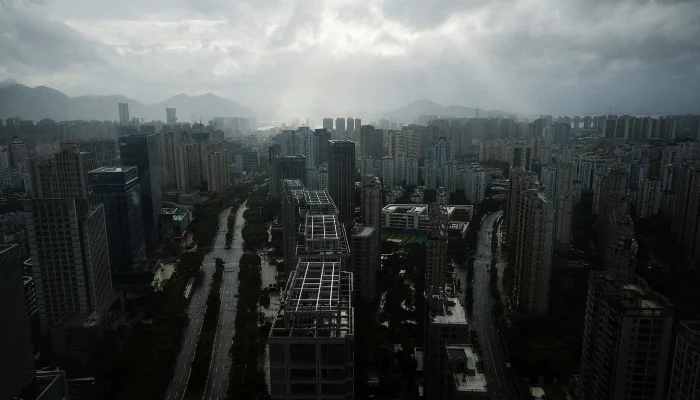
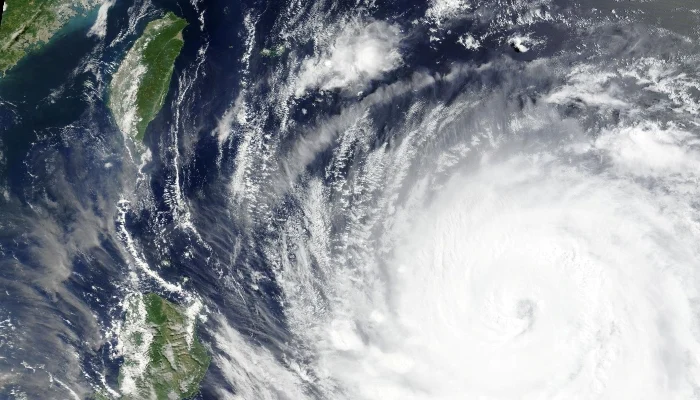
Typhoon Bavi made landfall Saturday night in Taizhou city on China’s eastern coast, prompting nearly 2 million residents to evacuate. The storm had previously battered Japan’s southern Sakishima islands and brushed past northern Taiwan. Although Bavi is now moving northwest, slowing down and weakening, it remains a serious threat because of the massive amount of moisture it carries within its rain bands — an area roughly the size of France.
At landfall, Bavi’s maximum sustained winds were about 90 mph (144 km/h), similar to a Category 1 hurricane. State media reported that over 1.7 million people had been evacuated across Zhejiang province, where Taizhou is located, along with more than 100,000 from neighboring Fujian province, Beijing, and around 34,000 from Shanghai.
Wenzhou resident Huang Xinghuan, 50, expressed cautious optimism, saying, “I’m a little worried, but I think It’ll be okay. We’ve experienced typhoons before. We will get through it.” He mentioned his family had stockpiled about two to three days’ worth of water and believed supplies were sufficient, advising against panic-buying.
While Japan and Taiwan haven’t reported any deaths, the Philippines saw 17 fatalities due to heavy rains caused by a strengthened southwest monsoon exacerbated by Bavi. Taiwan’s fire department reported 113 injuries, mainly from falls off motorcycles and bicycles or from being struck by objects.
In Taiwan, authorities evacuated over 14,000 people primarily from mountainous areas as the island prepared for Bavi’s approach. Although the storm did not land there, officials took extensive precautions, forecasting nearly 3 feet (about 1 meter) of rain in some regions. Most evacuations occurred in the north and east, with 920 canceled international flights, leading to the closure of Taiwan’s main airport at Taoyuan and all domestic flights.
Nearly all cities and counties in Taiwan declared typhoon holidays, shutting down offices and schools for Saturday. In Taipei, some restaurants and convenience stores remained open, while the high-speed rail service continued with reduced schedules. Despite the severe weather, some residents experienced only mild inconvenience, describing it as “just a bit more wind.” However, in Taipei’s Beitou area, gusts reaching around 60 mph (100 km/h) caused trees to fall and rivers to swell.
In Wenzhou, 60-something Chen Qiuqin walked through steady rain to help her elderly parents prepare for the storm. She expressed a measured outlook, saying, “I was worried about the flowerpots on my mother’s balcony, so I’m helping move them inside. My parents are alone at home, so I was a bit uneasy.”
 ChatGPT
 Perplexity
 Gemini AI
 Grok AI