الوسم: Taiwan

  • Typhoon Bavi hits eastern China’s Taizhou after 2 million evacuate

    Typhoon Bavi hits eastern China’s Taizhou after 2 million evacuate

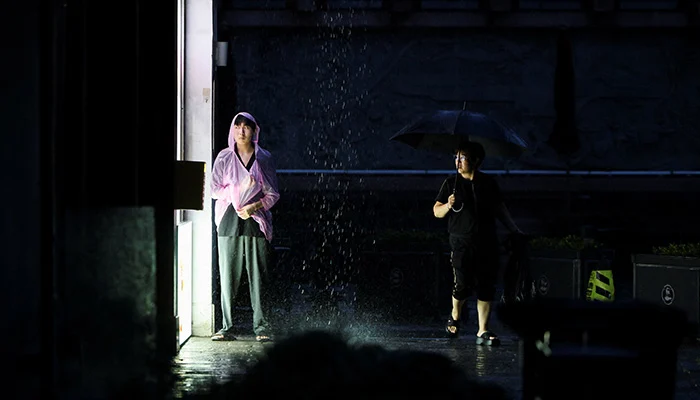
    Typhoon Bavi made landfall Saturday night in Taizhou city on China’s eastern coast, prompting nearly 2 million residents to evacuate. The storm had previously battered Japan’s southern Sakishima islands and brushed past northern Taiwan. Although Bavi is now moving northwest, slowing down and weakening, it remains a serious threat because of the massive amount of moisture it carries within its rain bands — an area roughly the size of France.

    At landfall, Bavi’s maximum sustained winds were about 90 mph (144 km/h), similar to a Category 1 hurricane. State media reported that over 1.7 million people had been evacuated across Zhejiang province, where Taizhou is located, along with more than 100,000 from neighboring Fujian province, Beijing, and around 34,000 from Shanghai.

    Wenzhou resident Huang Xinghuan, 50, expressed cautious optimism, saying, “I’m a little worried, but I think It’ll be okay. We’ve experienced typhoons before. We will get through it.” He mentioned his family had stockpiled about two to three days’ worth of water and believed supplies were sufficient, advising against panic-buying.

    While Japan and Taiwan haven’t reported any deaths, the Philippines saw 17 fatalities due to heavy rains caused by a strengthened southwest monsoon exacerbated by Bavi. Taiwan’s fire department reported 113 injuries, mainly from falls off motorcycles and bicycles or from being struck by objects.

    In Taiwan, authorities evacuated over 14,000 people primarily from mountainous areas as the island prepared for Bavi’s approach. Although the storm did not land there, officials took extensive precautions, forecasting nearly 3 feet (about 1 meter) of rain in some regions. Most evacuations occurred in the north and east, with 920 canceled international flights, leading to the closure of Taiwan’s main airport at Taoyuan and all domestic flights.

    Nearly all cities and counties in Taiwan declared typhoon holidays, shutting down offices and schools for Saturday. In Taipei, some restaurants and convenience stores remained open, while the high-speed rail service continued with reduced schedules. Despite the severe weather, some residents experienced only mild inconvenience, describing it as “just a bit more wind.” However, in Taipei’s Beitou area, gusts reaching around 60 mph (100 km/h) caused trees to fall and rivers to swell.

    In Wenzhou, 60-something Chen Qiuqin walked through steady rain to help her elderly parents prepare for the storm. She expressed a measured outlook, saying, “I was worried about the flowerpots on my mother’s balcony, so I’m helping move them inside. My parents are alone at home, so I was a bit uneasy.”

  • Xi urges Chinese, Taiwanese to unite, tells Taiwan opposition leader

    Xi urges Chinese, Taiwanese to unite, tells Taiwan opposition leader

    Taiwan’s opposition leader, Cheng Li-wun, visited China for a peace initiative, marking the first visit by a KMT leader in ten years. She met with Chinese President Xi Jinping at the Great Hall of the People in Beijing on Friday, where Xi expressed strong confidence that Taiwanese and Chinese people would unify, emphasizing the ongoing trend of closer ties and unity across the Strait. Xi reiterated China’s readiness to enhance dialogue with Taiwanese groups, including the Kuomintang, based on a shared goal of opposing Taiwan independence.

    Cheng assured Xi that the Taiwan Strait would cease to be a hotspot for potential conflict and called for an end to political confrontations, highlighting a positive response from Xi regarding her proposal for Taiwan’s involvement in international organizations such as Interpol and regional trade agreements.

    The trip comes ahead of a visit by U.S. President Donald Trump to Beijing for a summit with Xi, amid increasing pressure from the U.S. for Taiwanese opposition figures to support defense procurement plans, including U.S. weapons. Cheng criticized the Taiwanese government’s defense budget, which has stalled in Parliament, and advocated for a smaller, more manageable defense fund of NT$380 billion ($12 billion), with the potential for additional arms purchases from the U.S.

    While the Kuomintang regularly engages with Chinese officials, their previous high-profile visit was in 2016 with Hung Hsiu-chu. Relations across the Strait have deteriorated recently, especially since Lai Ching-te, Tsai’s successor, was elected; Beijing considers Lai a separatist.

    Cheng arrived in Shanghai on Tuesday evening, asserting that war is not inevitable between the two sides, contrary to international fears. She also traveled to Nanjing to visit the mausoleum of Sun Yat-sen, a revered revolutionary leader widely respected in both Taipei and Beijing.

  • China hikes defense budget 7% to modernize by 2035

    China hikes defense budget 7% to modernize by 2035

    China is set to increase its defense budget by 7% in 2026, marking the smallest rise in five years but still exceeding overall economic growth estimates and other Asian nations amid rising regional tensions, notably over Taiwan. Security experts and military officials in the region are closely monitoring these budget plans as China aims to modernize its armed forces by 2035, expand deployments throughout East Asia, and conduct a major purge of senior officers to combat corruption.

    Premier Li Qiang announced during the opening of the annual parliamentary session that China will advance its combat readiness and speed up the development of “advanced combat capabilities.” He also reaffirmed the country’s goal of reunification with Taiwan, emphasizing that all efforts will be made to safeguard China’s sovereignty, security, and development interests. President Xi Jinping continues to hold ultimate authority over military decisions.

    The 7% increase follows three consecutive years of 7.2% growth, the lowest since 6.8% in 2021. This budget supports China’s ongoing efforts to develop new missiles, naval ships, submarines, and surveillance technologies. Experts from institutions like the S. Rajaratnam School of International Studies suggest that this level of military spending aligns with China’s long-standing strategy of balancing economic growth with national defense, maintaining consistent growth as a percentage of GDP roughly matching overall economic expansion and inflation.

    This year’s defense buildup coincides with a significant purge within the upper military echelons, a rare event in recent decades. Notably, General Zhang Youxia, a close Xi ally, was placed under investigation in January, while General He Weidong was expelled last October. The high-profile anti-corruption campaign has led to a reduction in the number of top military leaders, leaving only two members on the Central Military Commission outside Xi Jinping, including newly promoted Vice Chairman Zhang Shengmin.

    Despite these internal upheavals, Beijing remains committed to the Communist Party’s absolute control over the military. Premier Li stressed that the country will continue to enhance political loyalty within the armed forces and make significant progress toward the PLA’s centennial goals. Many analysts believe that the upcoming anniversary of China’s founding next year may lead to increased military activities, especially around Taiwan, which China considers part of its territory despite its democratic governance.

    Li Jinping reiterated China’s firm stance against separatist movements and external interference regarding Taiwan, vowing to oppose “Taiwan independence” efforts. While Taiwan’s government maintains that only its people can decide their future and has not noted any major policy shifts from China, officials remain concerned about the sizable and growing defense budget. Taipei’s Mainland Affairs Council spokesperson Liang Wen-chieh pointed out that even in a challenging economic environment with sluggish private consumption, China’s large military investments pose a threat to Taiwan.

    On the international stage, Li Peked down a recent warning about the global security landscape, shifting from “increasingly complex and severe” to a more moderate description of its international environment. Meanwhile, Japan’s government expressed concern over China’s opaque defense expenditures and its increasingly assertive behavior in regional waters. Japan pledged to continue efforts to maintain stable and constructive relations with China despite ongoing disagreements over territorial disputes and security threats.

    Although the recent anti-corruption purges disrupted some military command structures temporarily, they are expected to bolster China’s military modernization efforts over time. As Chinese defense spending continues to outpace other Asian countries, the country’s share of regional military expenditure rose to nearly 44% in 2025, up from about 37% in 2010-2020, according to the International Institute for Strategic Studies. China’s annual military budget, around $277 billion, accounts for roughly a quarter of the U.S. defense outlay of over $1 trillion, although China provides limited detail on its defense spending breakdown.

  • Chinese President Xi speaks with US President Trump over call

    Chinese President Xi speaks with US President Trump over call

    US President Donald Trump and Chinese President Xi Jinping converse after a bilateral meeting at Gimhae International Airport during the Asia-Pacific Economic Cooperation summit in Busan, South Korea, on October 30, 2025. — Reuters
    • Xí emphasizes that Taiwan will eventually be integrated into China.
    • The US and China are close to reaching an agreement on critical resources like rare earth minerals and soybeans.
    • Under the proposed deal, the US plans to reduce tariffs on Chinese goods.

    Chinese President Xi Jinping and U.S. President Donald Trump had a phone conversation Monday discussing bilateral cooperation and Taiwan, according to Beijing’s official media.

    Xi urged Trump to keep up the momentum in their relationship, reflecting on their recent meeting in South Korea aimed at easing tensions in their ongoing trade disputes.

    Regarding Taiwan, Xi reiterated that the island’s “return to China remains an essential part” of the global order, as reported by Xinhua. China considers Taiwan to be a part of its territory.

    Recent comments by Japanese Prime Minister Sanae Takaichi suggesting Tokyo might intervene militarily if Taiwan comes under attack have further heightened tensions in the region.

    While the United States officially does not recognize Taiwan as an independent state, it remains Taipei’s primary partner and supplier of military aid.

    Taipei’s top diplomat, Lin Chia-lung, expressed earlier this month some concern that future high-level talks between Trump and Xi could overlook Taiwan’s interests.

    “It’s a concern, but not cause for panic—diminishing Taiwan’s interests could also harm U.S. strategic goals,” Lin noted.

    Trump and Xi’s first meeting since 2019 took place in late October, amid heightened global focus on their complex economic relationship involving everything from rare earths to port fees.

    The ongoing conflict has disrupted markets and supply chains worldwide for months.

    U.S. Treasury Secretary Scott Bessent indicated hope that a deal to secure supplies of rare earth minerals could be finalized by Thanksgiving, which is on Thursday this year.

    A tentative agreement from last month’s talks involved China agreeing to suspend certain export restrictions on key minerals for a year.

    China dominates the mining and processing of rare earths, crucial for advanced electronics, automotive, aerospace, and defense industries.

    Under the terms of the deal, the U.S. will reduce tariffs on Chinese goods, and Beijing has committed to purchasing at least 12 million metric tons of American soybeans this year and 25 million tons in 2026.

    Xi told Trump that their recent meeting in South Korea helped set the direction and renewed energy for the often-turbulent China-U.S. relationship, according to Xinhua.

    Since then, bilateral ties have remained steady and have shown signs of improvement, a development welcomed globally.

  • China warns Japan of severe consequences, urges Chinese to avoid visits

    China warns Japan of severe consequences, urges Chinese to avoid visits

    China has issued a warning to Japan, stating that any attempt to intervene militarily over Taiwan would result in a devastating defeat for Japan. Beijing also cautioned Chinese citizens against visiting Japan, following Japanese Prime Minister Sanae Takaichi’s comments regarding Taiwan, which China claims as its own territory.

    On Friday, Japan summoned China’s ambassador to protest remarks made by a senior Chinese diplomat on social media about Takaichi. The dispute stems from Takaichi’s parliamentary comments last week, in which she suggested that a Chinese attack on Taiwan could threaten Japan’s survival and provoke a military response from Tokyo.

    Last Saturday, China’s Consul General in Osaka, Xue Jian, shared a news article about Takaichi’s Taiwan remarks on social media, accompanied by a comment calling for the “cutting off” of a “dirty neck,” a now-deleted post. Japan responded by calling in the Chinese ambassador to express its displeasure over Xue’s statements.

    Some prominent Japanese politicians have called for Xue’s expulsion, but the government has only requested Beijing to “take appropriate measures,” without specifying further actions. Chinese Defense Ministry spokesperson Jiang Bin criticized Takaichi’s statements as highly irresponsible and dangerous, warning that if Japan refuses to learn from history and takes risks or even uses force over Taiwan, it will face a crushing defeat against the resolute People’s Liberation Army and suffer significant consequences.

    On Thursday, China’s foreign ministry summoned Japan’s ambassador in Beijing to formally protest Takaichi’s comments — the first such summons in over two years, since Beijing reprimanded Japan over Fukushima’s wastewater discharge earlier this year. The Chinese government also expressed concerns about Japan’s recent military and security policies, including its ambiguity on nuclear armament. Spokesperson Lin Jian indicated that Japan’s reluctance to rule out acquiring nuclear submarines signifies a concerning policy shift.

    Late Friday, China advised its citizens to avoid traveling to Japan due to worsening relations and the potential risks posed by the diplomatic tensions stemming from Takaichi’s remarks.

    The situation is further inflamed by Chinese media, which has launched harsh editorial attacks on Takaichi, fueled by historic grievances over Japan’s wartime actions and China’s sensitive stance on Taiwan. An editorial in the Communist Party’s People’s Daily criticized Japan’s efforts to potentially revise its post-World War II pacifist constitution and pursue a more assertive military presence, accusing Japan of trying to whitewash its past aggression, citing visits to Yasukuni Shrine, denial of the Nanjing Massacre, and hyping the “China threat” theory.

    Historical disputes over Japan’s wartime invasion of China and the broader regional tensions continue to influence current relations. China asserts sovereignty over Taiwan, which is just over 110 kilometers from Japan, and relies heavily on maritime routes around the island for trade. Japan hosts the largest overseas U.S. military contingent, adding strategic complexity.

    Additionally, China’s embassy in Tokyo has reportedly advised its employees to stay indoors amid rising anti-China sentiment. Japan’s government reiterated its desire for a peaceful resolution to Taiwan’s status through dialogue, as tensions persist.

    In other developments, Chinese authorities criticized Taiwan’s Democratic Progressive Party lawmaker Puma Shen for visiting Berlin recently, claiming China was threatening to have him arrested abroad. Shen, however, dismissed these threats, asserting Taiwan’s independence efforts are nearing their end.

    Meanwhile, China issued a bounty for Taiwanese social media influencers accused of “separatism,” which they responded to humorously, with one influencer attempting to turn himself in to authorities in a viral video.

  • Typhoon Fung-wong Causes Floods and Evacuations in Taiwan

    Typhoon Fung-wong Causes Floods and Evacuations in Taiwan

    Ahead of Typhoon Fung-wong’s arrival on Wednesday, more than 8,300 residents in Taiwan were evacuated. The storm, now significantly weakened, brought heavy rains to the mountainous eastern coastline, causing severe flooding stretching in some areas up to waist-high.

    Most businesses and schools in the southern regions of the island shut their doors, with 51 individuals reported injured. Live footage showed extreme flooding in parts of Yilan County, an area predominantly rural, where waters reached neck level, prompting rescue teams—including soldiers—to conduct efforts for stranded residents.

    Fisherman Hung Chun-yi recounted, “The water entered so rapidly.” He spent the night removing mud from his home in Suao, an eastern harbor town, after floodwaters on the first floor reached depths of about two feet. “It rained so intensely and so quickly that the drainage system couldn’t keep up.”

    The fire department reported that about 8,300 people had been relocated to safer areas, mainly within Yilan and the neighboring Hualien regions, as a late-season typhoon and a monsoon from the north exacerbated rainfall. Yilan’s town of Dongshan recorded 794 mm (approximately 31 inches) of rain on Tuesday, according to weather officials.

    Fung-wong is expected to brush past Taiwan’s southern tip later today before moving out into the Pacific Ocean. The storm lost much of its strength after passing through the Philippines, where it claimed 18 lives, and a September typhoon caused similar destructive floods in Hualien, killing 18 people.

  • India and China to Restart Direct Flights After 5-Year Halt

    India and China to Restart Direct Flights After 5-Year Halt

    India and China are resuming direct flights between specific cities this month after a suspension of over five years. The move indicates a cautious step toward easing bilateral tensions, according to India’s foreign ministry. Since 2020, there have been no direct flights connecting the two countries, despite China being India’s largest bilateral trading partner.

    India’s leading airline, IndiGo, announced it will start daily non-stop flights between Kolkata and Guangzhou on October 26. Additionally, there are plans to introduce a route linking New Delhi with Guangzhou. This comes after Indian Prime Minister Narendra Modi’s recent visit to China — his first in seven years — to attend a Shanghai Cooperation Organization (SCO) meeting.

    During the meeting, Modi and Chinese President Xi Jinping emphasized that India and China are development partners rather than competitors. They explored ways to strengthen trade relations amid global uncertainties and tariffs. Modi also expressed India’s dedication to improving bilateral ties, highlighting concerns over the significant trade deficit with China, which nears $99.2 billion.

    Both leaders affirmed the importance of maintaining peace and stability along their disputed border, where a clash in 2020 led to a prolonged military stand-off. This renewed communication suggests a potential thaw in relations, with economic and diplomatic exchanges gradually resuming.

  • Flood Fears Rise as Typhoon Ragasa Kills 14 in Taiwan, Evacuees Stay Alarmed

    Flood Fears Rise as Typhoon Ragasa Kills 14 in Taiwan, Evacuees Stay Alarmed

    Rescue teams mobilized across Taiwan continue their efforts in Hualien, where flash floods caused by Super Typhoon Ragasa have resulted in at least 14 fatalities. Many residents in Guangfu, a scenic tourist spot in Hualien, sought refuge in shelters on Wednesday amid fears of additional flooding after a barrier lake burst its banks, flooding the area with a wall of water. The lake, formed by landslides from previous heavy rains in the less-populated eastern part of the island, inundated Guangfu, prompting urgent evacuations.

    Authorities are actively searching for the 129 individuals reported missing, with the number later rising to 152. Premier Cho Jung-tai emphasized the need to investigate why evacuation procedures in designated zones were not fully executed, clarifying that the focus is on uncovering facts rather than assigning blame.

    As rain persisted intermittently, police issued new flood alerts, urging residents to move to higher ground. Many, including a woman named Tsai at an emergency shelter in a local school, opted not to return home until the risk subsides. Deputy Disaster Response Chief Huang Chao-chin assured that with rainfall easing and most of the lake’s water already released, the likelihood of a repeat severe flood has diminished.

    Local officials noted that pre-flood evacuation recommendations were voluntary, and that vertical evacuation alone couldn’t fully address the situation. While Taiwan generally has robust disaster management systems due to its frequent typhoon activity, this recent event exposed some gaps in warning and preparedness, especially in Guangfu.

    Guangfu’s residents describe the floodwaters hitting like a “tsunami,” with some escaping just in time. Fire authorities confirmed that all the dead and missing are from Guangfu, where a major bridge over a river was destroyed. The military has dispatched 340 troops to assist with rescue operations, with soldiers using armored vehicles to navigate muddy streets, distributing supplies and helping residents.

    Approximately 60% of Guangfu’s population, about 5,200 people, took refuge upstairs in their homes, while most others stayed with family members. The lake’s overflow released an estimated 60 million tons of water, roughly filling 36,000 Olympic-sized swimming pools. In a show of diplomatic goodwill, China’s Taiwan Affairs Office extended condolences, challenging their usual stance of non-interference and acknowledgement of the crisis.

    Hualien is renowned for its natural beauty and indigenous communities, including the Amis, which are impacted by the destruction. The storm brought roughly 28 inches of rainfall to Taiwan’s east coast but spared the western regions, home to vital semiconductor manufacturing. The island remembers the devastation caused in 2009 by Typhoon Morakot, which claimed around 700 lives and caused billions in damages.

  • US Warns of China’s Escalating Military Drills in Asia

    US Warns of China’s Escalating Military Drills in Asia

    US Defense Secretary Pete Hegseth addresses attendees at the IISS Shangri-La Dialogue security summit in Singapore, May 31, 2025.

    SINGAPORE: The United States has issued a warning, indicating that China is preparing to potentially employ military force in Asia. A senior U.S. official stated that China’s recent activities—such as military exercises near Taiwan and in the South China Sea—suggest that it may be attempting to alter the regional balance of power.

    This alert comes amid rising tensions between the two nations concerning trade, technology, and security issues.

    During an annual security conference in Singapore on Saturday, U.S. Secretary of Defense Pete Hegseth conveyed these concerns as the Trump administration engages in ongoing disputes with Beijing over trade practices, technological advancements, and influence over critical regions worldwide.

    In response to Hegseth’s remarks, China’s foreign ministry condemned the address, asserting that it had “formally communicated” its objections to the U.S., particularly regarding comments about Taiwan.

    Since taking office, President Trump has instigated a trade war with China, aimed at limiting its access to crucial AI technologies and strengthening security alliances with countries like the Philippines, which is involved in escalating territorial conflicts with China.

    “The threat posed by China is tangible and may be immediate,” Hegseth indicated during the Shangri-La Dialogue, which was attended by defense officials from multiple nations.

    He mentioned that Beijing is “seriously preparing to potentially employ military force to change the power dynamics in the Indo-Pacific region.”

    Hegseth cautioned that the Chinese military is enhancing its capabilities for a possible invasion of Taiwan, emphasizing that they are “practicing for the real event.”

    China has intensified military pressure on Taiwan, undertaking extensive exercises around the self-governed, democratic island, which are frequently interpreted as groundwork for a blockade or invasion.

    Hegseth pointed out that the U.S. is “reorienting its focus towards deterring aggression from communist China,” urging U.S. allies in Asia to promptly bolster their defenses in light of increasing threats.

    In response, Beijing’s foreign ministry stated: “The U.S. should not attempt to exploit the Taiwan issue as a bargaining chip to suppress China and must refrain from playing with fire.”

    ‘Provoking Issues’

    Hegseth characterized China’s actions as a “wake-up call,” accusing Beijing of endangering lives through cyberattacks, harassing neighboring countries, and “illegally appropriating and militarizing territories” in the disputed South China Sea.

    Despite an international ruling deeming its claims unfounded, China asserts sovereignty over nearly the entire waterway, a critical route for over 60% of global maritime trade.

    Recently, China has had repeated confrontations with the Philippines in these strategic waters, an issue expected to dominate conversations at the Singapore summit, according to U.S. officials.

    As Hegseth was speaking, China’s military announced that its naval and air forces were conducting routine “combat readiness patrols” around the Scarborough Shoal, a series of reefs and rocks claimed by both Beijing and the Philippines.

    China chose not to send senior defense officials to the summit, instead sending a delegation led by Rear Admiral Hu Gangfeng from the People’s Liberation Army National Defense University.

    Hu commented on Hegseth’s speech without mentioning his name, stating that “these actions fundamentally serve to provoke unrest, incite division, and destabilize the Asia-Pacific region.”

    Hegseth’s remarks followed President Trump reigniting trade tensions with China, claiming that Beijing had “breached” an agreement to reduce tariffs, as both sides appeared to be at an impasse in negotiations.

    The two largest economies had initially agreed to lower each other’s steep tariffs temporarily, pausing them for 90 days.

    ‘Cannot Dominate’

    Reassuring U.S. allies during his address, Hegseth declared that the Asia-Pacific region is “America’s priority theater,” affirming the commitment that “China cannot outmaneuver us—or our allies and partners.”

    He mentioned that the U.S. has increased its collaboration with allies like the Philippines and Japan and reiterated Trump’s commitment that “China will not invade Taiwan during his tenure.”

    However, he urged U.S. partners in the area to increase their military expenditures and “rapidly enhance their own defenses.”

    “Asian allies should look to European nations as a model,” Hegseth noted, referencing commitments by NATO members such as Germany to approach Trump’s defense spending goal of 5% of GDP.

    “Deterrence does not come without cost.”

  • China Conducts Major Military Exercises Near Taiwan

    China Conducts Major Military Exercises Near Taiwan

    On Tuesday, China mobilized its army, navy, air, and missile forces to encircle Taiwan in extensive military exercises. These drills were described by Beijing as a rehearsal for “precision strikes” and a potential blockade of the self-governing island.

    In response, Taiwan activated its own aircraft and naval vessels and positioned ground-based missile systems to counter the activities.

    These maneuvers followed comments made by U.S. Defense Secretary Pete Hegseth, who stated during a visit to Japan that the United States would uphold “credible deterrence” in the Taiwan Strait.

    In recent years, Beijing has significantly ramped up the presence of fighter jets and warships near Taiwan, a move that Taipei vehemently opposes. Taiwan’s defense ministry reported that China deployed 21 warships, including the aircraft carrier Shandong, in the vicinity of the island, along with 71 aircraft and four coast guard ships. This marks the highest number of naval vessels positioned around Taiwan since May of the previous year, when 27 ships were noted in a report by AFP referencing the defense ministry’s daily updates.

    Tensions in the Taiwan Strait, measuring 180 kilometers (112 miles) wide, have heightened since the inauguration of Taiwanese President Lai Ching-te in May 2024. According to Beijing, the recent military exercises were intended as a “stern warning and robust deterrent” against proponents of Taiwan’s independence.

    The drills included “sea and air combat readiness patrols, joint operations to establish comprehensive control, assaults on both maritime and land targets, and blockades of vital regions and sea lanes,” as noted by Senior Colonel Shi Yi, spokesperson for the Chinese military’s Eastern Theater Command.

    Shi further stated that Chinese forces were “closing in on Taiwan from multiple angles.” The Eastern Theater Command also indicated that the exercises involved training for “multi-directional precision strikes” around the island and released a graphic titled “closing in.”

    Additionally, China’s coast guard reported conducting “law enforcement patrols” in the waters surrounding Taiwan. Zhu Fenglian, a spokesperson for Beijing’s Taiwan Affairs Office, remarked, “Pursuing ‘Taiwan independence’ places the people of Taiwan in a precarious situation of conflict.”