Tag: China

  • Typhoon Bavi hits eastern China’s Taizhou after 2 million evacuate

    Typhoon Bavi hits eastern China’s Taizhou after 2 million evacuate

    Typhoon Bavi made landfall Saturday night in Taizhou city on China’s eastern coast, prompting nearly 2 million residents to evacuate. The storm had previously battered Japan’s southern Sakishima islands and brushed past northern Taiwan. Although Bavi is now moving northwest, slowing down and weakening, it remains a serious threat because of the massive amount of moisture it carries within its rain bands — an area roughly the size of France.

    At landfall, Bavi’s maximum sustained winds were about 90 mph (144 km/h), similar to a Category 1 hurricane. State media reported that over 1.7 million people had been evacuated across Zhejiang province, where Taizhou is located, along with more than 100,000 from neighboring Fujian province, Beijing, and around 34,000 from Shanghai.

    Wenzhou resident Huang Xinghuan, 50, expressed cautious optimism, saying, “I’m a little worried, but I think It’ll be okay. We’ve experienced typhoons before. We will get through it.” He mentioned his family had stockpiled about two to three days’ worth of water and believed supplies were sufficient, advising against panic-buying.

    While Japan and Taiwan haven’t reported any deaths, the Philippines saw 17 fatalities due to heavy rains caused by a strengthened southwest monsoon exacerbated by Bavi. Taiwan’s fire department reported 113 injuries, mainly from falls off motorcycles and bicycles or from being struck by objects.

    In Taiwan, authorities evacuated over 14,000 people primarily from mountainous areas as the island prepared for Bavi’s approach. Although the storm did not land there, officials took extensive precautions, forecasting nearly 3 feet (about 1 meter) of rain in some regions. Most evacuations occurred in the north and east, with 920 canceled international flights, leading to the closure of Taiwan’s main airport at Taoyuan and all domestic flights.

    Nearly all cities and counties in Taiwan declared typhoon holidays, shutting down offices and schools for Saturday. In Taipei, some restaurants and convenience stores remained open, while the high-speed rail service continued with reduced schedules. Despite the severe weather, some residents experienced only mild inconvenience, describing it as “just a bit more wind.” However, in Taipei’s Beitou area, gusts reaching around 60 mph (100 km/h) caused trees to fall and rivers to swell.

    In Wenzhou, 60-something Chen Qiuqin walked through steady rain to help her elderly parents prepare for the storm. She expressed a measured outlook, saying, “I was worried about the flowerpots on my mother’s balcony, so I’m helping move them inside. My parents are alone at home, so I was a bit uneasy.”
  • Typhoon Bavi prompts massive evacuations heading for China

    Typhoon Bavi prompts massive evacuations heading for China

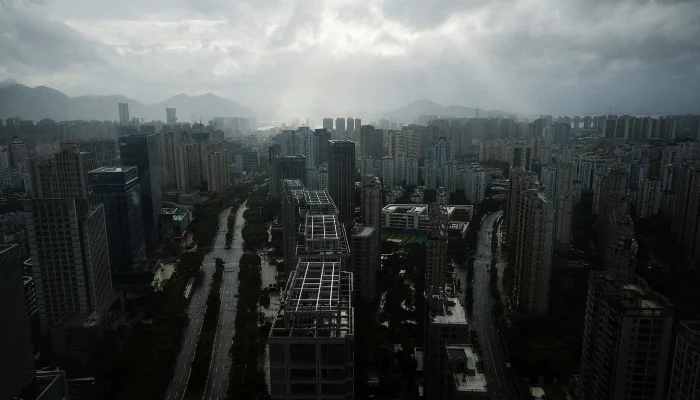
    Heavy rain clouds blanketed Wenzhou’s downtown area as Typhoon Bavi drew near on July 11, 2026, in Zhejiang province, China. The storm has caused the evacuation of over 600,000 residents in China, especially in the city of Wenzhou, which is home to approximately 10 million people. This move came after Bavi pounded Japan’s Sakishima Islands with intense rainfall and fierce winds, then brushed past northern Taiwan.

    Although Bavi is gradually losing strength and moving over colder waters, it remains a significant threat due to the enormous amount of moisture contained within its rainbands—stretching roughly the length of France. Meteorologists predict the typhoon will make landfall in Wenzhou early Sunday morning.

    State media reported that more than 500,000 individuals had been evacuated in Zhejiang Province, where Wenzhou is situated, with an additional 100,000 evacuees in neighboring Fujian Province. Wenzhou resident Huang Xinghuan, 50, expressed cautious optimism while shopping at a local wet market before the storm’s arrival. “I’m a bit worried, but I believe everything will be alright. We’ve experienced typhoons before, and we’ll get through this,” he said. Huang’s family has stocked enough water to last around two to three days and feels confident that supplies are sufficient, emphasizing that there’s no need for panic buying.

    While no fatalities have been reported in Japan and Taiwan due to Bavi, the typhoon’s heavy rains contributed to the death of 17 people in the Philippines, exacerbated by the intensified southwest monsoon. Taiwan’s fire department reported injuries to 87 people, mainly from falls off motorcycles or bicycles, or from being hit by falling objects.

    Taiwan took proactive measures, evacuating over 14,000 people from mountainous regions as the nation prepared for Bavi’s approach. Although the storm did not directly make landfall, authorities issued precautions to prevent casualties, anticipating nearly 1 meter (3 feet) of rainfall in some areas.

    Most evacuations occurred in northern and eastern parts of Taiwan, resulting in the cancellation of 920 international flights and the shutdown of Taoyuan International Airport outside Taipei—the country’s main gateway—as well as all 282 domestic flights. With most schools and offices closing for the weekend, the country declared a typhoon holiday, although some restaurants and convenience stores in Taipei remained open. The primary north-south high-speed rail line continued running but with limited service.

    In Taipei, residents experienced gusty winds and rain, with some staying outdoors. Yeh Mao-hsiung, 68, dismissed the storm’s severity, saying, “It’s fine, just a bit more wind.” Nonetheless, in the Beitou district near the mountains, winds approaching 60 mph toppled trees and caused rivers to swell.

    Wenzhou resident Chen Qiuqin, in her sixties, walked through steady rain on her way to her parents’ home to help prepare for the typhoon. She was not overly worried, citing the government’s preparations. “I was concerned about the flowerpots on my mother’s balcony, so I came to help move them inside. My parents are elderly and home alone, so I wanted to make sure they’re safe,” she shared.

  • Rescue Teams Seek Missing Amid China Storms After 100,000 Evacuated

    Rescue Teams Seek Missing Amid China Storms After 100,000 Evacuated

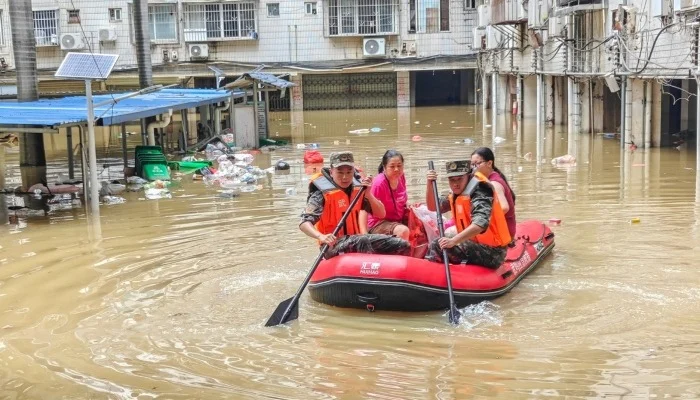
    Paramilitary police officers evacuate residents via rubber dinghy after flooding caused by Typhoon Maysak in Nanning, Guangxi Zhuang Autonomous Region, China, on July 6, 2026. — AFP

    – Severe storms and landslides have resulted in 38 fatalities.
    – Floodwaters have damaged approximately 13,000 acres of farmland.
    – Over 130,000 residents have been forced to evacuate.

    Rescue teams searched flood-affected areas in China for survivors following deadly storms that claimed 17 lives, overwhelmed numerous rivers, and caused a reservoir dam to break. Authorities warned that heavy rainfall would continue into Wednesday.

    In Guangxi’s southern region, six individuals lost their lives, and more than 130,000 people evacuated due to relentless rain and severe flooding from Typhoon Maysak, according to regional officials. Forecasts indicate that rainfall will persist not only in Guangxi but also in neighboring Guangdong Province.

    Muddy, fast-moving waters burst the banks of 40 rivers and waterways in Guangxi, ruining nearly 13,000 acres of agricultural land, reported state media. Videos broadcast by CCTV showed floodwaters rushing past the remains of a broken reservoir dam while rescue workers, equipped with life jackets, operated inflatable boats.

    Additional disaster relief supplies—including food, raincoats, and rubber boats—are being dispatched to the region, according to Xinhua News Agency.

    Guangxi’s flood control response remains at a high alert level, with authorities warning that peak water levels could exceed the warning mark by over six meters (about 20 feet) at the Wuzhou Hydrological Station early Thursday. Li Guoying, Minister of Water Resources, noted that the ongoing heavy rains and prolonged flooding pose a serious risk to reservoirs and embankments in the area.

    Thunderstorms and strong winds killed an additional 11 people and injured 331 in Hubei Province, with reports of tornadoes elsewhere late Monday, Xinhua reported. One person is listed as missing, and around 4,800 homes have been damaged or collapsed.

    China frequently experiences natural disasters during the summer, with some regions enduring intense rainfall while others face scorching heat.

    President Xi emphasized the importance of mobilizing all resources for emergency response, according to CCTV.

    In northwestern Gansu Province, the death toll from a recent landslide increased to 21, after earlier reports of 33 fatalities. The landslide struck around 6:56 a.m. Tuesday at Rencang Village in Dangchang County, and rescue efforts concluded with the confirmation of 21 deaths, according to local authorities. The cause of the landslide remains under investigation. Reconstruction funds totaling 30 million yuan (approximately $4.4 million) have been allocated for recovery efforts.

  • US Military to Establish War-Prepared Stockpile in Australia

    US Military to Establish War-Prepared Stockpile in Australia

    The US military is working on establishing a permanent, war-ready weapons cache for its Marine Corps along Australia’s southeastern coast, beyond the reach of most Chinese missiles, according to tender documents and confirmed by officials to AFP.

    This will be the Marine Corps’ first such stockpile in Australia, aimed at utilizing the continent’s strategic position in the South Pacific to counter China’s rapid military expansion, experts said.

    During the Cold War, the US Marine Corps began prepositioning military supplies globally—using floating stores on ships and storage caves in Norway for weapons, ammunition, and vehicles needed to sustain thousands of troops.

    The first land-based stockpile in the Asia-Pacific region is set to open this year in the Philippines, near potential hotspots in the South China Sea.

    Recently released US Navy documents reveal plans for an even larger Australian stockpile, with $30 million allocated for constructing warehouses and offices in southeastern Victoria for “critical forward provisioning.”

    By 2028, this Australian facility is expected to reach full capacity and will be stored in Melbourne before being relocated to US warehouses at an Australian military base in Bandiana, rural Victoria, under construction next year, according to tender details.

    Australia does not permit foreign military bases on its territory—a sensitive issue given its security alliance with the US and the increasing presence of rotating US forces at Australian defense facilities.

    The US Navy has contracted a global defense firm to staff the Australian stockpile with around 110 specialists—including engineers, mechanics, and safety experts—to oversee the supplies, which include “crew-served weapons,” according to the documents.

    A Marine Corps Forces Pacific spokesperson told AFP that Marine activities in Australia support global sustainment efforts by maintaining ready-to-issue equipment and supplies for operations and exercises across the Indo-Pacific. The spokesperson declined to discuss specific contract details or force planning but emphasized that Marine equipment is maintained at “high readiness.”

    Coordination on contracting and operations will closely involve Australia’s Department of Defense. The spokesperson added that these activities enhance responsiveness, interoperability with allies and partners, and support various missions throughout the Indo-Pacific, a broader term for the Asia-Pacific region.

    In 2023, US Army trucks were stationed at Bandiana following an Australian war game involving US troops that occurs biennially. The Marine stockpile project at Bandiana, approved last July, is separate from these arrangements.

    “The Marine Corps and Army equipment programs are tailored to their respective service needs and managed independently,” the Marines spokesperson stated.

    Australia’s Department of Defence has not immediately responded to requests for comment.

    Beyond China’s missile threat?

    The Pentagon has requested $500 million from Congress next year to enhance equipment and fuel prepositioning across the Asia-Pacific, aiming to deter China.

    Approximately 2,000 US Marines conduct six months of exercises annually in Darwin, on Australia’s northern coast.

    A recent report by the Lowy Institute warned that China possesses the capability to target northern Australia with ballistic missiles launched from its outposts in the South China Sea.

    According to Sam Roggeveen, director of international security at the Lowy Institute, this potential threat likely influenced the decision to establish a stockpile in southeastern Australia.

    “Once these facilities become operational, they would be obvious targets for China,” he said.

    The increasing deployment of US forces and military resources in Australia represents a significant shift in Australian policy, aligning the country more closely with America’s strategic goals in the region, Roggeveen added.

    John Blaxland, a professor of international security at the Australian National University, noted that Australia’s geographic importance is gaining recognition amid concerns over the vulnerability of the US military base on Guam.

    “With regional influence competition at its highest in over a generation, it’s not surprising the US Marine Corps is looking to Australia for storage solutions,” he said.

    “Unless Australia significantly boosts defense spending—something that isn’t politically feasible—facilitating US investment in Australian infrastructure seems to be the most sensible strategy.”

  • Millions of Chinese Students Take the Challenging Gaokao Exam

    Millions of Chinese Students Take the Challenging Gaokao Exam

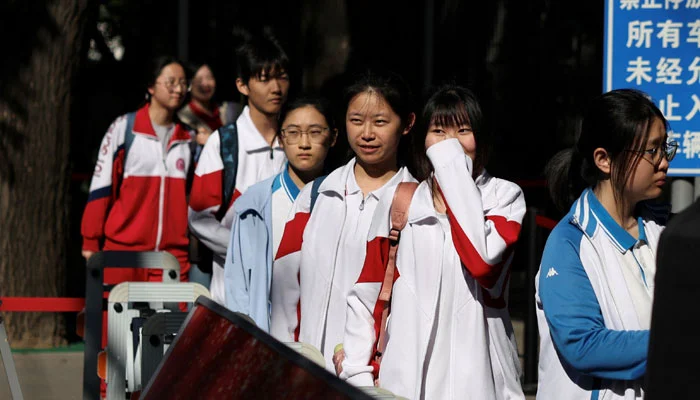
    Hundreds of young students in China, holding pens and ID cards, shuffled into a testing center in Beijing under a bright blue sky on Sunday. Parents gathered around as they joined millions across the country taking the high-stakes college entrance exam, known as “gaokao.”

    This year, approximately 12.9 million students registered for the exam, which is typically the only criterion for university admission in China, according to the Ministry of Education. The exam spans multiple days, starting Sunday, covering subjects such as Chinese, math, English, science, and the humanities. Results will be announced later this month.

    Zhang Xinnan, a student on the verge of entering the exam hall, expressed feelings of nervousness, especially about the Chinese essay component. Wearing his school uniform, the 18-year-old shared that he’s been preparing extensively with practice questions over the past year. Despite the nerves, he believes his preparation will help him succeed, aiming to work in the new energy vehicle industry.

    Outside the exam centers, some parents dressed in red—symbolizing good luck—stood nearby, with police and security personnel present to manage the crowds. Parents hoped to capture their children’s moments entering the exam halls.

    In China, education has expanded rapidly amid economic growth, raising parental expectations for their children’s futures. However, the job market for new graduates is more challenging than before, with youth unemployment a significant issue. Official figures indicate that about one in six young people aged 16 to 24, excluding students, are unemployed.

    Attitudes toward the gaokao are shifting, with many students and parents now prioritizing health over high test scores. Deng Ju, a mother holding a stack of practice books for her daughter, said, “Just perform normally—that’s enough. I care more about physical health; the test is just a formality.” For her, skipping the exam entirely would be ideal, especially since her daughter isn’t aiming for prestigious universities like Tsinghua or Peking University. She joked, “No more gaokao. Let’s not gaokao anymore,” but added with a smile, “That’s impossible.”

    For many students in Beijing, the gaokao remains a key step toward their dreams. Zhang hopes to attend his ideal university, and he mentioned that staying calm is essential. “Mentality is the most important part of the gaokao,” he noted. His friends share similar concerns, emphasizing the importance of a steady mindset when facing this critical exam.

  • Xi to Tour North Korea Next Week

    Xi to Tour North Korea Next Week

    Chinese President Xi Jinping is scheduled to visit North Korea next week, according to state media reports Friday. This visit marks a significant diplomatic move as Xi’s first trip to Pyongyang in seven years and his initial official international journey this year. The trip is set for June 8-9, prompted by an invitation from North Korean leader Kim Jong Un.

    Beijing plays a crucial role in supporting North Korea both politically and economically, with China accounting for up to 95% of North Korea’s total trade and 85% of its exports, based on 2022 data from a Washington-based think tank. Despite North Korea’s international isolation and sanctions, the country has strengthened its ties with Russia recently, especially following Russia’s invasion of Ukraine in 2022, with Pyongyang providing military support and aid in return.

    The upcoming summit signifies China’s increasing global diplomatic presence, coming after Xi hosted parallel summits with U.S. President Donald Trump and Russian President Vladimir Putin last month. Experts suggest Beijing aims to deepen its influence over Pyongyang, positioning North Korea closer within China’s broader diplomatic strategy.

    Xi last met Kim in September, during a military parade in Beijing honoring the 80th anniversary of Victory in World War II. Prior visits by Chinese leaders to North Korea, such as Hu Jintao in 2005, have been infrequent, with Xi and his wife Peng Liyuan visiting North Korea in 2019 to celebrate their “unbreakable friendship.”

    China’s foreign policy approach involves monitoring North Korea’s rapidly progressing nuclear program to prevent actions that could lead to regional instability or conflict, aligning with mutual interests. Kim Jong Un declared plans to significantly expand North Korea’s nuclear capabilities during a recent visit to a new atomic facility.

    South Korea’s government expressed hope that increased exchanges between North Korea and China could promote peace and stability, but North Korea continues to dismiss engagement efforts, viewing Seoul as its most hostile rival. Analysts interpret Xi’s diplomatic activity as part of China’s effort to position itself as a stable, strategic alternative to the U.S., with broader outreach to traditional U.S. allies such as the U.K. and France.

    However, the likelihood of Beijing facilitating a summit between Donald Trump and Kim Jong Un remains low, according to experts.

  • China’s Chief Diplomat Urges US and Iran to Find Common Ground

    China’s Chief Diplomat Urges US and Iran to Find Common Ground

    Chinese Foreign Minister Wang Yi departed the Great Hall of the People in Beijing during Russian President Vladimir Putin’s visit on May 20, 2026, as captured in a Reuters photo. Wang emphasized that Beijing is actively coordinating with involved parties and supporting mediation efforts. Meanwhile, the United States conducted strikes on missile sites and vessels attempting to lay mines in the region, escalating tensions. Iran has accused the U.S. of violating the ceasefire and issued warnings of retaliation.

    In a statement to the UN Security Council, Wang Yi reiterated China’s call for all parties involved in the delicate Middle East ceasefire to honor the truce. He expressed hope that both the U.S. and Iran would make concessions, emphasizing China’s ongoing diplomatic efforts. Wang also highlighted China’s support for mediation efforts by Pakistan, the United States, and Iran and urged all sides to continue meeting halfway to restore peace in the Middle East.

  • China Rescuers Hunt for Missing After Mine Blast Kills 82

    China Rescuers Hunt for Missing After Mine Blast Kills 82

    Rescuers in northern China searched for two individuals still missing on Sunday after a gas explosion at a mine claimed 82 lives. The incident, which occurred at the Liushenyu shaft in Shanxi province on Friday, is considered China’s deadliest mining disaster in nearly 20 years, with 247 workers underground at the time.

    Relatives gathered anxiously at a checkpoint near the mine, hoping for news about their loved ones. One man, nervously smoking on the curb, told AFP that calls to his brother—who has three children—had gone unanswered since the blast. He admitted he had no idea how the accident happened and that his parents still didn’t know their older son was missing.

    Authorities have begun an investigation into the explosion, with early findings indicating that the Tongzhou Group, which operated the mine, had committed “serious illegal violations.” Officials assured the public that those responsible would face strict legal consequences, as more than half of the workers in the shaft had entered without proper registration, according to state media. Typically, miners undergo facial recognition checks or use location-tracking cards before descending into the mine.

    A company representative has been taken into custody under legal procedures, reported Xinhua News Agency. Miners accused their employer of neglect, sharing that they had to purchase their own safety helmets. One 58-year-old miner from Shandong, who has worked in several coal mines over three decades and wished to remain anonymous, said management was the worst he had seen. He explained he was on a morning shift during the accident and was not in the mine when the explosion occurred. “If we had been working a few hours later, it would have been us,” he added.

    The Chinese State Council has mandated nationwide “tough crackdowns” on illegal activities, including falsification of safety data, underreporting underground workers, and illegal contracting practices.

    Rescue teams responded swiftly, with hundreds of personnel rushing to the scene. By Saturday evening, 128 injured individuals had been transported to hospitals. Rescuers systematically entered the mine shaft throughout the night, using robots to assess underground conditions. One rescuer told Xinhua, “As long as there is hope, we will make every possible effort.” This incident marks the most devastating mining accident since 2009, when 108 people died in Heilongjiang province.

    Survivor Wang Yong recounted that he heard no sound during the explosion but saw a cloud of sulfurous smoke, reminiscent of firecracker explosions. He shouted for others to run as the smoke descended and fainted after being overcome by it. After more than an hour, he regained consciousness and managed to escape.

    International leaders offered condolences, with Japanese Prime Minister Sanae Takaichi praying for the safe rescue of those trapped. Indian Prime Minister Narendra Modi expressed hope that the grieving families find strength amid the tragedy. Shanxi, one of China’s poorer regions, is a major hub of the country’s coal mining sector.

    While mining safety has improved over recent decades, accidents still occur, often due to lax safety protocols and vague regulations. In 2023, a collapse at an open-pit coal mine in Inner Mongolia resulted in 53 fatalities. Despite China’s significant investments in renewable energy and being the world’s top coal consumer and greenhouse gas emitter, coal continues to be vital to the country’s energy needs.

  • Eight killed, dozens trapped in China coal mine explosion

    Eight killed, dozens trapped in China coal mine explosion

    Eight individuals have lost their lives, and several others remain trapped beneath the surface following a gas explosion at a coal mine in northern China, according to government reports on Saturday.

    The explosion took place at 7:29 p.m. local time (11:29 a.m. GMT) on Friday at the Liushenyu coal mine situated in Shanxi Province, as reported by the state news agency Xinhua.

    At the time of the blast, 247 workers were underground. By 6:00 a.m. Saturday, 201 of those workers had been rescued and brought to the surface safely, Xinhua confirmed.

    The authorities confirmed eight fatalities. Additionally, 38 workers are still trapped underground. Rescue operations are actively underway, with efforts focused on locating and assisting the remaining trapped miners.

    Chinese President Xi Jinping called for “all-out efforts” to tend to the injured and instructed a comprehensive investigation into the incident. He emphasized that all regions and departments must learn from this tragedy, stay vigilant about workplace safety, and take decisive action to prevent similar major accidents in the future.

    Earlier assessments indicated dangerously high levels of carbon monoxide, a deadly and odorless gas, detected at the site. Some trapped workers are reported to be in critical condition.

    Shanxi, a less-developed province, is often regarded as China’s primary hub for coal mining. While safety measures in mines have improved over recent decades, accidents continue to happen frequently in an industry where safety protocols are sometimes overlooked or inadequately enforced.

    China remains the world’s leading consumer of coal and is the largest emitter of greenhouse gases. The country has also rapidly expanded its renewable energy capacity, but fossil fuel industries like coal extraction still pose significant safety and environmental challenges.

  • Putin and Xi Reaffirm Strong Bond Following Trump Meeting

    Putin and Xi Reaffirm Strong Bond Following Trump Meeting

    President Xi Jinping praised the strong and unwavering partnership between China and Russia during discussions with Vladimir Putin on Wednesday, emphasizing their alliance just days after Donald Trump’s visit to China. The visit comes amid heightened attention on their evolving relationship, especially following Trump’s recent trip, which lacked significant breakthroughs like assistance in reopening the Strait of Hormuz.

    Due to widespread Western sanctions impacting Russia’s energy revenues and increasing dependence on China, Putin’s position has become somewhat fragile. Meanwhile, ongoing tensions over Iran have disrupted crude oil and natural gas shipments, providing Putin with an opportunity to promote Russian energy supplies as alternative options. Experts suggest Putin might focus on advancing the “Power of Siberia 2” gas pipeline, intended to deliver Russian natural gas to China via Mongolia—offering a land route as opposed to sea shipments from the Middle East.

    In Beijing’s grand Great Hall of the People, the leaders quickly highlighted their countries’ close ties as they renewed their “friendly cooperation” treaty. Xi expressed that Beijing and Moscow have “steadily deepened political mutual trust and strategic coordination,” with resilience that remains unbreakable. Putin, in turn, affirmed that their relationship has reached an “unprecedentedly high level,” despite external challenges, without specifying any third-party nations. Xi also subtly criticized the United States by warning against “unilateral and hegemonic countercurrents,” which some interpret as a veiled rebuke of U.S. policies.

    As the U.S. under Trump sought to strengthen alliances, China has hosted numerous world leaders, and Moscow’s support for Beijing has deepened since Russia’s invasion of Ukraine in 2022. Putin’s annual visits to Beijing reflect the growing closeness, even as his trip aims to be less showy than Trump’s and more focused on substantive cooperation. Xi referred to Putin as an “old friend,” a term not used for Trump during his recent visit, underscoring the strength of their bond. Both leaders see their relationship as more “structurally solid” and stable than China’s ties with the U.S.

    While Beijing advocates for negotiations to end the Ukraine conflict and has not condemned Russia’s military actions, its neutrality is nuanced by its reliance on Russian energy exports. Moscow, heavily dependent on Chinese markets, is unlikely to push Russia away but seeks to maintain support.

    Concerning the Middle East, Russia aims to leverage the energy crisis caused by the closing of the Strait of Hormuz, positioning itself as a key energy supplier in response to regional conflicts. Russia’s top diplomat Sergei Lavrov indicated that Moscow might compensate for China’s energy shortages amid the Middle East turmoil. Conversely, China emphasizes the urgency of ending the conflict, warning that continued hostilities in the region are “inadvisable,” highlighting their interest in stabilizing vital waterways to support their economic interests.

  • Tankers Leave Hormuz Amid U.S. Iran Deal Discussions

    Tankers Leave Hormuz Amid U.S. Iran Deal Discussions

    Two Chinese oil tankers have recently left the Strait of Hormuz, each transporting around 2 million barrels of crude, totaling approximately 4 million barrels. This development offers some optimism that the ongoing US-Israeli conflict with Iran might reach a peaceful resolution soon, especially after encouraging remarks from the U.S. administration.

    President Donald Trump indicated on Tuesday that the conflict could end “very quickly,” while Vice President JD Vance highlighted significant progress in negotiations with Tehran. Vance expressed confidence during a White House briefing, stating, “We’re in a pretty good spot here.” Trump, a day earlier, had paused plans to renew hostilities following Iran’s new proposal to end the strife, saying, “I was just about to make the decision to act today.” He also claimed that Iranian leaders are eager for a deal but warned that if no agreement is reached soon, a U.S. attack could still occur within days.

    The U.S. has been working to conclude the nearly three-month-old conflict initiated with Israel. Trump has repeatedly claimed that an agreement with Iran was close and has threatened severe military strikes if Iran refused to cooperate. Domestically, Trump faces mounting political pressure to reopen the Strait of Hormuz, a vital artery for global oil supplies. High gasoline prices and poor approval ratings ahead of November congressional elections have added to the urgency.

    This conflict has severely disrupted global energy markets, blocking hundreds of tankers from leaving the Gulf and damaging regional energy infrastructure. Data from LSEG and Kpler indicates that two supertankers, carrying Iraqi crude and among a handful of vessels, recently exited the Gulf, passing through the narrow strait with an estimated 4 million barrels of oil.

    Oil prices responded positively to the recent signals from Washington and the Gulf region, with Brent crude decreasing to as low as $110.16 per barrel before recouping much of its losses. Market analysts, such as Toshitaka Tazawa from Fujitomi Securities, noted that investors are eager to see whether Washington and Tehran can find common ground and secure a peace agreement, although U.S. foreign policy remains fluid.

    Vance acknowledged at the White House that negotiating with Iran presents difficulties, partly due to internal divisions within Iran’s leadership. “Sometimes it’s not entirely clear what Iran’s negotiating position is,” he said, emphasizing the U.S. effort to establish clear red lines. He also stressed that part of Trump’s strategy is to prevent the proliferation of nuclear arms in the region.

    Iran’s parliament foreign affairs chief, Ebrahim Azizi, suggested on X (formerly Twitter) that Trump’s decision to pause an attack stemmed from the realization that Iran would respond decisively if attacked. Iran’s latest peace proposal reportedly involves a comprehensive end to hostilities across multiple fronts, including Lebanon, the withdrawal of U.S. forces from nearby areas, and reparations for damages caused by U.S.-Israeli strikes. Tehran also seeks the removal of sanctions, release of frozen funds, and an end to the U.S. marine blockade, according to Deputy Foreign Minister Kazem Gharibabadi as cited by IRNA.

    Much of Iran’s previous proposal remains unchanged from its last offer, which Trump dismissed last week as “garbage.”

    The ceasefire, initiated after devastating US-Israeli airstrikes that caused thousands of Iranian casualties and destruction in Lebanon, has mostly held. Nonetheless, recent drone launches from Iraq targeting Gulf nations such as Saudi Arabia and Kuwait continue to pose threats. The conflict was launched by the U.S. and Israel to curtail Iran’s regional influence, dismantle its nuclear program, destroy missile capabilities, and foster regime change. Despite efforts, Iran still maintains significant nuclear stockpiles and missile and drone threats, and its leadership shows resilience against the superpower’s pressures.

  • China Rains Kill 22, 20 Still Missing

    China Rains Kill 22, 20 Still Missing

    Heavy rainfall across central and southern China has resulted in a rising death toll, reaching 22, with an additional 20 people still missing, according to state media reports on Wednesday. Many regions have experienced what officials describe as “record-breaking rainfall,” leading to closures of schools and workplaces, as well as the deployment of relief funds to affected areas.

    In Hunan Province, five people have died, and 11 are missing following the severe weather, according to Xinhua. The previous day, the agency reported that over 61,500 residents in a single county were affected by the flooding without providing further details.

    Southern Guangxi reported the death of 10 individuals after a truck was swept into a swollen river during a crossing attempt on Saturday evening; the first fatality from that incident was noted on Sunday. Guizhou Province, nearby, also suffered from intense rains, resulting in four deaths and five more people missing.

    Further north in Hubei, floods caused by relentless rains have led to three deaths and four people missing. These floods also damaged infrastructure and cut off communication for some rural communities. The government allocated approximately 120 million yuan (about $17.6 million) in disaster relief funds for five of the affected regions, with an additional 30 million yuan directed to Guizhou, which has experienced significant casualties and property damage, according to the National Development and Reform Commission.

    Nearly 24,000 people have been evacuated from flood-prone areas across Hunan, Guizhou, and Hubei. Forecasters expect ongoing heavy rainfall over the coming days. Scientists warn that as the planet continues to warm due to fossil fuel emissions, the frequency and severity of such extreme weather events will likely increase. China, the world’s leading emitter of greenhouse gases, is also investing heavily in renewable energy and has set a goal to reach carbon neutrality by 2060.

  • Putin Meets China Amid Sturdy Ties After Trump Spectacle

    Putin Meets China Amid Sturdy Ties After Trump Spectacle

    In this pool photograph distributed by the Russian state agency Sputnik, Russia’s President Vladimir Putin is welcomed by Chinese Foreign Minister Wang Yi upon his arrival at Beijing Capital Airport in Beijing late on May 19, 2026. — AFP

    • Putin looks for increased Chinese backing following Trump’s visit to Beijing.
    • Xi and Putin anticipated to discuss the “Power of Siberia 2” gas pipeline.
    • Kremlin states leaders will address regional and global issues.

    Russian President Vladimir Putin arrived in Beijing late Tuesday for talks with Chinese President Xi Jinping, a longtime friend, aiming to affirm their strong relationship just days after Donald Trump’s visit to China.

    Putin’s trip confirmation came hours after Trump’s stop, which was China’s first visit by a U.S. president in almost ten years, with the goal of stabilizing tense relations.

    He landed at Beijing Capital International Airport around 11:15 p.m. (3:15 p.m. GMT) on Tuesday, where Chinese Foreign Minister Wang Yi and a military band welcomed him.

    This visit mirrored Trump’s arrival closely, with both leaders emerging onto red carpets amid chants of “welcome”—this time, with Russian flags, rather than American.

    The two are scheduled to discuss ways to deepen Russia-China strategic ties and exchange views on significant international and regional matters, according to a Kremlin statement.

    Their alliance has strengthened since Russia invaded Ukraine in 2022, with Putin visiting Beijing annually as Russia faces worldwide diplomatic isolation.

    In this pool photograph distributed by the Russian state agency Sputnik, Chinese honor guards march past the aircraft carrying Vladimir Putin upon his arrival at Beijing Capital Airport late on May 19, 2026. — AFP
    Chinese honor guards march past the plane carrying Russia’s President Vladimir Putin upon his arrival at Beijing Capital Airport late on May 19, 2026. — AFP

    Despite the friendly language, their relationship isn’t equal — Moscow relies heavily on Beijing, which is the main buyer of Russian oil under sanctions.

    Possible topics for discussion include the construction of the “Power of Siberia 2” natural gas pipeline from Russia to China via Mongolia, serving as an overland alternative to marine imports from the Middle East, a project Moscow is eager to begin.

    To set a positive tone, Xi and Putin exchanged heartfelt letters on Sunday commemorating 30 years of their countries’ strategic partnership.

    Chinese Foreign Ministry spokeswoman Guo Jiakun praised the “lasting friendship” between the nations on Tuesday.

    In a video message to the Chinese people, Putin declared that bilateral relations are at an “unprecedented level,” with trade ongoing growth.

    In this pool photograph distributed by the Russian state agency Sputnik, Putin is greeted by Chinese Foreign Minister Wang Yi and other officials at Beijing Capital Airport late on May 19, 2026. — AFP
    Putin is welcomed by Chinese officials including Foreign Minister Wang Yi upon arriving at Beijing Capital Airport late on May 19, 2026. — AFP

    “The closely strategic alliance between Russia and China plays an essential role in global stability. We aim for peace and widespread prosperity without targeting any third country,” Putin stated, without mentioning specific nations.

    They are also expected to sign a joint declaration after their discussions.

    Old friends greet each other

    Xi welcomed Putin warmly as an “old friend” during his last visit to Beijing in September 2025, language not used with Trump last week.

    In turn, Putin called Xi his “dear friend,” and intends to reinforce that their relationship remains unaffected by Trump’s visit.

    Although Putin’s visit might lack Trump’s grandeur, “the Xi-Putin bond doesn’t need showy displays,” noted Patricia Kim from the Brookings Institution in Washington.

    Both leaders see their ties as “stronger and more stable” than those between China and the U.S.

    While China advocates for a diplomatic solution to the Ukraine conflict, it has so far refrained from condemning Russia’s military actions, positioning itself as neutral.

    Trump and Xi discussed Ukraine last week, but no breakthroughs resulted.

    Kim added, “Xi will probably brief Putin on his summit with Trump,” suggesting that Moscow remains confident no agreements were made that would undermine Russian interests.

    Energy interests and oil plans

    Putin hopes China will deepen economic support, especially after Trump claimed during his visit on Fox News that Beijing agreed to purchase US oil to satisfy its “insatiable” energy needs.

    Russia depends on Chinese demand to fund its Ukraine conflict, and Lyle Morris from Asia Society explained that Putin is eager to hear Xi’s thoughts on China’s next moves in the Middle East, especially since Trump has indicated that Beijing should take a leading role.

    Regarding the US-Israel-Iran tensions, their priorities might differ. China favors quicker resolution of the Strait of Hormuz issues to keep global trade flowing, while Russia benefits economically from the ongoing turmoil in Iran, which has relaxed sanctions against its energy sector, said James Char of Singapore’s Nanyang Technological University.

    Sergei Lavrov, Russia’s Foreign Minister, mentioned in April that Moscow could compensate for China’s energy shortages resulting from Middle Eastern conflicts.

    Experts like Joseph Webster suggest that stronger energy ties are likely to be a focus, with China seeking more Russian energy, especially as Russia shifts energy exports eastward in response to Ukraine’s attacks on its infrastructure.

  • Xi to welcome Putin as China promotes stable global leadership post-Trump visit

    Xi to welcome Putin as China promotes stable global leadership post-Trump visit

    Chinese President Xi Jinping is scheduled to host Russian President Vladimir Putin at the Chinese leader’s private residence in Beijing, Zhongnanhai, on September 2, 2025. This visit comes less than a week after Donald Trump’s prominent trip, as Beijing aims to present itself as a steady and predictable global power amid ongoing trade disputes, conflicts, and energy shortages.

    This marks Putin’s 25th trip to China, a visit that China and Russia emphasize as a sign of their “permanent” partnership, despite Western calls for Beijing to pressure Moscow to end its Ukraine war. Putin affirms that China and Russia support each other’s core interests and is looking to enhance energy cooperation with the world’s second-largest economy despite Western sanctions.

    Analysts suggest the Xi-Putin summit signals to the world that the China-Russia strategic alliance remains central to their foreign policies and that U.S. efforts to divide them are likely to fail. The visit follows Trump’s recent trip, which garnered positive global optics but yielded few significant business agreements. Xi described U.S.-China relations as one of “strategic stability,” contrasting this with the notion of “strategic competition” typical of the Biden administration.

    By hosting international leaders, China seeks to reinforce its image as a source of global stability, contrasting with Western difficulties in resolving the Ukraine conflict and addressing other regional tensions such as Iran, which have disrupted energy markets.

    In foreign diplomacy, China aims to assure its trading partners, including the U.S., of its peaceful rise as an economic and technological leader, often downplaying concerns about its strategic ambitions. The U.S. State Department noted after Trump’s visit that there was a consensus on issues fostering stability for global markets and consumers.

    At the same time, Beijing’s engagement with Russia and other partners signals a consistent diplomatic stance, even under Western pressure. Experts note that Xi does not have the influence to compel Putin to end Ukraine’s conflict and recognizes that a Russian defeat would weaken Putin’s position domestically. Therefore, China continues to provide diplomatic cover at the UN, supports Russia with economic aid, and supplies dual-use technologies for Moscow’s military efforts.

    Although China has publicly denied supplying lethal weapons to either side in the Ukraine war and maintains strict control over exports of sensitive items, it continues to explore energy cooperation. During Putin’s last visit in September 2025, Russia and China agreed to develop the Power of Siberia 2 gas pipeline, although pricing negotiations are still pending. With energy shortages stemming from conflicts elsewhere in the Middle East, Russia is positioning the pipeline as a crucial long-term supply source, but Beijing remains committed to diversifying its energy imports, engaging with Turkmenistan and Russia separately. The potential deal may set broad supply terms without finalizing prices, which could take years to resolve.

    China is also the largest purchaser of Russian oil, buying both pipeline and sea shipments. Despite Western sanctions, Chinese refiners continue to import Russian oil, often paid for in yuan. Russia has agreed to boost exports to China by an additional 2.5 million metric tons annually via Kazakhstan. Putin expressed optimism about ongoing cooperation advancements and hopes to finalize substantial energy deals during the current visit.

  • South China Suffers 5.2 Magnitude Quake, Two Dead

    South China Suffers 5.2 Magnitude Quake, Two Dead

    A 5.2 magnitude earthquake struck southern China’s Guangxi region early Monday, resulting in two fatalities and the collapse of 13 buildings, according to state media reports. The tremor occurred in Liuzhou city at 12:21 a.m. local time (4:21 p.m. ET), and as of this morning, one individual remained unaccounted for.

    Authorities identified the victims as a 63-year-old man and a 53-year-old woman, with search and rescue operations still underway for the missing person. Over 7,000 residents have been evacuated from the affected area.

    Footage shared by local broadcasters shows civilians fleeing high-rise structures and scenes of destruction, including debris strewn across neighborhoods. Rescue workers equipped with helmets and tools are seen navigating the wreckage, while search dogs attempt to detect signs of life beneath the rubble.

    Earthquakes are a relatively frequent occurrence in China. Last January, a powerful quake in Tibet claimed at least 126 lives and caused widespread damage to infrastructure.

  • Iran’s Ghalibaf to lead diplomatic ties with China: Media

    Iran’s Ghalibaf to lead diplomatic ties with China: Media

    Ghalibaf has recently become a prominent figure in Iran’s foreign policy. Iran’s president, Pezeshkian, has recommended that Ghalibaf take on a new diplomatic role. He is now tasked with managing Iran’s relationships with China across various sectors.

    According to Iranian media, Ghalibaf was appointed as a special envoy for China affairs, a decision made by Iranian President Pezeshkian and approved by Supreme Leader Ayatollah Khamenei. His new responsibilities include coordinating multiple facets of Iran-China relations.

    Historically, Ali Larijani, a former security chief who was killed in US-Israeli attacks in March, held a similar position. Larijani played a significant role in advancing negotiations with China, culminating in a 25-year cooperation agreement in 2021.

    Since the outbreak of conflict on February 28 involving Israel and the US, Ghalibaf has risen as a key figure in high-stakes diplomacy, leading Iran’s limited negotiations with the US in April. Several top Iranian officials, including former Supreme Leader Ali Khamenei, have been assassinated amid the ongoing war, which has spread throughout the Middle East before a fragile ceasefire was established in early April.

    Recently, Iran has permitted several Chinese ships to pass through the vital Strait of Hormuz for the first time since the conflict began, a strategic waterway critical for global energy supplies. The Revolutionary Guards stated that the ships moved through after reaching an agreement on Iran’s maritime protocols.

  • Putin’s China Visit Scheduled for May 19-20 After Trump Trip

    Putin’s China Visit Scheduled for May 19-20 After Trump Trip

    Russian President Vladimir Putin (left) greets Chinese President Xi Jinping during a meeting at the Belt and Road Forum in Beijing on October 18, 2023. — Reuters

    – Putin and Xi Jinping are set to discuss strengthening their strategic partnership.
    – They are expected to sign a joint declaration following their discussions.
    – The visit comes shortly after former President Donald Trump’s trip to China this week.

    Putin is scheduled to visit China on May 19 for two days, according to the Kremlin, arriving shortly after U.S. President Donald Trump’s visit to Beijing. During his trip, Putin will focus on deepening the comprehensive partnership and strategic cooperation with Xi Jinping, as well as exchanging views on major international and regional issues. The leaders will also sign a joint declaration at the end of their meetings.

    In addition, Putin plans to hold talks with Chinese Premier Li Qiang about boosting economic and trade ties. The announcement of Putin’s visit follows Trump’s visit to China, which ended on Friday with a lavish reception despite ongoing tensions over trade and geopolitics, including the Russia-Ukraine conflict.

    During his discussions with Xi, Trump addressed the prolonged Ukraine-Russia war and tensions with Iran, but he left China without reaching any breakthroughs on these issues. Negotiations to resolve the Ukraine conflict, brokered by the U.S., seem to be stalled since the outbreak of hostilities between Israel and Iran on February 28.

    Before Trump’s visit, Ukrainian President Volodymyr Zelensky asked him to raise efforts to end the conflict during his talks with Xi. Russia has refused to consider a ceasefire or negotiations unless Ukraine agrees to its maximalist demands.

    While China consistently advocates for negotiations to end the fighting, it has not condemned Russia’s military actions in Ukraine since February 2022 and claims neutrality. Beijing denies supplying weapons to Moscow and blames Western countries for prolonging the conflict by arming Ukraine. As the world’s leading importer of Russian fossil fuels, China remains Moscow’s primary economic partner, especially since Western sanctions targeted Russian oil and gas.

    Trump departed China on Friday touting “fantastic” trade agreements, including a pledge from Beijing to buy 200 Boeing aircraft, along with U.S. oil and soybeans. However, specifics were vague, and China did not officially confirm any trade deal.

    China’s response to the summit was more subdued compared to Trump’s praise of Xi as a “great leader” and “friend.” Meanwhile, Russia’s top diplomat, Sergey Lavrov, acknowledged the China-U.S. summit but emphasized that Moscow maintains closer ties with Beijing, describing their relationship as deeper and stronger than typical political or military alliances.