
Select Language:
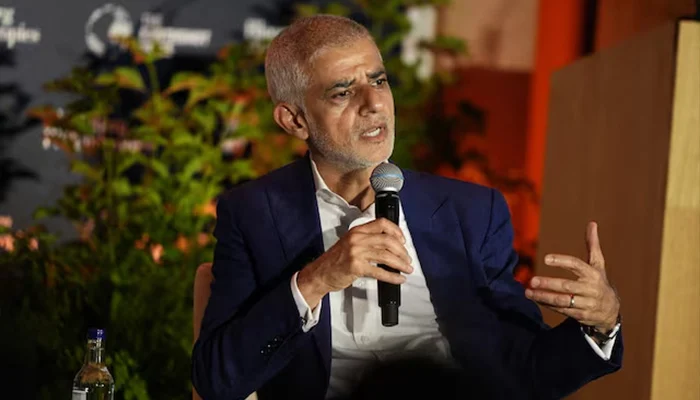
London’s British-Pakistani Mayor, Sir Sadiq Khan, has received a life peerage following Prime Minister Sir Keir Starmer’s announcement of 26 new appointments to the House of Lords, made prior to his departure from office. Sir Sadiq, the UK’s most senior Muslim politician and the first Muslim Mayor of London, is among 16 political figures appointed by Sir Keir. He will serve in the House alongside former Cabinet Secretary Sir Chris Wormald and retired senior judge Sir Brian Leveson, both of whom will sit as crossbench peers.
Downing Street confirmed that King Charles III had graciously agreed to confer peerages on the new appointees. Government insiders praised Sir Sadiq, describing him as a “brilliant mayor who has transformed London for the better,” highlighting significant decreases in violent crime, improved air quality, the successful launch of the Elizabeth Line, and increased council housing construction.
A City Hall spokesperson expressed that serving as mayor has been “one of the greatest privileges of Sadiq’s life,” reaffirming his commitment to shaping a fairer, safer, and greener London for all residents. The spokesperson also noted Sir Sadiq’s pride in receiving the peerage. He has not indicated plans to seek a ministerial role or yet decided on running for another term as mayor—a position he has held since his historic election in 2016.
Born in Tooting, South London, to Pakistani immigrants from Islamabad, Sir Sadiq is the son of a bus driver and a seamstress. Raised on a council estate, he studied law, initially working as a human rights solicitor before entering politics as Labour’s Member of Parliament for Tooting. His rise from a working-class British-Pakistani family to London’s mayor is often celebrated as one of Britain’s most remarkable political success stories.
In addition to Sir Sadiq’s appointment, Sir Keir endorsed five peerage nominations from Liberal Democrat leader Sir Ed Davey and three from Conservative leader Kemi Badenoch. The House of Lords, which currently comprises approximately 774 members, remains one of the world’s largest legislative chambers. Although Labour is in government, the Conservative Party maintains a slight lead with 246 peers compared to Labour’s 216, with 156 crossbenchers and 74 Liberal Democrat peers.
 ChatGPT
 Perplexity
 Gemini AI
 Grok AI