
Select Language:
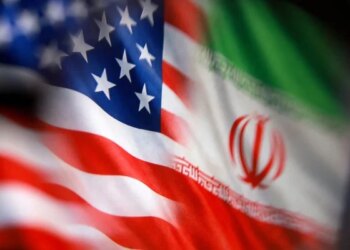
Global leaders have lauded the US-Iran peace agreement as a significant diplomatic milestone, emphasizing efforts to reduce regional tensions and praising Pakistan’s mediation role. On Sunday, U.S. and Iranian officials announced they had reached a framework to end hostilities, lift the US sanctions, and reopen the Strait of Hormuz.
President Donald Trump posted on Truth Social that the “Deal with the Islamic Republic of Iran is now complete,” around 5:30 p.m. ET in Washington (2130 GMT). His statement followed Pakistan’s Prime Minister Shehbaz Sharif, who confirmed early Monday local time that an agreement had been finalized.
The memorandum of understanding (MoU) is scheduled for formal signing this Friday in Switzerland. The international response to the deal includes:
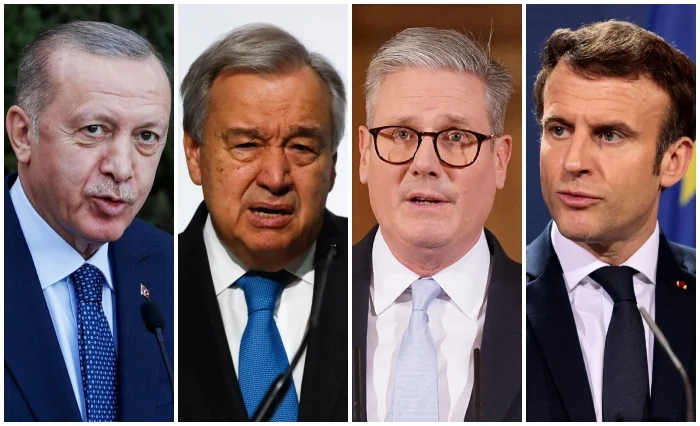
UN Secretary-General Antonio Guterres stated that the agreement marks a major step toward ending conflict and noted the success of negotiations. He commended Washington and Tehran for their roles, thanking regional countries like Pakistan, Qatar, Egypt, Saudi Arabia, and Turkey for their constructive contributions.
Turkish President Recep Tayyip Erdogan welcomed the peace deal, describing it as vital for regional stability. He expressed appreciation to Pakistan for its extraordinary mediation efforts and acknowledged the leadership of the US and Iran in reaching this milestone. Erdogan also credited Qatar and Saudi Arabia for supporting diplomatic initiatives.
Australian Prime Minister Anthony Albanese expressed support for the agreement, emphasizing Australia’s long-standing call for de-escalation. He highlighted the importance of restraint and constructive diplomacy, acknowledging the contribution of Pakistan, Qatar, Saudi Arabia, Turkey, and other mediators.
UK Prime Minister Keir Starmer praised the achievement on X (formerly Twitter), calling it a crucial step towards ending hostilities, stabilizing the region, and reopening the Strait of Hormuz. He congratulated President Trump and the mediators from Pakistan and Qatar, noting the long-standing push for de-escalation.
French President Emmanuel Macron welcomed the deal, urging its swift and full implementation. He underscored the immediate need to reopen the Strait of Hormuz and highlighted the support from the UK’s international mission.
Qatar’s Prime Minister Sheikh Mohammed bin Abdulrahman bin Jassim Al Thani approved the agreement, thanking Pakistan and other regional and international stakeholders for their pivotal roles in facilitating negotiations. He acknowledged their instrumental contributions toward progress.
German Chancellor Friedrich Merz endorsed the deal, predicting it could pave the way for a more secure Middle East and bolster the global economy, emphasizing the importance of determined implementation.
Japanese Prime Minister Sanae Takaichi expressed hope that safe navigation through the Strait of Hormuz would be practically ensured and that an overall agreement on Iran’s nuclear program would materialize swiftly, praising mediators for their efforts.
New Zealand Foreign Minister Winston Peters viewed the deal positively, calling it a crucial step toward regional stability and stressing that diplomacy remains the most effective approach to resolving long-standing conflicts.
The E4 nations (United Kingdom, France, Germany, and Italy) issued a joint statement, noting their readiness to lift sanctions on Iran in response to steps on its nuclear program, contingent on Iran’s continued cooperation with the IAEA to prevent nuclear armament.
— Additional reporting by Reuters.
 ChatGPT
 Perplexity
 Gemini AI
 Grok AI