- China searches for over 500 missing persons after floods.
- Two lakes being watched as flood alerts remain active.
- Nepal reports 626 deaths, while Tibet records seven, due to flooding.
Nepal has paused its search and rescue efforts due to adverse weather conditions and has indicated it requires international technical assistance to handle the devastating flood that struck an area near Tibet.
The poor Himalayan nation of 30 million people estimates it will need approximately $4 to $5 billion to rebuild following Wednesday’s flood, according to the finance minister interviewed by Reuters.
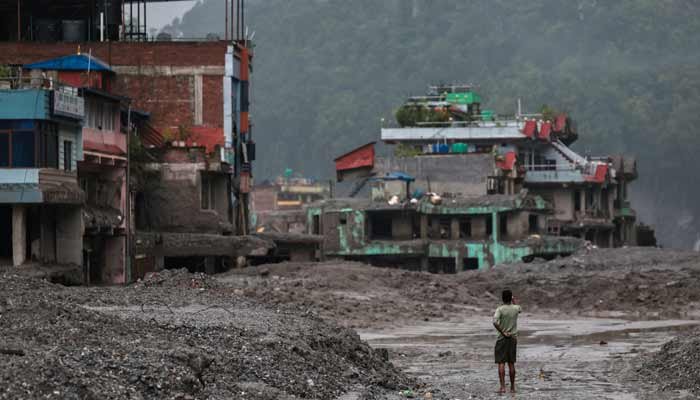
The flood, caused by a glacier collapse, sent a massive flow of rock, ice, mud, and debris rushing through mountain river systems on Wednesday, resulting in at least 626 deaths in Nepal and seven in Tibet. The floodwaters submerged buildings, bridges, and power stations in its path.
Nearly 3,000 individuals are still missing—about 2,426 in Nepal and at least 558 in Tibet’s Gyirong County—including at least 540 foreigners, many of whom are Hindu pilgrims from India.
Nepal seeks specialized assistance, not just general rescue
“Search and rescue efforts are temporarily halted due to rain and fog,” said Narendra Pariyar, the senior official for the severely affected Rasuwa district, speaking to Reuters.
Current priorities include arranging land transportation to evacuate pilgrims to Kathmandu.
Rescue operations were briefly suspended on Friday when a lake, formed along the Nepal-China border after the flood, began overflowing into Nepal’s Lhende Khola and Trishuli rivers.
This lake is one of two upstream flood-prone lakes being monitored by Nepal. Authorities warn that flood risks will continue until both lakes drain completely.
One of the lakes is shrinking, according to China’s state news agency Xinhua, citing analysis from the water resources ministry. However, a Chinese geohazards expert warned the lake’s stability could be compromised, noting over 100 other glacial lakes in the area might also pose threats.
Nepal’s Foreign Minister Shisir Khanal stated that the country does not need aid for search-and-rescue operations but does require help with evacuating trapped individuals, restoring transport and communication lines where bridges have been destroyed, identifying bodies, conducting DNA testing, and storing bodies for extended periods.
“We have already requested specialized services and technical expertise in areas where we lack sufficient skills,” he told Reuters.
China urges global cooperation in disaster response
India has dispatched three flights carrying roughly 60 tons of relief supplies to Nepal, including blankets, medicines, food, and water purification tablets. Additionally, India plans to send a rescue tunnel team and medical personnel.
The Indian government also offered its disaster response force and modular bridges, along with technical teams, to aid in restoring connectivity.
China has called for international aid and cooperation to support Nepal following the floods but hasn’t specified what assistance it will provide.
Kathmandu’s initial estimate suggests that rebuilding could cost between $4 billion and $5 billion, according to Finance Minister Swarnim Wagle. He emphasized that this is a preliminary estimate and that damage assessments are ongoing.
Meanwhile, China is racing to locate more than 500 missing persons. On Friday, rescuers reached the heavily impacted Gyirong border crossing, navigating mountain terrain and forests with ropes after roads to the area, surrounded by steep Himalayan slopes, were destroyed.
Footage from surveillance cameras shows large torrents of water and debris flooding the crossing as residents desperately tried to escape.