الوسم: Nepal

  • China-Nepal Floods Kill Over 1,000; Tunnel Rescue Provides Last Hope

    China-Nepal Floods Kill Over 1,000; Tunnel Rescue Provides Last Hope

    The death toll from the catastrophic Himalayan glacial floods surpassed 1,000 on Tuesday, as rescue teams from China and Nepal searched for survivors, including dozens believed to be trapped in hydropower tunnels.

    Nearly 4,500 individuals remain missing after a massive wave of freezing water, rocks, and debris from a high-altitude glacier collapse surged downstream last Wednesday, destroying entire villages and carving a path of destruction across Nepal.

    Rescue teams in Nepal are tirelessly excavating, drilling, and blasting through debris in a race against time and dangerous conditions to free around 100 hydropower workers trapped in multiple tunnels. So far, only bodies have been recovered from tunnels filled with sludge.

    “We are concentrating on search and rescue operations at the tunnels; our efforts are ongoing,” said Nepal Army spokesperson Raja Ram Basnet. “Our personnel are also removing bodies and working to prevent disease outbreaks.”

    Hospitals in Nepal are overwhelmed, prompting authorities to begin burying hundreds of unidentified bodies after DNA testing. Additionally, at least 17 bodies have been retrieved from rivers far downstream in India.

    Prime Minister Balendra Shah described the disaster as “unimaginable and heartbreaking.”

    In Kathmandu, residents gathered, posting photographs of missing family members along a long wall outside a hospital, holding onto faint hope of finding loved ones alive.

    Debu Sapkota, a 58-year-old driver, shared photos of his 83-year-old mother-in-law and his young daughter-in-law, both of whom went missing in Trishuli Bazaar after being swept away last week. While a warning alert was issued, the elderly woman was deemed “too old to run,” he explained. His granddaughter had tried to help her escape, but both were carried away by the torrent. Sapkota no longer holds out hope they survived, believing their bodies are the only certainty now.

    In Chitwan district, families mourned while performing cremations for some of the dead. Rescue workers are seen unloading bodies from helicopters in districts like Nuwakot and Rasuwa.

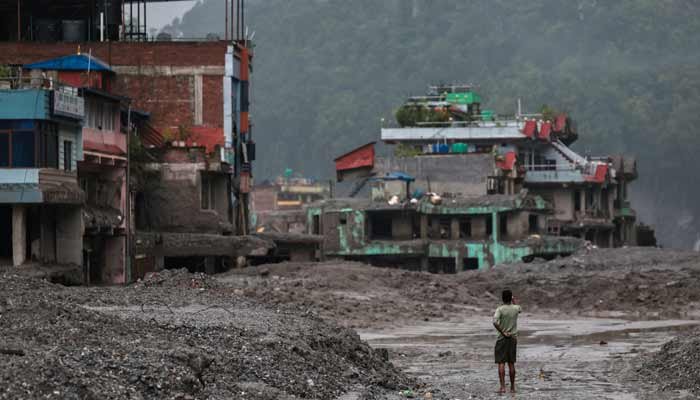
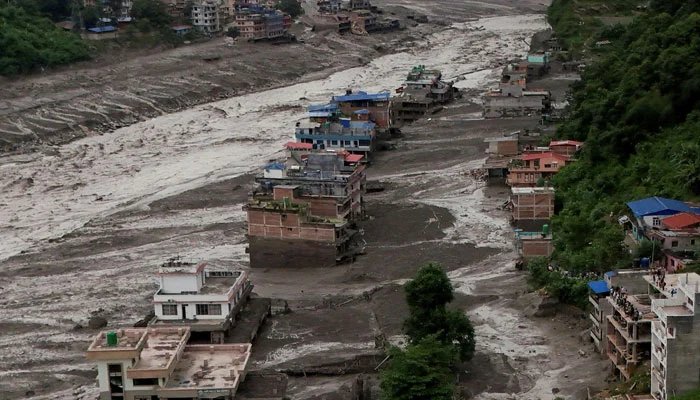
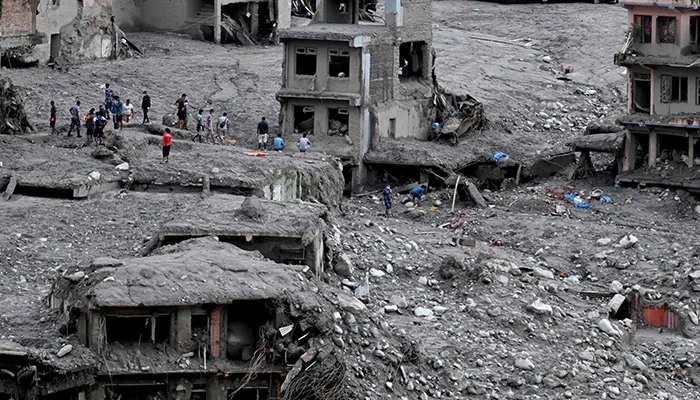
    The damage is colossal. Entire communities have been swept away, leaving countless families homeless and living in makeshift shelters amid persistent heavy rains. Roads and dozens of bridges are destroyed, and power plants have been washed out.

    “There are numerous challenges,” said officer E. Hawadi in Nuwakot, one of the hardest-hit areas.

    In Nuwakot, AFP photographers observed people sifting through muddy rubble for usable items, some attempting to piece together shelter from debris and tarps.

    Among the missing are tourists trekking in the seemingly peaceful Himalayas and Hindu pilgrims heading to Tibet’s sacred Mount Kailash.

    Widespread anger is growing over the destruction in Nepal, a predominantly rural country of 30 million that has contributed little to the emissions fueling global warming but is bearing its devastating effects.

    Prime Minister Shah emphasized the need to raise the issue of climate-related disasters with the international community, stating, “It is now time for us to strongly address the crisis we are facing due to climate change.”

    Scientists warn that the Himalayas, the world’s highest mountain range, are melting at an accelerated pace as global temperatures climb.

    Nepal’s economy is already strained, with limited resources to respond to such a large-scale disaster. Officials estimate reconstruction could cost billions of dollars.

    Nepal has recovered 987 bodies and has 3,916 individuals listed as missing. Meanwhile, Chinese media reports 16 deaths and 546 missing persons, bringing the total death count to over 1,000 and missing to more than 4,460.

    In Tibet, rescue personnel, officials, and residents observed memorial services on Tuesday,mourning the victims in silence. Over 2,000 responders, including military personnel, are aiding efforts, which include searching for survivors, repairing roads, restoring communication, and reestablishing power lines.

    China’s foreign ministry stated Monday that the country has been transparent in its reporting and rejected claims that it is underreporting death numbers.
  • Nepal Teams Search for Hundreds Trapped in Hydropower Tunnels as Flood Toll Reaches 900

    Nepal Teams Search for Hundreds Trapped in Hydropower Tunnels as Flood Toll Reaches 900

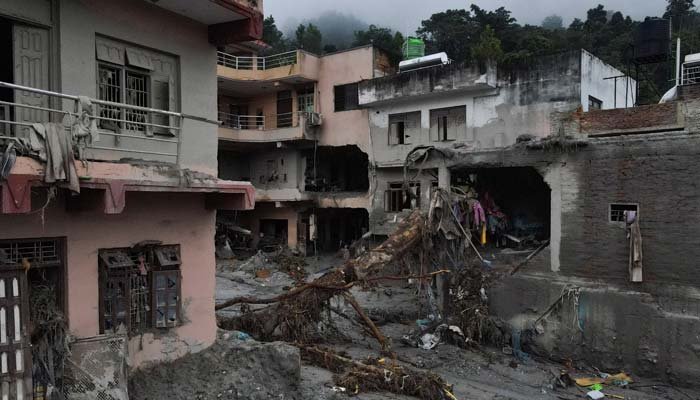
    A drone captures an aerial view of a tree that has been uprooted, alongside damaged houses, following the catastrophic flash floods and mudslide in Devighat, Nuwakot District, Nepal, on August 31, 2026. The scene highlights the extensive destruction wrought by the natural disaster. — Reuters

    – 933 workers are currently missing at hydropower project sites in the flood-affected areas.
    – Dozens of unidentified bodies have been buried in shallow graves amidst the ongoing crisis.
    – Nearly 21,000 security personnel have been mobilized to assist Nepal’s rescue efforts.

    Nepal’s rescue teams, with support from Chinese and Indian experts, worked through the night to reach hundreds of individuals believed to be trapped inside blocked tunnels of hydropower projects. The floods, which tore through the Himalayan region last week, have left a trail of destruction across valley towns, villages, and even into neighboring China.

    The disaster was triggered by a glacier collapse on the Nepal-Tibet border, unleashing an overwhelming flow of ice, rock, mud, and debris that resulted in over 900 deaths, with about 5,000 still unaccounted for. Many bodies, often unrecognized, have been buried hastily in shallow graves as they decomposed in the humid plains after being swept down from the mountains.

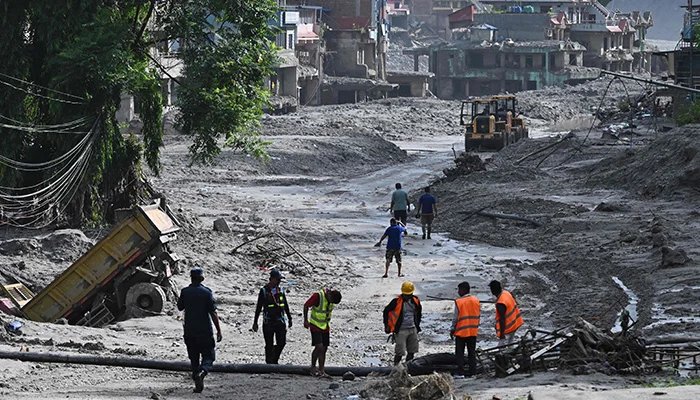
    Officials in Nepal are prioritizing efforts to unlock the blocked tunnels of approximately six hydropower projects, where workers are believed to be trapped. Rescue teams used earth-moving machinery to remove mud and rocks under the cover of night, with soldiers employing flashlights to search inside the tunnels. An excavated pit was created in a bid to access one of the affected tunnels.

    The Nepal Disaster Management Authority reports that 933 individuals are missing at hydropower sites in the flood zone. The Red Cross estimates that more than 90,000 people have been impacted by the disaster, which China attributes to climate change effects.

    As of Monday, official counts indicated 903 fatalities and 4,247 people missing in Nepal. On the Chinese side, authorities reported 16 deaths in Gyirong County and 546 individuals missing.

    Nepal’s Prime Minister Balendra Shah described the flood as an “unprecedented and devastating natural disaster,” emphasizing the difficulty of fully assessing the scope of the damage. Despite challenging weather conditions, treacherous terrain, and persistent risks, Nepal is committed to continuing rescue operations, with nearly 21,000 security personnel, alongside civilian workers and volunteers, actively involved.

    A drone image shows damaged buildings and homes caked in mud along the Likhu River in Devighat, Nuwakot District, following the deadly floods and mudslides on August 30, 2026. The destruction underscores the severity of the event. — Reuters

    Chinese President Xi Jinping, currently visiting Kyrgyzstan, has stated that Beijing is making every effort to locate and assist missing persons affected by the disaster, as reported by Xinhua. The Chinese authorities have identified 261 foreign nationals from 23 countries unaccounted for in Tibet near the critical border with Nepal.

    China has deployed over 2,100 rescue workers and allocated at least 220 million yuan (roughly $33 million) for relief operations. The country has been air-dropping supplies and deploying life-detection equipment to aid frontline rescue teams.

    Despite Nepal’s assertion that it does not require foreign rescue assistance, it has relied on India and China’s expertise for tunnel rescue operations. Rescue activities faced interruptions since Friday due to adverse weather and the potential threat posed by a newly formed lake on the Nepal-China border, potentially causing further flooding as it overflowed into Nepal’s rivers.

    Reports from China’s CCTV indicate that another upstream lake, created by a landslide, has largely drained naturally. This landslide occurred 2.8 kilometers downstream of the initial glacier debris site. Authorities are monitoring a large impact crater on the Nepal side, which expanded to 174,000 square meters by Saturday evening and holds around 2.5 million cubic meters of water. A breach here could trigger a chain reaction affecting downstream lakes.

    Further landslides along the river pose risks of additional lakes forming, with eight high-risk spots identified for geological disasters. The floods are largely attributed to glacier instability driven by long-term global warming effects, considered a new and significant feature of cryosphere-related disasters on the Tibetan plateau.

    Some Nepali officials have expressed concern over China’s limited sharing of glacier and water level data following earlier cooperation meetings, fearing this could hinder future disaster preparedness. China has yet to respond to inquiries about the extent of data sharing.

  • Nepal Floods Claim 734 Lives in Fifth Day of Rescue Efforts

    Nepal Floods Claim 734 Lives in Fifth Day of Rescue Efforts

    Rescue efforts are ongoing at Trishuli Center in Nepal’s Nuwakot district following devastating flooding along the Nepal-Tibet border on August 30, 2026, caused by severe monsoon rains.

    The overall death toll has reached 750, with 3,044 individuals still unaccounted for. The disaster has also been linked to a mudslide in China, which authorities attribute to glacier instability driven by climate change. To aid in relief, Beijing has deployed more than 2,100 emergency personnel.

    Nepal’s disaster management agency reported that at least 734 people have died, and the number of missing residents continues to grow. As of the latest update, over 2,426 individuals are listed as missing, including 589 foreigners—an increase from previous figures. Among the missing are 933 workers involved in hydroelectric projects along the river impacted by the floodwaters. Rescue teams have successfully saved over 8,186 people, including 227 foreigners.

    In neighboring India, officials recovered seven bodies pulled from rivers originating in Nepal, though these deaths are not yet included in official counts.

    In Tibet, China reports that 16 people have lost their lives, and 261 foreign nationals from 23 countries remain missing after a mudslide triggered by a glacier collapse. The highest number of missing foreigners is from Nepal, accounting for 104 individuals. Other unaccounted-for nationals include 49 Indians, 33 Latvians, 18 Americans, and 15 Britons. Chinese authorities confirmed the situation during a press conference, indicating increased risk as water levels in the nearby Trishuli River have risen, prompting residents and rescue workers to relocate to higher ground.

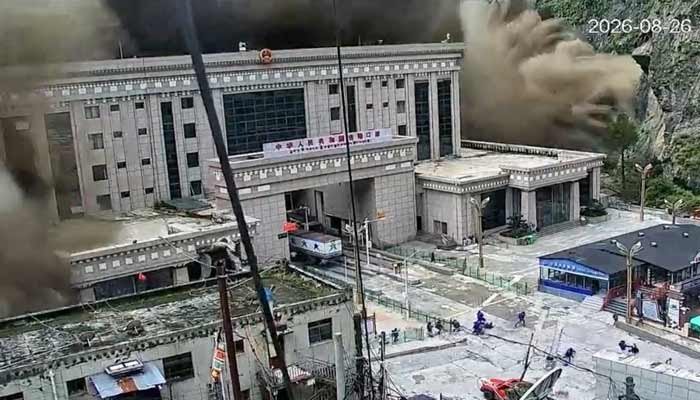
    Chinese officials also stated that the glacier collapse was a result of long-term global warming effects, describing this type of disaster as a new and significant cryosphere-related phenomenon in the region. Surveillance footage shows the rapid flow of water and debris engulfing buildings at the Gyirong border crossing, with the mudslide reaching the area in approximately six to seven minutes.

    Chinese Foreign Minister Wang Yi spoke with his Nepalese counterpart on Saturday, calling this the most severe cross-border disaster in recent years. The Chinese government has mobilized over 2,100 rescue workers and allocated at least 220 million yuan (about $32.7 million) for relief efforts, including emergency funding, supplies, satellite data, and specialized rescue teams. The joint efforts between China and Nepal focus on locating missing persons, improving disaster response, and addressing the impacts of climate change. Experts estimate that more than 90,000 people could have been affected by the disaster.

  • Nepal seeks tech aid as severe weather halts flood rescue efforts

    Nepal seeks tech aid as severe weather halts flood rescue efforts

    A man photographs damaged structures following flash floods and a mudslide in Trishuli, Nuwakot district, Nepal, on August 29, 2026. — Reuters

    • China searches for over 500 missing persons after floods.
    • Two lakes being watched as flood alerts remain active.
    • Nepal reports 626 deaths, while Tibet records seven, due to flooding.

    Nepal has paused its search and rescue efforts due to adverse weather conditions and has indicated it requires international technical assistance to handle the devastating flood that struck an area near Tibet.

    The poor Himalayan nation of 30 million people estimates it will need approximately $4 to $5 billion to rebuild following Wednesday’s flood, according to the finance minister interviewed by Reuters.

    The flood, caused by a glacier collapse, sent a massive flow of rock, ice, mud, and debris rushing through mountain river systems on Wednesday, resulting in at least 626 deaths in Nepal and seven in Tibet. The floodwaters submerged buildings, bridges, and power stations in its path.

    Nearly 3,000 individuals are still missing—about 2,426 in Nepal and at least 558 in Tibet’s Gyirong County—including at least 540 foreigners, many of whom are Hindu pilgrims from India.

    Nepal seeks specialized assistance, not just general rescue

    “Search and rescue efforts are temporarily halted due to rain and fog,” said Narendra Pariyar, the senior official for the severely affected Rasuwa district, speaking to Reuters.

    Current priorities include arranging land transportation to evacuate pilgrims to Kathmandu.

    Rescue operations were briefly suspended on Friday when a lake, formed along the Nepal-China border after the flood, began overflowing into Nepal’s Lhende Khola and Trishuli rivers.

    This lake is one of two upstream flood-prone lakes being monitored by Nepal. Authorities warn that flood risks will continue until both lakes drain completely.

    One of the lakes is shrinking, according to China’s state news agency Xinhua, citing analysis from the water resources ministry. However, a Chinese geohazards expert warned the lake’s stability could be compromised, noting over 100 other glacial lakes in the area might also pose threats.

    Nepal’s Foreign Minister Shisir Khanal stated that the country does not need aid for search-and-rescue operations but does require help with evacuating trapped individuals, restoring transport and communication lines where bridges have been destroyed, identifying bodies, conducting DNA testing, and storing bodies for extended periods.

    “We have already requested specialized services and technical expertise in areas where we lack sufficient skills,” he told Reuters.

    China urges global cooperation in disaster response

    India has dispatched three flights carrying roughly 60 tons of relief supplies to Nepal, including blankets, medicines, food, and water purification tablets. Additionally, India plans to send a rescue tunnel team and medical personnel.

    The Indian government also offered its disaster response force and modular bridges, along with technical teams, to aid in restoring connectivity.

    China has called for international aid and cooperation to support Nepal following the floods but hasn’t specified what assistance it will provide.

    Kathmandu’s initial estimate suggests that rebuilding could cost between $4 billion and $5 billion, according to Finance Minister Swarnim Wagle. He emphasized that this is a preliminary estimate and that damage assessments are ongoing.

    Meanwhile, China is racing to locate more than 500 missing persons. On Friday, rescuers reached the heavily impacted Gyirong border crossing, navigating mountain terrain and forests with ropes after roads to the area, surrounded by steep Himalayan slopes, were destroyed.

    Footage from surveillance cameras shows large torrents of water and debris flooding the crossing as residents desperately tried to escape.

  • What Caused the Devastating Flood at the Nepal-Tibet Border?

    What Caused the Devastating Flood at the Nepal-Tibet Border?

    Flash floods that impacted the Himalayan border region of Nepal and China’s Tibet on Wednesday have resulted in at least 165 fatalities. Nearly 1,500 individuals, including at least 800 foreigners, are reported missing following a massive mudslide that caused devastating floods in towns and valleys after a wall of debris collapsed into a Himalayan river.

    Here is a breakdown of the causes and current situation:

    What happened:
    Early Wednesday, a section of a Himalayan glacier broke apart and tumbled into the valley below. While initial speculations suggested an earthquake might have triggered the event, the U.S. Geological Survey clarified that the tremor was seismic energy generated by the glacier’s collapse and subsequent debris flow.

    The ice and rock avalanche descended along the Lhende Khola river, which runs along the Nepal/Tibet border. The resulting mudslide struck Gyirong port in Tibet and parts of Nepal, unleashing rapid flooding that destroyed entire roads, damaged power infrastructure, and inundated multiple villages.

    Casualties and Missing Persons:
    So far, Nepal has recovered 165 bodies, but the number is expected to rise sharply. About 1,500 people are still unaccounted for across both China and Nepal. Among those missing are nearly 750 foreigners, including:

    • 177 Indians, many on a pilgrimage to Kailash Mansarovar
    • 63 Americans
    • 53 Ukrainians
    • 34 Australians
    • 33 British citizens
    • 28 Malaysians
    • 25 Canadians
    • 9 South Koreans working at a hydropower plant

    Additionally, citizens from around 20 other nations are also reported missing. No immediate details are available regarding the foreign nationals missing in Tibet.

    Downstream in India, approximately 5,000 residents in Bihar were evacuated after flood warnings prompted precautionary measures.

    Current Situation:
    Rescue efforts are ongoing, with police and military personnel conducting search and rescue operations. Helicopters are delivering tents, food, and emergency supplies provided by India. Nepal’s army reports that over 5,000 personnel are engaged in recovery activities, and they’ve rescued 125 individuals—including 20 foreigners—by Thursday. The affected areas lack electricity, and flood sediments present additional challenges for responders.

    International aid is arriving:

    • The United Nations is mobilizing supplies and personnel to support flood-affected communities.
    • India is coordinating closely with Kathmandu for rescue and relief efforts.
    • South Korea is dispatching a rapid-response team to assist.

    The disaster highlights the devastating power of Himalayan glacier collapses and their potential to trigger widespread destruction in border regions. Rescue operations continue as authorities work to account for those missing and provide relief to displaced communities.

  • Nepal-Tibet Border Flood: Hundreds Missing, 95 Dead Amid Disaster

    Nepal-Tibet Border Flood: Hundreds Missing, 95 Dead Amid Disaster

    A wide view of muddy properties after a sudden flash flood at Trishuli in Nuwakot district, Nepal, August 26, 2026. — Reuters

    – Prime Minister Shah announces that rescue teams and military units have been deployed.
    – The government urges residents near rivers to stay vigilant and exercise caution.
    – Nepali officials are concerned about the potential for significant casualties and property damage.

    KATHMANDU: The death toll from the flash flood that affected Nepal’s Himalayan border region with Tibet has risen to 95, police reports state.

    A powerful flash flood in Nepal’s Himalayan region has swept away villages and construction sites in areas bordering Tibet, prompting authorities to warn of possible heavy casualties. They are advising residents living along riverbanks to move to higher ground immediately.

    The Tourism Ministry reports that 341 foreign nationals are currently missing following the devastating floods in the area.

    The districts of Syapru Besi and Timure, located in the mountainous Rasuwa region, suffered severe damage, officials said, emphasizing the need for heightened vigilance among people living near the Bhote Koshi River.

    Narendra Pariyar, the district administrator, told Reuters, “We have reports of villages and infrastructure projects being washed away,” but added that detailed estimates of casualties and damages are not yet available.

    He cautioned, “There might be significant casualties or property losses, but it’s too early to confirm.”

    Prime Minister Balendra Shah has confirmed that rescue and relief operations are underway, with police and military personnel dispatched to assist.

    “We have instructed authorities to relocate residents from lower areas to safer locations,” Shah said.

    “The government advises everyone along the river to stay alert and take extra precautions,” the official statement added.

    The Bhote Koshi River begins in Tibet and flows into Nepal’s Trishuli River, which eventually joins India’s Gandak River.

    Officials explained that the recent flooding was caused by the draining of a supraglacial lake on the Tibetan plateau, a phenomenon linked to regional climate changes.

  • Family of Everest miracle survivor calls for rescue investigation

    Family of Everest miracle survivor calls for rescue investigation

    The family of a Nepali climber who managed to crawl away from Mount Everest six days after being abandoned is demanding an investigation into rescue operations. Doctors reported Friday that he is in stable condition and recovering in a hospital.

    Dawa Sherpa, 57, disappeared in severe weather on the higher slopes of the world’s tallest peak early on May 30. His family believed he had died and even performed last rites.

    He was found crawling toward Base Camp Thursday morning by the Sagarmatha Pollution Control Committee (SPCC), a Nepali team responsible for route maintenance and waste cleanup on Everest. Sherpa, also known as “Hillary” after the legendary climber Edmund Hillary, was transported to Kathmandu for treatment of frostbite on his fingers, a fractured thigh, and severe dehydration.

    “His condition remains stable, and his dehydration has significantly improved,” said Jyotindra Sharma, director of HAMS Hospital in Kathmandu. “He endured extremely difficult conditions on Everest.”

    He added that Sherpa would stay in the ICU for a few more days for observation and ongoing care. His survival has been celebrated by his family, who also expressed frustration over what they described as rescue teams’ delayed response in locating him.

    His wife, Damu Sherpa, told AFP she was overwhelmed with happiness when she received a photo of him being flown to Kathmandu. “I don’t remember much about this past week — we believed he was gone, and had already begun funeral rites,” she said, waiting outside the ICU to see him. “Seeing those photos and recognizing him—that was a huge surprise. He was still wearing a cap I knitted for him.”

    Climbing season on Everest was nearing its end, resulting in fewer climbers on the summit. His family criticized the expedition company for allegedly delaying the deployment of search and rescue efforts.

    “We need an investigation into the company. They did not start the rescue quickly enough,” his wife claimed.

    Karma Gyalje Sherpa, a relative and guide himself, questioned whether a more urgent response would have been triggered if a wealthy foreign climber had been lost. “Surviving in those conditions without proper food for six days is nothing short of a miracle,” he told AFP. He expressed frustration, suspecting that foreigners might receive more prompt assistance.

    Rinji Sherpa, another climber from Dawa Sherpa’s village, described him as someone fully aware of mountain dangers who is committed to his clients. “He’s very loyal and responsible. He’s had close calls before, but he’s always managed to survive.”

    This season has already claimed at least five lives—two Indians and three Nepali climbers. More than 1,000 climbers summited Everest this year, making it the busiest season on record, according to initial official reports.

  • Nepal’s ex-PM Oli detained over Gen Z protest casualties

    Nepal’s ex-PM Oli detained over Gen Z protest casualties

    Nepal’s ex-prime minister, KP Sharma Oli, was detained on Saturday as authorities look into allegations that he may have been negligent in the deadly crackdown on Generation Z-led anti-corruption protests last September, according to officials. His arrest, which his legal team claims was unlawful and led to protests where supporters clashed with police, came shortly after rapper-turned-politician Balendra Shah was sworn in as prime minister on Friday. A committee investigating the violence recommended prosecuting Oli for negligence.

    Also taken into custody was Ramesh Lekhak, Oli’s former home minister. Last September, police responses to the protests resulted in 76 deaths, along with arson and unrest that ultimately forced Oli’s resignation.

    Following his arrest, supporters gathered in protest rallies, confronting police officers attempting to prevent them from burning tires near the prime minister’s office. Authorities responded with tear gas and baton charges, resulting in injuries to at least one person, witnesses reported.

    Nepal’s Communist Party (Unified Marxist-Leninist), which Oli leads, condemned the arrest as illegal and a act of revenge. The party demanded an immediate release and announced plans for further protests scheduled for Sunday. Party official Shankar Pokhrel indicated that protest notices would be submitted across all 77 districts nationwide.

    Home Minister Sudan Gurung defended the move on social media, asserting, “This is the start of justice. The country is heading in a new direction.”

    Oli has served as prime minister four times between 2015 and 2025, but never completed a full five-year term. In 2020, he issued a new political map that included a small disputed territory controlled by India, which boosted his popularity temporarily. However, his support waned, and he lost his seat in an election held earlier this month to Shah’s Rastriya Swatantra Party, amid widespread anger over the September protests’ deaths.

    An investigative panel found Oli and Lekhak responsible for failing to halt police firing during the protests. Police spokesperson Om Adhikari confirmed that Oli and Lekhak would appear in court on Sunday. Witnesses reported that Oli, aged 74 and a recipient of two kidney transplants, was taken from the police station to a hospital.

    Oli’s lawyer, Tikaram Bhattarai, described his client’s arrest as unwarranted and vowed to challenge it in the Supreme Court. “They say it’s for investigation purposes, but it’s illegal and unjustified because there’s no risk of him fleeing or avoiding questioning,” he stated. Efforts to reach Lekhak and his legal team for comments were unsuccessful.

  • Nepal’s Rapper-Driven Centrist Party Nears Election Victory

    Nepal’s Rapper-Driven Centrist Party Nears Election Victory

    Nepal’s centrist RSP party, led by rapper-turned-politician Balendra Shah, secured a clear majority in the direct parliamentary elections, with partial official results indicating a strong lead and suggesting a landslide victory. The 35-year-old Shah’s Rastriya Swatantra Party (RSP) also led in the proportional representation votes, according to announced results and trends from the election commission.

    This election marked the first since the youth-led anti-corruption protests in September 2025, which resulted in the government’s fall. Shah himself defeated veteran four-time Prime Minister KP Sharma Oli in his own constituency—Oli’s Marxist-led government was ousted amid last year’s violence.

    His victory over the 74-year-old Oli and his rise from the mayor of Kathmandu to a potential prime minister highlights a dramatic shift in Nepali politics. The September protests, driven broadly by Generation Z under a loose banner, initially started over a social media ban but quickly expanded into a wider movement against corruption and economic struggles.

    Elections for Nepal’s 275-seat House of Representatives took place on Thursday, with 185 seats filled through direct votes and 110 through proportional representation. Election observers from the Asian Network for Free Elections described the voting process as peaceful and reflective of continued democratic engagement despite recent political turmoil.

    As of Sunday afternoon, 153 of the direct election results had been announced. Shah’s RSP led with 117 wins, followed by the Nepali Congress with 17, and Oli’s Marxist party trailing with seven. Prominent leader Pushpa Kamal Dahal, a three-time prime minister and former Maoist guerrilla commander, also secured his seat, with his party holding a total of seven seats.

    Trends indicated that Shah’s RSP was also leading in eight of the remaining 12 direct constituency races. In the proportional representation tally, RSP was further ahead with nearly half of the votes counted, though final tallies might take several days.

    Nepali Congress, the previous coalition’s largest party, saw its new leader, Gagan Thapa, defeated by Shah’s party. Election officials assured the public that counting was proceeding smoothly, with results expected soon for all direct races and additional days needed for the proportional representation results.

    Shah celebrated his victory Saturday evening with a parade through his new constituency, donning his signature dark sunglasses and greeting the crowds from a sunroof, where supporters chanted “Balen”—his nickname. Oli, who congratulated Shah, wished him “a smooth and successful five-year term.”

    Meanwhile, Nepal’s government-formed investigation commission into the September 2025 violence submitted its report Sunday, although no one has yet been held accountable for the deaths. The findings remain confidential pending public release. The commission collected evidence from over 200 witnesses and compiled a 900-page report, with an additional 8,000 pages of supplementary material. Its conclusions and recommendations are now with interim Prime Minister Sushila Karki for action.

    Oli denies ordering security forces to fire on protesters and attributes the violence to infiltrators, dismissing responsibility.

  • Nepal’s Rapper-Mayor Balendra Shah Set to Rise as Prime Minister

    Nepal’s Rapper-Mayor Balendra Shah Set to Rise as Prime Minister

    Balendra Shah, a musician-turned-politician and the prime ministerial hopeful for the Rastriya Swatantra Party (RSP), rings a bell, which serves as the party’s emblem, during an election campaign in Kirtipur, Kathmandu, Nepal, on February 28, 2026. — Reuters

    Shah’s growing popularity is fueled largely by social media and his strong connection with young voters. The RSP’s manifesto emphasizes job creation and economic development. Counted results from the election commission indicate that around 100 seats are led by his party, far ahead of main competitors, with final outcomes for all 165 directly elected seats and 110 proportional representation seats expected soon.

    The Nepali Congress, now in second place, has already conceded defeat. Analysts predict that the RSP’s substantial lead makes it likely Shah will lead the upcoming government. “Balen Shah’s immense popularity has even led to buses heading to Kathmandu bearing stickers that say, ‘Heading to Balen’s city,’” noted Bipin Adhikari, a constitutional law professor at Kathmandu University.

    If Shah wins, it would mark a remarkable rise for a figure who initially gained fame through rap music criticizing Nepal’s establishment and leveraged that support to attain high political office.

    Shah’s appeal partly stems from his tenure as Kathmandu’s mayor, where he prioritized urban infrastructure improvements, waste management, and healthcare services. However, he has also been criticized, including by Human Rights Watch, for allegedly using police to seize property from street vendors and landless citizens. He stepped down as mayor in January to run for national office and did not respond to interview requests or questions from Reuters.

    Unlike seasoned political veterans from older generations, Shah largely avoids mainstream media. Instead, he maintains a prolific social media presence, with over 3.5 million followers on platforms like Facebook, allowing him to directly engage with younger voters. “What makes Balen unique is his ability to connect with youth through brief messages on social media, but becoming prime minister won’t be an easy task,” said independent political analyst Puranjan Acharya.

    Born to a father practicing traditional Ayurvedic medicine and a homemaker mother, Shah displayed an early talent for poetry, which evolved into a passion for rap influenced by American artists such as Tupac Shakur and 50 Cent. After earning an undergraduate degree in civil engineering in Nepal, he pursued a master’s in structural engineering in southern India, all while establishing himself as a rap star. His songs often tackle Nepal’s ruling class and resonate with many in a nation where about 20% of 30 million people live in poverty.

    One of his most popular songs, “Balidan” (Sacrifice), released in 2019, has garnered over 12 million views on YouTube. The lyrics include: “Let me speak, sir, it is not a crime, / Let me open my mind, I am not a curse to the palace, / My mind is not bad, I am not afraid to speak the truth.”

    In December, Shah joined the RSP, led by former TV host Rabi Lamichhane, as its prime ministerial candidate. The party’s platform includes creating 1.2 million jobs, reducing forced migration, and boosting Nepal’s per capita income from $1,447 to $3,000—more than doubling the country’s economy to a $100 billion GDP—and providing healthcare insurance for all within five years.

    Looking ahead, analysts believe Shah’s success as leader will largely depend on assembling a talented team to overhaul Nepal’s sluggish, corrupt bureaucracy. “He needs capable advisors and support systems—without them, he risks becoming ineffective, like wood attacked by termites,” Acharya warned.

  • Nepal tallies votes following crucial post-uprising election

    Nepal tallies votes following crucial post-uprising election

    Nepal’s latest parliamentary election took place amid the aftermath of protests that led to the government’s overthrow in 2025. Counting is currently in progress, with initial results anticipated later today, though a complete count might take several days. The process has been peaceful, according to Election Commission spokesperson Prakash Nyupane, but the political landscape remains tense as parties await the final tally.

    Voters selected representatives to replace the interim government, which had been in place since a violent uprising last September that left at least 77 dead and resulted in widespread destruction of government buildings. The protests, initially sparked by a social media ban, evolved into a larger movement fueled by frustrations with corruption and a struggling economy.

    The vote is among the most fiercely contested in Nepal since the end of its civil war in 2006. Prominent candidates include a former prime minister with Marxist roots aiming to make a political comeback, a young rapper turned mayor appealing to the youth, and the newly elected leader of the Nepali Congress party.

    Polling stations reported a calm atmosphere, with thousands of security personnel deployed to maintain order. Key results are being watched closely in a regional district called Jhapa-5, where the main contenders face off. One challenger, KP Sharma Oli—ousted last year as prime minister—is seeking to regain power. He’s facing off against Balendra Shah, a 35-year-old rapper-turned-politician representing a centrist party, who is rallying young voters as a symbol of change. Gagan Thapa, leader of Nepal’s oldest party, also remains in the race, promising to bring fresh leadership.

    Over 3,400 candidates competed for 165 seats directly elected to the 275-member House of Representatives, with additional members chosen through party lists. Voter turnout reached nearly 60%. Many voters expressed hope that the election would produce a leader capable of guiding Nepal toward stability and progress, especially after recent sacrifices and decades of political upheaval.

    As the vote count continues, political analysts warn that forming a cohesive government might take time, especially if no single party secures a majority. The nation watches nervously, hopeful for a new path forward.

  • Nepal’s Birgunj Imposes Curfew Amid Mosque Vandalism Protests

    Nepal’s Birgunj Imposes Curfew Amid Mosque Vandalism Protests

    Protests broke out in Nepal’s Birgunj, a city along the border with India, after Hindu extremists vandalized a mosque. The incident, which involved looting and damage to the place of worship, sparked outrage among the local Muslim community. As tensions escalated, demonstrations led to clashes with police, prompting authorities to enforce a curfew and deploy security forces with orders to use live fire against curfew violators.

    The unrest began Sunday when Hindu radicals attacked the mosque, inflicting damage and stealing valuables. This incident deeply upset community members, leading a large number of Muslims to march in protest in Dhanusha’s Kamala Municipality. Police responded by firing tear gas to disperse the crowds, and several protesters were detained.

    In response, the Parsa District administration imposed a curfew in Birgunj, prohibiting public movement and gatherings in an effort to restore order. Officials confirmed that security personnel have been authorized to open fire if necessary to maintain control.

    Located approximately 130 kilometers south of Kathmandu, Birgunj is a key gateway for goods and supplies from India. Due to the tense situation, Indian authorities have strengthened border security and sealed the border entirely. Clashes of this nature are rare in Nepal, a predominantly Hindu nation where Muslims mostly reside in southern border regions.

  • Ex-rapper from Nepal to vie for PM amid Gen Z-led protests

    Ex-rapper from Nepal to vie for PM amid Gen Z-led protests

    Two well-known leaders have formed an alliance ahead of Nepal’s March parliamentary elections, aiming to challenge the longstanding dominance of the country’s traditional parties, which have held power for over 30 years, according to officials and analysts on Monday.

    Rapper-turned-Kathmandu mayor Balendra Shah, popularly known as Balen, a widely loved elected figure, joined the Rastriya Swatantra Party (RSP) — a party led by ex-TV host and current politician Rabi Lamichhane — on Sunday, party representatives said.

    The agreement stipulates that if the RSP wins the upcoming election on March 5, 35-year-old Balen will serve as prime minister, while Lamichhane will remain the party leader.

    Both leaders have committed to addressing issues raised during the youth-led protests against widespread corruption in September, which resulted in 77 deaths and led to Prime Minister K.P. Sharma Oli’s resignation.

    “Bringing Balen and his young supporters into the RSP is a very strategic and intelligent move,” said analyst Bipin Adhikari. “Traditional political parties are nervous because they fear losing their young voters to the RSP.”

    The election commission estimates nearly 19 million of Nepal’s 30 million citizens are eligible to vote. An additional million voters, most of them young people, registered after the protests.

    Balen gained significant attention following those protests and was seen as a de facto leader among the youth who organized the September demonstrations. He also played a key role in forming the interim government led by former Chief Justice Sushila Karki to oversee the election process.

    For the past three decades, power has largely been shared between the Communist Party of Nepal (Unified Marxist-Leninist) and the centrist Nepali Congress, but Balen’s emerging popularity poses a considerable challenge to these established parties.

  • Nearly 1,000 Stranded on Tibet’s Mount Everest Amid Blizzard

    Nearly 1,000 Stranded on Tibet’s Mount Everest Amid Blizzard

    A man carries a bag as he navigates through a flooded street along the banks of the overflowing Bagmati River after heavy rains, in Kathmandu, Nepal, October 4, 2025. — Reuters

    Rescue operations are ongoing on Sunday to reopen access to campsites on Tibet’s eastern slope of Mount Everest, where nearly 1,000 people remain stranded due to a snowstorm that has blocked roads, according to Chinese state media.

    Local villagers and rescue teams have been dispatched to clear the snow from the area, which sits at an altitude exceeding 4,900 meters (16,000 feet), as reported by Jimu News. Some tourists on the mountain have already been evacuated.

    The snow began falling on Friday evening and continued through Saturday, with authorities suspending ticket sales and entry to the Everest Scenic Area from late Saturday, as per notices on the official WeChat accounts of Tingri County’s Tourism Department.

    Just across the border in Nepal, intense rains have caused landslides and flash floods, damaging roads, destroying bridges, and resulting in at least 47 fatalities since Friday, police said.

    In the eastern Ilam district bordering India, 35 people lost their lives in separate landslides. Additionally, nine individuals are reported missing after being swept away by floodwaters, and three others died due to lightning strikes elsewhere in the country.

  • Heavy Rains in Nepal Claim 22 Lives, Block Major Roads

    Heavy Rains in Nepal Claim 22 Lives, Block Major Roads

    Heavy rainfall has caused landslides and flash floods in Nepal, leading to blocked roads, destroyed bridges, and the deaths of at least 22 people over the past 36 hours, officials reported Sunday.

    Police spokesperson Binod Ghimire stated that 18 individuals lost their lives in separate landslides in Ilam district, located in eastern Nepal bordering India. Additionally, three people were killed by lightning strikes in southern Nepal, and one person died in floods in Udayapur district, also in the east.

    Authorities confirmed that 11 people have been swept away by floodwaters and remain missing since Saturday. Rescue workers are actively searching for them, according to Shanti Mahat, a spokesperson for the National Disaster Risk Reduction and Management Authority (NDRRMA).

    Numerous highways have been rendered impassable due to landslides and flooding, trapping hundreds of travelers. Domestic flights have been significantly disrupted, though international flights continue operating normally, said Rinji Sherpa, spokesperson for Kathmandu airport.

    In southeastern Nepal, the Koshi River—known to cause frequent severe floods in the neighboring Indian state of Bihar—has risen above hazardous levels, a local official reported. Dharmendra Kumar Mishra, district governor of Sunsari, explained that water levels in the river are more than twice their usual amount. All 56 sluice gates of the Koshi Barrage have been opened to drain excess water, compared to the normal 10 to 12 gates, and authorities are considering restricting heavy vehicles on the bridge.

    In Kathmandu, a city surrounded by hills, several rivers have flooded streets and inundated numerous homes, effectively isolating the capital from the rest of the country by road. Landslides and flash floods are common during Nepal’s monsoon season, which usually spans from mid-June to mid-September, claiming hundreds of lives each year.

    Meteorologists forecast continued heavy rains in the Himalayan nation through Monday. Officials emphasize that they are exercising maximum caution and are taking steps to assist those affected by the ongoing natural disasters.

  • Nepal Panel Investigates Violence in Anti-Graft Protests That Killed 74

    Nepal Panel Investigates Violence in Anti-Graft Protests That Killed 74

    A protest against corruption and social media bans erupted in Kathmandu, Nepal, with demonstrators waving flags atop vehicles near Parliament. The unrest resulted in the worst violence in decades, leaving over two thousand injuries, with protesters setting fire to government buildings, malls, and luxury hotels linked to corrupt officials.

    Nepal’s interim government, headed by ex-Chief Justice Sushila Karki, has formed a three-member panel led by retired judge Gauri Bahadur Karki to investigate the violence, which claimed 74 lives and prompted Prime Minister KP Sharma Oli’s resignation. The panel, given three months, will examine the causes of the deaths and property damage, including acts of arson and vandalism committed during the protests.

    Former Prime Minister Oli, via social media, called for an inquiry into the violence, stating that police did not receive orders to open fire and that outsiders infiltrated the protests. Police lacked the weapons used against protesters, he added.

    The protests, initially driven by Gen Z activists protesting corruption and unemployment, spiraled into chaos as the government’s response became violent. Many significant entities, including the prime minister’s office, the Supreme Court, and the parliament, were targeted, alongside various commercial establishments owned by individuals close to political leaders.

    Karki, known for her honesty as a former corruption court chair, is now overseeing the investigation, aiming to clarify the events and address public concerns.

  • Nepal’s Activists Who Removed the Government Now Choose New Leaders

    Nepal’s Activists Who Removed the Government Now Choose New Leaders

    A former DJ and an obscure non-profit from Nepal leveraged a popular gaming social media platform to organize large-scale protests, ultimately shaping the country’s new temporary leadership. Sudan Gurung, 36, who founded Hami Nepal (which translates to “We are Nepal”), utilized Discord and Instagram to rally substantial demonstrations that compelled Prime Minister KP Sharma Oli to step down during Nepal’s most severe political upheaval in many decades, according to demonstrations participants.

    The activist group accessed restricted platforms through VPNs to issue calls that reached tens of thousands of young Nepalese citizens. Efforts by Oli’s representatives for comment went unanswered.

    “I joined a Discord group with around 400 members. They asked us to participate in a protest march a few kilometers from Parliament,” explained 18-year-old student Karan Kulung Rai, who was not involved in the group but heard about the march.

    Hami Nepal’s early social media activity proved to be influential enough to be mentioned on national television. During escalation and violence at protests, the group also flagged false information and circulated hospital contact numbers for assistance. Members who requested anonymity for security reasons shared that Gurung and his leadership team have since become central figures in significant political decisions, including selecting the new interim administration, which is scheduled to hold elections on March 5.

    The group has reportedly secured the cooperation of Nepal’s president and army chief to appoint Sushila Karki, a former Chief Justice known for her firm stance against corruption, as the nation’s first female interim prime minister. Gurung declared at his first post-protest press conference: “My goal is to ensure power rests with the people and to bring corrupt politicians to justice.”

    On Sunday, Gurung and his team participated in meetings to determine the cabinet lineup, suggesting the removal of some appointees from the previous government. A Hami Nepal member noted, “Discussions are ongoing between Karki and our team, and we expect to finalize the cabinet soon.” Gurung and Karki did not respond immediately to phone inquiries.

    The group emphasized on Instagram that they aim to ensure the new government comprises skilled and capable youth.

    The protests that erupted last Monday, mainly led by people in their twenties identified with Generation Z, turned violent within hours and swiftly toppled the government. Following a ban on multiple social media platforms—a ban later reversed—protesters clashed with authorities, resulting in a death toll of at least 72 and over 1,300 injuries.

    Gurung, who is older than typical Gen Z age, and his team have stated they do not seek political office but want to influence future governance decisions.

    “Sudan Gurung isn’t interested in becoming a politician. He was merely helping the ‘Gen Z’ group, and we see ourselves as the voices of the nation, not leaders,” said 26-year-old volunteer Ronesh Pradhan.

    Gurung’s background includes organizing disaster relief during Nepal’s devastating 2015 earthquake, which claimed over 9,000 lives, and during the COVID-19 pandemic.

    Among those managing Hami Nepal’s social media presence are 24-year-old café owner Ojaswi Raj Thapa and law graduate Rehan Raj Dangal. Thapa, who emerged as a prominent protest leader, told Reuters that ensuring judiciary independence is a key priority once the interim government is established.

    “We might need some constitutional amendments, but we don’t want to dissolve the constitution,” Thapa added.