الوسم: climate

  • Nepal seeks tech aid as severe weather halts flood rescue efforts

    Nepal seeks tech aid as severe weather halts flood rescue efforts

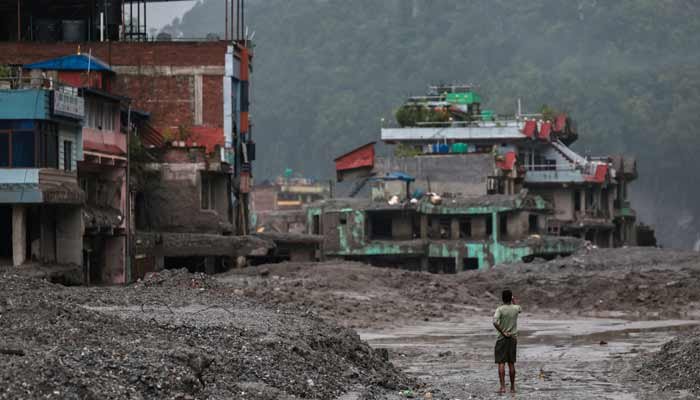
    A man photographs damaged structures following flash floods and a mudslide in Trishuli, Nuwakot district, Nepal, on August 29, 2026. — Reuters

    • China searches for over 500 missing persons after floods.
    • Two lakes being watched as flood alerts remain active.
    • Nepal reports 626 deaths, while Tibet records seven, due to flooding.

    Nepal has paused its search and rescue efforts due to adverse weather conditions and has indicated it requires international technical assistance to handle the devastating flood that struck an area near Tibet.

    The poor Himalayan nation of 30 million people estimates it will need approximately $4 to $5 billion to rebuild following Wednesday’s flood, according to the finance minister interviewed by Reuters.

    The flood, caused by a glacier collapse, sent a massive flow of rock, ice, mud, and debris rushing through mountain river systems on Wednesday, resulting in at least 626 deaths in Nepal and seven in Tibet. The floodwaters submerged buildings, bridges, and power stations in its path.

    Nearly 3,000 individuals are still missing—about 2,426 in Nepal and at least 558 in Tibet’s Gyirong County—including at least 540 foreigners, many of whom are Hindu pilgrims from India.

    Nepal seeks specialized assistance, not just general rescue

    “Search and rescue efforts are temporarily halted due to rain and fog,” said Narendra Pariyar, the senior official for the severely affected Rasuwa district, speaking to Reuters.

    Current priorities include arranging land transportation to evacuate pilgrims to Kathmandu.

    Rescue operations were briefly suspended on Friday when a lake, formed along the Nepal-China border after the flood, began overflowing into Nepal’s Lhende Khola and Trishuli rivers.

    This lake is one of two upstream flood-prone lakes being monitored by Nepal. Authorities warn that flood risks will continue until both lakes drain completely.

    One of the lakes is shrinking, according to China’s state news agency Xinhua, citing analysis from the water resources ministry. However, a Chinese geohazards expert warned the lake’s stability could be compromised, noting over 100 other glacial lakes in the area might also pose threats.

    Nepal’s Foreign Minister Shisir Khanal stated that the country does not need aid for search-and-rescue operations but does require help with evacuating trapped individuals, restoring transport and communication lines where bridges have been destroyed, identifying bodies, conducting DNA testing, and storing bodies for extended periods.

    “We have already requested specialized services and technical expertise in areas where we lack sufficient skills,” he told Reuters.

    China urges global cooperation in disaster response

    India has dispatched three flights carrying roughly 60 tons of relief supplies to Nepal, including blankets, medicines, food, and water purification tablets. Additionally, India plans to send a rescue tunnel team and medical personnel.

    The Indian government also offered its disaster response force and modular bridges, along with technical teams, to aid in restoring connectivity.

    China has called for international aid and cooperation to support Nepal following the floods but hasn’t specified what assistance it will provide.

    Kathmandu’s initial estimate suggests that rebuilding could cost between $4 billion and $5 billion, according to Finance Minister Swarnim Wagle. He emphasized that this is a preliminary estimate and that damage assessments are ongoing.

    Meanwhile, China is racing to locate more than 500 missing persons. On Friday, rescuers reached the heavily impacted Gyirong border crossing, navigating mountain terrain and forests with ropes after roads to the area, surrounded by steep Himalayan slopes, were destroyed.

    Footage from surveillance cameras shows large torrents of water and debris flooding the crossing as residents desperately tried to escape.

  • Hurricane Hunters Spot Early Signs of Possible Storm Intensification

    Hurricane Hunters Spot Early Signs of Possible Storm Intensification

    Hurricane Melissa rapidly intensified after forming on October 21, 2025, reaching Category 5 strength by October 27. Credit: NOAA, Cooperative Institute for Research in the Atmosphere (CIRA).

    Scientists have pinpointed several early indicators that can help meteorologists determine when a tropical cyclone is starting to organize and strengthen. Detecting these signs earlier could give communities more lead time to prepare for dangerous storms.

    This new insight is based on nearly 30 years of data collected by NOAA Hurricane Hunter aircraft.

    The research reveals that a tropical cyclone generally needs to become vertically aligned before it can undergo significant intensification.

    In simple terms, meteorologists describe this process as the storm needing to “stand up straight.”

    A cyclone is a vast rotating system that extends from just below the ocean surface upward into the atmosphere. Ideally, the centers of circulation at different heights are roughly aligned above each other.

    However, strong winds higher in the atmosphere can push the top of the storm away from its center near the surface, causing it to tilt.

    This separation between the lower and middle levels of the storm is called “tilt.” One common cause is vertical wind shear, which happens when wind speeds or directions change with altitude.

    When a storm is tilted, it usually struggles to strengthen. But once its various levels become aligned, environmental conditions become much more conducive to intensification.

    Researchers from the University of Miami and NOAA identified four key characteristics that are common in storms capable of straightening themselves out.

    These storms tend to have a strong, compact circulation close to the ocean surface. Their tilt aligns favorably with the surrounding wind shear. They also exhibit stronger upward-moving air and heavier rainfall near the storm’s lower center. Lastly, they are often situated in favorable environments, with warm ocean waters, abundant moisture, and relatively weak winds at mid-levels.

    The team analyzed data from the TC-RADAR database, which includes 1,510 radar analyses gathered by NOAA Hurricane Hunter aircraft over 28 hurricane seasons from 1997 to 2024.

    Crucially, storms that eventually straightened out showed noticeable signs about a day earlier. These signs included a more organized and stronger circulation close to the ocean surface and widespread, intense thunderstorms near the low-level center.

    Researchers believe these thunderstorms aren’t just indicators; their vigorous upward air movement might actually help reorient the tilted circulation into a more upright position.

    This discovery can be invaluable for predicting rapid intensification — sudden increases in storm strength over a short period — which often causes significant hazards because coastal areas may have limited warning time to evacuate or prepare.

    Hurricane Hunter aircraft already measure many of these features during routine missions, providing real-time data on whether a storm is becoming better organized.

    The findings could also improve the accuracy of computer models used to forecast hurricane behavior. Recognizing early signs of strengthening a day in advance could offer emergency planners and residents extra time to evacuate or take safety measures during a storm’s intense development phase.

  • How a Slow Planet Spin Might Create a Venus-Like Scorching World

    How a Slow Planet Spin Might Create a Venus-Like Scorching World

    A planet’s rotation speed plays a significant role in shaping its climate and surface conditions. Earth, rotating approximately once every 24 hours, benefits from a rapid spin that helps distribute heat evenly and drives weather patterns, maintaining a habitable environment. In contrast, Venus takes about 243 Earth days to complete a single rotation, making it one of the slowest-spinning planets in our solar system. This slow rotation is linked to Venus’s thick, crushing atmosphere and extreme surface temperatures.

    Determining a planet’s rotation from afar isn’t straightforward. Astronomers often observe the movement of a planet’s atmosphere rather than its solid surface. For Venus, the upper atmosphere zips around the planet in just about four days, despite the planet itself rotating once every 243 days. Observing only atmospheric motion could lead scientists to overestimate the planet’s rotation rate by a factor of around 60.

    This presents a challenge when studying exoplanets, especially since we typically can’t directly see their surfaces. Looking at different wavelengths of light might be the key to disentangling atmospheric currents from the planet’s true rotation. For example, infrared observations can probe deeper atmospheric layers, allowing scientists to compare wind speeds at various depths. This approach can help distinguish how fast the planet actually spins underneath its atmospheric dynamics.

    The upcoming European Space Agency’s PLATO mission, set to launch in March 2027, aims to find hundreds of Earth-sized planets similar to Venus. By observing these planets over extended periods, PLATO will detect worlds with longer orbital periods that earlier surveys might have missed. Many of these planets are expected to orbit relatively bright stars, making them ideal targets for detailed follow-up studies with instruments like the James Webb Space Telescope.

    Studying the rotation rates of these Venus-like planets could provide vital clues as to why Venus evolved into an extremely hot, greenhouse-dominated world. If most of these planets are found to spin very slowly, it might suggest that slow rotation naturally leads to the extreme greenhouse conditions we see on Venus. Conversely, if their rotation speeds vary widely, other factors must be influencing their climates.

    Understanding these dynamics isn’t just about explaining Venus—they’re crucial for the search for life elsewhere. Accurate measurements of a planet’s rotation can improve climate models and help identify worlds with potential habitability. As we discover more planets resembling Venus and Earth, analyzing their spins could finally unravel why some become fiery hellscapes, while others become hospitable homes for life.

  • Experts warn as UK heatwave fuels surge in AC demand

    Experts warn as UK heatwave fuels surge in AC demand

    Zainab Hussain, a resident of London, once considered air conditioning a luxury in Britain. Today, at age 35, she finds it hard to imagine surviving without it. She and her husband are among a growing number of British households turning to air conditioning to cope with increasingly intense summer heat.

    Critics, especially sustainability experts, warn against viewing AC as the default solution. Rajat Gupta, a professor of sustainable architecture and climate change at Oxford Brookes University, explained, “It’s often seen as a quick fix, but it can cause significant harm.” He pointed out that air conditioning ramps up electricity consumption, boosts energy bills, and increases carbon emissions. Moreover, it worsens the urban heat island effect by releasing hot air into city streets.

    Despite this, after enduring a second fierce heatwave last month that kept them up at night, the Hussain family decided to install an air conditioner upstairs in their semi-detached home in Selsdon, South London. “Our summers have been getting more and more unbearable, so we knew we had to have one for the downstairs area,” Hussain said. She added, “But after last week’s heatwave, we realized that even upstairs was starting to feel unbearable,” as workers installed their new unit.

    Only about 5% of homes in Britain currently have air conditioning, while nearly half overheat during summer, according to a 2025 report by the Center for British Progress, a non-partisan think tank. The report emphasizes the urgency of increasing AC adoption due to the rising risks of heat-related deaths—numbers in the low thousands annually—and the decline in worker productivity caused by excessive heat.

    The trend of hotter summers is evident as records keep tumbling. Last month marked the warmest June in England since records began in 1884, and all five of Britain’s hottest summers have occurred in the 21st century, with the previous year topping the list as the hottest. Climate scientists attribute this to human-induced climate change, which makes such extreme weather events more frequent and severe.

    Joe Springett, an air conditioning installer with nearly two decades of experience, has noticed a shift in his business. “I’m getting busier with residential installations every year,” he said while fitting Hussain’s new unit. “As soon as the heat hits, the phones start ringing—everyone wants cooling now.” After the recent heatwave, Springett’s schedule was packed for weeks, and stock shortages became common.

    For those who lack outdoor space or cannot afford premium units—costing several thousand dollars including installation—more affordable, portable options are becoming popular. Retailers report a surge in demand, with some portable AC units already sold out. B&Q, a leading home improvement retailer, noted that searches for portable units have doubled compared to the previous year.

    Rajat Gupta advocates for a more sustainable approach. He encourages building retrofits that incorporate shading, improved ventilation, and other eco-friendly measures, rather than relying solely on air conditioning. He believes AC should be reserved for vulnerable populations, such as those in care homes and hospitals. “In homes, widespread use isn’t yet common, and it’s better to keep it that way,” Gupta stated. “Use it only when necessary, and only where it’s needed.”

    In the UK, operating costs for AC vary widely depending on the system’s efficiency and usage patterns. Some estimates suggest that high-power units can add hundreds of pounds to monthly electricity bills. John Calautit, a sustainability lecturer at University College London, is skeptical about widespread AC use. He notes that most British buildings are designed to retain heat and aren’t built to handle extreme warmth. “We should focus on simple solutions like shading, reflective materials, and natural ventilation,” he advised. “If those don’t suffice, then we consider mechanical cooling options.”

    Springett believes Britain must adapt to climate realities. For the Hussain family, with south-facing windows exposed to direct sunlight all day, installing an air conditioner felt like their only choice. “We’re home so much more now, especially with remote work. It’s not just about comfort; it’s about being able to function properly in our own house,” Hussain explained.

  • France warns to cut funding to India over climate inaction

    France warns to cut funding to India over climate inaction

    France issued a warning on Monday that it might withhold climate financing to India if New Delhi does not step up its efforts to combat global warming. This statement came amidst ongoing discussions over a recent trade agreement between India and the European Union.

    Monique Barbut, France’s Minister of Ecological Transition, emphasized to AFP that the EU should adopt a tougher, more strategic approach in climate negotiations, favoring a policy that conditions financial support on concrete action. She highlighted India as a key example, noting that under their January trade agreement, the EU plans to allocate €500 million ($574 million) to support India’s green transition.

    She expressed skepticism about releasing the funds until India submits a Nationally Determined Contribution (NDC) aligning with its climate commitments and shows a more cooperative attitude toward the EU on climate talks. NDCs are national plans to reduce emissions tied to the 2015 Paris Agreement, and over 60 countries, including India, Egypt, and the Philippines, have yet to submit their latest version, missing a UN deadline last year.

    India ranks as the third-largest emitter of greenhouse gases globally, after China and the United States.

    Broadly, Barbut called for the EU to take a more assertive and strategic stance in climate negotiations, making it clear that support should be contingent upon genuine commitments. She conveyed her concerns directly to the European Commission and pointed out that European financial contributions should only go to countries with credible climate action plans under the Paris Agreement.

    EU climate ministers are scheduled to review the bloc’s climate diplomacy at a meeting in Brussels on Tuesday.

  • Denmark and Greenland Face Tensions Amid White House Pressure

    Denmark and Greenland Face Tensions Amid White House Pressure

    Denmark has announced plans to increase its military forces in Greenland, emphasizing the island’s strategic importance. President Trump highlighted Greenland’s critical role in the defense of the Arctic and stressed that control over the territory is essential for the success of the Golden Dome missile and air defense system, urging NATO support. The discussion came amid high-level talks at the White House between Danish and Greenlandic diplomats and U.S. officials, including Vice President JD Vance and Secretary of State Marco Rubio.

    Footage captured Danish Foreign Minister Lars Loekke Rasmussen and Greenland’s Foreign Minister Vivian Motzfeldt arriving at the White House, with U.S. officials entering the talks. The White House shared an image showing two scenarios for Greenland: one optimistic with a sunny White House, and one dystopian with storms over China and Russia, hinting at the geopolitical tensions surrounding the territory.

    Trump’s aggressive stance on Greenland has unsettled transatlantic relations. He insists that NATO should back U.S. efforts to seize control of Greenland, claiming it is crucial for national defense. He asserts that failing to do so would allow Russia or China to take control, a scenario he cannot accept.

    Vance, known for his tough rhetoric, previously criticized Denmark as an unreliable partner during a visit to Greenland last year and has publicly reprimanded Ukrainian President Zelensky in past meetings. Critics warn that pushing for Greenland’s takeover could lead to diplomatic setbacks or outright conflict.

    Denmark, which has invested nearly $14 billion in Arctic security, responded by reaffirming its commitment to bolster military resources in Greenland and is currently engaged in joint exercises involving air, sea, and ground forces, with Swedish officers participating upon Denmark’s invitation.

    Denmark’s Foreign Minister Rasmussen expressed hope for clarifying misunderstandings during negotiations but acknowledged the potential for escalation. Greenland’s leadership has expressed a preference to remain with Denmark, though Trump has repeatedly voiced ambitions to acquire the island fully, citing fears of Russian or Chinese encroachment. Both powers are increasing activity in the melting Arctic, but neither claims sovereignty over Greenland, which is home to about 57,000 residents.

    After the White House discussions, an American congressional delegation is scheduled to visit Copenhagen to reaffirm solidarity with Denmark and Greenland. The U.S. maintains agreements that allow it to station troops and operate a space base at Pituffik. Meanwhile, Greenland’s Prime Minister Jens-Frederik Nielsen reiterated the island’s wish to stay under Danish sovereignty, standing in contrast to Trump’s persistent efforts to consider Greenland as part of U.S. strategic planning.

  • Trump pulls US from numerous international and UN organizations

    Trump pulls US from numerous international and UN organizations

    U.S. President Donald Trump walked to the White House on January 4, 2026, after returning from Florida, as captured in a photo by Reuters.

    The United States announced plans to withdraw from 35 non-UN organizations and 31 UN entities. Trump explained that these withdrawals are due to conflicts with American national interests. This decision highlights his longstanding skepticism toward multilateral organizations.

    Among the entities slated for exit is the UN Framework Convention on Climate Change (UNFCCC), often regarded as the foundation of global climate efforts and the parent agreement of the 2015 Paris accord. The U.S. notably skipped last year’s annual UN climate summit for the first time in thirty years.

    Manish Bapna, president and CEO of the Natural Resources Defense Council, stated, “The U.S. is set to leave the UNFCCC first. Other countries participate because they see value beyond moral duty—shaping economic policies and seizing opportunities that come with engaging in these negotiations.”

    Further withdrawals include UN Women, which advocates for gender equality and women’s empowerment, as well as the UN Population Fund (UNFPA), which focuses on family planning, maternal, and child health across over 150 countries. The U.S. had already cut funding to UNFPA last year. The memo specifies that withdrawing from UN bodies may involve ceasing participation or funding within legal limits. The Trump administration has already sharply reduced voluntary contributions to most UN agencies. No immediate comment was available from the UN Secretary-General’s office.

    Trump’s approach reflects his persistent wariness of multinational institutions, especially the UN. He has repeatedly questioned their efficiency, cost, and the extent to which they serve U.S. interests. Over the past year, he has cut U.S. funding for the UN, withdrawn from the Human Rights Council, suspended aid to UNRWA, and exited UNESCO. Additionally, plans to leave the World Health Organization and the Paris Agreement have been announced.

    Other targeted entities include the UN Conference on Trade and Development, the International Energy Forum, the UN Register of Conventional Arms, and the UN Peacebuilding Commission. The White House claimed these organizations promote “radical climate policies, global governance, and ideological programs that threaten U.S. sovereignty and economic strength.”

  • Global Temperature Records Shattered Worldwide in 2025

    Global Temperature Records Shattered Worldwide in 2025

    In 2025, Central Asia, the Sahel region, and northern Europe experienced their hottest year on record, based on data from the European Copernicus program analyzed by AFP. Over the past 12 months, the global temperature trend ranks as the third hottest year ever, trailing only 2024 and 2023, pending official confirmation in Copernicus’s upcoming annual report.

    This average temperature includes both land and ocean surfaces, but certain regional records tell a more alarming story. Due to limited climate data reporting from some developing nations, AFP supplemented the global picture by independently examining Copernicus data, satellite measurements from around 20 different sources, and weather station reports, covering worldwide hourly data since 1970.

    In 2025, a total of 120 monthly temperature records were broken across more than 70 countries. Notably:

    Central Asia saw every nation surpass its previous annual temperature records. Tajikistan, a landlocked and mountainous country where only 41% of the population has access to safe drinking water, experienced the highest abnormal temperatures globally — over 3°C above historical seasonal averages from 1981 to 2010. Monthly temperature records there have been broken every month since May, except November. Nearby countries like Kazakhstan, Iran, and Uzbekistan faced temperatures 2°C to 3°C higher than typical seasonal levels.

    The Sahel and West Africa regions registered temperature increases between 0.7°C and 1.5°C above seasonal norms. Mali, Niger, Nigeria, Burkina Faso, and Chad experienced some of their hottest months ever, with Nigeria recording its hottest year on record and other nations ranking among the top four hottest in history. Experts from the World Weather Attribution network state that extreme heat events have become nearly ten times more likely since 2015, emphasizing the role of climate change. These vulnerable nations, already battling conflict, food insecurity, and poverty, are on the frontline of rising temperatures.

    Europe faced a scorching summer, with about ten countries nearing or setting new annual temperature records. Switzerland and Balkan nations saw summer temperatures spike 2°C to 3°C above average. Spain, Portugal, and the UK endured their worst summers on record, sparking massive wildfires. The UK’s driest spring in over a century contributed to water shortages. While northern Europe avoided the June heatwave, it experienced unusually warm autumns, making 2025 one of the two warmest years on record in Norway, Sweden, Finland, and Iceland.

  • Top 5 Trends to Watch in 2026

    Top 5 Trends to Watch in 2026

    Next year will bring trips around the Moon, major football tournaments, and a heated battle for control of the U.S. Congress. Here are five key events to keep an eye on in 2026.

    Climate: Will the world respond?
    Global temperatures are already hitting record highs, and projections suggest things could get even warmer in 2026. Last year was the hottest on record, and the UN estimates there’s an 80% chance at least one year before 2030 will surpass that. Despite setbacks like the U.S. boycotting COP30 in Brazil, multilateral efforts on climate change show resilience. Climate advocates emphasize that 2026 must be the year international climate diplomacy transforms itself, as countries respond to Colombia’s invitation to a groundbreaking conference on phasing out fossil fuels in April. Experts are curious if worldwide youth-led protests will escalate to push more aggressive climate action.

    Major football World Cup
    The largest FIFA World Cup ever will feature 48 teams competing across the U.S., Canada, and Mexico, with the U.S. hosting 11 venues. The tournament runs from June 11 to July 19, and tensions between President Trump and co-host nations over tariffs and immigration could influence the competition’s political atmosphere. France, led by Kylian Mbappe, aims to avenge their 2022 loss to Argentina’s Lionel Messi, while Spain hopes for a strong showing. Cristiano Ronaldo, age 41 during the tournament, has indicated this will likely be his last World Cup, with hopes of securing Portugal’s first global title. New entrants like Cape Verde, Uzbekistan, and Curacao will debut, but ticket prices may be steep due to dynamic pricing strategies.

    Gaza, Israel, and Netanyahu’s prospects
    A fragile ceasefire between Israel and Hamas began on October 10 after two years of conflict, but its sustainability remains uncertain. Trump’s peace plan for Gaza leaves many issues unresolved, such as troop withdrawals, rebuilding efforts, and governance. The UN Security Council’s endorsement could lead to deploying an international force, though both Israel and Hamas oppose the idea. Meanwhile, Netanyahu, now 76, plans to run again in elections scheduled for late 2026 amid a fragile coalition. Many Israelis want accountability for the October 2023 attack that ignited the war, and a significant portion oppose his request for a presidential pardon to escape corruption trials. To maintain support from far-right allies, Netanyahu may consider military options against Hamas or Hezbollah, risking escalation.

    Control of the U.S. Congress
    Voters will head to the midterm elections in 2026 amid high stakes for Trump, Congress, and the nation. While Trump isn’t on the ballot, a strong Republican showing would reinforce his influence. However, if his favored candidates falter, it could expose cracks in his movement and complicate successions. The GOP’s hold on Congress is tight, with narrow margins in both chambers depending on key battleground states like Michigan, North Carolina, and Ohio. Democrats see opportunities, especially since the party of the incumbent often loses seats in midterms. Republicans face a challenging path to maintain the House, and Democrats aim to flip four Senate seats needed to gain control. Full Republican dominance could cement Trump’s legacy, but Democratic control would slow his agenda and potentially trigger ongoing investigations.

    Humans returning to the Moon and space exploration
    While a manned lunar landing may not happen in 2026, NASA plans to launch Artemis II—the first crewed mission to orbit the Moon—by April at the latest. This marks a major step toward restoring American footprints on the lunar surface, a vision initially launched during Trump’s first term. China aims to land on the Moon by 2030 and is progressing with its Chang’e 7 mission, targeting the lunar south pole, along with testing its crewed spacecraft, Mengzhou, next year. India, which sent a robotic mission to the Moon in 2023, is planning to send astronauts into orbit by 2027, signaling an expanding global interest in space exploration.

  • World reaches fossil fuel-free compromise at COP30

    World reaches fossil fuel-free compromise at COP30

    World governments reached a consensus Saturday on a compromise climate agreement at COP30 in Brazil, aimed at increasing financial support for vulnerable nations affected by climate change, while deliberately leaving out any reference to fossil fuels that contribute to the crisis. The talks, which extended into overtime after intense negotiations in Belem, revealed divisions between wealthy and developing countries, particularly on oil, gas, and coal policies. COP30 President Andre Correa do Lago admitted the negotiations had been challenging, noting some delegates had higher aspirations for certain issues.

    The European Union was initially resistant to language advocating a shift away from fossil fuels but ultimately agreed to drop such language after a coalition of countries, including Saudi Arabia, insisted it was non-negotiable. Wopke Hoekstra, the EU’s climate commissioner, expressed support for the deal, emphasizing that it was a step in the right direction. Conversely, Panama’s climate negotiator, Juan Carlos Monterrey, criticized the outcome, saying, “A climate decision that doesn’t even acknowledge that fossil fuels are not neutral is essentially complicit. This process surpasses mere incompetence.”

    The agreement also introduces a voluntary initiative to accelerate climate action and calls for wealthy nations to triple their financial contributions to help developing countries adapt to climate impacts by 2035. While existing commitments have already mitigated some temperature rise, they fall short of preventing a 1.5°C increase above pre-industrial levels, a threshold associated with catastrophic climate effects. Developing nations emphasize the urgent need for funds to cope with rising sea levels, heatwaves, droughts, and severe storms.

    Avinash Persaud, a senior advisor at the Inter-American Development Bank, highlighted the importance of financial pledges amid escalating climate impacts but expressed concern that the world has not yet provided enough rapid grants to address loss and damage in vulnerable nations.

    The deadlock over fossil fuel language delayed the negotiations past Friday, leading to intense, all-night discussions. A side document addressing fossil fuels and forest protection was issued amid the lack of consensus, with Correa do Lago encouraging ongoing dialogue on these issues during Brazil’s presidency.

    Additionally, the agreement sets in motion a review process to align international trade with climate objectives, addressing concerns over rising trade barriers hindering the deployment of clean technology solutions.

  • EU Blocks Draft Deal at COP30 Climate Summit Deadlock

    EU Blocks Draft Deal at COP30 Climate Summit Deadlock

    The final results of Brazil’s COP30 climate summit remain uncertain as the European Union refuses to endorse a draft agreement, claiming it doesn’t sufficiently push global efforts to reduce greenhouse gas emissions. The two-week conference in Belem, held in the Amazon, was expected to conclude on Friday evening but extended into the night as negotiations persisted.

    Brazil emphasized that this summit was critical for international climate cooperation, urging countries to find common ground on issues like fossil fuel use and to demonstrate that coordinated global action is essential. COP30 President Andre Correa do Lago urged negotiators in a plenary session to unite and reach an agreement, stating, “This cannot be an agenda that divides us. We must reach an agreement together.”

    Some developing nations challenged the EU’s stance, demanding more financial support to help poorer countries adapt to climate impacts. A developing country negotiator, speaking anonymously, said, “We can’t simply focus on one pathway. If there’s a pathway for fossil fuels, there needs to be a pathway for climate finance, too.”

    Disagreements over fossil fuel policies, emission reduction timelines, and funding highlighted the profound challenge in forging a consensus at this critical climate forum, a recurring test of global resolve to prevent the worst effects of climate change. A draft agreement released early Friday by Brazil omitted any references to fossil fuels, removing earlier options that many countries opposed. Despite initial calls from around 80 nations to phase out fossil fuels, many signaled they’d accept the deal without such commitments by Friday night.

    The EU, representing 27 countries, viewed the draft as too weak. EU Climate Commissioner Wopke Hoekstra declared, “Under no circumstances will we accept this.” While the EU is open to increased funding for climate adaptation, it insists the climate emissions sections need strengthening. Some European negotiators considered walking away from the talks over the draft.

    Reports indicated that the summit leadership was primarily seeking minor adjustments to the current draft, and the possibility of a separate side agreement on fossil fuels was under discussion—an arrangement countries could choose to join voluntarily, but which would not be part of the formal consensus-based COP agreement.

    The Arab group, composed of 22 nations including Saudi Arabia and the UAE, reportedly told negotiators that their energy sectors are off-limits in negotiations. A Saudi representative conveyed that targeting their energy industries would jeopardize the entire process, though the Saudi government did not respond to comment requests.

    The draft also aims to triple financing for climate adaptation by 2030 compared to 2025 levels—it remains unclear whether these funds would come directly from wealthy nations, international development banks, or the private sector. To adopt the agreement, consensus among nearly 200 countries is required, making the negotiations complex.

    COP30 President Correa do Lago highlighted the importance of showing global unity, especially given the absence of the U.S.—which has downplayed climate change, with former President Trump labeling it a hoax. “The world is watching,” he emphasized.

  • COP30 Climate Summit: Final Push on Fossil Fuels & Funding

    COP30 Climate Summit: Final Push on Fossil Fuels & Funding

    The COP30 climate summit faced a significant dispute Friday over the ongoing role of fossil fuels, as Brazil, the host country, removed its previous proposal for a global plan to phase out oil, gas, and coal from the draft agreement.

    A deal draft issued early Friday omitted any mention of fossil fuels, eliminating numerous options on the topic that appeared in earlier versions. This has become one of the most heated issues during the two-week conference attended by nearly 200 governments in Belem, Brazil.

    Over 30 countries sent a letter late Thursday to the COP30 leadership, stating they could not support a conclusion that did not include a commitment to develop a clear roadmap for transitioning away from fossil fuels. This has set the stage for a climactic showdown in the final hours, with the summit scheduled to conclude at 6 p.m. local time (9 p.m. GMT). Past COP meetings have often extended past their deadlines before reaching a compromise.

    EU Climate Commissioner Wopke Hoekstra expressed disappointment, saying the current draft lacked sufficient ambition to reduce emissions. Countries are expected to discuss the draft publicly starting around 1 p.m. GMT, with any final agreement needing consensus approval.

    For days, nations have debated the future of fossil fuel use, which accounts for the largest share of human-caused greenhouse gas emissions. Nations including Colombia, France, Germany, Kenya, the Marshall Islands, Mexico, the Netherlands, South Korea, Spain, and the UK emphasized in their letter that the current draft does not meet the minimum standards for a credible outcome, urging for a clear plan to ensure an equitable and orderly shift away from fossil fuels.

    The draft also proposes to triple the financial aid available to help nations adapt to climate change by 2030, relative to 2025 levels. Still, it leaves uncertain whether this funding will come from wealthy countries directly, from development banks, or from private sources. Poorer countries are likely to be disappointed, seeking stronger assurances that public money will support adaptation efforts, such as infrastructure improvements to withstand extreme weather or reinforce buildings against storms—projects crucial for saving lives but less financially attractive to private investors.

    Additionally, the draft outlines plans to hold future COP conferences to discuss trade issues, with a focus on involving entities like the World Trade Organization (WTO). This is seen as a win for countries like China, advocating for trade to be part of climate conversations, but it might cause discomfort for the European Union, which has expressed concerns over proposals like the EU carbon border levy. Countries such as South Africa and India have criticized the levy and called for its abolition.

  • Tehran Worshippers Call for Rain Amid Iran’s Drought Crisis

    Tehran Worshippers Call for Rain Amid Iran’s Drought Crisis

    On Friday, hundreds gathered at a mosque in northern Tehran to pray for rain amid one of Iran’s worst droughts in decades. According to local officials, this year’s rainfall in the capital has been the lowest in a century, with half of Iran’s provinces experiencing months without any measurable precipitation. In response to water shortages, the government has implemented periodic water cuts to Tehran’s 10 million residents to curb usage.

    At the Imamzadeh Saleh mosque, men and women united in a special prayer, pleading with God for rain. Tehran, situated on the southern slopes of the Alborz mountains, typically benefits from hot, dry summers that are alleviated by autumn rains and winter snow. However, the mountain peaks remain unusually dry, still lacking the snow cover normally seen at this time of year.

    The city’s water consumption surpasses three million cubic meters daily, as reported by local media. Last week, President Masoud Pezeshkian warned that without sufficient rainfall before winter, evacuations might become necessary, though he offered no specific plans. The government clarified that Pezeshkian’s comments were intended as a warning of the severity of the situation rather than a policy announcement.

    Of the five major dams supplying the city’s drinking water, one is completely empty, and another holds less than 8% of its capacity. Conditions elsewhere in the country are similarly dire; local media have reported that Iran’s total precipitation this year has only reached 152 millimeters, reflecting a 40% decrease compared to the 57-year average.

  • Tehran Limits Water Supply Amid Iran’s Drought Crisis

    Tehran Limits Water Supply Amid Iran’s Drought Crisis

    Iran is planning to implement periodic water restrictions for Tehran’s 10 million residents as it confronts its most severe drought in decades. Rainfall in the capital has hit levels not seen in a hundred years, with officials reporting that half of Iran’s provinces have not received any rain for months. To conserve water, authorities are preparing to reduce water flow in Tehran, with some local reports indicating pipes have already gone dry overnight in certain areas.

    “I believe these measures will prevent waste, even if they cause some inconvenience,” Iran’s Energy Minister Abbas Ali Abadi announced on state television. Meanwhile, President Masoud Pezeshkian, in a televised speech on Friday, warned that Tehran might need to be evacuated if rainfall does not resume before year’s end—though he did not specify how such a large-scale relocation might be carried out.

    Situated on the southern slopes of the Alborz mountains, Tehran usually relieves its hot, arid summers with autumn rains and winter snowfall. However, the city’s water situation is dire. According to local sources, Tehran consumes about three million cubic meters of water daily. The Amir Kabir Dam on the Karaj River—one of the city’s five reservoirs—is nearly empty, containing just 14 million cubic meters, a stark drop from last year’s 86 million. This reserves enough to cover less than two weeks of the city’s needs.

    Images broadcast by state TV show several other dams, including those serving the cities of Isfahan and Tabriz in the northwest, with significantly lower water levels than in previous years. Hassan Hosseini, deputy for Mashhad, Iran’s second-largest city, indicated that nighttime water cuts are being considered to help manage shortages. Over the summer, Tehran declared two public holidays to save water and energy, coinciding with frequent power outages during a severe heatwave.

  • Heavy Rain Floods Northern India, Yamuna Surges Past Critical Mark

    Heavy Rain Floods Northern India, Yamuna Surges Past Critical Mark

    Floodwaters swept through northern India on Wednesday, resulting in the loss of at least five lives, according to officials. Authorities warn that more thunderstorms are on the horizon, and media reports indicate that around 10,000 residents have been evacuated from riverbank areas in Delhi, the capital city.

    This year’s monsoon season has been especially severe across India, claiming the lives of at least 130 people in August alone in the northern regions. Entire villages have been submerged, infrastructure has been ravaged, and widespread destruction has ensued.

    Recent floods have impacted Jammu and Kashmir, Himachal Pradesh, Uttarakhand, and Punjab, where the Chenab and Tawi rivers have surpassed dangerous levels in multiple locations. The rising waters have triggered landslides, damaged roads, and effectively cut off parts of the mountainous areas in Indian-controlled Jammu and Kashmir and Himachal Pradesh from the rest of the country.

    On Wednesday, landslides in Rajouri in Jammu and Mandi in Himachal Pradesh claimed five lives, authorities reported. The India Meteorological Department issued warnings for heavy to very heavy rain across the region, with Uttarakhand and Uttar Pradesh expected to see more downpours.

    The Central Water Commission announced that the Yamuna River in Delhi had breached its danger level earlier in the week. In response, nearly 10,000 people have been evacuated to relief camps along major highways, a precautionary move for those living in vulnerable, low-lying areas. Similar floods were seen in Delhi in 2023, when floodwaters entered homes and the river reached its highest point in 45 years.

    In Himachal Pradesh, many tourist destinations have suffered damage from landslides caused by the surging rivers, further disrupting local infrastructure. Schools and other educational institutions have been ordered shut, and residents are advised to stay indoors due to ongoing flood warnings.

    In neighboring Punjab, authorities report 30 fatalities and nearly 20,000 evacuations since August 1. The floods have devastated agriculture across 150,000 hectares of crops, with waters rushing through the plains of India’s breadbasket.

    The continuous heavy rain has led dams to release water, causing flooding in the plains of India and Pakistan. Pakistan has issued alerts for additional flooding in eastern Punjab after India announced plans to release water downstream from its dams. Delhi had previously issued four such warnings to Islamabad.

    Since the monsoon started in late June, at least 881 people have died nationwide, with the worst flooding in four decades affecting more than 3.3 million residents of Punjab since August 26, according to local disaster management authorities.

  • US Braces for Harsh Hurricane Season Amid Trump’s Climate Cuts

    US Braces for Harsh Hurricane Season Amid Trump’s Climate Cuts

    Horseshoe Beach, Florida, September 28, 2024. — Reuters

    WASHINGTON: The United States is bracing for a more intense and potentially perilous hurricane season this year, with forecasts suggesting that stronger storms are on the way.

    As risks escalate, the Trump administration is reducing jobs and funding within the National Oceanic and Atmospheric Administration (NOAA), the country’s primary agency for weather and climate. Experts are warning that these budget cuts could hinder the ability to monitor storms effectively and ensure public safety.

    On Thursday, NOAA announced expectations for a more severe Atlantic hurricane season in 2024.

    They predict a 60 percent chance of an above-average season, estimating between 13 to 19 named storms, with winds reaching 39 mph (63 kph) or more.

    Among these, six to ten are anticipated to escalate into hurricanes with winds of at least 74 mph, including three to five major hurricanes classified as categories three, four, or five, featuring sustained winds exceeding 111 mph.

    Moreover, there’s a 30 percent likelihood of a near-normal season and a 10 percent chance of a below-average season, according to the agency.

    The administration is also attempting to disband the Federal Emergency Management Agency (FEMA), proposing to transfer its responsibilities to individual states.

    The acting head of FEMA, Cameron Hamilton—who was appointed by the Trump administration—was dismissed earlier this month after asserting that eliminating the agency was not “in the best interests of the American public.”

    Warming Oceans

    This forecast is influenced by several factors: neutral conditions in the El Niño–Southern Oscillation (ENSO) climate pattern, warmer-than-average sea temperatures, predictions of low wind shear, and heightened activity from the West African Monsoon, which serves as a precursor to Atlantic hurricanes.

    “As we experienced last year with significant inland flooding caused by hurricanes Helene and Debby, the effects of hurricanes can stretch well beyond coastal areas,” stated Acting NOAA Administrator Laura Grimm.

    “NOAA plays an essential role in providing timely and accurate forecasts and warnings, along with the scientific knowledge needed to save lives and property.”

    However, Rick Spinrad, a former NOAA administrator, expressed considerable concern regarding the agency’s capacity to respond after significant layoffs of meteorologists, technicians, and other critical personnel, initiated by Elon Musk’s so-called “Department of Government Efficiency.”

    “I’m worried about our ability to operate planes, run simulations, and answer calls as these storms approach our shores—all while the Weather Service is also dealing with tornadoes, wildfires, floods, and extreme precipitation,” Spinrad said.

    Sea temperatures have been rising for decades, primarily due to fossil fuel consumption. “Thus, climate change undeniably contributes to the ocean temperatures that are crucial to this forecast,” Spinrad noted.

    President Donald Trump is aiming to trim NOAA’s research budget by $1.3 billion next year. The administration’s Project 2025, a conservative agenda guiding its second-term policies, has identified the agency as a key source of “climate alarmism.”

    Last year, five named storms inflicted economic losses exceeding a billion dollars, adjusted for inflation, according to NOAA data.

    The deadliest of these was Hurricane Helene, which caused 250 fatalities in the U.S.—the highest toll since Hurricane Katrina in 2005.

    Earlier this month, the Trump administration announced it would cease updates to its billion-dollar disaster database, which for 44 years has illustrated the increasing costs of climate instability.

  • US Withdrawal: 1 of 4 Nations Outside Paris Climate Deal

    US Withdrawal: 1 of 4 Nations Outside Paris Climate Deal

    The Paris Agreement: A Global Commitment to Climate Action

    Overview of the Paris Agreement

    The Paris Agreement, established in 2015 during COP21 in Paris, represents a landmark global accord aimed at addressing climate change. The primary goal is to limit global warming to well below 2 degrees Celsius, with aspirations to restrict the temperature rise to 1.5 degrees Celsius above pre-industrial levels. This ambitious target was set to avoid catastrophic climate impacts, such as extreme weather events, sea-level rise, and the loss of biodiversity.

    Key Objectives and Commitments

    Temperature Goals

    The central focus of the Paris Agreement is its temperature goals. By aiming to cap global temperature rise, countries acknowledge the necessity for urgent and sustained action to reduce greenhouse gas emissions. Achieving these targets requires not just political will but also substantial financial investment in green technologies and infrastructure.

    Nationally Determined Contributions (NDCs)

    Each participating country submits its own Nationally Determined Contributions (NDCs), outlining the actions it will take to address climate change. These contributions are intended to be progressively ambitious, reflecting the evolving capabilities and responsibilities of each country over time. The commitment to regularly update NDCs encourages nations to enhance their climate actions.

    Financial Assistance and Capacity Building

    Recognizing the vulnerabilities of developing nations, the Paris Agreement emphasizes the need for financial assistance and capacity building. Developed nations are encouraged to provide support to developing countries, helping them to mitigate climate impacts and transition to sustainable practices.

    The U.S. Withdrawal from the Paris Agreement

    A Historic Shift in Policy

    The recent withdrawal of the United States from the Paris Agreement, led by President Donald Trump, marks a significant shift in global climate leadership. Trump’s administration signed an executive order to initiate withdrawal on his first day back in office, re-aligning U.S. climate policy away from international cooperation.

    The Implications of Withdrawal

    Global Emissions Impact

    As the world’s second-largest emitter of greenhouse gases, the U.S. plays a critical role in global climate efforts. Its withdrawal not only weakens the collective ambitions of the Paris Agreement but also sets a concerning precedent for other nations. The U.S. departure signals a retreat from global climate governance, potentially influencing other nations to reconsider their commitments.

    Joining an Evolving Coalition

    With this withdrawal, the U.S. joins Iran, Libya, and Yemen as the only countries not participating in the Paris Agreement. This coalition underscores a troubling trend where significant emitters step back from international climate frameworks, dampening global efforts to tackle environmental crises.

    The Rejoining of the Agreement

    Joe Biden’s Environmental Agenda

    President Joe Biden took a contrasting approach by rejoining the Paris Agreement early in his administration in 2021. His environmental agenda emphasizes climate action as a top priority, aiming to restore U.S. leadership in global climate discussions. This shift represents an attempt to regain trust and commitment from the international community.

    The Importance of Global Unity in Climate Action

    A Call for Collective Efforts

    The challenges posed by climate change necessitate a united global response. Individual country actions, while important, must be framed within a broader collective effort to be effective. The withdrawal of major players like the U.S. raises concerns about whether nations can truly meet the ambitious goals set forth in the Paris Agreement.

    Future Prospects for the Paris Agreement

    As nations approach upcoming conferences and negotiations, the efficacy of the Paris Agreement will hinge on the political will of its participants. The commitment to climate action must transcend national politics, recognizing the urgent need to protect our planet for future generations.

    In this context, global attention remains focused on how countries will enhance their NDCs and respond to the call for increased climate finance, accountability, and transparency. The future of international climate agreements and, ultimately, climate action hangs in the balance as countries navigate these complexities.