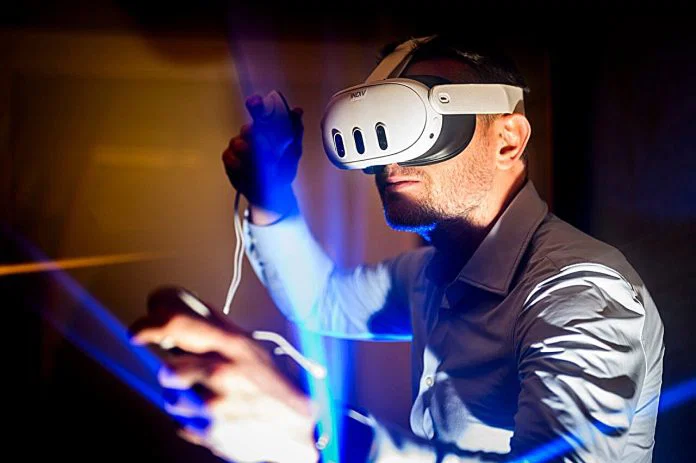
Imagine putting on a VR headset, walking into a vibrant nightclub bathed in glowing lights, and being greeted with a warm smile and a friendly, “Hey, you look so cute!” As you smile back, the headset detects your facial expression and recognizes your genuine happiness. Instead of passively watching a story unfold, your actual emotions become an integral part of the experience.
This concept is at the heart of Rekindle, an innovative VR game developed by researchers at Northeastern University. The game merges immersive storytelling with advanced emotion-tracking technology to foster a deeper understanding of LGBTQ+ experiences. The developers hope Rekindle can inspire empathy and drive positive social change.
Set in a future where a totalitarian government erases memories of sexual identity deemed undesirable, players embark on a quest to reconnect with forgotten memories related to LGBTQ+ identities. Throughout the game, players explore a world where they gather fragments of memories—each representing significant moments, both joyful and painful. Some memories highlight celebrations of love and community, while others recall tragic events like the 2016 Pulse nightclub shooting in Orlando, where 49 individuals lost their lives in an attack targeting the LGBTQ+ community.
What distinguishes Rekindle from many VR titles is its ability to respond to the player’s real-time emotional cues. Using the Samsung Galaxy XR headset, the system tracks subtle facial movements—like the eyes, eyebrows, and mouth—and analyzes dozens of muscle signals to gauge emotions such as happiness, sadness, surprise, anger, or fear. It even detects complex feelings, such as being happily surprised or heartbreakingly angry.
At certain points, the game prompts players to consciously express specific emotions before progressing, transforming players from passive viewers into active participants whose feelings influence the storyline. This dynamic encourages a stronger emotional bond with the main character and helps players see the world from perspectives different from their own.
While many video games collect data on player actions, Rekindle goes a step further by understanding emotional responses during critical moments. As reactions vary among individuals—particularly between those familiar with LGBTQ+ history and those less informed—these differences promote self-reflection on personal biases and feelings.
Beyond entertainment, this emotion-tracking technology has other promising applications. It could enhance mental health therapies, offering virtual counseling experiences for anxiety, phobias, or post-traumatic stress disorder by providing therapists with insights into a patient’s emotional state—beyond just verbal reports. The technology might also improve road safety, alerting drivers to signs of fatigue or stress, or guide individuals through stressful situations by recognizing fear or anxiety and providing calming support.
Although Rekindle remains experimental, it demonstrates how blending virtual reality, storytelling, and emotion recognition can create more meaningful and personalized experiences. Such technology holds potential not only for fostering empathy but also for transforming how we understand and support each other.