
Select Language:
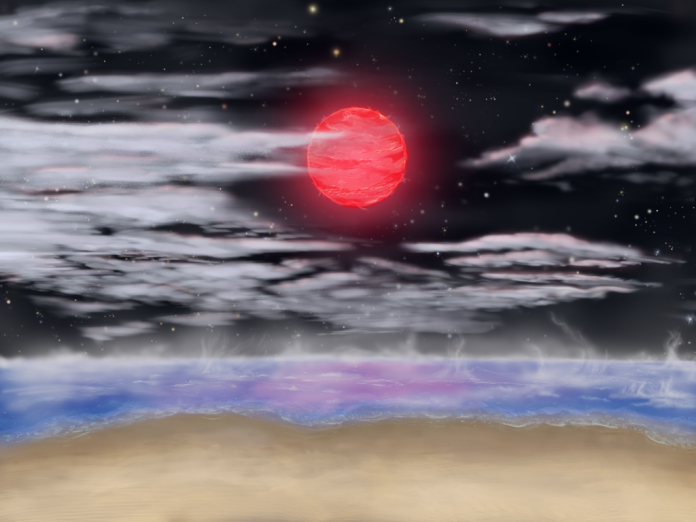
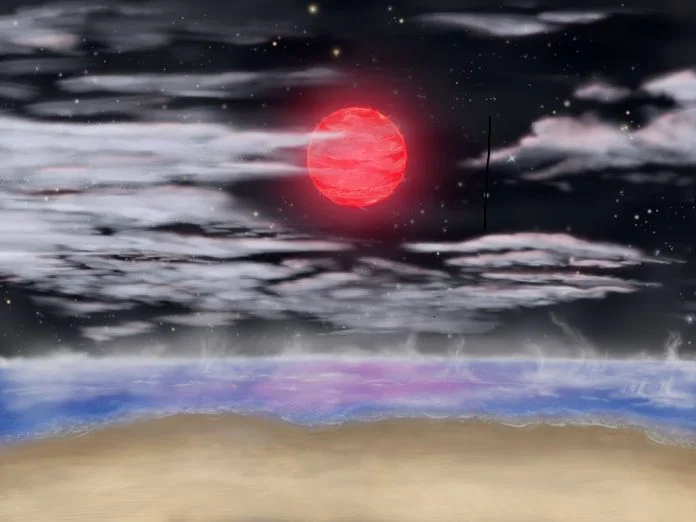
A nearby planet that might support life appears to be more Earth-like than scientists initially believed. Recent observations indicate that GJ 3378b is smaller and rockier than previous estimates suggested, making it an even more intriguing candidate in the quest to find life beyond Earth.
Located approximately 25 light-years away in the direction of the constellation Camelopardalis, GJ 3378b remains relatively close in astronomical terms. The planet orbits a small, cool red dwarf star, which makes it a compelling target for study.
One major reason GJ 3378b has garnered attention is its position within the star’s “habitable zone,” the area around a star where conditions might permit liquid water to exist on a planet’s surface. Since all known life on Earth depends on water, scientists often prioritize planets found within these zones when searching for extraterrestrial life.
“Our guiding principle is ‘follow the water,’” explained lead researcher Paul Robertson from the University of California, Irvine. The presence of liquid water increases the likelihood that a planet could host life.
Red dwarf stars are significantly smaller, cooler, and dimmer than our Sun, and they are the most abundant stars in the Milky Way, accounting for about 70% of all stars. Because of their prevalence, astronomers consider them prime locations to hunt for potentially habitable planets.
Detecting small planets around these faint stars isn’t straightforward. The research team employed the Habitable-zone Planet Finder, a sophisticated instrument attached to the Hobby-Eberly Telescope at the McDonald Observatory in Texas. This instrument is specially designed to detect infrared light, which is the dominant emission from red dwarf stars.
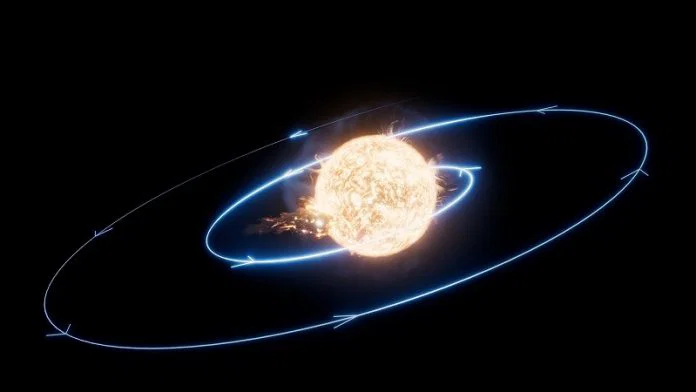
Instead of observing the planet directly, scientists tracked the star’s subtle wobble caused by the planet’s gravitational pull. By measuring these tiny movements with high precision, they could refine estimates of the planet’s size and orbit.
The updated findings reveal that GJ 3378b has a mass roughly 2.3 times that of Earth, significantly less than the previously estimated five times Earth’s mass. Smaller “Super Earths” like this are more likely to be rocky worlds, rather than thick, atmosphere-covered planets that are less conducive to life.
Additionally, the planet completes an orbit around its star every 21 days, a shorter period than previously thought. Despite being closer to its star, the star’s cooler temperature means the planet remains within the habitable zone.
Scientists remain cautious, though. Its proximity to the star could expose GJ 3378b to intense radiation, potentially stripping away its atmosphere over time—a key ingredient for life. Further observations are needed to determine whether the planet has managed to retain its atmosphere.
Looking ahead, upcoming giant telescopes such as the Giant Magellan Telescope and the Extremely Large Telescope will offer much more detailed views of nearby exoplanets like GJ 3378b. Researchers hope these powerful observatories will eventually detect biosignatures—chemical indicators that could confirm the presence of life.
For now, GJ 3378b stands out as one of the most promising nearby worlds in humanity’s ongoing effort to answer one of science’s biggest questions: are we alone in the universe?
 ChatGPT
 Perplexity
 Gemini AI
 Grok AI