الوسم: red dwarf stars

  • Astronomers Find Four Dead Stars Near Earth

    Astronomers Find Four Dead Stars Near Earth

    Astronomers have identified four previously unseen white dwarfs that are surprisingly close to Earth, showing that our own corner of the galaxy still holds many secrets. These newly found white dwarfs are all within 65 light-years from us and orbit red dwarf stars. Since red dwarfs are much brighter in visible light, they completely overshadow their smaller companions, leading each system to appear as if it contains only a single star.

    One of these concealed white dwarfs is just 25 light-years away, making it the ninth-closest white dwarf to the Sun. The discovery was made by researchers from the University of Warwick and the University of Colorado Boulder and has been published in the Monthly Notices of the Royal Astronomical Society.

    White dwarfs are the dense remnants of stars like our Sun after they run out of nuclear fuel. While isolated white dwarfs are usually easy to identify due to their distinctive appearance, spotting one next to a bright red dwarf is much more challenging. Lead researcher Dr. Mairi O’Brien explained that the brightness of red dwarf companions often masks the white dwarfs’ light in visible wavelengths, which kept them hidden from astronomers for decades. She emphasized that this finding demonstrates how observing the universe across different wavelengths can still lead to significant discoveries—even in our local stellar neighborhood.

    The team initially became interested in these star systems because the red dwarfs showed slight wobbling motions—a radial wobble—which often indicates the presence of an unseen orbiting object. To confirm the hidden companions, they used the Hubble Space Telescope, which is capable of detecting ultraviolet light. White dwarfs emit much more ultraviolet radiation than red dwarfs, although active red dwarfs can sometimes produce signals similar to those of white dwarfs through energetic flares. By developing specialized calibration techniques, the researchers successfully distinguished the white dwarfs from the red dwarfs’ signals and verified their existence.

    One particular system, called G 203-47, stood out as especially unusual. Researchers observed its wobble 27 years ago, but it’s only now that they’ve confirmed the white dwarf companion. Interestingly, in this system, the red dwarf completes a full rotation once every 100 days, yet it orbits the white dwarf every 14.9 days—a puzzling difference. Many similar binary systems tend to have their stars’ rotation and orbit synchronized over time, much like the Moon always shows the same face to Earth. G 203-47’s lack of synchronization suggests it experienced a different evolutionary path, possibly involving more intense early interactions that tightly bound their motions, unlike gentler encounters.

    This discovery also supports predictions made by computer models. Previous studies estimated that around four to five hidden white dwarf-red dwarf pairs should exist within 65 light-years of Earth, and these recent findings align closely with those predictions. However, the search is far from finished. Researchers believe that only about 30% of nearby red dwarfs have been thoroughly examined for hidden white dwarf companions. They estimate that there could be another nine or ten such systems yet to be discovered, indicating that our neighborhood of stars still has many more surprises to reveal.
  • Scientists find potential habitable super-Earth exoplanet

    Scientists find potential habitable super-Earth exoplanet

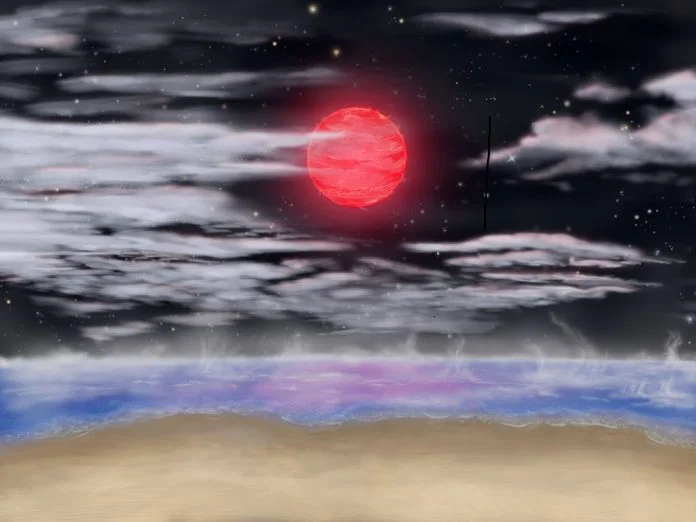
    A nearby planet that might support life appears to be more Earth-like than scientists initially believed. Recent observations indicate that GJ 3378b is smaller and rockier than previous estimates suggested, making it an even more intriguing candidate in the quest to find life beyond Earth.

    Located approximately 25 light-years away in the direction of the constellation Camelopardalis, GJ 3378b remains relatively close in astronomical terms. The planet orbits a small, cool red dwarf star, which makes it a compelling target for study.

    One major reason GJ 3378b has garnered attention is its position within the star’s “habitable zone,” the area around a star where conditions might permit liquid water to exist on a planet’s surface. Since all known life on Earth depends on water, scientists often prioritize planets found within these zones when searching for extraterrestrial life.

    “Our guiding principle is ‘follow the water,’” explained lead researcher Paul Robertson from the University of California, Irvine. The presence of liquid water increases the likelihood that a planet could host life.

    Red dwarf stars are significantly smaller, cooler, and dimmer than our Sun, and they are the most abundant stars in the Milky Way, accounting for about 70% of all stars. Because of their prevalence, astronomers consider them prime locations to hunt for potentially habitable planets.

    Detecting small planets around these faint stars isn’t straightforward. The research team employed the Habitable-zone Planet Finder, a sophisticated instrument attached to the Hobby-Eberly Telescope at the McDonald Observatory in Texas. This instrument is specially designed to detect infrared light, which is the dominant emission from red dwarf stars.

    Instead of observing the planet directly, scientists tracked the star’s subtle wobble caused by the planet’s gravitational pull. By measuring these tiny movements with high precision, they could refine estimates of the planet’s size and orbit.

    The updated findings reveal that GJ 3378b has a mass roughly 2.3 times that of Earth, significantly less than the previously estimated five times Earth’s mass. Smaller “Super Earths” like this are more likely to be rocky worlds, rather than thick, atmosphere-covered planets that are less conducive to life.

    Additionally, the planet completes an orbit around its star every 21 days, a shorter period than previously thought. Despite being closer to its star, the star’s cooler temperature means the planet remains within the habitable zone.

    Scientists remain cautious, though. Its proximity to the star could expose GJ 3378b to intense radiation, potentially stripping away its atmosphere over time—a key ingredient for life. Further observations are needed to determine whether the planet has managed to retain its atmosphere.

    Looking ahead, upcoming giant telescopes such as the Giant Magellan Telescope and the Extremely Large Telescope will offer much more detailed views of nearby exoplanets like GJ 3378b. Researchers hope these powerful observatories will eventually detect biosignatures—chemical indicators that could confirm the presence of life.

    For now, GJ 3378b stands out as one of the most promising nearby worlds in humanity’s ongoing effort to answer one of science’s biggest questions: are we alone in the universe?

  • Super Earth Nearby Might Still Support Life

    Super Earth Nearby Might Still Support Life

    A rocky exoplanet named GJ 3378b was discovered in 2024 orbiting a red dwarf star just 25 light-years from Earth, in the direction of the constellation Camelopardalis. Based on radial velocity data, scientists estimate this planet is approximately 2.3 times Earth’s mass, classifying it as a “Super Earth.” Recent revisions by a team led by researchers from the University of California, Irvine, suggest this planet resides within its star’s habitable zone (HZ).

    The research was headed by Paul Robertson, an Associate Professor of Physics and Astronomy at UC Irvine. He collaborated with experts from the University of Texas Center for Planetary Systems Habitability, the Astrophysics & Space Institute, the Anton Pannekoek Institute for Astronomy, the Center for Exoplanets and Habitable Worlds, the Astrobiology Research Center, NASA’s Jet Propulsion Laboratory (JPL), Goddard Space Flight Center, along with various other academic and research institutions.

    Red dwarf stars are the most common type of star in the universe, making up 70-75% of stars in the Milky Way and up to 90% in elliptical galaxies. Studies of nearby red dwarfs indicate they frequently form rocky planets within their habitable zones, making them prime targets in the search for extraterrestrial life. However, red dwarfs are known for their variability and flare activity, which could potentially make planets in their habitable zones inhospitable. Their faintness also complicates the detection of Earth-like planets, which are small compared to other types like Super Earths, mini-Neptunes, or gas giants.

    To detect these planets, astronomers rely on specialized tools, such as the Habitable-zone Planet Finder (HPF) instrument mounted on the Hobby-Eberly Telescope. This device measures tiny stellar wobbles caused by orbiting planets through radial velocity techniques.

    Paul Robertson explained in a McDonald Observatory release: “Our approach is ‘follow the water.’ It’s the one resource all known life needs, so that’s what we target when looking for environments capable of supporting life. The Habitable-zone Planet Finder is tailored for infrared light because, as stars get cooler and smaller, most of their energy emissions are in infrared wavelengths. By using an infrared spectrometer on a large telescope, we gain increased ability to observe faint stars.”

    Since 2018, the HPF has helped astronomers identify numerous exoplanets and assess which might be potentially habitable. Michael Endl, an astronomer at the University of Texas and the McDonald Observatory, emphasized: “Precision is everything. Detecting low-mass planets requires spotting very subtle signals. If your instruments aren’t precise enough, you simply won’t find them.”

    Initially, GJ 3378b was thought to be five times more massive than Earth. A planet this massive could retain an atmosphere, but its density might be so high as to make surface life impossible. The latest analysis reduces its estimated mass to about 2.3 times Earth’s, increasing the chances it might lack a thick, crushing atmosphere. Additionally, the refined orbital period from 25 days to 21 brings the planet firmly into the star’s habitability zone.

    However, being closer to its star could mean higher radiation levels, which might strip away any atmosphere over time. More detailed observations will become feasible as upcoming telescopes come online, including the Giant Magellan Telescope (GMT), the Extremely Large Telescope (ELT), and the Habitable Worlds Observatory (HWO). These advanced telescopes will be equipped with enormous mirrors, adaptive optics, coronagraphs, and spectrometers, enabling direct imaging and search for signs of life, called biosignatures. Endl noted, “Our ultimate goal is biosignatures. We want to find out if we’re truly alone in the universe. Currently, we’re in the reconnaissance phase, studying nearby stars because they are the easiest to analyze for signs of life.”

    GJ 3378b is a significant step toward understanding our planetary neighbors and identifying which worlds might support life beyond Earth.