

Select Language:
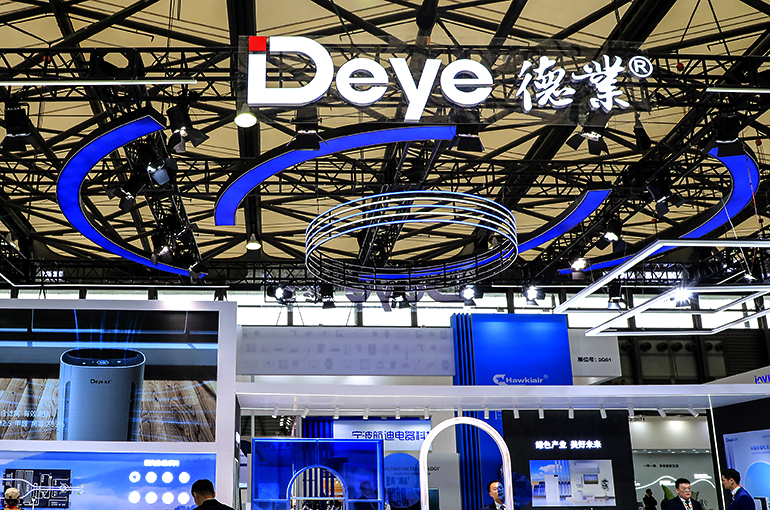
Chinese renewable energy company Deye Technology announced plans to invest at least 1.2 billion yuan (approximately $181 million) in the second phase of its commercial and industrial energy storage system (ESS) manufacturing facility located in Cixi, a city in eastern Zhejiang Province.
Deye’s subsidiary, Deye Energy Storage Technology, recently signed an investment agreement with the management committee of the Cizi Binhai Economic Development Zone to develop a new production line capable of producing 9 gigawatt-hours of ESS annually. This project aims to expand the company’s manufacturing capacity for commercial and industrial energy storage solutions.
Last year in April, the company revealed a plan to develop a 16 GWh ESS plant in the same economic zone. The first phase of this project, with an annual output of 7 GWh, has already completed the necessary preparations, including acquiring a 370-acre parcel of land. The facility is expected to generate over 500,000 yuan in average tax revenue per acre, and its research and development investment is projected to constitute at least 3.8 percent of its output once operational.
Strong global demand for commercial and industrial ESS products prompted the company’s leadership to accelerate the second phase to better accommodate future increases in sales. The company emphasized that this investment likely won’t significantly affect its operational performance for the current year, but successful project execution will likely boost future performance prospects.
Initially, the company specialized in manufacturing plastic molds and injection-molded components, producing heat exchangers and parts for air conditioning manufacturers like Midea Group and Auxiliary Electric. In 2016, it expanded into the photovoltaic inverter industry. Its primary products now include energy storage inverters, photovoltaic inverters, and battery packs for energy storage solutions.
Currently, its shares trade at around 97 yuan (approximately $14.27) per share in Shanghai, reflecting a decrease of 2.2 percent at midday trading, though they have increased by 61 percent so far this year.
 ChatGPT
 Perplexity
 Gemini AI
 Grok AI