Author: Fahad Khan

  • WuXi AppTec Soars 29% to $1.6B in H1 Profit, Hits Limit Up

    WuXi AppTec Soars 29% to $1.6B in H1 Profit, Hits Limit Up

    Shares of the biotech company hit the daily limit in Shanghai today after reporting a 29.4% increase in net profit for the first half of the year compared to the same period last year. The company’s profit exceeded 10 billion yuan for the first time, reaching approximately 11.08 billion yuan (around $1.6 billion).

    Its stocks traded on the mainland market [SHA: 603259] jumped 10% to 141.35 yuan ($21), pushing the company’s market value to about 421.7 billion yuan ($62.4 billion). Shares listed in Hong Kong [HKG: 2359] climbed 11.1% to HKD 181.10 ($23), elevating its overall valuation to roughly HKD 540.3 billion ($68.9 billion).

    Revenue increased by 38.9% in the first six months to around 28.9 billion yuan ($4.2 billion), driven by strong sales of multiple customer products, the performance of its Contract Research, Development and Manufacturing Organization (CRDMO) model, and the effective leadership of its global management team, according to a recent interim report. Excluding acquisitions, revenue from ongoing operations—including chemistry, testing, and biology segments—grew by 48% year-over-year.

    The demand for laboratory monkeys remained high this year, causing prices to rise sharply, reaching as much as 200,000 yuan ($29,586) per animal. The company owns its own breeding farm and is working to improve breeding efficiency and lower mortality rates through enhanced operational practices, management said during the earnings call. The facilities are dedicated solely to the company’s research needs, and procurement will stay flexible, aligning with market conditions.

    Gains from the revaluation of biological assets contributed approximately 260 million yuan ($38.4 million) in the first half, representing a small part of the total net profit. The majority of earnings came from core business operations.

    Recently, the national drug regulatory agency sought public input on a new initiative aimed at promoting alternatives to traditional animal testing, such as organoids, organ-on-a-chip technologies, and artificial intelligence-driven models. The trend toward adopting these innovative methods aligns with industry shifts and regulatory requirements, and the company is actively integrating new technologies. Despite this, the industry still has strong demand for animal testing, as many new molecular entities continue to depend heavily on animal data for safety assessments. This ongoing demand is reflected in the company’s order volume and overall business success.

  • Chery Auto Injects $75M into South Korea’s KGM to Strengthen Ties

    Chery Auto Injects $75M into South Korea’s KGM to Strengthen Ties

    Chinese automotive manufacturer has committed to investing $75 million in a South Korean fellow automaker to strengthen their two-year collaboration.

    The partnership will leverage the former’s new energy powertrain technology and global platform expertise alongside the latter’s strengths in product planning, design, and vehicle deployment to accelerate the development of new models. This collaboration also aims to expand jointly into autonomous driving and advanced electrical and electronic architectures, focusing on the transition toward software-defined vehicles.

    The first vehicle resulting from this partnership will be the SE-10, a mid-sized SUV that pays homage to the company’s Rexton series. It is scheduled to debut early next year in two variants: a plug-in hybrid and a 2.0-liter gasoline engine.

    Following the launch of the SE-10, the companies plan to collaborate on a second vehicle that will be marketed in China, South Korea, and Europe. They intend to incorporate regional regulations, safety standards, and customer preferences from the outset, with plans to finalize specific vehicle types, specifications, production and sales territories, and role divisions at a later point.

    Additionally, the partnership will explore joint initiatives in robotics and semiconductor technology, aiming to co-develop research, verification, and commercialization efforts based on each company’s technological capabilities. There will also be joint investments in automotive chip development.

    For global expansion, the companies are discussing joint investments in overseas manufacturing facilities and business operations. They plan to utilize their existing production sites, supply chains, and sales networks collaboratively. Specific investment plans will be evaluated for regions where market potential has been validated, with task forces led by senior managers from both firms to oversee progress and hold regular reviews.

    Their collaboration first began in 2024 with a licensing agreement for a platform. The following year, they committed to co-developing medium and large SUVs.

    The automaker was the top vehicle exporter in its country for 23 consecutive years as of 2025, with exports reaching 1.3 million units—an increase of 17% over the previous year. In July alone, monthly exports exceeded 200,000 vehicles for the first time, bringing total exports for the first seven months of the year to approximately 1.1 million.

    Shares of the automaker traded around HKD26.80 (roughly USD3.42) as of late afternoon in Hong Kong, reflecting a decrease of about 2.6%.

    The South Korean company, formerly known as SsangYong Motor, had previously partnered with a major Chinese automaker from 2004 to 2009 before withdrawing due to financial difficulties faced by its partner. In 2011, it was acquired by an Indian automotive group but filed for receivership again in 2020 after funding was cut. It was taken over by a South Korean conglomerate in 2022 and renamed last year.

    Its stock closed up nearly 6% today at KRW2,855 (around USD1.99).

  • US FFC’s Import Ban Could Impact Chinese Robot Vacuums and Mowers

    US FFC’s Import Ban Could Impact Chinese Robot Vacuums and Mowers

    As of August 4th, companies manufacturing robot vacuum cleaners and lawn mowing robots in China could face challenges due to an import ban imposed by the U.S. Federal Communications Commission on advanced robotic devices from overseas, according to industry sources.

    A senior insider noted, “Chinese-developed robotic vacuums and lawn mowers have rapidly advanced over the past couple of years. Top-tier brands in North America fall under the category of ‘advanced robotic devices,’ so they are likely included in the scope of the FCC’s new restrictions.”

    On July 28th, the FCC announced it would add “advanced robotic devices”—including mobile robots like humanoids and quadrupeds, as well as connected power inverters—to its Covered List. The agency cited concerns about “unacceptable risks to U.S. national security and the safety of U.S. citizens.”

    “While the immediate impact appears to restrict the import of humanoid and quadruped robots,” explained a high-ranking industry expert, “the export of these specific products to the United States is still quite limited. Therefore, the direct effect on Chinese companies in this sector is likely to be minimal.”

    In comparison, Chinese-made robot vacuum cleaners and lawn mowers hold a significant share of the U.S. market. As a result, these products could see more substantial repercussions from the new regulations. Critics view the FCC’s move as a form of trade protectionism,” the expert added.

    According to data from the China Chamber of Commerce for Import and Export of Machinery and Electronic Products, China exported 1.2 million robotic vacuum cleaners valued at about USD 170 million, and 1.4 million lawn mowers—including robotic models—worth roughly USD 210 million to the U.S. during the first half of this year. In contrast, only 1,840 humanoid and quadruped robots, valued at USD 23.3 million, were exported during the same period.

    Most Chinese brands of robot vacuums and lawn mowers have already secured FCC certification, so the short-term effects of the import ban are unlikely to be severe, the insider indicated. However, they also suggested that in the long run, the new regulations could raise the barriers to entering the U.S. market, making it more difficult for new brands to get approvals, especially for startups and emerging companies.

    For instance, products from Segway Navimow available in the U.S. already have FCC authorization, and the company’s lawn mower robots are not expected to be impacted by the ban. They are closely monitoring policy developments and evaluating future compliance strategies,” a company representative said.

    An employee at a cleaning appliance firm mentioned that their robot vacuum cleaners sold in the U.S. would not be affected immediately. However, they noted that similar regulations could influence the launch and export of other robotic cleaning devices, such as window cleaners, across the industry, potentially impacting future models and exports.

  • OpenAI Price Drop Causes Asian Stock Market Decline

    OpenAI Price Drop Causes Asian Stock Market Decline

    OpenAI, the U.S.-based developer of ChatGPT, recently reduced the prices of two of its latest low- and mid-tier AI models, sparking a sharp decline in Asian stock markets amid a broader tech selloff.

    As of 1:02 p.m. Beijing time today, the Seoul stock index was down 1.2%, following a 5.1% drop yesterday. Meanwhile, the Shanghai Star 50 Index rebounded by 3.4% today after falling 5.1% yesterday. In Tokyo, the Nikkei 225 declined 0.3%, adding to the 0.9% decrease from the previous day.

    On July 30, the company announced a 20% reduction in the price of GPT-5.6 Terra to $2 per million input tokens and $12 per million output tokens, and an 80% cut for GPT-5.6 Luna to 20 cents and $1.20 respectively. This move raised investor concerns about shifting supply and demand dynamics within the AI supply chain.

    The price reductions primarily aim to improve efficiency, offset rising costs, and compete with open-source models, explained Wen Tianna, CEO of Boda Capital International. However, these cuts may lead to short-term worries about decreasing inference costs and slower growth in computing power demand, which could negatively impact sentiment toward AI hardware and semiconductor stocks.

    Despite this, lower prices could eventually encourage greater usage and broader adoption, particularly benefiting software and cloud service providers. The decline in South Korean stocks was partly driven by forced deleveraging, rather than solely by the AI company’s price cuts, while Chinese tech stocks’ decline was more related to weak global sentiment toward hardware.

    This price reduction has increased valuation fluctuations across global AI assets, according to Pan Jun, an investment manager at Cheese Fund. It has shifted investor focus from expanding compute capacity to assessing returns on AI investments and monetizing AI applications.

    The downturn in South Korean equities also reflects a mismatch between memory chipmakers’ earnings expectations and actual results, alongside a correction of crowded, leveraged trades, Pan added. However, he emphasized that these developments do not pose a systemic risk globally.

    The price cuts are prompting investors to reassess the long-term profitability of AI computing and modeling layers, important factors that fueled sector investment over the past two years, noted Mo Xiaocheng, CEO of Huanrui Fund. He added that the recent market volatility is a natural correction following a previous rally, and that the sector will face heightened competition and falling prices over time.

    According to Li Zeming, CIO at Blue Water Capital Management, the ongoing price war among leading language models will slow down the commercialization of downstream AI applications and reduce investment enthusiasm. A decline in infrastructure spending will impact sectors such as semiconductors, memory chips, power equipment, and optical communication.

    When hardware stocks weaken, capital often shifts toward application-layer companies with lower valuations and stronger fundamentals. Wen highlighted that internet firms listed in Hong Kong remain undervalued historically and could show resilience during the hardware correction.

    Shares of a major Chinese tech company rose 0.7% today to HKD126.10 ($16.08) after closing up 7% yesterday, following the launch of a new AI product. Meanwhile, another company declined 0.9% after a 3.2% rise yesterday.

  • Luckin Coffee Opens 5,000+ Stores as Rivals Cut Back in H1

    Luckin Coffee Opens 5,000+ Stores as Rivals Cut Back in H1

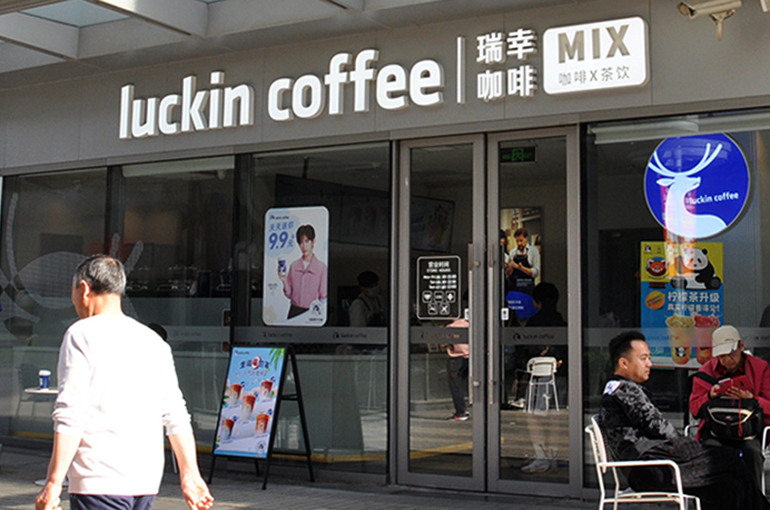
    Leading Chinese coffee chain expands rapidly, opening over 5,000 new locations in the first half of the year, while other domestic competitors continue to shrink. The company added a net of 2,548 outlets in the first quarter and 2,714 in the second quarter, reaching a total of 36,310 stores globally.

    Meanwhile, other coffee brands have slowed their expansion efforts in China, with the total number of coffee shops decreasing from 243,000 in January to 227,000 in June. The company’s CEO emphasized the importance of maintaining the current pace of growth to increase market share, noting that China’s coffee market still offers significant room for new outlets. The market is in a vigorous growth phase, characterized by rising penetration and increasing consumption frequency.

    Internationally, the company operated 89 stores in Singapore, 20 in the United States, and 114 franchised shops in Malaysia as of June 30. The management team highlighted their cautious approach to overseas expansion, prioritizing improving profitability per location and gaining operational experience.

    In the second quarter, revenue jumped 29% year-over-year to approximately $2.4 billion, fueled by store growth and a record 112.7 million monthly customers, a 23% increase. Revenue from company-operated stores rose 27% to about $1.8 billion, and franchised store revenue increased 28% to roughly $543 million. Operating profit at self-managed shops grew 26% to CNY 2.5 billion, with a profit margin of 21%.

    Despite strong growth in prior periods, same-store sales at company-operated locations declined by 5.3% last quarter, mainly due to high comparison figures from intense delivery platform promotions last year. However, operating profit remained strong at CNY 2.5 billion, a 26% increase, with margins unchanged from the previous year.

    The decrease in same-store sales was anticipated, with the CEO noting that last year’s July and August featured some of the most aggressive delivery subsidies in China, which set a high benchmark for this quarter’s performance.

  • VW to Shut Three Chinese Plants to Boost Performance

    VW to Shut Three Chinese Plants to Boost Performance

    Volkswagen Group has announced plans to cut back on production in China, its largest market, in an effort to turn around its declining fortunes amid intense competition from domestic automakers. This move is part of an aggressive restructuring plan disclosed during its recent earnings report for the first half of the year, marking the most significant overhaul since the company’s inception nearly 90 years ago. The car giant will shut down factories in Nanjing, Urumqi, and Ningbo No. 1, while reducing capacity at plants in Anting and Changchun.

    The company aims to achieve an operating profit margin of 8 to 10 percent by 2030. To meet these targets, it plans to decrease its global production capacity from 12 million to 9 million vehicles annually through the closure, renovation, or sale of excess factories.

    As part of its 2030 technology strategy, Volkswagen plans to abandon a unified global approach to software development, instead tailoring solutions for different regions. In the East, working with partners Xpeng Motors and CARIAD China, it will develop electronic and electrical architectures designed specifically for China. Additionally, the company will advance localized research and development in intelligent driving with Carizon, a joint venture involving Volkswagen China, CARIAD, and Horizon Robotics.

    Historically, Volkswagen has been criticized for its large workforce, with around 630,000 employees worldwide. The company has announced significant layoffs, which have sparked controversy, particularly in Germany. Its vision for 2030 includes reducing production capacity by as much as 50 percent, cutting down on the number of vehicle models, and streamlining organizational structures and investments.

    The company’s goal is to establish itself as the world’s most attractive automaker by 2030. Achieving this will require optimizing all areas of the business and executing strategies swiftly and decisively, according to CFO Arno Antlitz.

    Despite its size—being the largest car manufacturer globally by revenue and once holding a 40 percent share of the Chinese market—Volkswagen has struggled to keep pace with the shift to electric vehicles. This has left it vulnerable to increasing competition from Chinese firms like BYD and Geely.

    For the first half of the year, the company reported revenues of €158.1 billion (about $181 billion), roughly unchanged from the previous year, with an operating profit of €5.93 billion (around $6.8 billion), reflecting a 12 percent decline. Its operating margin stood at 3.8 percent. Regional differences in performance were observed, but slowing growth in China was the main drag on overall results.

    During this period, Volkswagen delivered approximately 4.13 million vehicles worldwide, a 6.3 percent decrease from the previous year, with sales in China dropping 26 percent to 973,000 units. Excluding China, sales in other regions increased slightly by 2 percent. The company’s joint ventures in China contributed only €184 million (around $210 million) to operating profit in the first half, a decline of more than 60 percent compared to last year’s €506 million. The full-year contribution is projected to fall between €200 million and €600 million.

  • CXMT’s New LPDDR DRAM Approaching Production Readiness, Says Source

    According to sources, CXMT’s next-generation LPDDR DRAM is approaching full-scale production readiness.

  • China’s Titan Wind Gains as It Secures $480M Oil Tanker Deal

    China’s Titan Wind Gains as It Secures $480M Oil Tanker Deal

    Shares of Titan Wind Energy increased following the announcement that the Chinese company, which mainly supplies wind power equipment, received an order for six dual-purpose oil product transport vessels valued at up to $480 million. This marks their second sizable deal within a month.

    The company’s stock closed at 6.79 yuan ($1.01) per share, up 6.4 percent today, while the broader Shenzhen Composite Index declined by 1 percent.

    Titan Wind’s maritime engineering subsidiary has signed a contract with a division of a prominent international shipping firm to construct six oil tankers, each with a deadweight of 114,000 tons. The project’s value ranges from $420 million to $480 million. Delivery is planned in phases between 2028 and 2029 after completing design, construction, and safety testing, as announced on July 31 by the Shenzhen-based parent company.

    The company stated it has had no contact with the client in the past three years and chose not to disclose the client’s name to protect trade secrets.

    These vessels are classified as Long Range 2 tankers capable of transporting either crude or refined oil, providing operational flexibility for long-distance crude shipments and regional refined oil trade. Titan Wind described these ships as the primary type used in international oil transportation.

    On July 22, the company revealed it received a separate order for four Aframax oil tankers from another well-known international shipowner, valued at up to 1.9 billion yuan ($281.4 million). This marked the company’s entry into the oil tanker manufacturing market.

    Last year, Titan Wind reported total revenue exceeding 5.4 billion yuan, with nearly 46 percent generated from its land-based wind power equipment business. Offshore wind gear and offshore engineering equipment contributed about 26 percent, while the remaining income mainly came from wind farm operations.

  • China’s 12th Drug Procurement Pulls 10 Original Drugs in Record Batch

    China’s 12th Drug Procurement Pulls 10 Original Drugs in Record Batch

    On August 3rd, the latest round of China’s centralized drug procurement set new records, with ten different original medications being acquired in the country’s 12th bidding session. This marks the highest number of varieties procured in a single round.

    A total of 521 products spanning 65 drug types were purchased from 327 pharmaceutical companies during this bidding event held in Shanghai starting July 31st. This increased the overall varieties to 555, with approximately 45,000 healthcare facilities participating in the process.

    On average, fifteen companies bid on each product, and the most competitive medicine attracted up to 49 bidders. Officials project that, within this year, patients across the nation will have improved access to these medications at lowered prices.

    The latest bidding process reintroduces a clinical choice element for healthcare providers, with all drug quantities reported based on brand names. Bids significantly below the average price—more than two standard deviations—remained eligible for consideration but were excluded from volume allocations or quotas to prevent irrational bidding practices.

    The primary goal of this centralized procurement effort is to meet clinical needs, uphold quality, and guarantee supply stability. Experts emphasize that bids should stay within a reasonable range, aiming to shift the competition away from destructive rivalry toward a balanced approach that benefits patients, hospitals, insurers, and the pharmaceutical industry alike.

    Participants reported adopting a more cautious stance this round. One procurement officer explained that even a minor bid increase of just 20 cents USD could secure a win, but many companies kept bids conservative this time to avoid losing the chance altogether.

    It was also noted that only five out of over 800 product specifications required detailed price rationale statements, streamlining the process.

    Additionally, the bid system has been enhanced through a ‘revival mechanism.’ Even if reference formulations—mostly original drugs—failed to meet initial standards, companies could still qualify by bidding up to three times the trigger price but below the highest valid bid. This mechanism facilitated the inclusion of ten reference formulations, setting a new benchmark. Notable drugs included Novartis’ sacubitril/valsartan, Bayer’s iopromide, Eisai’s betahistine, Abbott’s dydrogesterone, and Guangzhou Green Cross Pharmaceutical’s amino acid compound.

    As long as original drugs and reference formulations are priced reasonably, they can be “restarted” and included in procurement, according to Liu Side, a gastrointestinal department director at Nanfang Hospital, Southern Medical University. “Even without volume-based differentiation, hospitals retain discretion in independent procurement, which is a positive advancement for clinical practice,” he stated.

    The rules shift reflect a move from simply focusing on price reduction to implementing a comprehensive governance model. The process now emphasizes market access, quality oversight, and supply monitoring, signaling a broader, more multidimensional approach to drug procurement—an evolution aimed at fostering sustainable and balanced growth in the industry.

  • China’s Mini-Drama Scene Faces Monotony and Low Hits Amid AI Titles

    China’s Mini-Drama Scene Faces Monotony and Low Hits Amid AI Titles

    Artificial intelligence-produced content has rapidly overtaken live-action productions in China’s short-drama scene this year, generating a series of challenges such as content duplication, a notably low success rate, and stricter revenue-sharing conditions for creators.

    More than 95% of the 128,000 new mini dramas released in China during the first quarter were created using AI, meaning thousands of these projects flood Chinese streaming platforms daily, according to data from the China Network Audio-Video Association.

    Furthermore, the number of live-action mini dramas released in June declined to 1,629 from 1,934 at the beginning of the year, indicating fewer new projects are launching. On the Redguo Short Drama’s Top 10 Hot Chart, the number of live-action series dropped to just four on July 20 from ten on March 19.

    Chen Qi, a film and television producer and member of the Chinese Writers Association, explained that AI-animated dramas cost about two-thirds less to produce than traditional live-action works. While a high-quality live-action mini drama can cost between CNY200,000 and CNY1 million (USD 29,460 to USD 147,300), an AI animation might only cost CNY100,000 to CNY500,000, which is why many producers are turning to AI content.

    However, increased competition and widespread content sameness have decreased the chances of creating a hit. Popular short dramas often spawn numerous AI-generated imitators with nearly identical plots across various platforms, differing only in character names and minor story elements.

    With the limited time users spend viewing content each day, exposure for individual projects becomes increasingly diluted, often causing most series to quickly fade into obscurity after release.

    In the first half of this year, over 221,900 AI short dramas premiered online, but only 1,055 surpassed 100 million views, and merely 12,000 achieved over 10 million views, according to DataEye. Third-party tracking data, including Yunhe Data and Gudu Data, show even lower success rates for AI animations—only 62 out of roughly 50,000 series launched in March surpassed 100 million views.

    The influx of new releases has also driven up production costs for AI short dramas over the past six months, rising to CNY3,000 or even CNY5,000 (USD 441.90 or USD 736.50) per minute of content, up from CNY1,000, with higher visual quality standards pushing expenses further.

    Producers are also facing more unfavorable revenue-sharing terms on streaming platforms. Many platforms have reduced guaranteed minimum earnings and cut back the revenue-sharing percentages.

    Previously, creators of short dramas could earn about CNY800 to CNY1,000 (USD 117.84 to USD 147.30) for every 10,000 views, but now they might only receive CNY100 for the same number of views. Only major studios and high-profile series tend to secure better revenue splits.

    Determining whether an AI short drama will be profitable often takes up to six months after its release, according to industry insiders. Overall, making a profit has become more difficult, and only productions with strong viewership can generate lasting income through sequels.

    Lv Shaolong, deputy manager of Judian Short Drama and Lingju Animation, stated that the momentum behind AI short dramas is unlikely to slow down and that this format will continue expanding its influence into other areas. AI content is now being applied in gaming, educational videos, and e-commerce marketing clips, with new commercial opportunities continually emerging despite these sectors still being in early stages.

  • Spider-Man: Brand New Day Nets $19M at IMAX China Opening Weekend

    Spider-Man: Brand New Day Nets $19M at IMAX China Opening Weekend

    Spider-Man: Brand New Day has raked in $19.2 million at the IMAX box office across China, setting new records for both opening day and opening weekend for the IMAX franchise.

    This film marked the largest opening weekend ever for a single-character superhero movie in IMAX China, accounting for 16 percent of the country’s total box office during that period, despite representing only about 1 percent of total screenings.

    Additionally, it achieved the highest opening day for a Hollywood release in IMAX China since Avengers: Endgame in 2019, earning $1.2 million — roughly one-third of the movie’s midnight gross nationwide.

    “This exceptional performance highlights IMAX’s unique advantage in transforming compelling stories into must-see theatrical experiences while also reflecting the Chinese market’s ongoing enthusiasm for major event films,” said the CEO of IMAX China. “This strong opening energizes our momentum through the summer season, supported by a robust lineup of upcoming content.”

  • Rolls-Royce China President Predicts Global Aviation Supply Chain Stabilization by 2027

    Rolls-Royce China President Predicts Global Aviation Supply Chain Stabilization by 2027

    The global aviation supply chain is projected to reach a stable recovery phase by the end of next year, according to the regional president of one of the world’s major jet engine manufacturers, known for powering wide-body aircraft.

    “Supply chain issues are a challenge faced by the entire aviation industry, and our company is no exception,” he stated in a recent interview. “We anticipate that by late 2027, the supply chain will be relatively stable and on its way to full recovery.”

    Throughout the pandemic, widespread flight cancellations caused a sharp decline in deliveries from Boeing and Airbus, leading suppliers to reduce their workforce by up to half. The process of hiring and training new staff has been slow, which has delayed growth in production capacity.

    For example, Airbus’s CEO mentioned the company is increasing manufacturing capacity while managing a shortage of engines from a major supplier, which will likely impact the production of A320-family jets in 2026 and 2027.

    Currently, there are no delays in aircraft deliveries caused by issues with engine supplies from this manufacturer, the executive confirmed.

    Regarding engine overhauls, he explained that the company’s existing overhaul capacity is adequate and expanding. The main bottleneck is the limited supply chain capacity for certain critical parts, resulting in longer overhaul cycles and temporary operational shutdowns.

    Despite expecting ongoing supply chain challenges through the remainder of this year, the company remains committed to achieving zero shutdowns in the second half.

    To address these issues, the company has increased procurement from Chinese suppliers, with purchases from China rising over 10 percent last year compared to the previous year. Additionally, it has begun deploying engineers and dedicated teams directly to key Chinese partners. Early results are promising, particularly for models like the Trent 700.

    Over the past several years, the company has invested GBP 750 million (around USD 1 billion) to expand overhaul capacity across 12 facilities, boosting repair capacity by 50 percent since 2023. The goal is to reach an annual overhaul volume of 1,300 to 1,400 engines by 2028.

    A joint venture between the company and Air China, known for engine servicing, started operations last December. The target for this year is to bring in 18 to 19 Trent 700 engines, with the first delivery scheduled around October. This facility plans to increase its overhaul capacity between 2026 and 2034, ultimately aiming to service 250 engines at full capacity.

    Regarding the narrow-body aircraft engine market, the company’s CEO has affirmed plans to enter this segment, likely through partnerships, which are currently being established.

    “The UltraFan program aims to prove we have the technical ability and expertise required to enter the narrow-body aircraft market,” he said. “Ground testing of the first narrow-body jet demonstrator engine is planned for 2028.”

  • How to Use GitHub for Efficient Code Search and Navigation

    Feeling frustrated because your online comments or reactions aren’t showing up properly? You’re not alone. Many people face issues with reactions not displaying correctly, but there’s a simple way to fix this. Here’s a step-by-step guide to help you get your reactions showing up and working smoothly.

    First, make sure you’re using the latest version of your browser. Sometimes, outdated browsers can cause display issues. If your browser is current, try refreshing the page or closing and reopening it. This often solves minor glitches.

    If that doesn’t work, clear your browser cache. Cached data can sometimes interfere with how content loads. To do this, go into your browser’s settings, find the privacy or history section, and select the option to clear browsing data. Choose to clear cached images and files, then restart your browser.

    Next, check your internet connection. A weak or intermittent connection can prevent reactions from loading properly. If your connection is slow, try restarting your Wi-Fi router or switching to a more stable network.

    Another common fix is to disable any browser extensions that might be blocking or messing with the page content. Ad blockers or privacy extensions can sometimes interfere with scripts that display reactions. Try turning off extensions one by one to see if that resolves the issue.

    If reactions still don’t appear, try accessing the page in a different browser or in incognito/private mode. Sometimes, browser settings or cookies can cause problems, and using a different session can help isolate the issue.

    Finally, if none of these steps work, reach out to the website’s support team. There could be a temporary problem on their end that they need to fix. Providing them with details about what you’ve tried will help them troubleshoot faster.

    By following these simple steps, you should be able to resolve the issue with reactions not loading properly. Keep your browser updated, clear cache regularly, and check your extensions — these are the most common solutions to get everything back in working order.

  • How to Identify Your GitHub Engine’s Search Approach (Minimax, MCTS, NNUE)

    How to Identify Your GitHub Engine’s Search Approach (Minimax, MCTS, NNUE)

    If you’re trying to find a way to hide or remove the reaction buttons on a webpage, here’s a simple and effective solution that can work if you’re comfortable with some basic web modifications.

    First, you need to identify the section of the webpage that contains the reaction buttons. Usually, these are organized within specific HTML elements or classes. In this case, the buttons are located within templates like “emoji-reaction-button-template” or similar structures.

    Once you’ve located these elements, you can hide them using your browser’s developer tools. Here’s what to do:

    1. Open your webpage in a browser like Chrome.
    2. Right-click on one of the reaction buttons and select “Inspect” to open the developer tools.
    3. Highlight the HTML code for the reaction buttons.
    4. To hide these buttons without deleting them permanently, add a CSS rule. You can do this directly in the console for temporary hiding:

    css
    .social-reaction-summary-item {
    display: none;
    }

    Enter this command in the console tab and press Enter; this will hide all reaction buttons quickly.

    If you want a more permanent fix, and you’re comfortable editing the webpage’s code, you can find the relevant section in the HTML and remove or comment out the code that generates these buttons.

    This method effectively hides the reaction buttons, making your page cleaner if reactions aren’t needed or wanted. Remember, these changes are local to your browser session unless you embed the CSS into a user style extension or modify the webpage’s code directly.

  • How to Use GitHub Copilot: A Step-by-Step Guide

    How to Use GitHub Copilot: A Step-by-Step Guide

    If you’re trying to remove the “Copy to Clipboard” button from your webpage, here’s a simple guide to do that. Often, this button is part of the code that allows users to copy snippets or text easily. Removing it involves editing the HTML where the button is defined.

    First, locate the section of your webpage’s code that includes the “Copy to Clipboard” button. It usually looks like a button element with a specific ID or class, and might be within a template or directly in the HTML.

    Once you’ve found it, you can delete or comment out this part of the code. For example, if the button is wrapped within a <button> tag with a certain ID or class, simply remove that entire <button> section.

    Here’s an example to illustrate:

    Before:

    After:

    Or if it’s directly embedded:

    Remove that line to eliminate the button from your page.

    Always make sure to save your changes and refresh your webpage to see the update. Removing this feature won’t affect the rest of your content, but if you’re unsure, back up your code before editing.

    By deleting or commenting out the relevant code, the “Copy to Clipboard” button will no longer appear on your webpage, providing a cleaner look and removing that functionality.

  • How To Use GitHub for Effective Collaboration

    How To Use GitHub for Effective Collaboration

    If you find yourself having trouble with your online discussions or comment sections, here’s an easy solution to improve your experience and make your feedback more engaging.

    One common issue users face is difficulty reacting to comments or posts. Fortunately, most platforms now offer a simple way to share your feelings through reaction buttons, which include emojis like thumbs up, thumbs down, laughs, hearts, and more.

    To get started, look for the reaction buttons usually located beneath the post or comment. These are often labeled with emojis or icons. When you see a button you want to use, just click on it. For example, clicking the thumbs-up emoji indicates you agree or like the comment. If you want to express different reactions, there are often options like laughing, celebrating, or showing confusion, all accessible from the same button or menu.

    Once you click on a reaction, it will be recorded, and you’ll often see the number of people who reacted with the same emoji. If you change your mind, most platforms allow you to click the same reaction again to remove it or change to another emoji.

    Using reactions is a quick and effective way to communicate without writing a response. It makes conversations more lively and helps creators see how their content is being received. Just remember, the process is simple: find the reaction area, pick your emoji, and click.

    By taking advantage of reaction features, you can participate more actively in discussions and make your voice heard with just a few clicks.

  • How to Use GitHub for Seamless Collaboration

    How to Use GitHub for Seamless Collaboration

    If you’re experiencing issues with GitHub reactions such as thumbs up, thumbs down, or other emojis not working properly, here’s a simple guide to help you troubleshoot and fix the problem.

    First, it’s important to understand that reactions are generally linked to the platform’s features and can sometimes be affected by browser issues, cache problems, or network glitches. To resolve this, follow these easy steps:

    1. Refresh your browser: Sometimes, a quick refresh can resolve temporary glitches. Click the refresh button or press F5 on your keyboard to reload the page.

    2. Clear your browser cache and cookies: Over time, cached data can interfere with website functions. Go into your browser settings, find the options for clearing browsing data, and clear the cache and cookies. After clearing, restart your browser and return to GitHub.

    3. Try a different browser or device: If the problem persists, switch to another browser like Chrome, Firefox, or Edge, or try accessing GitHub on a different device. This can help determine if the issue is browser-specific.

    4. Update your browser: Make sure you’re using the latest version of your browser. Outdated browsers can have compatibility issues that affect website features.

    5. Disable browser extensions: Sometimes, extensions like ad blockers or privacy tools can interfere with website functionalities. Temporarily disable extensions and see if reactions work properly afterward.

    6. Check your internet connection: Ensure your internet connection is stable. Network issues can prevent reactions from loading or working correctly.

    7. Contact GitHub support: If none of the above steps work, it might be a platform issue. Reach out to GitHub support or check their status page for ongoing outages.

    By following these simple steps, you should be able to restore reaction functionality on GitHub pages. Remember, keeping your browser updated and clearing cache regularly can prevent many common website issues.