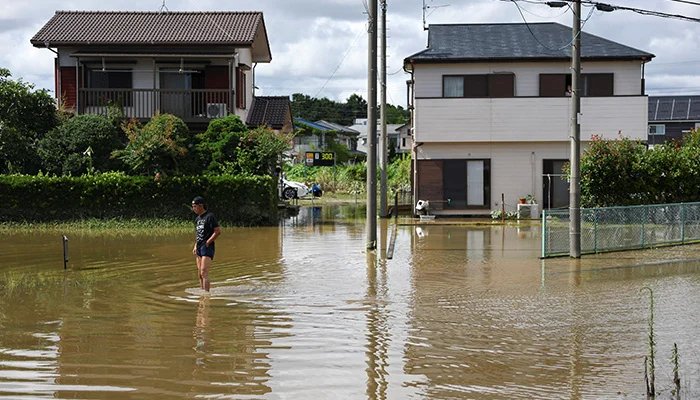
Heavy rains in Japan caused flooding that stranded thousands at Tokyo’s Narita Airport on Friday, leading to transportation disruptions, power outages affecting 20,000 homes, and the loss of eight lives. During one of Japan’s peak holiday seasons, over 14 inches (360 millimeters) of rain fell within 24 hours in parts of Chiba Prefecture near Tokyo, flooding roads and rail lines, prompting military rescue efforts.
Chiba Governor Toshihito Kumagai described the situation as “extremely unusual,” noting that he has responded to numerous disasters but has never encountered anything like this. The fatalities included an individual trapped inside a submerged vehicle, according to NHK, citing local authorities and police.
At Narita International Airport, staff handed out sleeping bags, water, and snacks to hundreds of travelers, many of whom had already spent Thursday night stranded after transportation shutdowns left about 7,000 individuals in limbo—chaos that disrupted normal airport operations.
A local resident, Minoru Yamasaki, 48, returning from vacation, said, “I waited four hours for a taxi,” after booking a hotel that was unable to accommodate him. With no other options, he returned to the airport. The airport’s spokesperson indicated most flight schedules were expected to proceed normally on Friday.
Early Friday morning, over 20,000 households experienced power outages due to flooding at a substation, according to Tokyo Electric Power. Nearly 13,000 homes temporarily lost gas service as well. In Chiba City, hundreds spent the night sheltered in government buildings under foil blankets, awaiting rescue.
Several major highways in the area remain closed, forcing drivers onto detours, which has led to traffic congestion. Rail services suffered suspensions, although some trains between Narita and Tokyo have resumed, alleviating pressure at the busy international hub.
Weather data showed that the 367 mm (14.5 inches) of rain recorded in 24 hours in Chiba surpassed the previous record of 309 mm (12.17 inches) set in October 2013, emphasizing the exceptional intensity of the rainfall.