Tag: flooding

  • Japan’s Southwestern Islands Brace for Typhoon Bavi’s Approach

    Japan’s Southwestern Islands Brace for Typhoon Bavi’s Approach

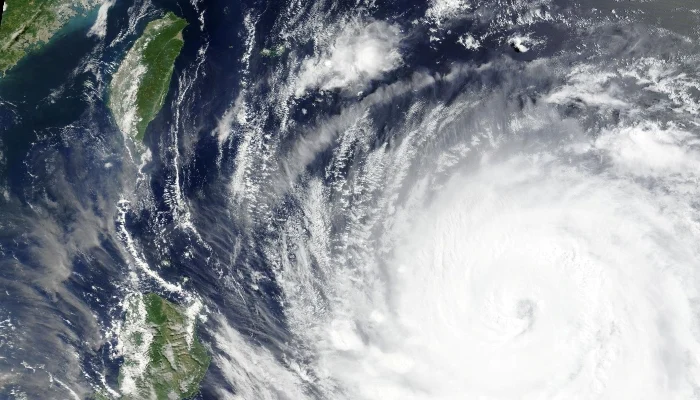
    A satellite image captures Typhoon Bavi as it churns through the Pacific Ocean on July 9, 2026. — Reuters

    – Typhoon Bavi is approaching Japan’s Sakishima Islands.
    – Taiwan has shut down financial markets and is preparing for heavy rain.
    – The typhoon is forecast to strike the Chinese coast late Saturday.

    ISHIGAKI: A significant and intense typhoon is nearing a remote group of islands in southwestern Japan, prompting officials to warn of fierce winds, heavy rainfall, landslides, and flooding—potentially the most severe storm the area has seen in years.

    Early Friday, Typhoon Bavi was closing in on Japan’s Sakishima Islands, a distant chain near Taiwan, with sustained winds reaching 100 mph (162 kph). Residents started taping windows and hanging windproof screens over homes and storefronts.

    Many airlines canceled numerous flights in the region, including those scheduled for Saturday.

    On Ishigaki, a popular tourist island within the Sakishima chain, locals rushed to stock up on supplies, with supermarket shelves stripped of instant noodles. Several beaches, coastal parks, and the ferry terminal appeared closed.

    “Hearing about this storm, I think it’s going to be pretty bad,” said Hiroshi Nomura while hanging windproof nets around his bicycle rental shop. “I’m a little worried that our preparations might not be enough.”

    Taiwan braces for heavy rains

    In neighboring Taiwan, markets have closed for the day, and a large section of the northern and eastern regions are on holiday. The Taipei city government has set up stations where residents can pick up sandbags.

    Although Bavi isn’t expected to directly hit Taiwan, the island is anticipating heavy rainfall—up to a meter (about 3.3 feet) in some areas—starting late Friday.

    Authorities have evacuated over 1,000 residents, mainly from the mountainous eastern coast, and nearly 29,000 military personnel are on standby to assist with relief efforts.

    “While the typhoon has slightly weakened and is now categorized as a moderate storm, its large storm radius means strong winds and heavy rain could still impact many areas,” President Lai Ching-te posted on Facebook.

    Taiwan’s airlines have canceled all Saturday flights departing from Taoyuan International Airport near Taipei.

    The world’s largest contract chip manufacturer, TSMC, announced it will delay releasing its June sales data from Friday to Monday.

    Late Saturday, Bavi is expected to make landfall near Wenzhou, a city in eastern China with a population of 10 million.

  • Rescue Teams Seek Missing Amid China Storms After 100,000 Evacuated

    Rescue Teams Seek Missing Amid China Storms After 100,000 Evacuated

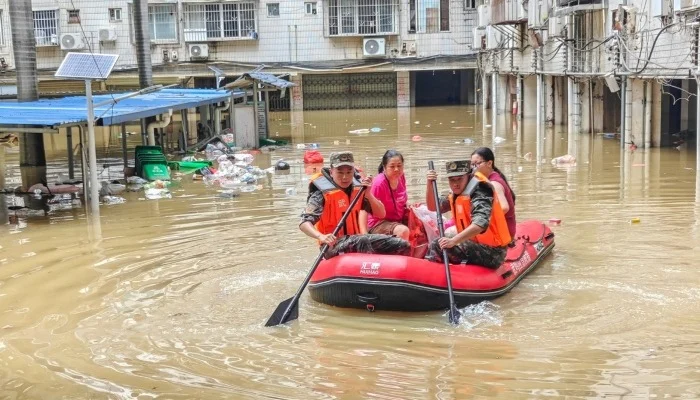
    Paramilitary police officers evacuate residents via rubber dinghy after flooding caused by Typhoon Maysak in Nanning, Guangxi Zhuang Autonomous Region, China, on July 6, 2026. — AFP

    – Severe storms and landslides have resulted in 38 fatalities.
    – Floodwaters have damaged approximately 13,000 acres of farmland.
    – Over 130,000 residents have been forced to evacuate.

    Rescue teams searched flood-affected areas in China for survivors following deadly storms that claimed 17 lives, overwhelmed numerous rivers, and caused a reservoir dam to break. Authorities warned that heavy rainfall would continue into Wednesday.

    In Guangxi’s southern region, six individuals lost their lives, and more than 130,000 people evacuated due to relentless rain and severe flooding from Typhoon Maysak, according to regional officials. Forecasts indicate that rainfall will persist not only in Guangxi but also in neighboring Guangdong Province.

    Muddy, fast-moving waters burst the banks of 40 rivers and waterways in Guangxi, ruining nearly 13,000 acres of agricultural land, reported state media. Videos broadcast by CCTV showed floodwaters rushing past the remains of a broken reservoir dam while rescue workers, equipped with life jackets, operated inflatable boats.

    Additional disaster relief supplies—including food, raincoats, and rubber boats—are being dispatched to the region, according to Xinhua News Agency.

    Guangxi’s flood control response remains at a high alert level, with authorities warning that peak water levels could exceed the warning mark by over six meters (about 20 feet) at the Wuzhou Hydrological Station early Thursday. Li Guoying, Minister of Water Resources, noted that the ongoing heavy rains and prolonged flooding pose a serious risk to reservoirs and embankments in the area.

    Thunderstorms and strong winds killed an additional 11 people and injured 331 in Hubei Province, with reports of tornadoes elsewhere late Monday, Xinhua reported. One person is listed as missing, and around 4,800 homes have been damaged or collapsed.

    China frequently experiences natural disasters during the summer, with some regions enduring intense rainfall while others face scorching heat.

    President Xi emphasized the importance of mobilizing all resources for emergency response, according to CCTV.

    In northwestern Gansu Province, the death toll from a recent landslide increased to 21, after earlier reports of 33 fatalities. The landslide struck around 6:56 a.m. Tuesday at Rencang Village in Dangchang County, and rescue efforts concluded with the confirmation of 21 deaths, according to local authorities. The cause of the landslide remains under investigation. Reconstruction funds totaling 30 million yuan (approximately $4.4 million) have been allocated for recovery efforts.

  • Violent Storm Ravages India’s Most Populous State, 100+ Dead

    Violent Storm Ravages India’s Most Populous State, 100+ Dead

    A fierce storm swept through Uttar Pradesh, India’s most populous state, on Thursday, bringing heavy rain and hail that resulted in over 100 fatalities. Rescue officials confirmed the death toll and stated that some victims fell prey to falling trees or collapsing walls. In the wake of the disaster, authorities plan to quickly distribute relief funds to the affected residents within the next 24 hours.

    While tornadoes and storms are frequent in this region during the early hot months from March to June, before the monsoon season arrives, Wednesday’s storm was particularly destructive. It injured 59 individuals, damaged 87 houses, and caused the death of 114 livestock, according to officials.

    Most of the fatalities occurred in around a dozen districts, with the area surrounding Prayagraj—an important Hindu pilgrimage city—being the hardest hit, according to Hrishikesh Bhaskar Yashod, the relief commissioner for the state.

    Ashok Rai, a resident of Obra, a coal-rich industrial town in Sonbhadra district, described the chaos: “The whole area turned black for about half an hour. Strong winds lifted signboards and debris, including thick coal dust, and tossed them around.”

    Images broadcast on television showed uprooted trees, toppled billboards smashing into cars, and wooden furniture knocked over at roadside stalls. A video captured a man being violently pulled from a tin structure by the storm, injuring him but leaving him alive.

    Officials also noted that falling trees and walls collapsed, claiming additional lives. In response, Chief Minister Yogi Adityanath urged officials to extend aid and deliver financial assistance immediately, emphasizing the importance of swift relief efforts.

    Prime Minister Narendra Modi’s ruling party oversees the state government, which is actively engaged in providing support to those affected by this devastating storm.

  • Vivid Thunderstorms Illuminate UAE Nights

    Vivid Thunderstorms Illuminate UAE Nights

    A strong storm system rolled through the United Arab Emirates overnight, bringing intense rainfall, powerful gusts, and nearly nonstop lightning that illuminated the night for over two hours, according to residents. In some locations, the lightning was so brilliant it made the darkness look like daylight, with thunderclaps waking people up around 11 p.m. local time.

    The weather event impacted many emirates, including Dubai, Sharjah, Ajman, Umm Al Quwain, Fujairah, Ras Al Khaimah, and Abu Dhabi. Fujairah experienced 47.9 millimeters of rain, while Ras Al Khaimah faced flooding on parts of Emirates Road due to overflowing from Al Beeh and Qada’a valleys. Authorities advised drivers to take alternative routes as a result.

    The National Centre of Meteorology (NCM) issued a flash flood warning after midnight as the storm moved from the western regions into Abu Dhabi and Dubai. Dubai Police and the Ministry of Interior also issued safety advisories, including messages in Urdu, urging residents to avoid unnecessary travel, keep safe distances on the roads, and steer clear of pools of water or swiftly flowing rivers to prevent vehicle skidding. Some areas reported hail and reduced visibility.

    Travelers were advised to allow extra time for journeys to Dubai’s DXB and DWC airports due to weather-related delays. Authorities also temporarily closed Jebel Jais in Ras Al Khaimah because of dangerous conditions.

    The UAE government and NCM forecast that unstable weather, including heavy rain, thunderstorms, strong winds, and brief hail, are likely to persist through Friday. Conditions are expected to improve from Saturday, with clearer skies and cooler temperatures. Officials urged residents to stay alert and cooperate with authorities to ensure safety.

  • Urgent Aid Race for Asia Flood Victims as Toll Nears 1,200

    Urgent Aid Race for Asia Flood Victims as Toll Nears 1,200

    A drone captures an aerial view of cars parked in a flooded area in Hat Yai district, Songkhla province, Thailand, on November 25. — Reuters

    – Sri Lanka declares a state of emergency and appeals for international assistance.
    – Over 631 people have died, with 472 still missing across Sumatra, Indonesia.
    – Witnesses describe sudden, tsunami-like flood surges.

    Flood response teams and aid agencies in Indonesia and Sri Lanka are racing to deliver supplies Tuesday to hundreds of thousands stranded after catastrophic flooding that has resulted in approximately 1,200 deaths across four nations.

    Heavy monsoon rains combined with two tropical cyclones last week dumped substantial rainfall over Sri Lanka, parts of Sumatra in Indonesia, southern Thailand, and northern Malaysia.

    Climate change is intensifying such weather events, as a warming atmosphere retains more moisture and rising sea temperatures strengthen storm systems.

    While floodwaters have mostly receded, the destruction has left countless people displaced, living in shelters, struggling to access clean water and food.

    In Aceh, one of the worst-hit regions of Indonesia, residents report that survivors who could afford it are hoarding supplies.

    “Roads are mostly blocked in flood-affected zones,” said 29-year-old Erna Mardhiah, standing in line at a gas station in Banda Aceh.

    “Everyone’s worried about running out of fuel,” she added after waiting for two hours.

    Prices have soared due to the shortages.

    “Things are already expensive—chili peppers cost up to 300,000 rupiah per kilo ($18)—which probably explains the panic buying,” she explained.

    On Monday, Indonesia announced it would send 34,000 tons of rice and 6.8 million liters of cooking oil to the hardest-hit provinces: Aceh, North Sumatra, and West Sumatra.

    “There’s no room for delay,” stated Agriculture Minister Andi Amran Sulaiman.

    Food scarcity remains a major concern, with aid groups warning that local markets are rapidly running out of essential supplies, with prices already tripling.

    “Communities across Aceh face severe food shortages and hunger if supply lines aren’t restored within a week,” said Islamic Relief.

    A shipment of 12 tons of food, coordinated with Indonesia’s navy, is expected to arrive in Aceh Tuesday.

    In Sumatra, the floods have caused over 631 deaths, with 472 people still missing. Affected populations have totaled around a million people who’ve evacuated their homes, according to disaster officials.

    Survivors describe overwhelming waves of water that struck without warning.

    In East Aceh, Zamzami described the floodwaters as “unstoppable, like a tsunami.”

    “We can’t explain how enormous the water was. It was truly extraordinary,” said the 33-year-old, who goes by a single name.

    People in his village took refuge atop a local two-story fish market to escape the deluge and are now trying to clear mud and debris amid ongoing power and communication outages.

    “Access to clean water is difficult,” he told AFP on Monday. “Children are starting to get fevers, and there’s no medicine.”

    The same weather system caused heavy rain in southern Thailand, killing at least 176 people, while neighboring Malaysia reported two fatalities.

    In Sri Lanka, heavy rains triggered flash floods and deadly landslides, claiming at least 390 lives. An additional 352 people are reported missing, and some of the worst areas in the central part of the country remain hard to reach.

    President Anura Kumara Dissanayake has declared a state of emergency, describing this as “the most challenging natural disaster in our history.” Unlike Indonesia, Sri Lanka has called for international aid.

    The country’s air force, with help from Indian and Pakistani counterparts, has been evacuating stranded residents and delivering vital supplies.

    In Welimada, a mountainous region, authorities recovered the bodies of 11 residents buried under mudslides on Monday.

    Meanwhile, in Colombo, floodwaters are slowly receding on Tuesday, after rising swiftly and surprising residents accustomed to seasonal flooding.

    “Every year we have minor floods, but this was something else,” said delivery driver Dinusha Sanjaya. “It wasn’t just the amount of water, but how quickly everything went under.”

    Despite a decrease in rainfall, landslide warnings remain in effect across much of the central region, local officials said.

  • Central Java Landslides Cause 18 Deaths and Dozens Missing

    Central Java Landslides Cause 18 Deaths and Dozens Missing

    Rain-caused landslides in two areas within Indonesia’s Central Java province last week resulted in at least 18 fatalities, according to officials on Monday, with rescue efforts still underway.

    In Cilacap city, a landslide in Cibeunying village buried about a dozen homes, details the disaster response agency. Rescuers faced difficulties because victims were trapped beneath 3 to 8 meters (roughly 10 to 25 feet) of debris. The incident has claimed at least 16 lives, with seven individuals still unaccounted for, said M. Abdullah, the head of the local search and rescue division. Heavy machinery was brought in to excavate mud and rubble, footage from Kompas TV showed on Monday.

    Meanwhile, in the Banjarnegara region, a landslide on Saturday resulted in two deaths and 27 people missing. The disaster agency reported that roughly 30 homes and farmland had been damaged by this event.

    Indonesia’s rainy season, which commenced in September, is projected to continue through April, heightening the risk of severe rainfall and flooding, the national weather service warned.

  • Typhoon Kalmaegi causes 1 death in Philippines, heading to Vietnam

    Typhoon Kalmaegi causes 1 death in Philippines, heading to Vietnam

    A person lost their life when Typhoon Kalmaegi struck central Philippines on Tuesday, according to the national disaster agency. Heavy rainfall, fierce winds, and storm surges prompted tens of thousands to evacuate their homes.
    With sustained winds reaching 150 km/h and gusts up to 205 km/h at landfall early Tuesday, Kalmaegi—locally called Tino— is expected to traverse the Visayas islands and exit into the South China Sea by Wednesday.
    Throughout the Visayas, as well as parts of southern Luzon and northern Mindanao, mass evacuations took place, and the disaster agency confirmed one fatality.
    A video shared by DZRH radio on Facebook depicted homes in Talisay City fully submerged, with just rooftops visible. Similar scenes emerged on social media from Cebu City, where streets and vehicles were underwater.
    The Philippine weather bureau PAGASA explained that the combined effects of Kalmaegi and a shear line brought heavy rains and strong winds across the region.
    “Due to interaction with the terrain, Tino may weaken slightly as it crosses Visayas, but it’s projected to stay at typhoon strength throughout its passage over the country,” PAGASA stated in a morning update.
    More than 160 flights to and from the affected zones have been canceled. Mariners were advised to find safe harbor immediately and remain anchored until conditions improve.
    The agency issued warnings for potentially life-threatening and damaging storm surges, estimating heights over 3 meters along coastlines and low-lying areas in central Philippines, including parts of Mindanao.
    Vietnam also announced preparations for the worst as Kalmaegi approaches, with landfall expected Thursday night in central regions already hit hard by recent floods that resulted in at least 40 deaths and six missing persons last week.
    “The typhoon is extremely strong and continues to intensify in the East Sea,” the government noted in a statement, referencing the South China Sea.
    This storm hits as the Philippines, accustomed to around 20 tropical storms annually, recovers from a series of recent disasters, including earthquakes and severe weather events.
    In September, Super Typhoon Ragasa battered northern Luzon, causing shutdowns of government operations and schools due to powerful winds and relentless rain.

  • Hurricane Melissa’s Toll Rises to 44 as Storm Moves North

    Hurricane Melissa’s Toll Rises to 44 as Storm Moves North

    Jules Marcelin shares the aftermath of Hurricane Melissa in Petit Goave, Haiti, where he lost two family members due to severe flooding. He shows the extensive damage to his home caused by the storm on October 30, 2025. — Reuters

    Confirmed fatalities include at least 25 in Haiti and 19 in Jamaica. Experts estimate damages could reach up to $52 billion. Hurricane Melissa is among the strongest storms ever recorded at landfall.

    PORT-AU-PRINCE/KINGSTON/HAVANA: The death toll from Hurricane Melissa has risen to 44, according to official reports, after it caused widespread destruction throughout the northern Caribbean and gained speed heading toward Bermuda.

    In Jamaica, the government has confirmed at least 19 fatalities, but rescue efforts continue. The hurricane knocked out power to hundreds of thousands, tore roofs off buildings, and scattered debris and wreckage across fields.

    Jamaica’s military has mobilized reserve personnel to assist with relief and rescue operations.

    Melissa struck southwestern Jamaica as a Category 5 hurricane on Tuesday, marking the country’s strongest direct hit and the first major hurricane since 1988. Wind speeds exceeded the threshold for the hurricane’s top classification. AccuWeather reports it tied for the second-strongest Atlantic hurricane on record in terms of wind speed at landfall.

    Damage estimates range from $48 billion to $52 billion, encompassing both economic losses and physical destruction across the western Caribbean.

    Haiti, which was not directly impacted but suffered days of heavy rains from the slow-moving storm, reported at least 25 deaths, mostly in Petit-Goave, where a river overflowed, causing fatalities. A local road connecting to Jacmel was damaged and partially washed away by a swollen river, further compounded by previous storm damage from Hurricane Beryl last year.

    Cuba’s eastern regions were also affected, with roughly 735,000 residents evacuated. While no fatalities have been reported there as of Thursday, homes and crops sustained significant damage.

    By 8 p.m. (0000 GMT), Melissa had downgraded to a Category 1 storm, located 409 km (254 miles) southwest of Bermuda, with hurricane conditions expected on the island by nightfall, as the storm’s eye moved northwest.

    Maximum sustained winds are recorded at 105 mph (169 kph). Authorities in Bermuda are remaining cautious, closing the causeway Thursday night and postponing schools and ferry services on Friday.

    In the Bahamas, Melissa passed through Wednesday night. Storm warnings were lifted, but officials stopped short of declaring an all-clear, stating a decision on the safety of returning residents will be made by Saturday.

    The front page of Thursday’s Jamaica Observer proclaimed “DEVASTATION” amid scenes of widespread impact. Kingston, though densely populated, avoided the worst damage and prepared to reopen its airport and port. Aid flights have begun arriving.

    Despite some areas showing less destruction, over 130 roads remain blocked by fallen trees, debris, and power lines, prompting the military to clear routes on foot. Ambulances follow behind to assist stranded residents.

    Satellite images reveal extensive damage in the hardest-hit areas: stripped trees, destroyed structures, and empty, defoliated landscapes.

    In Montego Bay, 77-year-old Alfred Hines waded through mud and debris, recalling his escape from rising floodwaters. “At one point, the water reached my waist, then around my neck, and I just made my way out,” he told Reuters. “I want to forget it and return to normal.”

    Across western Jamaica, residents flocked to supermarkets and gas stations for supplies. Tourist Chevelle Fitzgerald described her six-hour journey from Montego Bay to Kingston, noting the highway was blocked and numerous trees had fallen. Power remains out for over 70% of Jamaica’s electrical customers, with many schools lacking water and electricity.

    Scientists warn that hurricanes are strengthening and occurring more frequently due to rising ocean temperatures linked to climate change. Many Caribbean leaders call on wealthier nations to provide reparations in aid or debt relief. Despite the U.N. establishing a funding mechanism for disaster response, donations have fallen short of targets.

    AccuWeather reports Melissa as the third most intense Caribbean hurricane on record and notes its slow movement has intensified its destructive impact. U.S. rescue teams are en route to assist Jamaica, with officials pledging immediate humanitarian aid to Cuba, which was also hit hard.

    Cuba, struck by Melissa as a Category 3 storm overnight, faces ongoing recovery challenges. Over 240 communities remain isolated with disrupted communications, affecting approximately 140,000 residents. Tourists were evacuated inland, and residents in Santiago, Cuba’s second-largest city, are beginning repairs after the storm.

  • Melissa Claims 30+ Lives as this year’s fiercest hurricane hits Caribbean

    Melissa Claims 30+ Lives as this year’s fiercest hurricane hits Caribbean

    Hurricane Melissa made landfall in Jamaica as the strongest storm ever recorded on the island, with sustained winds reaching 185 mph, surpassing the threshold for a Category 5 hurricane. The storm tore through Cuba’s second-largest city, leaving hundreds of rural communities cut off and causing widespread destruction. Haiti experienced heavy rainfall, resulting in at least 25 fatalities, including 10 children, primarily due to floods in Petit-Goave, a coastal town 40 miles west of Port-au-Prince, where a river overflowed. Over 1.3 million displaced Haitians faced flooding, with more than 1,000 homes inundated. Residents in makeshift camps described the flooding as life-threatening, with many struggling to sleep or sit due to rising waters, and aid efforts perceived as slow to deliver supplies.

    Melissa made landfall in southwestern Jamaica, devastating regions previously battered by Hurricane Beryl last year. Damage estimates from AccuWeather suggest losses of around $22 billion, with rebuilding projected to take over a decade. Floodwaters washed up four bodies in St. Elizabeth, and nearly 80% of Jamaica lost power. Kingston was spared the worst, with plans to reopen its main airport shortly. Prime Minister Andrew Holness visited Black River Hospital, where staff reported significant damage, including roofs torn off buildings and fields strewn with debris. Staff recounted working through the night under flashlight amid fears for their families, describing the experience as “like missiles blowing through the glass.”

    In Cuba, Melissa, still a Category 3 hurricane at landfall, struck overnight near Guama, west of Santiago de Cuba. The storm left 241 communities isolated, affecting approximately 140,000 residents. Authorities evacuated around 735,000 people across eastern Cuba as the storm approached. The president warned of widespread damage and advised vigilance as rains persisted. While no deaths were reported immediately, the storm caused extensive damage, damaging crops and complicating an already strained supply of food, fuel, and medicine. Cuba’s ongoing shortages have fueled record migration since 2021, and the UN General Assembly recently called for an end to the US embargo, which has hindered aid delivery.

    Meteorologists ranked Melissa as the third-most intense hurricane in the Caribbean, following Wilma in 2005 and Gilbert in 1988. Experts link the increase in hurricane intensity and frequency to rising ocean temperatures driven by climate change. Many Caribbean nations have urged wealthier countries to contribute aid or debt relief. The regional Caribbean Community Climate Change Centre emphasized the urgent need to enhance the UN’s “loss and damage” fund, established in 2023 to help vulnerable nations recover from increasingly severe weather events. Despite these efforts, funding remains insufficient, with the US withdrawing from the fund’s board earlier this year.

    Global responses to Melissa’s destruction included humanitarian aid, with some countries offering financial support, food supplies, and rescue teams. In Montego Bay, a tourist hotspot, a resident recounted a harrowing rescue where rescuers broke into her home to save her and her child as floodwaters reached her waist. She mourned lost trees planted by her father, highlighting the widespread personal and communal damage caused by the storm.

  • Hurricane Melissa Hits Jamaica Coastline

    Hurricane Melissa Hits Jamaica Coastline

    Hurricane Melissa made landfall in Jamaica on Tuesday as a Category 5 storm, according to the latest update from the U.S. National Hurricane Center (NHC). It ranks among the most powerful hurricane landings ever recorded in the Atlantic basin, the NHC noted.

    Earlier, the NHC reported that the storm, the maximum intensity on the Saffir-Simpson scale, was approximately 34 miles southeast of Negril, Jamaica, at 4:00 p.m. GMT. It was producing sustained winds of 183 miles per hour, with stronger gusts. The Miami-based hurricane center warned that Melissa’s path could lead to widespread structural failures.

    Anne-Claire Fontan, a tropical cyclone specialist with the World Meteorological Organization, described the situation as catastrophic. “For Jamaica, this will be the storm of the century for sure,” she said during a press briefing.

    Satellite images showed Hurricane Melissa southeast of Jamaica at 12:00 UTC on October 28, 2025. Forecasters anticipated storm surges reaching up to four meters, coupled with rainfall exceeding 27 inches, which could cause severe flash flooding and landslides.

    Haiti and the Dominican Republic have already experienced days of heavy rainfall, leading to at least four fatalities. In Jamaica, local reports indicated that three people had died during storm preparations.

    The NHC projects the storm will impact Jamaica on Tuesday, maintaining its strength as a powerful hurricane when crossing eastern Cuba, then moving over the Bahamas and Turks and Caicos by Wednesday. The Bahamian government has ordered evacuations in the southern and eastern parts of the islands, while Cuba has evacuated around 500,000 residents from vulnerable areas.

    Melissa’s slow progress over unusually warm Caribbean waters contributed to its rapid intensification, with forecasts predicting up to 30 inches of rain in parts of Jamaica and up to 12 inches on Hispaniola.

    The Red Cross estimates that approximately 1.5 million people in Jamaica could be directly affected by the hurricane. Necephor Mghendi, an official with the IFRC, highlighted the challenges ahead, noting, “Today will be very difficult for tens of thousands, if not millions, of people in Jamaica. Roofs will be tested, floodwaters will rise, and many will face isolation.”

    To facilitate effective aid distribution, essential supplies such as tarps, hygiene kits, blankets, and clean drinking water have already been pre-positioned at Red Cross facilities across the island, with over 800 shelters prepared for evacuees.

    Prime Minister Andrew Holness mandated mandatory evacuations in southern Jamaica, including the historic Port Royal. He warned of extensive damage to farms, homes, and infrastructure, emphasizing that the island’s facilities are not built to withstand a Category 5 hurricane. The government has allocated a $33 million emergency response budget, alongside insurance and credit lines to cover damages, slightly exceeding the impact of Hurricane Beryl—an early record-setter for rapid intensification into a Category 5 storm.

    Scientists continue to warn that climate change-driven warming of ocean waters is likely to produce stronger, faster-moving hurricanes. Chief Meteorologist Jonathan Porter from AccuWeather remarked, “Slow-moving major hurricanes often become some of the deadliest and most destructive storms in history. We are witnessing a dire situation unfolding in slow motion.”

  • Flooding in Mexico: Heavy Rains Cause 130+ Dead or Missing

    Flooding in Mexico: Heavy Rains Cause 130+ Dead or Missing

    Last week’s heavy rainfall in Mexico resulted in at least 64 fatalities, with 65 individuals reported missing. The tropical depression that caused widespread landslides and flooding impacted coastal and central regions along the Gulf Coast. This system developed late in the rainy season, exacerbating land saturation and causing rivers to overflow, as they had already been swollen by months of persistent rainfall. Forecasters were primarily focused on nearby tropical storms and two Pacific hurricanes at the time.

    President Claudia Sheinbaum stated that the rainfall was more intense than anticipated. Admiral Raymundo Morales of Mexico’s Navy explained that the flooding occurred due to the convergence of warm and cold air currents over already flooded rivers and weakened mountains from prolonged rains.

    Approximately 100,000 homes were affected by the disaster. Sheinbaum indicated she would meet with financial officials later to plan recovery efforts and would visit some of the hardest-hit areas. Civil protection coordinator Laura Velazquez identified Hidalgo and Veracruz as the most severely impacted states, with Veracruz reporting 29 deaths and 18 people missing, and Hidalgo reporting 21 deaths and 43 missing.

    Infrastructure including bridges was destroyed, and streets turned into muddy waterways. Emergency responders were seen wading through deep waters last week to rescue stranded residents and deliver supplies. Thousands of personnel have been deployed to assist with evacuations, cleanup, and monitoring the affected zones.

    Power outages in towns across five states have mostly been restored. Authorities are now also concentrating on preventing the spread of mosquito-borne viruses like dengue, which thrive in stagnant water.

  • 64 Dead, 65 Missing as Floods Devastate Central and Eastern Mexico

    64 Dead, 65 Missing as Floods Devastate Central and Eastern Mexico

    Floodwaters submerge open fields scattered with trees across Veracruz, one of the most affected regions after several days of heavy rainfall and severe flooding. —AFP

    – Small towns remain isolated; residents are clearing roads to enable aid delivery.
    – Emergency shelters have been opened for those displaced, with helicopters ferrying food and water to stranded communities.
    – Intense rains have caused landslides, destroying entire neighborhoods and washing away infrastructure.

    Rescue teams are working tirelessly Monday to reach individuals trapped by the catastrophic floods that have resulted in 64 deaths in central and eastern Mexico, with 65 people missing. Heavy rains over last week transformed streets into raging rivers, triggered landslides, and washed out roads and bridges.

    Many small communities are still cut off by road, days after the storms, with residents making great efforts to clear pathways for supplies. President Claudia Sheinbaum announced Monday that about 10,000 military personnel equipped with boats, aircraft, and helicopters are involved in rescue and relief operations, providing critical food and water supplies to those affected.

    Shelters are in place for displaced residents, and aerial flights continue to deliver essentials to those cut off. “Multiple flights are necessary to get enough food and water to everyone,” the president stated.

    Laura Velázquez, head of Mexico’s Civil Defense, reported that Veracruz, Hidalgo, and Puebla were the hardest hit by the flooding caused by relentless heavy rains. In Hidalgo alone, 43 individuals remain missing, and the death toll was updated from 47 to a higher number within just 12 hours, underscoring the rapidly evolving scale of the crisis.

    This year has seen particularly intense rainfall in Mexico, including a record amount for Mexico City.

    Residents in Tenango de Doria, Hidalgo, walked kilometers in search of food and water as flooded roads and inaccessible terrain hinder transportation. Many carried belongings, hoping to find shelter. Marco Mendoza, a 35-year-old farmer, shared, “We walked two and a half hours through the mud… Everything is ruined; we have no supplies or food.” Stores in the town center lacked electricity, and locals gathered in the main plaza, seeking updates on road openings and aid arrivals.

    Farmer Francisco Hernandez from nearby El Texme explained that a river overflowing its banks has left his community “trapped.” Although Mexico’s rainy season typically occurs from May to October, last week’s downpour was exacerbated by a tropical system moving from the Gulf of Mexico combined with a cold front from the north, meteorologists said.

    Due to rising waters, coastal cities and towns in Veracruz, rich with numerous rivers, were advised to evacuate last Friday. In some elevated areas, persistent rains caused landslides, sweeping away parts of mountainsides.

    Sheinbaum dismissed questions regarding early warnings and preparedness, noting that such events are challenging to predict with precision unlike hurricanes. “It was difficult to have advance notice about this situation because of the unpredictable nature of the weather,” she explained.

    Many areas began clearing debris with heavy machinery on Sunday as skies cleared.

  • Heavy Rains in Nepal Claim 22 Lives, Block Major Roads

    Heavy Rains in Nepal Claim 22 Lives, Block Major Roads

    Heavy rainfall has caused landslides and flash floods in Nepal, leading to blocked roads, destroyed bridges, and the deaths of at least 22 people over the past 36 hours, officials reported Sunday.

    Police spokesperson Binod Ghimire stated that 18 individuals lost their lives in separate landslides in Ilam district, located in eastern Nepal bordering India. Additionally, three people were killed by lightning strikes in southern Nepal, and one person died in floods in Udayapur district, also in the east.

    Authorities confirmed that 11 people have been swept away by floodwaters and remain missing since Saturday. Rescue workers are actively searching for them, according to Shanti Mahat, a spokesperson for the National Disaster Risk Reduction and Management Authority (NDRRMA).

    Numerous highways have been rendered impassable due to landslides and flooding, trapping hundreds of travelers. Domestic flights have been significantly disrupted, though international flights continue operating normally, said Rinji Sherpa, spokesperson for Kathmandu airport.

    In southeastern Nepal, the Koshi River—known to cause frequent severe floods in the neighboring Indian state of Bihar—has risen above hazardous levels, a local official reported. Dharmendra Kumar Mishra, district governor of Sunsari, explained that water levels in the river are more than twice their usual amount. All 56 sluice gates of the Koshi Barrage have been opened to drain excess water, compared to the normal 10 to 12 gates, and authorities are considering restricting heavy vehicles on the bridge.

    In Kathmandu, a city surrounded by hills, several rivers have flooded streets and inundated numerous homes, effectively isolating the capital from the rest of the country by road. Landslides and flash floods are common during Nepal’s monsoon season, which usually spans from mid-June to mid-September, claiming hundreds of lives each year.

    Meteorologists forecast continued heavy rains in the Himalayan nation through Monday. Officials emphasize that they are exercising maximum caution and are taking steps to assist those affected by the ongoing natural disasters.

  • Philippines Toll Hits 11 as Storm Bualoi Heads for Vietnam

    Philippines Toll Hits 11 as Storm Bualoi Heads for Vietnam

    The death toll from Severe Tropical Storm Bualoi increased to 11 in the Philippines on Saturday as the storm approached Vietnam, officials reported. Bualoi impacted small islands in central Philippines on Friday, knocking down trees and power lines, tearing off roofs, causing flooding, and prompting evacuations for 400,000 residents.

    The smallest island of Biliran was among the hardest hit, with eight fatalities and two individuals listed as missing, according to provincial disaster management official Noel Lungay. He added, “Widespread flooding occurred, and some roads remained submerged early today. People are beginning to return home as weather conditions improve.”

    Earlier reports from Manila’s civil defense agency indicated three additional deaths on the neighboring islands of Masbate and Ticao, including two individuals who were crushed by fallen trees and walls caused by strong winds. Overall, 14 people remain missing across central Philippines, with no further details provided, and over 200,000 people continue to stay in evacuation centers.

    Bualoi followed Super Typhoon Ragasa, which previously caused 14 fatalities across northern Philippines. As of Saturday, Bualoi was moving across the South China Sea at typhoon strength speeds of 75 miles per hour (120 km/h), according to the Philippine weather service. It was expected to be off the coast of central Vietnam by Sunday afternoon.

    The Philippines experiences roughly 20 storms and typhoons annually, affecting disaster-prone regions where millions live in poverty. Experts warn that climate change is likely increasing the intensity of these storms.

    Meanwhile, public outrage in the Philippines is escalating over a corruption scandal involving fake flood-control projects believed to have cost taxpayers billions. Thousands took to the streets on Sunday to demonstrate, with peaceful protests turning chaotic as police vehicles were set ablaze and police station windows were shattered.

  • 400,000 Evacuated, 3 Dead Amid New Storm After Super Typhoon Ragasa Hits Philippines

    400,000 Evacuated, 3 Dead Amid New Storm After Super Typhoon Ragasa Hits Philippines

    A severe tropical storm battered the Philippines on Friday, prompting the evacuation of nearly 400,000 residents and resulting in at least three fatalities. The country continues to face the ongoing impact of Super Typhoon Ragasa. In the southern Luzon Bicol region, officials reported three deaths caused by collapsing walls and uprooted trees as Storm Bualoi moved northwest at sustained speeds of 110 km/h.

    During the storm, an evacuee took shelter under pews in a church after the roof was ripped off. “Around 4 a.m., the wind tore through the church’s door, windows, and roof,” said Jerome Martinez, a municipal engineer from Masbate province. He described it as one of the strongest winds he’s ever experienced, noting some children sustained minor injuries requiring stitches.

    Many homes were destroyed or had their roofs blown away, leading to more evacuations as roads became blocked by fallen trees and debris. Bernardo Alejandro, a civil defense official, stated that evacuation orders have been issued to about 400,000 people. Rescuers in Masbate reported clearing large trees and damaged electric poles to make roads passable. “The rain was heavy, but the wind was even stronger,” an AFP correspondent quoted. Social media videos show people navigating flooded streets by boat or wading through water waist-deep in the central islands of Visayas.

    The Philippines experiences roughly 20 storms and typhoons annually, which frequently maintain or worsen levels of poverty in disaster-prone areas. Climate scientists warn that global warming is increasing storm intensity. Authorities warned of a high risk of life-threatening storm surge of up to three meters (10 feet). Meanwhile, the population still dealing with the aftermath of Ragasa is displaced, with at least nine dead earlier this week after the typhoon struck the northern regions.

    Public frustration is mounting over a scandal involving fraudulent flood-control projects believed to have cost billions of dollars, adding to a climate of distrust and anger toward government agencies.

    In Taiwan, rescue teams combed through mud on Friday for 11 individuals reported missing after Super Typhoon Ragasa caused floods earlier this week. The flood death toll remained at 14. Heavy rains caused a barrier lake to overflow in Hualien County, releasing sludge that covered large parts of the area, complicating ongoing rescue efforts. Rescuers sometimes had to wade in mud up to their waists, cutting holes in building roofs to search for missing people.

    One man, Hwang, is still searching for his sister’s body after she was unable to escape her house filled with mud. Many fatalities occurred on the ground floors of homes, especially among the elderly, who couldn’t evacuate upstairs as instructed.

    88-year-old Huang Ju-hsing remains trapped in his home after floodwaters blocked access to his family’s grocery store on the ground level. His wife described how they urged him to move upstairs, which he managed to do, demonstrating the courage sparked by emergency situations.

    Hualien, known for its natural beauty and tourism appeal, is rural and sparsely populated. The unresolved issue of the barrier lake, formed by earlier typhoons, persists—though it has shrunk to a fraction of its original size. The government has ruled out using explosives to breach the dam, fearing it could trigger landslides and worsen the situation. Despite the flooding, Taiwan’s vital semiconductor industry on the island’s west coast remains unaffected.

  • 12 Dead as Record Rain Floods Kolkata, India

    12 Dead as Record Rain Floods Kolkata, India

    Heavy rainfall in Kolkata has resulted in at least 12 fatalities, with nine due to electrocution and two from drowning, as the city faces severe flooding. Transportation has come to a halt, with many flights and trains canceled or delayed, and power outages affecting numerous neighborhoods for hours. Streets are submerged, some waist-deep, causing vehicles to be stranded and pedestrians to wade through floodwaters. Authorities have deployed water pumps to drain flooded streets and railway tracks, while emergency services and food distribution efforts are underway. The India Meteorological Department warns of continued rain in the coming days due to a low-pressure system over the Bay of Bengal. Schools and educational institutions across the state will remain closed on Wednesday and Thursday, ahead of festival holidays starting Friday. Residents are advised to exercise caution as water levels gradually recede, aiming for normalcy by Wednesday evening. The flooding has disrupted preparations for Durga Puja, West Bengal’s biggest Hindu festival, damaging many festival structures, clay idols, and disrupting community activities. Local residents express concern over the severity of the situation, emphasizing that conditions should not have deteriorated after just a few hours of rain.

  • Flood Fears Rise as Typhoon Ragasa Kills 14 in Taiwan, Evacuees Stay Alarmed

    Flood Fears Rise as Typhoon Ragasa Kills 14 in Taiwan, Evacuees Stay Alarmed

    Rescue teams mobilized across Taiwan continue their efforts in Hualien, where flash floods caused by Super Typhoon Ragasa have resulted in at least 14 fatalities. Many residents in Guangfu, a scenic tourist spot in Hualien, sought refuge in shelters on Wednesday amid fears of additional flooding after a barrier lake burst its banks, flooding the area with a wall of water. The lake, formed by landslides from previous heavy rains in the less-populated eastern part of the island, inundated Guangfu, prompting urgent evacuations.

    Authorities are actively searching for the 129 individuals reported missing, with the number later rising to 152. Premier Cho Jung-tai emphasized the need to investigate why evacuation procedures in designated zones were not fully executed, clarifying that the focus is on uncovering facts rather than assigning blame.

    As rain persisted intermittently, police issued new flood alerts, urging residents to move to higher ground. Many, including a woman named Tsai at an emergency shelter in a local school, opted not to return home until the risk subsides. Deputy Disaster Response Chief Huang Chao-chin assured that with rainfall easing and most of the lake’s water already released, the likelihood of a repeat severe flood has diminished.

    Local officials noted that pre-flood evacuation recommendations were voluntary, and that vertical evacuation alone couldn’t fully address the situation. While Taiwan generally has robust disaster management systems due to its frequent typhoon activity, this recent event exposed some gaps in warning and preparedness, especially in Guangfu.

    Guangfu’s residents describe the floodwaters hitting like a “tsunami,” with some escaping just in time. Fire authorities confirmed that all the dead and missing are from Guangfu, where a major bridge over a river was destroyed. The military has dispatched 340 troops to assist with rescue operations, with soldiers using armored vehicles to navigate muddy streets, distributing supplies and helping residents.

    Approximately 60% of Guangfu’s population, about 5,200 people, took refuge upstairs in their homes, while most others stayed with family members. The lake’s overflow released an estimated 60 million tons of water, roughly filling 36,000 Olympic-sized swimming pools. In a show of diplomatic goodwill, China’s Taiwan Affairs Office extended condolences, challenging their usual stance of non-interference and acknowledgement of the crisis.

    Hualien is renowned for its natural beauty and indigenous communities, including the Amis, which are impacted by the destruction. The storm brought roughly 28 inches of rainfall to Taiwan’s east coast but spared the western regions, home to vital semiconductor manufacturing. The island remembers the devastation caused in 2009 by Typhoon Morakot, which claimed around 700 lives and caused billions in damages.