Tag: Japan

  • Japan quake death toll climbs to 13 amid mall rescue efforts

    Japan quake death toll climbs to 13 amid mall rescue efforts

    A 7.1 magnitude quake rocked southern Japan on Tuesday, with rescue teams desperately searching for survivors on Wednesday. The earthquake resulted in at least 13 deaths, power outages affecting thousands, and road collapses across the region.

    Eight individuals were rescued from the debris of a shopping mall near Kumamoto that partially collapsed and was struck by an explosion about an hour after the quake. Among those rescued were two women in their twenties who later died. It is estimated that 20 to 30 mall workers are still unaccounted for, according to NHK.

    Prime Minister Sanae Takaichi emphasized the urgency of rescue efforts, stating, “There are still people waiting to be saved, and this is a race against time. We will mobilize all available resources to save as many as possible.” Authorities are also investigating reports of a possible gas explosion at the Aeon mall, with rescue teams detecting the smell of gas inside the building. The cause of the explosion remains under investigation.

    Firefighters, police, and approximately 170 military personnel are focusing their efforts on parts of the building where emergency calls have been received. Over 4,500 soldiers have been dispatched nationwide to assist in recovery efforts. Additionally, seven people are missing after a chimney at a Nippon Paper Industries factory collapsed, and four others are seriously hurt. Hospitals are treating dozens of quake victims.

    Throughout Kumamoto Prefecture, where a significant earthquake occurred a decade ago, about 260,000 residents have been directed to evacuation centers. Emergency services reported receiving 386 calls, including pleas for rescue and reports of collapsed structures. The quake’s epicenter was approximately 20 kilometers south of Kumamoto City, the largest city in central Kyushu with around 700,000 residents.

    Authorities warn residents in the most affected areas to stay alert for more strong tremors over the next week and to watch for landslides. With temperatures reaching around 34°C (93°F), over 36,000 homes remain without power, raising concerns about heat stroke among affected populations.

    One hospital in Uki, near the epicenter, reported being rendered non-operational due to a power outage caused by the earthquake. The hospital’s head described the situation as “like a field hospital,” and another local hospital announced it had suspended new admissions after treating 86 injured patients, including three with severe injuries. Due to the quake, some high-speed train services were halted, with passengers sustaining injuries.

    The damage to the Aeon mall drew particular focus. Footage showed one side of the mall, housing approximately 200 stores, ripped apart, exposing steel supports and debris scattered across the parking lot. Aeon representatives confirmed that customers and staff were evacuated immediately following the initial tremor, but the specific cause of the subsequent explosion remains unclear. As a result, Aeon’s stock prices dipped nearly 2% in early trading in Tokyo, while the Nikkei 225 index gained 0.8%.

    Major local companies, including Sony, Tokyo Electron, and Honda, announced plans to suspend operations at their facilities through Wednesday. TSMC, the world’s largest contract chipmaker, evacuated workers from its local plant but resumed operations late Tuesday. Some roads suffered severe damage, with large cracks disrupting major highways and causing traffic jams.

    Japan is part of the Pacific Ring of Fire, experiencing about 20% of the world’s earthquakes of magnitude 6.0 or greater. A major quake in Kumamoto ten years ago killed 275 people, injured 2,739, and damaged many historic sites, including the city’s castle, a popular tourist attraction. Several historic structures and shrines, including a 17th-century tea house, also suffered damage in Tuesday’s tremors.

  • Major Southern Japan quake disables power, disrupts transport

    Major Southern Japan quake disables power, disrupts transport

    A preliminary magnitude 7.1 earthquake struck Japan’s southern Kumamoto Prefecture on Tuesday, causing widespread power outages, disrupting transportation, and prompting evacuation orders along with warnings of aftershocks. Thousands of homes lost electricity, and many residents faced dangerous conditions. Authorities reported damage to roads, bridges, and buildings, with some structures collapsing or catching fire. The disaster management agency instructed over 150,000 people to seek shelter in evacuation centers.

    At her Tokyo office, Prime Minister Sanae Takaichi told reporters that officials were still assessing the extent of casualties and property damage. “We’ve received reports of injuries, and we are evaluating the situation,” she said. “There have been power outages, fires, road and bridge damage, and building collapses. I urge everyone to take measures to stay safe and evacuate if necessary.”

    Public broadcaster NHK displayed images of burning or collapsed buildings, major cracks along roads—including an elevated highway—and a derailed freight train. Earthquake warnings were issued for multiple prefectures across Kyushu Island, with an initial tsunami alert later lifted.

    Japan, situated on the Pacific Ring of Fire, experiences frequent seismic activity, accounting for roughly 20% of the world’s magnitude 6.0 or higher earthquakes. The region is especially vulnerable, with tremors occurring at least every five minutes.

    In response to the earthquake, Kyushu Electric Power reported that around 40,000 homes lost power. JR Kyushu suspended train services, including high-speed bullet trains, and Kumamoto Airport closed its runways, leading airlines to divert and cancel flights. Major telecom providers like KDDI and Docomo also reported service disruptions due to power failures and transmission issues. Japan’s nuclear power plants in the affected area confirmed there were no anomalies.

    Ten years prior, a devastating quake in Kumamoto resulted in 275 deaths, injured over 2,700, and caused extensive damage to historic sites including the city’s famous castle.

  • Japan’s Southwestern Islands Brace for Typhoon Bavi’s Approach

    Japan’s Southwestern Islands Brace for Typhoon Bavi’s Approach

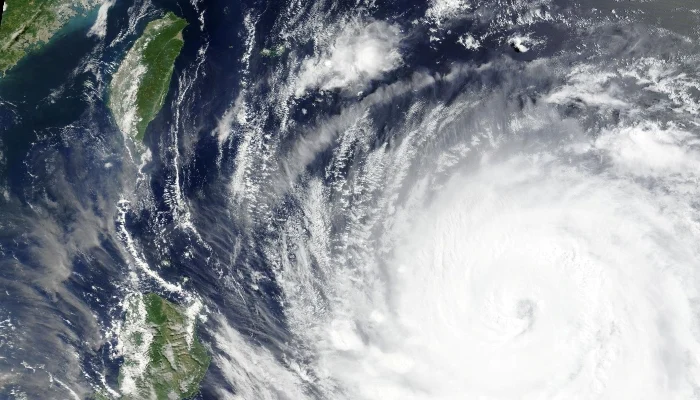
    A satellite image captures Typhoon Bavi as it churns through the Pacific Ocean on July 9, 2026. — Reuters

    – Typhoon Bavi is approaching Japan’s Sakishima Islands.
    – Taiwan has shut down financial markets and is preparing for heavy rain.
    – The typhoon is forecast to strike the Chinese coast late Saturday.

    ISHIGAKI: A significant and intense typhoon is nearing a remote group of islands in southwestern Japan, prompting officials to warn of fierce winds, heavy rainfall, landslides, and flooding—potentially the most severe storm the area has seen in years.

    Early Friday, Typhoon Bavi was closing in on Japan’s Sakishima Islands, a distant chain near Taiwan, with sustained winds reaching 100 mph (162 kph). Residents started taping windows and hanging windproof screens over homes and storefronts.

    Many airlines canceled numerous flights in the region, including those scheduled for Saturday.

    On Ishigaki, a popular tourist island within the Sakishima chain, locals rushed to stock up on supplies, with supermarket shelves stripped of instant noodles. Several beaches, coastal parks, and the ferry terminal appeared closed.

    “Hearing about this storm, I think it’s going to be pretty bad,” said Hiroshi Nomura while hanging windproof nets around his bicycle rental shop. “I’m a little worried that our preparations might not be enough.”

    Taiwan braces for heavy rains

    In neighboring Taiwan, markets have closed for the day, and a large section of the northern and eastern regions are on holiday. The Taipei city government has set up stations where residents can pick up sandbags.

    Although Bavi isn’t expected to directly hit Taiwan, the island is anticipating heavy rainfall—up to a meter (about 3.3 feet) in some areas—starting late Friday.

    Authorities have evacuated over 1,000 residents, mainly from the mountainous eastern coast, and nearly 29,000 military personnel are on standby to assist with relief efforts.

    “While the typhoon has slightly weakened and is now categorized as a moderate storm, its large storm radius means strong winds and heavy rain could still impact many areas,” President Lai Ching-te posted on Facebook.

    Taiwan’s airlines have canceled all Saturday flights departing from Taoyuan International Airport near Taipei.

    The world’s largest contract chip manufacturer, TSMC, announced it will delay releasing its June sales data from Friday to Monday.

    Late Saturday, Bavi is expected to make landfall near Wenzhou, a city in eastern China with a population of 10 million.

  • Chrono Bravers: AI Anime Set to Air in Japan Soon

    Chrono Bravers: AI Anime Set to Air in Japan Soon

    Digital Phablet – A brief Mecha anime titled Chrono Bravers has recently ignited controversy after fans discovered that the entire series will be created using generative AI and is scheduled to air on Japanese national television in July.

    Many viewers expressed their disapproval on social media, pointing out issues like inconsistent artwork and subpar production quality. A Japanese internet user commented on YouTube, “The art style shifts from scene to scene, making it hard to tell who’s who.”

    Another user remarked, “It’s amusing how they rely solely on AI, resulting in poorly made subtitles that look like something an unskilled employee crafted in PowerPoint.”

    Chrono Bravers: This Fully AI-Produced Anime Is Coming to Japanese TV

    A viewer on My Anime List commented after watching the Chrono Bravers trailer, “Haha, this makes Blue Lock seem like a masterpiece, honestly. The visuals are jarringly inconsistent, and the animation is way worse than even the most poorly made ones I’ve seen. I also doubt the plot, characters, music, and voice acting are any better. Not sure how AI will evolve in the future, but for now, I can’t support this kind of trash.”

    According to online sources, Chrono Bravers is set to debut on Tokyo MX, a channel operated by the Tokyo Metropolitan Television Broadcasting Corporation. The series’ official YouTube channel posted the trailer back in May. However, discussions have recently intensified around its extensive use of generative AI technology.

  • Man Arrested for Threatening to Bomb Nintendo Headquarters

    Man Arrested for Threatening to Bomb Nintendo Headquarters

    A Japanese man was recently detained for issuing threats to detonate bombs at Nintendo’s headquarters in Japan, asserting that he had actually planted explosive devices on the premises.

    According to KTV, the 27-year-old individual from Hekinan City in Aichi Prefecture was taken into custody on May 12 after being accused of threatening the Nintendo headquarters, which is based in Kyoto.

    Man apprehended for threats against Nintendo’s headquarters

    A tweet from Dexerto reported: “A 27-year-old man has been arrested for threatening to blow up Nintendo headquarters in Japan. He allegedly sent letters claiming, ‘I’m going to blow you all up,’ and that ‘multiple bombs’ had been planted.” See the tweet here

    Authorities revealed that the suspect delivered an envelope to the building with messages stating, “I’m going to blow you all up,” and “My plans cannot be thwarted.” Although the man claimed to have planted several bombs at Nintendo’s site, police reports indicated they searched both inside and outside the building but found no explosives. The suspect confessed to threatening the Japanese gaming corporation, but investigators are continuing to look into his motives.

  • Latest: Magnitude 6.2 Earthquake Hits Hokkaido, Japan

    A powerful earthquake struck northern Japan’s Hokkaido island early Monday, according to both US and Japanese weather agencies, marking the latest in a series of seismic events affecting the region. The earthquake registered a magnitude of 6.2 and hit at 5:23 a.m. local time (Sunday 9:23 p.m. GMT) in the southern part of Hokkaido. The Japanese Meteorological Agency (JMA) revised its initial estimate of magnitude 6.1 to 6.2, with the quake occurring at a depth of 83 kilometers (52 miles).

    No tsunami warning was issued by JMA, and the U.S. Geological Survey indicated that damage to property and risks to life were expected to be minimal due to the low population density in the area, situated roughly 200 kilometers east of Sapporo. However, officials noted that areas subject to intense shaking could face increased hazards like falling rocks and landslides. JMA also warned that the probability of additional quakes of similar strength in the coming week remains high.

    Earlier that day, a magnitude 5.0 tremor occurred offshore, several hundred kilometers south of Hokkaido. These events come shortly after JMA issued warnings of an elevated risk of a major quake—an 8.0 magnitude or greater—following last Monday’s 7.7 magnitude earthquake off northern Iwate Prefecture. That quake injured six people and caused significant shaking in Tokyo, hundreds of kilometers from the epicenter. It also triggered 80-centimeter (31-inch) tsunami waves in a port in Iwate, with smaller waves occurring elsewhere in northern Japan.

    Following the Iwate quake, JMA stated that the likelihood of a new, large-scale earthquake in the region was higher than usual. Japan remains one of the most seismically active countries globally, situated atop four major tectonic plates along the Pacific “Ring of Fire.” The country, home to about 125 million people, typically experiences around 1,500 earthquakes annually, accounting for roughly 18% of the world’s seismic activity.

    The nation holds the tragic memory of the massive 9.0 magnitude undersea quake in 2011, which caused a devastating tsunami resulting in approximately 18,500 deaths or missing persons and triggering a nuclear meltdown at Fukushima.

  • Firefighters in Action Against Devastating Forest Fires in Japan

    OTSUCHI: Hundreds of firefighters are struggling to control wildfires in northern Japan’s forests on Saturday, while authorities have advised more than 3,200 residents to evacuate their homes, officials announced.

    By Saturday morning, the fires in the rugged mountains of the Iwate region had scorched approximately 700 hectares (1,730 acres) over the past three days, according to local officials.

    A massive plume of smoke, visible and detectable from 30 kilometers (roughly 20 miles) away, rose from the valley near Otsuchi, as two helicopters deployed water onto the burning woods.

    Firefighters near Otsuchi were also actively spraying water on the forests close to residential areas threatened by the flames.

    On Saturday, around a dozen helicopters and more than 1,300 personnel, including Japan Self-Defense Forces troops, were dispatched to combat the fires.

    At least eight structures have been destroyed, but all residents have already evacuated, officials confirmed.

    “We are making efforts to put out the fires and will provide updates later today,” an official from Iwate stated to AFP.

    A local man in Otsuchi expressed hope for rain, stating, “Hopefully, it will rain soon.”

    Increasingly dry winters have heightened wildfire risks in the region. Last year, a fire in Ofunato city in Iwate was recorded as Japan’s worst in over fifty years.

    Experts have long warned that climate change—driven by human fossil fuel consumption—is intensifying drought conditions, prolonging dry spells, and creating prime conditions for wildfires to spread more easily.

  • Six Hurt in Japan Quake, No Major Damage Reported

    Six Hurt in Japan Quake, No Major Damage Reported

    A powerful earthquake struck northern Japan, resulting in injuries to at least six individuals reported by Tuesday. The tremor also generated tsunami waves reaching up to 31 inches (80 centimeters). Fortunately, there was no significant structural damage observed.

    The Japan Meteorological Agency (JMA) issued a warning about a heightened chance of a megaquake—an earthquake with a magnitude of 8.0 or higher—following Monday’s 7.7 magnitude quake offshore in Iwate Prefecture. The quake was strong enough to shake large buildings in Tokyo, hundreds of miles away from the epicenter.

    By 8 a.m. local time (11 p.m. GMT Monday), the Fire and Disaster Management Agency confirmed six injuries, with two categorized as severe. No fires or critical facility damages were reported. A tsunami warning for waves up to three meters (10 feet) was issued but was lifted after an 80-centimeter wave struck the port of Kuji in Iwate, along with a series of minor waves in the region.

    The JMA indicated that the likelihood of a major earthquake occurring soon has increased compared to normal times. Local authorities advised non-mandatory evacuations for over 182,000 residents in affected areas.

    Japan, situated atop four significant tectonic plates along the Pacific “Ring of Fire,” remains one of the world’s most seismically active nations. The country, home to approximately 125 million people, experiences around 1,500 earthquakes annually, accounting for nearly 20% of the world’s seismic activity. Most quakes are minor, but their impacts depend heavily on location and depth beneath the Earth’s surface.

    The memory of the catastrophic 9.0 magnitude undersea earthquake in 2011 still lingers. That disaster triggered a tsunami that claimed or left missing about 18,500 people and caused a severe meltdown at the Fukushima nuclear plant.

  • 7.5-Magnitude Japan Quake Triggers Tsunami Alert

    7.5-Magnitude Japan Quake Triggers Tsunami Alert

    An earthquake with a magnitude of 7.5 struck off Japan’s northeastern coast on Monday, prompting authorities to advise residents to avoid coastal zones, as tsunami waves of up to 3 meters (around 10 feet) are anticipated. The epicenter was located in the Pacific Ocean, about 10 kilometers deep, according to the Japan Meteorological Agency. The most significant waves are predicted to impact Iwate, Aomori, and Hokkaido prefectures.

    Prime Minister Sanae Takaichi addressed the public, stating that a state of emergency has been declared with an emergency task force in place, urging those in vulnerable areas to evacuate immediately. Japanese broadcaster NHK showed ships leaving Hachinohe port in Hokkaido to escape the incoming waves, with emergency alerts warning, “Tsunami! Evacuate!”

    Train services in Aomori, at the northern tip of Japan’s Honshu island, have been halted following the quake, as reported by Kyodo News. The earthquake registered as a level “upper 5” on Japan’s seismic intensity scale, indicating strong shaking that can hinder mobility and cause unreinforced concrete walls to collapse.

    Japan is notorious for its seismic activity, experiencing quakes approximately every five minutes due to its location within the Pacific “Ring of Fire,” which encircles the Pacific Basin with active volcanoes and oceanic trenches. The country accounts for roughly 20% of all earthquakes worldwide measuring magnitude 6.0 or greater.

    While no nuclear power plants are currently operational in Hokkaido and Tohoku, some facilities have been shut down for safety reasons. Hokkaido Electric Power and Tohoku Electric Power are assessing the earthquake and tsunami’s impact on their nuclear installations, including the Onagawa plant operated by Tohoku Electric.

  • Hamilton Drifts Ferrari F40 in Tokyo with Kim Kardashian

    Hamilton Drifts Ferrari F40 in Tokyo with Kim Kardashian

    Digital Phablet – Lewis Hamilton and Kim Kardashian ignite romance rumors with Tokyo drift video.

    Lewis Hamilton frequently enjoys his time in Japan, having claimed victory at the Japanese Grand Prix five times—once at Fuji and four times at Suzuka, with his latest win occurring in 2018. Just a few weekends ago, he finished sixth in the race, which he probably found satisfying enough. However, it’s often his off-track activities that grab more attention. Over recent years, he’s posted “Tokyo Drift” videos showcasing him racing R34 Skyline GT-Rs, one of which (shown below) landed him in some trouble with the rental company.

    A few days before the Japanese Grand Prix in March, Lewis was spotted arriving at a car meet at Daikoku Parking Area in a red Ferrari F40, surrounded by people capturing photos and videos. On Monday, he released “Tokyo Drift Vol. III,” a sleek and highly-produced film that also doubles as a stylish tease regarding his supposed relationship with Kim Kardashian—possibly even hinting at a Ferrari F40 comeback move he’s hoping Ferrari might consider.

    Kim Kardashian makes a cameo appearance in Lewis Hamilton’s F40 Tokyo drift video.

    A few months back, photos of Lewis and Kim checking into a luxury British resort from afar sparked dating rumors. Later, they were seen in Arizona, sharing images of the same stunning sunset on social media. Although their time together in Japan the week before the race was confirmed, Kim hasn’t joined Lewis at any races since the Formula 1 season began, despite sitting with him at the Super Bowl. Nonetheless, she appears in much of the new Tokyo Drift video, laughing and beaming after a particularly daring donut—marking the first time they’ve posted about each other publicly.

    The video is truly remarkable, credited to Lewis’s partner, 13thwitness, who shared some incredible behind-the-scenes shots during filming. Jalopnik’s friend Larry Chen was also involved, and many of his nighttime shots are featured in the final product. Larry humorously remarked, “Keeping up with Lewis is quite hard 🤣😂,” in a post about Yip Feng, the driver of the camera car. Many others, including Jalopnik writer Ken Saito, have excellent photos of Lewis in the F40, but exploring Larry’s feed and those of other contributors offers a particularly fascinating look into this project.

    Unlike many Formula 1 fans annoyed when any celebrity-related activity seems to encroach on their sport, I find this event genuinely fun. Kim clearly has a genuine passion for cars—most of her sisters do as well—and moments like these will likely help promote and grow F1’s popularity. Shouldn’t we all want more people to become curious about the automotive world we cherish? This enthusiasm extends broadly across car culture, but that’s a topic for another day. I wonder if they’ll both be at the Met Gala soon. Now that Ferrari has introduced the Purosangue, they might even arrive in the same vehicle—a stylish SUV with suicide doors—much easier to get in and out of when dressed in couture than a supercar.

    Lewis Hamilton & Kim Kardashian

  • Baby Monkey ‘Punch’ Gets His Own Spotify Playlist

    Baby Monkey ‘Punch’ Gets His Own Spotify Playlist

    Digital Phablet – ‘Punch’ is once again making headlines on social media after online reports revealed that the baby macaque has its own Spotify playlist titled “Yearning.”

    The adorable baby monkey became viral after being featured pulling his favorite orange plush toy on the playlist’s cover photo, with the caption “We are all your mom Punch” written beneath. A screenshot shared by Pop Crave on X (formerly Twitter) shows that the playlist has accumulated over 660,000 saves.

    Now thriving at Ichikawa Zoo in Japan, Punch has been through a lot. The seven-month-old was abandoned by his mother shortly after birth, faced challenges in making friends, and was bullied by older monkeys in his troop, leading him to find solace in a bright orange monkey plushie.

    ## Baby Monkey ‘Punch’ Gets His Own Spotify Playlist

    Punch stunned everyone by appearing on the cover of Spotify’s ‘Yearning’ playlist.

    The plushie also gained widespread attention, inspiring the Swedish multinational furniture retailer IKEA to release a plush toy modeled after the viral stuffed animal. Reports indicate that the $20 comfort plush, named “DJUNGELSKOG,” is already selling out at IKEA stores.

    His story struck a chord worldwide, turning him into an international celebrity. Over the past week, videos of Punch have flooded social media, with countless users eagerly following updates on their favorite baby monkey.

    Recently, a video showed two older monkeys in his troop stepping in to shield Punch from possible bullying. Other clips reveal that he has already connected with a favorite human— a zookeeper at Ichikawa Zoo. Still, another video captured Punch confidently standing up to a bully.

    The zoo frequently posts updates on Punch’s journey, captivating millions as they watch his character grow and develop.

  • Locating All Foto Rally Spots in Downtown Ryukyu in Yakuza Kiwami 3

    1. A welcoming sign at the entrance to Kariyushi Arcade, installed outside and above the front door.

    2. A T-shirt shop with a red tile awning, located on Ryukyu Boulevard near Goin’ My Way, next to Mujimun.

    3. A casual clothing store close to Kariyushi Arcade, situated next to Mujimun on Ryukyu Boulevard.

    4. A shop dedicated to Lalala Phone products, found in the Lalala Phone booth on Ryukyu Boulevard, next to Kariyushi Arcade.

    5. The best place to cool off in the heat is Hibiscus Ice Cream, located on W Ryukyu Boulevard downtown, near Haisaikan Gift Shop. (The photo shows the small sign hanging above the outdoor eating area.)

    6. Don’t judge a book by its cover—OkinaOne Steakhouse, located next to Hibiscus Ice Cream on W Ryukyu Boulevard, has a simple, run-down exterior.

    7. A sign on the building next to the steakhouse indicates the location. It’s an unmarked building beside OkinaOne on W Ryukyu Boulevard.

    8. The unmarked building facing Smile Burger across on E Ryukyu Boulevard.

    9. Outside Urashima, there’s an orange-tile gazebo. It’s at the entrance between Heaven’s Golf and Poppo, along E Ryukyu Boulevard.

    10. A sign for a restaurant near the coin lockers, upstairs in a building between Heaven’s Golf and Poppo on E Ryukyu Boulevard.

    11. A bright yellow sign indicates a local liquor store across from Haisaikan Gift Shop on W Ryukyu Boulevard near Kariyushi Arcade.

    12. A store with an outside Print Club machine is on W Ryukyu Boulevard, across from Kariyushi Arcade, in Haisaikan Gift Shop.

    13. A shop selling liquor and everyday items next to the Downtown Raffle stand, beside the entrance to Kariyushi Arcade.

    14. A beach-themed gift shop situated across from the Downtown Raffle stand, near Kariyushi Arcade’s entrance.

    15. Hana Hana is a souvenir shop with yellow lettering, located one building down from the Downtown Raffle stand within Kariyushi Arcade.

    16. A shop that sells traditional Ryukyuan instruments, next to Hana Hana inside Kariyushi Arcade.

    17. Shima Bird, a small souvenir shop near the back of Kariyushi Arcade, next to Maeda Drugs, in case you missed the other shops.

    18. Conch Shell offers casual island clothing, located in the corner between Kariyushi Arcade and the Public Market, just east of Waraba.

    19. A simple soba restaurant sits across from the Public Market, at the southern end of the map, next to the market and the taxi stand.

    20. Inside the Public Market, near the ceiling and next to the large stairway, there’s a kite depicting a shisa.

    21. An adorable mascot statue outside the arcade inside the Public Market building in Downtown Ryukyu.

    22. A juice shop near the Public Market, located in the far southwestern corner of the map, next to Waraba and an inaccessible area.

    23. Umachii is a local izakaya with red lanterns, situated in the middle of Ryukyu Central Highway on the left side of the street.

    24. A soba place near Ebisu Pawn, located in the center of Ryukyu Central Highway on the right side.

    25. A billboard showing a soy sauce brand is on a tall rounded building near the entrance to Ryukyu Central Highway, visible when looking up.

    26. A blue-topped phone booth located next to the stairs leading to the monorail, near the end of Ryukyu Central Highway.

    27. Outside Chura Bar, there’s a turquoise sign for a corner izakaya near Hatsumachi Street.

    28. Club Planet, a nightclub with a cosmic theme, located at the corner of Hatsumachi Street, across from Yamashiro Threads.

    29. A Ryukyu-style ramen restaurant is in the southern part of Hatsumachi Street, across from Yamashiro Threads and next to Inari Street, near the Hatsumachi taxi stop.

    30. Aqua Sky is a trendy local bar situated in the southern corner of Hatsumachi Street, next to Inari Street and close to the Hatsumachi taxi stop.

  • Japan’s ‘Iron Lady’ Takaichi Secures Stunning Election Victory

    Japan’s ‘Iron Lady’ Takaichi Secures Stunning Election Victory

    Japan’s Prime Minister Sanae Takaichi, leader of the ruling Liberal Democratic Party (LDP), greets supporters during an election rally before the February 8 snap election in Tokyo on February 7, 2026. — Reuters

    The coalition led by Japanese Prime Minister Sanae Takaichi achieved a historic victory in Sunday’s election, opening the door for promised tax reductions that unsettled financial markets.

    Takaichi, Japan’s first female Prime Minister and a staunch conservative inspired by Britain’s Margaret Thatcher, was projected to secure up to 328 out of 465 seats in the lower house of Parliament for her LDP.

    Less than two hours after voting closed, the LDP surpassed the 233 seats needed for a majority, marking one of its most successful election outcomes ever.

    With support from her coalition partner, the Japan Innovation Party (Ishin), Takaichi now holds a supermajority of two-thirds of seats, giving her the ability to push through legislation even without control of the upper chamber.

    “This election involved significant policy shifts—particularly in economic, fiscal, and security policies,” Takaichi said during a televised interview as results came in. “These policies have faced considerable opposition… If the public supports us, we are committed to tackling these issues with full strength.”

    At 64, Takaichi called the rare winter election to capitalize on strong personal approval ratings since her rise to the LDP leadership late last year.

    Voters braved heavy snow as some areas experienced record snowfall that disrupted traffic and caused a few polling stations to close early. It was only the third postwar election held in February, a month typically avoided for elections due to milder weather.

    In Uonuma, a mountain town in Niigata Prefecture, teacher Kazushige Cho, 54, weathered subzero temperatures and deep snow to vote for Takaichi’s party.

    “It feels like she’s giving us a sense of direction—like the whole country is working together and moving forward,” Cho commented.

    However, Takaichi’s pledge to suspend the 8% sales tax on food to help households cope with rising costs has unsettled investors wary about how Japan, burdened with the heaviest debt among advanced economies, will fund the initiative.

    Takaichi stated Sunday she intends to accelerate consideration of the sales tax cut while emphasizing fiscal responsibility.

    “Her plans to cut consumption tax raise major questions about funding and how she plans to balance the books,” said Chris Scicluna, head of research at Daiwa Capital Markets Europe in London.

    Taiwan’s President Lai Ching-te was among the first foreign leaders to congratulate Takaichi, expressing hope that her victory would lead to “a more prosperous and secure future for Japan and its regional partners.”

    Takaichi’s strong mandate could quicken efforts to bolster Japan’s defense capabilities, which may further strain relations with China, already criticizing her as attempting to revive militaristic ambitions.

    Japan’s Defense Minister Shinjiro Koizumi told TV stations Sunday evening he intends to advance policies to strengthen the nation’s defense.

  • Russian Bombers Join Chinese Air Patrol Amid Rising Japan-Tokyo Tensions

    Russian Bombers Join Chinese Air Patrol Amid Rising Japan-Tokyo Tensions

    Japan has activated fighter jets to observe Russian and Chinese aircraft conducting joint patrols around its territory, according to the Japanese Defense Ministry reported late Tuesday amid escalating tensions with Beijing. Two Russian Tu-95 bombers, capable of carrying nuclear weapons, flew from the Sea of Japan toward the East China Sea to meet up with two Chinese H-6 bombers. They carried out a “long-distance joint flight” over the Pacific Ocean.

    Additionally, four Chinese J-16 fighters accompanied the bombers during their round-trip mission between Okinawa and Miyako Islands. The Miyako Strait separating the two islands is considered international waters. Japan also detected Russian military activity in the Sea of Japan, including an A-50 early warning aircraft and two Su-30 fighters.

    Japan’s Defense Minister Shinjiro Koizumi commented on X (formerly Twitter) Wednesday that the Russian-Chinese operations were “clearly intended as a display of force against our nation,” emphasizing concerns over national security. He assured that Japanese fighter jets responded with strict air defense identification measures.

    Moscow’s defense ministry stated that the Russian-Chinese joint operation near Japan lasted approximately eight hours. South Korea reported that seven Russian and two Chinese aircraft entered its air defense zone on the same day.

    Last Sunday, Japan claimed that Chinese carrier-based fighters targeted Japanese military aircraft with radar, an account that Beijing disputes. Growing Chinese military actions near Japan follow Prime Minister Sanae Takaichi’s recent warning that Japan might respond if China takes military action against Taiwan that threatens Japanese security.

    Across the region, China and Russia have intensified military cooperation, executing joint exercises including missile defense drills on Russian territory and live-fire naval exercises in the South China Sea.

  • 7.6 Magnitude Quake Off Japan Sparks Tsunami Alert

    7.6 Magnitude Quake Off Japan Sparks Tsunami Alert

    A powerful earthquake hit Japan’s northern coast on Monday, prompting the country’s meteorological agency to record two tsunami waves, each measuring 40 centimeters. Local media reported some injuries as the quake caused widespread disruption.

    According to the United States Geological Survey, the quake had a magnitude of 7.6 and struck at 2:15 p.m. GMT off Misawa on Japan’s Pacific shoreline, at a depth of 53 kilometers (about 33 miles). The Japan Meteorological Agency issued a tsunami warning, with the initial wave reaching a port in Aomori, near Misawa, at 11:43 a.m. local time (2:43 p.m. GMT).

    Later, at 11:50 p.m., another 40-centimeter wave arrived in Urakawa, in Hokkaido. Photographs and footage captured shattered glass scattered across roads, indicating the significant impact. In Hachinohe, a hotel staff member confirmed injuries, and images showed debris and broken glass cluttering the streets.

    The tremor was also strongly felt in Sapporo, where residents received alerts on their smartphones. An NHK reporter in Hokkaido described the quake’s horizontal shaking lasting about 30 seconds, making it impossible to stand.

    Early warnings from the meteorological agency suggested that a tsunami of up to three meters (around 10 feet) could hit Japan’s Pacific coast. Japan’s location atop four major tectonic plates along the Pacific “Ring of Fire” makes it one of the world’s most tectonically active nations. With roughly 125 million residents, the country experiences about 1,500 tremors annually—most are mild, but their effects can vary dramatically depending on their strength and depth underground.

  • China warns Japan of severe consequences, urges Chinese to avoid visits

    China warns Japan of severe consequences, urges Chinese to avoid visits

    China has issued a warning to Japan, stating that any attempt to intervene militarily over Taiwan would result in a devastating defeat for Japan. Beijing also cautioned Chinese citizens against visiting Japan, following Japanese Prime Minister Sanae Takaichi’s comments regarding Taiwan, which China claims as its own territory.

    On Friday, Japan summoned China’s ambassador to protest remarks made by a senior Chinese diplomat on social media about Takaichi. The dispute stems from Takaichi’s parliamentary comments last week, in which she suggested that a Chinese attack on Taiwan could threaten Japan’s survival and provoke a military response from Tokyo.

    Last Saturday, China’s Consul General in Osaka, Xue Jian, shared a news article about Takaichi’s Taiwan remarks on social media, accompanied by a comment calling for the “cutting off” of a “dirty neck,” a now-deleted post. Japan responded by calling in the Chinese ambassador to express its displeasure over Xue’s statements.

    Some prominent Japanese politicians have called for Xue’s expulsion, but the government has only requested Beijing to “take appropriate measures,” without specifying further actions. Chinese Defense Ministry spokesperson Jiang Bin criticized Takaichi’s statements as highly irresponsible and dangerous, warning that if Japan refuses to learn from history and takes risks or even uses force over Taiwan, it will face a crushing defeat against the resolute People’s Liberation Army and suffer significant consequences.

    On Thursday, China’s foreign ministry summoned Japan’s ambassador in Beijing to formally protest Takaichi’s comments — the first such summons in over two years, since Beijing reprimanded Japan over Fukushima’s wastewater discharge earlier this year. The Chinese government also expressed concerns about Japan’s recent military and security policies, including its ambiguity on nuclear armament. Spokesperson Lin Jian indicated that Japan’s reluctance to rule out acquiring nuclear submarines signifies a concerning policy shift.

    Late Friday, China advised its citizens to avoid traveling to Japan due to worsening relations and the potential risks posed by the diplomatic tensions stemming from Takaichi’s remarks.

    The situation is further inflamed by Chinese media, which has launched harsh editorial attacks on Takaichi, fueled by historic grievances over Japan’s wartime actions and China’s sensitive stance on Taiwan. An editorial in the Communist Party’s People’s Daily criticized Japan’s efforts to potentially revise its post-World War II pacifist constitution and pursue a more assertive military presence, accusing Japan of trying to whitewash its past aggression, citing visits to Yasukuni Shrine, denial of the Nanjing Massacre, and hyping the “China threat” theory.

    Historical disputes over Japan’s wartime invasion of China and the broader regional tensions continue to influence current relations. China asserts sovereignty over Taiwan, which is just over 110 kilometers from Japan, and relies heavily on maritime routes around the island for trade. Japan hosts the largest overseas U.S. military contingent, adding strategic complexity.

    Additionally, China’s embassy in Tokyo has reportedly advised its employees to stay indoors amid rising anti-China sentiment. Japan’s government reiterated its desire for a peaceful resolution to Taiwan’s status through dialogue, as tensions persist.

    In other developments, Chinese authorities criticized Taiwan’s Democratic Progressive Party lawmaker Puma Shen for visiting Berlin recently, claiming China was threatening to have him arrested abroad. Shen, however, dismissed these threats, asserting Taiwan’s independence efforts are nearing their end.

    Meanwhile, China issued a bounty for Taiwanese social media influencers accused of “separatism,” which they responded to humorously, with one influencer attempting to turn himself in to authorities in a viral video.

  • Japan confronts surge in bear encounters

    Japan confronts surge in bear encounters

    In northern Japan, especially parts of Kita-Akita, a deep sense of unease has taken root. Locals have started attaching bells to their bags, believing that the jangling noise will scare away bears, while warning signs line the forests, reminding people to stay vigilant. Since April, bear attacks have claimed a record 13 lives nationwide, with frequent reports of bears trespassing into homes, scaring children near schools, and destroying goods in supermarkets.

    Kakeru Matsuhashi, a 28-year-old traditional “Matagi” hunter, described walking through a forest, clutching a knife, and hearing news almost daily about attacks or injuries. “It feels personal now, and honestly, it’s terrifying,” he said, referencing Akita, a prefecture hit hard by these incidents. The death toll this year has already doubled the previous high from 2023-24, even with five months left in the fiscal year.

    The data from certain regions is incomplete, but Japan has consistently recorded some of the highest numbers of fatal bear attacks worldwide in recent years. In 2023, a bear leapt from a garage, pinning 68-year-old Keiji Minatoya to the ground and biting his face, leaving him thinking, “This is how I die.” Fortunately, he managed to escape and find safety inside his house.

    To combat the rising threat, authorities are mobilizing resources to trap and hunt bears. Riot police will now be authorized to use rifles to shoot the animals, which can weigh up to half a ton and are capable of outrunning humans. In one recent attack, a hunter shot a bear near a house in Iwate, a neighboring region, after finding the victim’s body with bite marks and scars. Another incident involved a man, age 60, who was attacked while cleaning an outdoor hot spring bath; he was later found dead in nearby woods. Over 100 people have been injured in the first half of this year alone.

    The surge in bear numbers is a core issue. Experts attribute this rapid growth to an abundance of food, including acorns, deer, and boars, driven by a warming climate. Japan’s brown bear population has doubled in the past three decades, totaling around 12,000, while the Asian black bear on Honshu has grown to approximately 42,000. Some mountain regions are now considered “overcrowded,” according to forest research specialists, who warn that the mountains can no longer sustain the rising populations.

    This year’s poor acorn harvest, similar to 2023, has led bears—including their cubs—to stray into towns in search of sustenance. With less fear of humans, cubs develop a taste for farm produce and common fruits like persimmons. Furthermore, declining rural populations, due to low birthrates and urban migration, have reduced human presence at the forest edges, increasing overlap between bear habitats and human settlements. As Naoki Ohnishi from the Forestry and Forest Products Research Institute notes, bear habitats have inched closer to human areas — and this year, that proximity has further increased.

    This ongoing escalation has turned into a disaster. Hajime Nakae, a professor of emergency medicine at Akita University Hospital, describes the situation as akin to living inside a “safari park for bears,” explaining that the nature of attacks is changing. Bears are becoming more aggressive, charging from about 10 meters and leaping at people, rather than startling and fleeing. Without decisive action, Nakae warns that the number of injuries and incidents could spike nationwide, describing the current state as a “disaster.”

    Experts advocate for thorough culling of the bear population as the most effective way to safeguard communities. Last year, the government removed protection status for bears, allowing for more active control. Despite the challenges posed by limited resources and a shrinking pool of hunters—most of whom are over 60—the government culled over 9,000 bears in 2023-2024, including more than 1,000 in Akita this year. To prepare for winter, the bears are expected to go into hibernation soon, which might temporarily ease the situation.

    There’s a clear recognition that this is a complex crisis rooted in ecological and societal changes. The combination of rising bear numbers, shifting forests, and less human presence has set the stage for continued conflicts unless comprehensive measures are implemented.