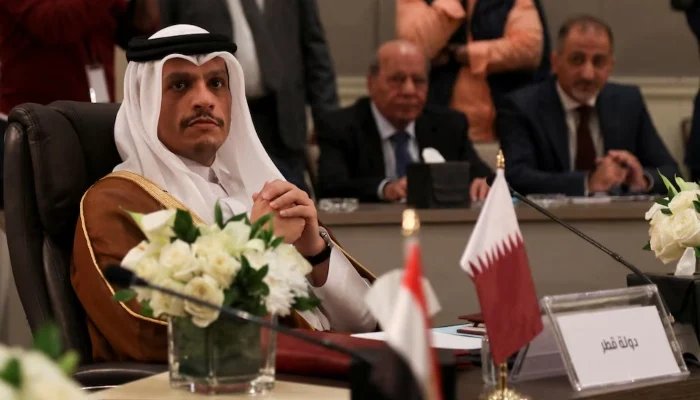
- Qatar aims to explore strategies for reducing regional tensions.
- The visit occurs as Iran’s conflict enters its sixth month.
- Iran states the Strait will remain closed unless certain conditions are met.
CAIRO/DUBAI: Qatar’s prime minister is scheduled to visit Tehran on Thursday in an effort to revive diplomatic talks amid ongoing tensions, as the US and Iran exchange accusations over Washington’s pledge to intensify economic sanctions targeting Iran’s trade partners.
Qatar, a Gulf neighbor of Iran and a close US ally, has acted as a back-channel mediator for the conflicting parties, contributing to the June ceasefire that temporarily halted hostilities.
The visit comes at a time when the conflict has stretched into its sixth month. Although fighting has largely paused, no significant diplomatic breakthroughs have been achieved. The two nations remain divided over control of the Strait of Hormuz—a critical passage for global oil shipments—which Iran has used as leverage.
The memorandum of understanding recently fell apart partly because of disagreements over the narrow strait between Iran and Oman, through which about one-fifth of the world’s oil passed before the conflict erupted on February 28.
While violence has subsided—U.S. Central Command has not reported any attacks on Iran in nearly a month—pressure on Iran appears to be shifting toward economic measures, including efforts to cut off trade with its partners through increased sanctions.
Oil flows through the Strait of Hormuz have dropped to a three-month low, with only 5 million barrels passing through on Monday, according to recent shipping data. Before the conflict, this corridor typically transported around 20 million barrels per day.
A senior Iranian source stated that Iran and Oman have agreed on how to manage the waterway and its revenue, although details are still being finalized. Conversely, Iran’s Revolutionary Guard mentioned that the two countries had reached mutually acceptable results on controlling the strait.
Iran insists the strait will stay closed unless the US meets its conditions—such as lifting sanctions, ending the blockade on Iranian ports, and providing compensation—as outlined in the memorandum signed in June, which later unraveled.
Tehran and Oman have been engaged in intermittent talks about managing traffic in the strait, with each side seeking to control the channel and revenue streams amid ongoing disputes with the US.