الوسم: regional tensions

  • Khamenei Urges Gulf Leaders to Face the True Threat

    Khamenei Urges Gulf Leaders to Face the True Threat

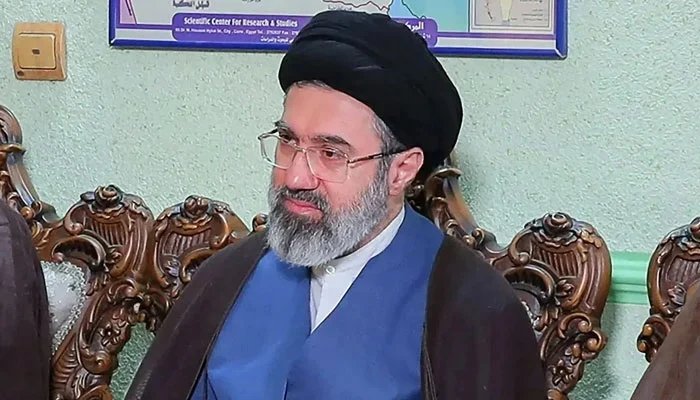
    Iran’s Supreme Leader Mojtaba Khamenei gestures during a meeting. — AFP/File

    • Divisions among Muslims benefit the interests of enemies: Khamenei.
    • Khamenei’s official statement released on Telegram.
    • Iran’s top leader calls on Gulf nations to recognize their true foe.

    Iran’s Supreme Leader Mojtaba Khamenei called on Muslim countries, especially those in the Gulf region, to unite against what he described as their “real enemy.” He emphasized that internal divisions among Muslims only serve the interests of their adversaries.

    The statement was shared on Khamenei’s Telegram channel in observance of Islamic Unity Week, which celebrates the birthday of Prophet Muhammad (PBUH).

    He stressed the importance of Muslim solidarity, collaboration across different fields, and mutual defense, warning that anyone fueling discord, whether intentionally or unintentionally, assists Islam’s foes.

    The message also posed a question: Would Palestinians find themselves so powerless if all Muslims stood united?

    Khamenei has been absent from public view since sustaining injuries in US-Israeli airstrikes six months ago, the same strikes that resulted in the assassination of his father and former supreme leader, Ayatollah Ali Khamenei.

    This call for unity mirrors his recent remarks to Iranians, where he reiterated a ban on actions that threaten social harmony and urged officials to avoid negative statements that could undermine national morale.

    He specifically questioned Gulf Arab leaders, asking whether “rogues without identity” would have dared to threaten their territories if their populations and governments had been “united under the banner of Islam.”

    In the ongoing conflict, Tehran has targeted US military sites and critical infrastructure in Gulf countries, highlighting ongoing tensions between Iran and its Gulf neighbors.

    “My repeated strong advice to leaders of Islamic nations, especially in West Asia and the Gulf, is to understand who your true enemy is, recognize their plans, and take action to counter them,” Khamenei stated.

  • Qatar PM to Visit Tehran to Boost US-Iran Diplomatic Talks

    Qatar PM to Visit Tehran to Boost US-Iran Diplomatic Talks

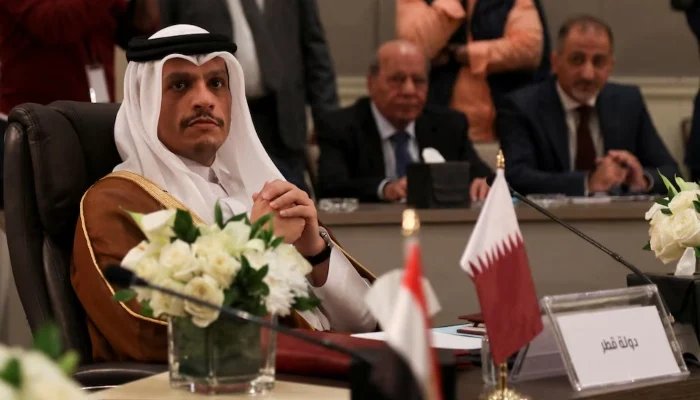
    Qatar’s Prime Minister and Foreign Minister Sheikh Mohammed bin Abdulrahman Al-Thani attends the Arab Ministerial Committee meeting in Amman, Jordan April 21, 2022. — Reuters

    • Qatar aims to explore strategies for reducing regional tensions.
    • The visit occurs as Iran’s conflict enters its sixth month.
    • Iran states the Strait will remain closed unless certain conditions are met.

    CAIRO/DUBAI: Qatar’s prime minister is scheduled to visit Tehran on Thursday in an effort to revive diplomatic talks amid ongoing tensions, as the US and Iran exchange accusations over Washington’s pledge to intensify economic sanctions targeting Iran’s trade partners.

    Qatar, a Gulf neighbor of Iran and a close US ally, has acted as a back-channel mediator for the conflicting parties, contributing to the June ceasefire that temporarily halted hostilities.

    The visit comes at a time when the conflict has stretched into its sixth month. Although fighting has largely paused, no significant diplomatic breakthroughs have been achieved. The two nations remain divided over control of the Strait of Hormuz—a critical passage for global oil shipments—which Iran has used as leverage.

    The memorandum of understanding recently fell apart partly because of disagreements over the narrow strait between Iran and Oman, through which about one-fifth of the world’s oil passed before the conflict erupted on February 28.

    While violence has subsided—U.S. Central Command has not reported any attacks on Iran in nearly a month—pressure on Iran appears to be shifting toward economic measures, including efforts to cut off trade with its partners through increased sanctions.

    Oil flows through the Strait of Hormuz have dropped to a three-month low, with only 5 million barrels passing through on Monday, according to recent shipping data. Before the conflict, this corridor typically transported around 20 million barrels per day.

    A senior Iranian source stated that Iran and Oman have agreed on how to manage the waterway and its revenue, although details are still being finalized. Conversely, Iran’s Revolutionary Guard mentioned that the two countries had reached mutually acceptable results on controlling the strait.

    Iran insists the strait will stay closed unless the US meets its conditions—such as lifting sanctions, ending the blockade on Iranian ports, and providing compensation—as outlined in the memorandum signed in June, which later unraveled.

    Tehran and Oman have been engaged in intermittent talks about managing traffic in the strait, with each side seeking to control the channel and revenue streams amid ongoing disputes with the US.

  • Zelenskiy signs defense deals with UAE and Qatar during Gulf trip

    Zelenskiy signs defense deals with UAE and Qatar during Gulf trip

    Ukraine has agreed to joint defense efforts with the UAE and Qatar as President Volodymyr Zelenskiy visits both nations amidst rising regional tensions. Qatar’s defense department announced Saturday that Doha and Kyiv have formalized a defense cooperation agreement, which includes sharing expertise on missile countermeasures and unmanned aerial vehicles.

    Prior to this, Zelenskiy met with UAE President Sheikh Mohamed bin Zayed Al Nahyan during his visit to the Emirates, with both countries pledging collaboration in security and defense sectors. Zelenskiy indicated that further details will be finalized by their respective teams, and highlighted Ukraine’s extensive experience neutralizing Russian drones and missiles. The country is nearing security deal signings to counter Iranian attacks, according to Ukrainian Foreign Minister Andrii Sybiha, who spoke with Reuters on Friday.

    Meanwhile, Zelenskiy’s travels extended to Saudi Arabia, where he also signed an agreement on defense cooperation. During his visit, he met Crown Prince Mohammed bin Salman. The ongoing US-Israeli conflict with Iran has resulted in over 2,000 casualties, disruptions in global markets, and Iranian retaliatory strikes that have effectively blocked the Strait of Hormuz, targeting Gulf countries with missiles and drones.

  • Saudi Arabia warns Iran against attack, warns of retaliation, sources say

    Saudi Arabia warns Iran against attack, warns of retaliation, sources say

    Smoke rises over the city amid heightened tensions between the U.S., Israel, and Iran in Riyadh, Saudi Arabia, on March 5, 2026. — Reuters

    • Iran was warned about potential retaliation, according to sources.
    • The Saudi foreign minister had a direct conversation with his Iranian counterpart.
    • Iran’s president issued an apology to Gulf states for recent actions.

    Saudi Arabia has informed Tehran that, although it favors diplomacy to resolve the conflict with the United States, ongoing assaults on the kingdom’s territory and energy infrastructure could force Riyadh to respond militarily. The warning was issued prior to a speech on Saturday by Iranian President Masoud Pezeshkian, in which he apologized to neighboring Gulf nations for Tehran’s recent strikes that targeted civilians, seemingly aiming to ease regional outrage.

    Two days earlier, Saudi Foreign Minister Prince Faisal bin Farhan clarified Riyadh’s stance during a call with Iranian Foreign Minister Abbas Araqchi, emphasizing Saudi Arabia’s openness to mediation and negotiations. He also stressed that neither Saudi nor other Gulf states had permitted US forces to use their airspace or land for strikes against Iran.

    However, Prince Faisal reportedly warned that if Iran’s attacks on Saudi territory or energy facilities persisted, Riyadh would be compelled to allow US forces to operate from its bases, and might retaliate against continued assaults on critical infrastructure.

    Sources mentioned that Riyadh has maintained ongoing communication with Tehran through its ambassador since the U.S. and Israeli military actions against Iran began on February 28, following failed negotiations over Iran’s nuclear program. Neither the Saudi nor Iranian foreign ministries responded to requests for comments.

    Drone and missile assaults target Gulf nations

    Over the past week, the UAE, Kuwait, Qatar, Bahrain, and Saudi Arabia have all experienced intense drone and missile attacks originating from Iran. In the wake of escalating conflict, Iran’s Supreme Leader, Ayatollah Ali Khamenei, was reportedly killed on the first day of the conflict. Tehran responded with strikes against Israel and Gulf Arab states hosting U.S. military bases, while Israel targeted Iran-backed Hezbollah forces in Lebanon.

    In an interview Saturday, Iranian Foreign Minister Abbas Araqchi stated he remains in constant contact with his Saudi counterparts and assured Tehran’s commitment to prevent its territory, waters, or airspace from being used for attacks on Iran.

    President Pezeshkian announced that Iran’s temporary leadership had authorized a suspension of strikes against neighboring countries unless those nations attacked Iran first. He personally apologized to affected Gulf nations for Iran’s recent actions, though it remains uncertain whether this signals a permanent shift. Despite this, reports indicate Iran continued strikes on Saturday.

    Adding to internal divisions, the Khatam al-Anbiya Central Headquarters — Iran’s unified military command — declared in a statement that U.S. and Israeli military targets throughout the region would remain high-priority targets. While Iran’s armed forces have so far respected regional sovereignty, they stated that they would direct powerful strikes against U.S. and Israeli assets located on land, at sea, and in the air.

    U.S. President Donald Trump claimed via social media that Iran had “apologized and surrendered” and promised no further aggression — a statement he suggested was driven by relentless U.S. and Israeli pressure.

    Iranian sources confirmed a call had taken place in which Riyadh warned Tehran to stop attacks on Saudi Arabia and neighboring Gulf states. Tehran reiterated that its assaults targeted U.S. interests and military bases, not Gulf nations themselves. Some Iranian officials have demanded that U.S. bases across the region be closed and that Gulf states halt intelligence sharing, which Tehran suspects is used to coordinate attacks. Meanwhile, some military commanders argue that strikes should continue, accusing the U.S. of using regional bases and airspaces to conduct operations against Iran.

    Despite previous efforts to foster regional diplomacy, Iran’s recent missile and drone campaigns—led by the Revolutionary Guards—have shattered those initiatives, leading to increased regional instability.
  • Iranian news anchor tears up during announcement of Supreme Leader’s death

    Iranian news anchor tears up during announcement of Supreme Leader’s death

    An Iranian state TV anchor became overwhelmed with emotion during a live broadcast on Sunday, visibly breaking down as he announced the passing of Supreme Leader Ali Khamenei. The footage captures the anchor sobbing openly in the studio, repeatedly pausing as he tries to read the official statement regarding Khamenei’s death, which followed a series of joint military strikes by the United States and Israel targeting Tehran.

    Earlier, Iranian state media confirmed that Khamenei was killed in the Saturday airstrikes. Serving as Iran’s top authority since 1989, the Supreme Leader held comprehensive control over the country’s political, military, and religious systems, making him a pivotal figure in Iran’s power hierarchy.

    This announcement comes amid sharp increases in regional instability. U.S. President Donald Trump and Israeli Prime Minister Benjamin Netanyahu had declared their intention to eliminate Iran’s missile arsenal as part of the coordinated military operation.

    In retaliation, Iran’s Islamic Revolutionary Guard Corps launched extensive missile and drone assaults on Israeli sites. Reports also indicated attacks on U.S. military installations across the Middle East, including locations in the United Arab Emirates, Bahrain, Qatar, Iraq, and Kuwait.

    Iranian officials warned that Khamenei’s martyrdom could mark a significant turning point. The Revolutionary Guard issued a vow to retaliate, emphasizing that “this great crime will not go unpunished.”

  • Trump Indicates Iran’s Nuclear Talks Deadline

    Trump Indicates Iran’s Nuclear Talks Deadline

    President Donald Trump predicted Friday that Iran will prefer negotiations over military confrontation, even as Tehran insists its missile program is non-negotiable.

    “From what I’ve seen, Iran does want to make a deal,” Trump told reporters in the Oval Office. When asked if he had given Iran a deadline to engage in talks about its nuclear and missile activities, he confirmed “yes,” without specifying the date.

    He mentioned a U.S. naval fleet heading toward Iran, stating, “We have a large armada, a flotilla—however you want to call it—on its way to Iran right now.” He expressed hope for a deal and, if not reached, indicated that “we’ll see what happens.”

    Trump pointed to Iran’s decision to suspend executions of protesters, after a crackdown that rights organizations say resulted in over 6,000 deaths, as evidence that Tehran might be open to negotiations.

    Regional allies are worried that a U.S. strike on Iran could destabilize the area and cause economic turmoil. An unnamed Gulf official briefed on U.S. plans said Washington remains discreet about its intentions, adding, “We hope that whatever happens leads to stability. That outcome depends on Iran doing the right thing, and we hope that’s the case.”

    Meanwhile, Iran’s top security official, Secretary of the Supreme National Security Council Ali Larijani, met with Russian President Vladimir Putin in Moscow. While no details from their discussions have been made public, Russia has offered to mediate between Washington and Tehran.

    Iran’s foreign minister emphasized Friday that missile and defense capabilities are “never” up for negotiation. Larijani further stated on social media that the European Union “knows” that, per Iran’s parliamentary resolution, the military of any country involved in recent EU actions against the Islamic Revolutionary Guard Corps (IRGC) will be regarded as terrorist organizations.

    “The consequences of such measures will fall on European countries that initiated this move,” Larijani warned. Foreign Minister Abbas Araghchi said Iran is “prepared to begin talks if they’re on equal footing,” but added that “Iran’s defensive and missile capabilities will never be negotiated,” and no plans exist to meet with U.S. officials on resuming talks.

    Nobel laureate and former IAEA head Mohamed ElBaradei condemned U.S. escalation threats, comparing them to the lead-up to the 2003 Iraq invasion, which he called “illegal and immoral” and based on falsehoods leading to devastating consequences.

    Reports suggest that U.S. officials believe any agreement would need to include limits on Iran’s long-range missile arsenal, the removal of enriched uranium, and a ban on independent enrichment efforts. An expert from Ankara’s Center for Iranian Studies said linking a nuclear deal to other issues is unlikely, with Iran’s missile program remaining a key red line fundamental to its defense.

    Iran has threatened swift missile retaliation against U.S. bases, ships, and allies, particularly Israel. Ali Shamkhani, head of Iran’s Defense Council, said Iran is prepared for broader, more advanced conflict scenarios.

    In Istanbul, Turkish Foreign Minister Hakan Fidan accused Israel of encouraging the U.S. to attack Iran and urged Washington to prevent such action. Iran has blamed the U.S. and Israel for recent protests that started over economic grievances and escalated into what Iran describes as “riots” fueled by the two countries’ interference.