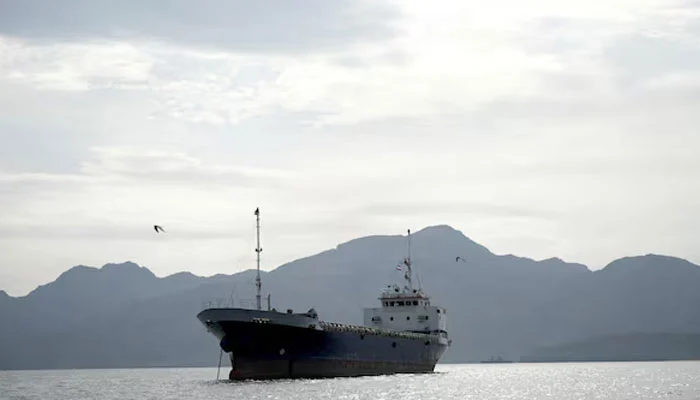
The traffic through the Strait of Hormuz has surged significantly, although it still registers at about half the normal peacetime volume, officials reported Thursday as stranded sailors began to leave the waterway. On Wednesday, a total of 70 confirmed crossings were documented, according to an X post by analytics firm Kpler. This number represents the highest for a single day since Iran closed the Strait on March 1 in response to U.S.-Israeli strikes. Data from Kpler indicated that at least 56 commercial vessels—such as oil and gas tankers and dry bulk carriers like fertilizers—had traversed the strait that day. By midday Thursday, 15 commercial ships had crossed, exceeding the usual average of 10 daily crossings recorded between March 1 and June 14, when Iran and the U.S. agreed to begin discussions aimed at ending hostilities. For the first time since March 1, dry bulk tankers reached 2025-level traffic in the waterway on Wednesday, with 22 crossings noted by maritime tracker AXSMarine.
The uptick in traffic corresponds with the gradual departure of some of the approximately 11,000 seafarers stranded in the Gulf due to ongoing conflict. A United Nations-led evacuation plan launched Tuesday evening is facilitating their exit. Maersk announced that two of its ships cleared the Gulf on Wednesday evening and Thursday morning, although three others remain stuck. Since June 15, shipping activity has been gradually increasing through the strait, a crucial conduit for roughly 20% of the world’s oil and natural gas exports. Vessels are now taking multiple different routes exiting the Gulf, leading to confusion and indicating that traffic has not yet reverted to pre-war conditions, when ships commonly moved through a toll-free central corridor.
Experts note that Iran continues to strictly control northern routes, issuing selective permits and phased agreements. Tehran issued a warning Thursday against unauthorized crossings of the Strait, stating vessels lacking proper authorization “will be dealt with.” Additionally, ships relying on the southern Omani corridor under U.S. Navy surveillance should not mistake this situation for normalcy. European mine-clearing vessels are now en route to the region to remove mines threatening safe passage in the strait’s main route, as announced by Britain’s navy on Tuesday. Furthermore, a cargo ship in the strait was struck by an unidentified projectile on Thursday, according to the UK Maritime Trade Operations (UKMTO), with no casualties reported.