الوسم: maritime security

  • Iran Calls for Control over Hormuz Inbound and Outbound Traffic

    Iran Calls for Control over Hormuz Inbound and Outbound Traffic

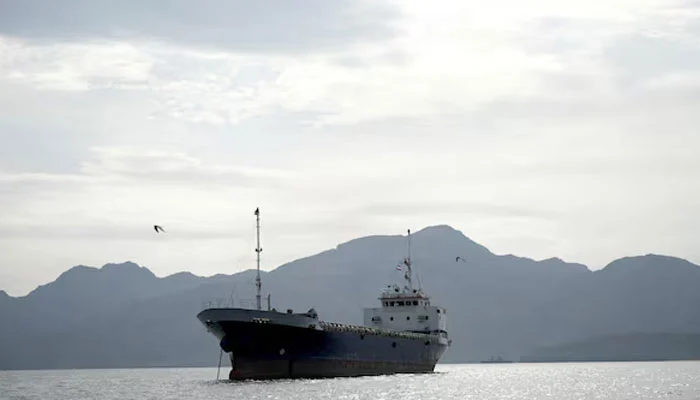
    People gather on a beach as a vessel navigates through the Strait of Hormuz, near Bandar Abbas, Iran, on May 31, 2026. — Reuters

    – Tehran is unlikely to shift its stance on the Hormuz dispute, according to a source.
    – Iranian President emphasizes that Tehran does not aim for a broader conflict.
    – The Strait of Hormuz remains a primary point of contention between the U.S. and Iran.

    Iran is seeking to oversee inbound maritime traffic through the Strait of Hormuz and monitor outbound shipments, with plans to intervene if necessary. These discussions involve Oman, aiming to reopen the strategic waterway. A senior Iranian official told Reuters that the current proposal involves Iran managing inbound ships, while outbound vessels would travel through a route between Iran and Oman, with exit clearances granted by Oman after notifying Iran.

    Tehran appears steadfast in its position, the source added. In late July, Iranian Deputy Foreign Minister Kazem Gharibabadi rejected Omani suggestions for an equal division of transit rights, asserting that such proposals fail to address Iran’s security concerns until regional stability is achieved.

    Control over the Strait of Hormuz, a narrow waterway bridging the Gulf and the Indian Ocean, is crucial since it handles about a fifth of global oil shipments and other vital goods. The dispute over maritime jurisdiction has been a significant obstacle in resolving the ongoing US-Israel efforts to pressure Iran, with the strait largely blockade since the conflict intensified in late February.

    The status of negotiations between the U.S. and Iran remains uncertain. An attack on a vessel near the Strait of Hormuz and rising oil prices have cast doubt on prospects for a quick resolution. Oil prices climbed nearly 3% after a significant decline the previous day, as market participants reassessed diplomatic hopes. A cargo ship was struck by an unknown projectile near Oman’s coast, reported the UK Maritime Trade Organization.

    While President Donald Trump claimed that talks with Tehran were ongoing and described it as Iran’s “last chance” to reach an agreement, Iranian officials denied any negotiations were happening. Trump’s recent decision to cancel planned military strikes on Iran, which he suggested were ‘massive attacks,’ reflects a pattern of threatening military action and then stepping back to pursue diplomatic efforts.

    Iranian President Masoud Pezeshkian stated that Iran has no desire to escalate the conflict, emphasizing, “We defend our borders, but we are not seeking to expand the war.” Meanwhile, Iran has suspended most traffic through Hormuz, while the U.S. maintains sanctions and a maritime blockade.

    Sources indicated that the vessel hit near Hormuz was a dry bulk cargo ship. Its crew abandoned the vessel, and one crew member remains missing.

    Since the launch of “Operation Epic Fury” over five months ago, the U.S. has repeatedly threatened military action, only to later cite negotiations as the reason to scale back. Iran, on the other hand, has refused to engage in negotiations following the breakdown of a proposed agreement in early July, which was initially signed to de-escalate tensions.

    The core dispute over the Strait of Hormuz persists. While Washington insists the June memorandum mandated Iran reopen the waterway, Tehran maintains that the agreement explicitly preserves its authority over shipping traffic in the region.
  • Iran vows回应乌克兰在里海袭击其船只

    Iran vows回应乌克兰在里海袭击其船只

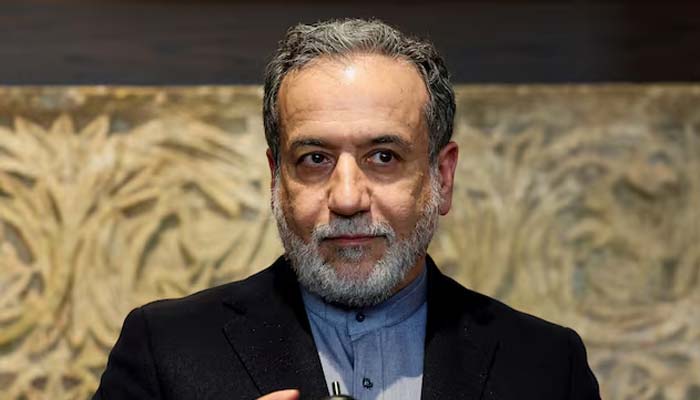
    Iranian Foreign Minister Abbas Araqchi observed as he addressed the press in Beirut, Lebanon, on October 4, 2024. — Reuters

    – Araghchi announces that the attack on a Ukrainian vessel has resulted in the death of an Iranian sailor.
    – Iran states that the assault on the ship violates the UN Charter.
    – Iran has summoned Ukraine’s chargé d’affaires in response to the vessel attack.

    TEHRAN — Iran’s Foreign Minister Abbas Araqchi issued a warning Sunday that his country will respond to a fatal Ukrainian assault on an Iranian ship in the Caspian Sea.

    Following Ukraine’s claims that Kyiv conducted long-range strikes in the Caspian Sea targeting vessels carrying military cargo connected to Iran—highlighting the expanding international scope of Russia’s conflict in Ukraine—Araghchi criticized the attack.

    “Zelensky has attacked an Iranian commercial vessel, killing one sailor,” he posted on X, calling it “a gross violation of the UN Charter, carried out at Israel’s behest to drag Europe into its war.”

    He added that, in conversations with the European Union’s Kaja Kallas and Russia’s top diplomat Sergei Lavrov, he had made it clear that what Kyiv did “cannot go unanswered.”

    The Iranian foreign ministry reported that the attack caused the vessel to explode, resulting in the death of one sailor and injuries to several others.

    The ministry also asserted that Iran has “never intervened” in the Russia-Ukraine conflict.

    On Saturday, President Zelensky announced on social media that Ukraine’s armed forces had achieved “significant results with long-range strikes in the Caspian Sea — including targeting vessels used for military cargo shipments involving Iran, as well as a warship.”

    Ukrainian intelligence claimed, via Telegram, that drone attacks targeted “cargo ships under international sanctions used to transport military supplies between Iran and Russia.”

    Iranian state television reported that the foreign ministry summoned the Ukrainian chargé d’affaires in Tehran on Saturday to protest what it described as a “hostile and criminal act.”

  • Iran Launches Missiles at Commercial Ships in Strait of Hormuz

    Iran Launches Missiles at Commercial Ships in Strait of Hormuz

    Iran’s Revolutionary Guards launched at least two missiles targeting commercial ships passing through the Strait of Hormuz on Monday night, according to Axios, citing two U.S. officials. The attack caused significant damage to two ships, but no injuries were reported.

    Meanwhile, Britain’s maritime security authorities announced that a tanker caught fire after being hit by an unidentified projectile east of Oman’s Limah early Tuesday morning. The UK Maritime Trade Operations (UKMTO) reported the vessel was struck on its port side while traveling south about eight nautical miles east of Limah, igniting a fire, with no casualties or environmental damage reported.

    The Axios report couldn’t be independently verified by Reuters, nor could it be confirmed whether the ships mentioned include the tanker referenced in the UKMTO statement. U.S. Central Command has yet to comment on the situation.

    These incidents highlight the increasing dangers to shipping lanes near the Strait of Hormuz, a strategic narrow waterway that serves as a critical conduit for roughly 20% of the world’s oil. Despite ongoing efforts to ensure safe passage under a temporary agreement, attacks on commercial vessels have persisted amid the broader conflict that erupted following U.S. and Israeli strikes on Iran.

    Last week, indirect negotiations between the U.S. and Iran concluded without apparent progress toward lasting peace, even as a 60-day ceasefire remains in effect to facilitate diplomacy after the recent escalation in hostilities. President Donald Trump expressed a hardened stance Monday, stating that the U.S. will either secure a deal with Iran or “finish the job,” reiterating threats of military action as Iran demonstrates defiance after the funeral of former Supreme Leader Ayatollah Khamenei.

    Over the weekend, Iran’s Revolutionary Guards issued warnings via maritime radio, stating, “Our missiles and drones are ready to fire at you,” according to a recording obtained by the Wall Street Journal. One target appeared to be the Al Rekayyat LNG tanker, owned by Qatar Gas Transport Company (Nakilat), which was struck on its port side near the engine room, causing a fire and smoke. All crew members are safe and accounted for. The vessel was operating in the Gulf of Oman at the time.

    Requests for comment sent outside regular business hours to Nakilat, QatarEnergy, and Qatar’s International Media Office have not yet been answered. As tensions remain high, executives and governments continue to monitor developments in Gulf oil exports and shipping safety around the vital Strait of Hormuz.

  • Hormuz Traffic Rises Sharply but Still Below Normal

    Hormuz Traffic Rises Sharply but Still Below Normal

    The traffic through the Strait of Hormuz has surged significantly, although it still registers at about half the normal peacetime volume, officials reported Thursday as stranded sailors began to leave the waterway. On Wednesday, a total of 70 confirmed crossings were documented, according to an X post by analytics firm Kpler. This number represents the highest for a single day since Iran closed the Strait on March 1 in response to U.S.-Israeli strikes. Data from Kpler indicated that at least 56 commercial vessels—such as oil and gas tankers and dry bulk carriers like fertilizers—had traversed the strait that day. By midday Thursday, 15 commercial ships had crossed, exceeding the usual average of 10 daily crossings recorded between March 1 and June 14, when Iran and the U.S. agreed to begin discussions aimed at ending hostilities. For the first time since March 1, dry bulk tankers reached 2025-level traffic in the waterway on Wednesday, with 22 crossings noted by maritime tracker AXSMarine.

    The uptick in traffic corresponds with the gradual departure of some of the approximately 11,000 seafarers stranded in the Gulf due to ongoing conflict. A United Nations-led evacuation plan launched Tuesday evening is facilitating their exit. Maersk announced that two of its ships cleared the Gulf on Wednesday evening and Thursday morning, although three others remain stuck. Since June 15, shipping activity has been gradually increasing through the strait, a crucial conduit for roughly 20% of the world’s oil and natural gas exports. Vessels are now taking multiple different routes exiting the Gulf, leading to confusion and indicating that traffic has not yet reverted to pre-war conditions, when ships commonly moved through a toll-free central corridor.

    Experts note that Iran continues to strictly control northern routes, issuing selective permits and phased agreements. Tehran issued a warning Thursday against unauthorized crossings of the Strait, stating vessels lacking proper authorization “will be dealt with.” Additionally, ships relying on the southern Omani corridor under U.S. Navy surveillance should not mistake this situation for normalcy. European mine-clearing vessels are now en route to the region to remove mines threatening safe passage in the strait’s main route, as announced by Britain’s navy on Tuesday. Furthermore, a cargo ship in the strait was struck by an unidentified projectile on Thursday, according to the UK Maritime Trade Operations (UKMTO), with no casualties reported.

  • India Allows Iran Warship Docking as US Sinks Another Near Sri Lanka

    India Allows Iran Warship Docking as US Sinks Another Near Sri Lanka

    India has granted permission for an Iranian warship to dock at its port as a humanitarian gesture, according to Foreign Minister Subrahmanyam Jaishankar on Saturday. This move comes in the aftermath of the U.S. sinking another Iranian navy vessel near Sri Lanka.

    The Iranian ship IRIS Lavan arrived at Kochi, a southern port in India, on Wednesday—the same day a U.S. submarine attacked the Iranian frigate Dena. Indian sources told Reuters that this was in response to an urgent request from Tehran.

    U.S. President Donald Trump has stated that one objective of the recent conflict with Iran, which Israel also joined, is to dismantle the Iranian navy. The Lavan, described as an amphibious landing vessel by the U.S. Naval Institute’s online platform, along with two other ships, was en route for a fleet review when they were unexpectedly caught in the midst of ongoing events, according to Jaishankar during the Raisina Dialogue.

    He emphasized that India’s decision was driven by humanitarian considerations rather than legal issues, asserting, “I believe we did the right thing.” The U.S. attack resulted in at least 87 fatalities, with the incident occurring 19 nautical miles off Sri Lanka’s coast, outside its maritime boundaries.

    India received the request to allow the Lavan to dock on February 28, coinciding with the start of Iran’s military operation. The request was classified as urgent due to technical issues suffered by the vessel. The ship’s 183 crew members have been accommodated at naval facilities in Kochi, according to an anonymous government source.

    The Dena was reportedly returning from a naval exercise organized by India, according to the exercise’s official webpage and Sri Lankan officials. Recently, Sri Lankan authorities revealed they are escorting the Iranian ship Booshehr to the eastern coast and relocating most of its crew to a navy camp near Colombo.

  • India Seizes 3 Iranian Oil Tankers for Smuggling: Report

    India Seizes 3 Iranian Oil Tankers for Smuggling: Report

    The Indian Coast Guard has reportedly confiscated three Iranian oil tankers in the Arabian Sea during a coordinated effort against an international oil smuggling ring, according to Iranian media reports.

    This event occurred a few weeks after Prime Minister Narendra Modi’s government rescinded its agreement with Iran regarding the Chabahar port. India was compelled to withdraw from participating in the port project after the United States imposed a 25% tariff on countries engaging with Tehran, as reported by The Economic Times last week.

    On social media platform X, the Indian Coast Guard stated that it intercepted the vessels approximately 100 nautical miles west of Mumbai on Friday, utilizing advanced surveillance and data analysis techniques. They refrained from specifically naming Iran but indicated that the vessels were linked to Iran based on tracking and Iranian media reports.

    The coast guard explained that the syndicate took advantage of mid-sea transfers in international waters to shift inexpensive oil from conflict zones to motor tankers, thereby bypassing duties owed to coastal nations.

    Tanker-tracking company TankerTrackers identified the ships as AL JAFZIA, ASPHALT STAR, and STELLAR RUBY. All three ships are under U.S. sanctions, with STELLAR RUBY flying under the Iranian flag. Iranian media separately reported that the tankers were connected to Iran and were detained on charges of oil smuggling.

    The Indian Coast Guard added that these ships are known for frequently altering their identities. They emphasized that the operation illustrates India’s role as a major maritime security provider and defender of the rules-based international order.

    Neither Indian authorities nor Iranian officials have publicly commented on the claims linking these vessels to Iran.

  • Iran Guards Confirm Seizure of Oil Tanker in the Gulf

    Iran Guards Confirm Seizure of Oil Tanker in the Gulf

    Iran’s Revolutionary Guards announced on Saturday that they have detained an oil tanker in the Persian Gulf near their coast, just one day after security firms indicated they might be responsible.

    The IRGC released a statement stating, “Yesterday at 7:30 AM, following a judicial order to confiscate the cargo of an oil tanker named Talara, flying the Marshall Islands flag, the IRGC naval rapid response units monitored, intercepted, and seized it.” They added that the vessel was found to be in violation of legal regulations by transporting unauthorized cargo—specifically, 30,000 tons of petrochemical materials en route to Singapore.

    The ship had left Ajman in the United Arab Emirates and was heading south through the Strait of Hormuz when it was approached by three small vessels. The ship then made a sudden change in course, according to maritime security company Ambrey.

    The U.S. Navy confirmed it was “closely observing the situation.” The U.S. 5th Fleet stressed that commercial ships generally have the right to navigate freely and conduct commerce on international waters.

    The Strait of Hormuz, a crucial passage for global oil and liquefied natural gas shipments, has been the site of similar incidents in the past. Last year, Iran’s Revolutionary Guards seized a container ship believed to be linked to Israel, following a deadly attack on Iran’s consulate in Syria that Israel was accused of orchestrating.