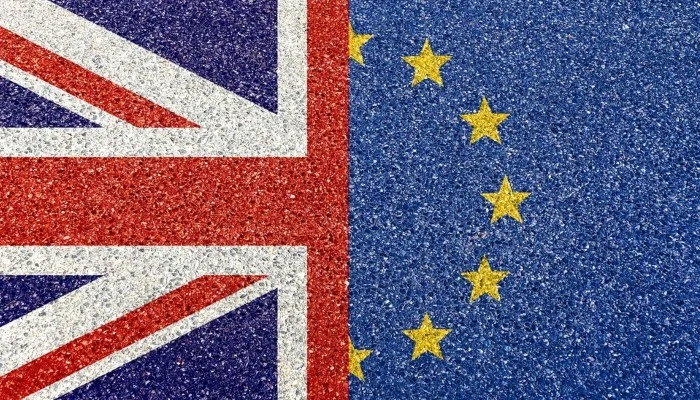
A decade after the Brexit referendum, the UK is showing signs of “divorce regret,” with surveys indicating most Britons now think leaving the European Union was a mistake. Various colorful terms have emerged to describe the idea of a potential reunion—ranging from “Brejoin” to “Breturn” or perhaps “Bre-entry”—sparking both whimsical ideas and serious political debates about whether London should pursue such a path.
The situation intensifies as the Labour Party prepares to challenge Prime Minister Keir Starmer, with potential contender Andy Burnham expressing a desire to see the UK back in the EU someday. But what about the EU—the jilted partner? Would Brussels be willing to welcome Britain back?
AFP spoke with six European diplomats, who requested anonymity. All suggested that their countries would generally be prepared—in principle—to re-establish the relationship. One diplomat argued that Europe has much to gain by re-admitting a nuclear power with one of the world’s largest economies and a permanent seat on the UN Security Council.
However, they also emphasized that London would need to demonstrate its commitment to the union and its responsibilities. “They are not yet willing to accept the full burdens of membership,” remarked another diplomat. Some went further, noting that the EU has managed to achieve more without a difficult ex—who frequently sought special treatment.
“Things seem simpler now,” said a diplomat. “We’re not constantly adjusting around opt-outs on every issue. There’s greater cohesion.”
Britain, which never adopted the euro or joined the Schengen Area, also negotiated a rebate on its EU budget contributions—often seen as signs of half-hearted European integration. One diplomat jokingly suggested that Brits are missed mainly for their command of English, as EU documents are often filled with awkward euro-speak. Others reflect more fondly: Sebastien Maillard from Chatham House noted that countries leaning toward economic liberalism or Atlanticism in geopolitics miss Britain as a balancing counterweight to France’s sovereigntist tendencies.
Recently, the EU has embraced policies such as “strategic autonomy,” “European preference,” and joint borrowing—shifts championed by Paris that might have been difficult to sell to London in the past. Maillard pointed out that the UK hasn’t fully grasped how much the EU has evolved over the last ten years.
These changes are largely driven by external factors—such as the pandemic, Russia’s invasion of Ukraine, the rise of China, and the presidency of Donald Trump—yet Brexit itself has sharpened the bloc’s focus. One diplomat observed that Brexit has led to a more mature debate within the EU, with right-wing populists across Europe now less likely to call for their countries to leave the union.
The question remains: does the EU want Britain back as it currently stands? Given the political climate in the UK, with strong anti-EU sentiments and parties like Reform UK gaining ground, European nations are cautious about tightening ties only to potentially have to undo them later. Furthermore, most agree that re-entry on the previous special terms would be nearly impossible.
Negotiations to soften the blow of Brexit continue to prove difficult, with persistent complaints about British “cherry-picking”—a recurring motif of the Brexit era. For instance, talks for UK access to certain EU defense programs fell apart over costs, and the suggestion for Britain to join the single market while excluding free movement of capital, services, and people was rejected by Brussels, which insists on an all-or-nothing approach.
Nevertheless, some progress has been made. London and Brussels are aiming to present several agreements at the July 22 summit—covering food and animal safety standards, youth mobility schemes, and linking emissions trading systems. These are modest steps, possibly necessary given the current realities—an incremental approach for those holding onto hopes of a romantic “Bre-union.”