الوسم: United Kingdom

  • Could the EU Re-Admit Britain? Exploring Possibilities

    Could the EU Re-Admit Britain? Exploring Possibilities

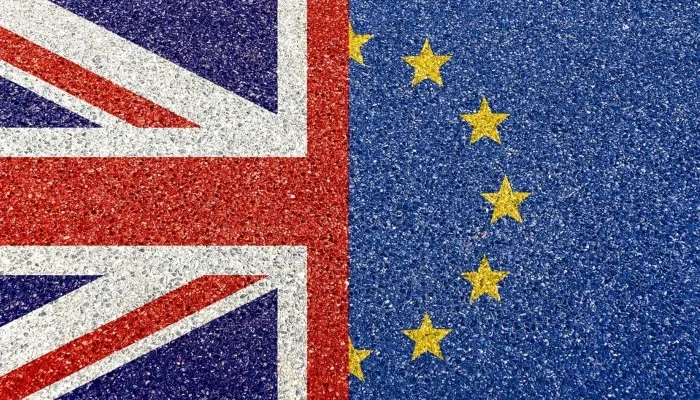
    A decade after the Brexit referendum, the UK is showing signs of “divorce regret,” with surveys indicating most Britons now think leaving the European Union was a mistake. Various colorful terms have emerged to describe the idea of a potential reunion—ranging from “Brejoin” to “Breturn” or perhaps “Bre-entry”—sparking both whimsical ideas and serious political debates about whether London should pursue such a path.

    The situation intensifies as the Labour Party prepares to challenge Prime Minister Keir Starmer, with potential contender Andy Burnham expressing a desire to see the UK back in the EU someday. But what about the EU—the jilted partner? Would Brussels be willing to welcome Britain back?

    AFP spoke with six European diplomats, who requested anonymity. All suggested that their countries would generally be prepared—in principle—to re-establish the relationship. One diplomat argued that Europe has much to gain by re-admitting a nuclear power with one of the world’s largest economies and a permanent seat on the UN Security Council.

    However, they also emphasized that London would need to demonstrate its commitment to the union and its responsibilities. “They are not yet willing to accept the full burdens of membership,” remarked another diplomat. Some went further, noting that the EU has managed to achieve more without a difficult ex—who frequently sought special treatment.

    “Things seem simpler now,” said a diplomat. “We’re not constantly adjusting around opt-outs on every issue. There’s greater cohesion.”

    Britain, which never adopted the euro or joined the Schengen Area, also negotiated a rebate on its EU budget contributions—often seen as signs of half-hearted European integration. One diplomat jokingly suggested that Brits are missed mainly for their command of English, as EU documents are often filled with awkward euro-speak. Others reflect more fondly: Sebastien Maillard from Chatham House noted that countries leaning toward economic liberalism or Atlanticism in geopolitics miss Britain as a balancing counterweight to France’s sovereigntist tendencies.

    Recently, the EU has embraced policies such as “strategic autonomy,” “European preference,” and joint borrowing—shifts championed by Paris that might have been difficult to sell to London in the past. Maillard pointed out that the UK hasn’t fully grasped how much the EU has evolved over the last ten years.

    These changes are largely driven by external factors—such as the pandemic, Russia’s invasion of Ukraine, the rise of China, and the presidency of Donald Trump—yet Brexit itself has sharpened the bloc’s focus. One diplomat observed that Brexit has led to a more mature debate within the EU, with right-wing populists across Europe now less likely to call for their countries to leave the union.

    The question remains: does the EU want Britain back as it currently stands? Given the political climate in the UK, with strong anti-EU sentiments and parties like Reform UK gaining ground, European nations are cautious about tightening ties only to potentially have to undo them later. Furthermore, most agree that re-entry on the previous special terms would be nearly impossible.

    Negotiations to soften the blow of Brexit continue to prove difficult, with persistent complaints about British “cherry-picking”—a recurring motif of the Brexit era. For instance, talks for UK access to certain EU defense programs fell apart over costs, and the suggestion for Britain to join the single market while excluding free movement of capital, services, and people was rejected by Brussels, which insists on an all-or-nothing approach.

    Nevertheless, some progress has been made. London and Brussels are aiming to present several agreements at the July 22 summit—covering food and animal safety standards, youth mobility schemes, and linking emissions trading systems. These are modest steps, possibly necessary given the current realities—an incremental approach for those holding onto hopes of a romantic “Bre-union.”

  • UK halts Chagos Islands surrender plan amid US resistance

    UK halts Chagos Islands surrender plan amid US resistance

    The UK government announced on Saturday that it has paused its plan to transfer sovereignty of the Chagos Islands—home to the US-UK Diego Garcia military base—which has been heavily criticized by former President Donald Trump. The upcoming legislation intended to transfer control of the islands to Mauritius, a move requiring approval from the U.S., will not be on the next parliamentary agenda, according to The Times.

    Prime Minister Keir Starmer’s office stated that London plans to continue negotiations to secure Washington’s formal approval. Trump previously labeled the deal a “big mistake” in February, after calling it the best possible outcome for Starmer. Under this agreement, Britain would hold control of Diego Garcia’s strategic military base through a 99-year lease, ensuring U.S. military operations can continue uninterrupted.

    A UK spokesperson emphasized that maintaining the base’s operational security remains a key priority. “We believe this agreement is the best way to safeguard the base’s long-term future, but we will only proceed if the U.S. supports it. We are actively engaging with both the U.S. and Mauritius,” they stated.

    Historically, Britain forcibly displaced approximately 2,000 indigenous Chagossians during the late ‘60s and early ‘70s to establish the military presence on Diego Garcia. Toby Noskwith, spokesperson for Indigenous Chagossian People—a campaign group—said that early on, high-level officials in the Trump administration, possibly even Trump himself, expressed reservations about the deal.

    “We’re surprised it has come to this point,” Noskwith remarked. “This issue has primarily been viewed as a diplomatic matter between states, but in the process, the Chagossians—especially elders and survivors—have been absent from discussions.” He called for questions to be asked about the significant money spent on negotiations that eventually collapsed, as well as the legality of a plan that denied the Chagossians their right to self-determination. Noskwith also urged Starmer to help ensure a respectful and dignified resettlement for the island’s original inhabitants.

    Recently, the close alliance between Washington and London has been strained, especially as Starmer has been hesitant to involve himself in the U.S.-Israeli conflict with Iran and initially refused to allow the use of British bases for attacks at the conflict’s outset. Although U.S. forces have since been permitted to conduct defensive strikes, Trump has repeatedly criticized Starmer, saying he falls short of Winston Churchill and has damaged the so-called “special relationship” between Britain and the U.S.

  • UK Braces for Scorching Summer Kickoff Today!

    UK Braces for Scorching Summer Kickoff Today!

    The sun rises over the London skyline, signaling a second heatwave for parts of the country, in London, UK, August 11, 2022. — Reuters

    South-east England is expected to experience peak temperatures of 29 degrees Celsius on May 1 (Thursday), marking what could be the hottest start to May in UK history.

    This temperature could surpass the previous record of 27.4°C set in Lossiemouth on May 1, 1990, as reported by BBC.

    This time of year, temperatures are projected to be between 7°C to 11°C above average across the region.

    While the heat will peak on Thursday, a gradual cooling is expected over the bank holiday weekend, with temperatures returning to normal by Monday.

    Wednesday saw temperatures generally hovering in the low to mid-20s across the UK, leading to exceptionally warm weather.

    South-east England recorded its warmest April in seven years, with Wisley in Surrey reaching 26.7°C (80.1°F).

    Scotland also recorded its highest April temperature since 2019 at Aboyne, reaching 24.4°C (75.9°F).

    Wednesday was the second-hottest April day ever recorded in Wales, after a national record of 26.2°C was set in Gogerddan (Ceredigion) in 2003.

    Castlederg in Northern Ireland also claimed its second-hottest April day, hitting 24.1°C, surpassing the previous record of 24.5°C set in 1984.

    Although Scotland’s far north remained moderately cool, UV levels across most of the UK were notably high.

    The forecast for Thursday predicts significantly warmer weather in England and Wales, with highs in the mid to upper 20s, potentially reaching up to 29 degrees Celsius.

    If this occurs, it would exceed the record for the warmest start to May by several degrees.

    In contrast, Scotland and Northern Ireland will see cooler temperatures, falling between 13°C and 17°C, which is typical for early May, accompanied by some clouds and showers.

    Parts of Wales, the Midlands, and eastern England may experience heavy, thundery showers on Thursday due to increased humidity.

    A significant high-pressure system has settled over the UK for the past week, effectively blocking typical rain-bearing low-pressure fronts that would usually arrive from the mid-Atlantic.

  • UK Bans Bad Default Passwords

    UK Bans Bad Default Passwords

    In Short

    • Weak passwords are now banned in the United Kingdom.
    • This law is a response to past cyber attacks.
    • It sets a standard for cybersecurity in IoT devices.

    The use of weak passwords has been banned by the United Kingdom. It is a measure to work on cyber security to remove guessable passwords on Internet of Things (IoT) devices.

    This action is a part of PSTI (Product security & Telecommunications Infrastructure). It is also a part of product security. These acts aim to enhance consumer product security. 

    This law states that consumer internet-connected products must be secure. They all must have a unique password. The password should not be guessable. The manufacturers can also let users create their passwords.

    This law is a response to past cyber attacks. For example, the Mirai botnet attack in 2016 used default passwords to cause big problems. The UK wants to stop such threats. They want to make their national cybersecurity stronger.

    The PSTI Act also says manufacturers must tell people about their products’ security. They must say how long the devices will get security updates. They must also tell users how to report security problems. This helps people know more about what they buy.

    To cross-verify if the company follows these rules the OPSS (Office for Product Safety and Standards) will come into action.

    High fine values have been stated for the companies not following the rules. The fine can cross £10 million. It can also be as huge as 4% of the company’s turnover. The bigger amount is the one they’ll have to pay.

    This new law is a big deal. It sets a standard for cybersecurity in IoT devices. It also shows that the UK is leading in this area. Other places like the European Union and the United States are thinking about doing the same. But they haven’t done as much as the UK yet.

  • Apple Vision Pro Used In Spinal Surgery In The UK

    Apple Vision Pro Used In Spinal Surgery In The UK

    Apple’s Vision Pro headset is all set to transform spinal surgeries with Mixed-Reality Technologies.

    Apple’s Vision Pro headset is making waves in the medical field, particularly at Cromwell Hospital in London, where it has been used to assist in spinal surgery procedures.

    The mixed-reality technology allows a scrub nurse to view virtual screens displaying crucial information during surgery, improving organization and efficiency. The software for this technology was developed by eXeX, enhancing the surgical team’s ability to provide care.

    doctor wearing an Apple Vision Pro during surgery
    eXeX

    The headset is just one example of the healthcare applications developed for the Vision Pro since its release. It’s being used for everything from robotic-assisted surgeries to surgical training and mental health support. Moreover, it is also being used for patient education, medical training, telemedicine, and diagnostic sessions.

    It is important to state that virtual reality (VR) and Augmented reality (AR) have been used with systems like Augmedics’ vision spine system before as well particularly for spine surgery.

    Though more studies and development are required, however, all these technologies aim to revolutionize spine surgery.

    apple vision pro in surgeon 134258676 16x9 0
    eXeX

    Described as a “spatial computer,” the Vision Pro represents a significant advancement in spatial computing, blending digital content with the physical world. It uses eye and hand tracking for navigation and interaction, powered by visionOS.

    Apple’s foray into healthcare with the Vision Pro aligns with its other health-focused initiatives, such as the health-tracking features of the Apple Watch and iPhone health applications.

    The use of Vision Pro in surgery could reduce human error and increase the confidence and efficiency of surgical teams, marking a significant step forward in healthcare technology.