Tag: EU

  • Could the EU Re-Admit Britain? Exploring Possibilities

    Could the EU Re-Admit Britain? Exploring Possibilities

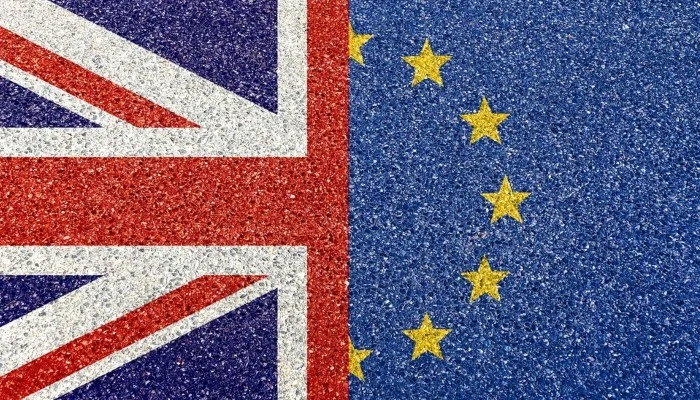
    A decade after the Brexit referendum, the UK is showing signs of “divorce regret,” with surveys indicating most Britons now think leaving the European Union was a mistake. Various colorful terms have emerged to describe the idea of a potential reunion—ranging from “Brejoin” to “Breturn” or perhaps “Bre-entry”—sparking both whimsical ideas and serious political debates about whether London should pursue such a path.

    The situation intensifies as the Labour Party prepares to challenge Prime Minister Keir Starmer, with potential contender Andy Burnham expressing a desire to see the UK back in the EU someday. But what about the EU—the jilted partner? Would Brussels be willing to welcome Britain back?

    AFP spoke with six European diplomats, who requested anonymity. All suggested that their countries would generally be prepared—in principle—to re-establish the relationship. One diplomat argued that Europe has much to gain by re-admitting a nuclear power with one of the world’s largest economies and a permanent seat on the UN Security Council.

    However, they also emphasized that London would need to demonstrate its commitment to the union and its responsibilities. “They are not yet willing to accept the full burdens of membership,” remarked another diplomat. Some went further, noting that the EU has managed to achieve more without a difficult ex—who frequently sought special treatment.

    “Things seem simpler now,” said a diplomat. “We’re not constantly adjusting around opt-outs on every issue. There’s greater cohesion.”

    Britain, which never adopted the euro or joined the Schengen Area, also negotiated a rebate on its EU budget contributions—often seen as signs of half-hearted European integration. One diplomat jokingly suggested that Brits are missed mainly for their command of English, as EU documents are often filled with awkward euro-speak. Others reflect more fondly: Sebastien Maillard from Chatham House noted that countries leaning toward economic liberalism or Atlanticism in geopolitics miss Britain as a balancing counterweight to France’s sovereigntist tendencies.

    Recently, the EU has embraced policies such as “strategic autonomy,” “European preference,” and joint borrowing—shifts championed by Paris that might have been difficult to sell to London in the past. Maillard pointed out that the UK hasn’t fully grasped how much the EU has evolved over the last ten years.

    These changes are largely driven by external factors—such as the pandemic, Russia’s invasion of Ukraine, the rise of China, and the presidency of Donald Trump—yet Brexit itself has sharpened the bloc’s focus. One diplomat observed that Brexit has led to a more mature debate within the EU, with right-wing populists across Europe now less likely to call for their countries to leave the union.

    The question remains: does the EU want Britain back as it currently stands? Given the political climate in the UK, with strong anti-EU sentiments and parties like Reform UK gaining ground, European nations are cautious about tightening ties only to potentially have to undo them later. Furthermore, most agree that re-entry on the previous special terms would be nearly impossible.

    Negotiations to soften the blow of Brexit continue to prove difficult, with persistent complaints about British “cherry-picking”—a recurring motif of the Brexit era. For instance, talks for UK access to certain EU defense programs fell apart over costs, and the suggestion for Britain to join the single market while excluding free movement of capital, services, and people was rejected by Brussels, which insists on an all-or-nothing approach.

    Nevertheless, some progress has been made. London and Brussels are aiming to present several agreements at the July 22 summit—covering food and animal safety standards, youth mobility schemes, and linking emissions trading systems. These are modest steps, possibly necessary given the current realities—an incremental approach for those holding onto hopes of a romantic “Bre-union.”

  • Switzerland Considers Population Cap of 10 Million Votes Pending

    Switzerland Considers Population Cap of 10 Million Votes Pending

    Switzerland held a referendum on Sunday to decide whether to implement a proposal that would cap the country’s population, a move compared to Britain’s Brexit vote, with potential significant impacts on its economy and its relationship with the European Union.

    The initiative, driven by worries over immigration, strain on public services, and housing shortages, was proposed by the right-wing Swiss People’s Party (SVP). It aims to limit the population to no more than 10 million by 2050, with official forecasts indicating this threshold could be reached as early as the early 2040s.

    This radical approach to legislating population limits aligns with a growing trend among Europe’s political right to tighten immigration controls, motivated by frustrations over rising costs of living, sluggish economic growth, and security concerns.

    Helen Gulea, a 58-year-old seamstress and part-time kiosk worker in Zurich, originally from Kenya, expressed her support for the cap. She said, “If the population exceeds 10 million, it will get tight, and immigration should be restricted.” Voting results were expected to start emerging around noon.

    If the proposal passes, reaching the 10 million mark would trigger steps that could lead Switzerland to revoke its free movement agreement with the EU, which provides the framework for much of the country’s labor force. Switzerland’s aging population has already surpassed 9 million, and public opinion appears to be closely divided. Recent polls indicated a shift against the measure, while earlier surveys suggested it could pass.

    Patrick Leisibach, an immigration specialist at the think tank Avenir Suisse, noted widespread concern about overcrowding placing excessive pressure on public infrastructure. He added, “There’s a traditional anti-immigration vote on the right, but nowadays, many on the left are feeling the weight as well.”

    Switzerland’s system of direct democracy means citizens vote on national referendums roughly four times annually, requiring a majority vote and support from a majority of cantons for approval. The government and parliament have urged voters to reject the so-called “sustainability initiative,” warning it could jeopardize Switzerland’s export-driven economy during a delicate period.

    Johanna Alves, a 33-year-old student, voted against the proposal, worried about its possible repercussions. “I work in an international environment, and I fear it could be in danger if this passes. It would also be disastrous for our economy, healthcare, and research,” she said.

    Last year, the U.S. under President Donald Trump imposed the highest tariffs on Swiss goods in Europe, highlighting how population policies could influence corporate planning. SVP lawmaker Thomas Matter argued that Switzerland’s rising prosperity hasn’t kept pace with increased immigration, and the country needs to slow things down.

    Months before Trump’s return to power, Switzerland signed agreements with Brussels to deepen economic ties with the EU—agreements that might be threatened if a population cap leads to the suspension of free movement.

    While Swiss voters have historically rejected measures harmful to the country’s long-term economic interests, recent decisions have been less predictable. In 2014, voters narrowly approved an SVP-backed measure to limit EU immigration, though its implementation was later softened through legislative adjustments.

    In the event the populist initiative passes, certain aspects, like the potential termination of free movement with the EU, could face further referendums, according to private sources. Some SVP members claim that the proposal isn’t intended to end free movement but is meant to serve as a wake-up call. Heinz Taennler, an SVP politician and finance director for the canton of Zug, stated, “I don’t want to end free movement. Another million people can still move here, but the government must take action.”

  • EU Bans Airlines from Charging Fuel Fees After Ticket Sale

    Airlines are prohibited from charging customers extra fuel fees after tickets have been purchased, the European Union announced on Friday, amid challenges faced by the aviation industry due to high energy costs stemming from the Middle East conflict.

    “Airlines can adjust their published fares to reflect the current situation, but adding a fuel surcharge after a ticket is bought isn’t justifiable,” EU spokesperson Anna-Kaisa Itkonen emphasized during a press briefing in Brussels.

    She also noted that any post-booking modifications could potentially violate the EU’s unfair commercial practices regulations.

    In an official statement published Friday addressing the energy crisis impact on aviation, the EU clarified that “any retrospective change in the ticket price is not permitted.”

    “The European Commission states that airlines cannot incorporate terms allowing them to increase ticket prices beyond the amount initially advertised at purchase due solely to higher fuel prices,” it said.

    The only exception applies to package holidays, where the seller explicitly states in the contract that fuel-related cost fluctuations may occur. In such cases, a price increase of up to 8% is permitted; any higher increase grants consumers the right to accept or cancel their reservation.

    In France, low-cost carrier Volotea has faced scrutiny and is under investigation after demanding fuel surcharges from passengers, citing the energy shock caused by the war. Gilles Gosselin, the company’s director for France, defended the practice.

    “Our system’s legality has been confirmed by three independent legal firms that specialize in airline and consumer law. The process is transparent, temporary, and symmetrical—allowing for adjustments both upward and downward,” Gosselin told AFP in France.

  • Iran-U.S. Tension Strains Ties as UK Turns to Europe

    Iran-U.S. Tension Strains Ties as UK Turns to Europe

    Britain’s government plans to introduce legislation next month aimed at bringing the country closer to the European Union, amid tensions caused by the Iran conflict that are straining the UK’s so-called special relationship with the United States.

    President Donald Trump’s unpredictable behavior and repeated insults toward America’s historic ally are fueling Prime Minister Keir Starmer’s efforts to strengthen ties with the EU, a shift that comes nearly a decade after the UK narrowly voted to leave the bloc.

    Evie Aspinall, director of the British Foreign Policy Group think tank, explained to AFP, “Our government is already inclined to move closer to the EU, and the situation in Iran offers a chance to accelerate that process.”

    Starmer’s government is drafting an EU “reset” bill permitting ministers to adjust UK standards to keep pace with evolving EU single market rules—referred to as “dynamic alignment.” The legislation will be announced by King Charles III on May 13 during his upcoming address outlining the government’s legislative plans, an anonymous government official told AFP.

    Since his Labour Party’s victory in the 2024 general election, overthrowing the Conservatives who had pushed Brexit, Starmer has repeatedly called for a deeper economic and security relationship with Europe. Recently, he emphasized this point during a meeting with Dutch leader Rob Jetten, stating, “The UK and the EU partnership must be capable of tackling today’s challenges.”

    The EU remains the UK’s largest trading partner, and the International Monetary Fund warned this week that the UK will experience the most significant economic fallout among advanced economies due to the Iran crisis.

    “Certainly, Iran has made this [EU relationship] more urgent,” the UK official added. “We must build economic resilience across the continent.”

    While initially refusing to participate in the US and Israel’s strikes on February 28, Starmer later permitted American forces to operate from UK bases for limited defensive purposes. His decision to appoint former Jeffrey Epstein associate Peter Mandelson as ambassador to Washington faced domestic criticism, yet he has also been praised for standing firm against Trump’s frequent provocations.

    Recently, Trump threatened to revoke the UK-US trade deal in a phone interview with Sky News, citing his tariffs’ impact on Britain. The ongoing unpredictability of Trump’s approach is believed to have strengthened the UK’s desire to forge a closer relationship with the EU, according to trade policy expert David Henig.

    Starmer’s government aims to introduce the EU-alignment legislation within months, possibly coinciding with the tenth anniversary of the Brexit referendum in June 2016. The measure will give MPs the opportunity to approve mechanisms for adopting EU rules—sometimes without full votes—especially in areas like trade agreements easing food and plant exports and plans to integrate the UK into the EU’s internal electricity market.

    Negotiations on a youth mobility scheme are also expected to be finalized ahead of a joint summit scheduled for late June or early July in Brussels. However, Starmer has ruled out rejoining the single market or returning to free movement policies.

    The Liberal Democrats advocate for a different approach, pushing for Britain to negotiate a customs union with the EU despite Starmer’s stance. Calum Miller, foreign affairs spokesman for the Liberal Democrats, told AFP, “We need to strengthen relations with reliable partners who share our values.”

    Brexit remains a contentious issue, with hard-right Reform UK, led by Eurosceptic Nigel Farage and polling as the leading party, criticizing the upcoming legislation as a betrayal of the Referendum’s narrow decision to leave. Nonetheless, recent surveys indicate growing regret among Britons about leaving the EU—an opportunity Starmer hopes to leverage amid rising living costs, which UK Finance Minister Rachel Reeves partly blames on Trump’s handling of the Iran conflict.

    Aspinall commented, “When relationships with the U.S. are strained, it’s easier for the public to accept a closer tie with the EU.”

  • France asserts EU has means to retaliate against Trump’s tariffs

    France asserts EU has means to retaliate against Trump’s tariffs

    Brussels has the means to respond to the U.S. for its recent tariff increases, according to France’s trade minister Nicolas Forissier, who shared this with the Financial Times on Saturday.

    Paris has been holding discussions with EU colleagues and the European Commission regarding President Donald Trump’s decision to implement a flat 10% global tariff—this move came after the U.S. Supreme Court declared many of the tariffs previously imposed on trading partners invalid.

    “For if it becomes necessary, the EU possesses the suitable tools,” Forissier stated to the FT.

    Possible EU responses include activating the “trade bazooka”—an anti-coercion instrument (ACI) potentially targeting U.S. tech firms. This tool offers a wide array of measures, such as export restrictions, tariffs on services, and the disqualification of U.S. companies from EU procurement contracts.

    There’s also a dormant package of retaliatory tariffs on more than $106 billion worth of U.S. goods that could be reactivated if needed.

  • EU’s Kallas says EU countries ready to give Ukraine membership date

    EU’s Kallas says EU countries ready to give Ukraine membership date

    EU Foreign Policy Head Kaja Kallas addressed the Munich Security Conference on Sunday, emphasizing that EU nations are not prepared to assign a definitive membership date for Ukraine, despite President Volodymyr Zelensky’s insistence on having such a deadline. Zelensky reiterated on Saturday that securing a date is vital for security assurances in a comprehensive peace agreement with Russia.

    Kallas stated, “My impression is that member states are not ready to commit to a specific date; there’s significant work still to be done.”

    Ukraine has been advocating for EU membership by 2027, a timeline that appears in a 20-point peace plan discussed among the United States, Ukraine, and the EU, aiming to stabilize Ukraine’s economy after the conflict concludes. However, many EU countries dismiss this fixed timeline as unrealistic because accession depends on an applicant’s adherence to EU standards and progress in legal reforms.

    Latvian President Edgars Rinkevics acknowledged the lack of readiness to set a firm date but suggested that the EU has historically been flexible when truly necessary. He hinted that the EU might find a tailored approach, but this would also need to consider the aspirations of Western Balkan countries and Moldova, long-standing candidates for membership.

    “The peace deal is closely linked to Ukraine’s EU accession,” Rinkevics said. “If Russia doesn’t make a move, then a peace agreement is unlikely.”

    Since Russia’s invasion in February 2022, Ukraine has applied to join the EU, seeking political and economic alignment with Western institutions despite obstacles, including Hungary’s opposition to starting detailed membership negotiations. The push for swift integration continues amidst ongoing conflict and diplomatic challenges.

  • EU Investigates Musk’s Grok for Sexual AI Deepfakes

    EU Investigates Musk’s Grok for Sexual AI Deepfakes

    The European Union has initiated an investigation into Elon Musk’s X platform following reports that the AI chatbot Grok can produce sexually explicit deepfake images of women and minors. This marks a new chapter in the global pushback against the controversial tool.

    Grok has come under fire after it was discovered that users could generate sexualized images of women and children by using simple text prompts like “put her in a bikini” or “remove her clothes.”

    Ursula von der Leyen, President of the European Commission, emphasized that such behavior is unacceptable in Europe. “We will not tolerate disturbing conduct such as digital exploitation of women and children,” she stated. “It’s clear — we will not grant consent or allow child protection to be compromised by tech companies willing to profit from such content. The harm caused by these illegal images is very real.”

    Henna Virkkunen, the EU’s digital commissioner, explained that the investigation aims to assess whether X has fulfilled its legal duties under the Digital Services Act (DSA), a regulation designed to supervise large online platforms. She added that the rights of women and children within the EU should not be sacrificed as collateral damage for the platform’s services.

    Brussels is specifically examining if X has adequately addressed risks associated with the distribution of illegal content on its platform, including manipulated sexually explicit images that could constitute child sexual abuse material.

    Research released Thursday by the Centre for Countering Digital Hate indicated that Grok created approximately three million sexualized images of women and children within just a few days.

    This investigation expands an ongoing EU review into X, which has been scrutinized since December 2023 under the region’s digital content regulations. The platform, formerly known as Twitter, was fined $140 million in December for not fully complying with transparency requirements. The penalty followed issues involving deceptive design aspects related to verified account badges and failure to provide data access for research purposes.

    Despite pressure from U.S. authorities, the EU remains committed to enforcing its rules, reflecting ongoing tensions over global tech regulation. This dispute mirrors broader conflicts between the EU and the U.S. on various issues, including Ukraine, trade policies, and Greenland.

  • EU Scrambles to Block Trump Greenland Tariffs, Plans Retaliation

    EU Scrambles to Block Trump Greenland Tariffs, Plans Retaliation

    The European Union has agreed to accelerate efforts to persuade U.S. President Donald Trump to drop tariffs on European countries and is also preparing countermeasures if necessary. EU diplomats revealed that they reached a general consensus on Sunday to bolster diplomatic talks and readiness for retaliation in case the tariffs move forward.

    Trump announced on Saturday that starting February 1, he would impose escalating tariffs on Denmark, Sweden, France, Germany, the Netherlands, Finland, the UK, and Norway, unless the U.S. gains permission to buy Greenland. Several major EU nations condemned the move, calling it blackmail.

    An urgent EU summit is scheduled for Thursday in Brussels to explore options. One possibility under consideration is a tariff package on $107.7 billion worth of U.S. imports, which could automatically take effect on February 6 after a six-month delay. Another is the activation of the rarely used “Anti-Coercion Instrument” (ACI). This tool could restrict US access to public tenders, investments, banking, and trade in services — especially digital services where the U.S. has a surplus with the EU.

    Support seems stronger for the tariff package at this stage, as initial backing for the anti-coercion measures appears mixed, an EU source said.

    European Council President Antonio Costa, who presides over EU summits, stated that consultations with EU members underscored their strong support for Denmark and Greenland and their willingness to stand against any coercive pressure. Danish Foreign Minister Lars Lokke Rasmussen, visiting Norway, emphasized that Denmark remains committed to diplomacy, referencing a recent agreement among Denmark, Greenland, and the U.S. to establish a working group. Rasmussen also noted that checks and balances within American society could act as a safeguard against any impulsive decisions.

    The EU’s diplomatic efforts to engage in dialogue will likely be a key topic at the upcoming World Economic Forum in Davos, where Trump is scheduled to give a keynote speech, his first appearance in six years. An EU official summarized the EU’s strategy: “All options are on the table—dialogue with the U.S. will continue after Davos.”

    Currently, the eight countries targeted by U.S. tariffs have sent small military contingents to Greenland as tensions escalate over the future of Denmark’s Arctic territory. The joint statement issued on Sunday warned that the tariff threats undermine transatlantic relations and could lead to a dangerous spiral. They expressed their willingness to pursue dialogue based on sovereignty and respect for territorial integrity.

    Danish Prime Minister Mette Frederiksen expressed reassurance about the continent’s unified stance, reaffirming that “Europe will not be blackmailed.” The tariff disputes unsettled global markets, causing the euro and British pound to decline against the dollar, with increased volatility expected.

    Discussions around U.S. trade agreements are also underway. French President Emmanuel Macron is advocating for activating the anti-coercion tool, while Irish Prime Minister Micheál Martin advised caution, suggesting it’s premature to deploy the ACI. Italian Prime Minister Giorgia Meloni, who has closer ties with Trump than some other EU leaders, labeled the tariffs as a “mistake” and said she voiced her concerns to the president earlier Sunday.

    The situation puts existing U.S.-UK and U.S.-EU trade deals under scrutiny. These agreements have faced criticism for favoring the U.S., which maintains broad tariffs, while their partners are required to remove import duties. The European Parliament is now considering suspending its work on the EU-U.S. trade deal, especially after postponing a vote that was scheduled for January 26-27.

    German lawmakers also hinted at possible last-resort actions, including boycotting the upcoming U.S.-hosted World Cup, to influence the Greenland issue. Meanwhile, the markets remain cautious, with currency values fluctuating amid uncertainty about future trade relations.

  • UK, EU sanction Canadian-Pakistani oil tycoon Murtaza Lakhani over Russia links

    UK, EU sanction Canadian-Pakistani oil tycoon Murtaza Lakhani over Russia links

    The European Union and the United Kingdom have targeted Pakistani oil trader Murtaza Ali Lakhani with sanctions over allegations that he aided Moscow in bypassing Western restrictions on crude oil exports, which are a key source of funding for Russia’s war efforts in Ukraine.

    The UK has accused 63-year-old Lakhani, a Canadian-Pakistani businessman, of financially benefiting from and supporting the Russian government by directly or indirectly controlling multiple companies involved in Russia’s energy sector, including Tejarinaft, Fossil Trading, and the Dubai-based Amur II.

    Lakhani, who previously donated to the Tory party, is the most high-profile oil trader to face Western sanctions since Russia launched its full-scale invasion of Ukraine in 2022. These sanctions are part of broader efforts by the UK and EU to pressure the Kremlin, amid U.S. initiatives to push for peace negotiations between Moscow and Kyiv.

    Known as a shrewd operator in difficult markets and long based in London, Lakhani has established a strong presence with influential connections in British political circles. He has now been sanctioned separately by the EU as well. The latest EU measures bar its citizens from doing business with the sanctioned entities and individuals, which hampers access to shipping and insurance services. The EU has blocked over 2,600 entities and individuals from conducting business.

    According to the EU’s official records, Lakhani, CEO of the trading firm Mercantile and Maritime, facilitates the shipment and export of Russian oil, specifically from state-owned giant Rosneft. It also states that he controls vessels transporting crude oil or petroleum products originating from or exported out of Russia.

    The UK has sanctioned his three companies, along with Mercantile & Maritime Group registered in the UAE with offices in London, Dubai, and Singapore. Lakhani, an alumnus of London education institutions, built M&M into a significant international oil trading entity, assembling a board that includes notable figures like a former British Army chief.

    Records show Lakhani owns and remains a director of Mercantile & Maritime UK Limited, established in 2015. This UK subsidiary notably donated £500,000 to the Conservative Party during Boris Johnson’s 2019 campaign. Despite these sanctions, M&M UK itself has not been included on the list.

    Recent reporting from the Financial Times indicates that since 2022, Lakhani has been associated with three companies in the UAE involved in supplying Russian oil, including Tejarinaft FZCO, which was renamed Nexus Oil Trading last year. His legal representatives claim he does not own or control these companies but has only provided occasional advice and support.

    UK officials argue that sanctions are effectively reducing Russia’s revenue from oil exports, which has declined sharply since October, when the UK and US sanctioned Russia’s two largest oil corporations. Oil income has fallen over 25% in the past year, reaching its lowest level since the invasion began. Sanctions Minister Stephen Doughty emphasized that these measures aim to tighten economic pressure on Russia and push for negotiations.

    Lakhani’s attorneys responded to the sanctions, asserting he denies owning or controlling any vessels that violate restrictions and is pursuing legal options to challenge the measures, claiming they are politically motivated and unfounded.

    Lakhani’s career began at Glencore, where he worked on Iraqi oil exports during Saddam Hussein’s regime. Later, he operated in Kurdistan as an intermediary between the Iraqi Ministry of Oil and international firms, facilitating independent oil sales from the region. During this time, he worked closely with Rosneft CEO Igor Sechin and helped Russia’s energy giant secure deals in Kurdistan, including during major events at the St. Petersburg economic forum.

    Building on these relationships, Lakhani partnered with Vitol to acquire a 5% stake in Vostok Oil, Rosneft’s significant Arctic oil project. He has expressed the view that Russia’s natural resources are indispensable and that efforts to hinder Russia’s resource development are short-sighted, reinforcing his close ties with the country’s energy industry.

  • US Considers New Russia Sanctions, Calls on Europe to Increase Ukraine Pressure

    US Considers New Russia Sanctions, Calls on Europe to Increase Ukraine Pressure

    US President Donald Trump’s administration is considering additional economic sanctions against Russia, targeting vital sectors of its economy if Vladimir Putin continues to delay ending the conflict in Ukraine, according to sources familiar with the matter. These potential measures could include increased restrictions on banking and energy industries, as well as sanctions on infrastructure involved in oil transportation.

    US officials have also communicated with their European counterparts to express support for utilizing frozen Russian assets to purchase US weapons for Ukraine. There are internal discussions about leveraging Russian assets held within the US to bolster Ukraine’s defense efforts. Though no concrete actions are imminent, this suggests the administration has a comprehensive set of tools ready for escalation after the previous sanctions imposed last Wednesday—the first since Trump’s return to office in January.

    While Trump portrays himself as a global peacemaker, he’s acknowledged that resolving Russia’s ongoing three-year-plus war in Ukraine is more complex than anticipated. His failed diplomacy in Alaska with Putin in August, and recent statements that he won’t meet Putin unless significant progress toward peace is made, reflect a cautious approach.

    European allies, fluctuating in their responses to Trump’s diplomacy, hope he will continue exerting pressure on Moscow. An unnamed US official indicated a preference for European nations to take the next significant step, perhaps through additional sanctions or tariffs. Meanwhile, Trump is expected to pause for a few weeks to assess Russia’s reaction to the latest sanctions.

    The recent sanctions targeted major Russian oil companies like Lukoil and Rosneft, causing oil prices to rise by over $2 a barrel and prompting China and India—key buyers of Russian crude—to seek alternatives. Trump indicated that discussions with Chinese President Xi Jinping might include Russian oil purchases, though China is reportedly reducing its Russian crude imports significantly, and India is halting altogether.

    Some of the new sanctions under consideration also aim at Russia’s banking system and the infrastructure supporting oil exports, according to sources. Ukraine has proposed additional measures, such as disconnecting Russian banks from the US dollar system, but US officials have not confirmed whether these requests are being seriously considered.

    Congressional efforts to pass a bipartisan sanctions package are ongoing, with some senators pushing for its approval. A senior administration source stated Trump is open to endorsing the bill eventually, though it’s unlikely to happen within the current month. The Treasury Department did not comment on these developments.

    Russian officials, including Vladimir Putin’s economic envoy Kirill Dmitriev, believe that Russia, Ukraine, and the US are close to a diplomatic solution to end the fighting. Ukrainian spokesperson Halyna Yusypiuk expressed appreciation for the recent sanctions but declined to comment further, emphasizing that dismantling Russia’s military capabilities remains a key objective.

    The week was marked by a series of diplomatic shifts and conflicting signals. Trump initially planned a meeting with Putin in Budapest after speaking with him last week but then canceled it, citing discomfort. Conversely, he met with Ukrainian President Zelensky in Washington to discuss ending the war, where Zelensky resisted suggestions to cede territory in exchange for peace.

    Russia subsequently sent a diplomatic note reaffirming its peace proposals. Despite Trump’s assertion that his meeting with Putin was canceled, Russian officials indicated that the leaders still intend to meet later. Political insiders suggest Trump’s decision to impose sanctions was influenced by a mixture of diplomatic misjudgment and strategic calculation, with the White House ultimately moving forward with the measures after a Wednesday meeting with key officials.

  • Austria DEPORTS First Afghan After Taliban Takeover; More Expected

    Austria DEPORTS First Afghan After Taliban Takeover; More Expected

    Austria has deported an Afghan national back to his home country for the first time since the Taliban took control four years ago, with the conservative-led coalition government in Vienna stating that more deportations are imminent. The government has prioritized tackling illegal immigration, seemingly aiming to diminish support for the far-right Freedom Party (FPO) by focusing on one of its key issues.

    The coalition government, consisting of three centrist parties, assumed office in March after the FPO secured a parliamentary victory but was unable to form a governing alliance. Despite this, the FPO continues to lead in opinion polls.

    “Today, a man convicted of serious crimes was expelled to Kabul—the first deportation to Afghanistan since 2021,” tweeted Chancellor Christian Stocker of the Austrian People’s Party. “Austria is sending a clear message: there is zero tolerance for anyone who has forfeited their right to remain by committing crimes,” he added.

    In July, Austria became the first EU country to send a Syrian asylum seeker back home since the conflict there began, despite human rights groups warning that the safety of returnees remains uncertain. Austria has also expressed its intention to restart deportations to Afghanistan despite similar concerns raised by advocates.

    Amnesty International criticized the move, stating that Afghanistan is still one of the most perilous nations globally. “Deporting individuals to a state that commits atrocities against its own people is a willful denial of protection and a violation of law,” the organization declared, urging an immediate halt to such actions.

    Syria and Afghanistan are the leading countries of origin for asylum seekers in Austria. The government has indicated that those slated for deportation will primarily be criminal offenders initially. “The Interior Ministry under Gerhard Karner is preparing additional deportations,” stated Stocker.

    This deportation occurs just one day after the EU announced it has “started exploratory talks” with the Taliban regime aimed at increasing deportations of unsuccessful asylum applicants. A coalition of 20 EU member states, led by Belgium, urged Brussels to engage with Kabul to facilitate the return of those with no legal right to stay in Europe.

  • EU commits to phasing out Russian gas by January 2028

    EU commits to phasing out Russian gas by January 2028

    Participants deliver speeches in front of a display booth of Novatek, Russia’s liquefied natural gas company, at the Russian Energy Week international forum in Moscow on October 15, 2025.

    – The EU aims to cut off Russia’s revenue to finance its conflict in Ukraine.
    – Russia currently supplies about 12% of the EU’s gas imports.
    – The proposal includes flexible provisions for landlocked member countries.

    On Monday, EU energy ministers approved a plan to eliminate Russian oil and gas imports by January 2028, according to the European Union Council. The agreement entails ending new Russian gas contracts starting in January 2026, phasing out existing short-term contracts from June 2026, and ceasing long-term contracts by January 2028, during discussions in Luxembourg.

    The legislation is still in draft form. EU member states will negotiate the final details with the European Parliament, which is reviewing its stance.

    The measure is driven by the desire to deprive Russia’s government of funds used to support its war in Ukraine. Russia currently provides roughly 12% of gas imported by the EU, a significant decrease from 45% before Russia’s invasion of Ukraine in 2022. Countries like Hungary, France, and Belgium still receive Russian gas.

    The European Commission designed the legislation to pass despite opposition from Hungary and Slovakia, which still import Russian oil. To succeed, the proposal requires support from at least 55% of EU countries—enough to prevent a veto by one or two nations. The approved text grants specific flexibilities for landlocked countries such as Hungary and Slovakia.

    Slovak Prime Minister Robert Fico defended his country’s resistance to the energy import phaseout and sanctions, which require unanimous EU approval. Slovakia previously delayed approval of the latest sanctions package over demands related to ending Russian energy imports.

    Meanwhile, the EU is negotiating a new sanctions package that would ban LNG imports a year earlier, effective January 2027. EU Foreign Policy Chief Kaja Kallas indicated that this new sanctions proposal could gain approval within the week.

  • EU-US Trade Deal Key Elements Confirmed on Sunday

    EU-US Trade Deal Key Elements Confirmed on Sunday

    The United States and the European Union reached an agreement on a trade framework this Sunday, concluding months of market uncertainty for industries and consumers on both sides of the Atlantic.

    Key points of the agreement include:

    – Nearly all European Union goods imported into the U.S. will face a standard tariff of 15%. This applies to products such as automobiles — which currently face a tariff of 27.5% — as well as semiconductors and pharmaceuticals. The 15% rate is the maximum and will not be added on top of existing tariffs.

    – The U.S. will reveal the outcomes of its Section 232 trade investigations within two weeks and will decide the tariffs for semiconductors and drugs separately. Any future decisions on these sectors will be handled independently, according to European Commission President Ursula von der Leyen.

    – Both the U.S. and EU will implement zero tariffs on all aircraft and their components, select chemicals, certain generic medications, semiconductor manufacturing equipment, some agricultural exports, natural resources, and critical raw materials. Additional products may be included in the future. The rules for spirits are still under discussion.

    – Tariffs on European steel and aluminum will remain at 50%, though von der Leyen indicated these tariffs will eventually be reduced and replaced with a quota system.

    – The EU committed to purchasing $250 billion worth of U.S. liquefied natural gas annually over the next three years, totaling $750 billion, as a replacement for Russian gas. The EU will also buy U.S. nuclear fuel.

    – Under the terms of the deal, the EU has pledged to buy U.S. military equipment, and European companies are set to invest $600 billion in the U.S. during President Trump’s second term.

  • China’s Diplomat Seeks Stronger Ties in Europe Amid Global Unrest

    China’s Diplomat Seeks Stronger Ties in Europe Amid Global Unrest

    China’s Foreign Minister Wang Yi Embarks on European Tour


    China’s Foreign Minister Wang Yi departs the podium after signing a document at the signing ceremony for the International Organisation for Mediation Convention (IOMed) in Hong Kong on May 30, 2025. — AFP

    • Wang Yi is set to visit the EU headquarters in Brussels, France, and Germany.
    • Yi aims to enhance relations with the European bloc as a counter to the U.S. superpower.
    • The ongoing conflict in Ukraine is likely to be a significant topic of discussion, especially regarding Beijing’s support for Moscow.

    China’s chief diplomat, Wang Yi, is traveling to Europe on Monday in a visit that aims to showcase the importance of Sino-European ties as a "stabilizing factor" in a world marked by uncertainty.

    Wang’s itinerary includes a stop at the European Union’s headquarters in Brussels, as well as meetings in France and Germany. His trip underscores China’s intent to bolster its relationship with the EU as a strategic counterbalance to the United States.

    However, significant tensions linger, particularly concerning economics, illustrated by a substantial trade deficit of $357.1 billion between China and the EU, alongside China’s steadfast alliance with Russia in light of its ongoing conflict in Ukraine.

    "The world is experiencing a rapid evolution of long-standing transformations, where unilateralism, protectionism, and bullying behaviors are becoming increasingly prevalent," stated Chinese foreign ministry spokesman Guo Jiakun on Friday, implicitly criticizing the U.S. under President Donald Trump.

    Guo emphasized that, amidst these challenges, China and the EU must work together to "maintain global peace and stability, uphold multilateralism, promote free trade, observe international standards, and act as stabilizing agents in a turbulent global landscape."

    Wang is expected to engage in a "high-level strategic dialogue" with his EU counterpart, Kaja Kallas, at the Brussels headquarters. In Germany, he will meet Foreign Minister Johann Wadephul to discuss diplomacy and security—marking his first visit since Germany’s new conservative government took office in May. Additionally, Wang will speak with French Minister of Europe and Foreign Affairs Jean-Noel Barrot, who visited China in March.

    The situation in Ukraine is anticipated to be a critical topic, with European leaders vocal about what they perceive as Beijing’s support for Moscow.

    While China positions itself as a neutral party in the Russia-Ukraine conflict, Western nations contend that its close ties with Russia offer critical economic and diplomatic backing to Moscow and have urged Beijing to exert influence to end the war.

    Trade Tensions

    Relations between Europe and China have become increasingly strained in recent years, as the EU attempts to adopt a stronger stance against what it considers unfair economic practices by China.

    Following the imposition of tariffs on Chinese electric vehicle imports by the EU, China reciprocated with its own tariffs, including those affecting French cognac. Although a deal on cognac was reached, it has not yet been formally approved by China’s commerce ministry, according to a source in the French economy ministry.

    This delay was said to be related to ongoing EU negotiations regarding electric vehicles.

    Trade tensions escalated this month when the EU prohibited Chinese companies from selling government medical devices valued over five million euros ($5.8 million) in response to restrictions imposed by Beijing on foreign access to its market. This recent trade dispute encompasses a wide variety of healthcare supplies worth approximately 150 billion euros within the EU.

    In retaliation, China accused the European Union of applying "double standards."

    Another contentious issue is the export of rare earth materials. Since April, Beijing has mandated licenses for exporting these strategically important resources, which account for nearly two-thirds of global production and 92% of refined output, as reported by the International Energy Agency. These metals are critical for various industries, particularly in electric vehicle batteries, and there has been substantial criticism regarding how China handles the issuance of these licenses.

    This month, China proposed the establishment of a "green channel" aimed at facilitating the export of rare earths to the EU, as reported by its commerce ministry.

  • Trump Reports Successful Weekend Talks on Iran’s Nuclear Program

    Trump Reports Successful Weekend Talks on Iran’s Nuclear Program

    Sure! Here’s a rewritten and unique version of your content in American English:

    US President Donald Trump addressing the media at Trump Tower in New York City, September 26, 2024. — Reuters

    • President Trump hints at a positive development regarding the Iran deal.
    • US President agrees to extend EU tariffs deadline to July 9.
    • Trump indicates potential for increased sanctions due to Russia’s actions in Ukraine.

    MORRISTOWN: President Donald Trump announced on Sunday that US negotiators had “very good” discussions with an Iranian delegation over the weekend as part of efforts to stop Tehran from advancing its nuclear weapon capabilities.

    “I believe we might have some positive news on the Iran situation,” Trump told reporters at Morristown Airport in New Jersey before heading back to Washington after spending the weekend at his Bedminster golf club.

    He noted that substantial progress had been made, though specific details about the talks held in Rome between US special envoy Steve Witkoff and the Iranian representatives were not provided.

    “I can’t guarantee what I’ll be sharing in the next couple of days, but I have a good feeling,” he remarked.

    Trump delays EU tariffs to July 9

    On Sunday, Trump softened his previous threat to impose a 50% tariff on imports from the European Union by agreeing to extend the deadline for discussions until July 9.

    Initially, Trump had announced on Friday that he was advising the implementation of a 50% tariff starting June 1 due to dissatisfaction with the slow pace of negotiations with the EU. This announcement unsettled global financial markets and intensified an ongoing trade conflict characterized by frequently shifting tariff policies with the US’s trade partners and allies.

    After a conversation with European Commission President Ursula von der Leyen, who requested additional time to reach an agreement, Trump decided to postpone the tariffs. He conveyed that they had a “very cordial call” and that he agreed to the delay.

    “We had a very pleasant discussion, and I agreed to extend it,” Trump stated as he prepared to leave New Jersey. “She mentioned they would move quickly to see if we can work something out.”

    Von der Leyen later tweeted about their “good call” and emphasized that the EU was ready to advance negotiations decisively, noting that time until July 9 was necessary for a successful agreement.

    Following the announcement of the delay, both the euro and the US dollar saw gains against the traditionally stronger yen and Swiss franc.

    Earlier in April, Trump had set a 90-day time frame for trade negotiations between the EU and the US, which was set to conclude on July 9. However, he changed his stance on Friday, expressing disinterest in a deal at all.

    “I’m not looking for a deal,” he stated, mentioning that the tariffs were already set at 50%. Following this, US stock indices and European markets experienced declines, and the dollar weakened as a result.

    Trump’s trade policies aim to reshape global economic relations, but after previous announcements regarding tariffs caused market instability, he has since backtracked towards focusing on negotiations. The US has successfully finalized agreements with Britain and engaged in discussions with China.

    However, progress with the EU has proven more challenging, contributing to rising tensions between the two allies regarding Trump’s “America first” agenda and Europe’s dependence on Washington for security and defense matters.

    Trump expresses frustration over Russia’s actions in Ukraine

    Expressing significant discontent, Trump condemned Russia’s recent bombing campaign in Ukraine, specifically targeting President Vladimir Putin: “I’m not happy with Putin,” he stated.

    “What on earth has gotten into him? He’s causing so much destruction and loss of life, and I cannot support that,” Trump said while at the Morristown airport.

    This statement followed a major Russian assault involving 367 drones and missiles hitting Ukrainian cities, including Kyiv, resulting in at least 12 fatalities and numerous injuries.

    Trump has consistently urged both sides to negotiate a ceasefire to end the protracted conflict in Ukraine and had a significant conversation with Putin last week.

    He even mentioned the possibility of imposing further sanctions on Russia given its ongoing military actions.

    “I have always managed to maintain a good rapport with him, but sending missiles into urban areas and taking lives is unacceptable,” Trump remarked.

    Let me know if you need any more changes or additional information!

  • Trump Revives Trade Fears with New EU and Apple Tariff Threats

    Trump Revives Trade Fears with New EU and Apple Tariff Threats

    Sure! Here’s a unique rewrite of the provided content in American English:


    Image Caption: President Donald Trump addresses the nation from the Oval Office in the White House, on the day he signs an executive order, May 23, 2025. — Reuters

    • Trump Threatens 25% Tariff on iPhones Not Made in the U.S.
    • U.S. and European Stocks Decline; Dollar Weakens While Gold Prices Rise
    • Apple’s U.S. Investment Plans Do Not Include iPhone Assembly

    On Friday, President Donald Trump escalated trade tensions once again, proposing a steep 50% tariff on goods from the European Union slated to take effect on June 1. He also warned Apple about a potential 25% tariff on all imported iPhones purchased by consumers in the U.S.

    These alarming announcements, made via social media, sent shockwaves through global markets that had recently seen a period of relative calm. Major stock indices in the U.S. and Europe dropped, the dollar weakened, and gold prices—often viewed as a safe haven—rose. Concerns about tariffs negatively impacting economic growth caused U.S. Treasury yields to fall.

    Trump’s harsh stance towards the EU stemmed from perceived slow progress in negotiations with the bloc. This marked a troubling return to a back-and-forth trade conflict that has unnerved markets, businesses, and consumers while raising concerns about a possible global recession.

    His remarks regarding Apple are part of a broader pattern aimed at convincing companies to shift production closer to home, a strategy that has previously targeted automakers, pharmaceutical firms, and semiconductor manufacturers. However, the reality is that the U.S. does not manufacture smartphones in large quantities, even as consumers purchase over 60 million phones annually. Transitioning production to the U.S. could significantly hike iPhone prices.

    Later that day, Trump elaborated to reporters, mentioning that the proposed tariff would impact "Samsung and anyone else making that product," which he seemed to refer to smartphones. He indicated that this new tariff could be implemented by the end of June.

    Reiterating his grievances, Trump claimed the European Union treats the U.S. unfairly by restricting American car sales in their market. "It’s time we play the game my way," he stated.

    When pressed on whether he anticipated a deal before the June 1 deadline, Trump asserted, "We’re not in the market for deals. The tariff is set at 50%. But they won’t face tariffs if they build their factories here."

    EU Trade Chief Maros Sefcovic conveyed that the European Commission is committed to reaching a mutually beneficial agreement, emphasizing that EU-U.S. trade negotiations should be predicated on respect, not intimidation, following a phone call with U.S. Commerce Secretary Howard Lutnick.

    Dutch Prime Minister Dick Schoof expressed support for the EU’s trade approach during a press conference, suggesting that the latest developments were expected as part of ongoing negotiations. "We’ve witnessed tariff fluctuations before in talks with the U.S.," he remarked.

    The White House had previously paused most punitive tariffs Trump proposed in early April, which had led to a significant sell-off in U.S. assets, including government bonds and the dollar. Trump maintained a 10% baseline tax on most imports and reduced a previously huge 145% tax on Chinese goods down to 30%.

    A 50% tariff on EU imports could result in higher prices for a wide range of products, from German cars to Italian olive oil.

    In the previous year, EU exports to the U.S. reached approximately €500 billion ($566 billion), with Germany leading at €161 billion, followed by Ireland at €72 billion, and Italy at €65 billion. These exports included pharmaceuticals, cars, auto parts, chemicals, and aircraft, according to EU statistics.

    Disputes Over Tariffs

    Negotiations between the U.S. and various countries have been rocky at best. Finance officials from the G7 industrialized nations attempted to ease tensions surrounding tariffs during a recent forum in Canada.

    Kathleen Brooks, a research director at XTB, noted that the EU seems to be among Trump’s least favored regions, suggesting that strained relations with its leaders increase the probability of a prolonged trade conflict.

    Discussions with Japan appeared to be less contentious, as Japan’s chief trade negotiator, Ryosei Akazawa, described the talks as more candid and comprehensive than in the past.

    While expressing hope for an agreement during an upcoming meeting between Trump and Japanese Prime Minister Shigeru Ishiba, Akazawa emphasized that they wouldn’t rush to finalize a deal, stating, "Our national interests must be protected."

    U.S. Treasury Secretary Scott Bessent remained tight-lipped about potential trade agreements but indicated that more would be announced as the 90-day pause on reciprocal tariffs approaches its end in July.

    Apple declined to comment on Trump’s tariff threat, which would reverse previously granted exclusions for smartphones and other electronics imported mainly from China—an important concession for major tech companies.

    Following Trump’s statement, Apple’s stock dipped by 3%. Trump mentioned in an early post on Truth Social that he had previously told CEO Tim Cook that he expected iPhones sold in the U.S. to be manufactured domestically rather than in India or other locations.

    Cook and Trump had met earlier in the week, according to a source familiar with the discussion. Apple has been working to expedite plans for most iPhones sold in the U.S. to be produced in India by the end of 2026 in anticipation of rising tariffs from China.

    However, the feasibility of relocating production to the U.S. remains low. In February, Apple announced a commitment to invest $500 billion over four years across nine American states, but this commitment did not include U.S.-based iPhone manufacturing.

    "It’s hard to envision that Apple can fully comply with the president’s request within the next 3 to 5 years," commented Gil Luria, an analyst at DA Davidson and Co.


    Feel free to ask if you need anything else!

  • EU Eyes Deporting Asylum Seekers to Third Countries

    EU Eyes Deporting Asylum Seekers to Third Countries

    Migrants waiting to be escorted to a registration office at the asylum seekers’ arrival center in Reinickendorf, Berlin, Germany, on October 6, 2023. — Reuters

    The European Union’s executive branch proposed a revision to existing EU laws on Tuesday, aiming to permit member states to deport rejected asylum seekers to nations with which they have no prior connections. This initiative has drawn criticism from human rights organizations, who argue it jeopardizes the right to seek asylum.

    According to the European Commission, these amendments would enable countries to remove asylum applicants by sending them to a third country that is deemed safe by the EU, which is expected to “streamline the asylum process and alleviate pressure on national systems.”

    This proposal would eliminate the requirement that asylum seekers must have a prior link to the safe third country.

    “The updated Safe Third Country framework provides another mechanism for member states to handle asylum claims more effectively while upholding the EU’s values and fundamental rights,” remarked Magnus Brunner, the EU’s Commissioner for Internal Affairs and Migration.

    Since over a million individuals, primarily Syrian refugees, arrived via the Mediterranean in 2015, anti-immigration sentiments have surged throughout the 27-member EU, which found itself unprepared to manage the influx.

    Due to disagreements on how to share the responsibility, EU countries have largely concentrated on returning migrants and minimizing arrivals.

    The new amendments also dictate that if asylum seekers contest the denial of their applications, they cannot automatically stay within EU borders during the appeals process.

    Amnesty International strongly condemned the proposed changes.

    Olivia Sundberg Diez, Amnesty’s EU Advocate on Migration and Asylum, stated, “This revision will only serve to further diminish access to asylum in Europe, reduce individuals’ rights, and heighten the chances of refoulement and arbitrary detention in third countries — particularly given the EU’s apparent inability to monitor and uphold human rights in its partner nations.”

    This proposal is part of the EU migration pact approved in 2023 and is expected to take effect in 2026, but it still requires the backing of the European Parliament and EU member states.

    In April, the EU Commission included nations like Egypt and Tunisia — countries that have faced scrutiny for their human rights practices — on a list of “safe countries” for returning unsuccessful asylum seekers.

    Just a month earlier, the Commission suggested that member states could establish centers in non-EU countries where migrants whose asylum claims were denied would await deportation.