
Select Language:
The Largest Muslim Populations in the World: A 2025 Overview
1. Countries with Over 50% Muslim Population
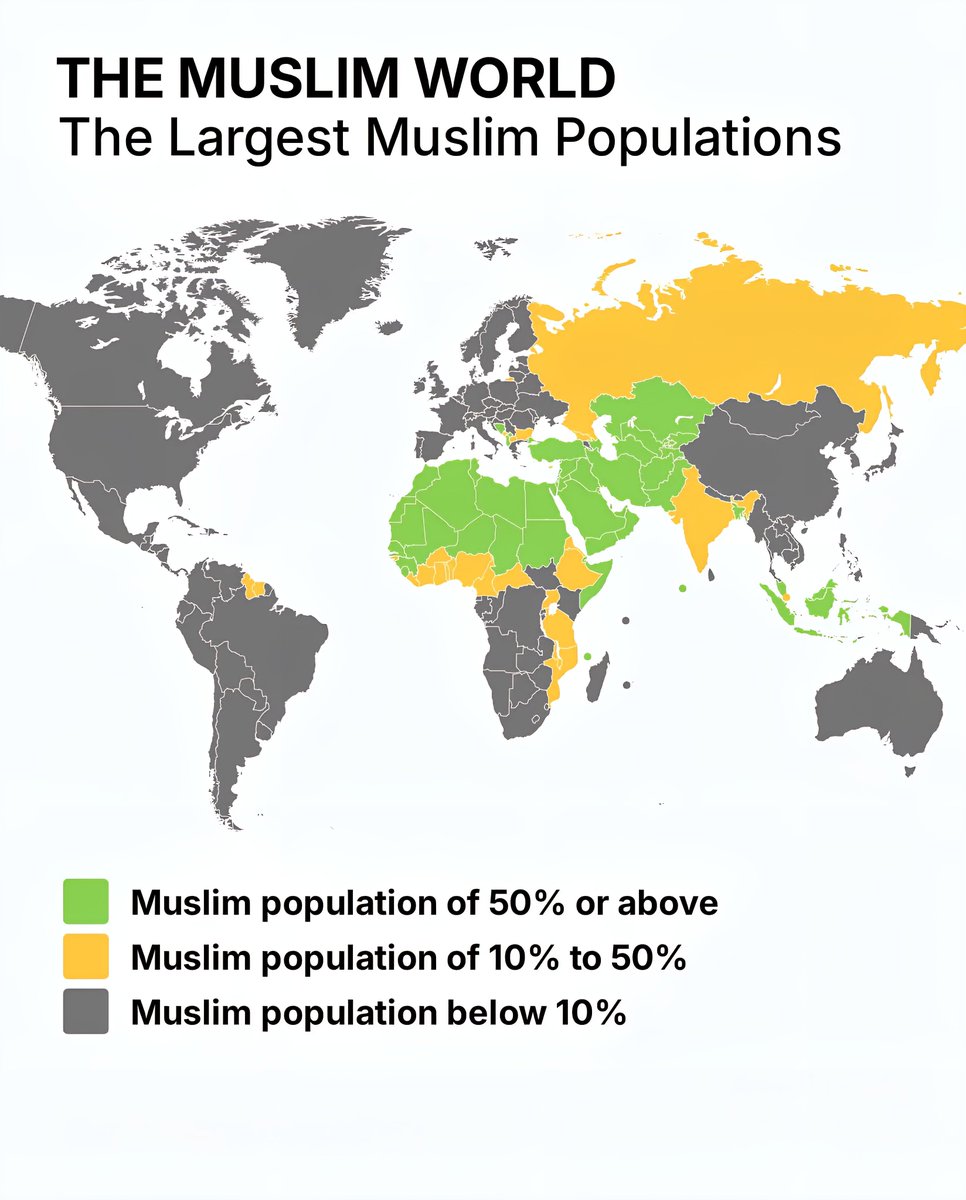
In 2025, several nations have Muslim populations that make up more than half of their total residents. These countries are primarily in the Middle East, North Africa, and parts of Central and South Asia, reflecting deep-rooted Islamic cultural and religious traditions. Here are some noteworthy examples:
-
Indonesia: The country with the largest Muslim population globally, Indonesia’s Muslim community accounts for approximately 87% of its total population. This Southeast Asian nation exemplifies a vibrant and diverse Islamic culture that influences its politics, arts, and daily life.
-
Pakistan: Over 95% of Pakistan’s population practices Islam, making it a predominantly Muslim nation. The country’s Islamic principles are embedded in its constitution, shaping its legal and social frameworks.
-
Bangladesh: With around 90% of its population adhering to Islam, Bangladesh maintains a significant Muslim majority that influences its cultural and national identity.
-
Egypt: Home to approximately 90% Muslim residents, Egypt holds a pivotal role in the Islamic world, both historically and in modern geopolitics.
-
Turkey: Although officially secular, about 99% of Turkey’s citizens identify as Muslim, with Islam deeply woven into its societal fabric.
2. Countries with 10% to 50% Muslim Population
Numerous nations have sizable Muslim communities but where Islam is not the majority religion. These countries often feature diverse religious landscapes, blending Islamic traditions with other faiths and cultural influences.
-
India: The world’s second-most populous country hosts around 14% Muslims of its total population, totaling roughly 200 million. The Muslim community in India is diverse, with a rich history of cultural and religious contributions.
-
Russia: Approximately 10-15% of Russia’s population adheres to Islam, especially prominent in regions such as Tatarstan, Chechnya, and Bashkortostan. These communities play vital roles within Russia’s broader demographic mosaic.
-
Nigeria: Islam is practiced by roughly 50% of Nigeria’s population, mainly in the northern regions, serving as a significant religious and cultural force in the country.
-
France: With nearly 8-10% of its population being Muslim, France has one of Europe’s largest Muslim communities, primarily composed of immigrants and their descendants from North Africa and the Middle East.
-
United Kingdom: Muslims make up about 5-8% of the UK population, with vibrant communities concentrated in urban regions like London, Birmingham, and Manchester.
3. Countries with Less Than 10% Muslim Population
Beyond the major Muslim-majority nations, many countries host lesser Muslim populations, often integrating Islamic practices within a broader multi-religious society. These countries may have growing Muslim communities due to migration and demographic shifts.
-
United States: Islam is practiced by roughly 1-2% of the U.S. population, estimated to be more than 3 million people. The American Muslim community is diverse, including African Americans, South Asians, Middle Easterners, and converts.
-
Brazil: Less than 1% of Brazil’s total population adheres to Islam, but the community is expanding due to immigration and conversion.
-
Australia: Muslim Australians represent around 2-3% of the population, with a significant number originating from Lebanon, Turkey, and Southeast Asia.
-
Canada: About 3-4% of Canadians are Muslim, making it one of the fastest-growing faith communities in the country.
-
Germany: Muslim residents account for roughly 5% of the population, primarily due to migration from Turkey and the Middle East.
4. The Demographic Shifts and Future Trends
Data from 2025 illustrates the dynamic landscape of Muslim populations worldwide. The largest communities continue to reside in Asia and Africa, with Southeast Asia (especially Indonesia and Malaysia) and the Middle East leading. Noteworthy is the steady growth of Muslim populations in Europe and North America due to migration, higher birth rates, and conversions, which are gradually reshaping societal profiles.
Advances in data collection and migration patterns suggest that these demographic trends will continue in the coming decades. Countries with rapidly growing Muslim populations are also witnessing increasing cultural influence, including in areas such as fashion, cuisine, and political activism.
5. Impact on Global Politics and Society
The demographic realities in 2025 impact geopolitics significantly. Nations with large and growing Muslim populations wield increased influence in international affairs. Conversely, countries with smaller Muslim communities are engaging more with intercultural dialogue to foster social cohesion and counteract Islamophobia.
Throughout the world, Muslim communities are becoming more visible and active in shaping societal norms, advocating for rights, and contributing to economic development. They also face challenges such as integration, combating stereotypes, and ensuring religious freedoms.
The numbers tell a story of a vibrant and evolving global Muslim demographic, deeply embedded in regional identities and increasingly influential on the world stage by 2025. The diversity within Muslim populations worldwide highlights the rich tapestry of cultures, traditions, and adaptabilities that continue to shape the modern era.
Note: All statistics are estimates based on the latest available data in 2025, acknowledging that demographic figures can vary due to reporting methods and data collection updates.
 ChatGPT
 Perplexity
 Gemini AI
 Grok AI